8 Ways to Share a Small Kitchen Table Between Meals and Laptop Work
A small kitchen table can handle occasional laptop work when the work surface, supplies, and papers all have a defined place to go at mealtime. These changeovers use the existing table first, with attention to chair pullout, food-safe clearing, and any rental limits on wall-mounted storage.
As an Amazon Associate I earn from qualifying purchases.
1.Set Up a Portable Work Tray That Lifts Off for Meals
Put the laptop, charger, mouse, and current notebook on a shallow tray with handles. Keeping the active work setup together prevents small items from spreading across the table and makes the switch to meals a single carrying task.
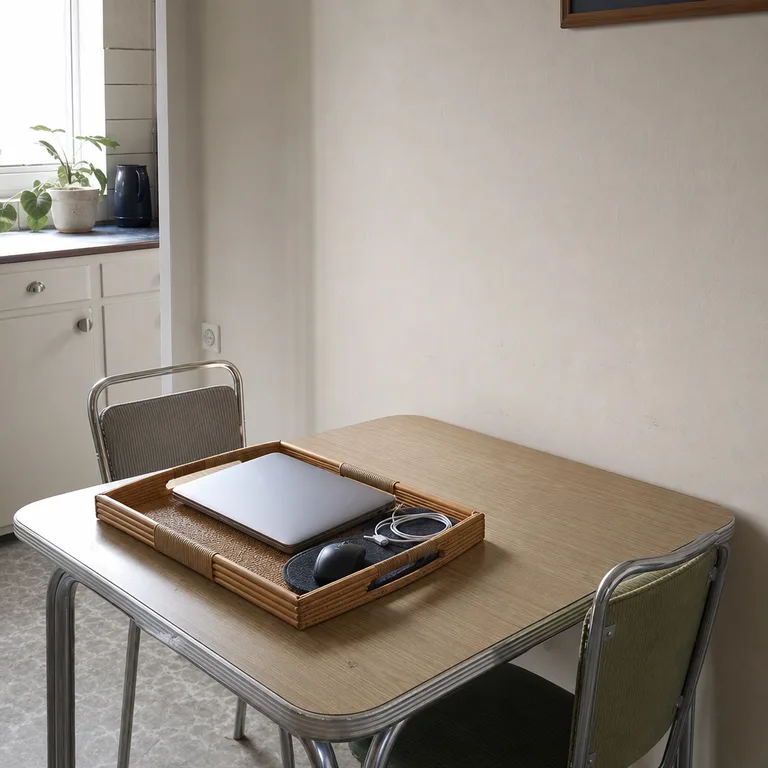
A serving tray, shallow basket, or tray already used elsewhere in the home can work. Choose one large enough to contain cords without hanging over the edge, but small enough to store on a counter, shelf, or cart nearby.
Remove the laptop and all electronics before wiping the table or preparing food. A tray is useful for short work sessions, but it still needs a reliable landing place when the table is needed.
Worth knowing: A loaded tray can become awkward to carry if it holds a larger laptop, paperwork, and a drink at the same time.
Related: 12 Small Kitchen Ideas That Free Up Prep Space Without Remodeling
2.Use One Table Leaf as the Work Zone
A gateleg or drop-leaf table can make the work area feel more defined. Raise one leaf for a laptop session while leaving the other folded, then close it again once the table returns to dining duty.
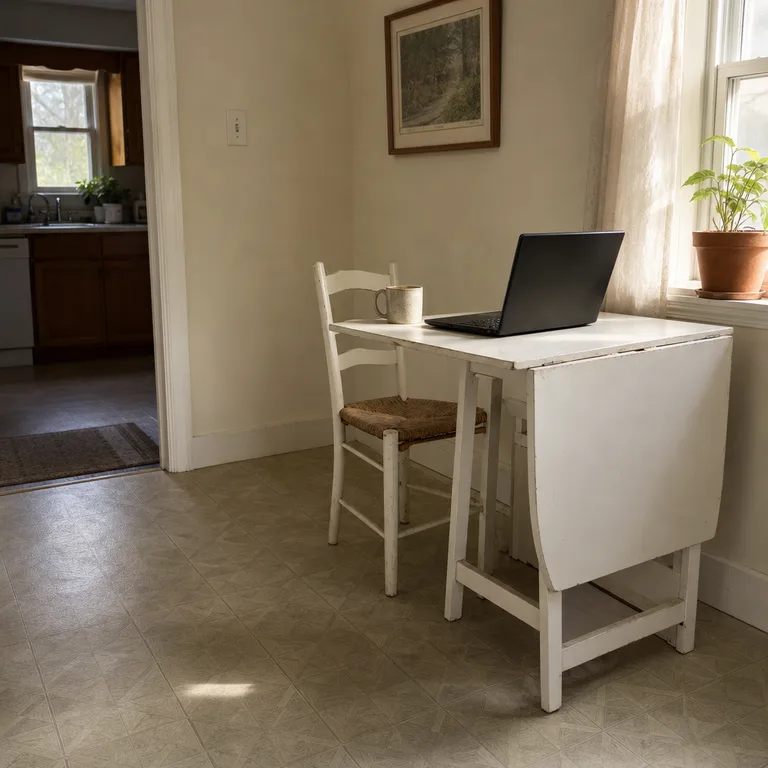
This approach changes the usable footprint without adding another piece of furniture. It also gives loose work items a natural boundary, rather than allowing them to take over the center of the table.
Use the table’s existing leaf and support hardware as intended, and keep the laptop centered on the stable raised section. Check that the open leaf does not block a kitchen walkway or interfere with chair pullout.
Worth knowing: This only works on tables with a sound, stable leaf mechanism, and frequent folding may not suit work that needs to stay out for days.
3.Make the End Seat the Regular Laptop Seat
Choose the end of a rectangular table as the regular laptop position. The long sides can then stay clearer for place settings, and the routine makes it easier to reset the same area after work.
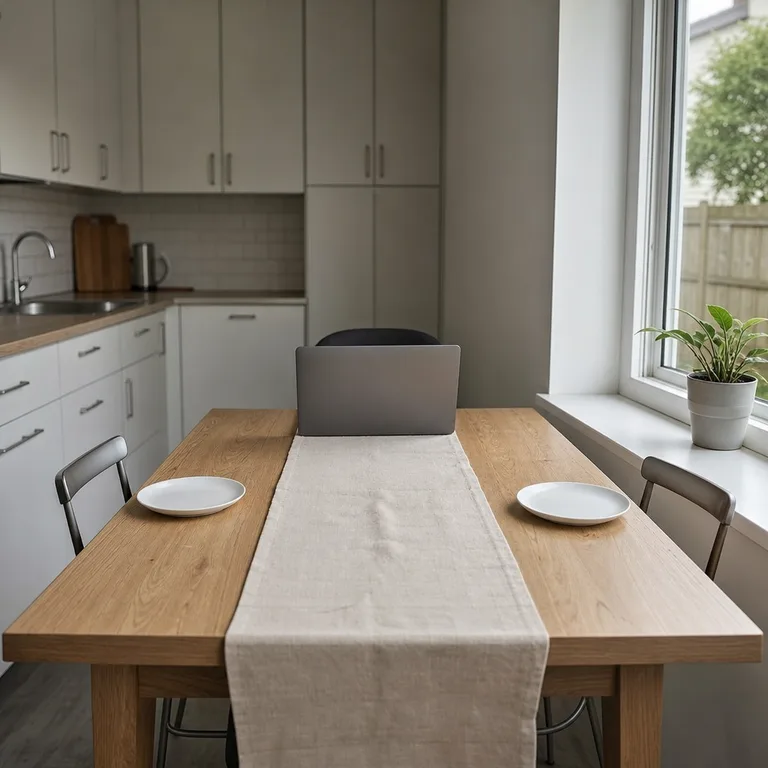
An end seat can reduce the feeling that work has spread through the dining space. It also makes cord routing simpler when the nearest outlet is at one end of the room.
Measure the clearance behind the end chair with it pulled out. Run charging cords where they will not catch someone walking through the kitchen, and unplug and store them before meals or wet cleaning.
Worth knowing: An end-seat setup may feel cramped if the table sits close to a wall, cabinet run, or busy passage.
Related: 10 Small Dining Area Ideas When You Don't Have a Dining Room
4.Park Supplies in a Slim Box Beside the Table
Keep chargers, pens, adapters, headphones, and other small tools in a narrow lidded box beside the table. A nearby shelf, utility cart, or cabinet ledge can hold it without claiming dining space.
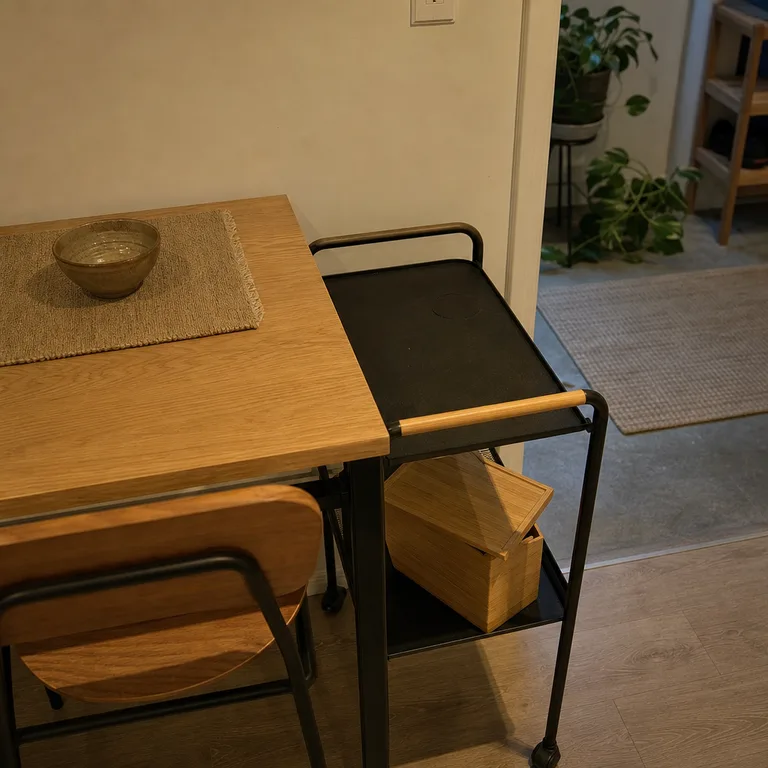
A box gives the changeover a clear finish: supplies leave the tabletop and return to one contained spot. A lid also makes the stored items look quieter in an open kitchen.
Reuse a sturdy container that fits the available gap, or choose a simple box that can be wiped clean. Keep it close enough to reach easily, but away from sink splashes, stove heat, and areas that need clear floor space.
Worth knowing: A box stored too far from the table is more likely to become a catchall rather than part of a quick reset.
5.Fold Documents Into a Stand That Stores Flat
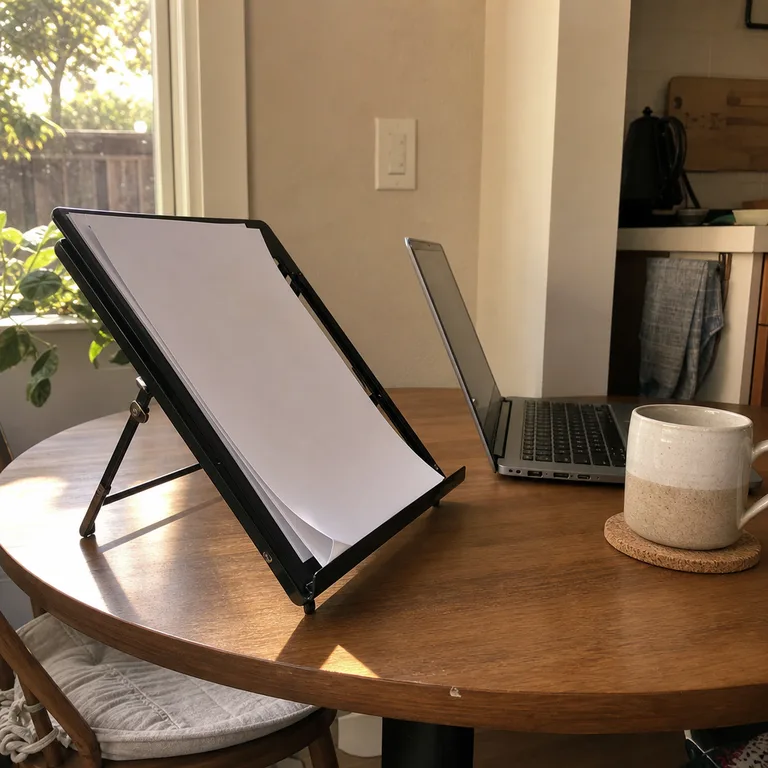
Use a folding document stand for printed notes, recipes, schedules, or reference pages during a work session. It keeps papers upright and together instead of letting them occupy the eating surface.
When work ends, collapse the stand and place it with the papers in a drawer or supply box. This creates a cleaner reset than stacking loose sheets at one end of the table.
A basic folding stand can be useful in a small kitchen because it stores flat. Keep paper away from drinks and food preparation, and move it fully off the table before serving a meal.
Worth knowing: A document stand helps with a limited set of active pages but will not replace proper storage for larger piles of paperwork.
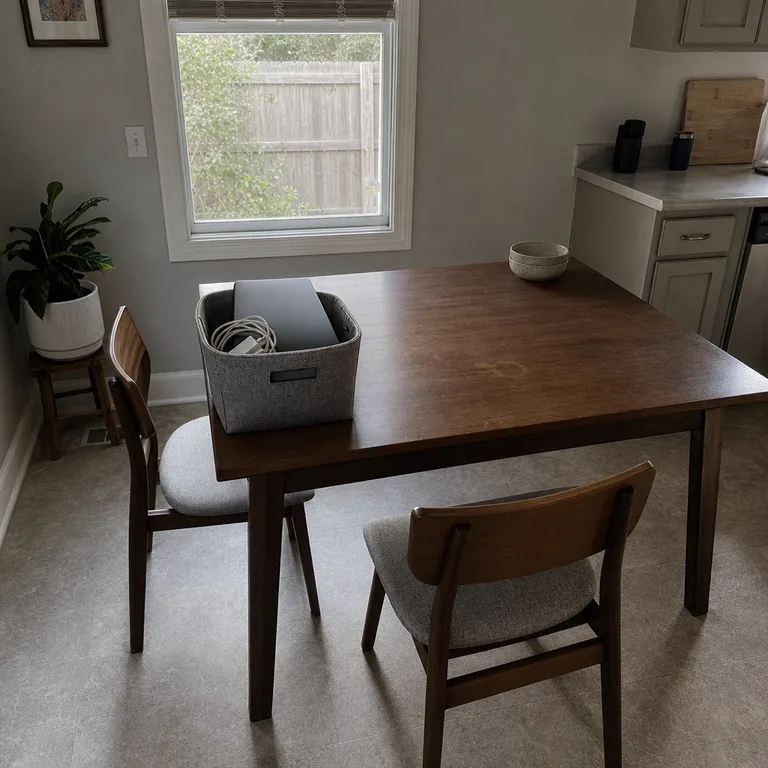
The reset matters because a shared table becomes difficult to use when each person leaves behind a few items. A simple order works well: close devices, coil cords, store papers, then clear the surface for the next use.
Use a fabric bin, shelf, or cabinet section for each person’s active supplies if they need to stay separate. Keep the handoff realistic for the household’s meal schedule rather than relying on a complicated routine.
Worth knowing: Separate work blocks require cooperation and may not work when both users need the table at the same time.
7.Hang a Wall Pocket for Papers Where Allowed
Place a shallow wall pocket near the table for active mail, school papers, or work documents. Moving these papers onto the wall keeps them visible without leaving them on the dining surface.
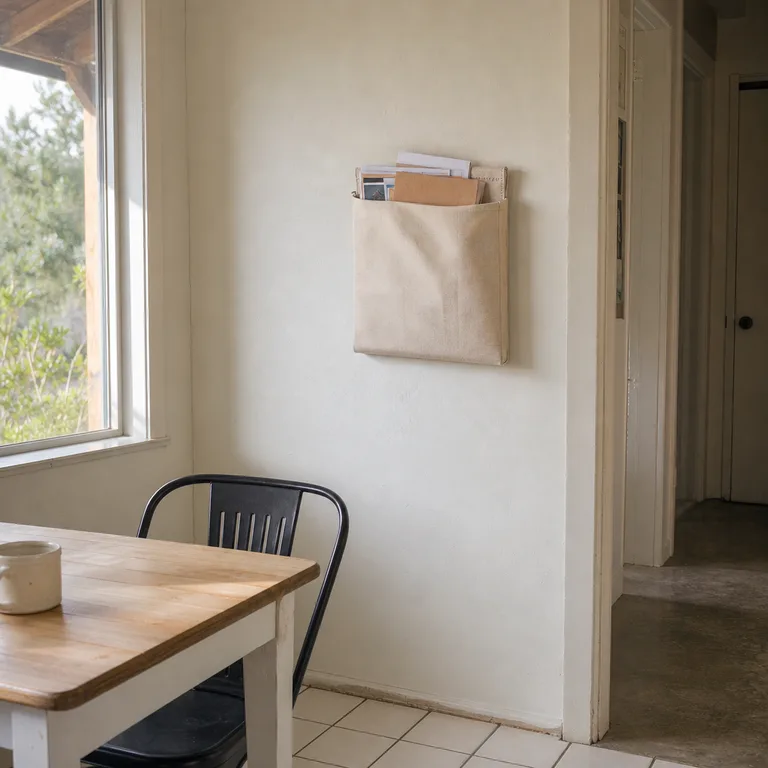
Choose a spot away from the stove, sink, and food-prep splash zones. In a rental, use removable hanging methods only where the wall surface and the hardware instructions allow it.
A canvas pocket, mail sorter, or simple file holder can keep current papers contained. Sort it regularly so it remains a place for active documents rather than long-term paper storage.
Worth knowing: Wall pockets add visual storage, so they can look cluttered if papers are overfilled or left unsorted.
8.Use a Chair-Back Organizer That Empties at Dinner
Hang a slim organizer over the back of the regular work chair for a notebook, charging cable, and small accessories. It uses vertical space beside the table and keeps those items close during the day.
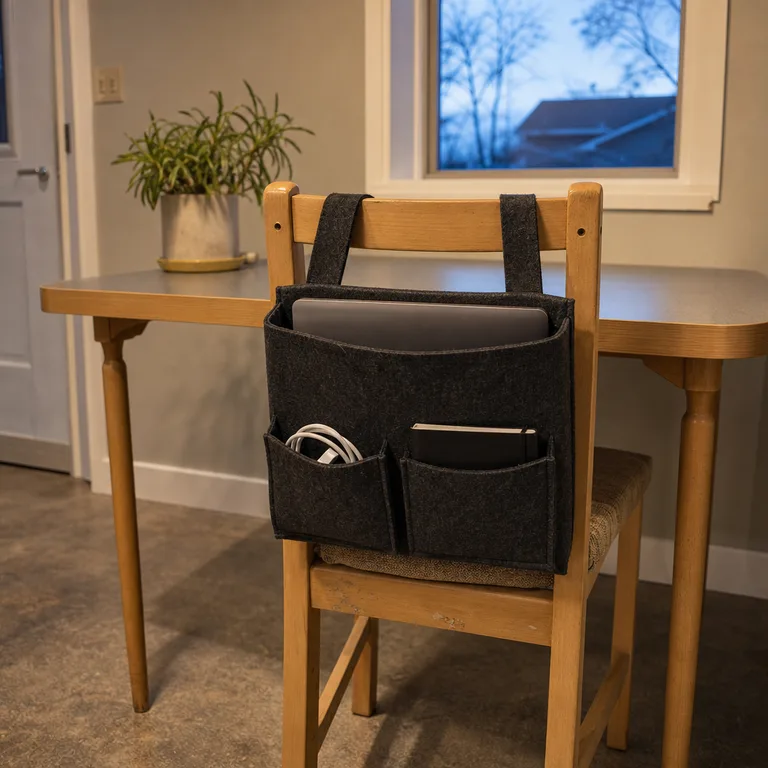
At mealtime, empty the organizer into the nearby supply box before anyone sits down. This keeps the chair comfortable, avoids pressure on the pockets, and makes the dining setup feel intentional rather than temporary.
Use one with a secure fit that does not slide against the chair frame or interfere with how the chair tucks under the table. Avoid overloading it, especially on lightweight chairs that may tip or scrape when moved.
Worth knowing: A chair-back organizer is best for small supplies and may be inconvenient for a full-size laptop or bulky power adapter.
About the author
Dana Ruiz, Senior editor
Dana writes about small-space living, storage and low-cost decorating.
Keep reading
10 Christmas Advent Calendar Displays for Small Homes
October 18, 2026
6 Entryway Parking Ideas for a Folded Stroller in a Small Apartment
October 18, 2026
7 Christmas Morning Gift-Opening Setups for a Small Living Room
October 17, 2026
7 Small Living Room Layout Adjustments That Keep Windows Easy to Open
October 17, 2026