6 Cordless Vacuum Dock Locations for a Small Home Without a Utility Room
A cordless vacuum works best in a visible, reachable spot where it can charge and lift off without moving coats, furniture, or cabinet doors. Check the exact-model manual for its approved dock, outlet, ventilation, mounting, and clearance requirements; reject any location that needs an enclosed charger, improvised extension lead, or unapproved mount.
As an Amazon Associate I earn from qualifying purchases.
1.Use a Shallow Entry Wall Recess Near the Door
A shallow strip of wall beside the front door can hold a dock without narrowing the main route through the entry. It places the vacuum near the area that often collects tracked-in dirt, while keeping it in sight rather than sealed inside a cabinet.
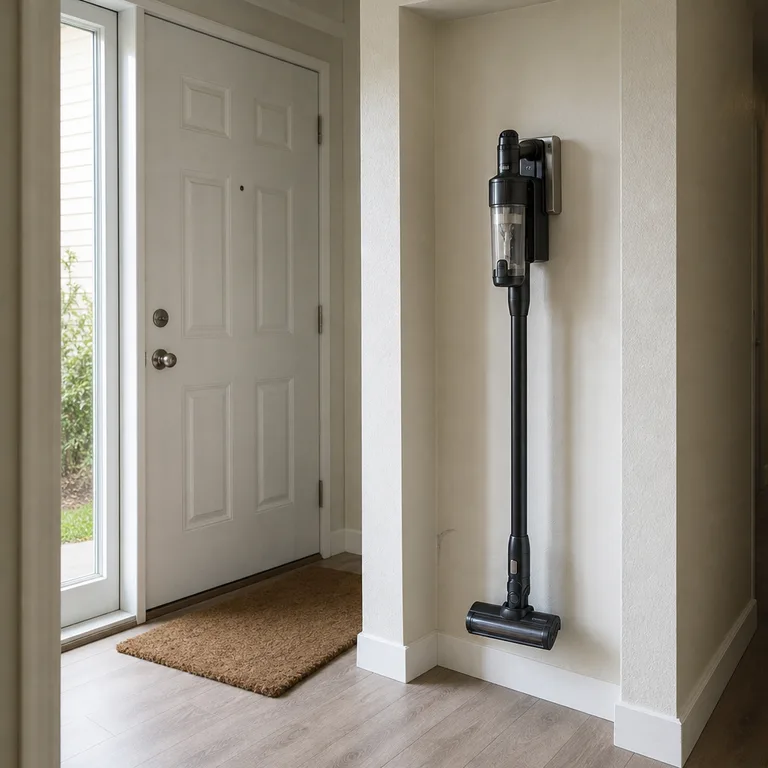
Choose a section where the vacuum can lift straight off its dock and does not interfere with the door, coat hooks, or a shoe bench. Mount only with the exact-model approved hardware and fixing method; if the wall construction cannot support it, choose another location rather than relying on unsuitable anchors.
Keep accessories limited to the tools used most often so the entry does not become visually busy. A small nearby tray or cabinet can handle keys and shoes, leaving the floor beneath the vacuum clear.
Worth knowing: This will not work in a narrow entry where the docked vacuum reduces the required walking clearance or conflicts with the front-door swing.
Related: 12 Small Entryway Ideas for Homes With No Foyer
2.Mount It in an Open Utility Nook
An open nook beside compact shelving can become a useful vacuum zone without needing a separate utility room. The dock stays accessible for charging and quick removal, while shelves hold cleaning cloths or other household supplies.
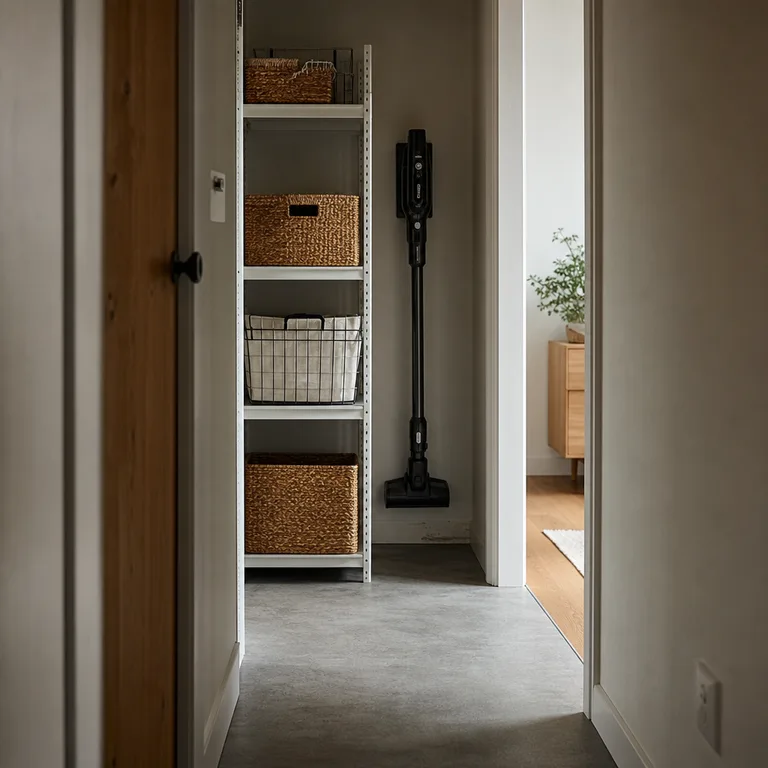
Leave the space around the dock open as required by the manual, especially above and beside the vacuum. Avoid filling the nook with tall baskets, laundry hampers, or loose items that make it awkward to remove the machine or block airflow.
Use simple shelves already on hand where possible, and group supplies in a few containers rather than adding more furniture. Keep the outlet and charger visible enough to inspect, with the cable managed only in a way permitted by the manufacturer.
Worth knowing: A nook that doubles as a tightly packed laundry or storage area may not provide enough clearance for safe, convenient charging.
Related: 10 Small Laundry Nook Ideas for Homes Without a Laundry Room
3.Dock It on the Outside Wall of a Wardrobe
The outside end of a wardrobe, or the adjacent blank wall, can make a useful charging position in a bedroom. This preserves hanging space inside the wardrobe and prevents the vacuum from getting trapped behind a door or under stored items.
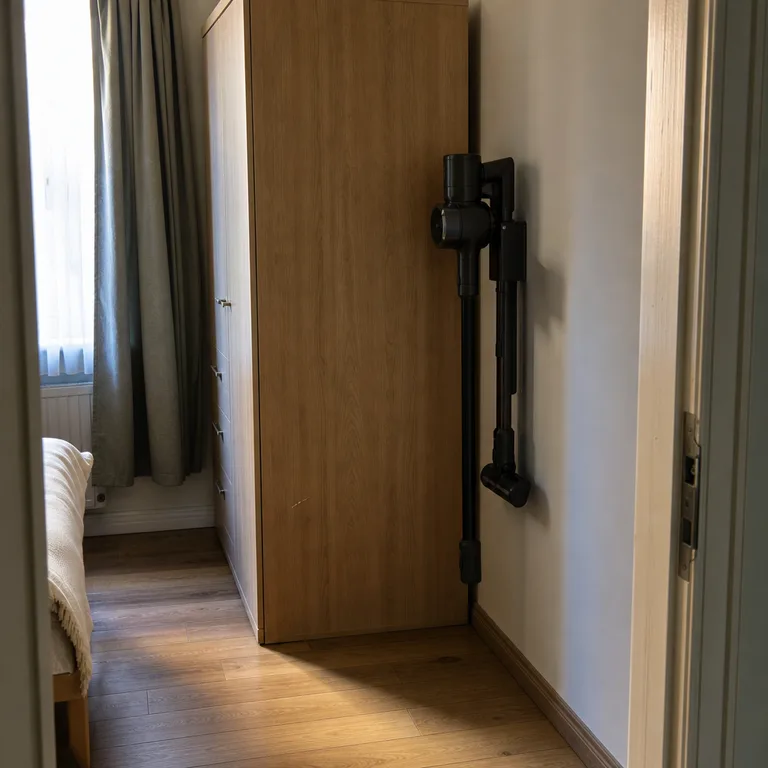
Check that drawers, wardrobe doors, and nearby bedroom doors can all open fully. A location with clear floor space below is easier to use than one blocked by a hamper, bedside table, or the edge of the bed.
Use the wall location only if its construction accepts the approved mounting method. If the wardrobe itself is freestanding, avoid attaching the dock to a thin panel unless both the vacuum maker and furniture construction make that installation appropriate.
Worth knowing: A bedroom dock can feel intrusive in a very small room, particularly if the vacuum is visible from the bed or blocks furniture rearrangement.
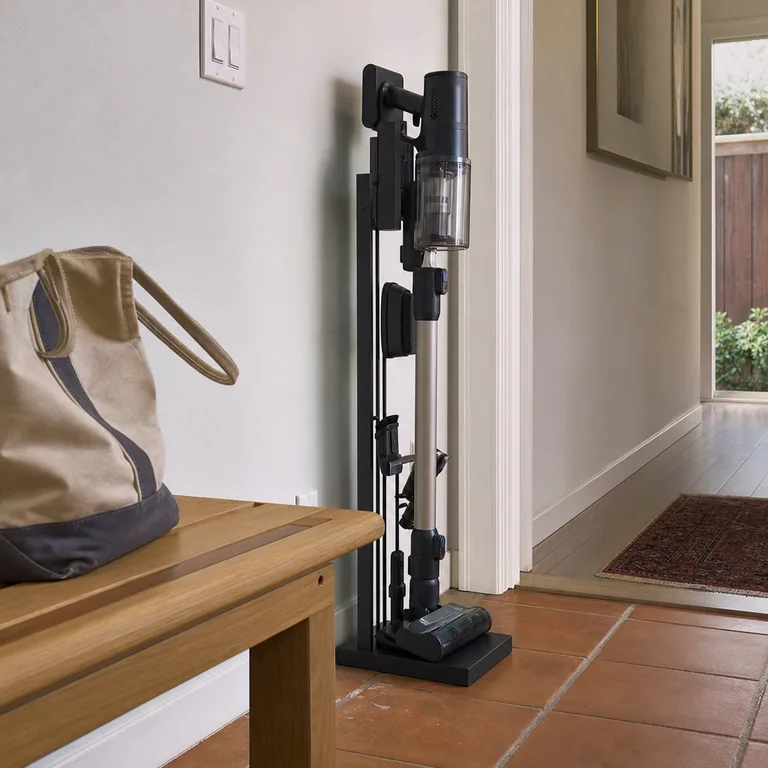
4.Choose a Load-Rated Freestanding Charging Stand
A load-rated freestanding stand can solve the mounting problem in a rental or on walls that are not suitable for the required fixings. It creates a dedicated upright home for the vacuum without drilling into drywall, tile, or a landlord-owned surface.
Place the stand on level flooring near an appropriate outlet, with enough overhead and side clearance to lift the vacuum away. Follow both the stand maker's stability guidance and the vacuum manual's charging instructions; a stand does not make an unapproved charger or cable setup acceptable.
A stand looks tidier when it occupies a deliberate edge of the room, such as beside a bench or at the end of an open wall. Keep the base out of a route used for shoes, bags, and door traffic, and use an approved anti-tip method if the stand calls for one.
Worth knowing: Freestanding stands use floor area and can be unstable or inconvenient on uneven floors, in busy passages, or around active children and pets.
5.Keep It in the Open Beside a Low Cabinet
An open corner beside a low shoe or entry cabinet gives the vacuum a permanent place without asking the cabinet to contain it. The cabinet can still work as a drop zone for daily items, while the dock remains easy to reach and inspect.
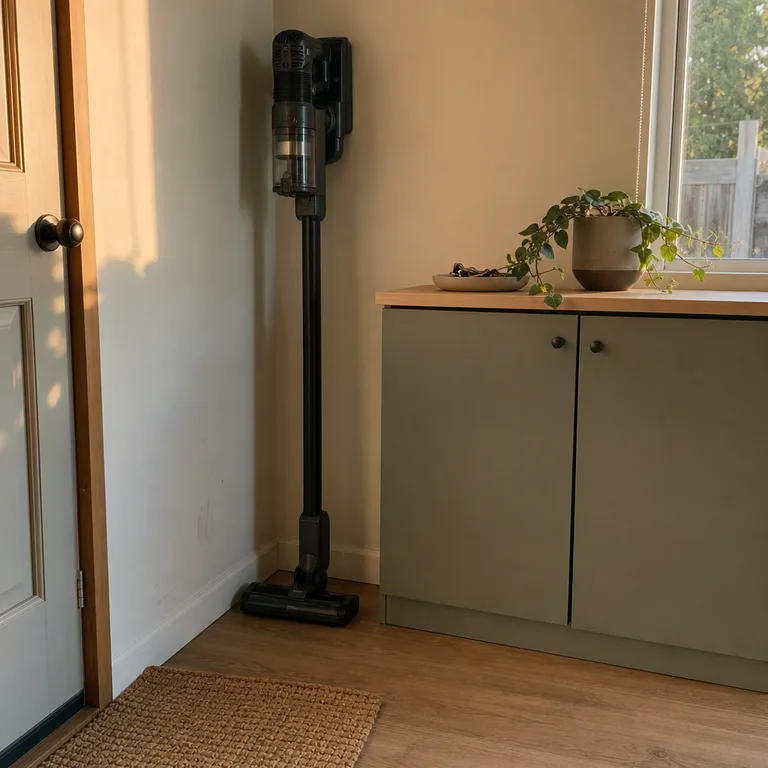
Choose the side of the cabinet with enough bare wall for the dock and enough open space to remove the vacuum in one motion. The top of the cabinet should not encourage a pile of bags or umbrellas that crowds the charging area.
This approach is usually cheaper than altering cabinetry because it uses a wall that is already there. Match the dock location to the room's existing vertical lines, such as the cabinet edge or a nearby trim line, so the vacuum reads as intentional rather than abandoned in a corner.
Worth knowing: The arrangement depends on keeping that corner clear, so it is less suitable for an entry that regularly collects bulky bags, strollers, or sports equipment.
6.Use a Hallway Wall Outside the Door Swing
A short hallway wall can be one of the most efficient dock locations because it uses vertical space that rarely holds furniture. It can also keep the vacuum central to several rooms, reducing the temptation to leave it leaning in whichever room was cleaned last.
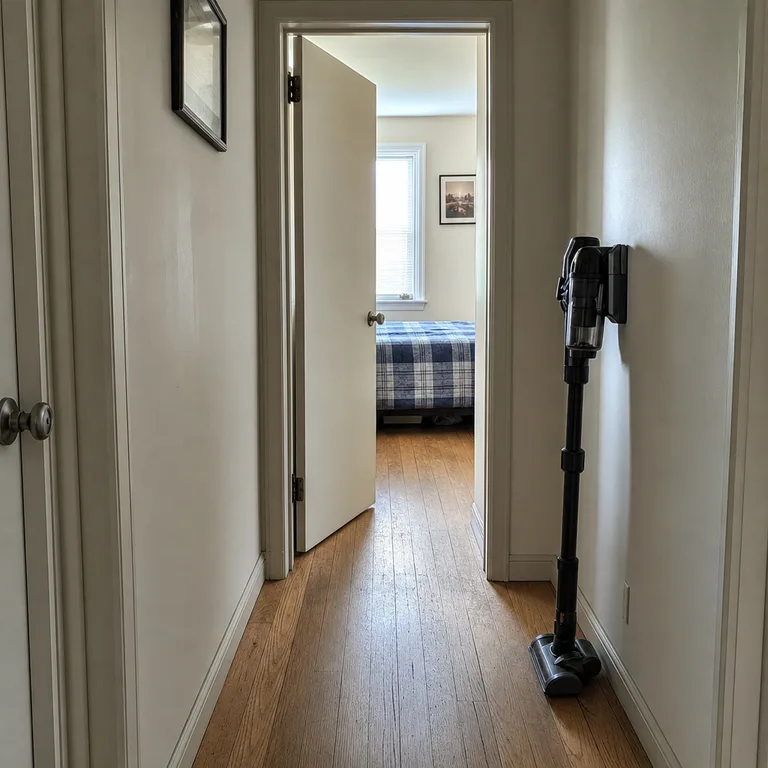
Open every nearby interior and closet door before committing to the spot. The docked vacuum, charger, and any accessory holder must all sit outside each door's swing path, and the remaining passage must still be comfortable for normal traffic.
A plain wall-mounted dock often needs little styling beyond a clear floor and restrained accessory storage. If cable concealment is needed, use only a method compatible with the exact model's instructions and keep the outlet accessible rather than burying connections behind furniture.
Worth knowing: Hallways are often narrow, so even a correctly mounted vacuum may create a pinch point where people pass, carry laundry, or move furniture.
About the author
Dana Ruiz, Senior editor
Dana writes about small-space living, storage and low-cost decorating.
Keep reading
8 Christmas Gift-Wrapping Stations That Pack Away in a Small Home
October 31, 2026

7 Small Bedroom Layouts With Sloped Ceilings
October 31, 2026
8 Christmas Buffet Setups for a Small Kitchen Without an Island
October 29, 2026
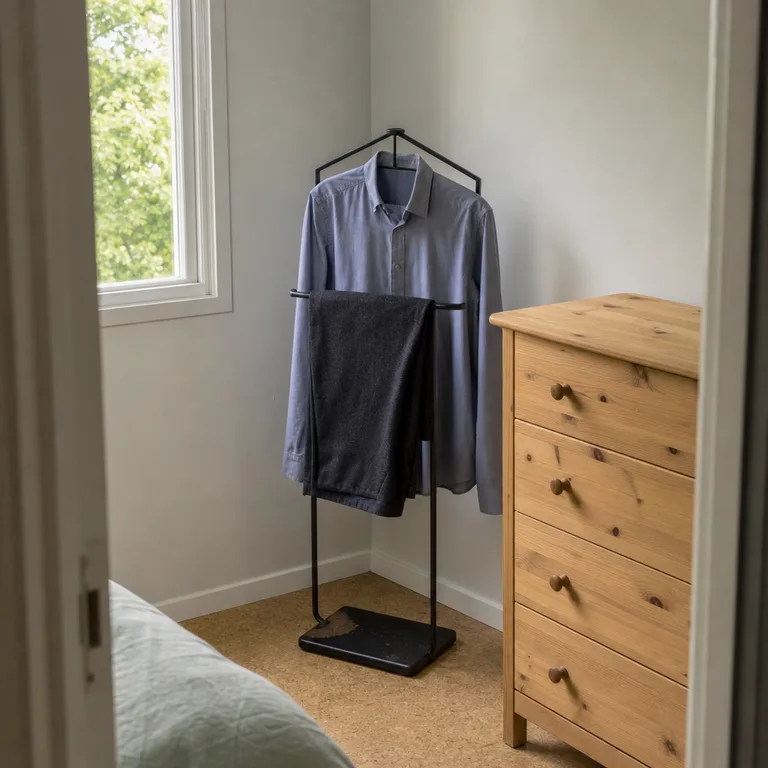
7 Rewear Clothes Stations for a Small Bedroom Without a Chair Pile
October 29, 2026