8 Christmas Buffet Setups for a Small Kitchen Without an Island
A small Christmas buffet can work on existing kitchen counters when the route is clear: guests pick up plates first, serve food next, and find refills without crossing the cooking zone. These eight layouts keep hot food near safe heat, cold food away from warmth and sun, and essential appliances reachable for the host.
As an Amazon Associate I earn from qualifying purchases.
1.Run a straight serving line along the longest counter
Turn the longest clear counter into one simple route. Put plates and napkins at the end nearest the kitchen entrance, arrange dishes in the order guests will serve themselves, and place utensils at the far end so people keep moving instead of doubling back.
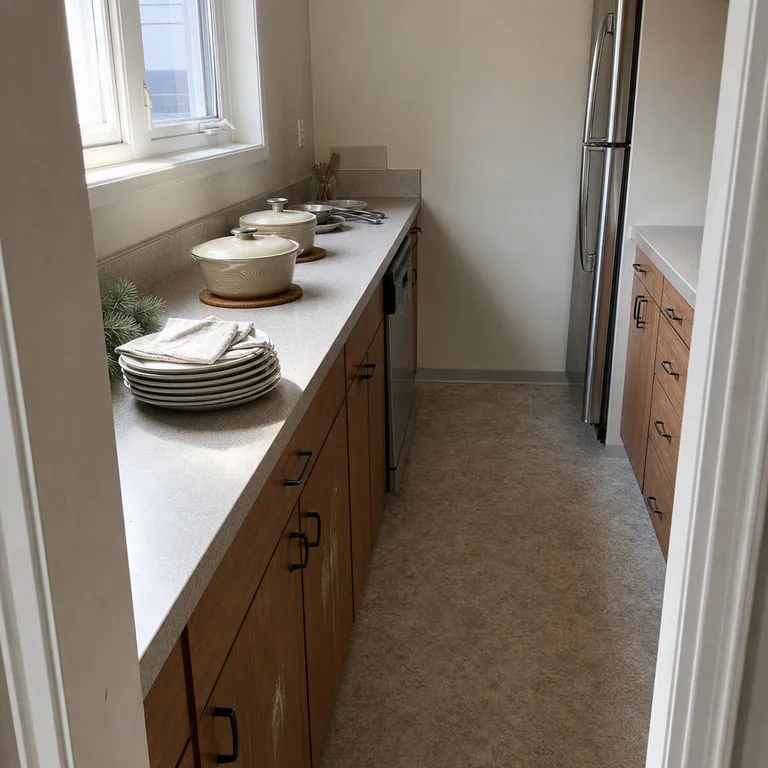
Keep the opposite counter open as a walking route and save the stove for cooking rather than setting out plates. Covered dishes, trivets, and compact serving bowls help fit a small menu without making the counter feel packed.
Worth knowing: This works best when the longest counter is not also the only route to the refrigerator or sink.
Related: 10 Holiday Hosting Layout Ideas for a Small Apartment
2.Use an L-shaped counter for separate hot and cold dishes
An L-shaped kitchen can divide the meal into two useful zones. Set hot mains and warm sides on the run nearest the stove, then use the shorter return for salads, relishes, bread, or desserts that do not need heat.
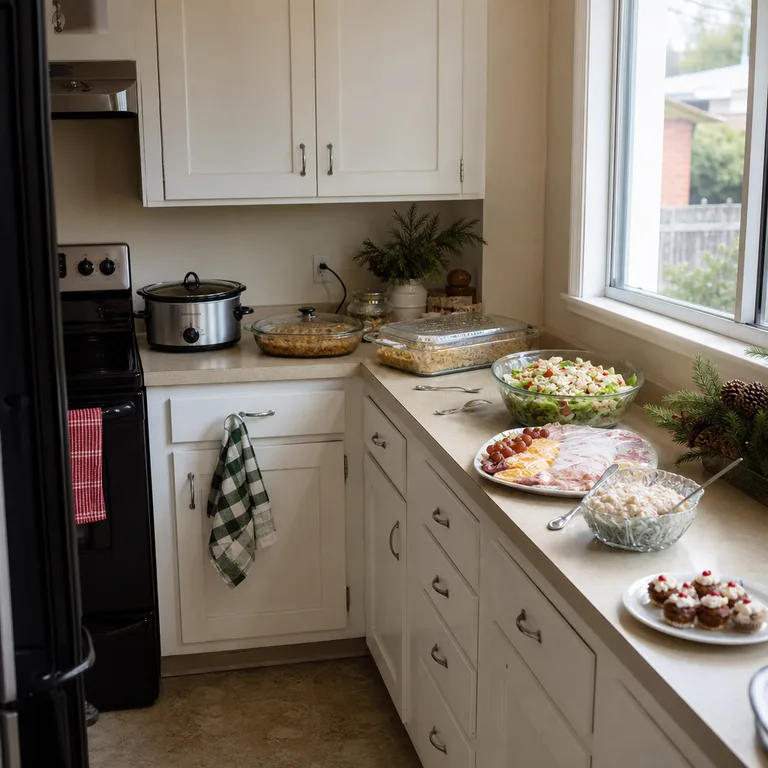
Leave the inside corner empty so guests can turn comfortably instead of reaching across a crowded bend. Use only the dishes that fit with room for serving utensils, and hold extra portions in the refrigerator or oven until they are needed.
Worth knowing: The corner can become a bottleneck if more than one person tries to serve at the same time.
3.Keep a stove-side hot-food station with appliance clearance
Use the counter beside the range for food that needs to stay warm, such as a covered casserole or a slow cooker. Place heat-safe mats beneath hot dishes and keep handles, cords, and serving tools from stretching across the cooktop.
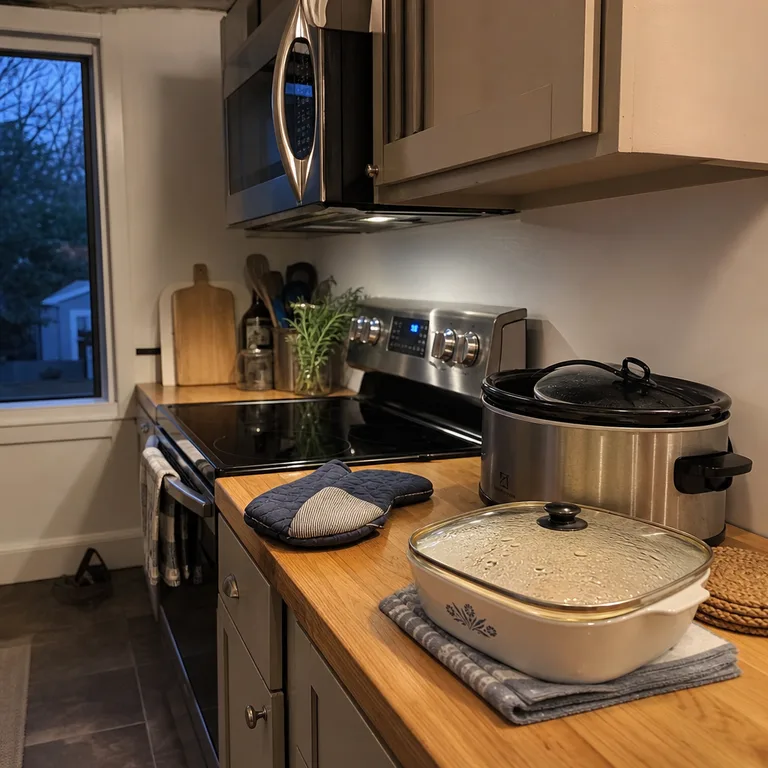
Leave clear access to oven controls, the microwave, and any appliance still needed during the meal. This makes it easier to warm a late dish or take out a refill without asking guests to move their plates.
Worth knowing: A stove-side station needs close attention because the counter can get crowded quickly around hot cookware and electrical cords.
4.Put plates on the dining-room-facing counter end
Use the counter end closest to the dining room or kitchen doorway as the pickup point for plates, cutlery, and napkins. Guests can collect what they need before stepping farther into the kitchen, rather than stopping in the entrance while choosing dishes.
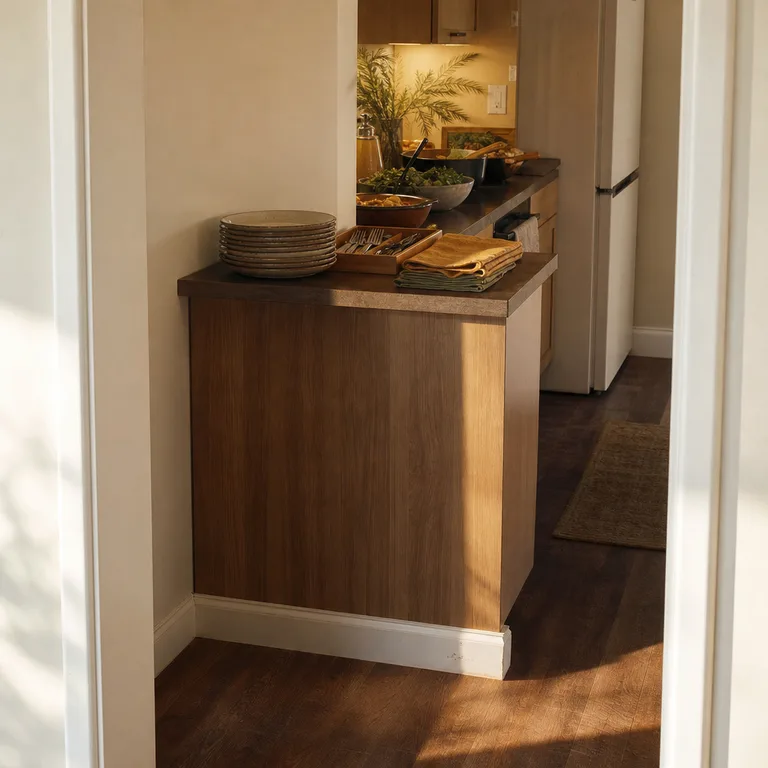
Continue the food line deeper along the counter, with serving utensils beside each dish instead of gathered in one spot. A low tray can keep cutlery contained and makes the setup easier to clear after the meal.
Worth knowing: This layout is less useful when the dining-facing counter end is very narrow or is needed as the main prep area.
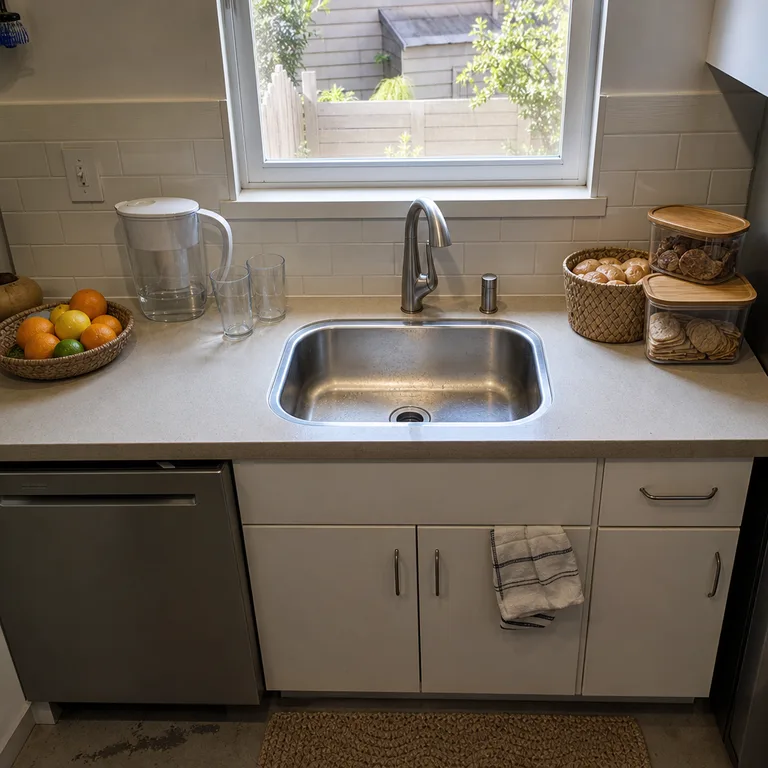
5.Make the sink run a drinks and refill station
The counter beside the sink is a practical place for water, nonalcoholic drinks, glasses, and sealed backup items such as rolls or crackers. It keeps guests looking for refills away from the hot-food area and gives drinks a defined home.
Keep the sink bowl and faucet open for handwashing, rinsing serving tools, and quick cleanup. Use lidded containers for refills so crumbs and spills do not spread across the counter beside the sink.
Worth knowing: This station can feel cramped if the sink area is also the only place for washing dishes during the gathering.
6.Reserve a cool counter section for dessert and cold sides
Choose the counter farthest from the oven, dishwasher steam, and direct winter sun for cold sides and make-ahead desserts. A pie, chilled salad, or small dessert plates are easier to serve when they are not competing with hot cookware.
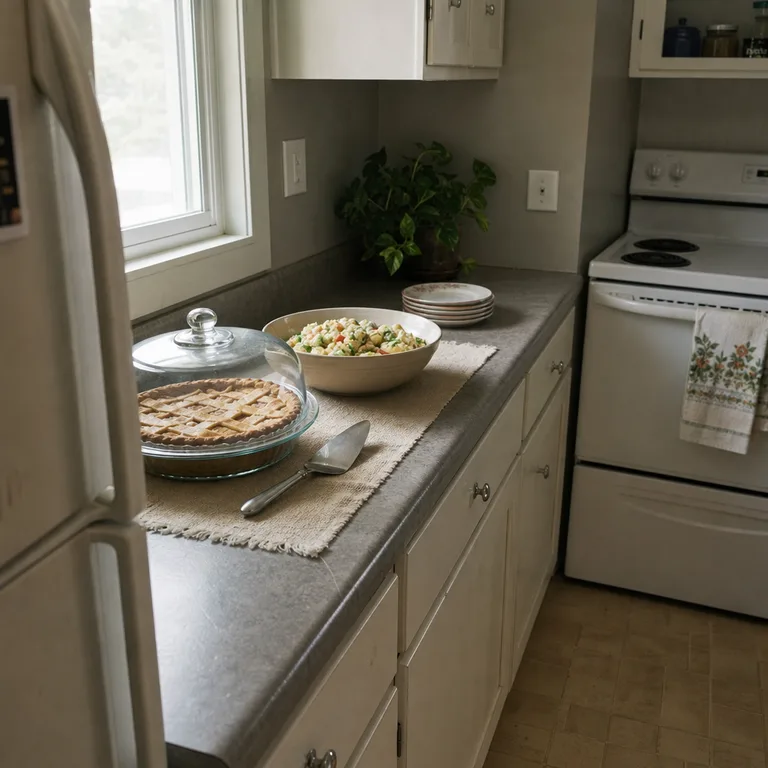
Bring out modest portions and replenish from the refrigerator rather than leaving every cold dish out for the full gathering. Covers help protect food, while a separate serving spoon for each dish keeps the area neater.
Worth knowing: Cold food still needs timely refrigeration, so this is a serving zone rather than long-term storage.
7.Use a breakfast bar as the guest-facing half of the buffet
A fixed breakfast bar or counter overhang can create a natural split between guests and the working kitchen. Put plates, bread, fruit, and other ready-to-serve room-temperature items on the guest-facing side, where they can be reached without entering the cooking area.
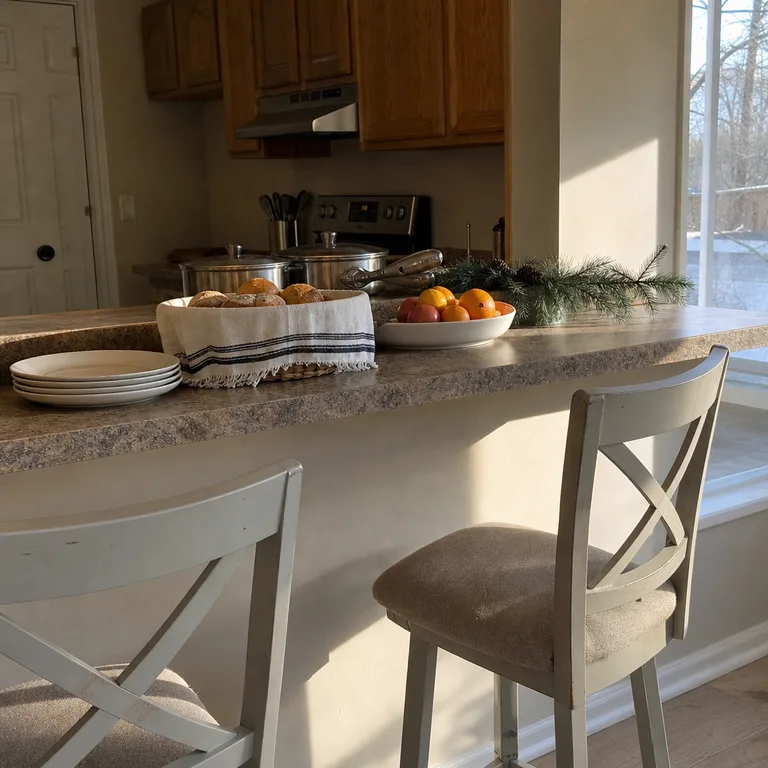
Keep refills, tongs, extra napkins, and backup serving dishes on the kitchen side. This gives the host a simple way to replenish food without reaching around guests or blocking the route to the stove.
Worth knowing: Avoid putting hot dishes on a bar where children, stools, or passing guests could easily bump them.
8.Serve a small first round and store refills in labeled zones
Set out a first round of the main meal in compact serving dishes instead of covering every counter with backup food. Group refills by course in the refrigerator, or on one separate clear counter section, so it is easy to see what needs replacing.
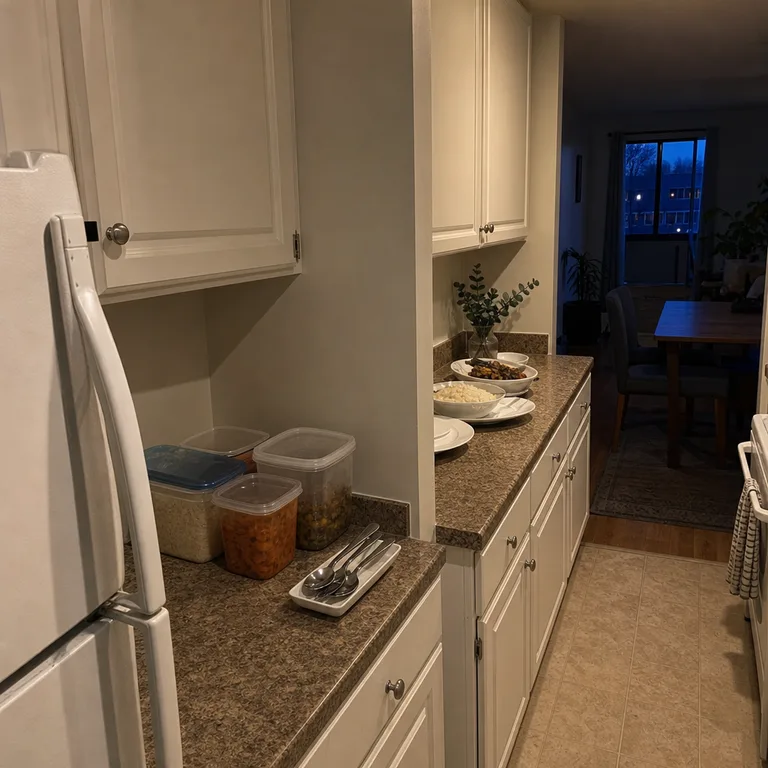
A simple label on covered containers can prevent searching through leftovers while guests wait. Refill between waves, using clean serving utensils as needed, and keep the appliance route open for reheating or cooling food.
Worth knowing: This approach requires the host to check the buffet during the meal instead of putting everything out at once.
About the author
Dana Ruiz, Senior editor
Dana writes about small-space living, storage and low-cost decorating.
Keep reading
8 Christmas Gift-Wrapping Stations That Pack Away in a Small Home
October 31, 2026
7 Small Bedroom Layouts With Sloped Ceilings
October 31, 2026
7 Rewear Clothes Stations for a Small Bedroom Without a Chair Pile
October 29, 2026
8 Privacy Ideas for Kids Sharing a Small Bedroom
October 29, 2026