7 Rewear Clothes Stations for a Small Bedroom Without a Chair Pile
A rewear station gives lightly worn clothes a defined place to air out between uses, so the bedroom chair can stay available. These compact options keep rewear items separate from clean laundry and the hamper, while leaving room for ventilation and respecting door clearance, garment care, and rental limits.
As an Amazon Associate I earn from qualifying purchases.
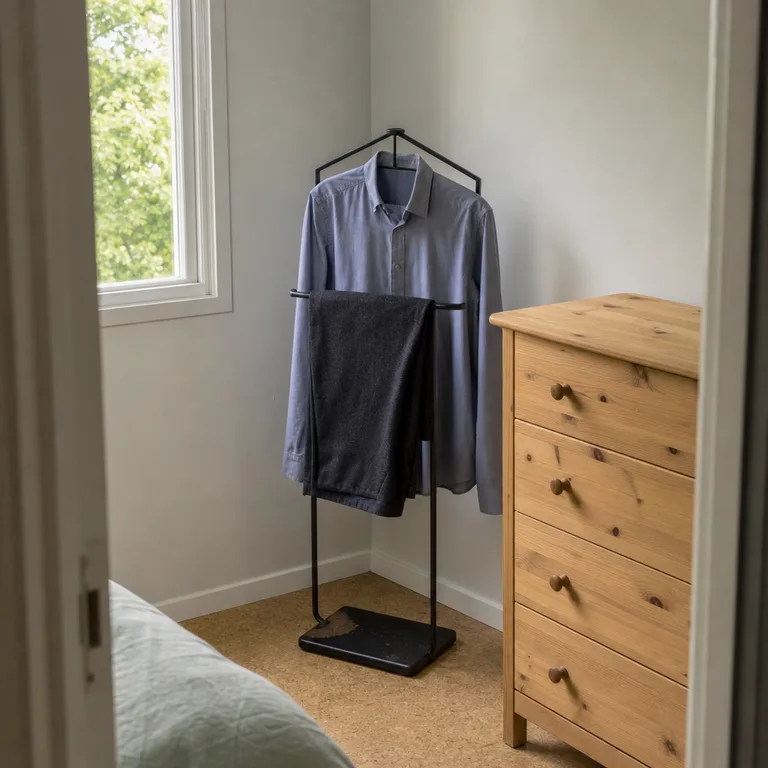
1.Mount a Single Valet Hanger Beside the Wardrobe
A pull-out valet hanger gives one outfit a deliberate place to land. Mount it on a wardrobe side panel where a shirt, cardigan, or trousers can hang without brushing the wall or stopping a wardrobe door from opening.
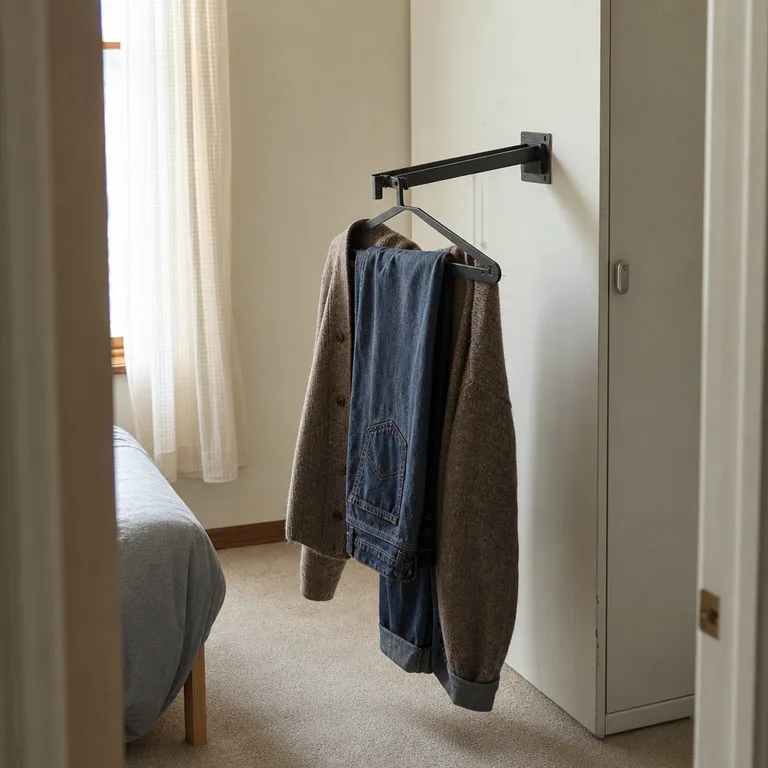
It keeps the category small by design, which helps prevent a rewear spot from becoming another overflowing rail. Choose a side panel that can take the fitting and follow the manufacturer’s installation guidance, especially with hollow furniture panels.
Use it for dry, lightly worn pieces only. Leave it folded away when empty so the room keeps its clear outline.
Worth knowing: A valet hanger is best for a small number of lightweight garments, and it may not suit wardrobes with thin side panels or no clearance beside them.
2.Use a Short Hook Rail Behind the Bedroom Door
A short rail behind the bedroom door can hold a few worn-once layers without taking up floor space. Space the hooks far enough apart that a shirt and lightweight jacket are not pressed tightly together.
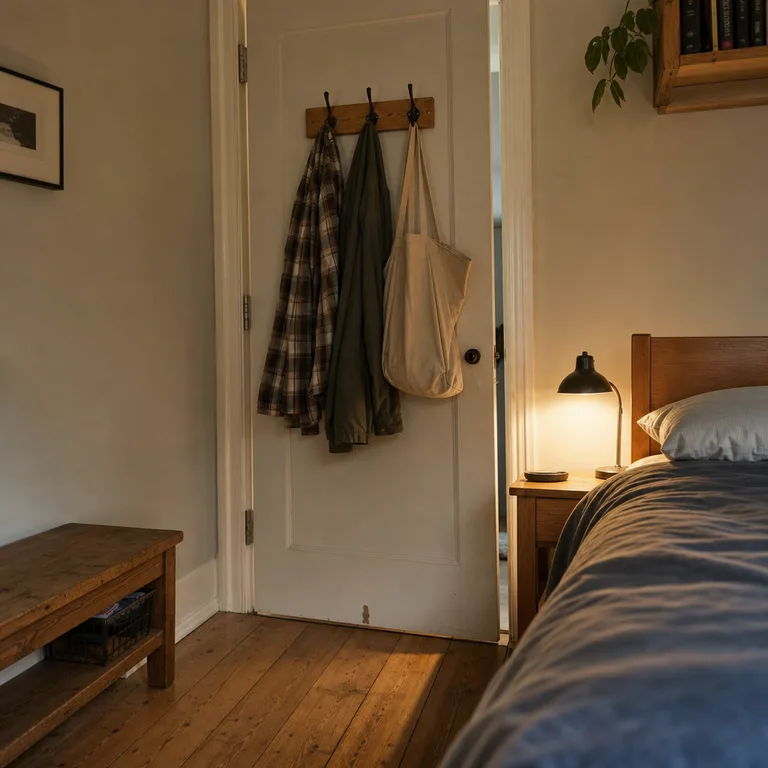
A fixed rail is usually neater than balancing clothes over the top of a door, but door swing matters. Open and close the door fully after hanging items to make sure they do not catch on furniture, a radiator, or the wall.
Use secure fixings appropriate for the door material, and reserve the rail for everyday layers rather than heavy outerwear. Renters can look for removable options, though adhesive hooks still need a clean surface and have limited weight capacity.
Worth knowing: This setup can make a small door feel busy, and it is unsuitable if hanging clothes interfere with the door opening or a narrow passage.
3.Add a Hook to the Outside of an Existing Wardrobe
A single hook on the outer wardrobe panel creates a contained spot for an overshirt, robe, scarf, or next-day layer. Place it away from drawer fronts, handles, and the usual path around the bed.
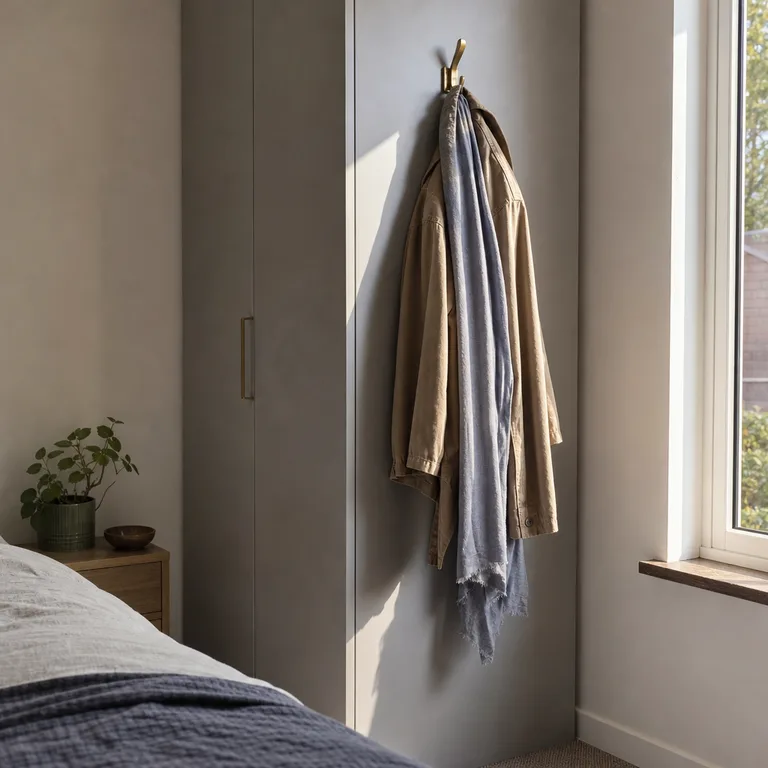
One visible hook works well because it establishes a clear limit: one or two rewear pieces rather than a growing stack. A hook also keeps garments accessible without mixing them back among freshly washed clothes.
Screw-mounted hooks tend to be more dependable for heavier items, while adhesive hooks suit lighter layers and rental situations where permitted. Check the wardrobe construction first, since some laminate panels are too thin for a long screw.
Worth knowing: A wardrobe-side hook can snag passing clothing or block a drawer if it is placed without enough clearance.
4.Place a Narrow Freestanding Valet in an Empty Corner
A narrow freestanding valet gathers the parts of one outfit in one place: trousers over a bar, a shirt on top, and a belt or scarf nearby. It is useful where drilling is not practical or where furniture cannot be altered.
Choose an open corner rather than squeezing it between the bed and a wall. Air can move around garments more easily there, and the valet will look like a purposeful piece instead of a temporary pile.
A simple metal or wood frame is enough; there is no need for a large garment rack. Keep the base flat and stable, and avoid placing it beside a damp bathroom wall or directly in the route to a window.
Worth knowing: It uses some floor area and can become cluttered if it is used for more than a single outfit at a time.
5.Reserve One Open Shelf for Folded Rewear Items
Set aside one open shelf for folded jeans, knitwear, sleepwear, and other pieces that do not need to hang. This separates them from clean dresser drawers while avoiding the sagging chair stack.
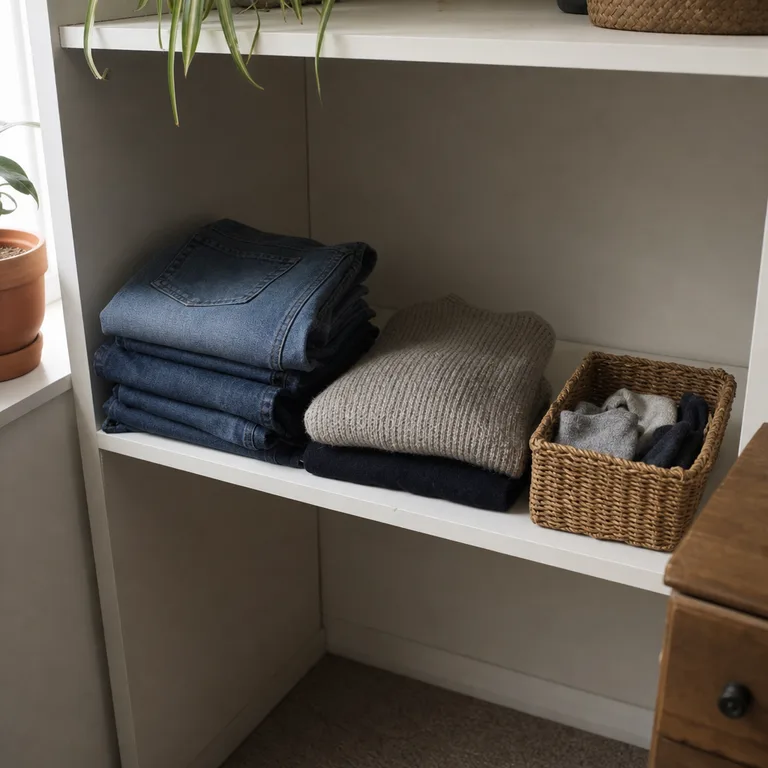
Fold each item loosely after it has had time to dry and air, rather than packing it into a deep bin. A shallow basket can hold worn-once socks, soft accessories, or smaller layers so they do not drift into clean laundry.
Use a shelf with enough space around the pile to see what is there. This makes it easier to rotate items and decide when something needs laundering rather than being worn again.
Worth knowing: A shelf does not provide much airflow for damp or heavily worn items, which should be laundered or aired elsewhere as garment care requires.
6.Lean a Stable Clothes Ladder Against a Clear Wall
A clothes ladder uses vertical wall space for several rewear items without adding a full wardrobe rail. Assign one rung to each type of garment, such as a T-shirt, trousers, and cardigan, so fabrics do not overlap in a dense bundle.
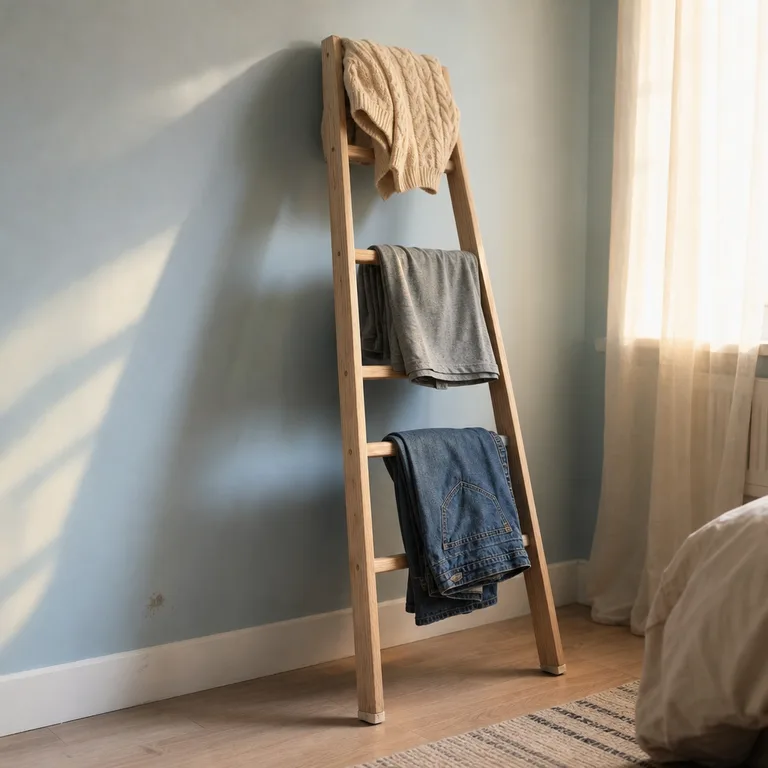
Place it against a solid, low-traffic wall where it cannot be bumped by a door or pulled forward by bedding. Non-slip pads can help protect flooring and reduce movement, but they do not make an unstable ladder safe.
Treat the ladder as a light-duty airing station, not climbing furniture or storage for bags. Spread garments across the rungs so air can reach them, particularly in humid rooms or during wet weather.
Worth knowing: A leaning ladder can tip if overloaded or knocked, so it is a poor choice near busy doorways, young children, or pets.
7.Keep One Hanger at the End of the Closet Rail
Reserve one hanger at the far end of the closet rail for worn-once clothing. Keep a small empty gap between it and clean garments so the category stays visible and does not blend back into the main wardrobe.
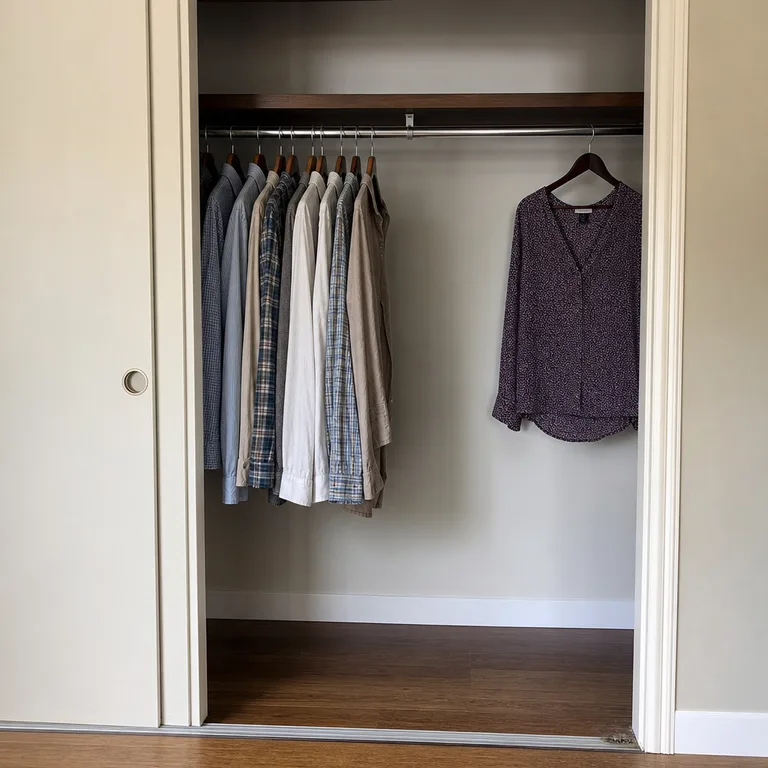
A distinct hanger material or color can make the boundary easy to recognize without labels or extra storage. This approach works especially well for blouses, shirts, and light layers that benefit from hanging rather than folding.
Do not use a closed closet as the only place to air a garment that is damp from rain, sweat, or humidity. Let it dry in an appropriate ventilated spot first, and return it to the hamper when it needs washing.
Worth knowing: Closets with tightly packed rails may not have enough open space for airflow around a separate rewear hanger.
About the author
Dana Ruiz, Senior editor
Dana writes about small-space living, storage and low-cost decorating.
Keep reading
8 Christmas Gift-Wrapping Stations That Pack Away in a Small Home
October 31, 2026

7 Small Bedroom Layouts With Sloped Ceilings
October 31, 2026
8 Christmas Buffet Setups for a Small Kitchen Without an Island
October 29, 2026

8 Privacy Ideas for Kids Sharing a Small Bedroom
October 29, 2026