10 Budget Curtain Ideas That Make Windows Feel More Finished
Bare or awkward living-room windows often need more than a single short panel to feel balanced: the right length, width, layers, and mounting position can add softness and privacy without replacing the window. These budget-minded treatments suit renters and homeowners, with practical notes on measuring, light control, safe hardware, and keeping fabric clear of heaters and cords out of children’s reach.
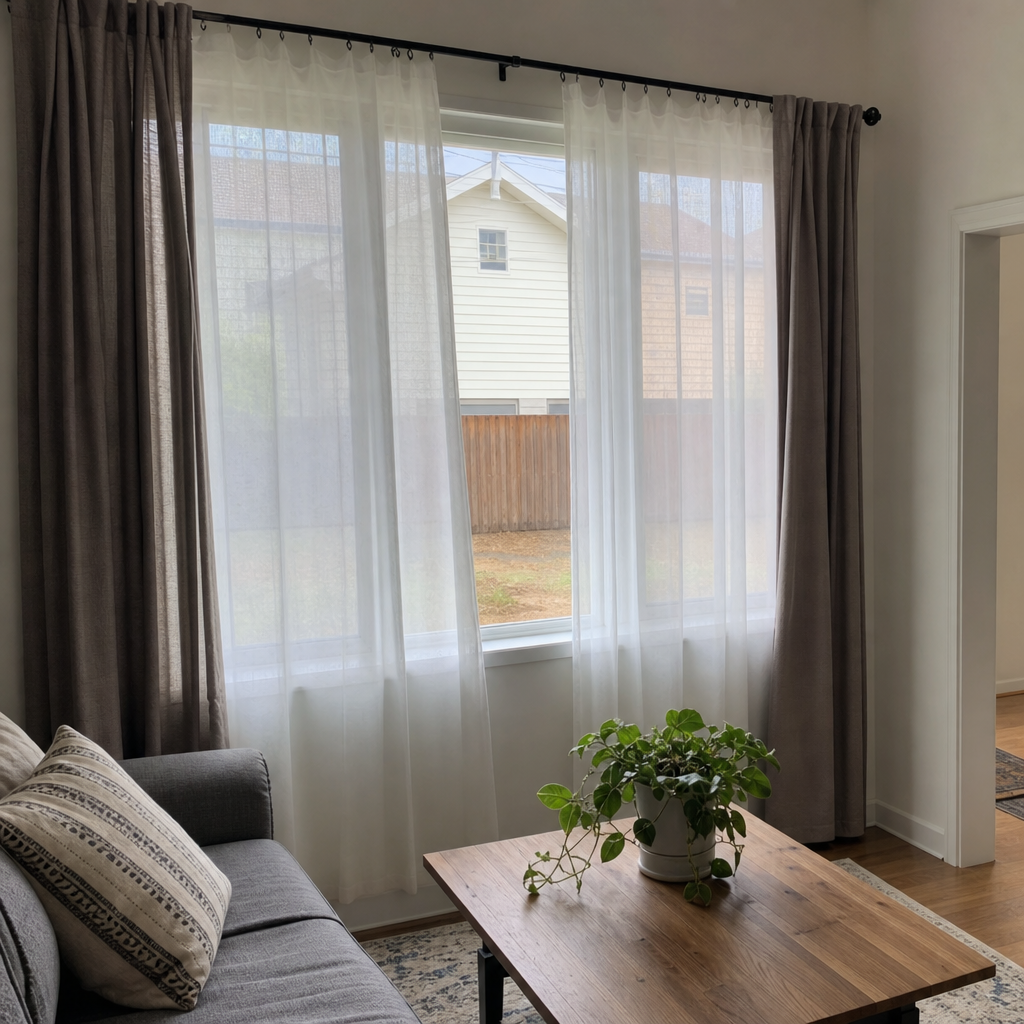
1.Hang Ready-Made Panels Higher and Wider Than the Window
Mount the rod above the top of the window frame and let it extend beyond both sides. This gives the eye a larger frame around the glass, so a small window feels less undersized and the open panels do not block as much daylight.
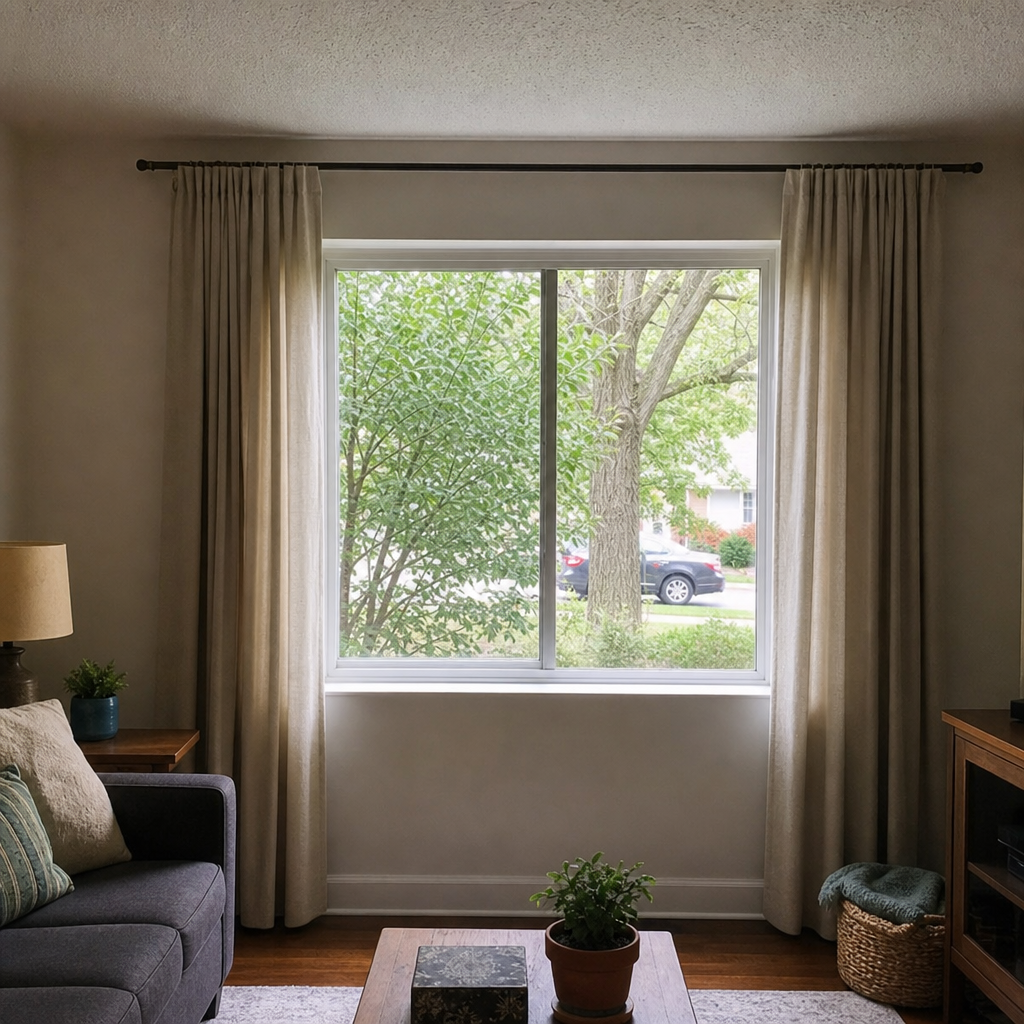
Measure the wall space as well as the window before choosing a rod. Basic ready-made panels often work well when they can stack mostly beside the glass, but use anchors suited to the wall material and check lease rules if drilling is required.
Worth knowing: High, wide mounting needs clear wall space and secure hardware, which may not be practical around trim, low ceilings, or rental restrictions.
Related: 15 Budget Living Room Updates That Work With the Sofa You Already Own
2.Choose Floor-Length Panels for Short or Narrow Windows
Use panels that finish close to the floor, rather than stopping at the sill, to give a short or narrow window a taller outline. Even simple cotton or linen-look fabric reads as more deliberate when the length relates to the room instead of the glass alone.
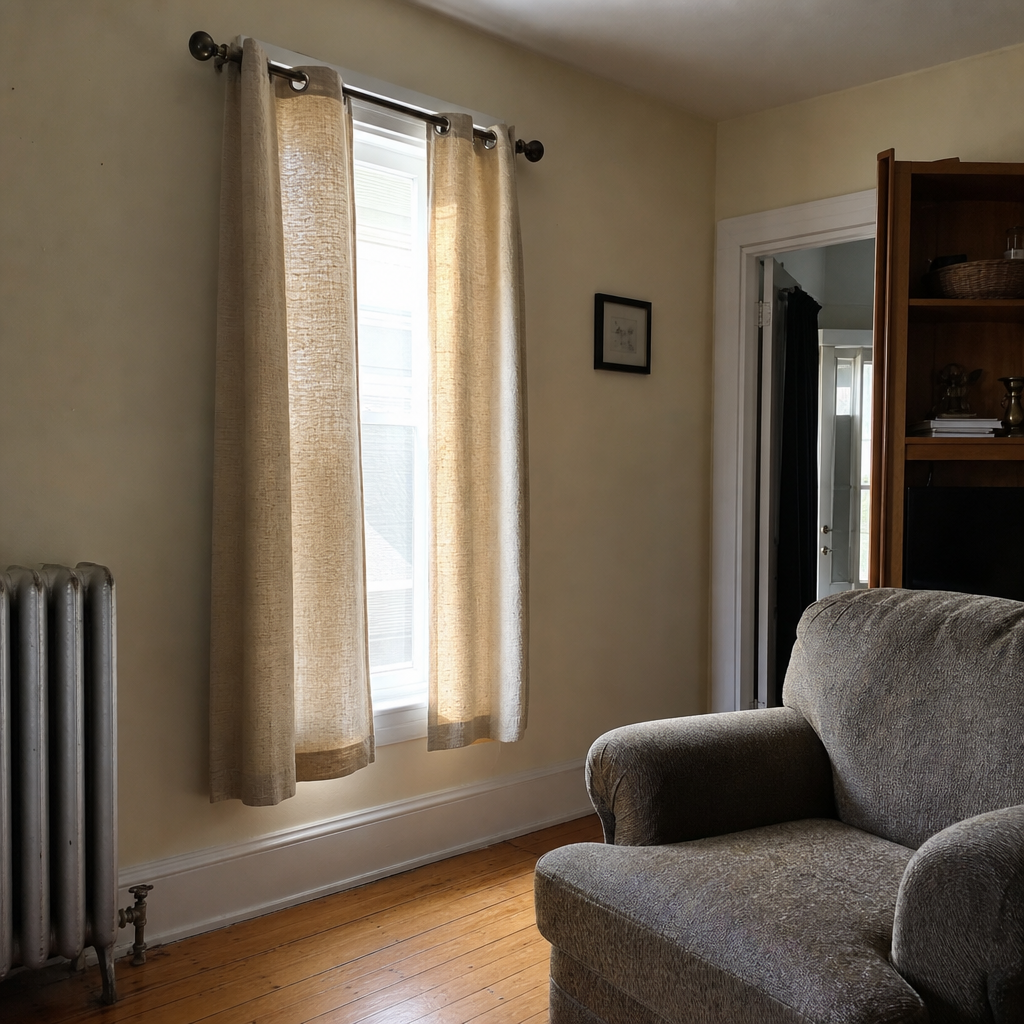
Ready-made panels can be an affordable starting point if they are slightly too long and can be adjusted. Aim for a hem that just clears the floor in busy rooms, where dragging fabric collects dust and can get caught under feet or furniture.
Worth knowing: Floor-length curtains are less useful where a radiator, baseboard heater, or frequently used vent sits directly below the window.
3.Use Curtain Rings to Stretch Short Ready-Made Panels
Clip rings lift a panel below the rod and can add a little needed length to curtains that otherwise end too high. They also create evenly spaced folds, which helps plain ready-made fabric hang with more structure.
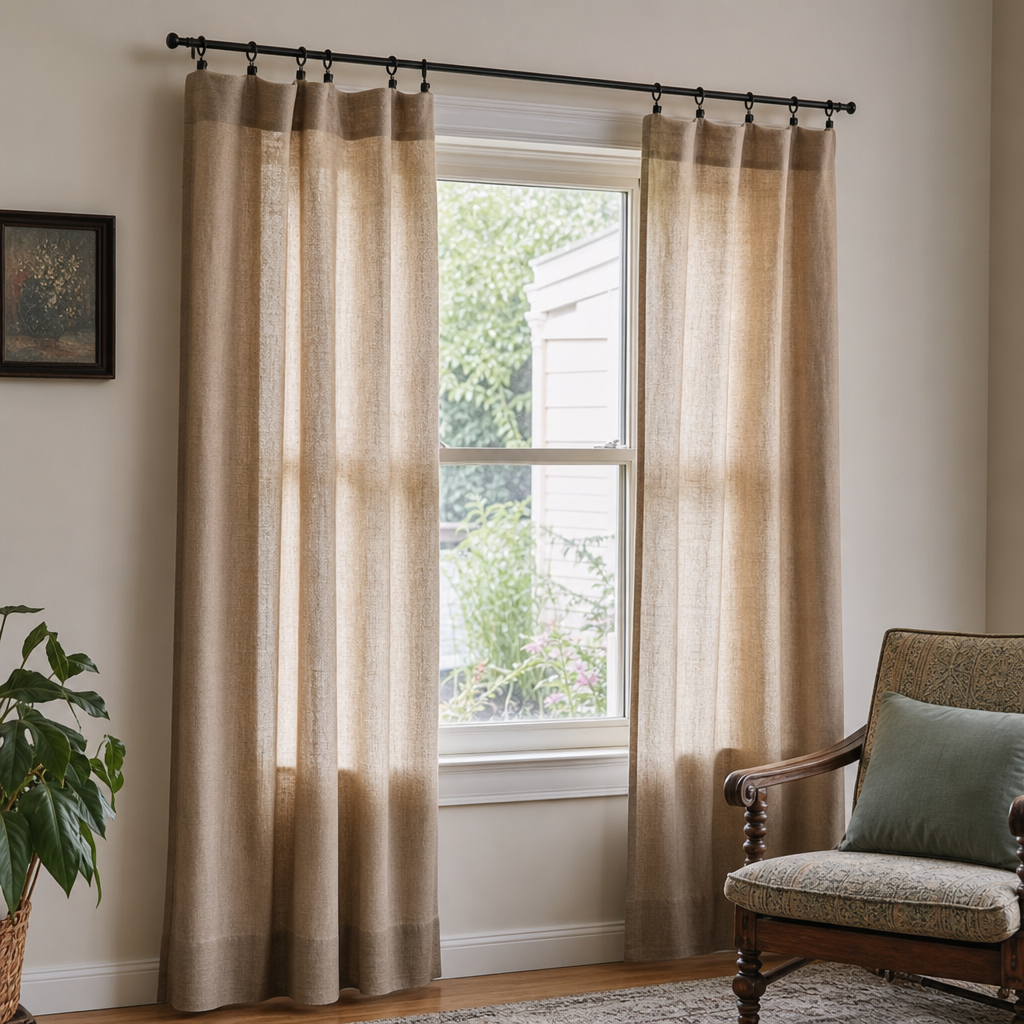
Choose rings sized for the rod and spread the clips evenly along the top edge. The rod and brackets need solid anchoring because opening and closing ring-hung panels creates more pulling movement than a fixed rod pocket.
Worth knowing: Clip rings only add a modest amount of length, so they cannot solve panels that are far too short.
4.Make Thin Panels Look Fuller With Extra Width
Give curtains enough total width to form soft folds when they are pulled closed. Panels stretched flat across the glass tend to look skimpy and can leave gaps that reduce nighttime privacy.
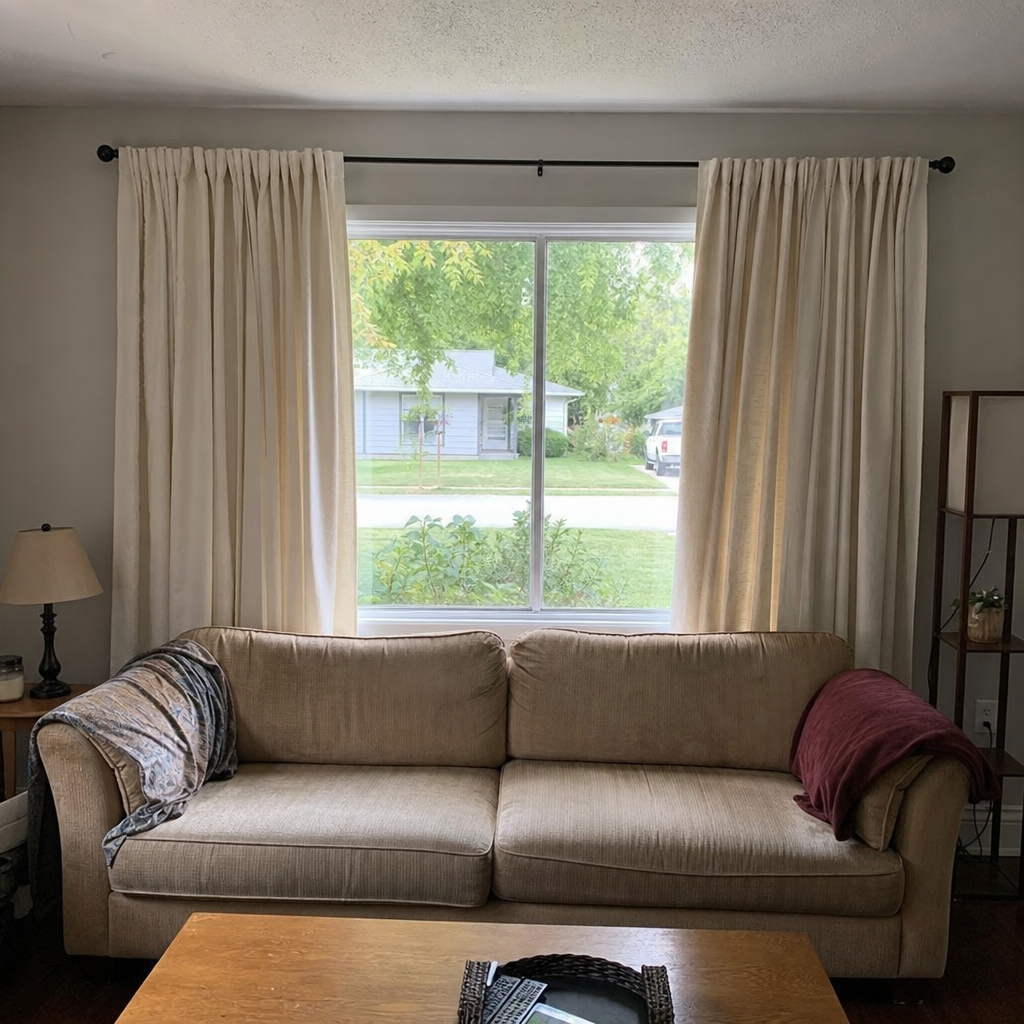
Check the package width, then compare it with the rod width rather than the window alone. Adding another inexpensive panel on each side is often simpler than replacing a thin pair, especially on a wide window or one facing a street.
Worth knowing: More fabric can make a small room feel visually heavy if the panels are dark, bulky, or kept closed most of the day.
5.Layer Sheer Curtains Behind Solid Panels
Hang a sheer layer nearest the glass and solid panels in front. The sheer softens hard daylight and reduces direct views during the day, while the outer panels can close for stronger privacy at night.
Use two rods or a double bracket so each layer can move independently. Light-filtering sheers are particularly useful for windows facing neighboring homes, but they still allow silhouettes and light to show after dark.
Worth knowing: Layered treatments take more rod depth and can crowd a shallow window wall or interfere with an inward-opening window.
Related: 12 Warm Neutral Living Room Ideas on a Budget
6.Use a Tension Rod for Lightweight Café Curtains
Fit a tension rod inside the window frame and hang a lightweight café curtain across the lower portion of the glass. This adds privacy where people pass outside while leaving the upper pane open for daylight and a view of the sky or trees.
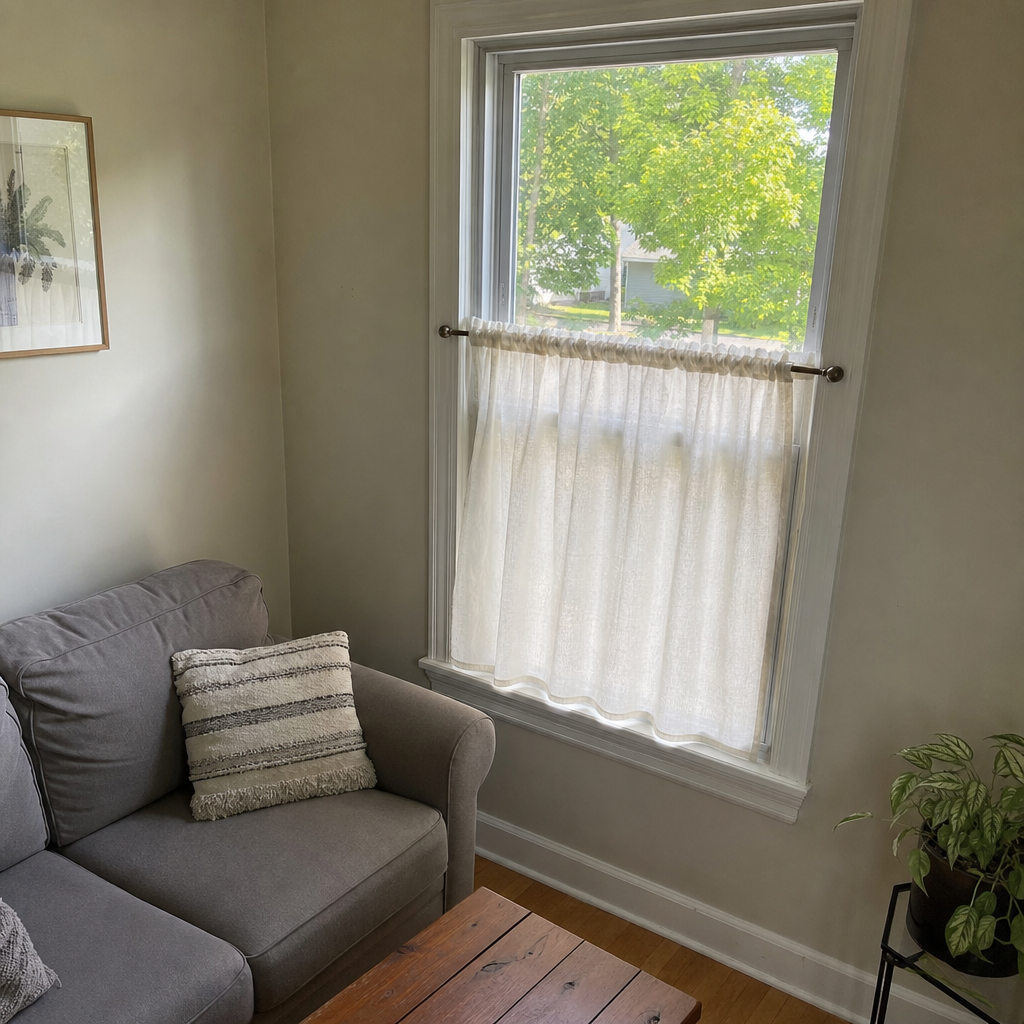
Choose a smooth, sound frame and avoid heavy fabric, lined panels, or anything that will be pulled often. A simple hemmed cotton panel or a thrifted lightweight textile can work if it is washed and checked for a sturdy top edge.
Worth knowing: Tension rods can slip, especially on uneven frames, humid windows, or surfaces that are not smooth and firm.
Related: 12 Thrifted Decor Ideas That Make Mismatched Finds Feel Collected
7.Add a Simple No-Sew Hem to Overlong Curtains
Shorten overlong panels with iron-on hem tape or a fabric adhesive made for hems. A clean near-floor finish makes inexpensive curtains look more fitted to the room and avoids the rumpled look of fabric pooled underfoot.
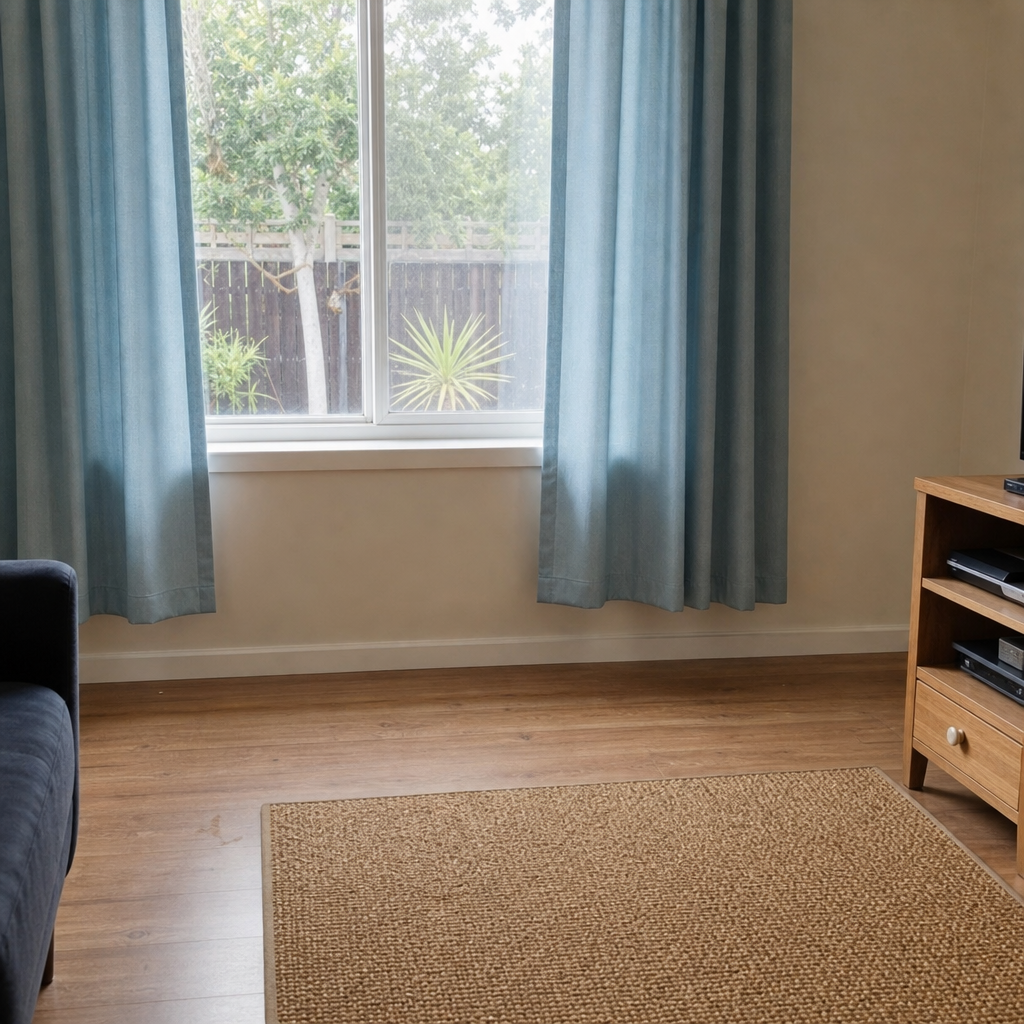
Hang the panel first and mark the length after it has rested on the rod, since some fabrics settle differently once suspended. Check the care label before applying heat or adhesive, particularly with synthetic fabric or panels that will need frequent washing.
Worth knowing: No-sew hems may loosen after laundering, and some fabrics do not respond well to heat or adhesive products.
8.Soften Blinds With Stationary Side Panels
Keep existing blinds for adjustable light and privacy, then add curtain panels that stay open at the sides. The panels bring in color, texture, and vertical softness without requiring the blinds to be removed or covered every day.
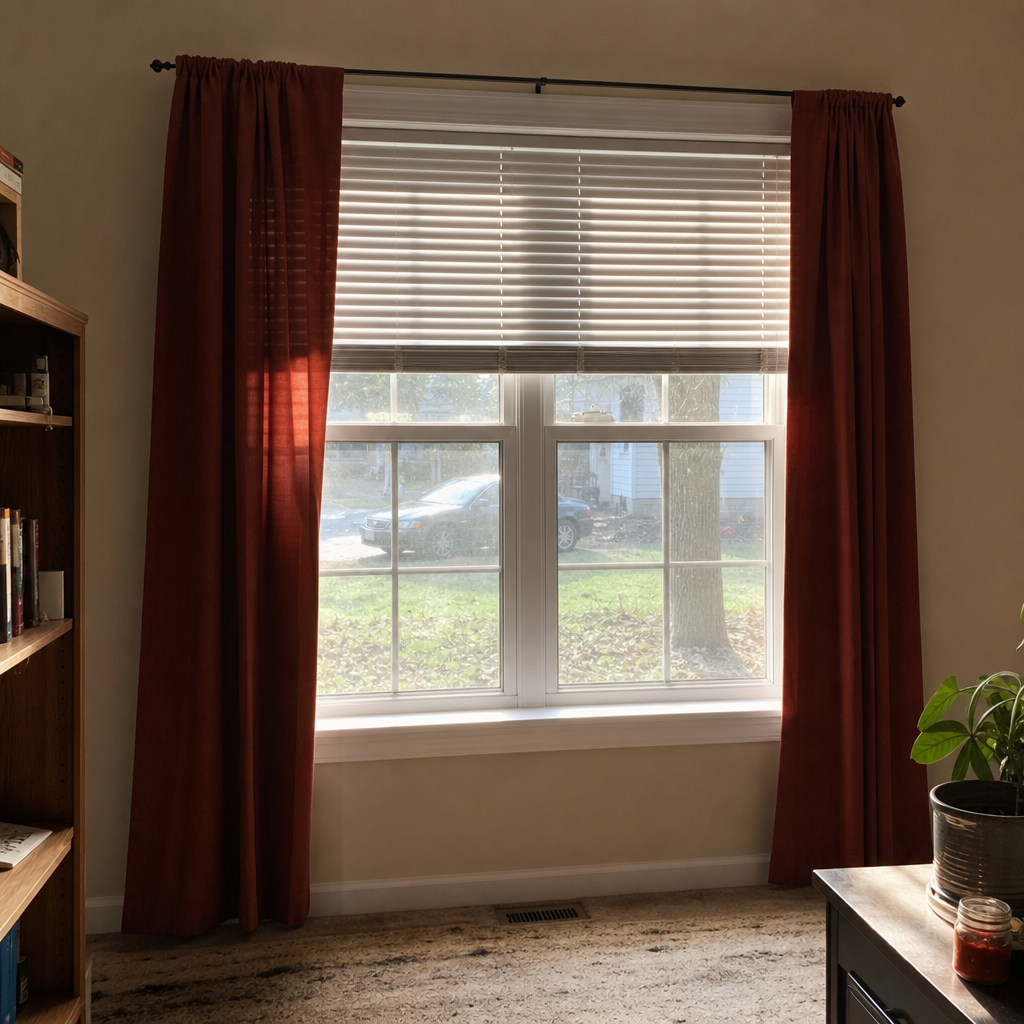
Mount the rod wide enough that the panels sit clear of the blind controls and glass when open. This is a practical update for rentals with serviceable blinds, where replacing installed window coverings may not be allowed.
Worth knowing: Stationary panels are decorative rather than fully functional, so the blinds still need to handle most privacy and light control.
9.Use a Fabric Valance to Visually Connect Awkward Windows
Add matching shallow valances above neighboring windows with different sizes or heights. Repeating one fabric gives the wall a common horizontal line, which can make mismatched openings feel more intentional.
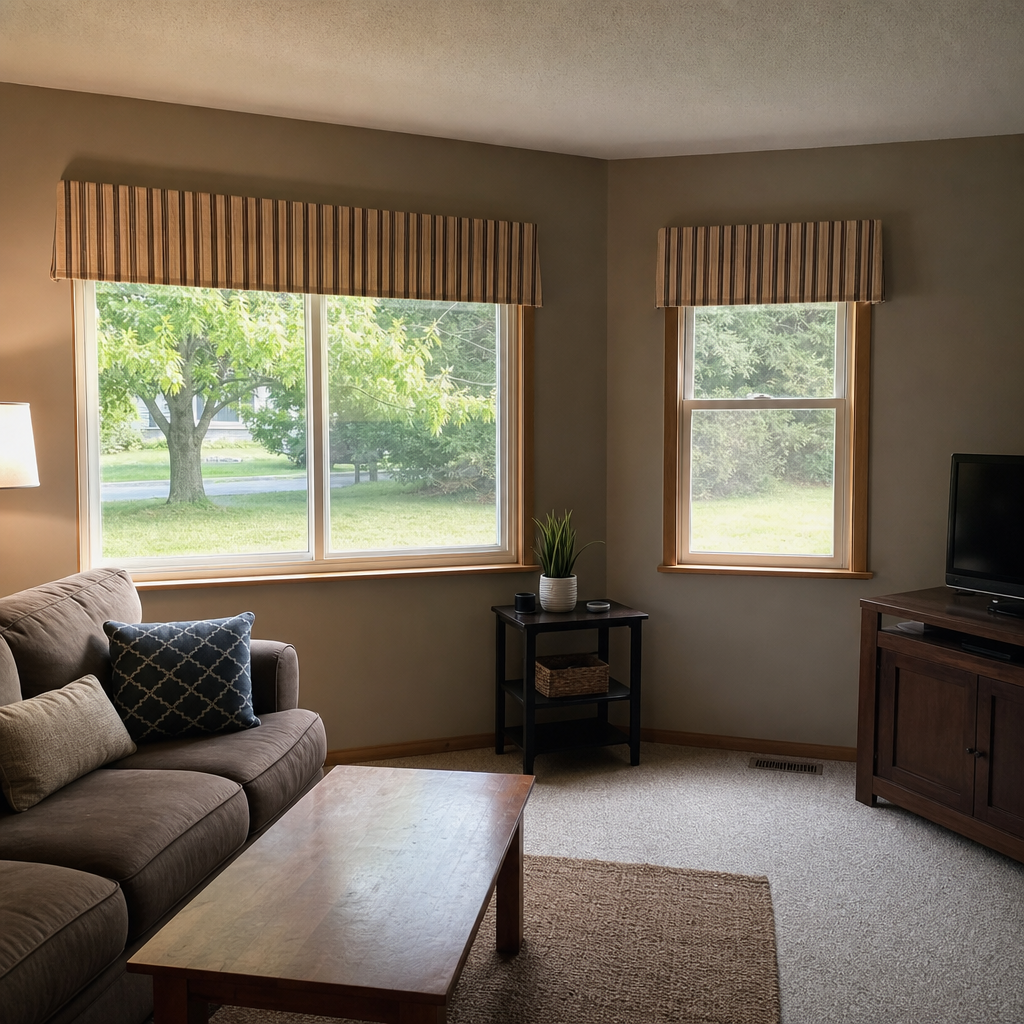
Keep the valances slim and mount them high so they cover little of the glass. An inexpensive fabric can work well when its color relates to cushions, a rug, or other textiles already in the room rather than introducing another unrelated pattern.
Worth knowing: Valances can feel dated or reduce useful daylight when they are too deep, heavily gathered, or hung low over the window.
10.Choose Cordless Shades or Keep Window Cords Secured
Pair simple curtains with cordless shades when a shade is needed behind them for light control and privacy. If corded window coverings are already in place, use suitable safety devices so loops are kept inaccessible to children and do not hang near furniture that can be climbed.
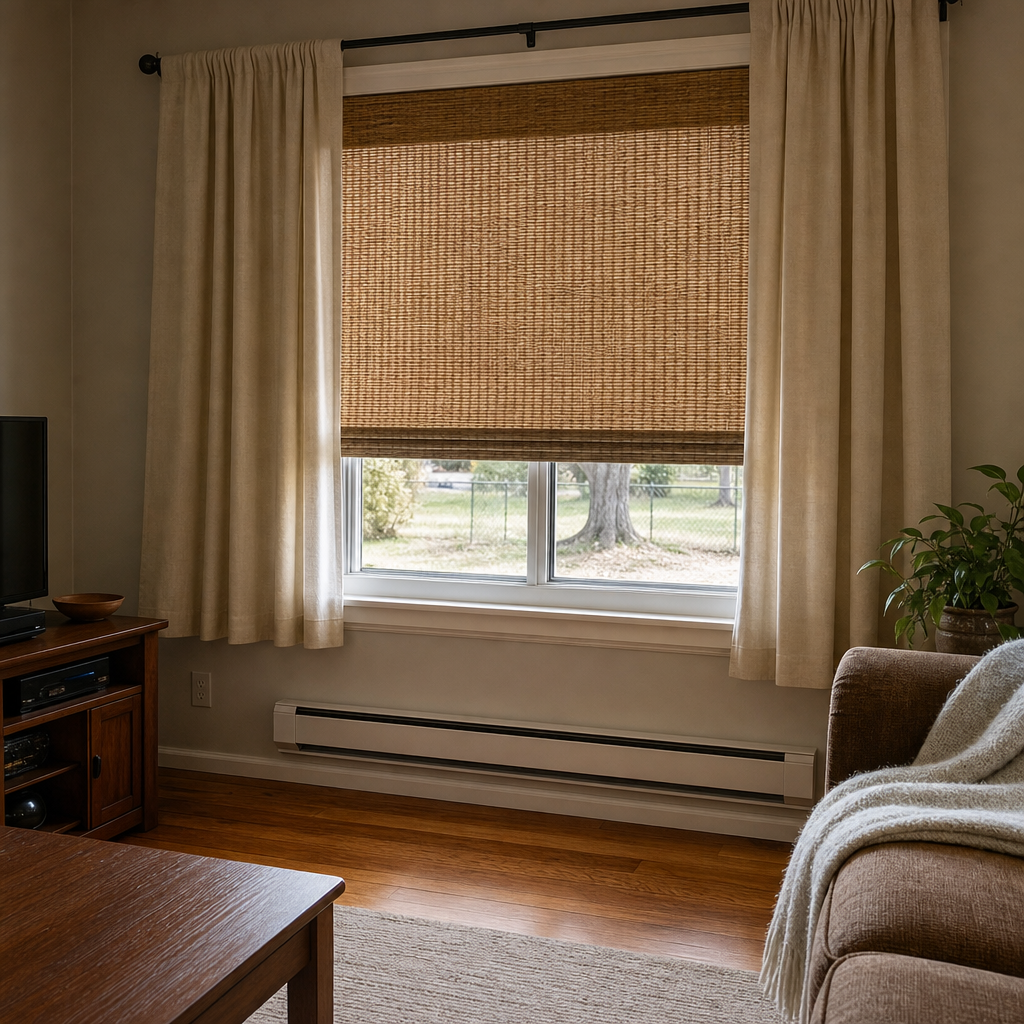
Keep curtain hems and shade materials clear of heaters, radiators, and vents so air can circulate and fabric is not exposed to excess heat. Check that panels, rods, and shade controls can operate without catching on one another before treating the installation as finished.
Worth knowing: Cordless shades and cord-safety fittings may not suit every existing blind style, and safety hardware still needs correct installation and regular checks.
About the author
Dana Ruiz, Senior editor
Dana writes about small-space living, storage and low-cost decorating.
Keep reading
12 Cozy Bedroom Refresh Ideas That Keep Your Existing Furniture
September 14, 2026
10 Living Room Lighting Ideas for Renters on a Budget
September 14, 2026
12 Sage Green and Brown Decorating Ideas That Feel Cozy
September 13, 2026
12 Warm Neutral Living Room Ideas on a Budget
September 13, 2026