12 Spice Storage Ideas for a Small Kitchen Without Custom Cabinets
Mismatched spice containers can still be easy to reach when the storage method matches the available drawer, cabinet, wall, or counter space. These low-cost arrangements keep labels visible, account for different bottle heights, and avoid the heat and direct sun that can dull spice flavor.
As an Amazon Associate I earn from qualifying purchases.
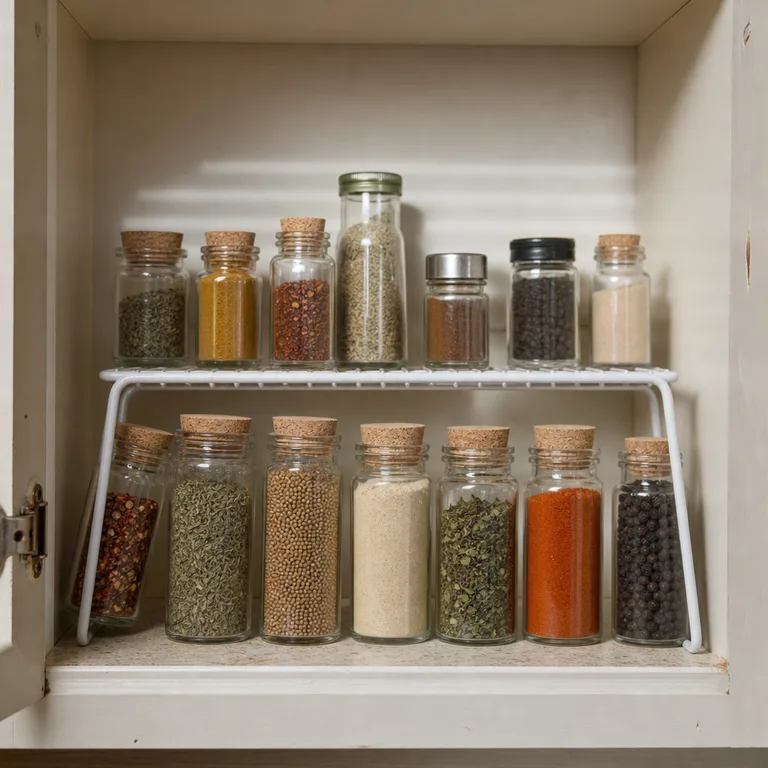
1.Lay Spice Jars Flat in a Shallow Drawer
Lay jars flat in a shallow drawer with the lids or labels facing up. Arrange them in rows so the spices used most often sit closest to the drawer front.
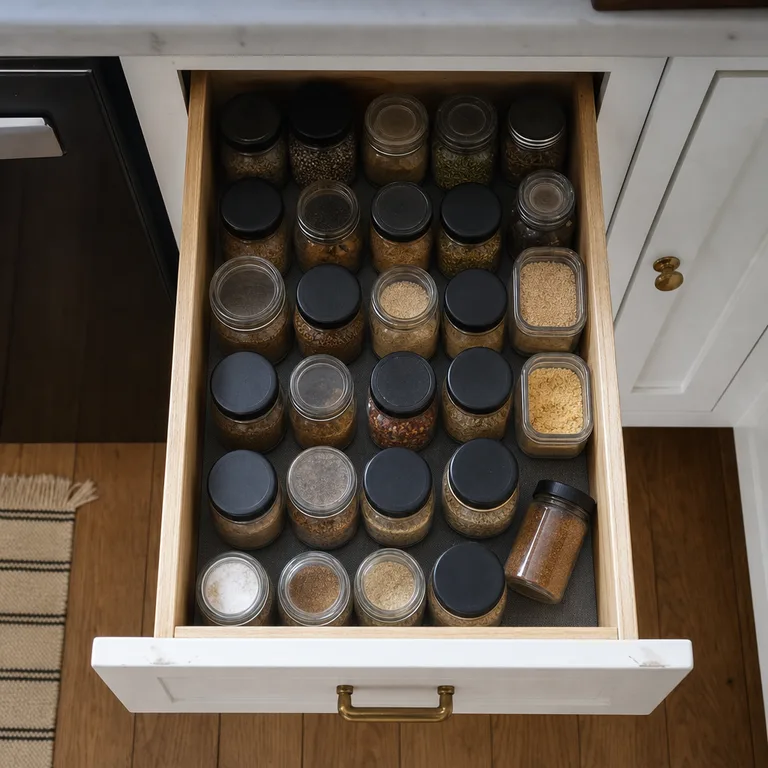
A non-slip liner helps round containers stay put, while simple dividers create separate lanes for different jar sizes. Keep the original container or ingredient information with each spice, especially if the lid is not easy to read from above.
This arrangement clears visual clutter from the counter and makes every jar visible at once. It works best in a drawer that is shallow enough to stop jars from stacking over one another.
Worth knowing: Tall bottles and bulky grinder-style containers may prevent the drawer from closing.
Related: 12 Kitchen Drawer Organization Ideas Using Simple Dividers
2.Set a Tiered Shelf Inside a Deep Cabinet
Place a freestanding stepped shelf inside a cabinet to lift the back row above the front. This makes mixed bottle heights easier to scan without pulling out every container.
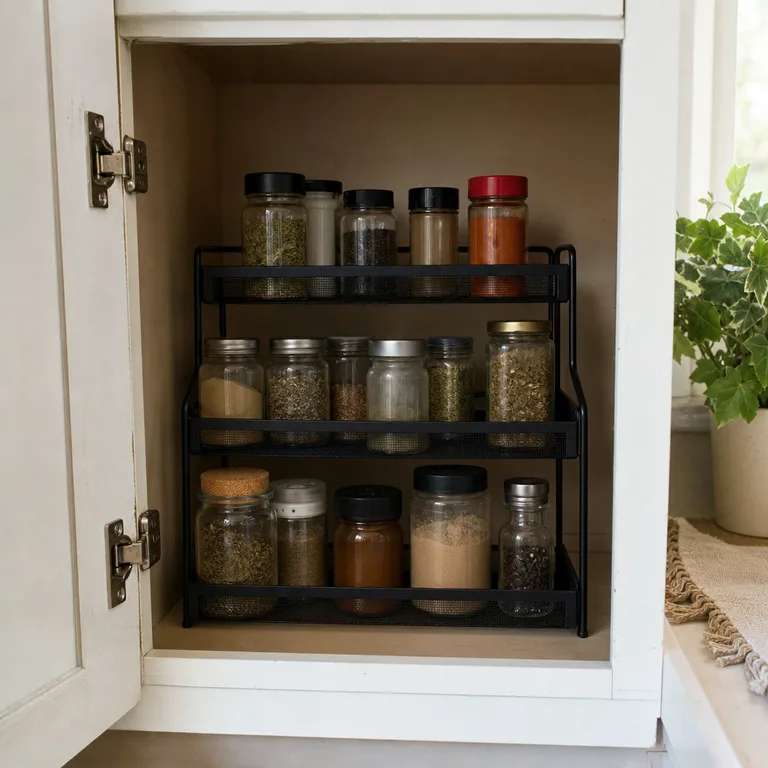
Use the lower level for taller bottles and save the raised tiers for short jars. A basic metal or plastic riser is often enough; there is no need to replace containers just to make the shelf look uniform.
Reserve the front row for frequent cooking spices and keep occasional blends farther back. The raised levels make better use of cabinet depth that would otherwise hide small jars.
Worth knowing: The cabinet needs enough vertical clearance for both the riser and the tallest spice containers.
3.Use a Small Turntable for Frequently Used Spices
Put a compact turntable on a level cabinet shelf and group everyday spices around its edge. A quick spin brings jars from a deep corner to the cabinet opening.
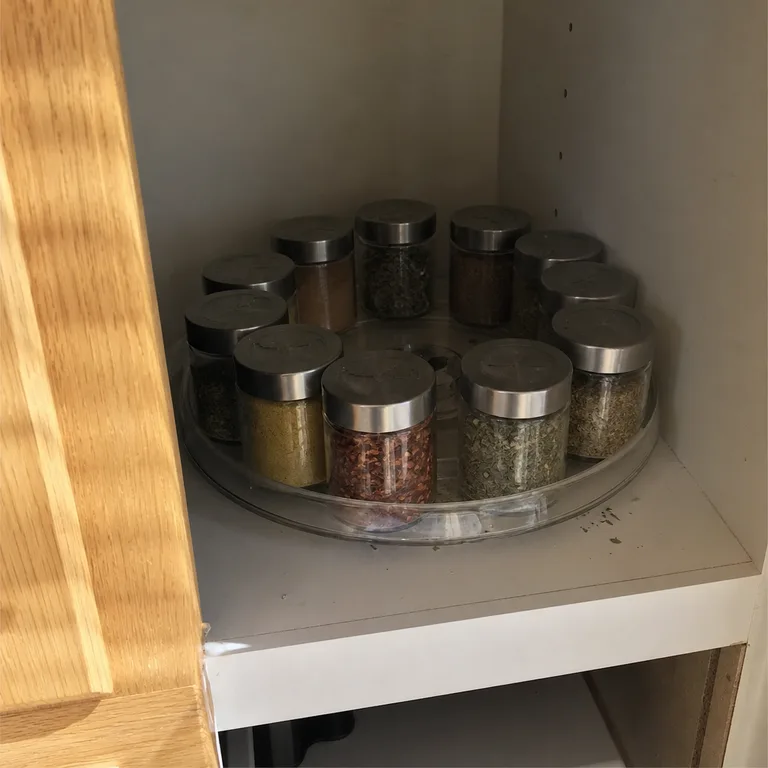
Keep this setup limited to the seasonings used during regular cooking, rather than trying to fit the entire collection on it. Leave a little space between bottles so they do not catch on the cabinet wall as the tray turns.
A turntable is especially useful in a deep upper cabinet where loose jars tend to disappear behind each other. Wipe up loose spice before it builds around the rotating base.
Worth knowing: A turntable can waste space if the cabinet is narrow or if bottles are too tall to rotate freely.
4.Carry Spices in a Pullout Handled Caddy
Gather spices in an open handled caddy that slides out from a lower cabinet or pantry shelf. The whole group can be pulled forward instead of reaching around loose jars.
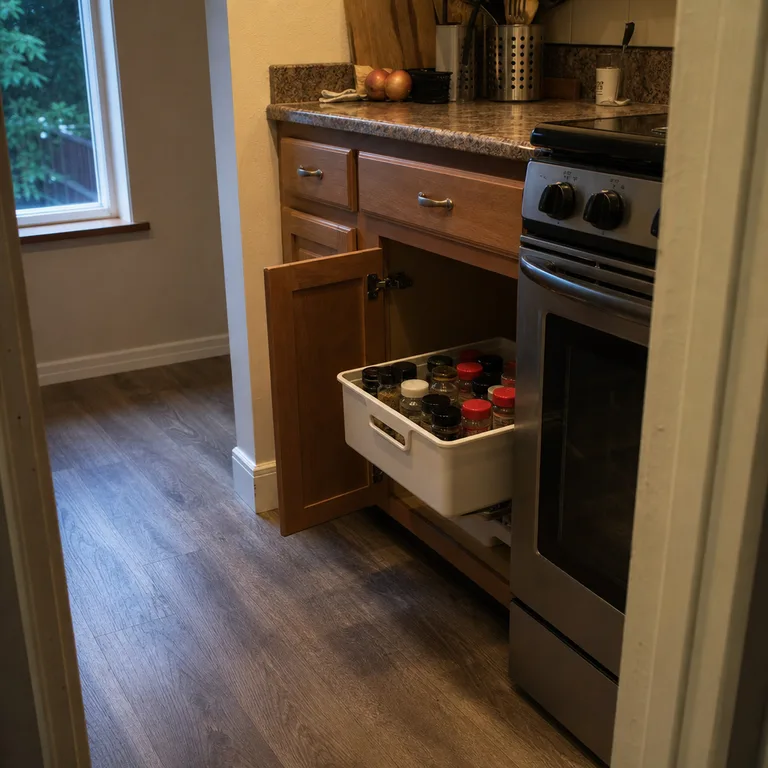
Sort the caddy by cooking use, such as everyday savory spices, grill seasonings, or blends for a particular cuisine. Choose an open bin with sides low enough that labels and lid colors remain easy to see.
This approach also makes shelf cleaning simpler because the spices move as one group. It is a practical reuse option when an existing bin or cleaning caddy is the right size.
Worth knowing: A full caddy can become heavy and awkward to carry, particularly from a high shelf.
5.Double One Cabinet Shelf With a Shelf Riser
Add a simple shelf riser to create a second level inside a cabinet. Short jars can sit on top while taller bottles remain below or beside it.
Measure the cabinet opening first, including the space above the shelf. A riser only helps when the upper row remains visible and jars can be removed without knocking over the lower row.
Use the raised level for small spice jars that would otherwise be hidden behind taller containers. Small grip pads beneath lightweight risers can help prevent shifting on smooth shelves.
Worth knowing: Wire risers may feel unstable with very heavy glass jars or unevenly sized containers.
6.Mount a Rated Rack on the Inside of a Cabinet Door
An inside-door rack puts short spice bottles in plain view while leaving cabinet shelves open for other kitchen items. It works well for a small selection of jars used often enough to deserve a dedicated spot.
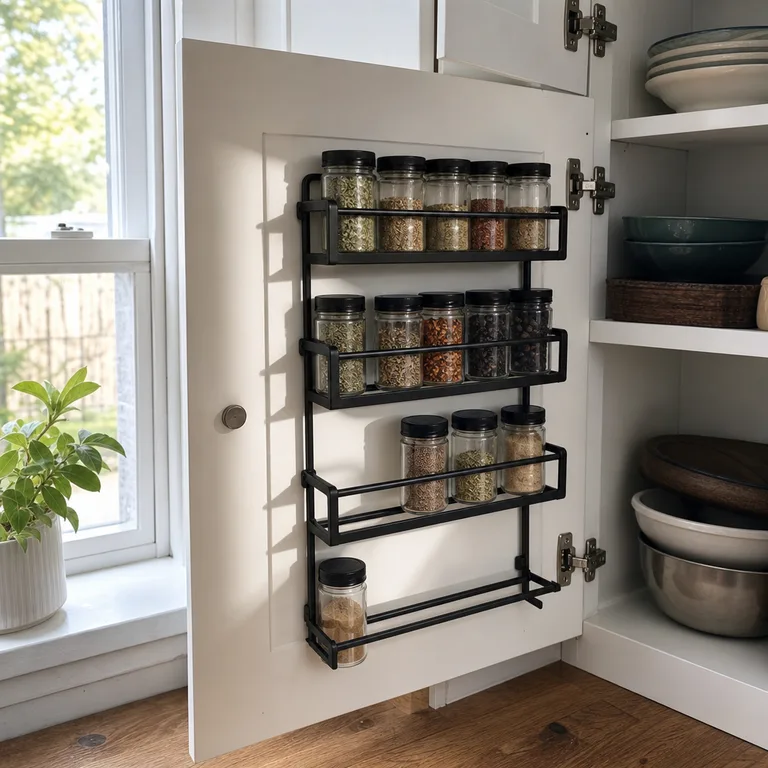
Check the rack instructions and the cabinet door material before mounting it. The rack must clear interior shelves, hinges, and bottles stored inside the cabinet when the door closes.
Use screws or hardware suited to the door and follow the stated weight guidance. Keep taller or heavier jars on a shelf instead of overloading a door rack.
Worth knowing: This option may not suit thin cabinet doors, rental kitchens, or doors with little closing clearance.
7.Add a Narrow Wall Rack Beside the Cooking Area
Use a slim wall rack on an open stretch of wall near the prep area. Keeping jars in a vertical row can free a cabinet shelf without taking much horizontal room.
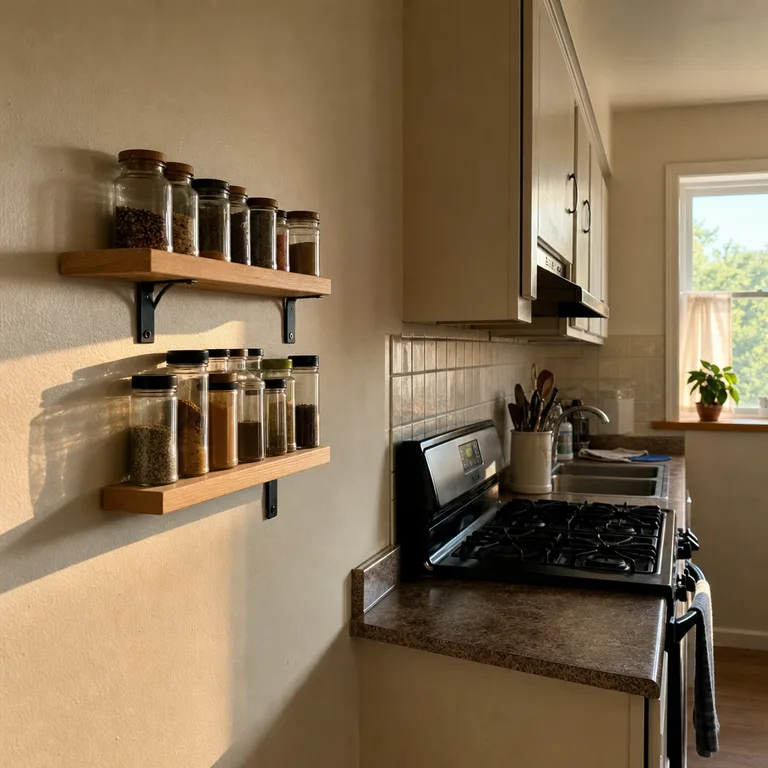
Mount it away from direct burner heat, steam, and grease splatter. A spot beside the cooking area is generally more practical than a spot directly above the range.
Choose a rack depth that supports the widest container in the group, then keep the collection small enough that each jar remains accessible. Secure mounting matters, especially on drywall or tile.
Worth knowing: Wall mounting may require landlord approval and suitable anchors for the wall surface.
8.Keep Daily Spices Together on a Counter Tray
Place the few spices used every day on a small tray near the prep space. The tray gives mismatched jars one defined boundary and makes the counter easier to wipe around.
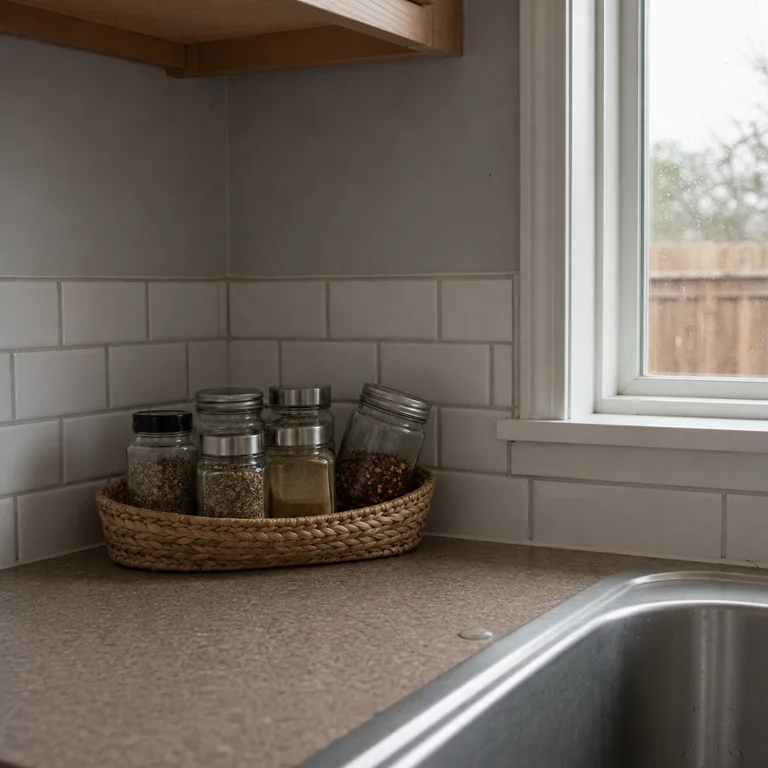
Keep only a short working set there, such as the seasonings reached for during routine meals. Store duplicates, specialty blends, and baking spices elsewhere so the tray does not turn into a crowded display.
Set the tray away from a sunny window, sink splashes, and burner heat. A washable tray is useful in a busy cooking zone where crumbs and oil can collect.
Worth knowing: This uses visible counter space, which may be too limited in a very small kitchen.
Related: 12 Small Kitchen Ideas That Free Up Prep Space Without Remodeling
9.Sort Spice Packets in a Divided Lidded Box
Stand loose spice packets in the compartments of a shallow divided box. Separate packets by type, such as seasoning mixes, dried herbs, whole spices, or one-time recipe packets.
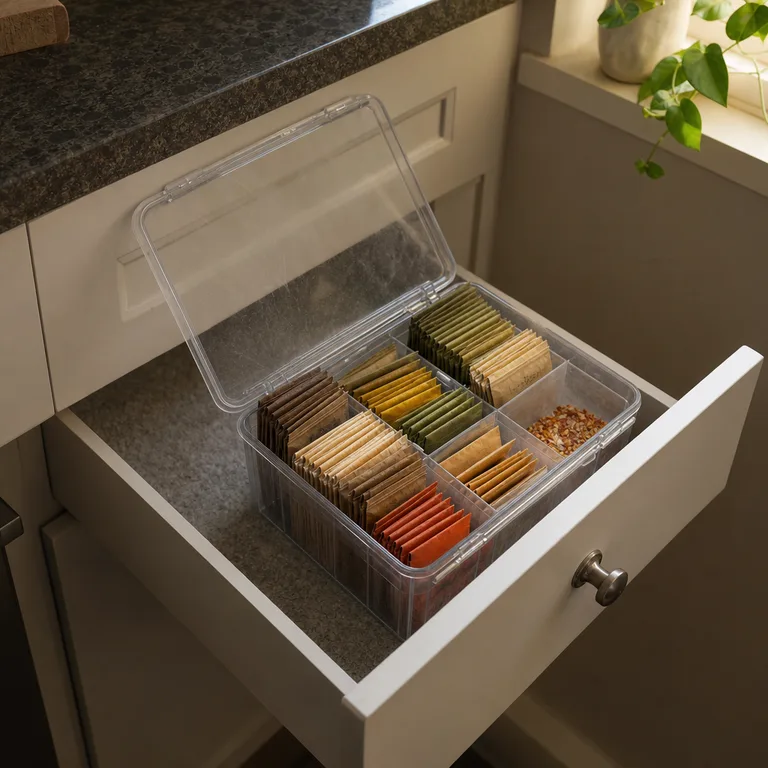
A lid keeps packets contained in a drawer or cabinet and protects them from crumbs and dust. Choose a box shallow enough that packet tops remain visible when it is opened.
Keep packets in their original packaging when possible so ingredient and use information stays with them. Reuse a small divided organizer if its compartments fit the packets without folding or crushing them.
Worth knowing: Very full packet collections may need more than one box and can still be hard to sort at a glance.
10.Separate Baking and Savory Spices in Two Small Trays
Use one small tray for baking spices and another for savory seasonings. This simple split makes it easier to find cinnamon or baking spice without searching through garlic powder and herb blends.
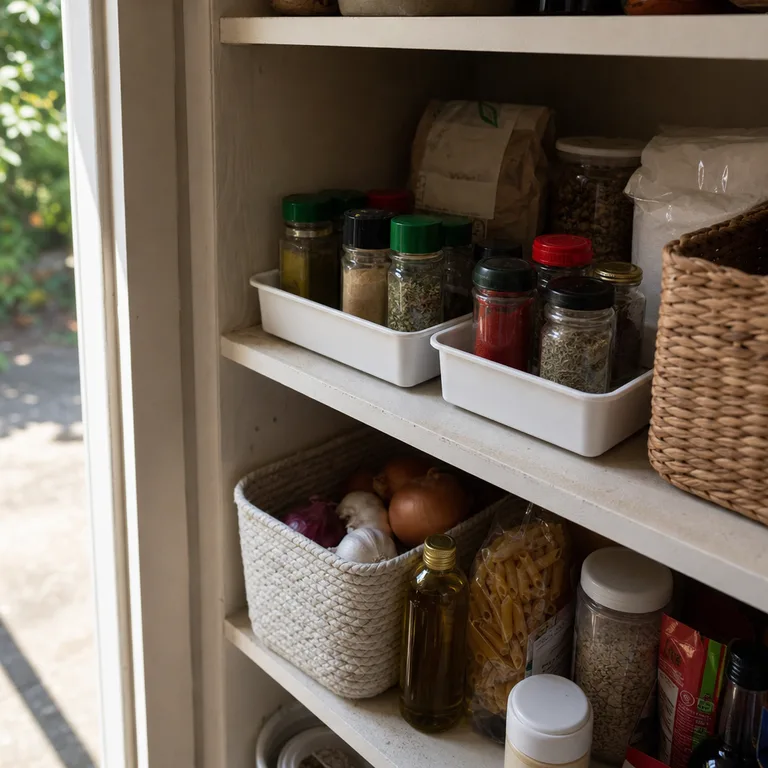
Place the baking tray near flour, sugar, or other baking supplies, and keep the savory tray closer to the cooking area. The trays can sit in a cabinet, pantry, or on an open shelf depending on available space.
The arrangement works with the containers already on hand because the category, not the jar style, creates order. Pull out a tray when cooking, then return it to the shelf as a single unit.
Worth knowing: Some spices fit more than one category, so the system depends on choosing a consistent home for each jar.
Related: 15 Small Pantry Organization Ideas Without Matching Containers
11.Group Bottles by Height in a Shallow Pantry Basket
Place spice bottles in a shallow open basket with short jars at the front and tall bottles at the back. This keeps smaller containers from disappearing behind larger grinders, shakers, and bottles.
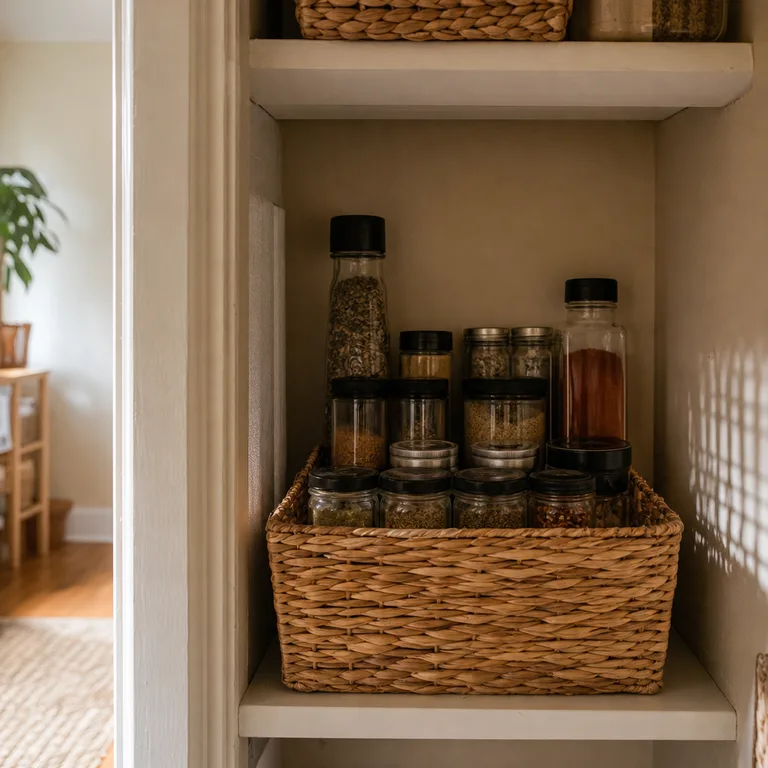
An open basket can be pulled forward from a pantry shelf, making it easier to see what is behind the first row. Keep one category in each basket rather than mixing spices with unrelated pantry goods.
A low-sided bin is better than a deep basket because labels remain visible and jars are easier to lift out. Wipe the shelf and basket occasionally, since fine spice dust can gather at the bottom.
Worth knowing: Deep pantry shelves can still hide the back row if the basket is too long or too full.
12.Choose a Measured Freestanding Spice Carousel
A freestanding spice carousel can hold a compact group of jars on a shelf or counter. Turn the container openings or labels toward the user so the right spice is easier to identify while cooking.
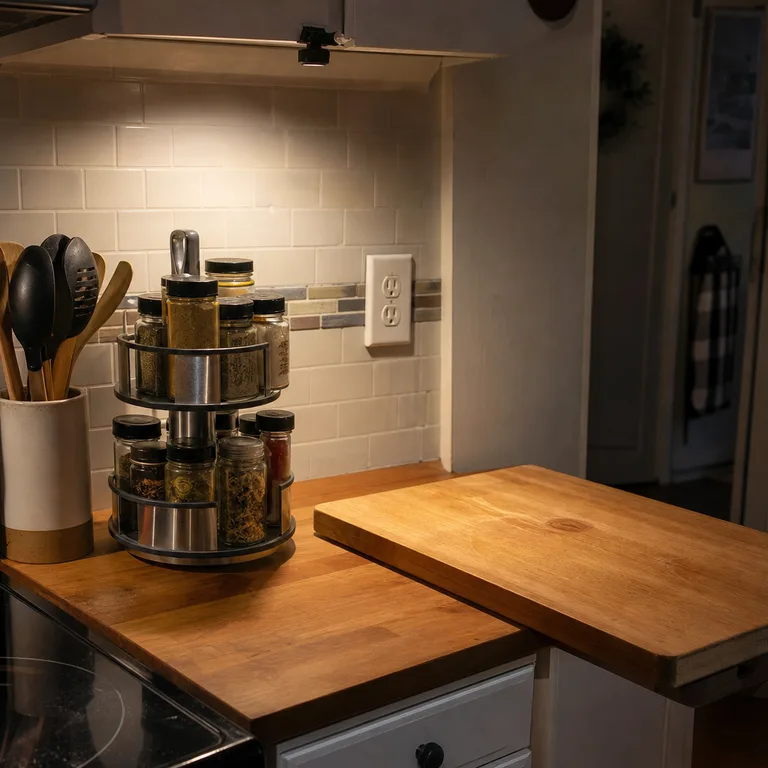
Measure the available footprint and overhead clearance before choosing a carousel. It should not crowd prep space, block a cabinet door, or sit where direct sun and cooking heat will reach the spices.
This option is most useful for a stable group of similarly sized everyday containers, though mixed jars can work if each tier has enough room. Keep less-used and oversized containers in a separate cabinet group.
Worth knowing: Carousels can look crowded with mismatched container shapes and may not hold tall bottles securely.
About the author
Dana Ruiz, Senior editor
Dana writes about small-space living, storage and low-cost decorating.
Keep reading
10 Bathroom Counter Organization Ideas for Two People Sharing One Sink
October 11, 2026
10 Ways to Fit a Craft Corner Into a Small Living Room
October 13, 2026
8 Overnight Guest Setups for a Small Living Room During the Holidays
October 12, 2026
9 Temporary Holiday Baking Setups for a Small Kitchen
October 12, 2026