8 Overnight Guest Setups for a Small Living Room During the Holidays
A small living room can host an overnight guest when the sleep setup fits the room’s circulation, ventilation, and exit routes. These eight plans use existing or borrowable pieces and show how the room can return to daytime use each morning.
As an Amazon Associate I earn from qualifying purchases.
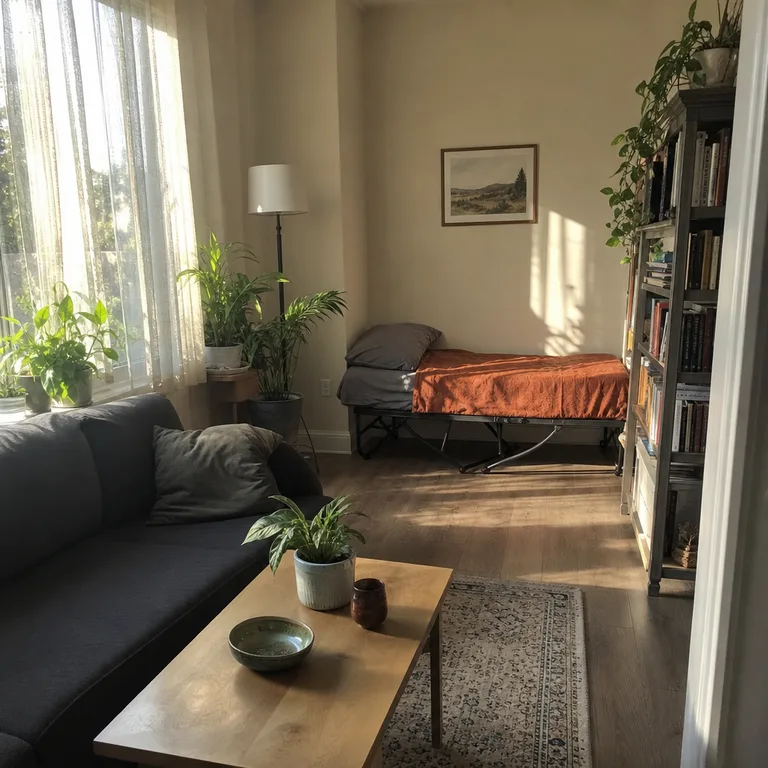
1.Open an Existing Sofa Bed Along the Long Wall
Open a sofa bed parallel to the room’s longest wall rather than across its narrowest point. This often leaves a more useful lane between the bed and the opposite furniture, so a guest can reach the bathroom without climbing over the sleep surface.
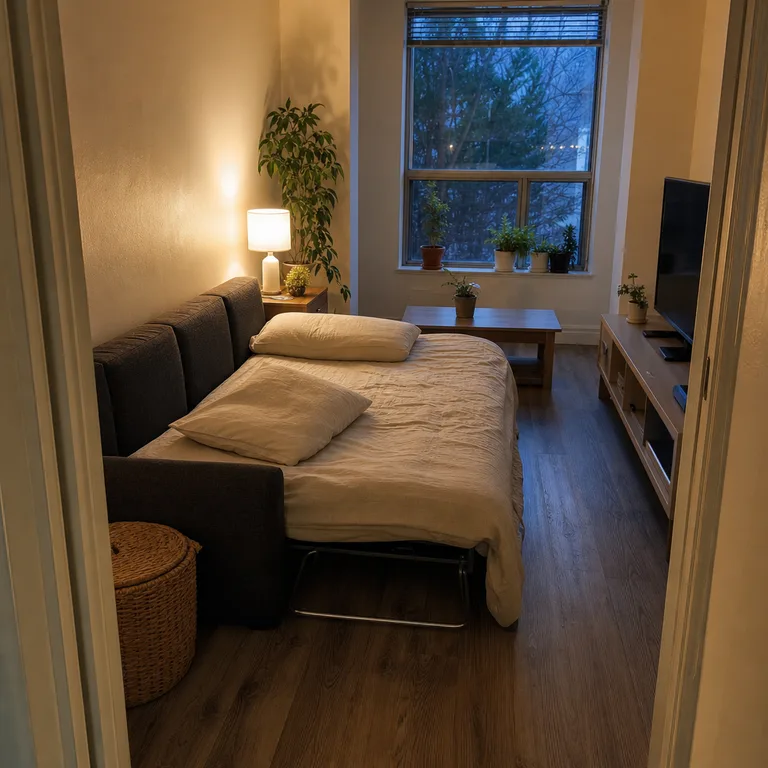
Keep the coffee table at the window end or against a wall for the night, and use a lidded basket for sheets, pillows, and throws in the morning. Check the sofa bed’s full open depth and make sure heating vents, windows, and the main exit remain clear.
Worth knowing: A sofa bed can still take up most of a narrow room, especially when its mattress folds out farther than expected.
2.Place a Borrowed Folding Mattress in a Window Corner
A borrowed tri-fold mattress can turn a window corner into a temporary sleeping zone without adding a large frame. Set it where the guest has some separation from the entry, but avoid blocking a radiator, baseboard heater, or window needed for ventilation.
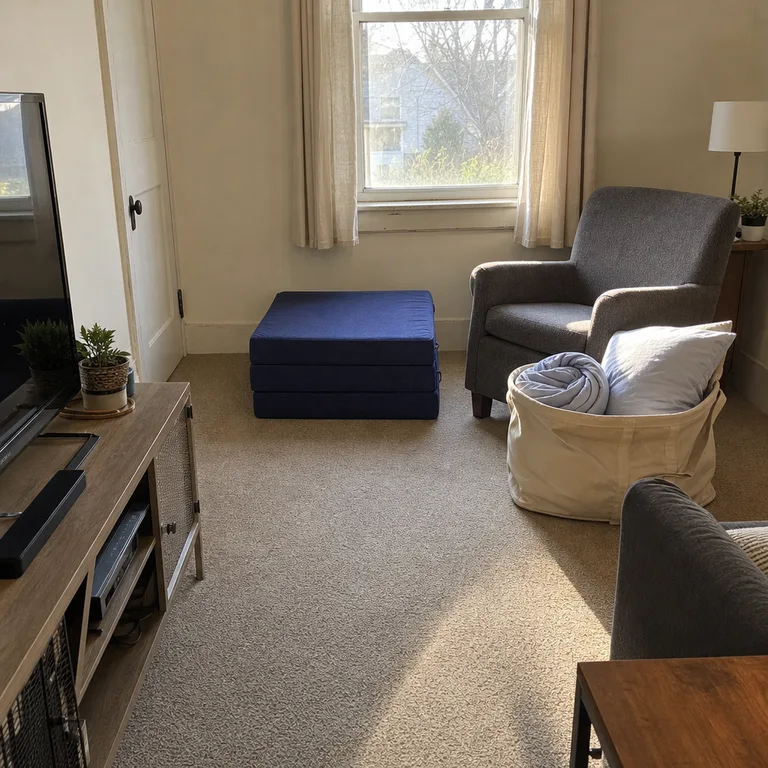
In the morning, fold the mattress into its compact block and place it behind an armchair, in a closet, or along an unobtrusive wall. Roll the bedding into a canvas bag so the reset looks intentional instead of leaving loose blankets around the room.
Worth knowing: Floor mattresses may be difficult for guests who need a higher surface to get in and out of bed.
3.Set a Guest Pad Beside a Moved Coffee Table
Shift a lightweight coffee table to a wall and place a slim sleeping pad beside the sofa. This uses the strip of open floor that often sits between seating and a wall while keeping the room’s main furniture arrangement mostly intact.
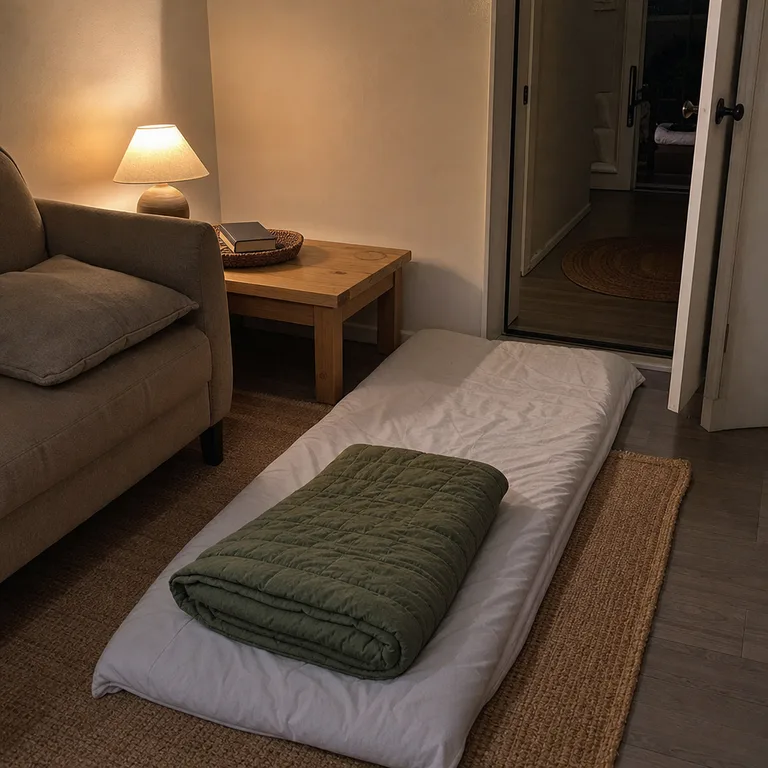
Use a fitted sheet and a washable quilt to make the pad feel more settled than a loose blanket on the floor. Leave a direct route from the doorway through the room, and make sure the moved table is stable rather than balanced in a tight passage.
Worth knowing: This layout only works when the pad does not narrow the doorway or create a tripping point on the route through the room.
4.Clear the Center for a Single Air Bed
A single air bed can work in the center of the room when the coffee table and movable accent pieces can shift aside for the night. Center placement can give a guest space on both sides, but it needs a clear lane from the entry to the bathroom or kitchen.
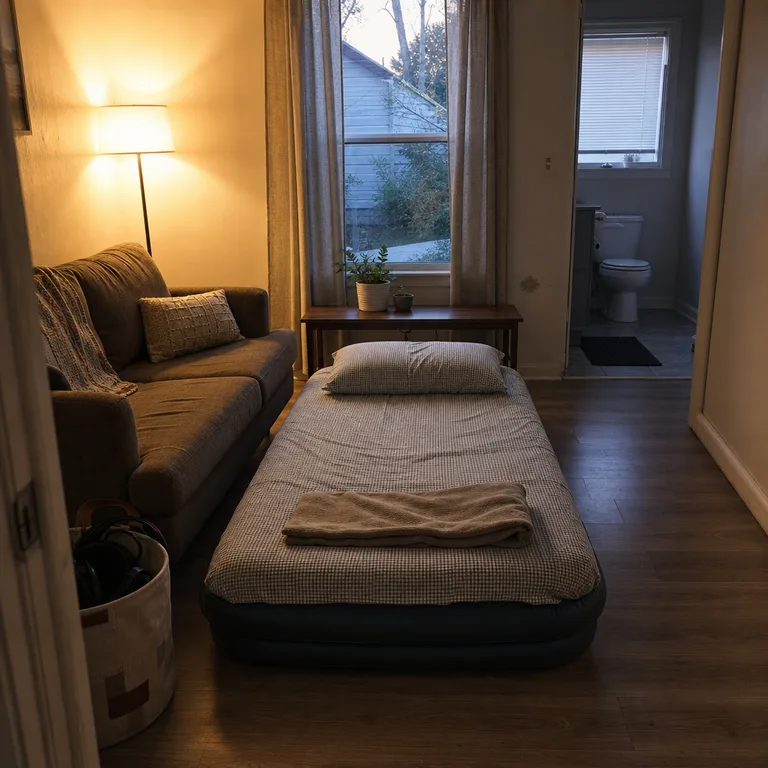
Keep the pump, cord, and extra bedding in a fabric bin once setup is complete. Follow the equipment instructions, keep cords away from the walking path, and avoid placing the bed directly over a floor vent.
Worth knowing: An air bed requires inflation, deflation, and daytime storage, which can make the morning reset less convenient during a busy holiday visit.
5.Tuck a Compact Folding Bed at the Far End of the Room
Set a compact folding bed at the quieter end of a long living room, such as beside a bookcase or beyond the main seating area. This keeps the sofa available for early risers and makes the guest zone feel less like it is in the middle of daily activity.
Measure the bed fully open, including room to walk around its foot and turn it into place. After breakfast, fold it upright and store the bedding in a nearby caddy or basket so the room returns to its usual layout with fewer loose pieces.
Worth knowing: Folding beds vary widely in open length and turning clearance, so a room that fits the folded unit may not fit it overnight.
6.Use a Two-Night Bedding Rotation With One Storage Spot
For a short visit, leave the chosen sleep surface in place and focus the morning reset on bedding rather than rebuilding the whole room. Keep one clean set ready in an under-sofa bag, ottoman, or other dedicated storage spot, with used linens separated from fresh ones.
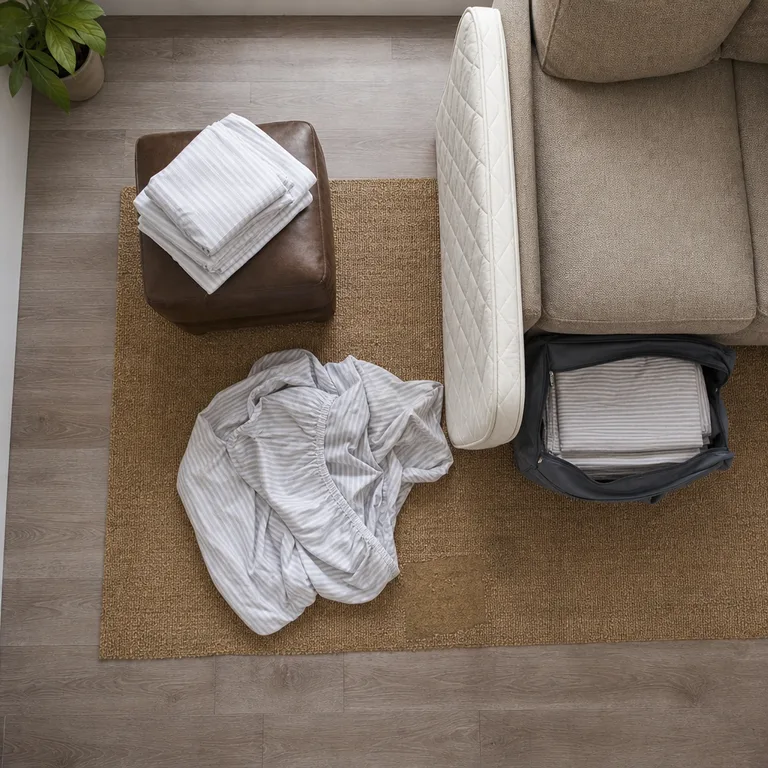
This approach reduces the loose pile of pillows and blankets that can make a small room feel crowded after the first night. A mattress protector or washable top layer can also simplify the changeover when the guest is using a floor mattress, air bed, or sofa.
Worth knowing: Keeping the sleep surface out during the day may limit how freely the living room can be used between overnight stays.
7.Prepare a Wide Sofa for One Guest
A wide sofa may serve as a one-person sleep surface when its seat is reasonably even and long enough for the guest. Remove the back cushions, use a washable padded cover or blanket as a layer, and put a tray table nearby for water, glasses, or a phone.
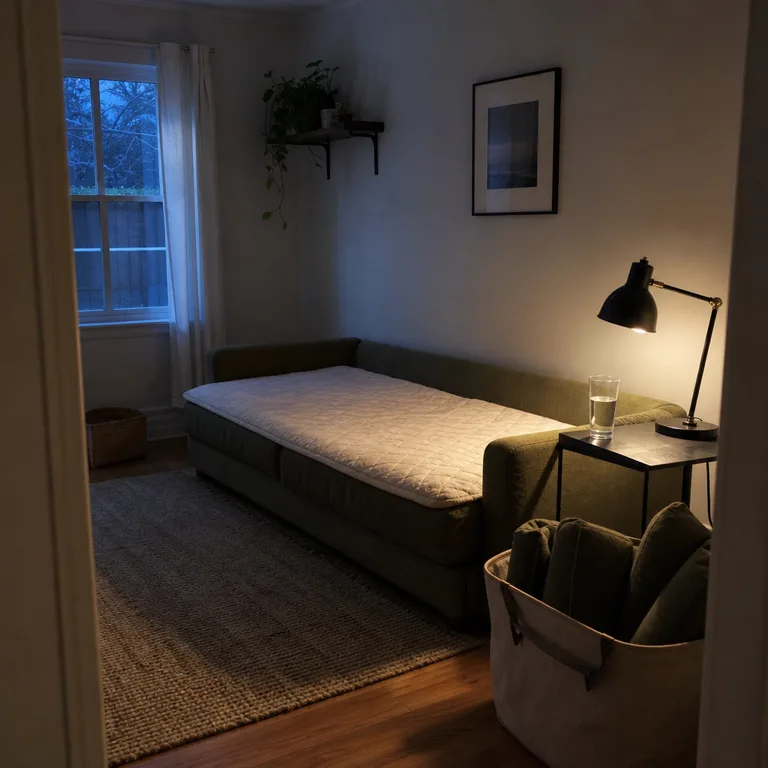
Stack the removed cushions in a hamper or basket rather than scattering them across the room. In the morning, return the cushions and fold the sleep layer into the same basket, restoring the seating area without needing extra furniture.
Worth knowing: A sofa is not suitable for every guest, particularly if its cushions slope, separate, or provide too little length for comfortable sleep.
8.Fit a Borrowed Camping Cot Into a Measured Side Lane
A borrowed camping cot can fit along a side wall when there is a true lane between the cot and the opposite furniture. It keeps the sleeper off the floor and usually folds away after the visit, but its full length must be checked rather than estimated.
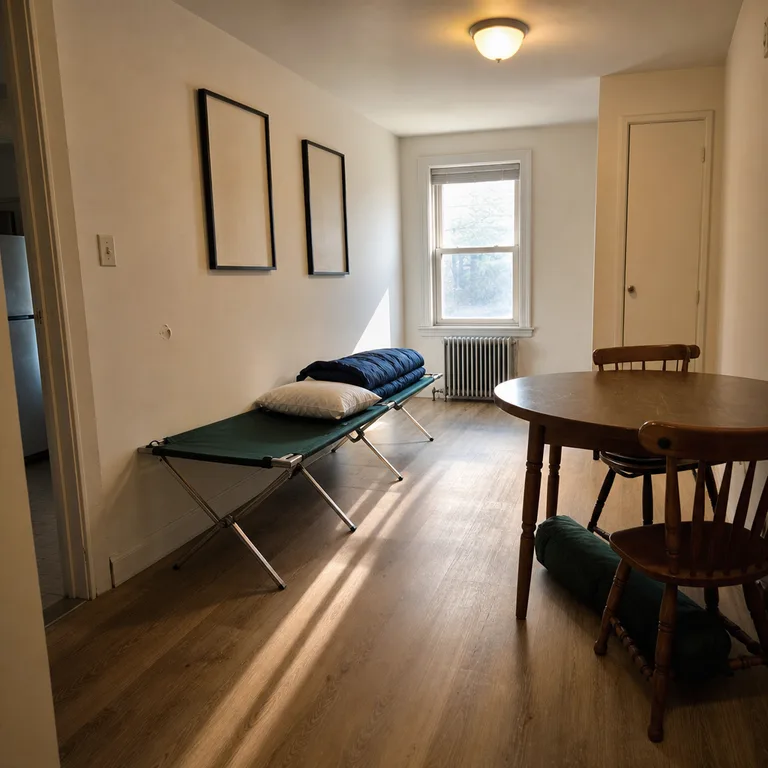
Place it away from door swings, radiators, and windows that need to open, and leave clear access to the room’s exit. A fitted sheet, sleeping bag, and pillow can make the setup feel more orderly, while the carry bag can slide under a table during the stay.
Worth knowing: Camping cots can be narrow and may not suit a guest who needs more room to turn or a steadier, more substantial sleep surface.
About the author
Dana Ruiz, Senior editor
Dana writes about small-space living, storage and low-cost decorating.
Keep reading
9 Temporary Holiday Baking Setups for a Small Kitchen
October 12, 2026
6 Small Shared Bedroom Layouts for Two Children Using Twin Beds
October 11, 2026
10 Small Kitchen Trash and Recycling Ideas Without Losing a Cabinet
October 11, 2026
11 Reusable Paper Christmas Decorations for a Living Room on a Budget
October 12, 2026