7 Easy Shoe-Changing Seats for a Narrow Entryway
A narrow entry can still include a reliable place to sit for shoes if the seat has a compact footprint, enough clearance for feet, and a steady surface for standing back up. These options focus on rated seating, clear door swings, and an exit route that remains easy to use.
As an Amazon Associate I earn from qualifying purchases.
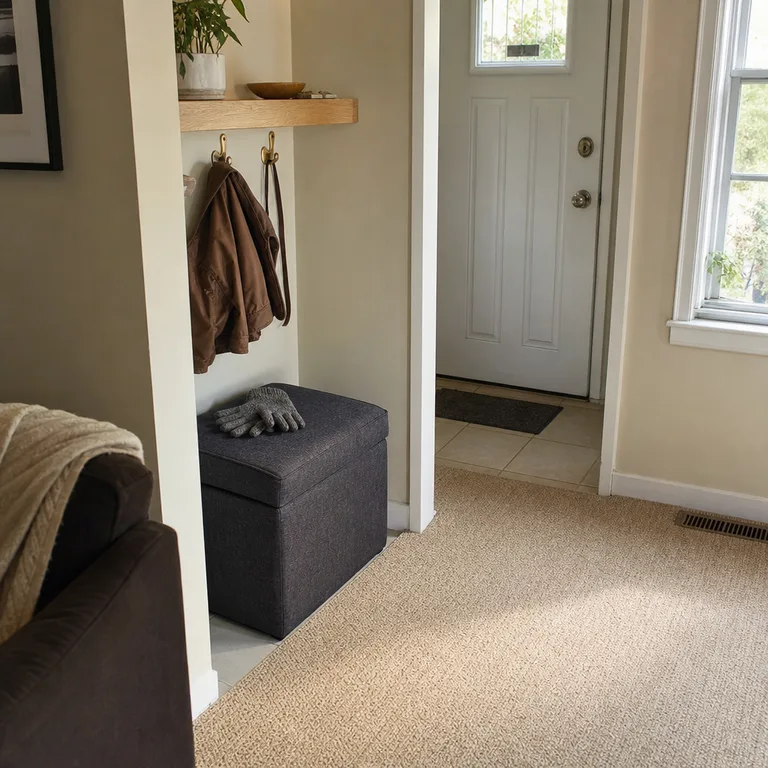
1.Use a Compact Fixed Stool Beside the Door
A low, four-legged stool can give a narrow entry a proper shoe-changing spot without the footprint of a bench. Set it beside the door or below a hook rail only if it stays outside the door swing and leaves a clear route into the home.
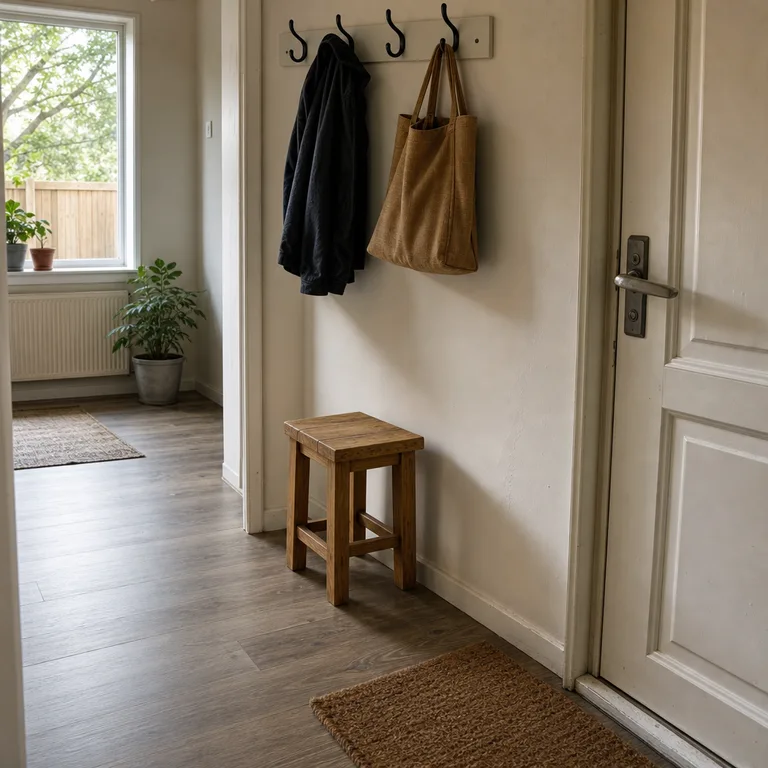
Choose a stool made and rated for sitting, with a broad enough top to feel secure when putting on shoes. A plain wood stool is often easy to find secondhand or reuse from another room; add non-slip floor pads if they suit the flooring and do not make the stool wobble.
Keep the area around the stool open so feet can plant firmly before standing. This layout works especially well where coats can hang above rather than collecting on the seat.
Worth knowing: Very low stools can be difficult for people who need a higher seat or a backrest.
2.Choose a Short Bench With a Seating Rating
A short bench provides a more generous sitting surface while taking up less wall length than a typical hallway bench. Place it along the longest uninterrupted wall, checking that the front door can open fully and that the remaining passage is comfortable to use.
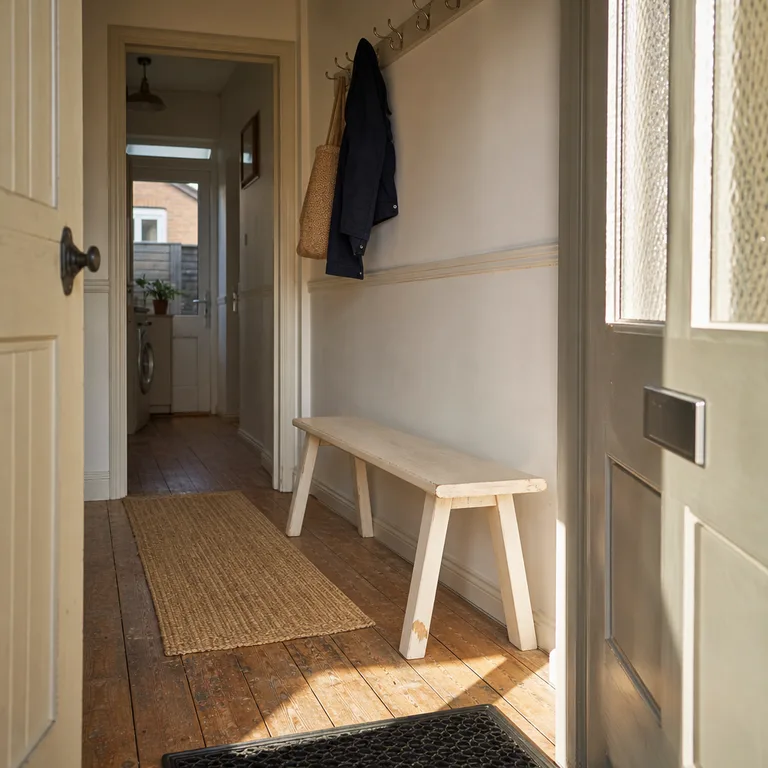
Look for a bench explicitly intended for seating rather than a decorative table or a light plant stand. A simple secondhand wood bench can be refreshed with cleaning, tightening loose hardware, and floor protectors instead of a full makeover.
Skip bulky arms and oversized cushions in a tight hall, since both increase the depth of the piece. A slim washable runner nearby can help contain dirt without turning the walking route into an obstacle.
Worth knowing: Even a short bench can make a very shallow entry feel blocked if its depth projects too far from the wall.
3.Place a Small Chair Flat Against One Wall
A small armless chair adds back support for shoe changing and can look more intentional than a bench squeezed into a tight hall. Position it flat against one wall with all four legs on level flooring, leaving the center of the entry free for passing through.
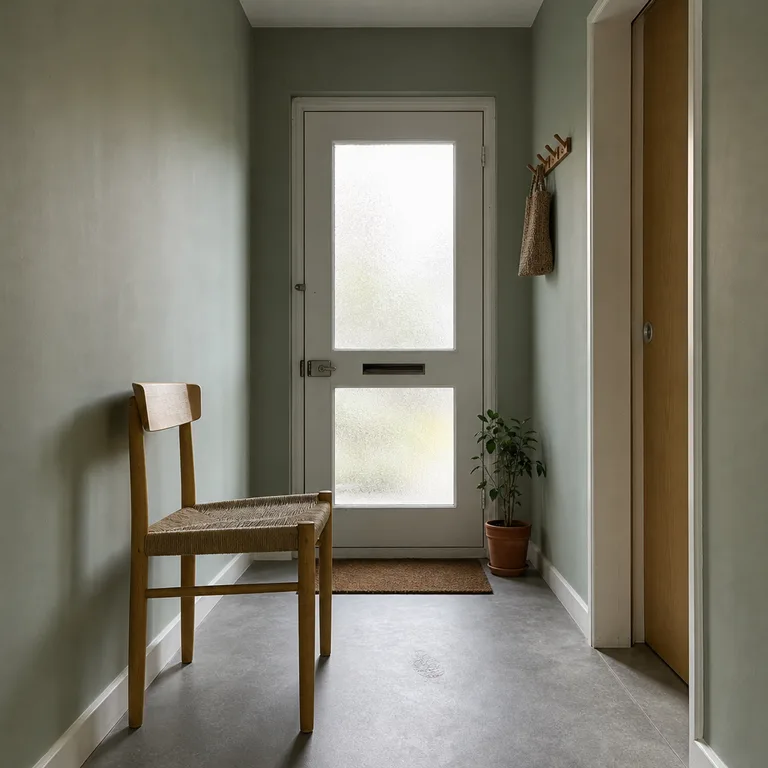
Choose a sturdy chair with a wipeable wood, painted, or sealed surface if wet shoes and outerwear are common at the door. A compact side chair or spare dining chair is an affordable reuse option, provided its joints are sound and it is made for adult seating.
Keep bags and heavy coats off the chair back, as they can pull a lightweight chair out of balance. If the entry has a door that opens inward, map its full arc before committing to the chair position.
Worth knowing: A chair needs more wall depth than a stool and may not suit an entry with an active inward-opening door.
4.Make a Storage Stool Do Double Duty
A storage stool can hold small entry essentials while offering a compact place to sit. Gloves, dog-walking gear, and spare shoe supplies stay nearby without requiring a separate basket on the floor.
Use only a storage piece designed and rated as seating, with secure hinges or a lid that does not shift under weight. An upholstered option can soften a hard-tiled entry, while a firm top is usually easier to sit on while fastening shoes.
Put the stool under a shallow shelf or beside the wall rather than directly in the path from the threshold. In damp climates, avoid storing wet items inside a closed stool until they have dried so trapped moisture does not create odors.
Worth knowing: Many storage ottomans are intended as footrests, so the seating rating and lid stability need careful checking.
Related: 12 Shoe Storage Ideas for a Narrow Entryway
5.Reuse an Armless Dining Chair Near the Entry
An unused armless dining chair can become a dependable shoe seat with no need to buy a dedicated entry bench. Turn it so there is open floor space in front for feet, rather than aiming the sitter toward a wall or pile of shoes.
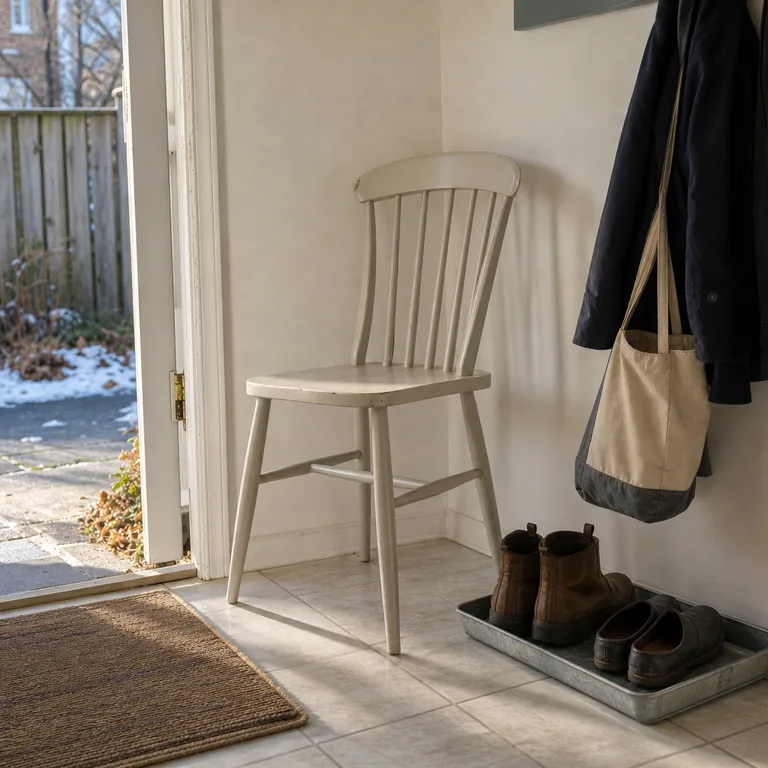
Check the chair for loose joints, cracked rails, or an unstable seat before moving it to the entry. A wood or painted chair is generally easier to wipe down than fabric when the doorway sees rain, mud, or winter grit.
Pair it with a narrow shoe tray placed beside, not beneath, the chair to keep wet footwear from spreading across the floor. Keep coats on wall hooks where possible so they do not make the chair unstable.
Worth knowing: A dining chair can look visually busy in a very small entry, particularly if it has a tall or ornate back.
6.Tuck a Bench Into an Adjoining Recess
An alcove, stair recess, or shallow wall return beside the entrance can hold a slim bench without narrowing the main hall. This turns an overlooked pocket of space into a defined shoe-changing zone while keeping the central route open.
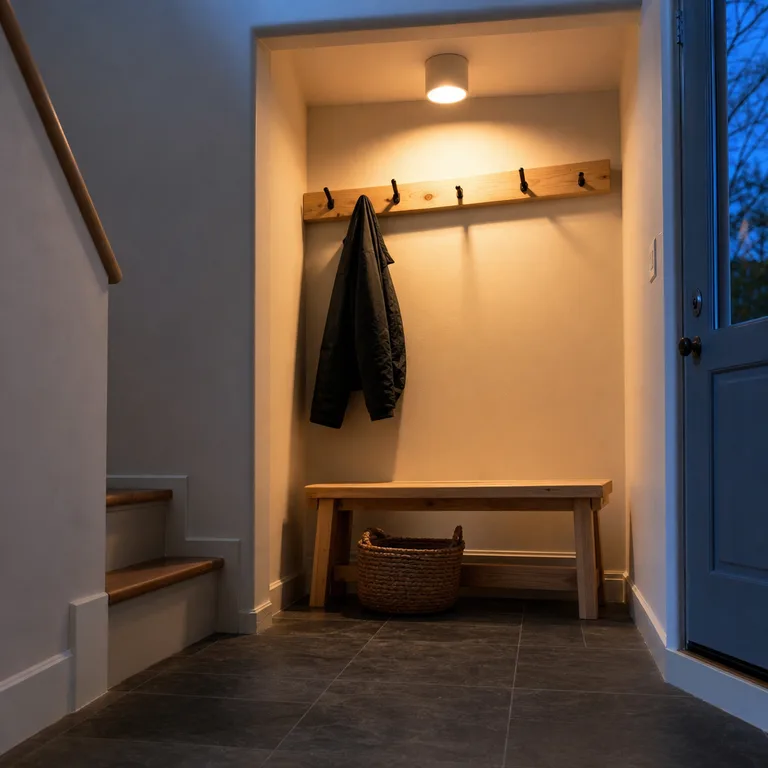
Measure the recess carefully and use a compact bench that fits without blocking nearby doors, stairs, vents, or utility panels. A basic pine bench can work well here, especially when combined with a peg rail above instead of freestanding storage beside it.
Avoid treating every recess as available space. Access to electrical panels, radiators, and other building services must remain clear, and rental homes may limit what can be mounted on the wall.
Worth knowing: This option depends on having a usable recess close enough to the door to be practical.
7.Pair a Small Seat With a Clear Standing Mat
A compact stool or chair works better when it is paired with a clear, firm area for standing up after shoes are on. A low-profile mat can define the zone and catch everyday dirt while leaving a visible strip of flooring for the route through the entry.
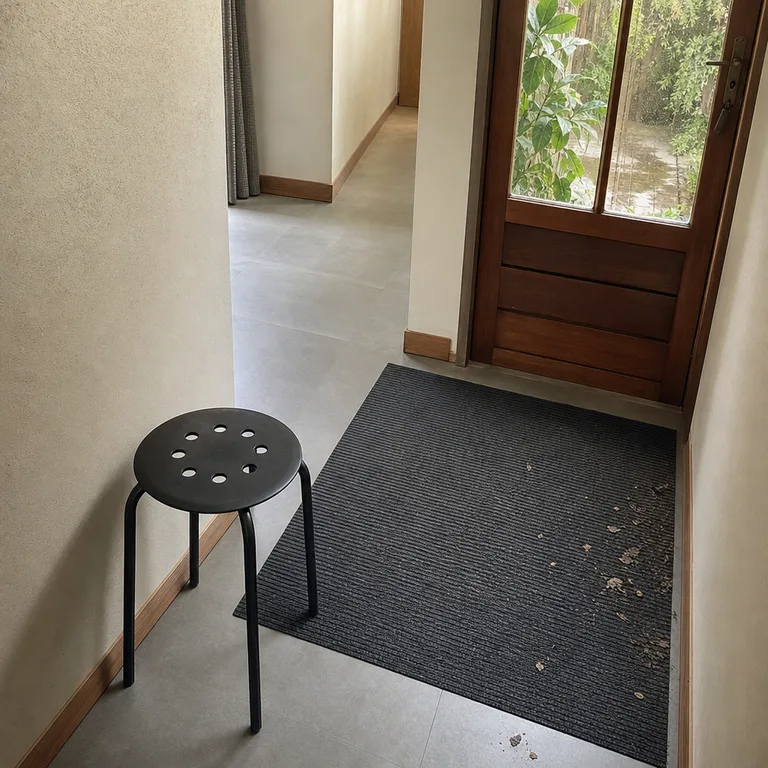
Choose a mat that lies flat and does not curl at the edges, especially where someone may shift weight from the seat to standing. Rubber or washable materials can be useful in wet seasons, but the surface still needs regular cleaning so grit does not collect underneath.
Place the mat beside the seat rather than under all four legs unless the seat remains completely level. Make sure the mat does not interfere with the door swing or create a raised edge in the path out.
Worth knowing: A mat can become a trip risk if it is thick, curled, or allowed to slide across smooth flooring.
About the author
Dana Ruiz, Senior editor
Dana writes about small-space living, storage and low-cost decorating.
Keep reading
10 Budget Multifunctional Furniture Ideas for Small Homes
November 4, 2026
8 Easy Small Living Room Layouts for TV and Fireplace
November 4, 2026
8 Easy Small Living Room Ideas to Fit a Piano or Keyboard
November 2, 2026
8 Budget Small Living Room Layouts for Sleeper Sofa Nights
November 2, 2026