12 Sage Green and Brown Decorating Ideas That Feel Cozy
Sage green and brown can make a living room feel grounded without committing to a full repaint or matching furniture set. Keep the palette limited to a few small accents, then compare fabrics and paint swatches in daylight because both colors can shift noticeably with the room’s exposure.
1.Layer Sage Pillow Covers on a Brown Sofa
A brown sofa already supplies the deeper half of this color pairing. Add a small group of sage pillow covers in slightly different textures, such as cotton, linen-look fabric, or a subtle woven pattern, rather than introducing more large furniture.
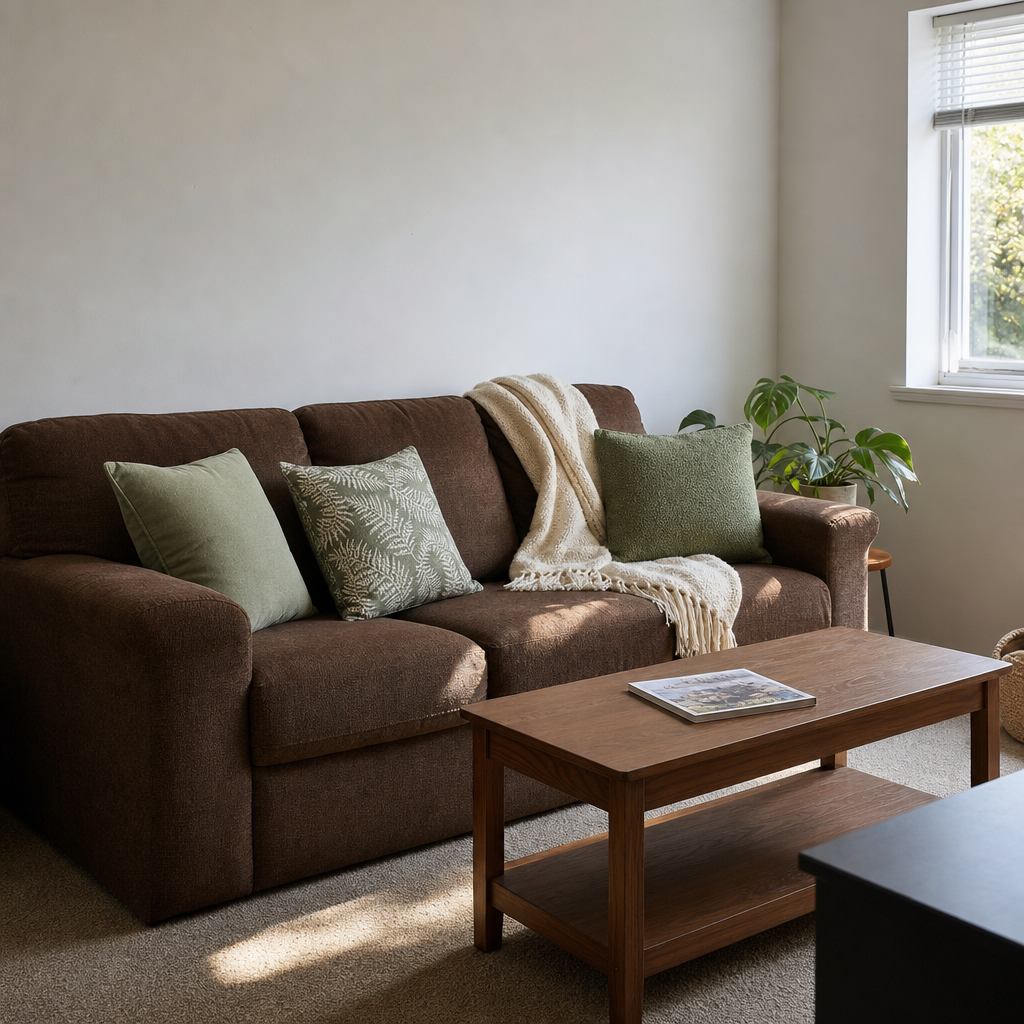
The green softens the visual heaviness of brown upholstery and makes an older sofa look more considered. Removable covers are an affordable way to test the palette, and washable choices make more sense on seating that gets regular use.
Keep the rest of the sofa fairly simple with a cream or warm neutral throw so the green remains an accent instead of becoming a competing color block.
Worth knowing: Very pale sage can disappear against a medium brown sofa in a dim room, so check the fabric against the upholstery in the room’s usual light.
2.Ground a Light Room With a Brown Rug and Sage Throw
Use a brown-toned rug to define the seating area in a room with white or pale walls. A sage throw over the sofa arm or chair back adds color at eye level without changing the walls or permanent finishes.
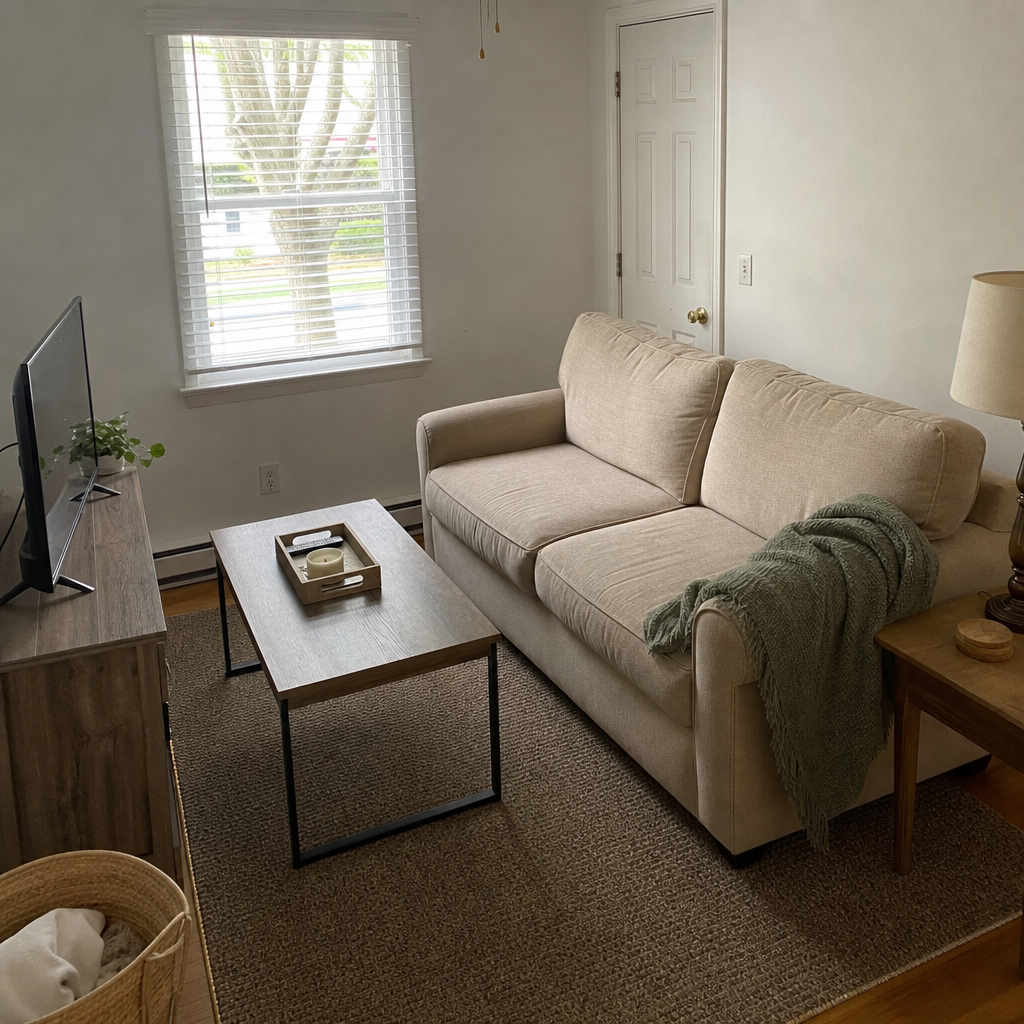
This combination gives a rental living room more contrast while keeping the larger surfaces neutral. Look for a low-pile rug in a mixed brown pattern if daily foot traffic, pets, or minor marks are a concern.
The rug does most of the grounding work, so one sage textile is often enough. That restraint keeps a small room from feeling crowded with color.
Worth knowing: A rug that is too small can make the seating area look disconnected rather than grounded.
3.Use Sage Curtains Beside Dark Wood Furniture
Hang muted sage curtain panels near a dark wood bookcase, console, or cabinet. The vertical fabric breaks up the solid dark surface and gives existing furniture a lighter companion color.
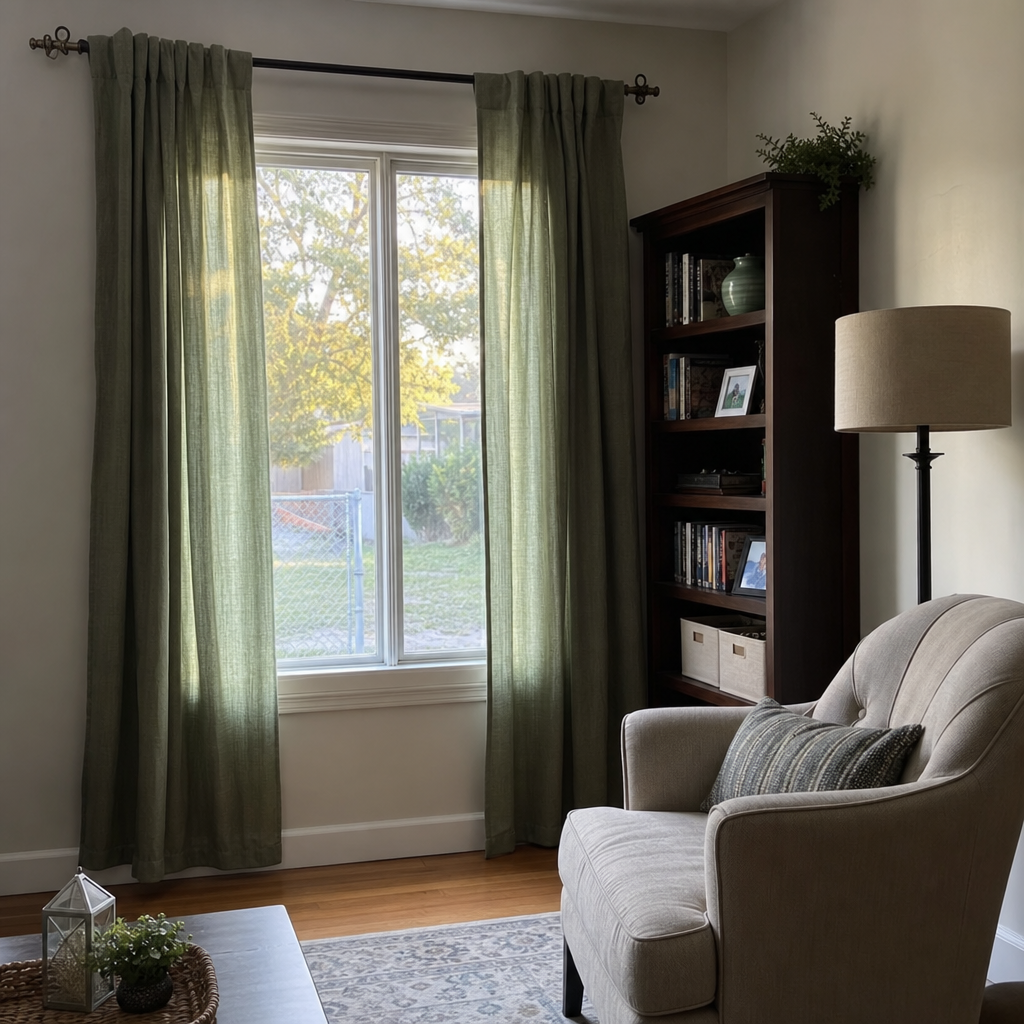
Choose simple panels rather than heavily patterned curtains when the room is small. Ready-made panels and basic curtain rods can update a window more affordably than replacing a substantial wood piece.
Check how the window behaves through the year. Washable or lined panels are more practical where condensation, dust, or direct sunlight affects the fabric.
Worth knowing: Sage curtains can look cooler or grayer in north-facing rooms, especially beside very dark wood.
4.Style a Brown Tray With Sage Ceramic Pieces
Place a brown wood tray on a coffee table, ottoman, or console and use it to hold a sage bud vase, candleholder, or small planter. The tray contains the smaller items, so the color combination looks deliberate instead of scattered.
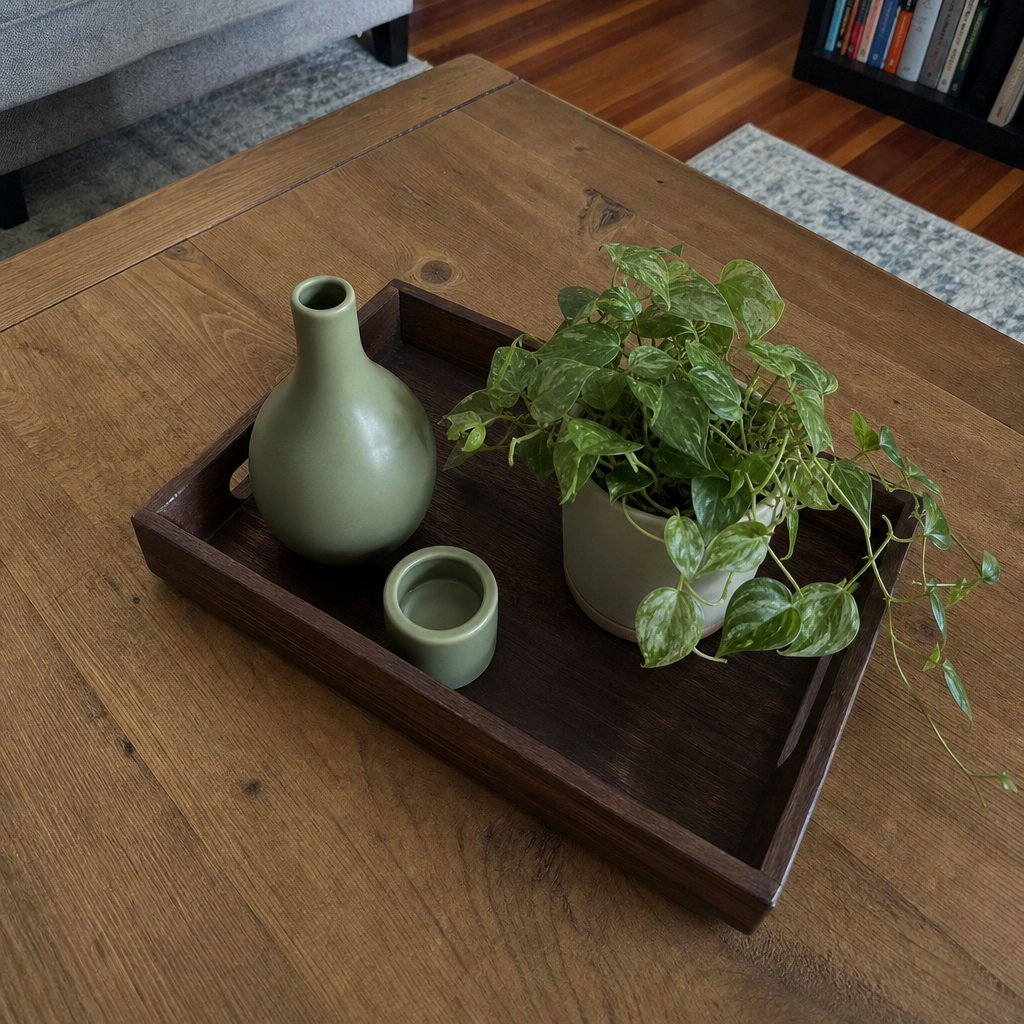
A secondhand tray or one already in the house can make this a low-commitment update. Swap the objects with the season or move the tray to another room when the arrangement needs a change.
Leave some empty space around the pieces. A few useful or natural-looking objects work better than a crowded collection on a small table.
Worth knowing: Small decorative pieces can quickly become clutter if the coffee table is also needed for meals, work, or children’s activities.
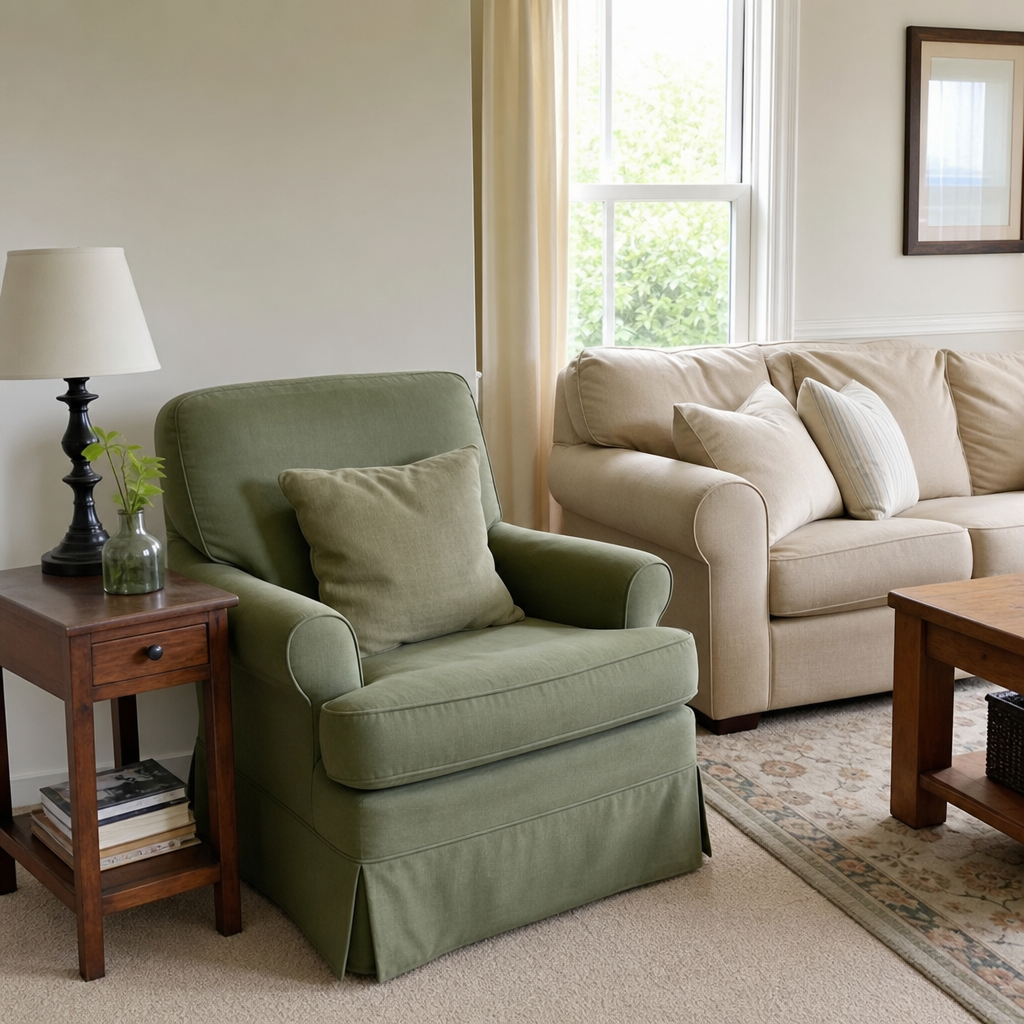
5.Add a Sage Slipcover to One Accent Seat
Cover one worn armchair in sage instead of replacing it. Set it beside a brown wood table, brown basket, or leather-look accent so the chair reads as part of the room rather than a stand-alone green feature.
One newly covered seat can brighten a brown-heavy living room without requiring matching upholstery. A slipcover is also easier to remove or change than a painted or permanently reupholstered chair.
Choose a fit that works with the chair’s shape, and smooth or tuck it after use so it does not look rumpled. Machine-washable fabric is especially helpful for a chair used every day.
Worth knowing: Loose universal slipcovers may shift on chairs with unusual arms, deep cushions, or attached pillows.
6.Frame Botanical Prints With Brown Wood
Group a few sage-toned botanical prints in brown wood frames on a blank wall. The green appears in a contained, quiet way while the frames repeat the warmth of wood furniture already in the room.
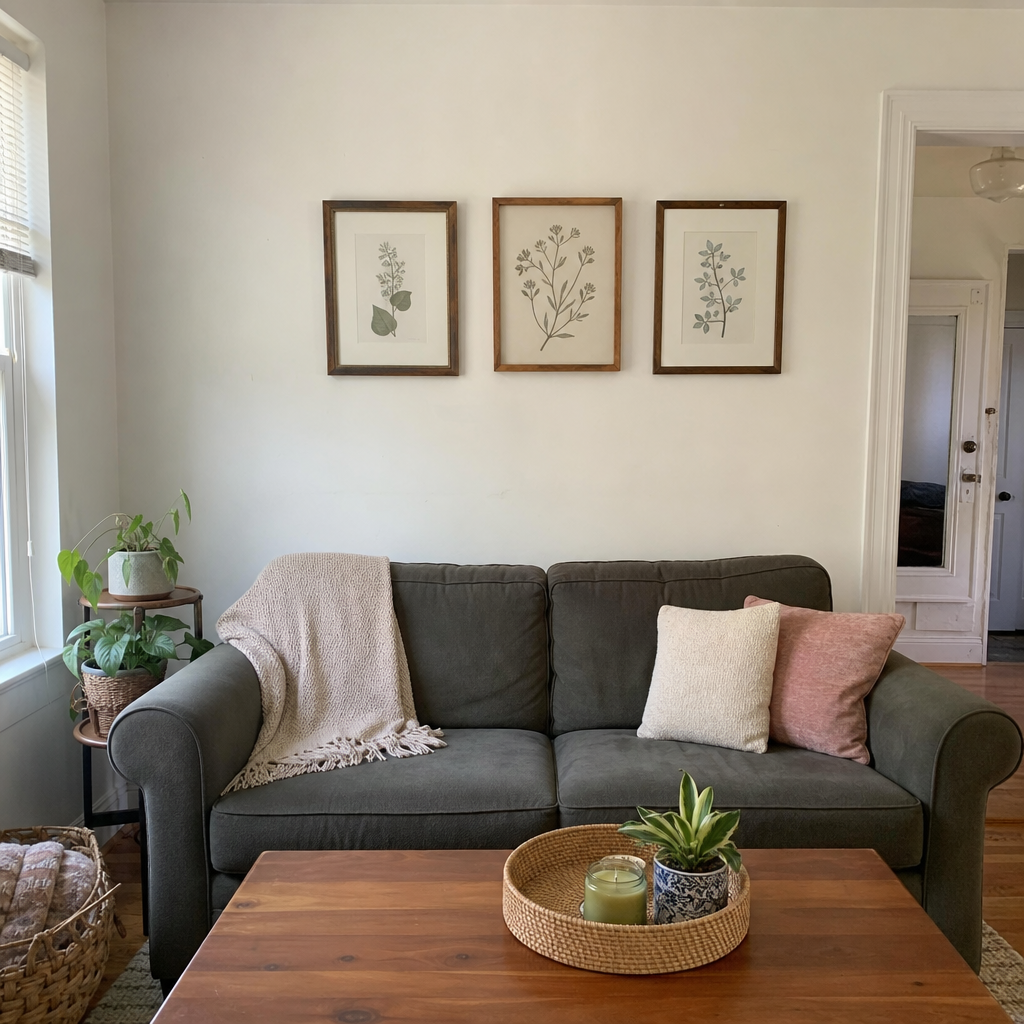
Printable art, secondhand frames, and simple botanical images can create a wall arrangement without the work of painting. Mismatched frames can still look connected when their brown tones are reasonably close.
Use removable picture hardware where a lease requires it, and space the frames as a compact group above a sofa or console. A smaller arrangement is usually easier to position than one oversized statement piece.
Worth knowing: Removable hanging strips have weight and surface limits, so they may not suit heavy glass frames or textured walls.
7.Pair a Brown Lamp Base With a Sage Shade
Use a brown ceramic, wood, or wood-look lamp base with a muted sage shade in a reading corner or on a side table. It introduces both colors in one useful object instead of adding more tabletop decor.
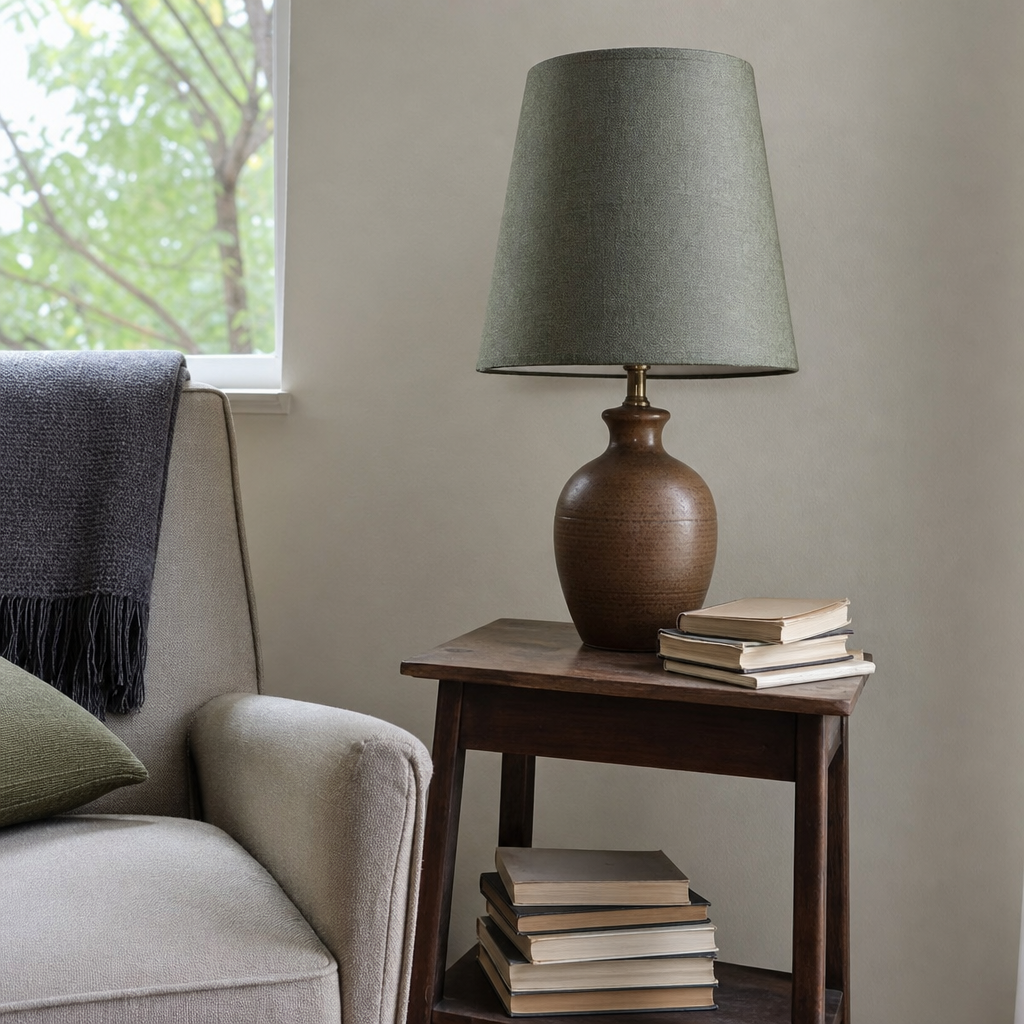
The shade changes the look of a basic lamp without replacing all of it. A warm bulb can keep the pairing cozy, while the brown base helps the green shade relate to nearby wood furnishings.
View the shade in daylight and again after dark. Its color will look deeper when lit in a low-light corner, and some green fabrics can cast a noticeable tint.
Worth knowing: A colored lamp shade may reduce the amount of clear task light available for reading or detailed work.
8.Bring In a Sage Planter and Brown Basket
Set a leafy houseplant in a sage pot and place it inside a brown woven basket. The plant adds another natural layer between the two colors, making the combination feel less staged.
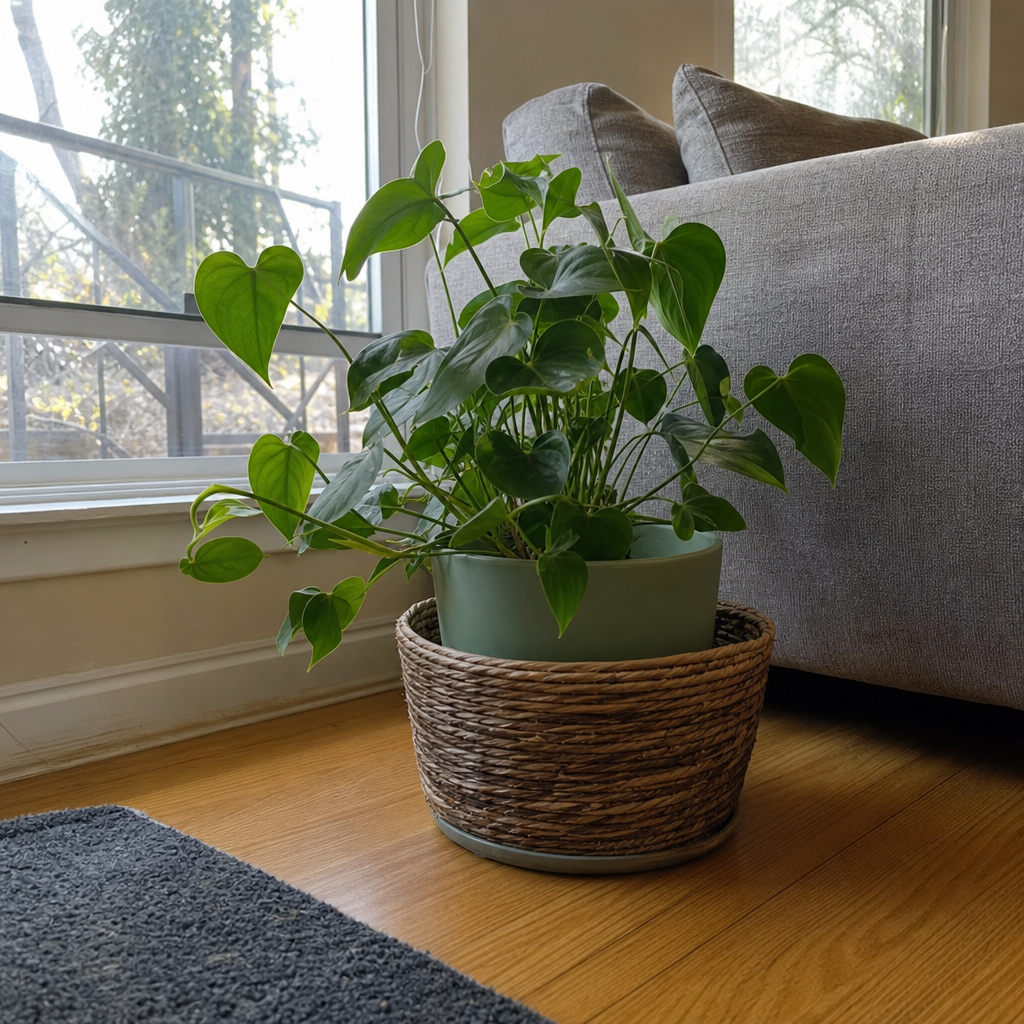
This is an easy accent for a window area, empty corner, or console top. A basket can hide a plain nursery pot, while the sage planter adds a clear but small dose of color.
Use a saucer or waterproof liner to catch excess water and protect floors, furniture, and the basket. Match the plant to the available sunlight rather than choosing one only for its appearance.
Worth knowing: Baskets can trap moisture if spills or drainage are not managed, which may damage flooring or encourage mildew.
9.Mix a Brown Leather-Look Ottoman With Sage Textiles
Use a compact brown leather-look ottoman as a footrest, extra seat, or occasional table, then repeat sage in sofa pillows or a throw. The smooth brown surface gives the softer green textiles a stronger contrast.
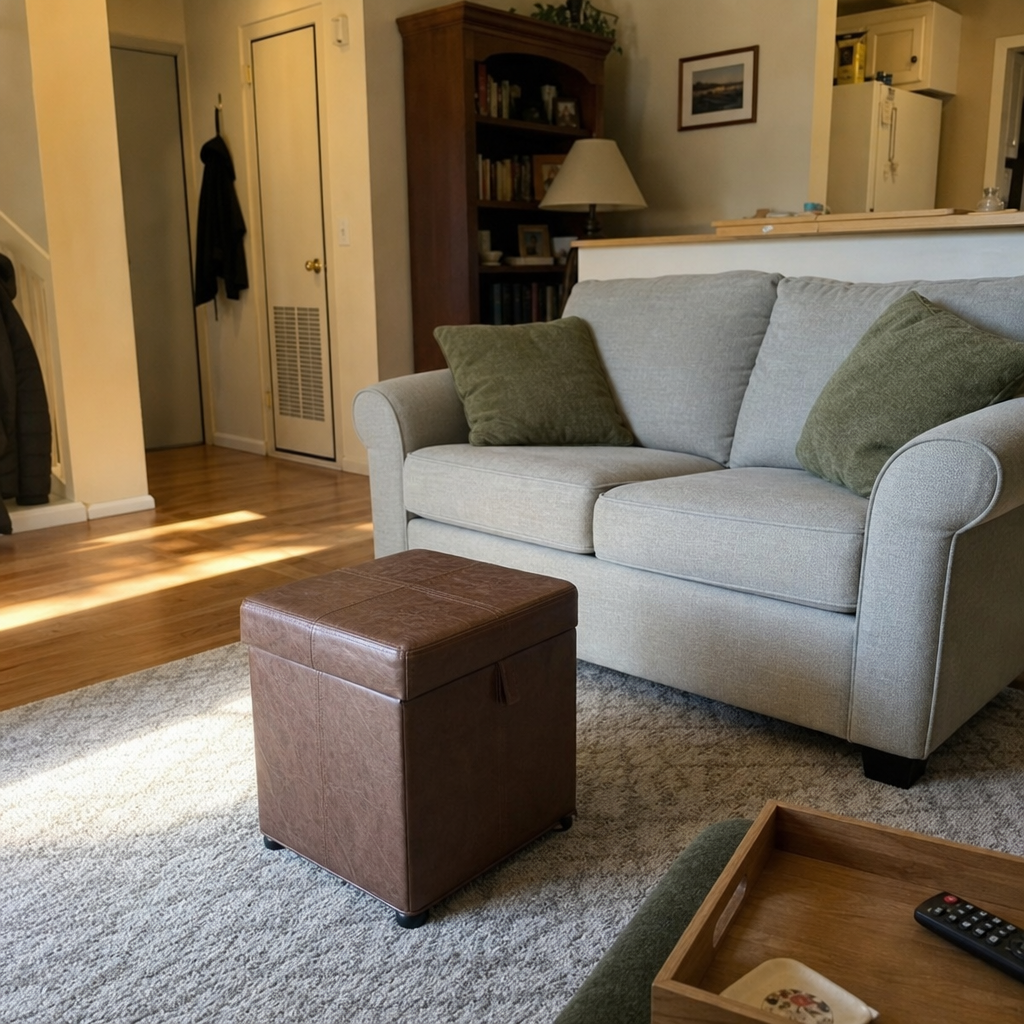
An ottoman is useful in a small living room because it can move out of the way more easily than a fixed coffee table. Choose one with a tray-friendly top if it will regularly hold drinks or remotes.
Keep the surrounding furniture light enough that the ottoman does not become another heavy block in the room. One or two sage textiles nearby are enough to connect the colors.
Worth knowing: Leather-look surfaces can show scratches or wear over time, particularly in homes with pets or frequent use.
10.Paint a Small Brown Side Table Sage Green
Refresh a scratched or dated brown side table with sage paint, while leaving nearby darker wood furniture unchanged. The mix of painted and natural-looking brown pieces adds contrast without needing a matching furniture set.
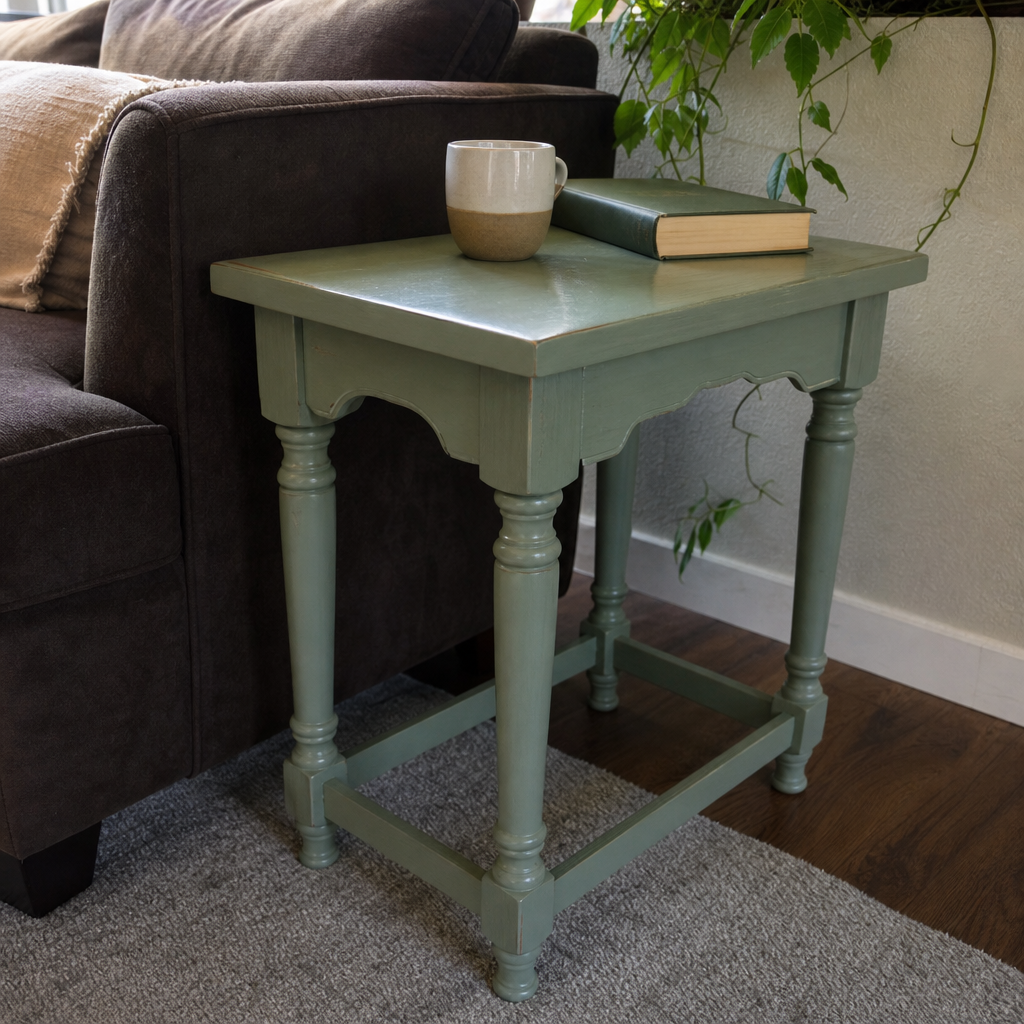
A small table is a manageable place to test a color that may feel too risky on a wall or large cabinet. Clean and lightly prepare the surface according to the paint instructions so the finish has a better chance of holding up.
Test the chosen sage near a window before painting the whole table. Daylight can pull some shades gray, yellow, or blue, and the result may look different beside brown upholstery than it does on a sample card.
Worth knowing: Painted table tops can chip or show rings if they are used heavily without a suitable protective finish.
11.Use Brown Baskets Under a Sage Console Display
Place brown woven baskets beneath a narrow console, then add one sage item on top, such as a vase, lamp, or small bowl. The baskets bring storage and texture at floor level while the green keeps the display from looking entirely brown.
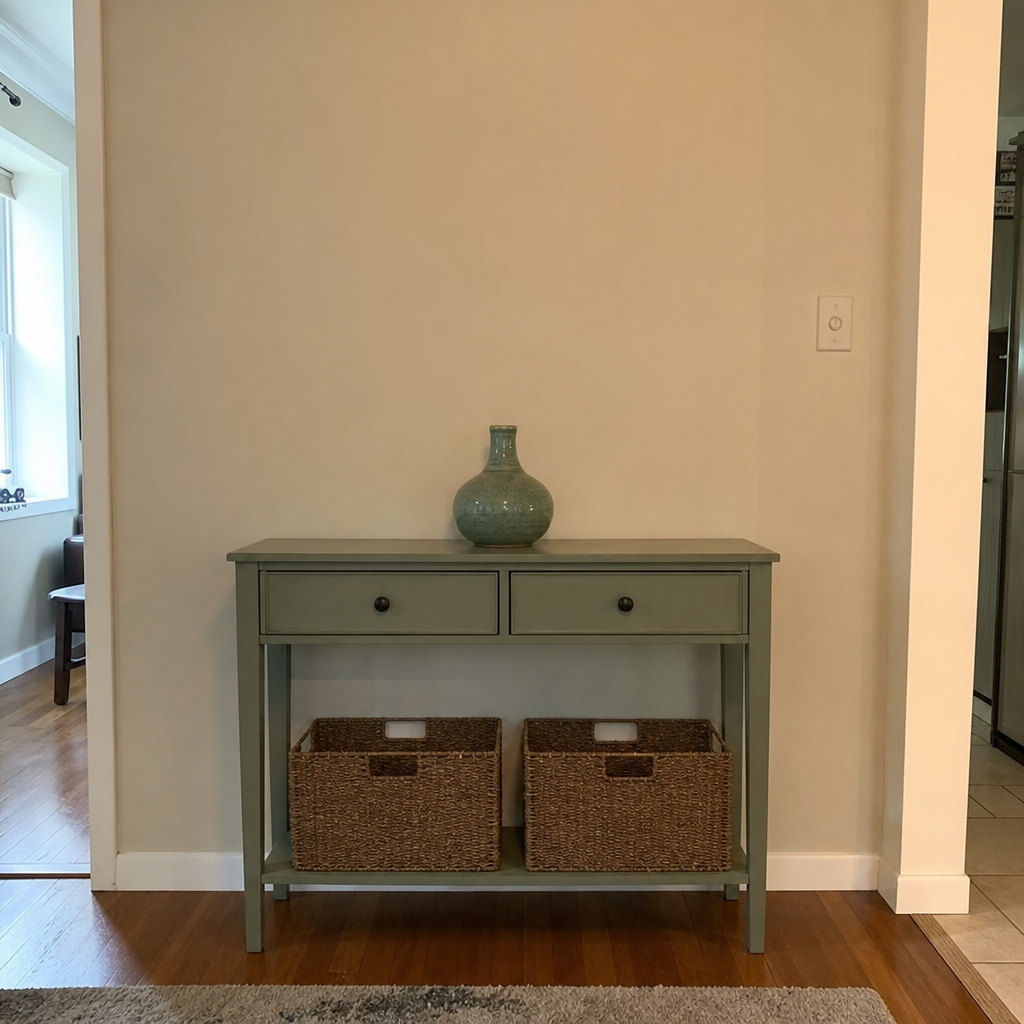
This arrangement works well in a tight living room or entry-adjacent wall because it gives everyday items a place to go. Use baskets sized to slide fully beneath the console so they do not narrow the walking path.
Keep the top surface useful and uncluttered. A single sage accent and a small catchall can be more effective than filling the console with several unrelated objects.
Worth knowing: Open baskets can make a room look untidy if the stored items are not contained or sorted.
12.Repeat Both Colors in a Small Window Seat
Combine a brown bench cushion or upholstered seat with a pair of sage pillows in a window nook. Repeating the two colors in one compact area makes them feel intentional even when the rest of the room stays neutral.
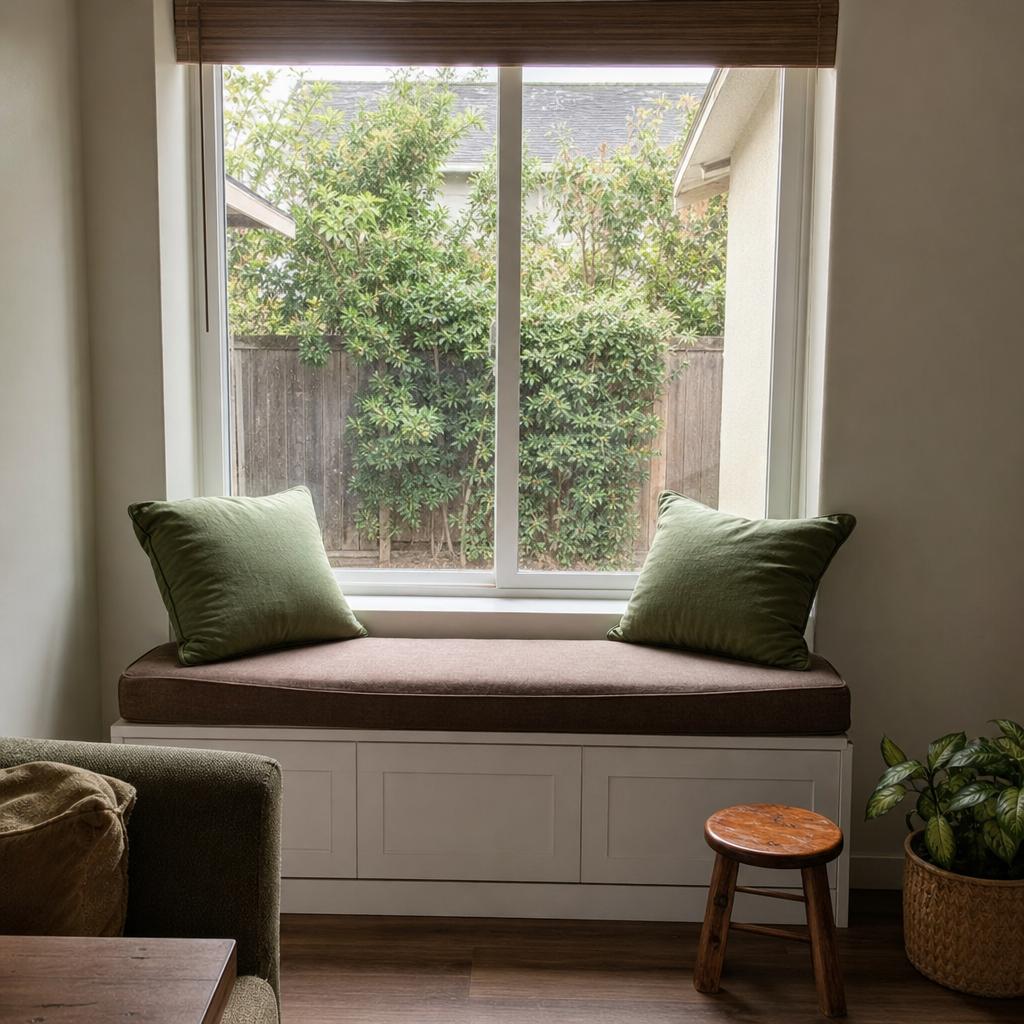
This approach can make an overlooked window area feel like part of the living room without adding another large piece of furniture. Use removable pillow covers and a simple cushion cover if the nook needs occasional cleaning.
Choose fade-resistant textiles where the seat gets strong direct sun, and rotate pillows when possible. A light-filtering window treatment can also protect fabric while keeping the nook comfortable to use.
Worth knowing: Direct sun can fade sage fabric and warm brown cushions unevenly over time.
About the author
Dana Ruiz, Senior editor
Dana writes about small-space living, storage and low-cost decorating.
Keep reading
12 Warm Neutral Living Room Ideas on a Budget
September 13, 2026
12 Thrifted Decor Ideas That Make Mismatched Finds Feel Collected
September 13, 2026
15 Budget Living Room Updates That Work With the Sofa You Already Own
September 13, 2026
15 Budget Landscaping Ideas That Make a Small Yard Feel Finished
September 11, 2026