10 Ways to Tidy a Bare Dirt Corner Without Building a Patio
A bare dirt corner beside a patio can be made tidier with a removable surface or a planted treatment that suits the light, soil, and how the space is used. Check for pooling water or soil washing away first, since gravel, mulch, and plants can cover a drainage problem without correcting it.
As an Amazon Associate I earn from qualifying purchases.
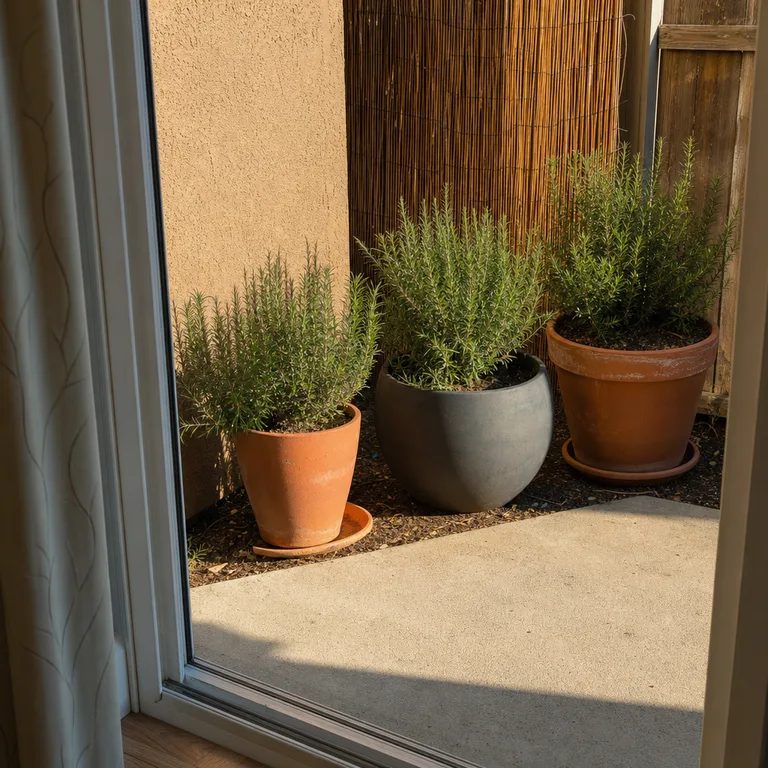
1.Mulch the Corner With a Defined Edge
Turn a dry, low-traffic patch into a simple mulch bed. A clear edge keeps the treatment from looking like a temporary pile of bark and gives the patio or fence line a cleaner boundary.
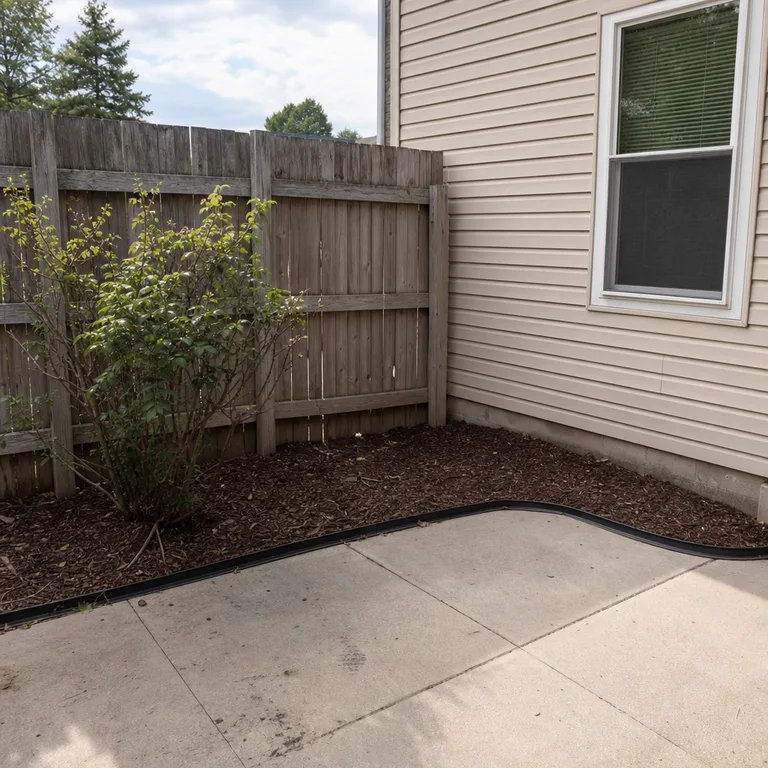
Use flexible edging for a curved corner or a straight metal edge for a sharper line. Remove established weeds first, spread a modest layer of mulch, and leave space around plant stems and the house siding so moisture is not held against them.
Mulch is one of the easier treatments to refresh as it fades or breaks down. It works especially well where the corner is visible but does not need to carry foot traffic.
Worth knowing: Mulch can wash or shift during heavy rain, particularly on a slope, and will need periodic topping up.
Related: 15 Budget Landscaping Ideas That Make a Small Yard Feel Finished
2.Cover a Dry Corner With Pea Gravel
Pea gravel gives a sunny dirt corner a neat, finished surface without the commitment of a built patio. Its small rounded stones soften the look of hard concrete, brick, or siding nearby.
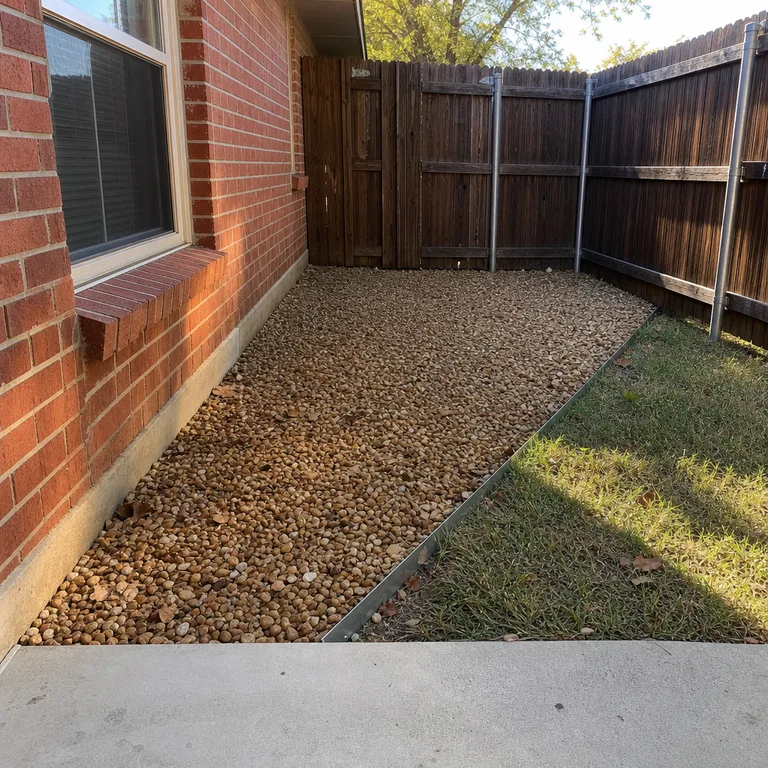
Contain it with a firm edge so stones do not migrate into the lawn or onto the patio. Clear weeds and level the area as much as possible, then use a suitable underlayer if it makes sense for the site; gravel laid over uneven ground will still look uneven.
Choose this option for a corner that stays mostly dry and is not used as a main walking route. It can be raked back into place when leaves or soil collect on top.
Worth knowing: Pea gravel is not a solution for standing water and can be uncomfortable or unstable under frequent foot traffic.
3.Lay Loose Stepping Stones Over Gravel
A short run of stepping stones turns an awkward patch into a useful route to a gate, bin storage area, hose connection, or side door. The combination looks more deliberate than a worn dirt track while avoiding the work of a full paved surface.
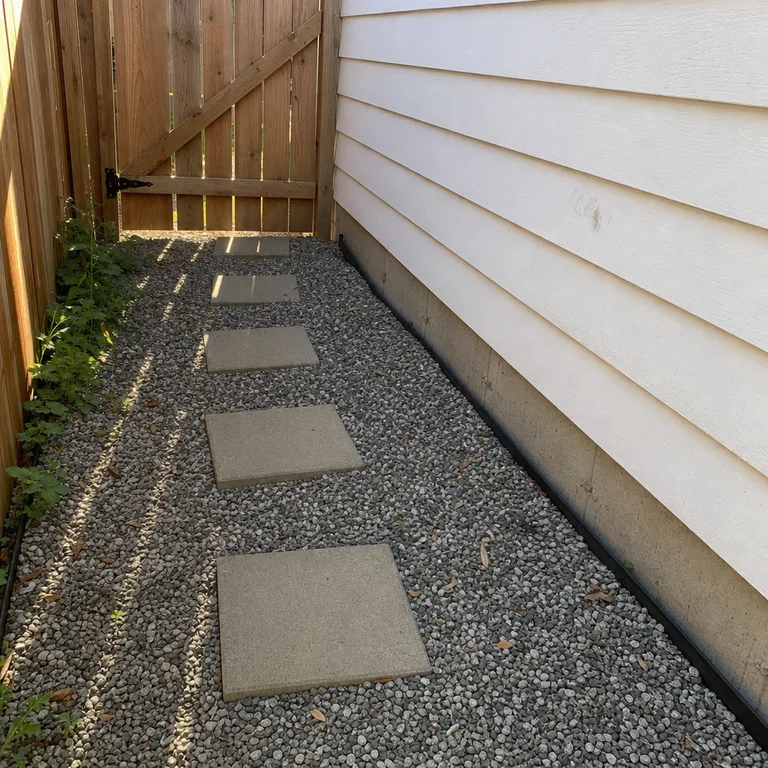
Set a few pavers over compacted gravel, spacing them for a natural stride. Keep their tops close to level with each other, because a single raised or tilted stone can become a trip hazard.
This approach can be completed in stages and adjusted later if the route changes. It is also easier to remove than a mortared patio when access is needed along the side of the house.
Worth knowing: Loose stones can settle over time, so they may need occasional lifting and re-leveling.
4.Plant a Low-Maintenance Groundcover Bed
A spreading groundcover gradually covers exposed soil and makes a bare corner feel connected to the rest of the garden. Low plants can soften the edge of a patio without blocking a view or taking over a narrow path.
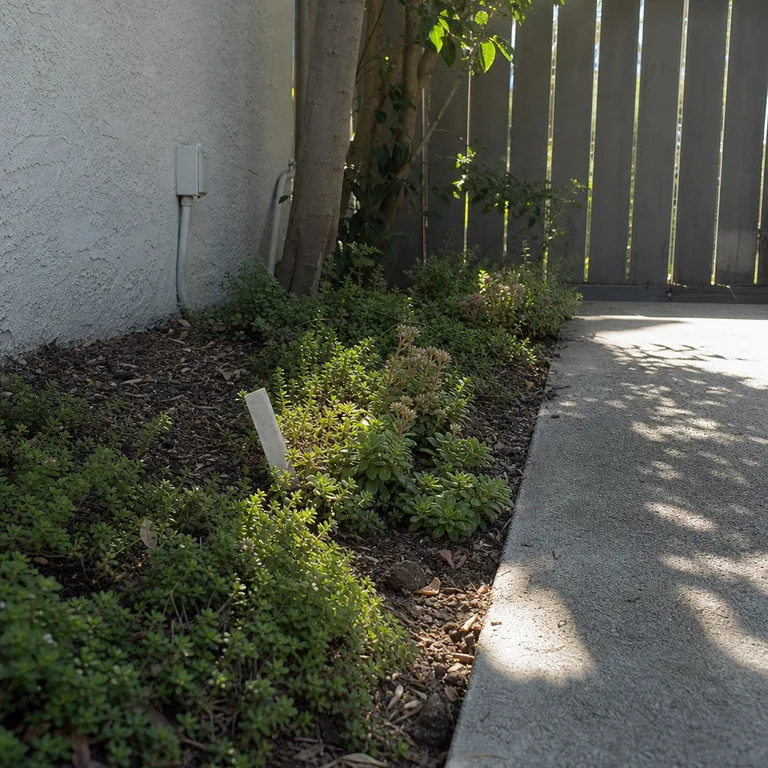
Match the plant to the actual conditions rather than choosing by appearance alone. Some groundcovers need steady sun and relatively dry soil, while others suit shade and more moisture; newly planted areas also need regular watering while roots establish.
Buy smaller starter plants and space them according to their mature spread to keep the project affordable. Mulch between plants at first to reduce weeds and make the gaps look intentional while the bed fills in.
Worth knowing: Groundcover is a gradual solution, and it will not hide the whole patch immediately.
Related: 10 Small Pollinator Garden Ideas You Can Start in One Corner
5.Use Large Pots to Hide the Bare Patch
A group of large containers can visually cover a dirt corner without changing the ground beneath it. This is useful beside a patio door, fence, or wall that may need future access.
Use pots in two or three compatible finishes rather than a scattered collection of small containers. Place the largest container at the back or in the deepest part of the corner, then add smaller pots around it to create a fuller shape.
Choose plants based on the available light, and use saucers carefully where runoff could stain concrete. Resin pots are easier to move than heavy ceramic ones, while terracotta can suit a sheltered area with good drainage.
Worth knowing: Containers need more frequent watering than in-ground planting, especially in hot or windy weather.
Related: 12 Container Garden Ideas for a Small Patio on a Budget
6.Create a Small Shade Garden Under an Eave
A corner under an eave can become a quiet foliage bed instead of a dusty dead zone. Broad leaves and layered green textures make a shaded space feel purposeful even without flowers.
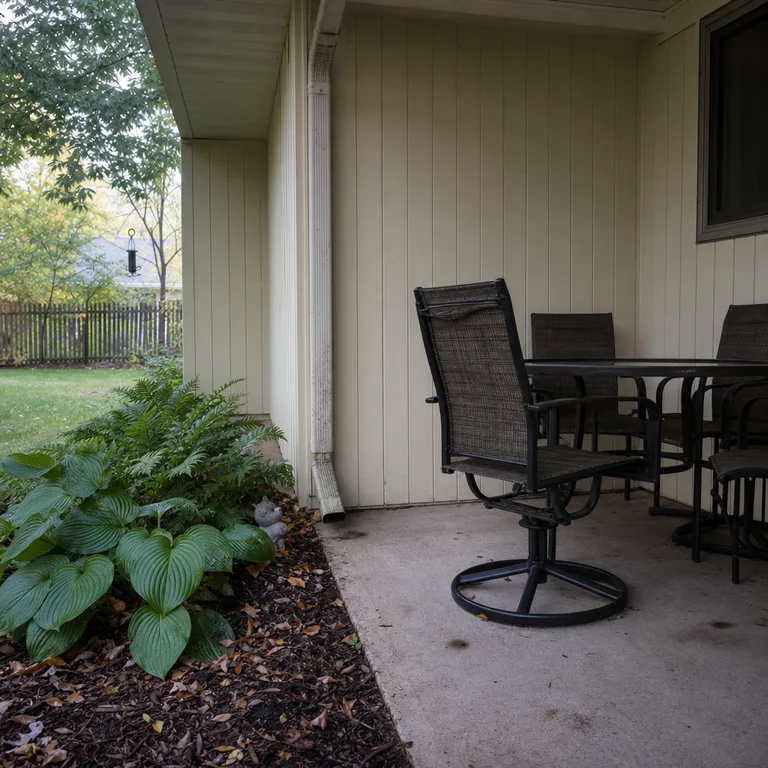
Use shade-tolerant plants that suit the region, then cover open soil with mulch. Check the soil by hand after rain: areas beneath roof overhangs are often much drier than the surrounding yard because little rain reaches them.
Keep plants far enough from the siding to allow air movement and make exterior maintenance easier. A simple hand-watering routine or a carefully placed drip line can help plants establish in a protected but dry spot.
Worth knowing: Shade beneath an eave can be deceptively dry, so this bed may require hand watering during dry periods.
7.Add a Narrow Raised Planter Along the Fence
A narrow raised planter creates a defined planting area where the ground is compacted, poor, or difficult to dig. It also gives a fence-side corner a stronger edge than loose pots alone.
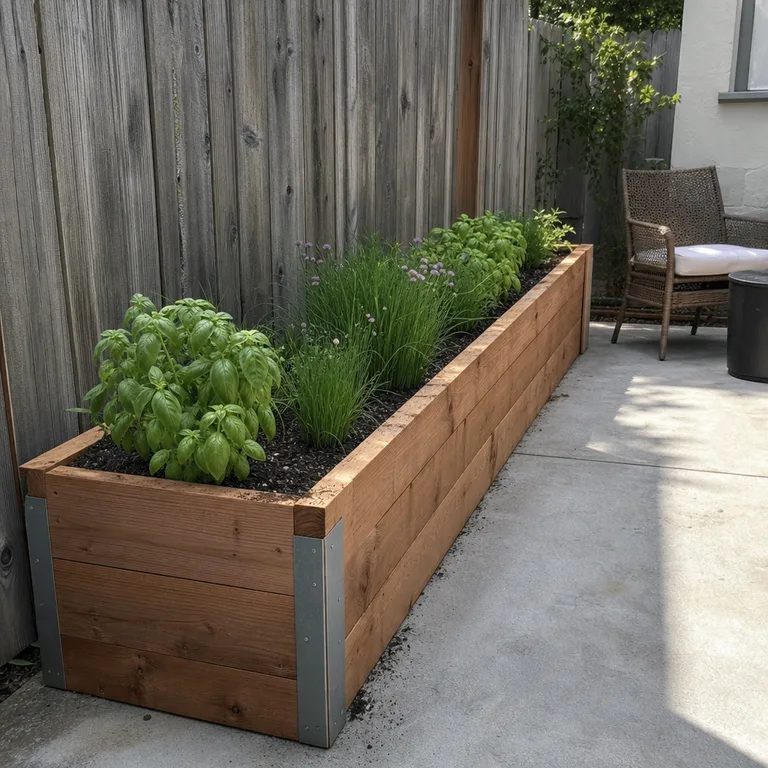
Choose a slim planter depth that still leaves room to pass, open a gate, or reach a hose spigot. Fill it with appropriate growing mix and make sure excess water can leave through drainage holes rather than collecting against the fence or patio.
Plant it simply with a row of herbs, compact grasses, foliage plants, or flowers suited to the sun exposure. Building one short box is often more manageable than rebuilding the whole corner at once.
Worth knowing: A raised planter dries out faster than the surrounding soil and needs drainage that does not direct water toward the house.
8.Make a Simple Rock and Drought-Tolerant Plant Bed
A small rock bed can suit a hot, sunny corner where leafy plants struggle or where a more structured look fits the house. A few well-spaced plants among stone make the ground look covered without making the bed crowded.
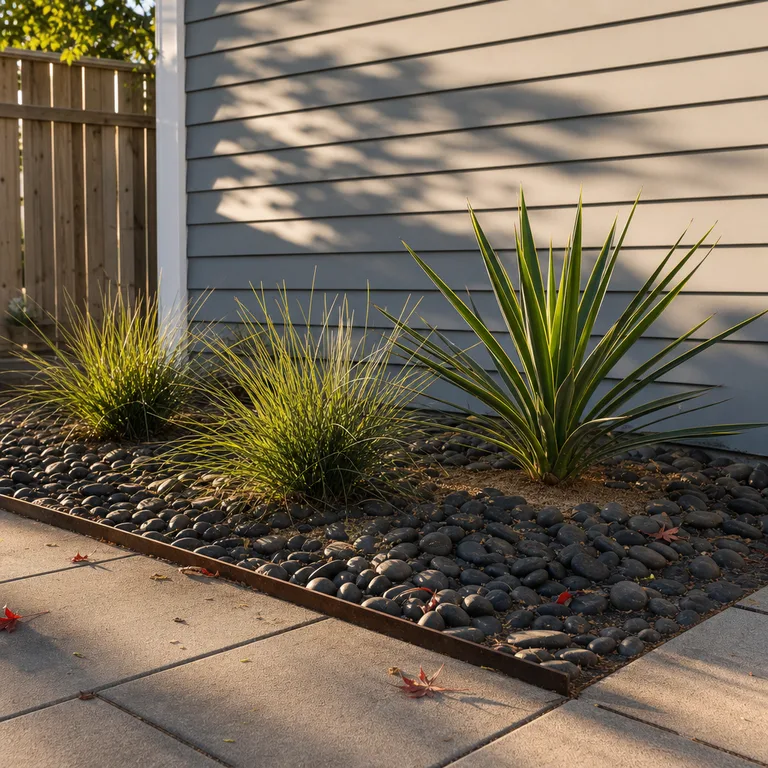
Use a limited palette of stone and repeat it across the patch for a calmer result. Add only plants that can handle the site’s direct sun, heat reflected from paving, and local winter conditions.
Keep the rock layer shallow enough that it does not bury siding or interfere with drainage paths. Edge the bed firmly so stones stay out of the lawn and do not scatter across the patio.
Worth knowing: Rocks still collect leaf litter and windblown soil, and weeds can eventually appear between them.
9.Cover the Patch With an Outdoor Mat and Containers
For a level, sheltered corner, an outdoor mat with weighted planters gives an immediate visual reset. It is a practical temporary treatment when a permanent garden or surface is still undecided.
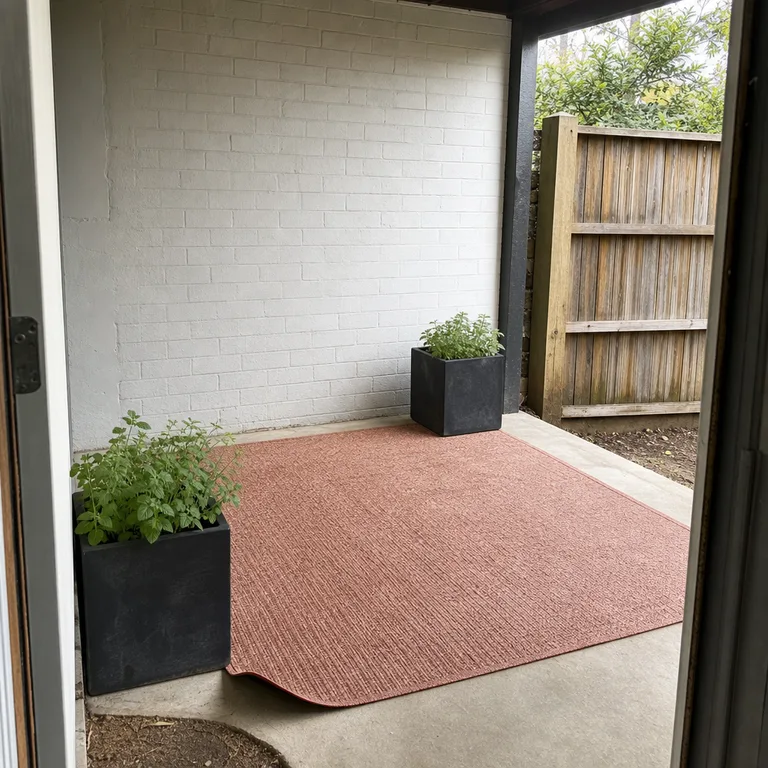
Choose a mat made for outdoor use and keep it within the boundaries of the sheltered area. Anchor the corners with containers rather than relying on loose objects that could shift in wind, and choose plants that will not spill into a walking route.
Lift the mat from time to time to sweep away trapped debris and check the surface below. This option works best on a hard, stable base or a very dry patch, rather than soft soil that stays muddy.
Worth knowing: An outdoor mat can trap moisture and debris, so it is not a good choice for a wet corner or an uneven muddy surface.
10.Plant a Compact Native-Style Border
A small mixed border can turn a bare corner into a seasonal feature with foliage, flowers, seed heads, and changing texture. Using region-appropriate perennials can make the planting feel at home beside an ordinary patio or fence.
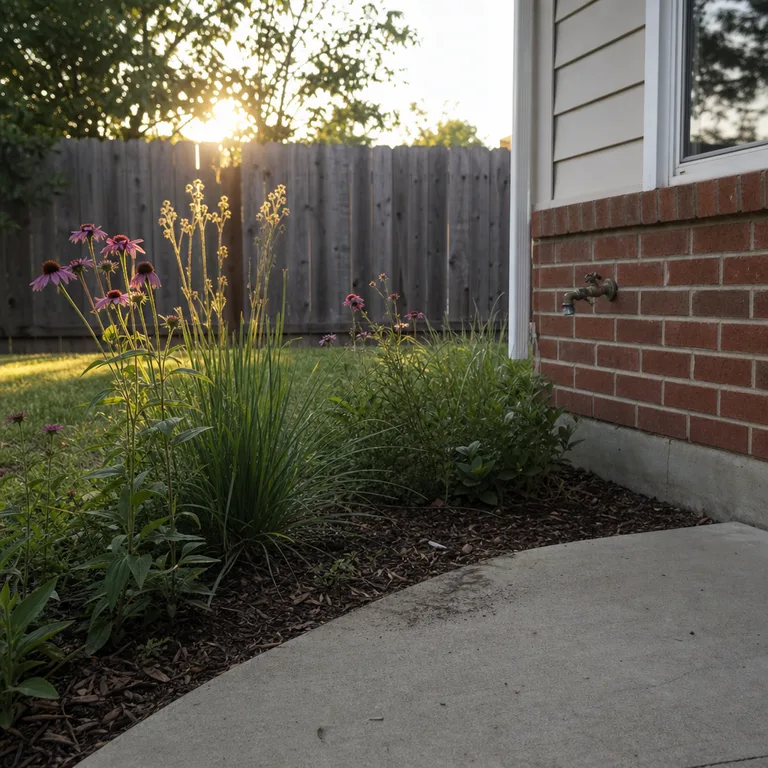
Keep the design compact by repeating a few plant types instead of buying one of everything. Place taller plants at the fence or wall, use lower plants along the patio edge, and allow for each plant’s mature width so the border does not become overcrowded.
Mulch the gaps after planting and water through the establishment period. Choose plants for the site's sunlight, soil moisture, and local rainfall rather than expecting a dry-site plant to thrive in a corner that stays wet.
Worth knowing: A mixed perennial border needs seasonal cutting back, weeding, and occasional dividing as plants mature.
About the author
Dana Ruiz, Senior editor
Dana writes about small-space living, storage and low-cost decorating.
Keep reading
10 Small Raised-Bed Garden Ideas for Beginners on a Budget
October 4, 2026
10 Garden Tool Storage Ideas When You Don't Have a Shed
October 4, 2026
10 Small Backyard Zone Ideas for Play and Quiet Seating
October 2, 2026
10 Fall Porch Planter Ideas Using Pots You Already Own
October 1, 2026