10 Garden Tool Storage Ideas When You Don't Have a Shed
A small patio can hold a useful tool collection when storage keeps metal dry, handles off wet paving, and soil away from indoor surfaces. These ideas fit covered corners, balcony walls, and narrow side spaces while allowing for rain, sun, drainage, rental limits, and safe storage of sharp tools.
As an Amazon Associate I earn from qualifying purchases.
1.Mount a Covered Wall Rail Under the Eaves
Use a sturdy rail with separate hooks on a wall beneath a deep eave. It keeps trowels, hand forks, pruners, a small broom, and hose fittings off the patio floor, where rainwater and soil tend to collect.
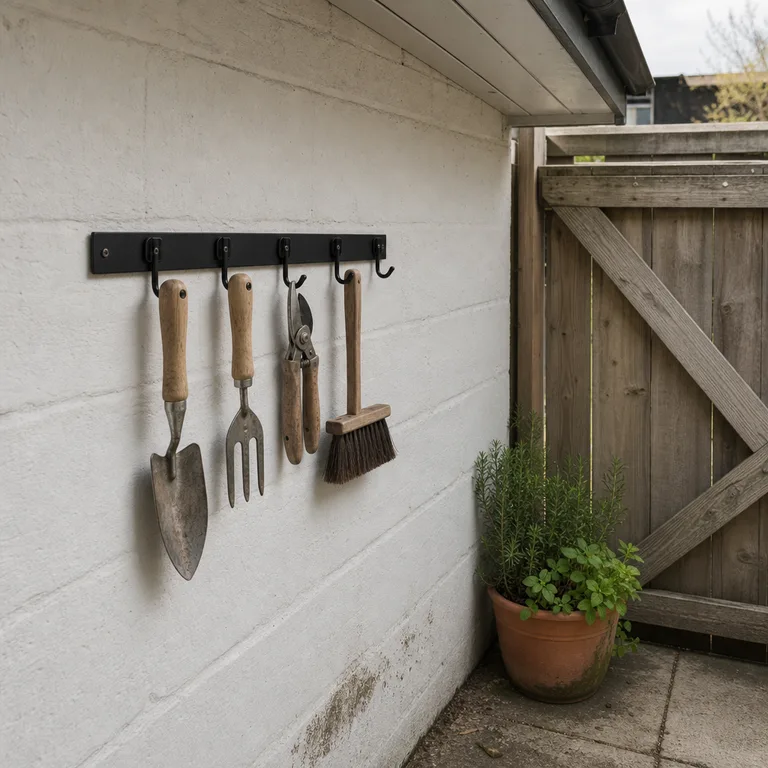
Give each tool its own hook so damp metal can air-dry instead of touching other tools. Choose exterior-rated hooks and fixings suited to the wall material, and check rental rules before drilling into masonry, siding, or shared walls.
Wipe soil from tools before hanging them and leave pruners closed or in a blade cover. A rail works best where wind-driven rain cannot reach it regularly.
Worth knowing: A shallow overhang may not provide enough protection during heavy, sideways rain.
Related: 10 Front Porch Decorating Ideas for a Small Budget
2.Use a Lidded Deck Box for Bulky Tools
A lidded deck box gathers long-handled tools, gloves, empty pots, and kneeling pads in one contained place. It can make an open patio look calmer because awkward shapes are no longer leaning against a wall or fence.
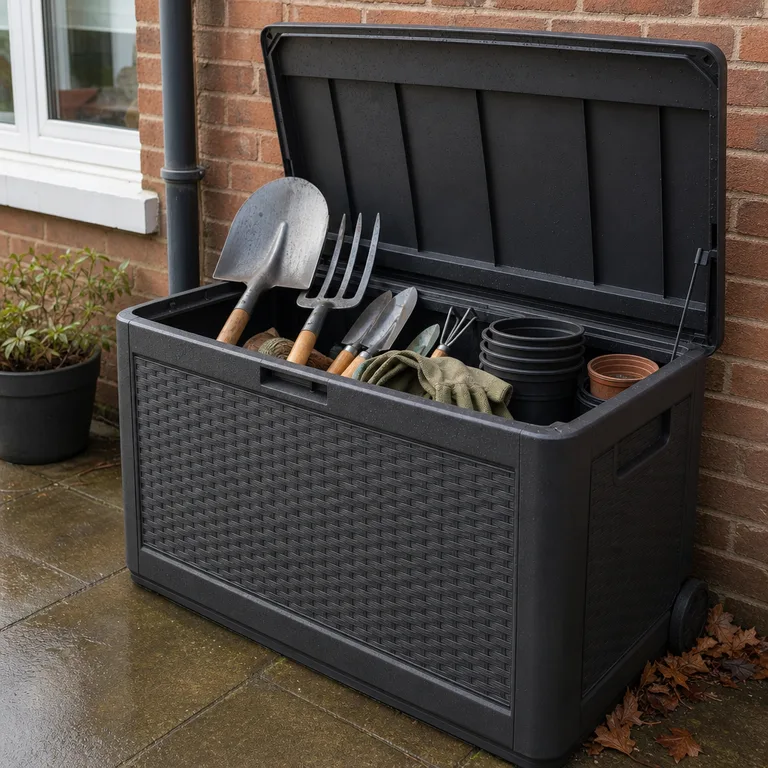
Set the box on firm paving or another level, well-drained base so the bottom is not sitting in standing water. Choose a lid that slopes or sheds water, and avoid overpacking it so tool heads do not trap moisture against each other.
Keep chemicals in their original containers and store them separately from everyday tools. Dry tools before closing the lid, especially after rain or washing.
Worth knowing: Even weather-resistant boxes can develop condensation, so contents need an occasional check.
Related: 12 Small Patio Seating Ideas on a Budget
3.Stand Long Handles in a Drainable Umbrella Stand
A tall weighted umbrella stand can hold a small set of upright spades, rakes, hoes, and cultivators in a covered corner. This is a simple option for gardeners who only need a few long-handled tools and do not want to install wall storage.
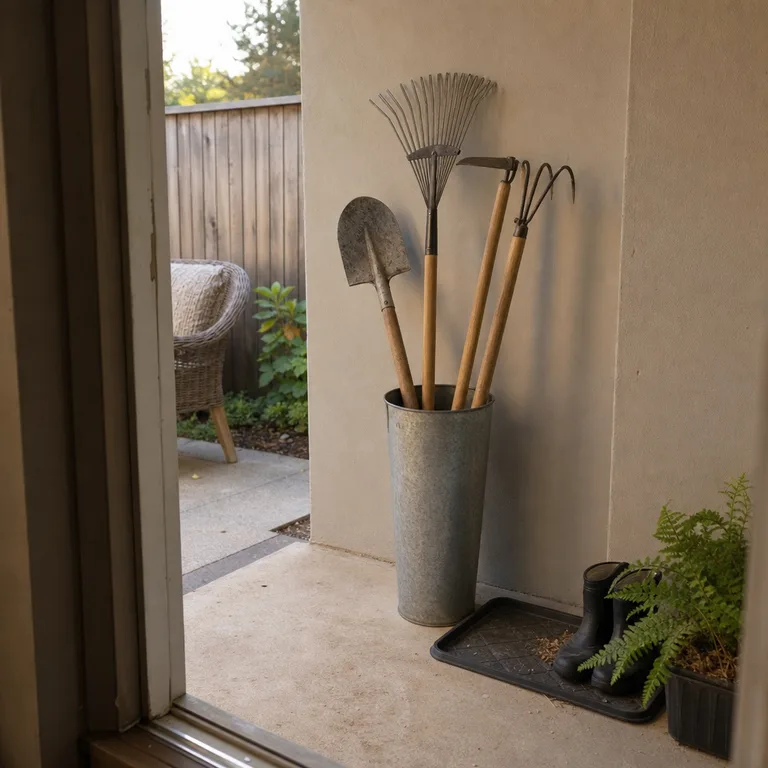
Place a removable boot tray beneath the stand or raise it on small feet so wet tool heads do not sit in a puddle. A stand with a wide base is safer than a narrow, lightweight container that can tip when a rake is pulled out.
Brush off loose soil and let wet tools dry before returning them to the stand. Keep sharp edges facing inward or fitted with guards where children or pets use the patio.
Worth knowing: An open stand does not protect tools from wind-blown rain or theft in an exposed area.
4.Turn a Narrow Gap Into a Vertical Tool Rack
A slim freestanding rack can make practical use of the gap beside a bin, outdoor unit, or fence return. It holds shovels, rakes, and brooms vertically while keeping the main patio clear for seating or containers.
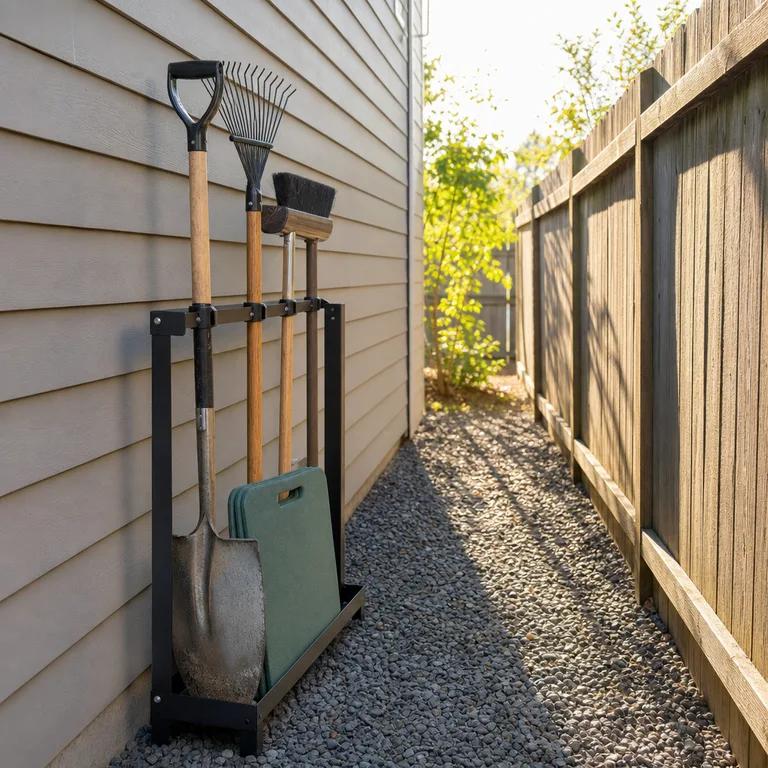
Choose a rack that leaves enough room to walk past without catching handles or tool heads. Put it on stable paving rather than loose gravel, and leave a little air space around the tools so damp handles and metal can dry.
This option can be easier for renters because it does not require holes in a wall. If the gap gets full sun, look for materials that will tolerate heat and fading.
Worth knowing: A rack in a narrow passage can become inconvenient if it blocks access to bins, gates, or utility equipment.
Related: 15 Budget Landscaping Ideas That Make a Small Yard Feel Finished
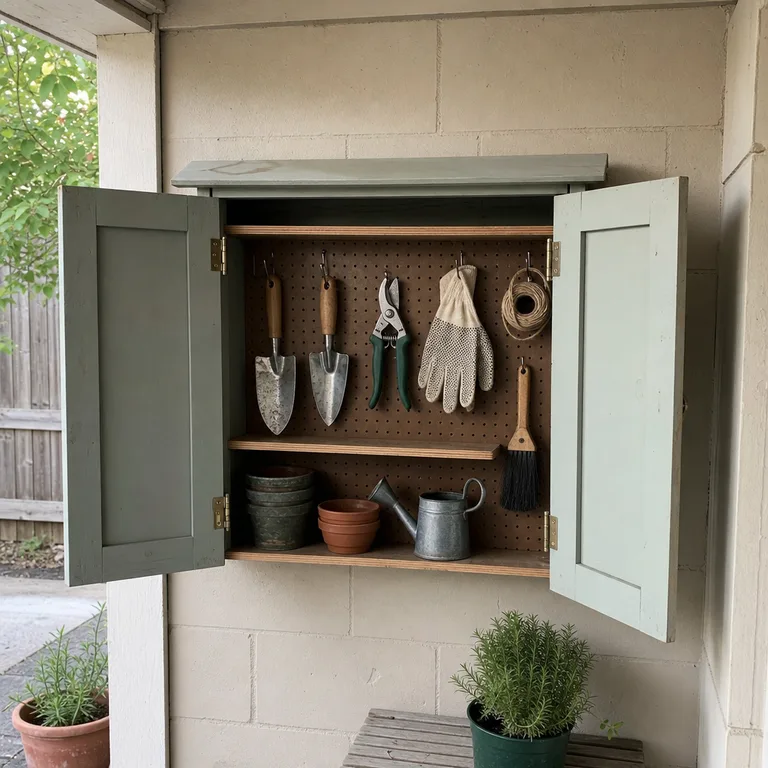
5.Hang Hand Tools Inside a Lidded Wall Cabinet
A shallow cabinet with closing doors protects hand tools from dust, wind, and light rain better than open hooks. Pegboard, small hooks, or narrow shelves make it easier to see trowels, secateurs, gloves, twine, and a hand brush at a glance.
Mount the cabinet on a sheltered wall and use corrosion-resistant hardware. Put pruners and other sharp tools higher up or behind a latch, particularly if children can reach the patio.
A simple painted cabinet can be made from a repurposed wall unit if the wood is suitable for sheltered outdoor use. Check the inside occasionally for dampness, since a tightly closed cabinet can hold condensation.
Worth knowing: A cabinet mounted in direct weather may swell, rust, or leak unless it is properly built and maintained for outdoor conditions.
6.Store Daily Hand Tools in a Covered Potting Bench
A compact potting bench gives small patios a work surface as well as a home for frequently used tools. Keep the tools on a lower shelf or in a removable caddy, with pots and seedling trays grouped nearby rather than scattered around the patio.
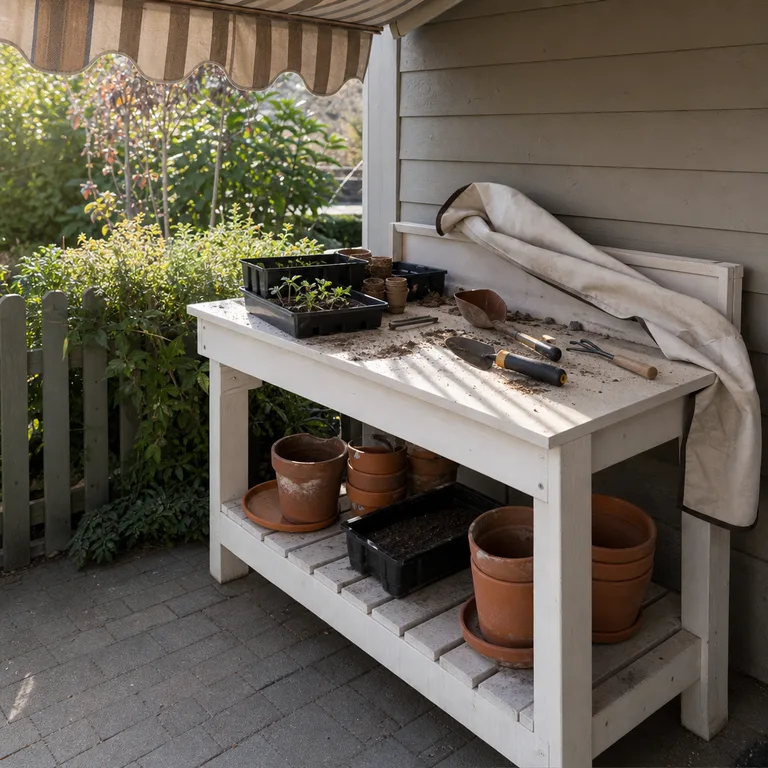
Use a fitted cover when the bench is not in use, or place it under an awning or roofed corner. Add a washable liner to open shelves so spilled soil and wet leaves can be lifted out instead of building up around wood and tool handles.
This setup suits gardeners who pot up plants often and want tools within reach. Let metal tools dry after cleaning rather than covering them while they are still wet.
Worth knowing: Open shelving still needs regular sweeping and may not be dry enough for long-term storage in a rainy climate.
7.Use a Rolling Cart That Moves Under Cover
A narrow rolling cart can hold a watering can, gloves, labels, small pots, and the hand tools used most often. Wheel it beside containers while gardening, then move it under an awning or inside a covered corner when rain starts.
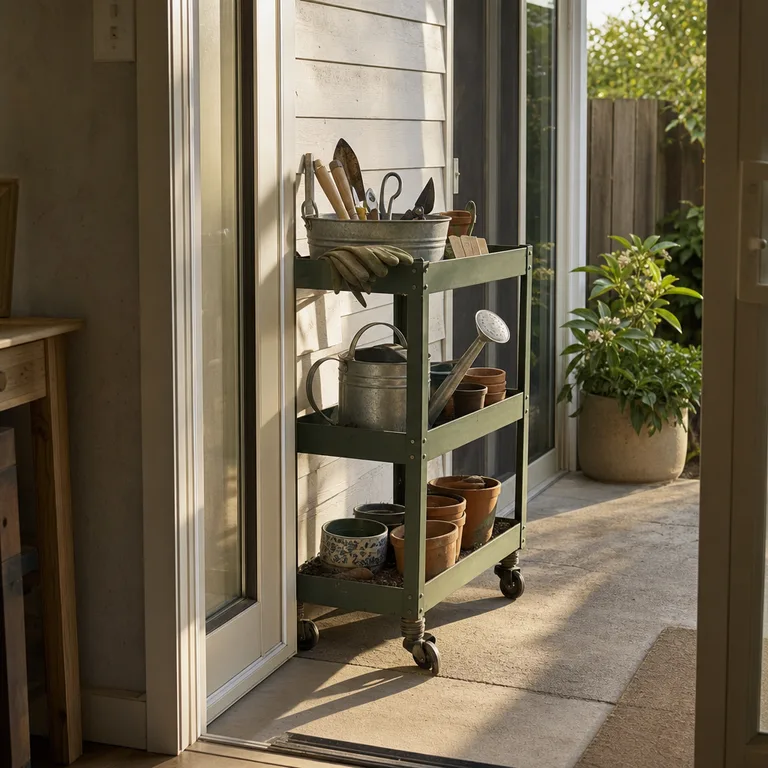
Look for a cart with sturdy shelves and casters that roll smoothly on the surface you have. Locking wheels help on sloped patios, while smooth concrete or pavers are much easier to manage than gravel, uneven decking, or rough soil.
Use small bins on the shelves to stop loose items sliding around. Do not leave sharp tools facing outward at the edge of a cart where someone could brush against them.
Worth knowing: Most rolling carts are not fully weatherproof and need a reliably covered parking spot.
8.Add a Slim Lean-To Locker Along a Fence
A narrow vertical locker turns an unused fence run into storage for a shovel, rake, loppers, folded kneeler, and bags of dry garden supplies. Its enclosed shape is useful when there is no wall under an eave and patio floor space is limited.
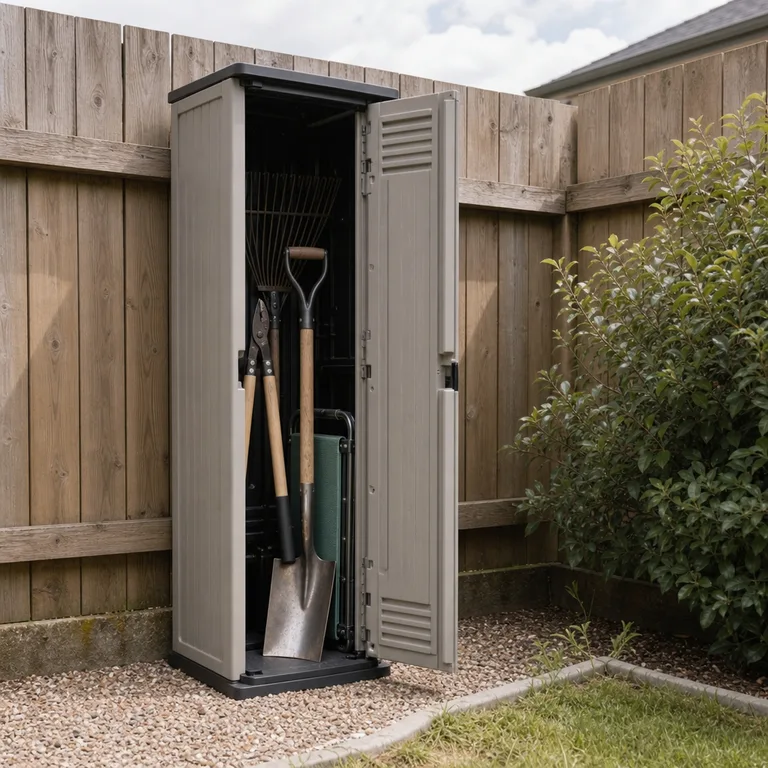
Raise the locker slightly above surrounding soil or gravel so the base stays clear of runoff. Avoid a spot beneath a downspout or roof edge where repeated splashing can work into door seams and leave the ground soggy.
Anchor a tall locker if the manufacturer recommends it, especially in a windy yard. Keep it organized with taller tools at the back and make sure the door can open without hitting planters or furniture.
Worth knowing: A locker needs a level base and enough clearance in front for its doors to open fully.
9.Hang a Fold-Flat Tool Organizer on a Fence
A folding organizer with pockets and loops is useful for lightweight hand tools, gloves, ties, and a small pair of pruning shears. It takes very little space and can be folded away when the patio is being used for meals or visitors.
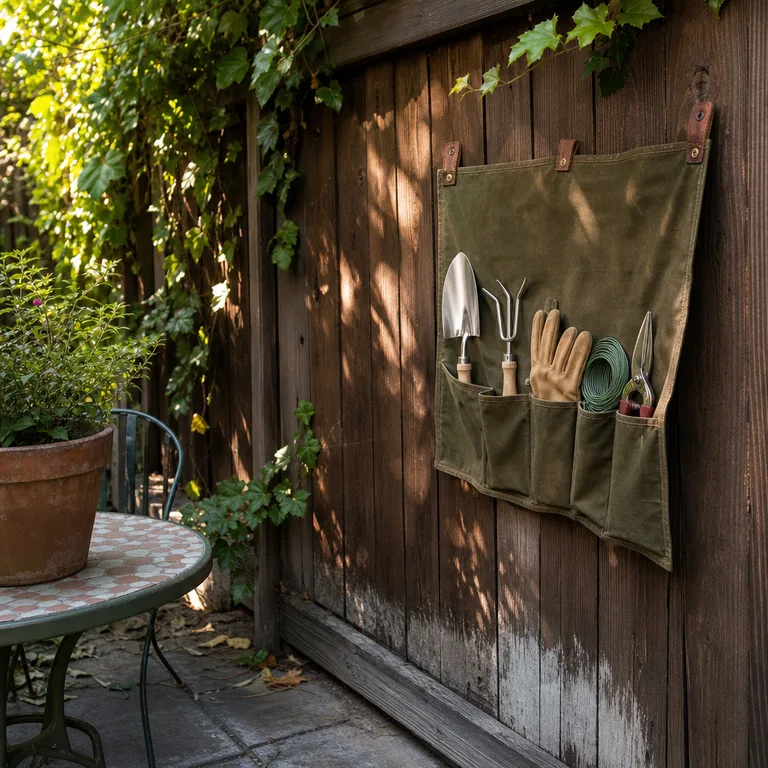
Mount it on the most sheltered part of a fence, ideally beneath an overhang or covered porch edge. Choose hooks that can be removed if needed, but make sure the organizer is secure enough that tools cannot fall when fabric shifts.
Use blade covers for sharp tools and avoid loading pockets with heavy metal items. Fabric organizers are most useful for dry, frequently used tools rather than muddy tools that need to air-dry.
Worth knowing: Canvas and fabric can remain damp after prolonged rain and may mildew in a poorly ventilated corner.
10.Keep Clean Tools in an Indoor-Outdoor Mudroom Bin
A sealed bin in a back-entry nook, utility area, or enclosed porch protects cleaned hand tools from rain, freeze-thaw cycles, and outdoor pests. It works well for trowels, pruners with blade covers, gloves, and kneeling pads that are dry enough to bring indoors.
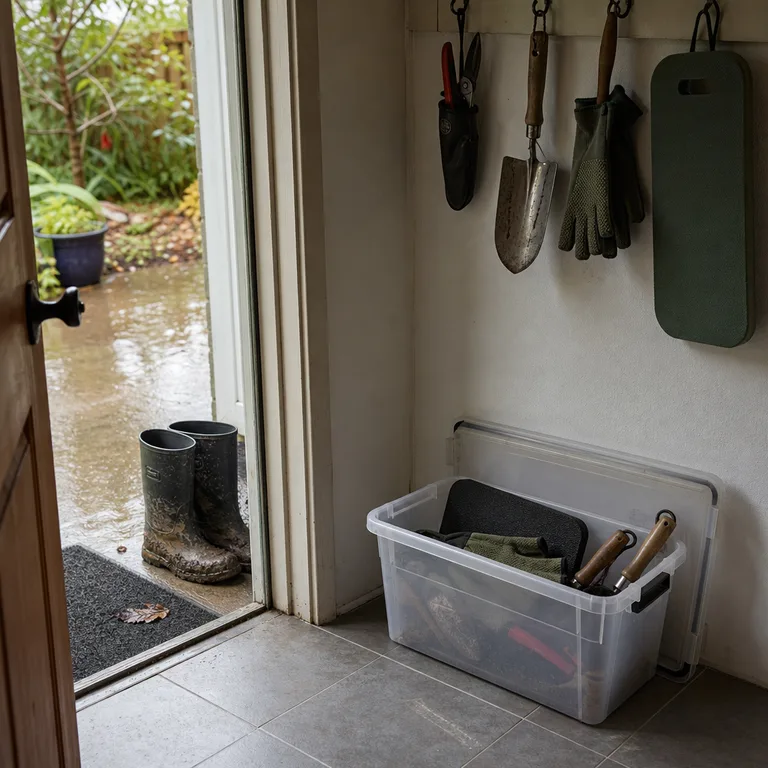
Brush off soil outdoors and clean tools after use before putting them in the bin. Keep muddy boots, soil-covered tools, and garden chemicals outside or in separate storage so the entry stays cleaner and supplies are not mixed together.
Wall hooks near the bin can hold gloves or a small hand brush while tools dry. This approach is especially useful where winters are hard on metal, but it also helps keep a small patio less cluttered year-round.
Worth knowing: Indoor storage requires a consistent cleaning routine, or soil and moisture will quickly make the entry untidy.
About the author
Dana Ruiz, Senior editor
Dana writes about small-space living, storage and low-cost decorating.
Keep reading
10 Small Raised-Bed Garden Ideas for Beginners on a Budget
October 4, 2026
10 Ways to Tidy a Bare Dirt Corner Without Building a Patio
October 4, 2026
10 Small Backyard Zone Ideas for Play and Quiet Seating
October 2, 2026
10 Fall Porch Planter Ideas Using Pots You Already Own
October 1, 2026