10 Small Backyard Zone Ideas for Play and Quiet Seating
A small backyard can serve active family time and quieter seating when its boundaries move instead of taking up permanent space. These ideas use lightweight screens, planters, rugs, and storage pieces to define activity without blocking sightlines or toy clearance.
As an Amazon Associate I earn from qualifying purchases.
1.Roll a Weatherproof Outdoor Rug Out for Play Time
A low-pile outdoor rug gives two chairs or a small table a clear visual home without turning the whole patio into a permanent seating area. It makes a hard surface feel more settled, while the nearby lawn or concrete stays visibly open for games and ride-on toys.
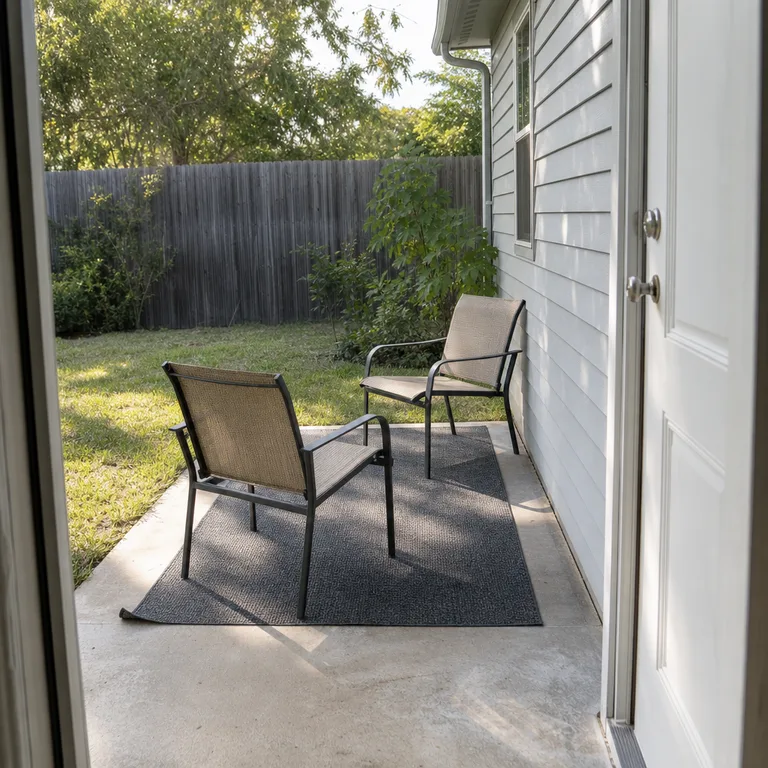
Choose a rug that is easy to roll rather than a thick, heavy style. When active play needs the full area, shake it out, roll it toward the wall, and secure it in a dry covered spot; allow the surface underneath to dry after rain so moisture does not sit against the patio.
Worth knowing: A rug can become slippery or hold dampness in persistently wet climates, so it needs regular lifting and drying.
Related: 12 Small Patio Seating Ideas on a Budget
2.Park Rolling Planters Between the Lawn and Seating
Two substantial planters on locking casters can mark the line between a seating nook and a play area. The plants soften the boundary without making supervision difficult, and the planters can roll together against a fence when the yard needs to be fully open.
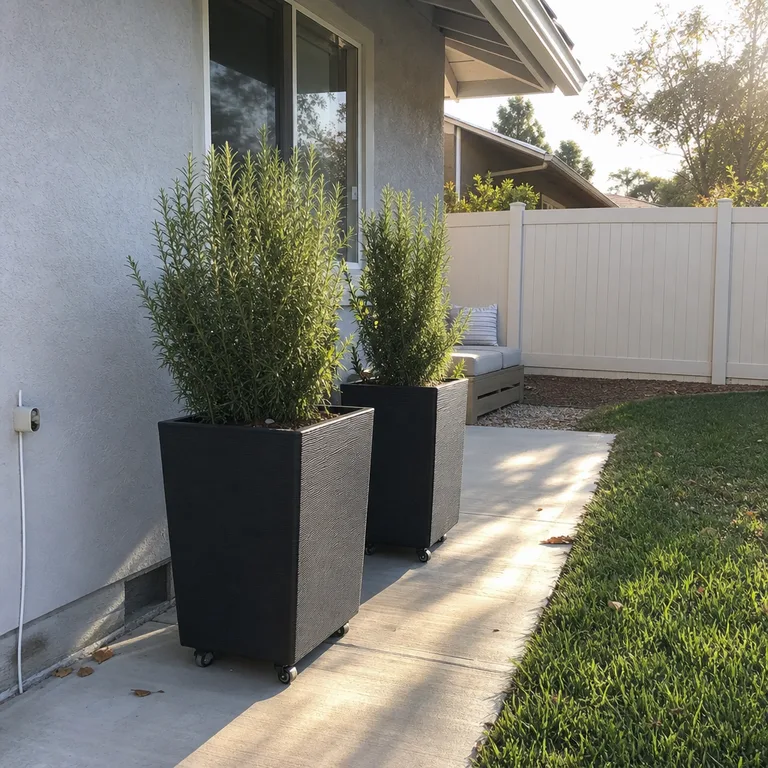
Use lightweight outdoor containers rather than heavy built-in boxes, then add potting mix and plants suited to the available sun. Lock the wheels whenever the planters are in place, and choose a route without steps or loose gravel so moving them does not become a strain.
Worth knowing: Even wheeled planters get heavy after watering, especially with large containers or wet soil.
Related: 12 Container Garden Ideas for a Small Patio on a Budget
3.Hang a Curtain Panel on a Freestanding Frame
A single outdoor curtain panel gives a quiet chair some separation from the busiest part of the yard. It creates a softer view from the seat while remaining easy to tie back when adults need an unobstructed view of children at play.
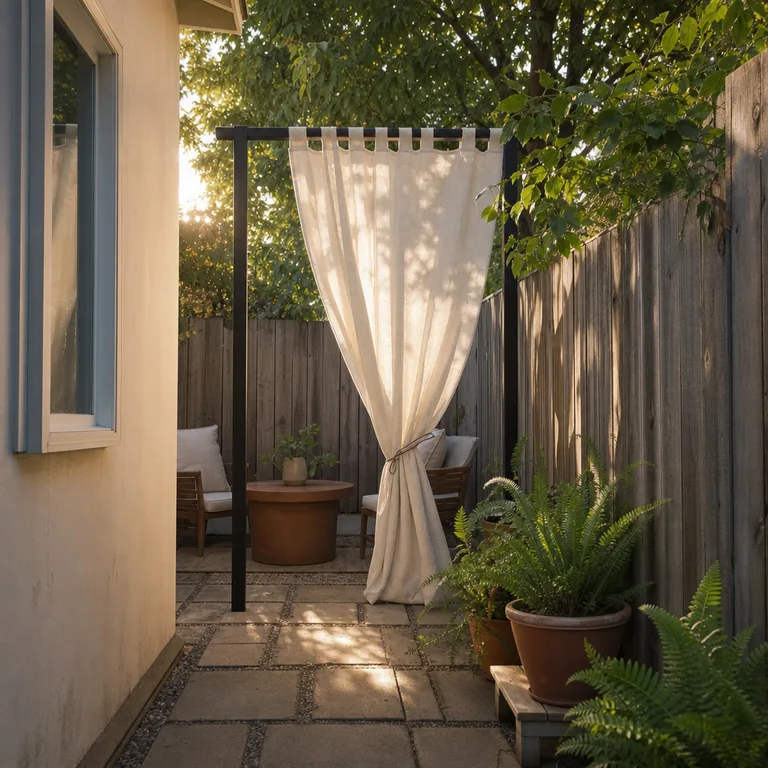
A freestanding frame avoids drilling into siding or a rental fence, and a washable outdoor-rated panel is practical for dust and pollen. Keep the fabric gathered when it is windy, and position the frame so it does not narrow the main route between the door and the lawn.
Worth knowing: A fabric screen needs to be tied back or stored during strong wind and severe weather.
Related: 10 Budget Patio Privacy Ideas for a Small Seating Area
4.Use Fold-Flat Benches Along the Fence
Fold-flat benches give the yard extra places to sit without leaving furniture in the running path. Open them for a family visit, chalk time, or a short break, then fold them away when the central space needs to stay clear.
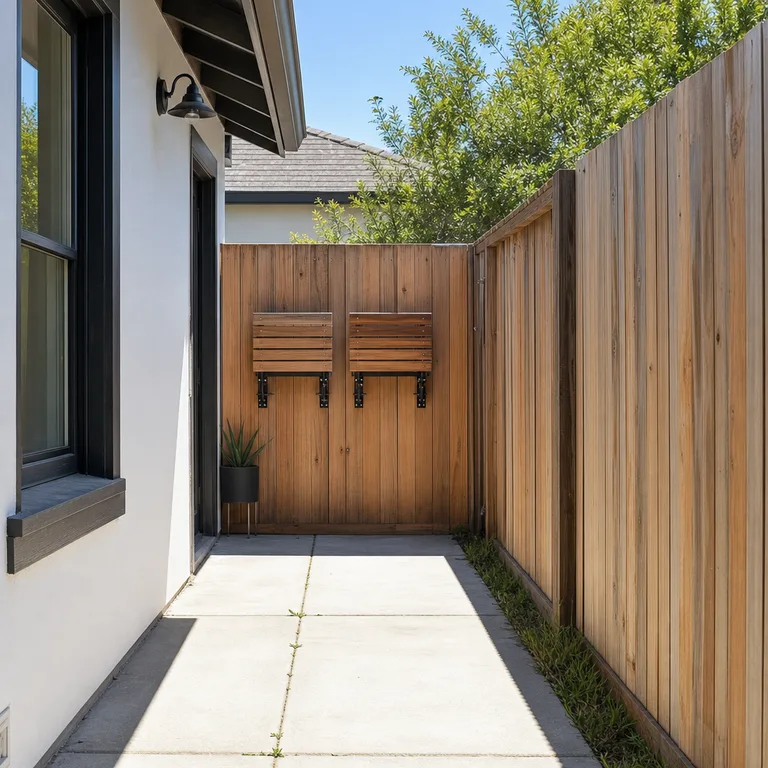
Place the benches along a sound fence or exterior wall and leave enough room for people to pass when they are open. Exterior-rated hardware and a well-sealed wood surface matter because repeated rain and sun exposure can wear ordinary indoor materials quickly.
Worth knowing: Installation requires a strong mounting surface and may not be allowed on a shared or rental fence.
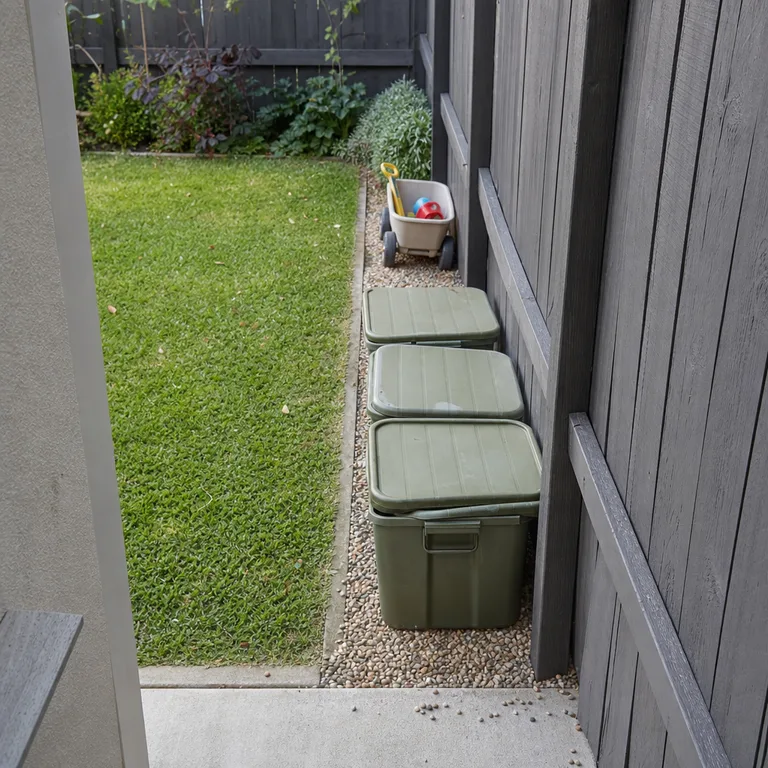
5.Create a Toy Parking Strip With Storage Crates
A row of lidded crates along one fence creates a simple return point for balls, chalk, skipping ropes, and loose outdoor gear. Keeping these items at the perimeter protects the seating area from clutter and leaves the center of the yard easier to use.
Set the crates on a stable surface such as paving, compacted gravel, or a narrow edged strip so they do not sink into mud. Give each category of gear its own crate or label, which makes cleanup easier for children without adding a large storage building.
Worth knowing: Crates can look cluttered if they are overfilled, and they need secure lids in rainy areas.
6.Divide the Yard With a Lightweight Slatted Screen
A freestanding slatted screen gives a reading chair or small conversation spot a sense of enclosure while keeping daylight and airflow moving through the yard. The gaps also preserve partial sightlines into the play zone, unlike a solid wall or tall hedge.
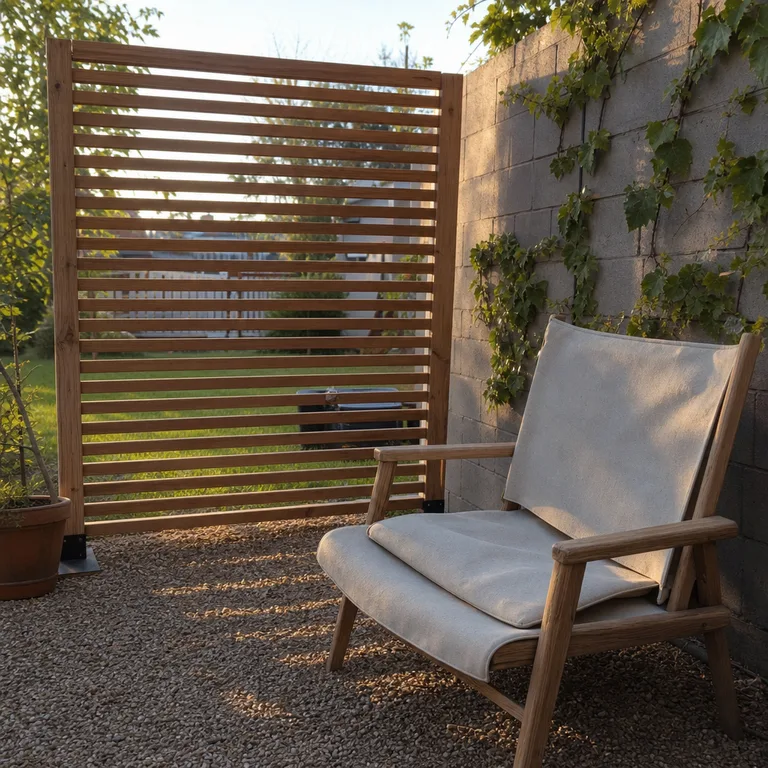
Use a screen with a broad, weighted base and place it on level paving, gravel, or firm ground. Keep it out of the likely path of balls and ride-on toys, and turn it slightly rather than setting it straight across the yard to make the division feel less abrupt.
Worth knowing: Freestanding screens can tip in wind or during rough play unless they are properly weighted and repositioned.
7.Set Out Interlocking Deck Tiles for a Temporary Sitting Pad
Interlocking deck tiles can define a seating pad on plain concrete, making a small pair of chairs look intentional instead of scattered. Because the tiles lift apart, the area can return to open hard surface when the family needs more room for play.
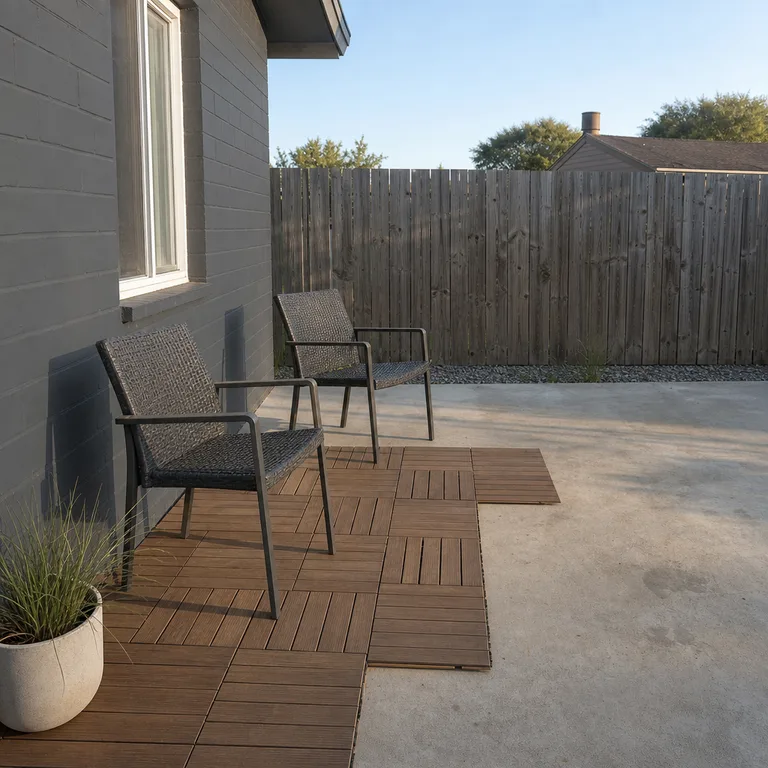
Start with a small rectangle that fits the furniture rather than covering the entire patio. Sweep underneath periodically and check that rain can still drain freely, especially on concrete with low spots or near a doorway.
Worth knowing: These tiles work best on level, well-draining hard surfaces and can shift on uneven ground.
8.Move a Narrow Potting Cart Into the Transition Area
A narrow rolling cart can act as a gentle transition between chairs and the open lawn. Use it for drinks, books, small garden tools, or a few potted herbs, then wheel it to the edge when a larger play area is needed.
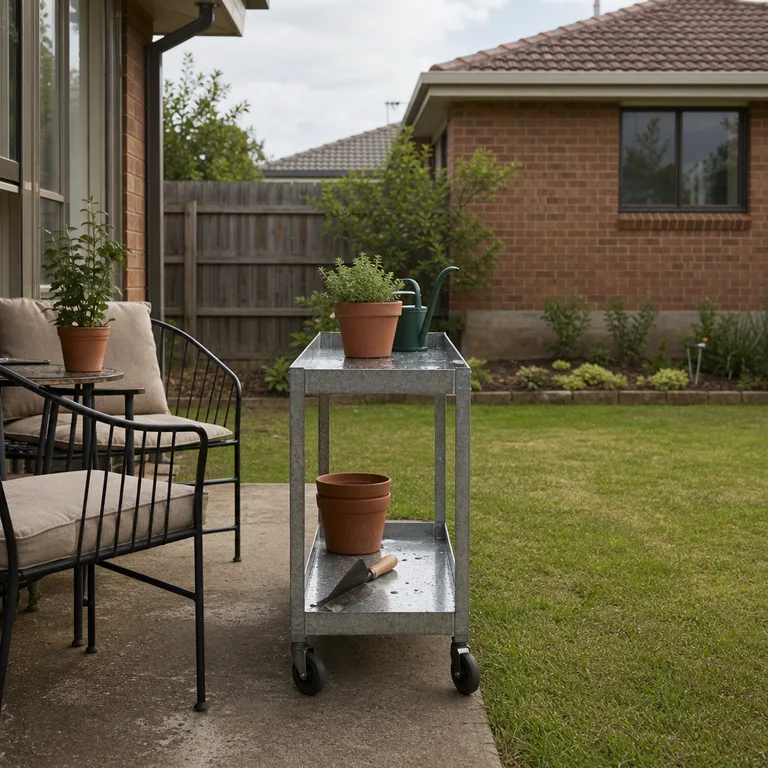
Choose a cart with locking wheels and a compact footprint so it does not become another obstacle. Keep breakable items on the upper shelf only while the seating zone is in use, and move the cart away from the active area before ball games begin.
Worth knowing: A rolling cart is useful only if there is a smooth, level route to move it across the yard.
9.Use Pop-Up Shade Only When the Seating Zone Is Active
A compact folding canopy gives a seating area temporary shade on hot, bright afternoons while leaving the lawn open for play. When it is folded away, the yard feels larger and sightlines from the house remain clear.
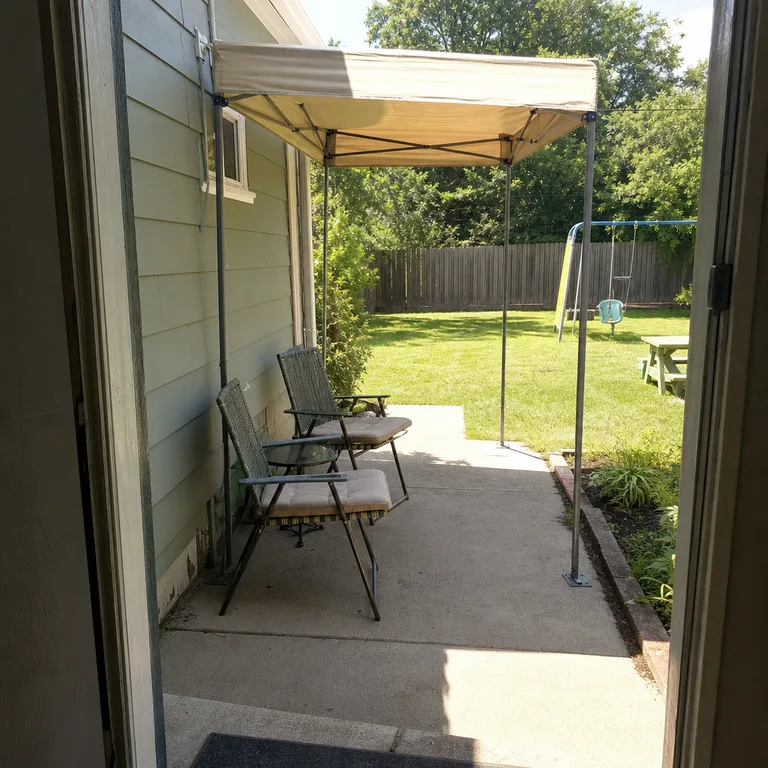
Set it over a small seating pad rather than across the middle of the yard, and use proper weights on every leg. Fold the canopy down after use instead of leaving fabric exposed to wind, and check local rental or neighborhood rules if it will be visible over a fence line.
Worth knowing: Pop-up canopies need active setup and takedown, and they are not a safe substitute for a permanent structure in windy conditions.
10.Border a Quiet Corner With Stackable Stools
A few lightweight stackable stools can loosely outline a quiet corner around a low table, creating an easy place for conversation or a child to sit with a book. Their low profile keeps the boundary informal and does not block the view across a compact yard.
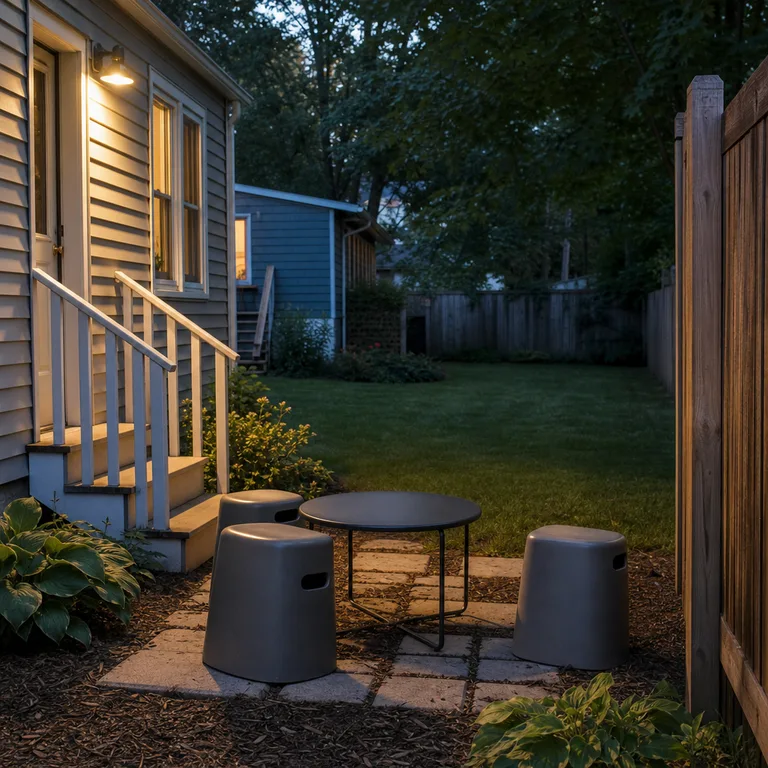
Use stools that can serve as extra seats, side tables, or temporary surfaces for outdoor activities. When the entire lawn or patio is needed, stack them against the house or under cover, and keep them off soft ground where legs may sink after rain.
Worth knowing: Stools provide flexible seating but offer less back support than chairs for long periods of sitting.
About the author
Dana Ruiz, Senior editor
Dana writes about small-space living, storage and low-cost decorating.
Keep reading
10 Fall Porch Planter Ideas Using Pots You Already Own
October 1, 2026
10 Budget Garden Path Ideas for a Short Backyard Route
September 30, 2026
12 Budget Garden Edging Ideas for One Small Flower Bed
September 29, 2026
10 Outdoor Lighting Ideas for a Small Yard Without New Wiring
September 28, 2026