10 Fall Porch Planter Ideas Using Pots You Already Own
Existing ceramic, plastic, metal, and terracotta pots can carry an autumn entrance with a few seasonal plants, cut branches, and simple natural materials. Match the planting to the container’s drainage, the porch’s sun exposure, and local frost timing so the display stays tidy through the season.
As an Amazon Associate I earn from qualifying purchases.
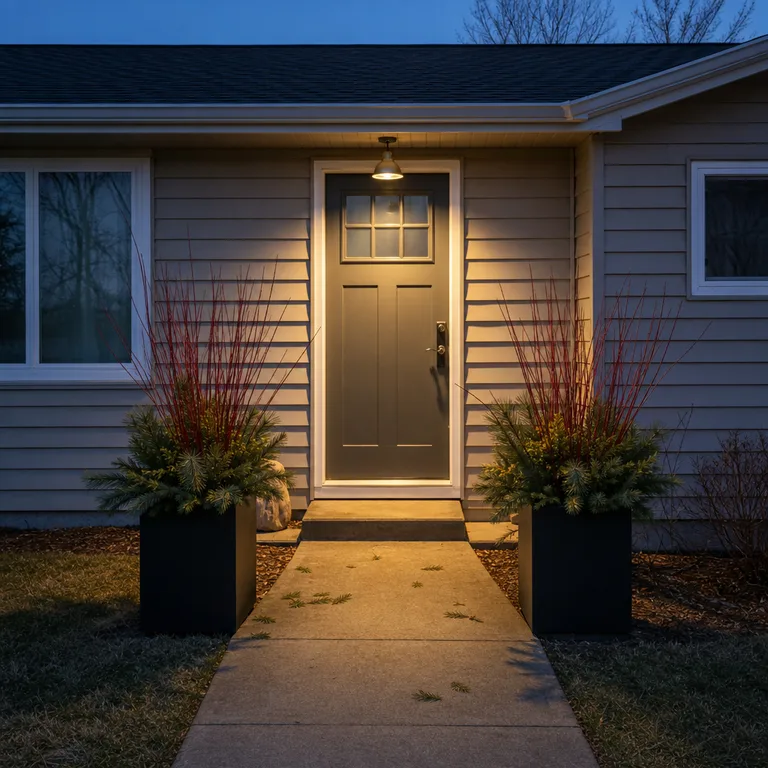
1.Layer mums with trailing ivy in matching front-step pots
Set one compact garden mum near the center of each pot, then tuck trailing ivy around the outer edge. A light layer of bark mulch hides exposed potting soil and gives the pair a finished, balanced look from the walkway.
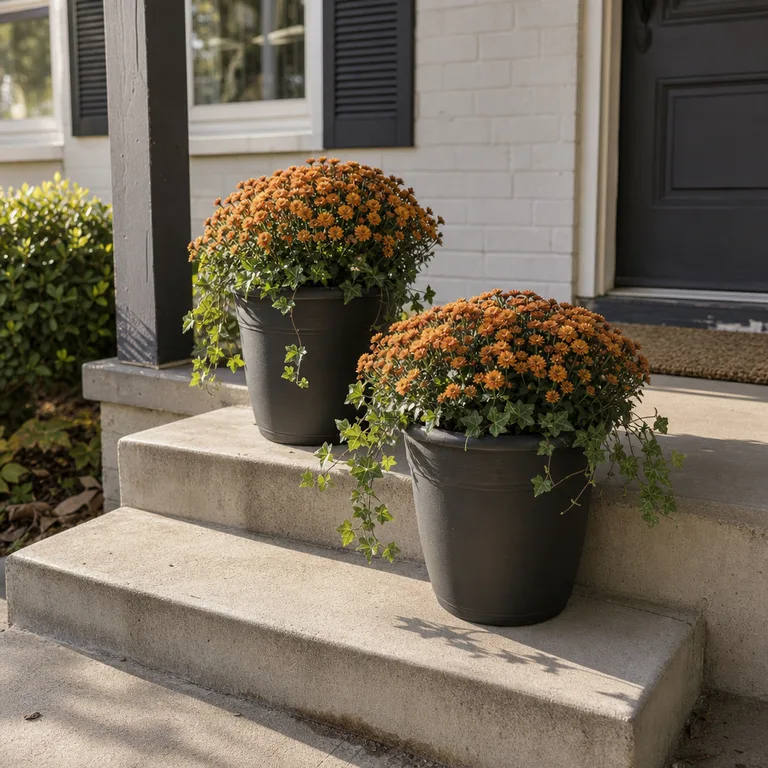
This combination works best on steps with part sun, where mums can open well without drying too quickly. Reuse the potting soil only if it still drains freely; otherwise, refresh the top portion with fresh mix and make sure each container has an open drainage hole.
Choose mums at a similar stage of bloom so the two pots read as a pair. Remove faded flowers as they appear, and move lightweight containers closer to the wall if an early hard frost is forecast.
Worth knowing: Mums often decline after repeated hard frosts, and ivy may need protection if local winter temperatures are severe.
Related: 10 Front Porch Decorating Ideas for a Small Budget
2.Fill tall empty pots with birch branches and dried grasses
Turn empty tall containers into a no-soil fall display with pale birch stems and dried grass plumes. The upright branches provide height, while the grasses soften the outline and keep the arrangement from looking too rigid.
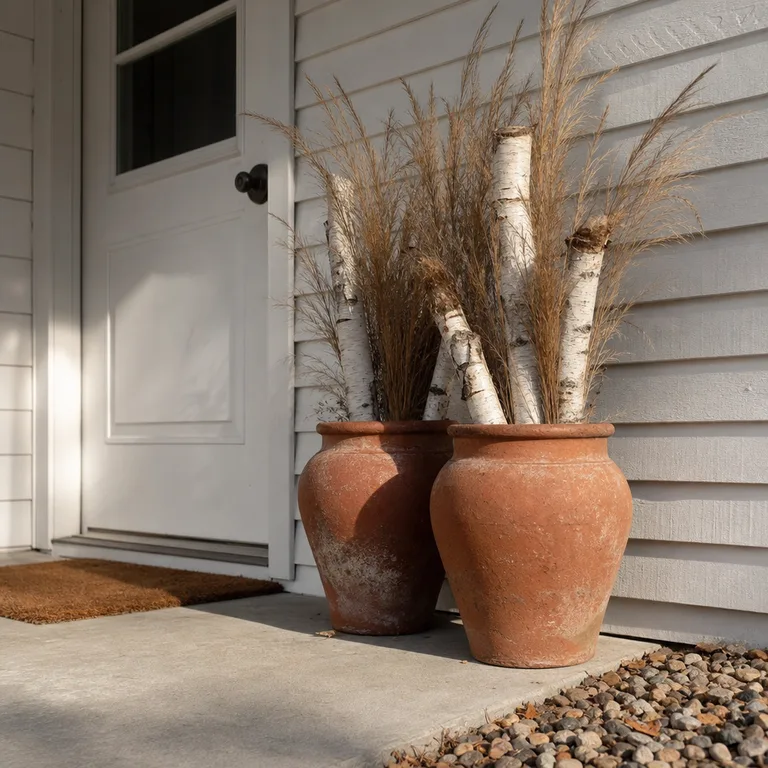
Anchor the stems in pea gravel, stones, or dry floral foam set low inside the pot. Use a few thicker branches first, then add grasses in small groups rather than making every stem stand at the same height.
This is especially useful for containers that are too deep to fill with plants or sit in a shaded entry. Place the heavier material at the base, and check the arrangement after windy weather so it does not become top-heavy.
Worth knowing: Dried grasses can shed and may look untidy in exposed, rainy, or very windy entrances.
3.Use ornamental cabbage in low bowl-shaped planters
Plant ornamental cabbage or kale closely in wide, low planters for a dense fall arrangement. Their ruffled leaves add color and texture even when the porch does not have enough sun for a full display of flowering plants.
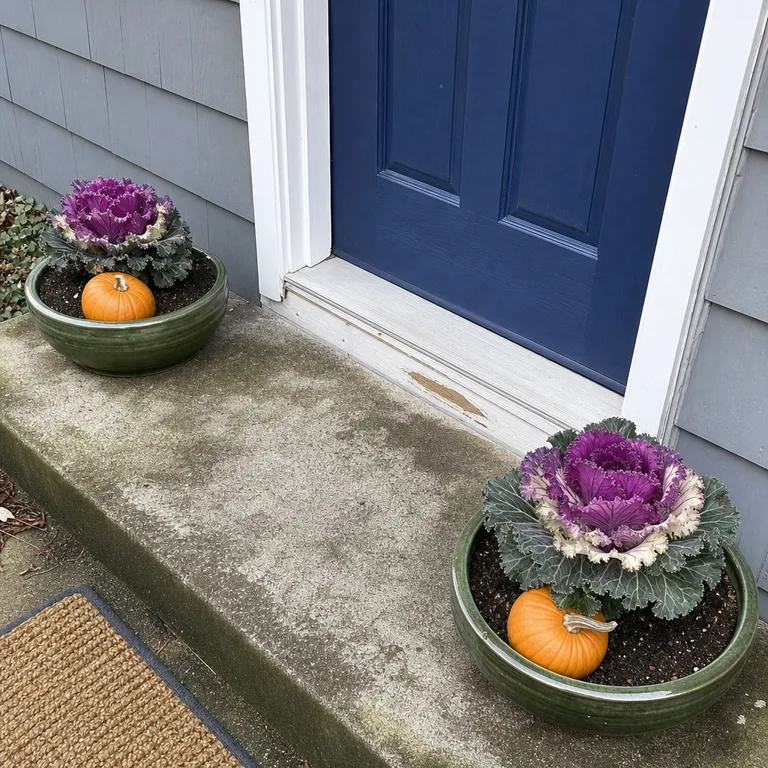
Nestle small pumpkins around the plants rather than burying them in damp soil. Keep the pumpkins resting above the soil surface, where air can circulate and soft spots are easier to notice.
Use this idea in containers with reliable drainage, since ornamental cabbage does not do well in constantly wet soil. Cool weather usually helps the leaf color deepen, making this a practical choice for many autumn climates.
Worth knowing: Low bowls can fill with rainwater if the drainage hole is blocked, which can quickly damage the plants.
4.Plant golden sedge around a single pumpkin
Place one medium pumpkin in each existing pot and plant golden sedge around it. The fine, arching blades add movement and a lighter texture than broad-leaved fall plants, while the pumpkin gives the arrangement a clear focal point.
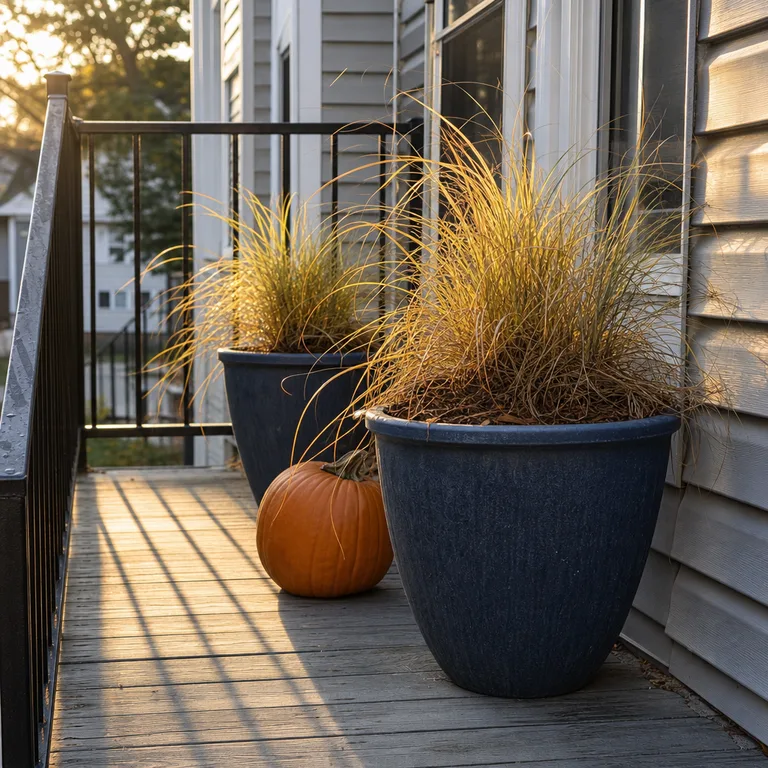
Use potting mix around the sedge and leave the pumpkin sitting on top rather than pressing it into wet soil. Matching pumpkins are not required, but choosing similar sizes helps the two containers feel connected.
A sheltered porch is the best setting for this combination. Sedge can bend flat in heavy rain or strong wind, so turn the pots occasionally and remove damaged blades if the weather is rough.
Worth knowing: This look needs occasional tidying after storms because the grass can become flattened or uneven.
5.Add red twig dogwood to evergreen-filled pots
Refresh pots that already hold small evergreens by adding upright red twig dogwood stems. The clear red branches stand out against dark green foliage and add height without requiring a full replanting.
Push cut stems firmly into the soil, spacing them in a loose fan rather than a stiff row. If the pot is exposed to wind, gather the tallest stems with discreet twine or shorten them so they do not sway against the house.
Keep the soil lightly moist until sustained freezing weather arrives, especially if the evergreen is still actively growing. This approach works well near a door where the simple color contrast can be seen from the street.
Worth knowing: Cut dogwood stems are decorative rather than permanent plants, and they may need replacing if they fade or loosen in the soil.
Related: 15 Budget Landscaping Ideas That Make a Small Yard Feel Finished
6.Make a corn-husk and wheat bundle for unused urns
Fill unused urns with tied bundles of wheat and corn husks for a dry arrangement that does not need soil, watering, or daily deadheading. The warm tan materials suit aged concrete, terracotta, metal, and other weathered containers particularly well.
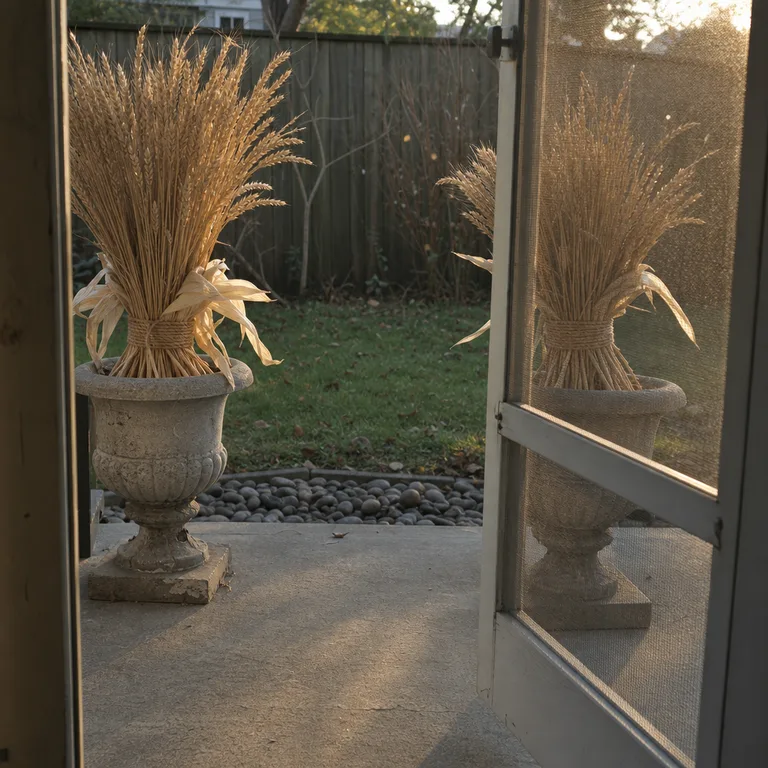
Weight the bottom of each urn with river stones, then stand the bundles in the center and secure them with jute twine. Let one or two stems lean slightly outward so the pair looks natural rather than overly formal.
Keep the display under a covered entry when possible. Dried plant materials hold up better there and are less likely to become matted after repeated rain.
Worth knowing: Dry materials can mildew in damp conditions and should be kept away from open flames or hot light fixtures.
7.Mix pansies and small gourds in glazed pots
Plant cool-season pansies around the rim of each glazed pot and set a few small gourds on the visible soil. The flowers bring in color, while the gourds make the containers look seasonal without crowding the plants.
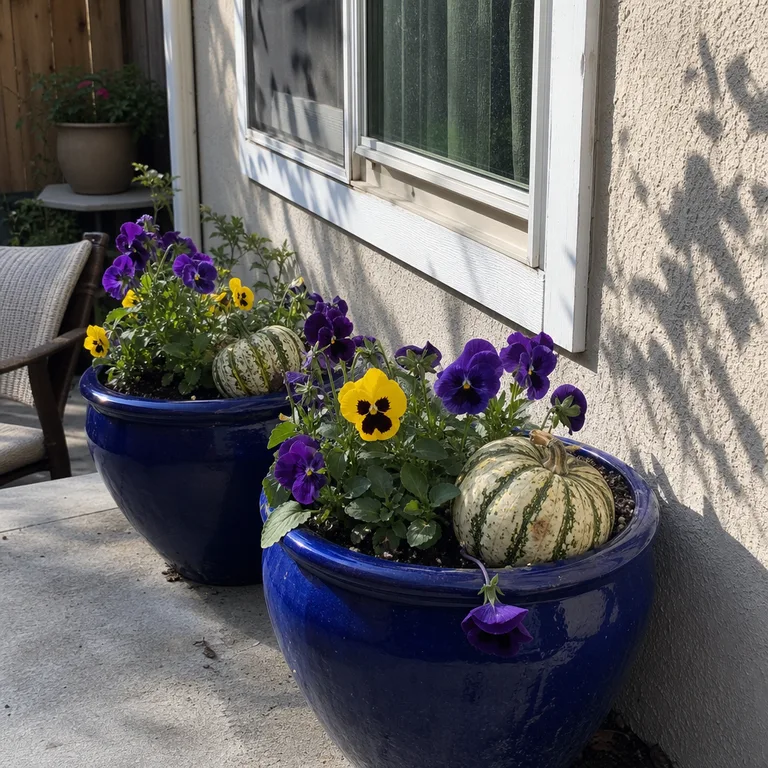
Pansies generally perform best with morning sun or bright shade, especially where autumn afternoons remain warm. Water the soil rather than the blooms, and remove spent flowers to keep the planting neat.
Use only a few gourds per pot so air can move around the pansies. If the existing pot has no drainage, use it as a cover pot around a smaller nursery container instead of planting directly inside.
Worth knowing: Gourds can soften or discolor in wet weather, so they may need to be replaced before the pansies are finished blooming.
Related: 12 Container Garden Ideas for a Small Patio on a Budget
8.Create a rustic lantern base with moss and apples
Use a broad existing planter as a base for a battery lantern, then ring it with sheet moss, firm apples, and pinecones. This makes an evening focal point without needing to fill the container with a traditional planting.
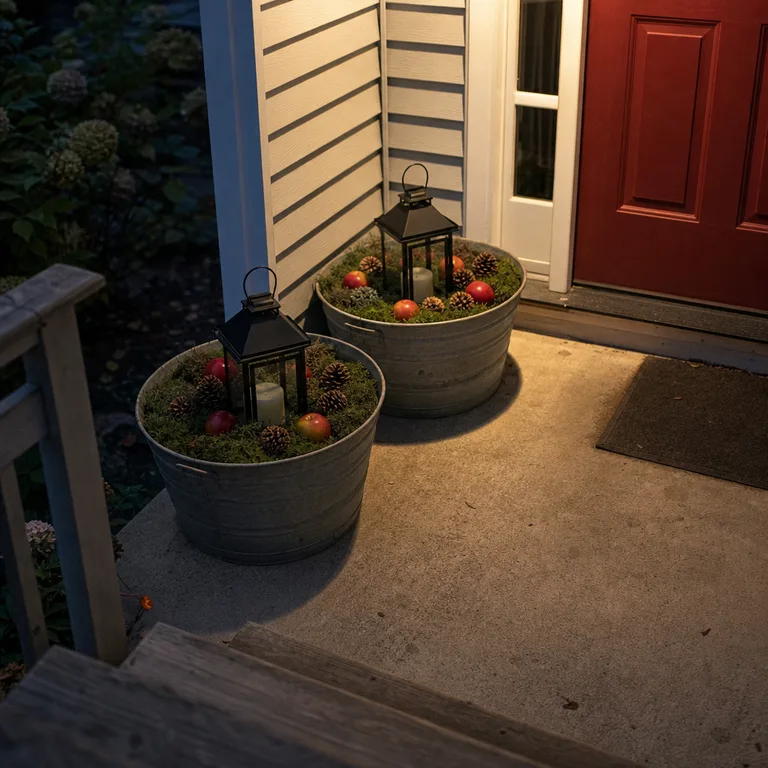
Set the lantern on a stable, level surface inside the pot and build the natural materials around it. A battery-operated candle is the safer choice for a porch display, especially near dry moss and leaves.
Choose apples with unbroken skin and check them often. Replace any fruit that softens, leaks, or attracts insects, and keep the arrangement under cover if frequent rain is expected.
Worth knowing: Fresh apples are temporary decor and can attract pests, particularly in warm weather or near wildlife.
9.Use purple fountain grass with copper-toned foliage
Pair purple fountain grass with compact copper-toned heuchera for a foliage-focused container that does not rely on flowers. The grass adds height and movement, while the heuchera fills the lower part of the pot with broad, warm-colored leaves.
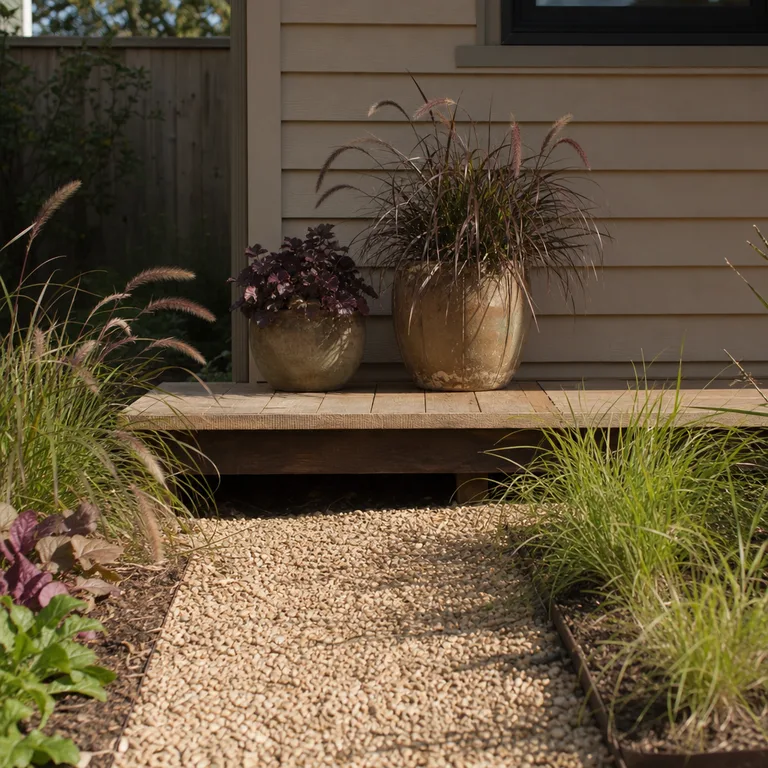
Use a larger container so the grass has room to arch naturally without covering the doorway or walkway. Place the pots in sun to part sun, and rotate them if one side receives noticeably stronger light.
This planting looks most cohesive when both containers use the same grass and the same foliage color, even if the plants are not identical in size. Water when the top layer of soil dries, since containers can dry faster than in-ground beds.
Worth knowing: Purple fountain grass is often treated as a seasonal plant in colder climates and may not survive winter outdoors.
10.Set evergreen cuttings among pumpkins and pinecones
Fill existing pots with fresh evergreen cuttings, then add pumpkins and pinecones across the surface. Pruned cedar, pine, or other suitable yard branches can provide the bulk of the display and give a plain container a fuller shape.
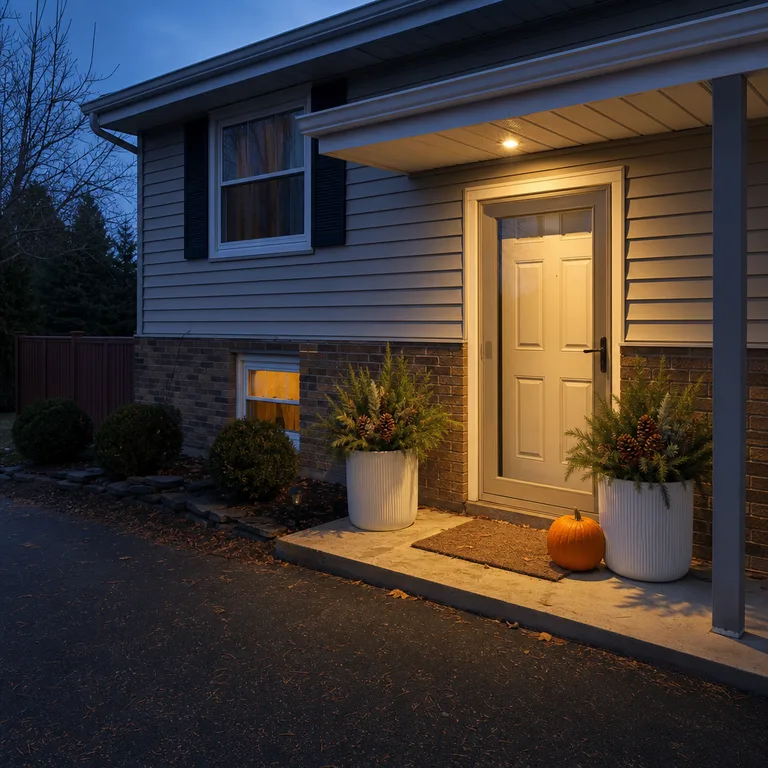
Start with the longest cuttings at the back and sides, then layer shorter pieces toward the front so the pot looks full from the entrance. Keep the branch ends in slightly damp soil or floral foam if possible, but do not block the pot’s drainage hole.
Check the greens regularly and clear away fallen needles from the doormat and porch steps. This display works well for a shaded or covered entrance where cut foliage is less likely to dry out quickly.
Worth knowing: Fresh cut evergreens eventually become brittle, and the arrangement needs removal once the branches dry out noticeably.
About the author
Dana Ruiz, Senior editor
Dana writes about small-space living, storage and low-cost decorating.
Keep reading
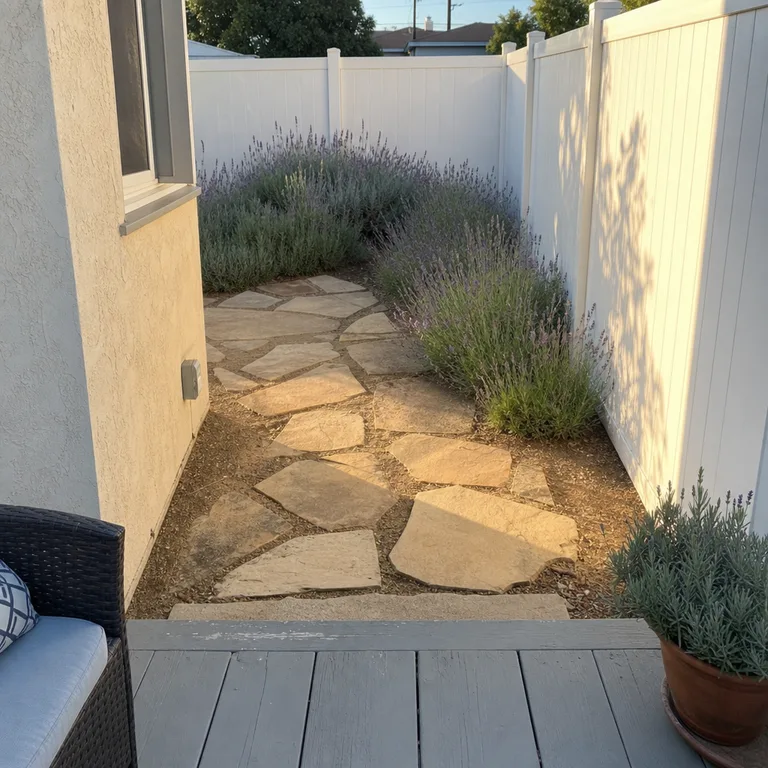
10 Budget Garden Path Ideas for a Short Backyard Route
September 30, 2026
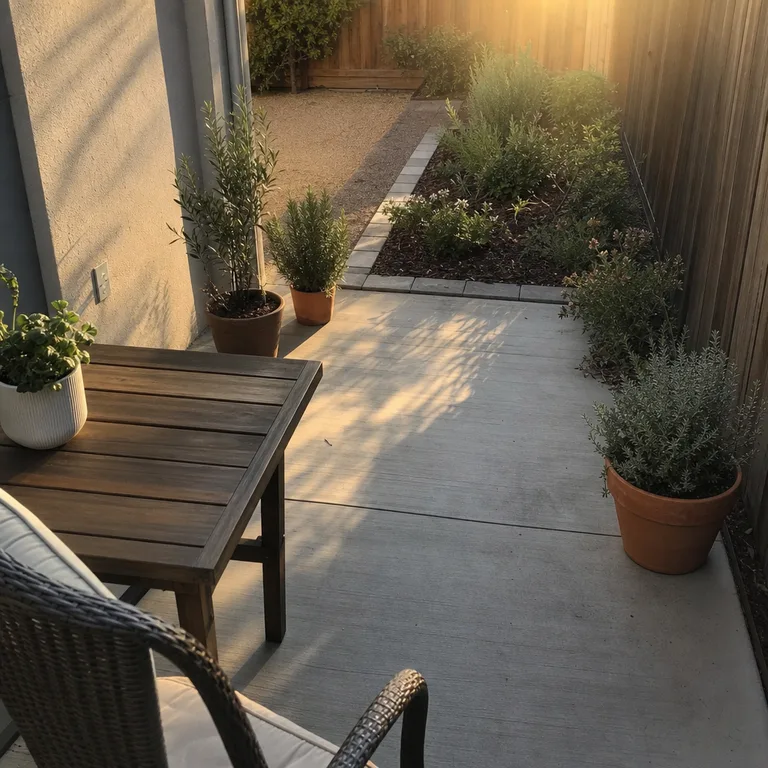
12 Budget Garden Edging Ideas for One Small Flower Bed
September 29, 2026
10 Outdoor Lighting Ideas for a Small Yard Without New Wiring
September 28, 2026
10 Nightstand Alternatives for Bedrooms With Almost No Bedside Space
October 1, 2026