10 Budget Headboard Ideas That Work With a Basic Bed Frame
A plain bed frame can look intentional when the wall, textiles, or a lightweight structure behind it gives the bed a clear visual anchor. These options suit different rental rules and mounting skills, while keeping heavy or unsecured pieces away from the pillow area.
As an Amazon Associate I earn from qualifying purchases.
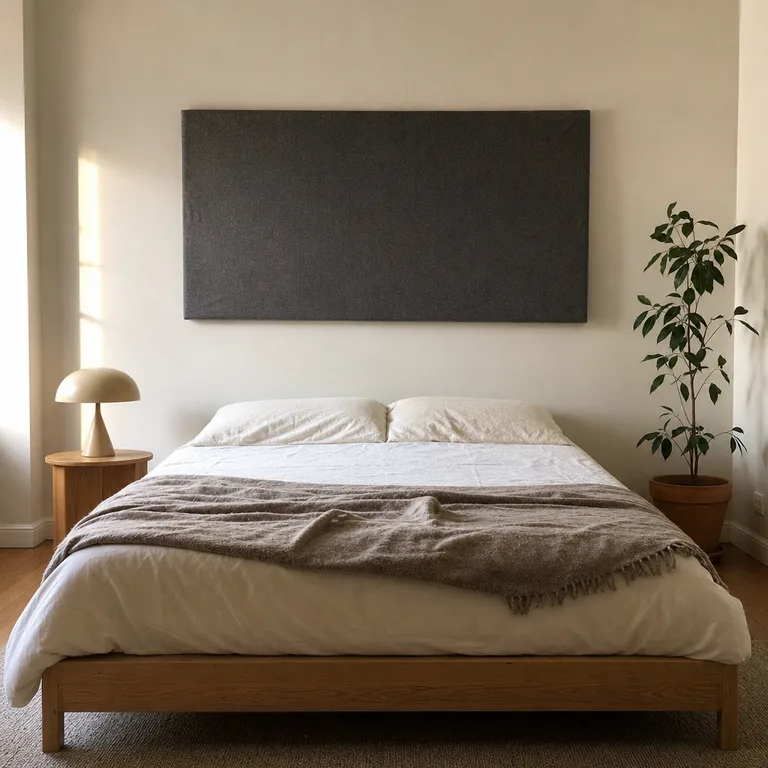
1.Paint a Headboard Shape Directly on the Wall
Painted shapes give the bed a backdrop without adding furniture or taking up floor space. An arch softens a boxy metal frame, while a wide rectangle or scalloped edge can make a simple platform bed feel more deliberate.
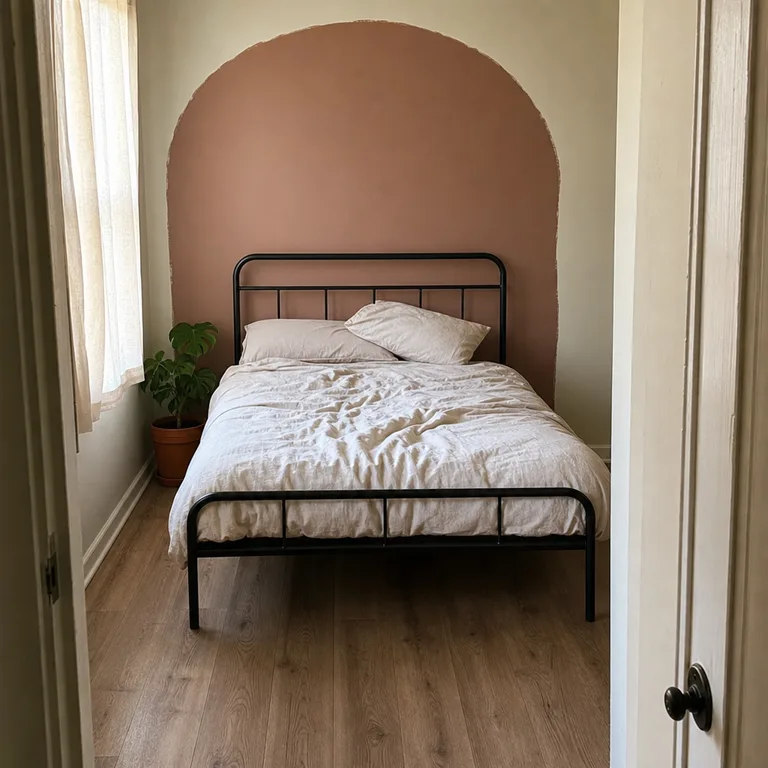
Choose a shape that extends beyond each side of the mattress and rises clearly above the pillows. Matte wall paint, low-tack tape, and a careful brush line keep this project affordable; it is also easy to adapt to colors already in the bedding.
This is a good low-cost option when the frame is too plain to attach a headboard to, but renters should get approval before painting. Keep the design high enough that pillows will not constantly rub against the painted edge.
Worth knowing: It is not suitable for rentals that prohibit painting, and a poorly patched repaint can be noticeable when moving out.
Related: 12 Cozy Bedroom Refresh Ideas That Keep Your Existing Furniture
2.Hang a Lightweight Fabric Panel Behind the Bed
A woven cotton panel, flat quilt, or simple tapestry brings color and texture to the wall behind a basic frame. Fabric also softens rooms with hard flooring, bare walls, and metal furniture.
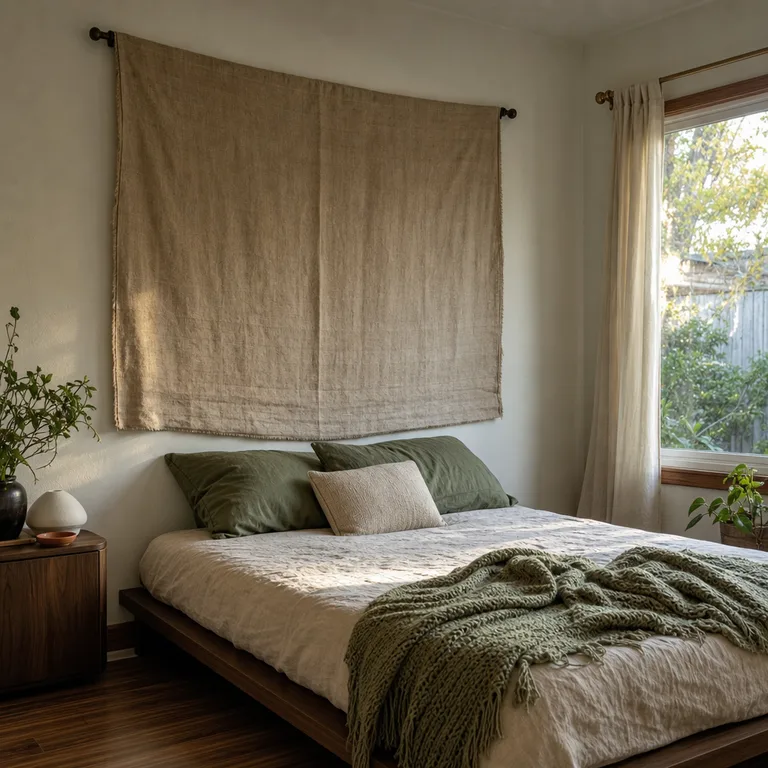
Hang it from a securely installed curtain rod or use removable hanging hardware only when the piece is light enough for the product rating and the wall surface is suitable. A panel that is wider than the bed makes the arrangement look connected rather than like a small piece of wall art.
Look for washable cotton or a removable cover if the bed is used daily. In humid rooms, avoid leaving thick fabric pressed tightly against a wall where it can hold moisture.
Worth knowing: Heavy quilts and woven hangings need proper hardware and should not rely on adhesive strips alone.
Related: 10 Rattan Accent Ideas That Add Warmth Without a Full Room Makeover
3.Use a Freestanding Woven Screen as a Backdrop
A folding woven screen gives a plain bed the scale of a headboard without requiring permanent wall holes. Its natural texture works especially well with simple white bedding, wood floors, and an unadorned frame.
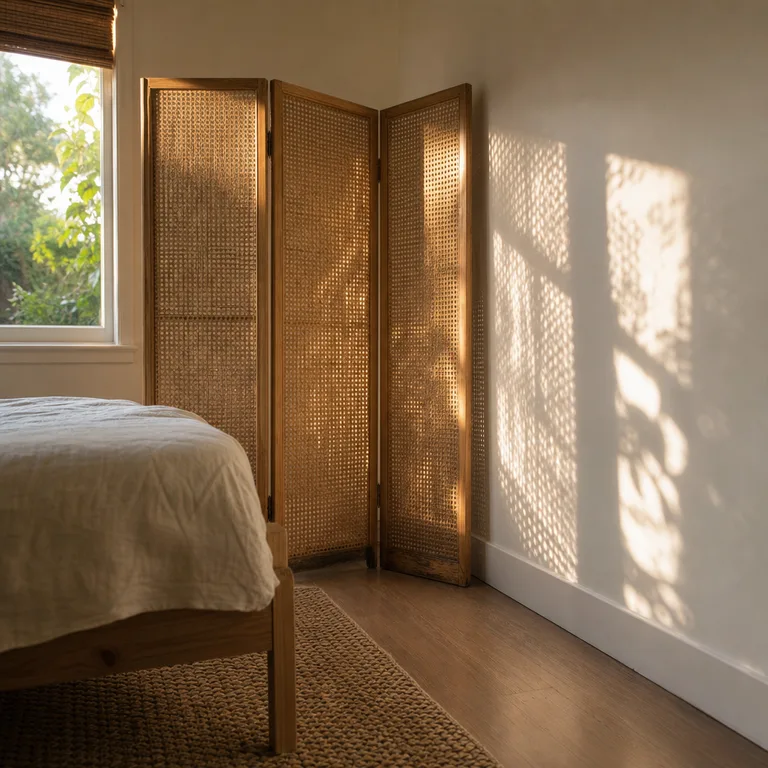
Place the screen behind the bed so the bed frame or mattress helps prevent it from shifting, but do not treat that as the only safety measure. Add felt pads under the feet to protect flooring, and position it where it cannot tip forward onto the pillows.
This approach can work in rentals because the screen is furniture rather than a wall installation. Choose a height that still leaves room for airflow around a radiator or heat vent.
Worth knowing: A screen takes up depth behind the bed and must be stabilized rather than left loose in a spot where it could fall.
4.Build a Shallow Plywood Headboard Panel
A single plywood panel gives even a basic steel frame a clean, custom-looking background. The visible grain adds warmth without needing elaborate cuts or a complicated upholstered build.
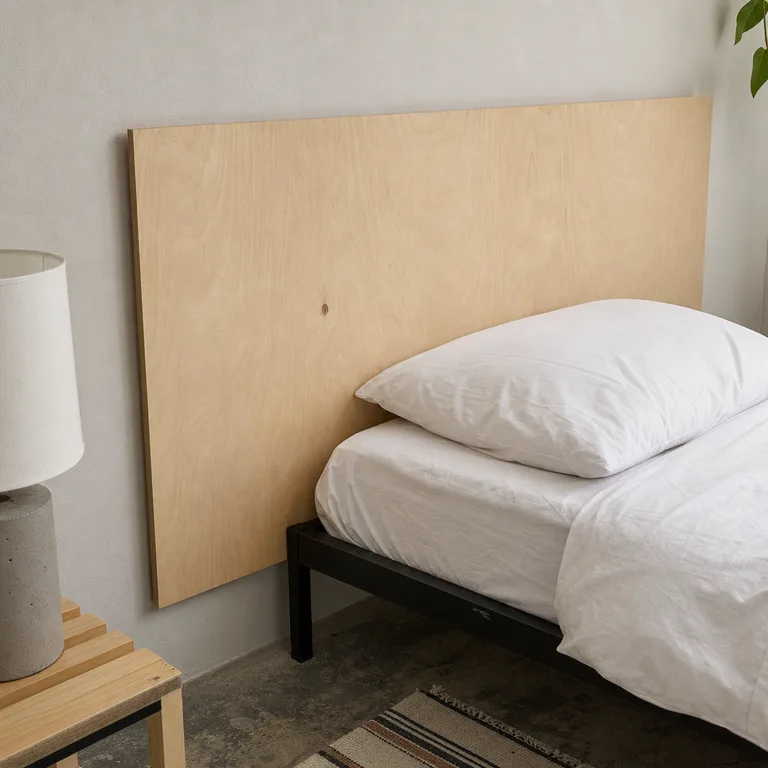
Use furniture-grade plywood, sand the edges and face, then seal it with a clear water-based finish or paint it to suit the room. Mount it into wall studs with appropriate brackets, or attach it to the frame only if the frame has compatible, sturdy connection points.
A simple rectangular panel is easier to cut, finish, and install than a shaped design. Plan the mounting height around the mattress and pillow stack so the panel remains visible after the bed is made.
Worth knowing: This is a more involved weekend project, and secure mounting into suitable wall structure is essential.
5.Create an Upholstered Panel with Foam and Fabric
An upholstered panel makes a low or minimal bed frame feel softer and more complete. It also gives someone sitting up in bed a more comfortable surface than a bare wall or metal rail.
Wrap thin foam and durable upholstery fabric around a rigid backing, pulling the fabric evenly before securing it on the reverse side. A single large panel is usually simpler and cheaper to make than several small padded tiles.
Choose a tightly woven, washable fabric in a mid-tone color if the headboard will get frequent contact from hair, hands, or pets. Install it firmly with hardware suited to the backing and wall, keeping it away from candles, portable heaters, and other heat sources.
Worth knowing: Fabric can collect dust and show wear over time, especially in a room with pets or limited ventilation.
6.Layer Large Floor Cushions Against the Wall
Large floor cushions can turn a low plain bed into a relaxed daybed-style setup. They add height, color, and a comfortable place to lean without requiring drilling or a permanent headboard.
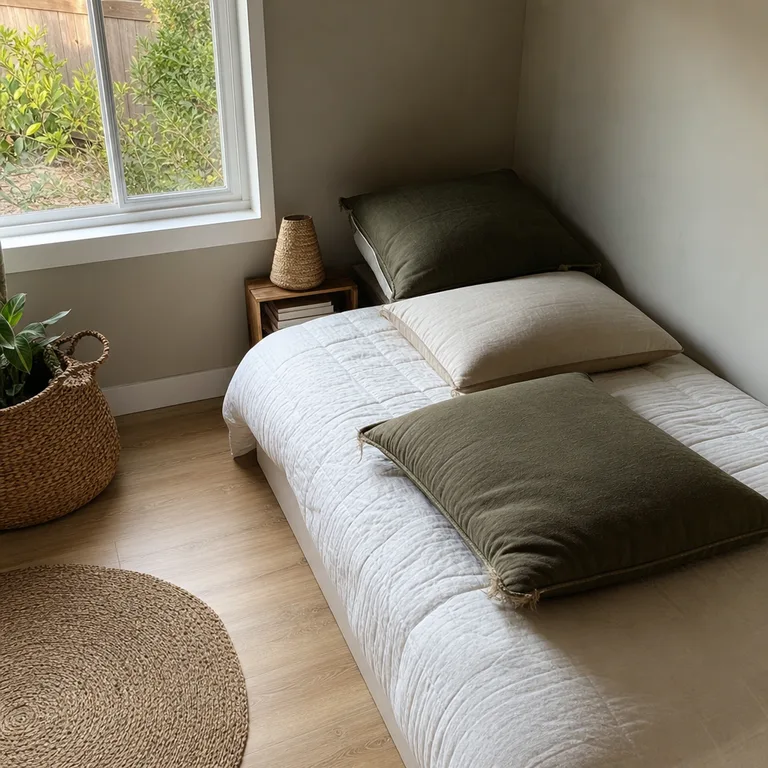
Use two or three oversized cushions in coordinating covers, with the tallest or firmest cushions at the back. Cotton canvas and removable covers are practical because they can be washed more easily than fixed upholstery.
This option works best in dry bedrooms with enough room to keep the cushions from being crushed between the mattress and wall. Rotate and fluff them regularly so the filling does not stay flattened in one place.
Worth knowing: Cushions shift during use and do not provide the firm support or polished outline of a mounted headboard.
7.Mount Two Narrow Shelves Above the Bed
Two shallow shelves create a defined headboard zone while adding space for lightweight framed art, a small plant, or a few decorative objects. The horizontal lines can make a narrow bed wall feel wider and more finished.
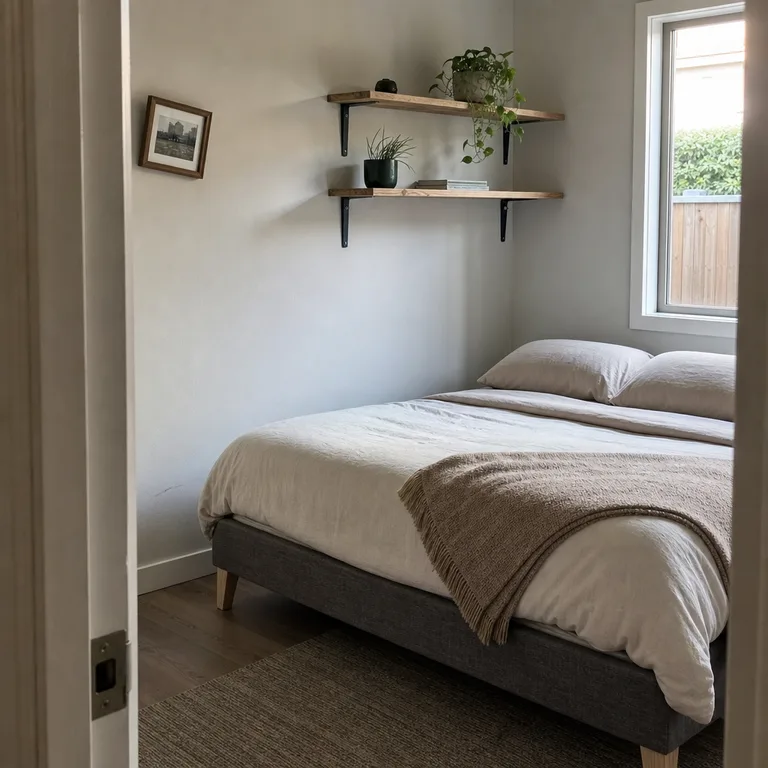
Keep the shelves slim and mount them well above the pillows, using studs where possible or anchors made for the wall type and intended load. Limit the display to light items, and avoid glass, heavy pottery, or anything that could fall onto the bed.
Matching wood shelves can warm up a basic metal frame, while painted shelves can blend into the wall for a quieter look. Trailing plants need regular care, and water should never be allowed to drip onto bedding or flooring.
Worth knowing: Shelves require careful installation and should never hold heavy or breakable objects over the bed.
8.Hang Matching Curtains Behind the Bed
Curtain panels behind the bed create a tall, soft backdrop that makes a basic frame look more substantial. This is especially useful on a blank wall where a wood or upholstered headboard would feel too bulky.
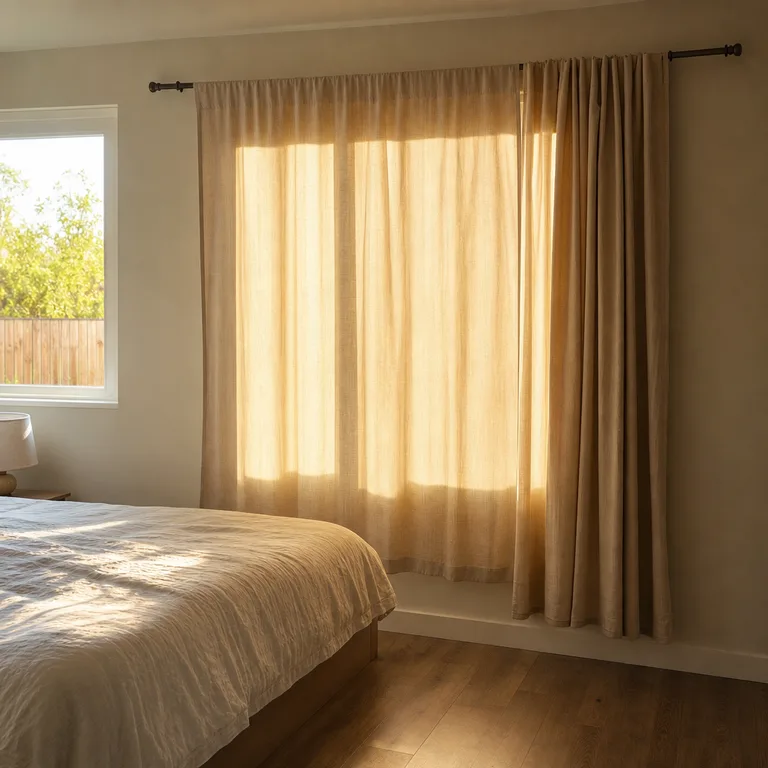
Mount a rod high on the wall and use panels wide enough to look full rather than stretched flat. Ready-made curtains are often an affordable route, and their color can tie into a duvet, rug, or existing window treatments.
Secure the rod with hardware appropriate to the wall, especially if using lined or blackout panels. Leave clearance around radiators, vents, and wall heaters so the fabric does not interfere with airflow or sit near heat.
Worth knowing: Curtains gather dust and need occasional laundering or vacuuming, which can be inconvenient with very long panels.
9.Make a Grid of Framed Prints Above the Bed
A grid of matching frames gives a plain bed a tailored focal point without changing the frame itself. Repeating frame sizes and even spacing make an inexpensive collection of prints look more intentional.
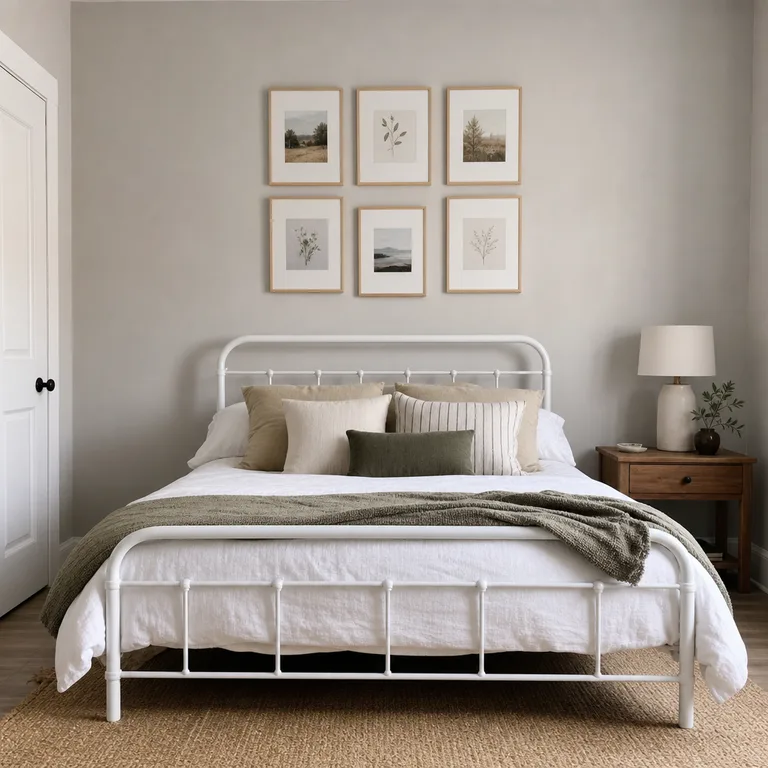
Use lightweight frames with calm artwork, such as botanical images, abstract shapes, or personal photos in a shared color palette. Paper templates help lay out the grid before hanging, and removable strips can work for suitably light frames on smooth rental walls.
Center the arrangement on the bed rather than the entire wall if the bed is not centered in the room. Keep the bottom row high enough that pillows do not knock against it when the bed is used.
Worth knowing: Frames can look cluttered if the grid is too large for the wall or if the artwork has too many competing colors.
10.Lean a Painted Shutter Panel Behind the Bed
A shutter panel adds vertical texture and a little architectural character to a basic iron or metal frame. A muted painted finish can bring in color while still keeping the bedroom calm.
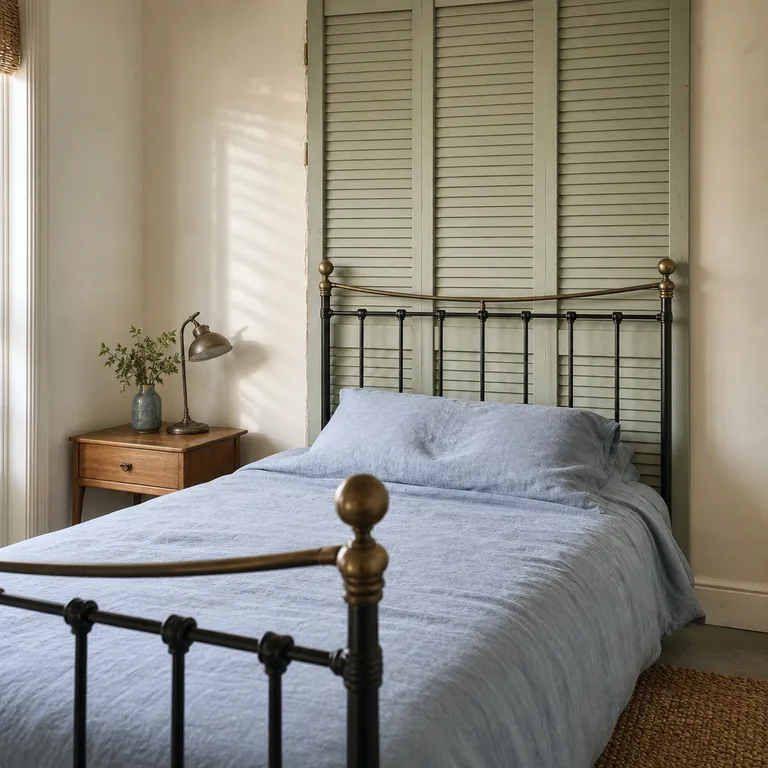
Use an unfinished or salvaged wood shutter panel, sand rough areas, and seal old paint or bare wood before bringing it into the bedroom. Secure the panel mechanically to the wall or a compatible frame with suitable brackets; it should not simply be balanced behind the mattress.
A single tall panel suits a narrow bed wall, while paired panels can better match a larger bed. Check that the shutter does not block an outlet, interfere with baseboard heating, or trap dust in a hard-to-reach gap.
Worth knowing: Older shutters may need substantial cleaning, repair, and sealing, and the panel still requires secure installation.
About the author
Dana Ruiz, Senior editor
Dana writes about small-space living, storage and low-cost decorating.
Keep reading
10 Budget Bedroom Rug Ideas for Rooms With Existing Carpet
October 6, 2026
12 Family Photo Display Ideas Beyond a Matching Frame Set
October 4, 2026
10 Kitchen Color Accents That Work With Oak Cabinets
October 3, 2026
10 Blanket Storage Ideas for a Living Room Without Spare Closets
October 6, 2026