10 Small Kitchen Trash and Recycling Ideas Without Losing a Cabinet
A small kitchen can handle trash, recycling, and food scraps without giving up a working cabinet or blocking the route between sink, stove, and door. These renter-friendly setups use narrow floor space, movable pieces, and overlooked vertical areas while leaving room for lids to open and bins to be cleaned.
As an Amazon Associate I earn from qualifying purchases.
1.Tuck a slim divided bin beside the refrigerator
The narrow gap beside a refrigerator can hold a divided trash and recycling bin without taking over the main kitchen floor. It keeps everyday waste near the cooking area, which makes it easier to sort packaging while putting groceries away or clearing up after meals.
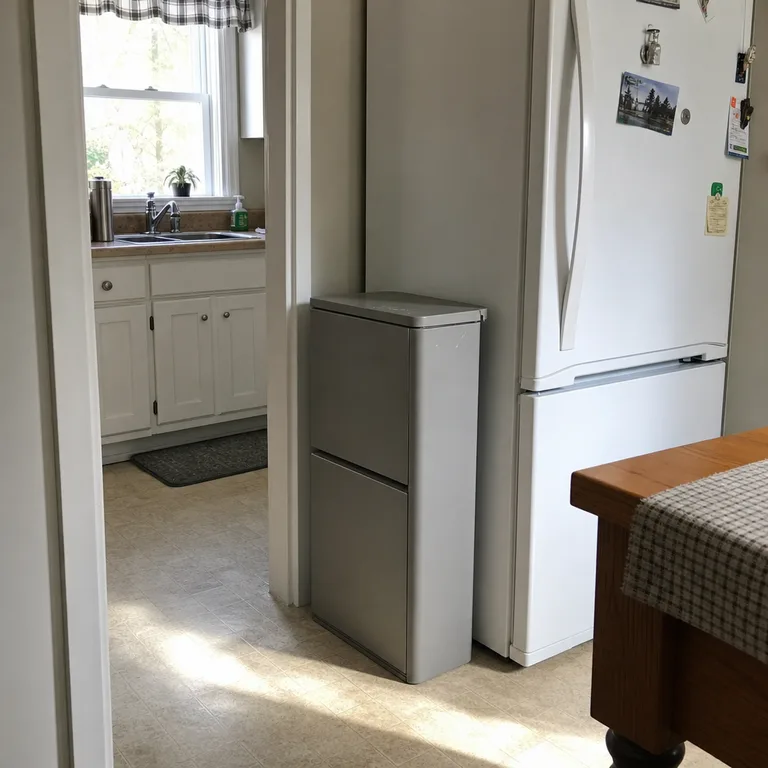
Choose a bin with a lid that opens within the available space, rather than one that needs extra room above or behind it. Measure the gap and check that nearby cabinet doors, refrigerator doors, and drawers can still open fully; a small mat underneath can protect flooring and make cleaning around the bin easier.
Worth knowing: This only works when the refrigerator has a genuine side gap with airflow and door clearance; do not pack a bin tightly against appliance vents.
2.Use two lidded bins under a narrow console table
A shallow console table can turn an unused wall into a contained sorting station. Place one lidded bin for trash and another for recycling beneath the table, then use the top for reusable bags, outgoing mail, or a tray that prevents small items from spreading across the counter.
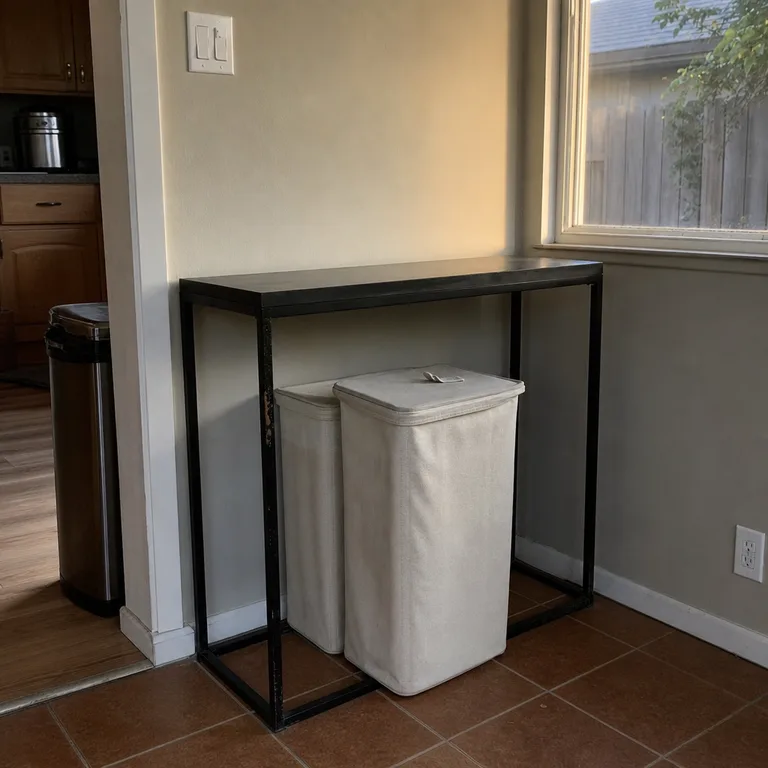
Look for a table with open space below rather than drawers or a low stretcher that interferes with bin lids. Separate liners make the bins easier to wash, and lids help keep visual clutter down in a kitchen that opens into a living or dining area.
Worth knowing: A console station needs a clear stretch of wall and may not suit a very narrow walkway or a rental where furniture placement blocks an exit route.
3.Roll a waste station into the end of a galley kitchen
A small rolling cart can hold separate bins on its lower shelf and park at the open end of a galley kitchen. This keeps waste collection out of the narrow working aisle while still allowing it to move closer during meal prep or cleanup.
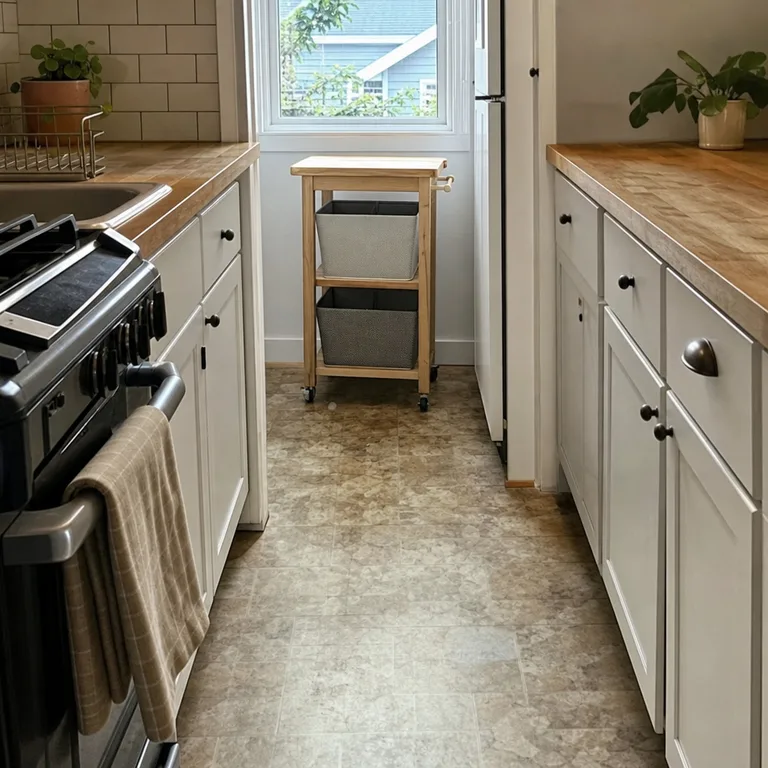
Use locking wheels so the cart does not shift when a bin is pulled out. Open baskets are fine for clean, dry recycling, but trash usually benefits from a removable lidded container; keep the cart away from stove heat and leave room for oven and dishwasher doors to open.
Worth knowing: A cart is less useful in a galley kitchen that has no open end, and it requires enough floor space to roll without snagging on thresholds or rugs.
4.Hang a removable bin inside a pantry door
The inside of a pantry door can store lightweight recycling such as flattened cardboard, clean plastic film where accepted, or empty cans. Moving these dry items off the kitchen floor preserves cabinet space for cookware and food.
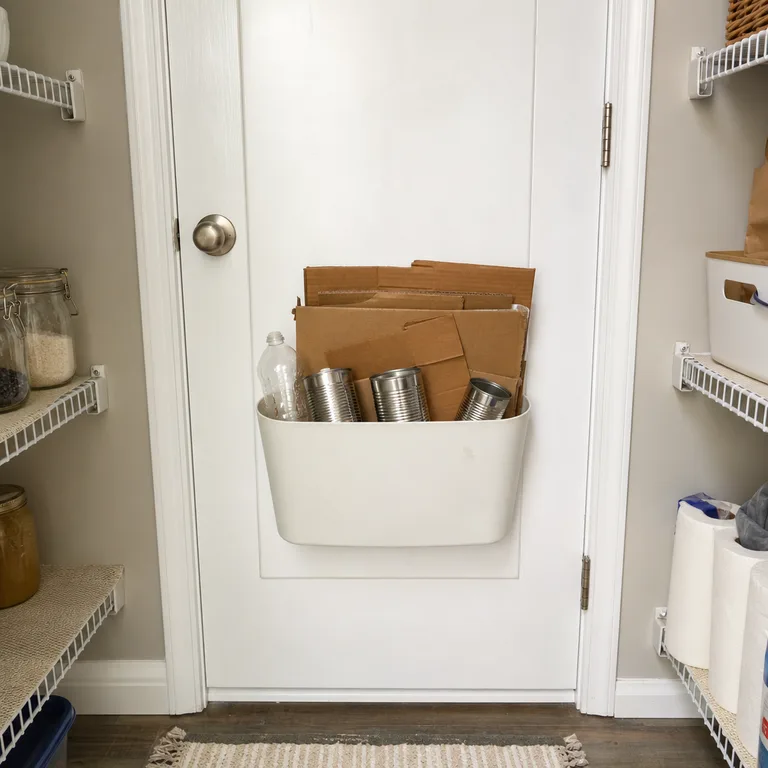
Use an over-door hanger or a removable mounting method that suits the door material and rental rules. Keep the bin shallow enough that it does not hit pantry shelves when the door closes, and flatten boxes promptly so the bin does not become difficult to empty.
Worth knowing: Door-mounted bins are not a good place for heavy glass, wet recycling, or food waste, which can strain the hardware and create leaks.
Related: 15 Small Pantry Organization Ideas Without Matching Containers
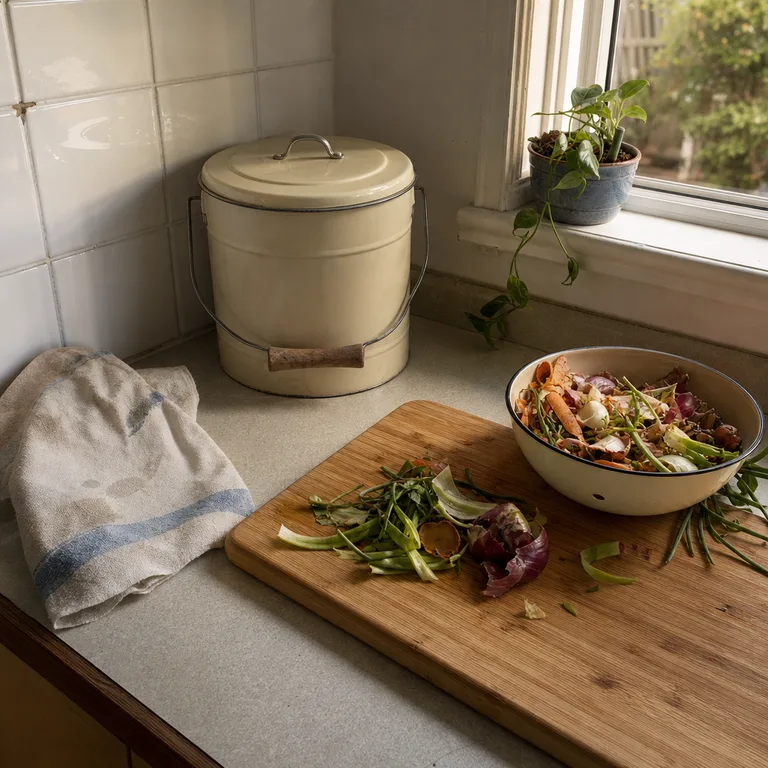
5.Put food scraps in a countertop pail near the prep area
A small lidded pail beside the cutting board catches vegetable peels, coffee grounds, and other accepted food scraps as they are made. It avoids repeated trips across a cramped kitchen with dripping scraps and keeps the main trash bin from filling as quickly.
Choose a washable container with a secure lid and empty it often into the collection method allowed locally. A compact pail should earn its counter space by sitting near prep, not in the landing area beside the stove or sink where it interferes with cooking and washing.
Worth knowing: Food-scrap programs vary by area, and a countertop pail can develop odors or fruit flies if scraps are left too long.
Related: 12 Small Kitchen Ideas That Free Up Prep Space Without Remodeling
6.Slide a flat bin beneath a raised microwave cart
An open microwave cart often has unused space beneath its lowest shelf. A low rectangular recycling bin can slide into that area and pull forward when needed, leaving the under-sink cabinet available for supplies or a larger trash container.
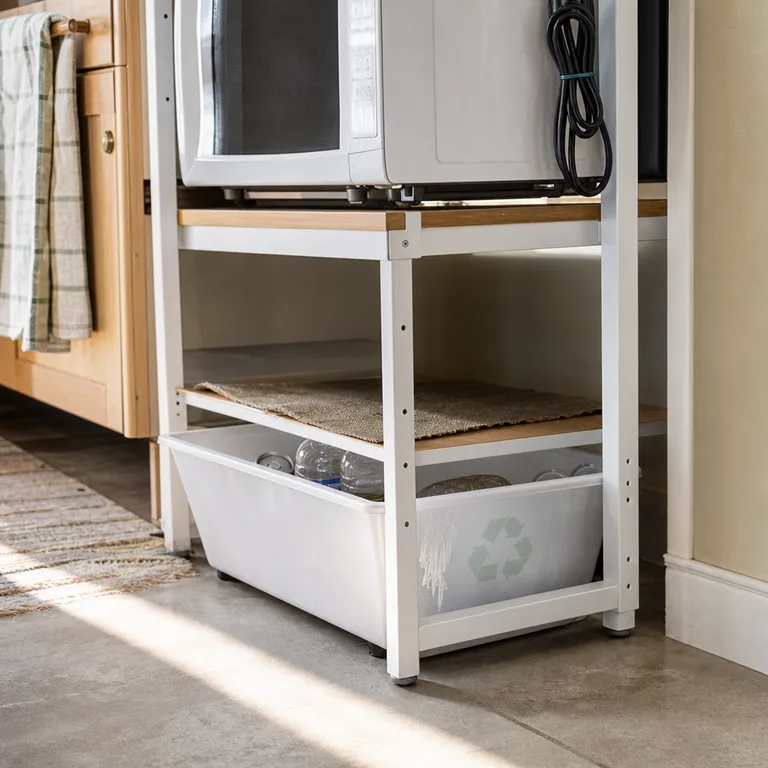
Choose a bin that clears the shelf above without catching on its frame, and use a liner that stays tucked inside when the bin moves. Keep appliance cords organized and away from the bin so damp bottles or leaking containers cannot reach electrical connections.
Worth knowing: This setup depends on a cart with enough open lower clearance, and it can be awkward if the cart sits in a busy path or against a wall.
7.Make a cleaning-closet sorting zone with stackable bins
When there is no spare kitchen floor space, a nearby utility or cleaning closet can hold dry recycling until collection day. Stackable bins make it possible to separate paper, containers, and other locally accepted materials without taking over the kitchen itself.
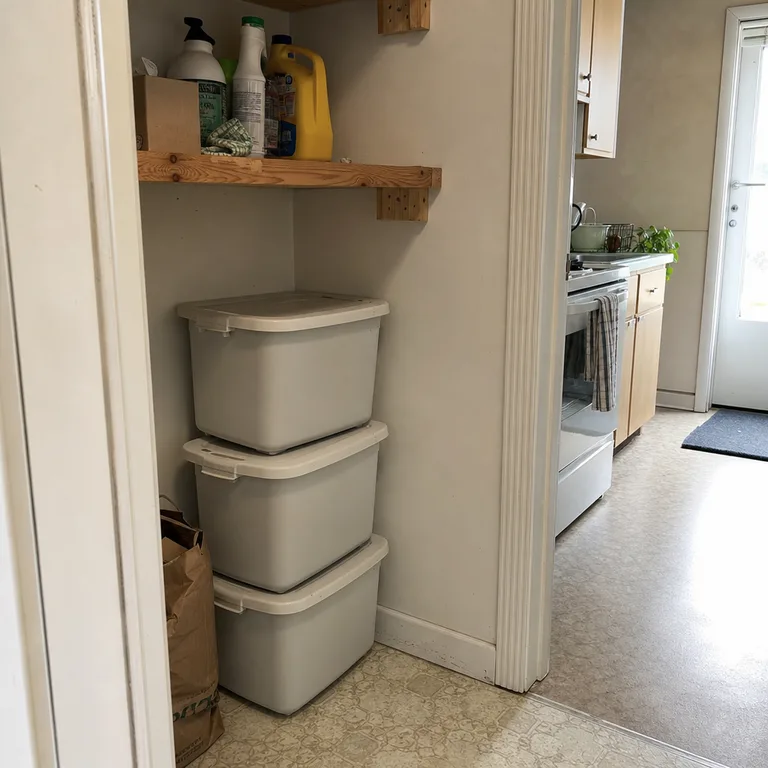
Use clear labels based on the rules in the building or neighborhood, since accepted materials differ by location. Put heavier items in the lowest bin, and leave enough room to remove a full container without knocking over cleaning supplies or stored tools.
Worth knowing: This is best for clean, dry recycling because food residue, damp materials, and unwashed containers can create odors in an enclosed closet.
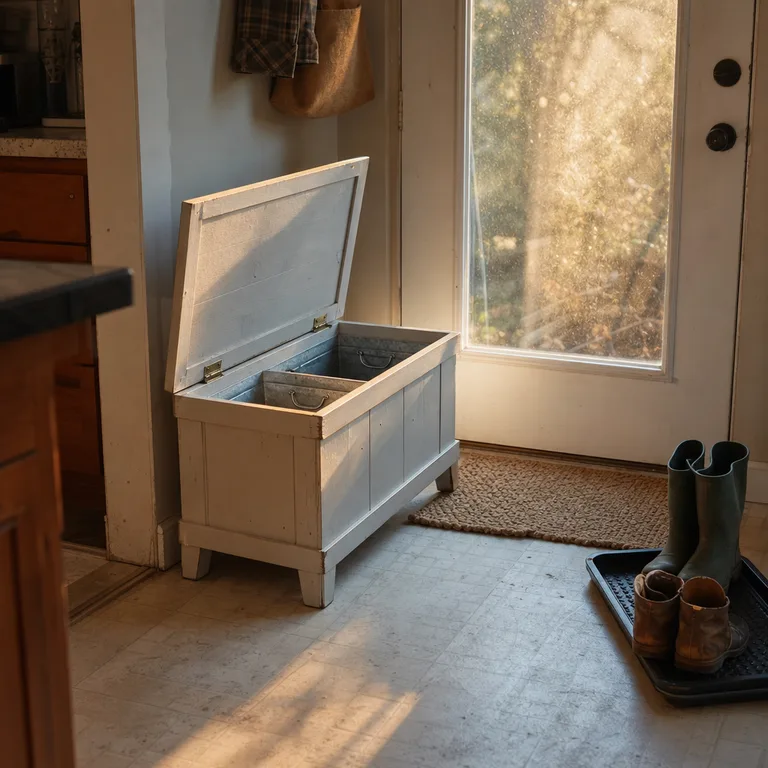
Choose bins with handles so they can be lifted out without dragging them against the bench interior. A wipeable liner or tray helps contain drips, and outdoor shoes, umbrellas, and wet gear should stay in a separate section so moisture does not soak paper recycling.
Worth knowing: A bench takes a larger footprint than a single freestanding bin, so it is only practical near a door with enough clearance for people to pass safely.
9.Fit a pull-out bin into the unused end of a base cabinet run
The exposed end of a cabinet run sometimes leaves a slim strip of floor that is too narrow for furniture but wide enough for a bin on a shallow tray. A tray lets the bin slide out for access while leaving cabinet interiors untouched.
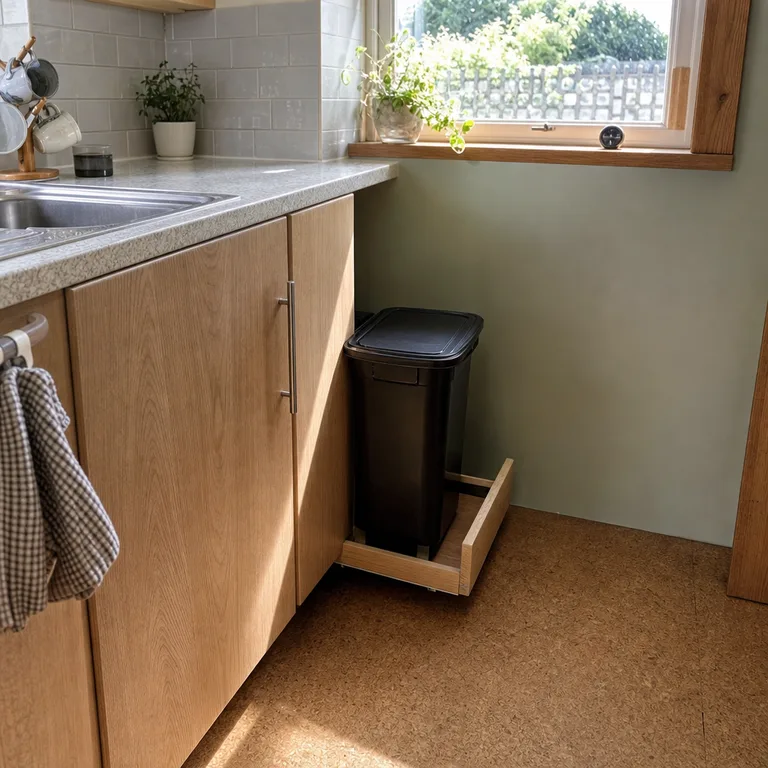
Use a freestanding tray rather than attaching hardware to cabinets if the rental agreement limits alterations. Pick a bin with a lid style that works below the counter overhang, and check that the tray will not block the path to the sink, dishwasher, or adjacent drawers.
Worth knowing: This option only works where a cabinet run has an exposed end and enough open floor beside it; it can feel cramped in a tight one-wall kitchen.
10.Keep returnables in a foldable tote by the exit
A handled foldable tote near the exit gives returnable bottles, cans, and reusable bags a defined temporary home. It is easy to carry out on the way to a collection point, and it can fold flat when there is little to store.
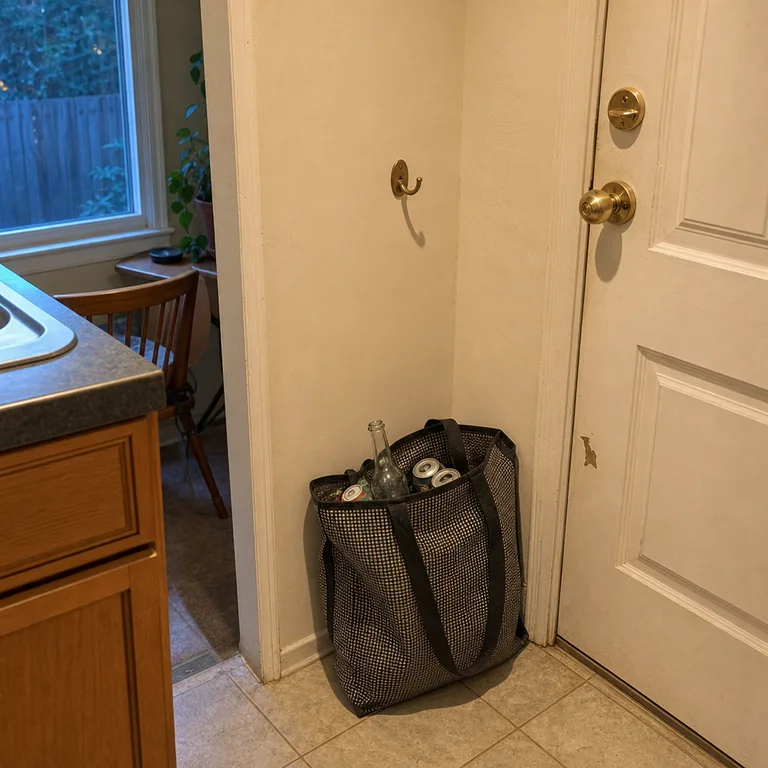
Use it only for rinsed, dry items so liquid does not soak through or attract pests. A wall hook above the tote can hold reusable shopping bags, while the tote itself stays low and out of the main kitchen work zone.
Worth knowing: A soft tote does not contain odors or leaks, and it can become too heavy to carry if glass containers are allowed to accumulate.
About the author
Dana Ruiz, Senior editor
Dana writes about small-space living, storage and low-cost decorating.
Keep reading
10 Small Living Room Ideas for Keeping a Pet Bed Out of the Walkway
October 6, 2026
10 Bathroom Counter Organization Ideas for Two People Sharing One Sink
October 11, 2026
10 Budget Christmas Porch Ideas for a Narrow Front Step
October 11, 2026

10 Ways to Decorate Around a TV Without Buying a New Console
October 11, 2026