10 Large Wall Art Ideas That Start With Affordable Materials
A large blank living-room wall often looks more settled with one or two substantial pieces than with a crowded cluster of small prints. These ideas start with accessible materials and include mounting, light, and rental-friendly considerations for first-home decorators.
1.Stretch a Bold Fabric Remnant Over a Simple Frame
Choose a fabric remnant with a pattern large enough to read from across the room: oversized leaves, broad stripes, or a simple geometric work especially well. Pull it taut over a basic stretcher frame or lightweight wood frame, folding the edges around the back so the front stays clean.
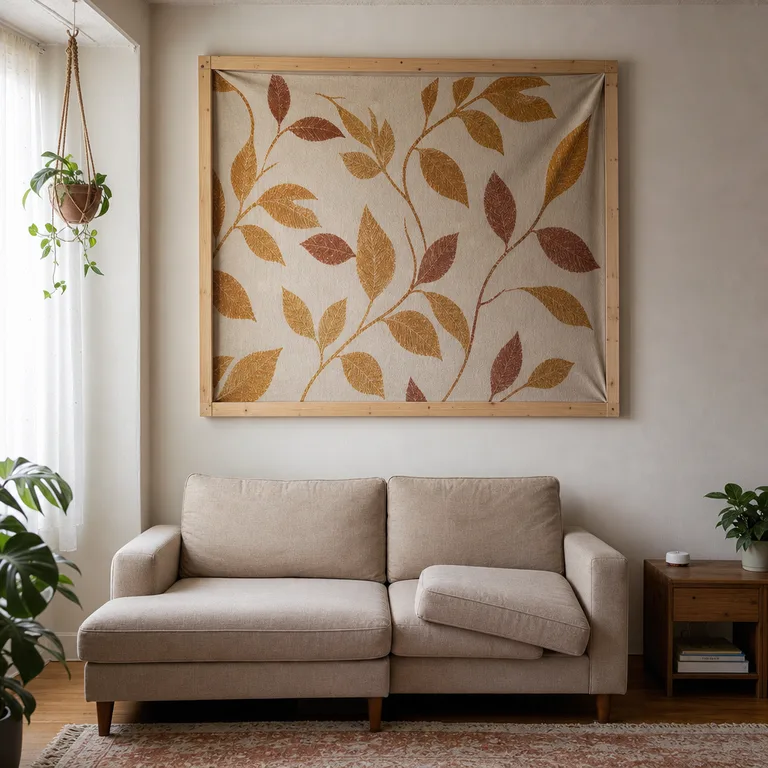
This gives the wall color, texture, and scale without requiring a collection of matching prints. Fabric is often easier to work with than a large framed print, and a single panel can pick up colors already present in the sofa, rug, or curtains.
Use a pattern with enough empty space that it will not look busy at a larger size. Keep the finished panel out of strong direct sun where possible, since sunlight can fade textile colors over time.
Worth knowing: Thin fabric can show the frame beneath it, so a lining or a heavier material may be needed for a smoother finish.
Related: 12 Playful Striped Decor Ideas You Can Try on a Budget
2.Hang One Oversized Thrifted Frame With a New Mat
Look for one large secondhand frame with a solid structure, even if its finish is scratched or dated. Add a broad paper mat around one print, photograph, or public-domain artwork to make a modest image feel properly scaled for the wall.
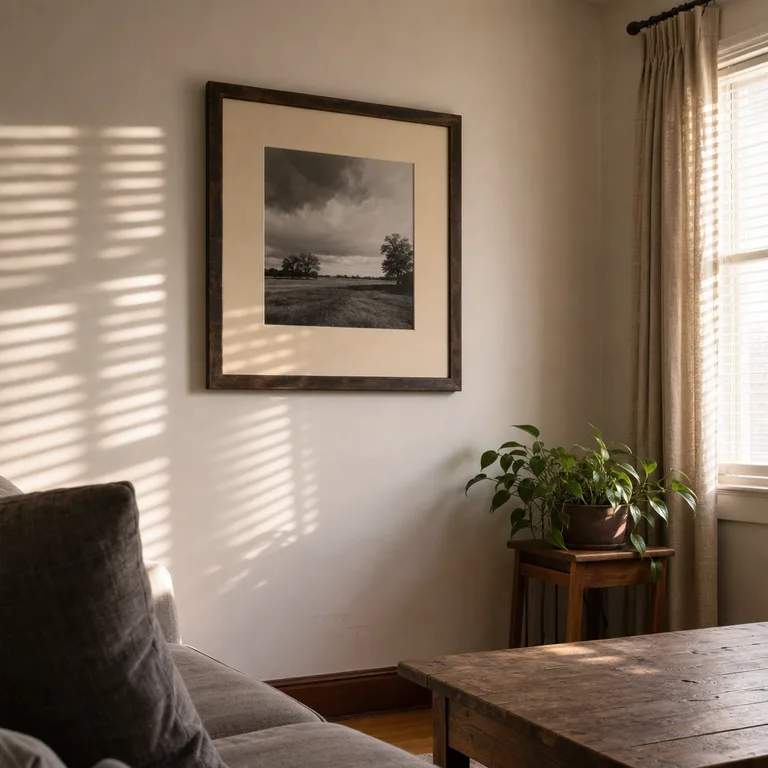
The wide border gives the art breathing room and turns one picture into a clear focal point. A worn wood frame can bring warmth to an ordinary room, while a painted frame can work better in a cleaner, more modern space.
Check the frame backing, glazing, and hanging hardware before putting it up. Large framed pieces can be heavy, so use anchors rated for the load or fasten into studs where the wall construction allows it.
Worth knowing: A very large mat and glazing can make a frame much heavier and harder to hang than it first appears.
Related: 12 Budget Gallery Wall Ideas Using Mismatched Frames
3.Make a Pair of Painted Canvas Panels
Use two matching canvases and repeat a small palette of paint colors across both. Broad brushstrokes, overlapping blocks, simple curved shapes, or loose stripes are enough; the goal is a related pair rather than two identical paintings.
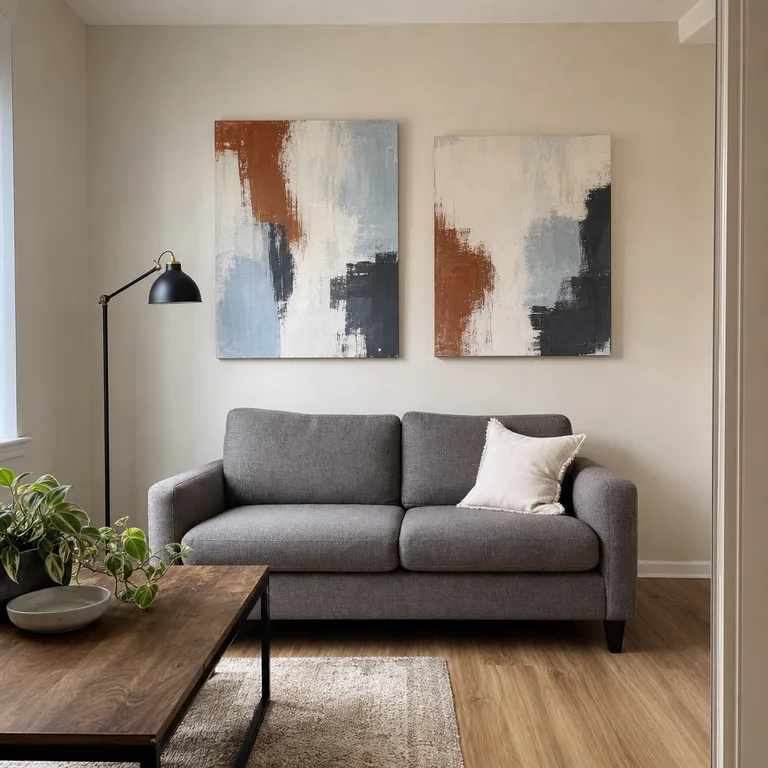
Two large panels fill horizontal wall space while leaving a calm gap between them. The repeated colors make the work feel intentional and can tie together a gray sofa, dark lamp, wood furniture, or other everyday pieces in the room.
Prime raw canvas if needed, and lay the canvases side by side while painting so the colors stay connected. Let the paint cure fully before hanging, particularly in humid rooms where fresh paint can remain tacky longer.
Worth knowing: Hand-painted art has visible variation, so this approach will not suit a room that needs a very crisp, symmetrical look.
4.Mount a Full-Length Curtain Panel as Textile Art
A single curtain panel hung on a slim rod can cover a wide, bare wall with color and softness. Choose a panel with a woven texture, subtle pattern, or deep solid shade that relates to the room instead of looking like an unused window treatment.
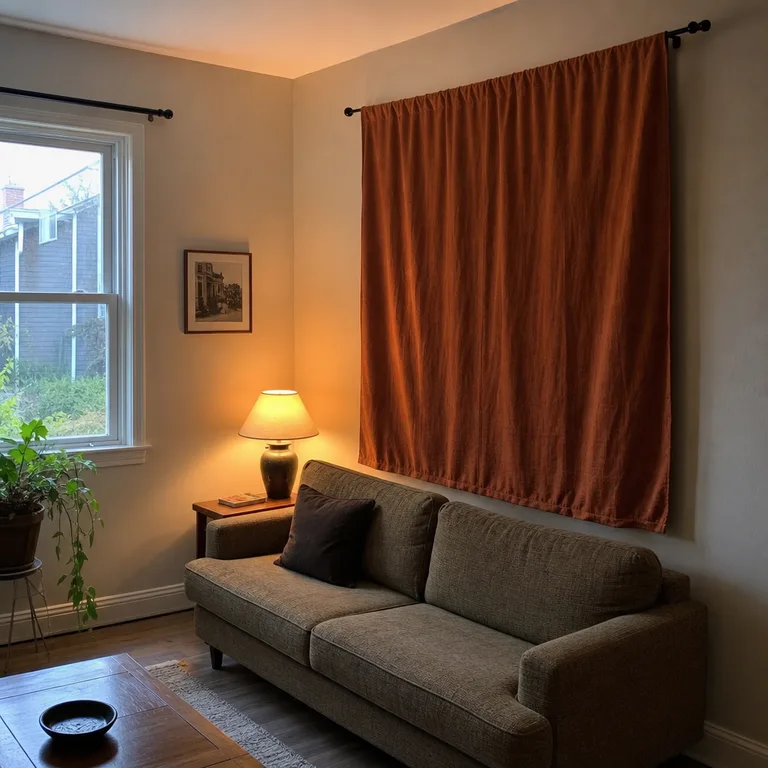
The vertical folds add dimension that flat prints cannot provide, which is useful in a room with plain drywall and simple furniture. This also works well behind a sofa where a hard framed piece might feel too formal.
Use rod brackets that are firmly secured and keep the fabric clear of radiators, supply vents, and doors that swing nearby. A hem can be adjusted with simple no-sew methods if the panel pools too heavily on the floor.
Worth knowing: Fabric collects dust and may need occasional vacuuming or laundering, depending on the material.
5.Frame a Large Piece of Removable Wallpaper
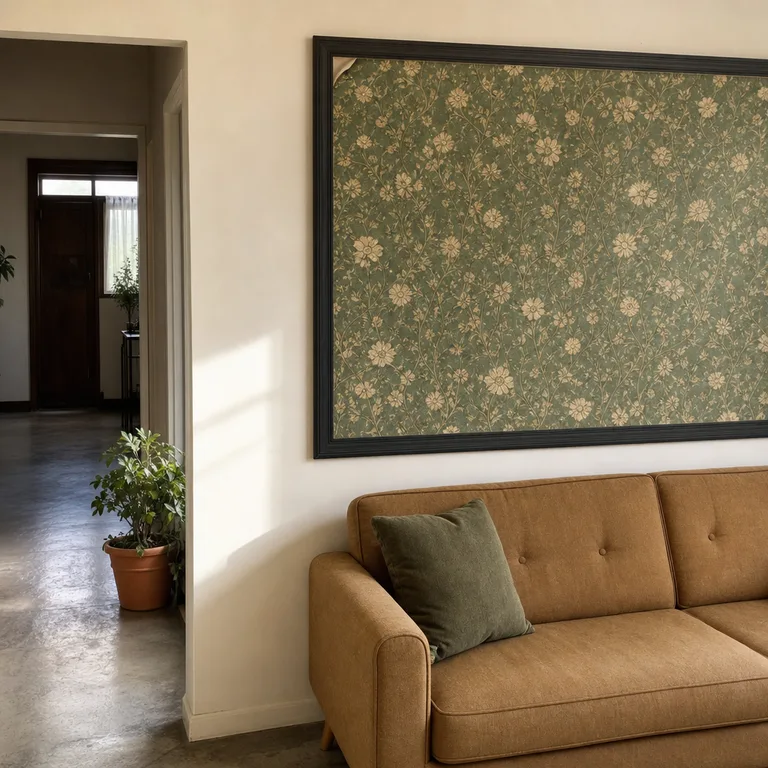
Turn a leftover length of removable wallpaper into one large art panel by placing it in a frame or applying it to a lightweight backing board. A dramatic floral, mural-like scene, or repeating graphic pattern has more presence at this scale than a small swatch would.
The frame gives the wallpaper a finished edge and lets a strong pattern live in the room without covering an entire wall. It is a useful option for first homes where permanent wallpaper feels like too much of a commitment.
Check that the wallpaper adhesive is suitable for the backing material, and test a small section first if the panel may sit in heat or direct sun. Renters should also confirm that their hanging method and any adhesive use comply with the lease.
Worth knowing: Some peel-and-stick materials can lift at the edges over time, especially in warm or humid rooms.
6.Build a Grid From Matching Clipboards
Mount several oversized matching clipboards in a simple rectangle, then clip in art paper, sketches, photographs, or pages from old books that are safe to display. Keep the paper palette restrained so the set reads as one large composition rather than a busy noticeboard.
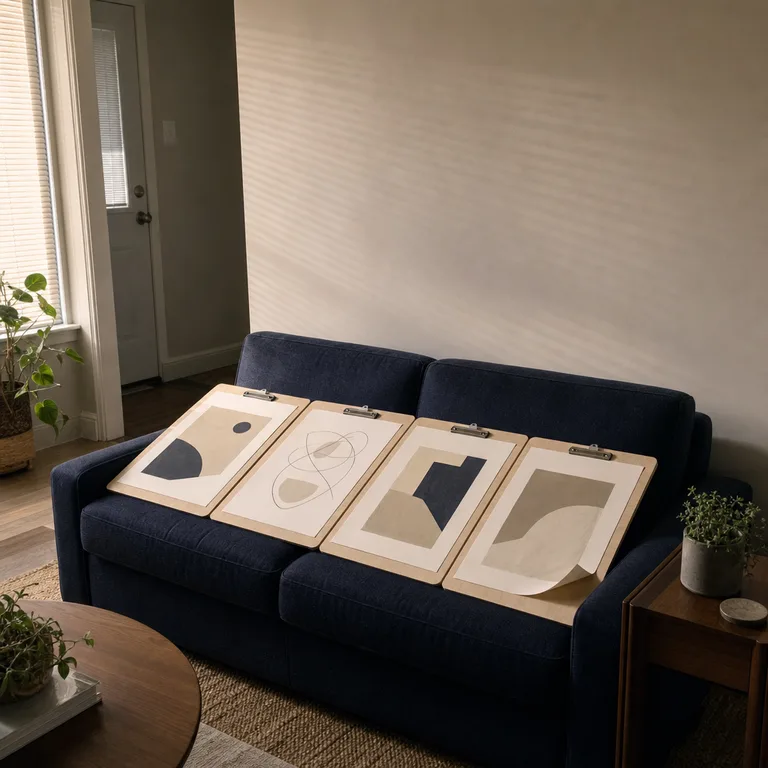
This creates substantial visual weight while making the images easy to change with the season or when the room evolves. The repeated plywood and metal clips bring order even if each sheet of art is different.
Measure the outer edges of the full grid before drilling so the finished arrangement has a clean overall shape. Place the clips at a reachable height if changing the paper is part of the appeal.
Worth knowing: Paper can curl in humid conditions or fade if the wall receives long periods of direct sunlight.
7.Turn a Salvaged Door Into a Painted Wall Panel
A flat old interior door, cabinet panel, or shutter can become oversized art with a simple painted design. Keep the pattern broad: color blocks, an arch, a checkerboard, or a few wide stripes will make the surface look deliberate without hiding its useful age and texture.
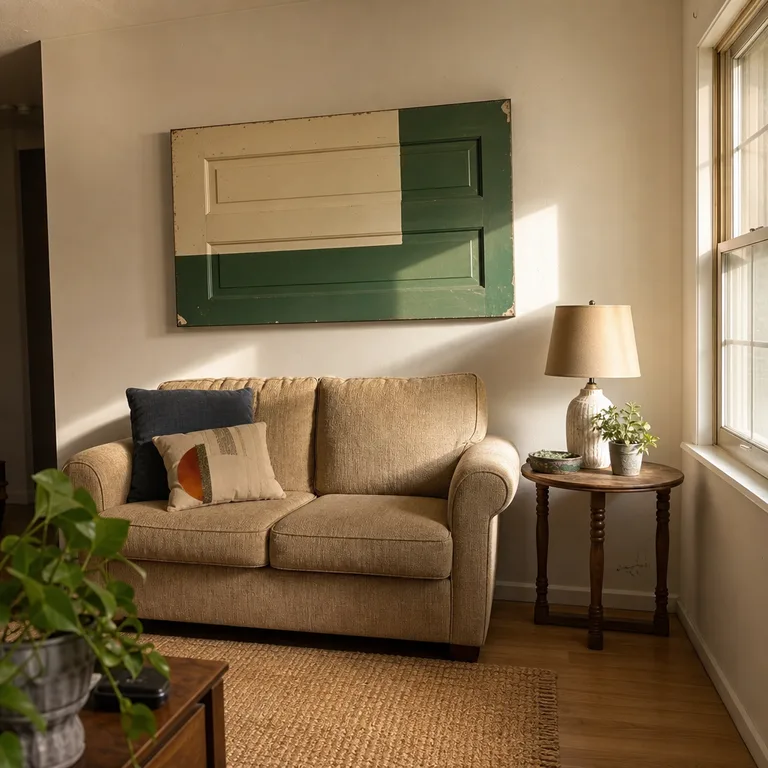
The panel adds architectural character to a plain wall and gives the room something larger and more substantial than a print. Existing dents, inset panels, and chipped edges can make a modest space feel less generic.
Clean and sand loose paint before painting, and seal any surface that sheds or flakes. Because reclaimed wood can be far heavier than canvas, secure it into studs or use anchors appropriate for both the panel and the wall type.
Worth knowing: This is a more demanding installation than hanging a canvas, and old painted surfaces may need careful handling.
8.Display a Large Map or Architectural Poster in a Poster Hanger
Choose one oversized map, architectural drawing, botanical plate, or public-domain illustration and hang it from simple wood poster rails. Sepia, black-and-white, and limited-color designs tend to feel calmer across a broad wall than highly detailed, brightly colored posters.
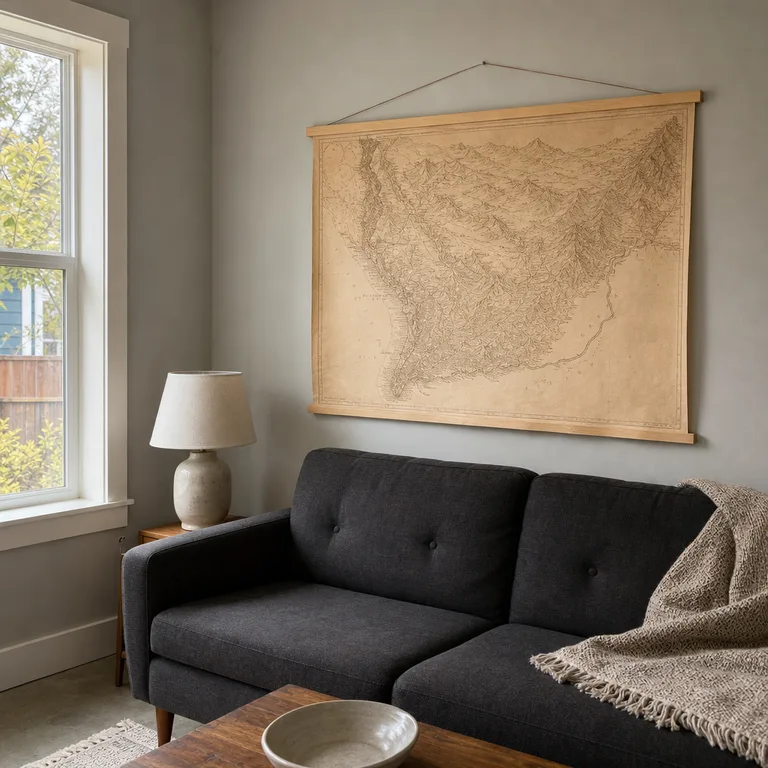
A large paper piece has the graphic impact of art while keeping the room light and uncluttered. The hanger keeps the edges visible, which makes the paper itself part of the display rather than trying to imitate a traditional framed print.
Use acid-free backing or mounting materials if the paper is valuable or meant to stay up long term. Avoid damp rooms and walls with persistent condensation, since paper can ripple and wood rails can shift with moisture.
Worth knowing: A poster hanger offers less protection from dust, tears, and sunlight than a fully glazed frame.
9.Create One Large Corkboard Collage With Edited Pinned Pieces
Start with one substantial corkboard and pin up an edited mix of postcards, sketches, family snapshots, fabric scraps, and small paper keepsakes. Leave some cork visible between pieces so the board has a clear shape instead of becoming a dense patchwork.
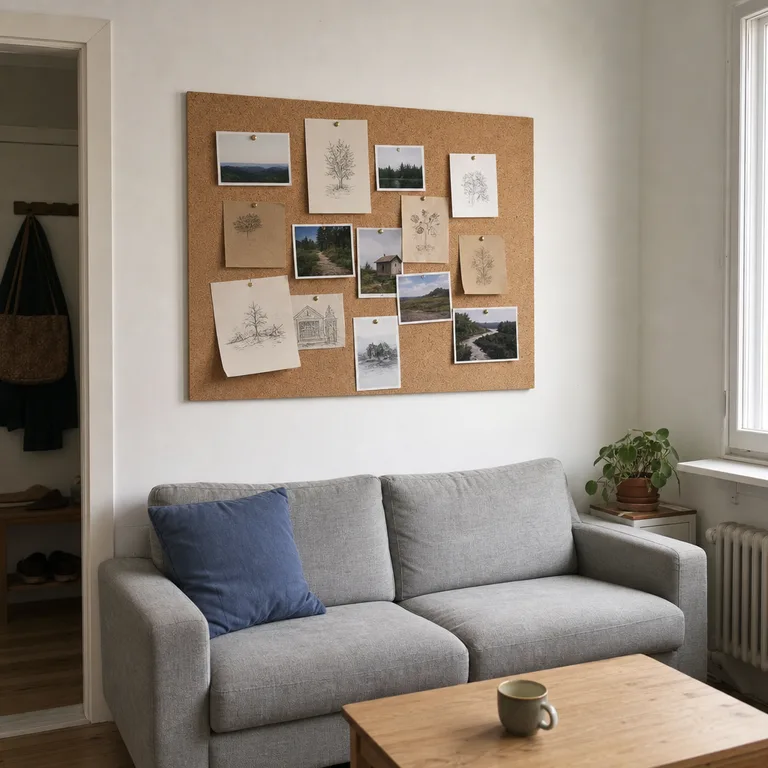
The board gives a personal wall a single boundary, so many small mementos still read as one large piece. It is particularly useful for decorators who want a home to feel lived-in without buying a series of new prints.
Arrange the largest pieces first, then fill only a few gaps with smaller items. Keep it away from bathrooms, laundry areas, or walls affected by dampness, since cork can warp and pinned paper can buckle.
Worth knowing: The informal look can become visually messy if new pieces are added without removing older ones.
10.Hang a Single Large Mirror With a Painted Backdrop
Center a plain large mirror over a painted arch, rectangle, or deeper block of wall color. The painted shape gives the mirror a defined visual field, making it feel like wall art rather than a purely practical reflective surface.
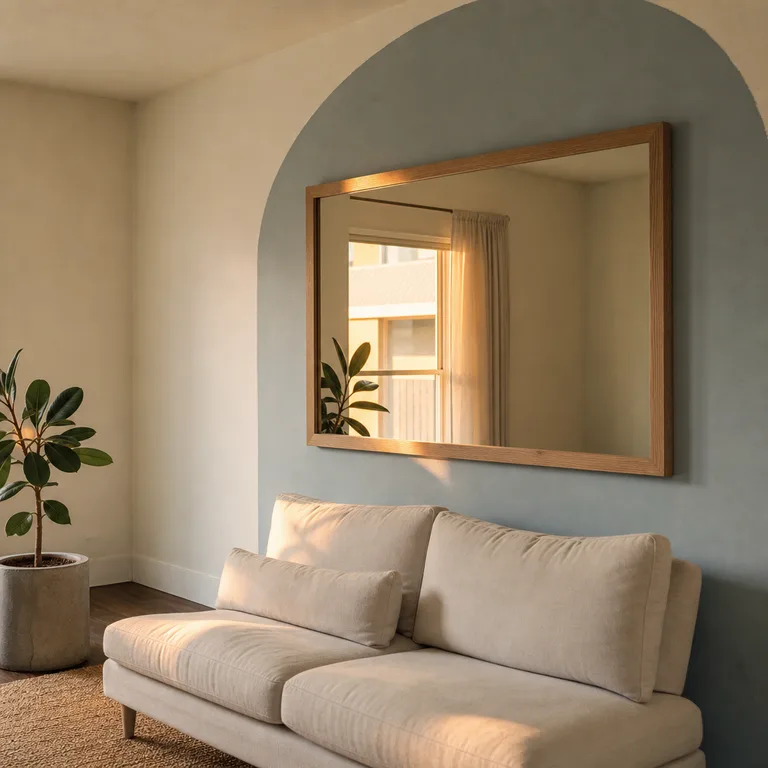
This approach fills a wall while bouncing available light back into the room, which can help a dim living area feel more open. A simple wood or painted frame is usually enough when the backdrop supplies the color and scale.
Test the mirror position at different times of day before committing to it. Place it where it reflects a pleasing view or soft light, not a harsh sunny window, cluttered storage area, or television screen.
Worth knowing: Mirrors can create glare and show fingerprints or dust more readily than most wall art.
About the author
Dana Ruiz, Senior editor
Dana writes about small-space living, storage and low-cost decorating.
Keep reading
12 Bathroom Wall Decor Ideas for Awkward Blank Spaces
September 28, 2026
12 Budget Christmas Mantel Alternatives for Homes Without a Fireplace
September 26, 2026
10 Budget Christmas Kitchen Decor Ideas That Keep Counters Usable
September 25, 2026
12 Budget Gallery Wall Ideas Using Mismatched Frames
September 25, 2026