10 Small-Yard Lawn Alternatives You Can Try One Patch at a Time
A small lawn replacement trial can show what suits a yard’s shade, soil, foot traffic, and maintenance routine without committing to a full redesign. Start with the spots where turf already struggles, such as a dry curb strip, a shady tree ring, a soggy low corner, or the route people naturally walk.
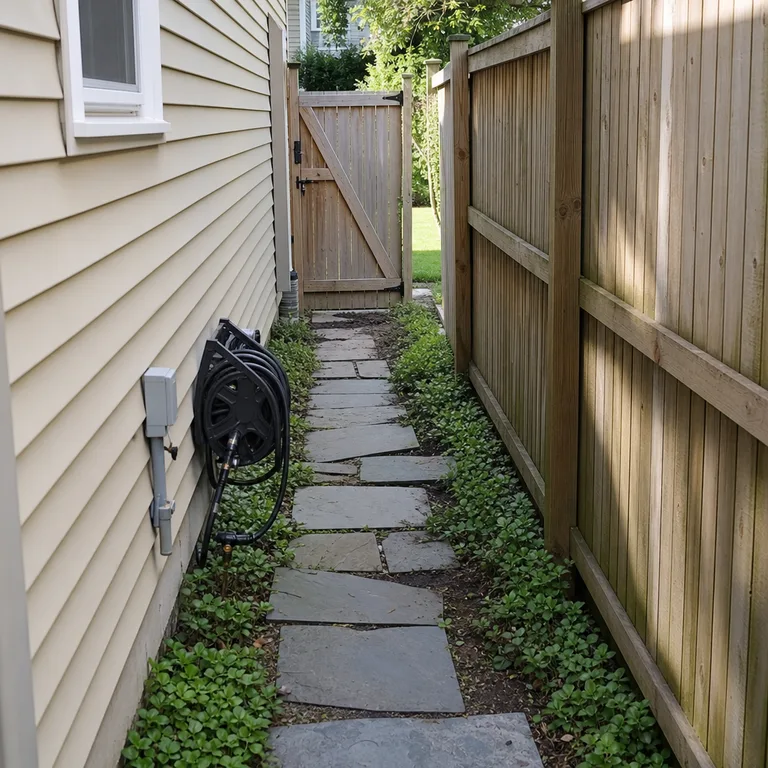
1.Plant shade-tolerant sedges beneath trees
Grass often thins beneath mature trees because roots compete for moisture and the canopy limits light. A patch of regionally suitable sedges can give this area a softer, more intentional finish while avoiding close mowing around exposed roots.
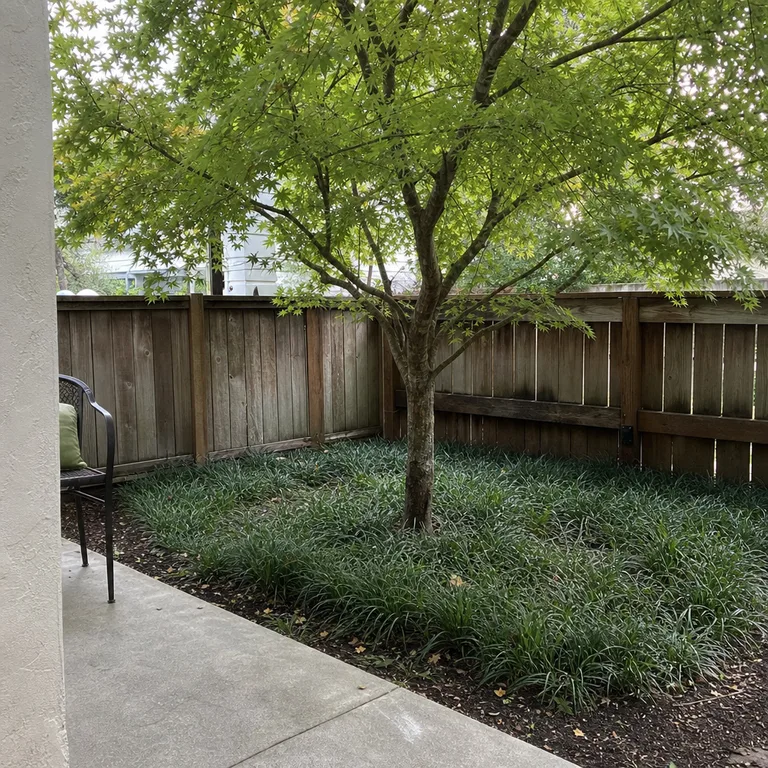
Start with one section beneath the tree rather than planting wall-to-wall. Clear turf carefully without cutting major roots, set plants at their intended mature spacing, and water consistently through establishment; fallen leaves will still need to be raked or removed in autumn.
Worth knowing: Sedges handle shade better than most lawn grass, but they are not a good choice for a route that gets regular foot traffic.
Related: 10 Shade Garden Ideas for a Small Yard on a Budget
2.Use creeping thyme in a hot, sunny strip
A narrow strip beside a patio, walk, or sunny foundation can be hard to mow neatly and may dry out faster than the rest of the lawn. Creeping thyme offers low foliage and seasonal flowers in a small area with full sun and relatively lean, well-drained soil.
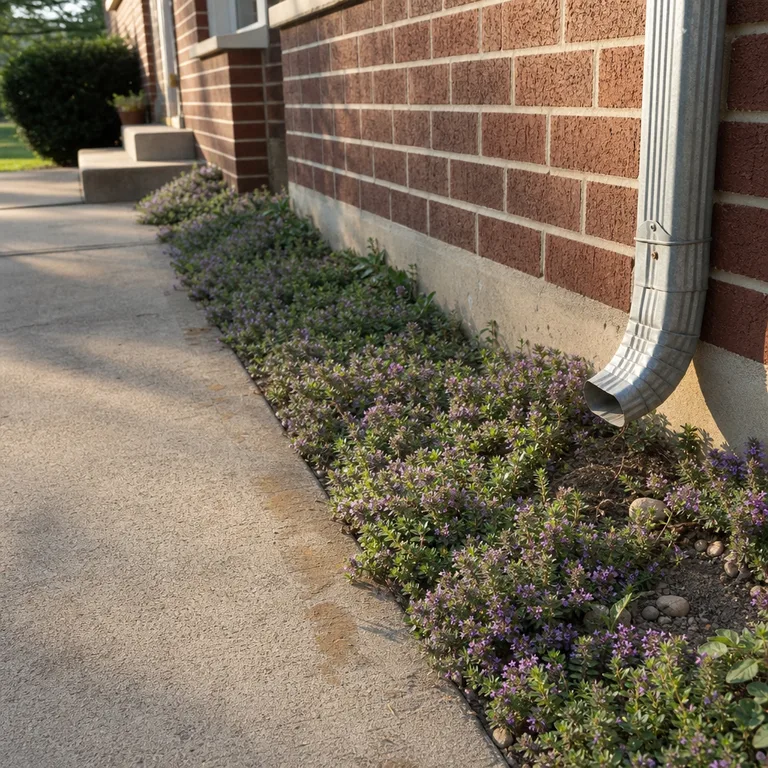
Use it where people may brush past or step occasionally, not where they run, play, or wheel bins. Small plants can be spaced to fill in over time, keeping the trial affordable, but they need watering until established and weeds should be pulled before they crowd young growth.
Worth knowing: Creeping thyme is not durable enough to replace turf in a frequently used play space or main walkway.
3.Turn a wet low spot into a rain garden bed
A lawn corner that stays soggy after rain is a better candidate for a planted basin than repeated reseeding. A shallow rain garden planted with moisture-tolerant species can make the low spot look deliberate while slowing and soaking in water where site conditions allow.
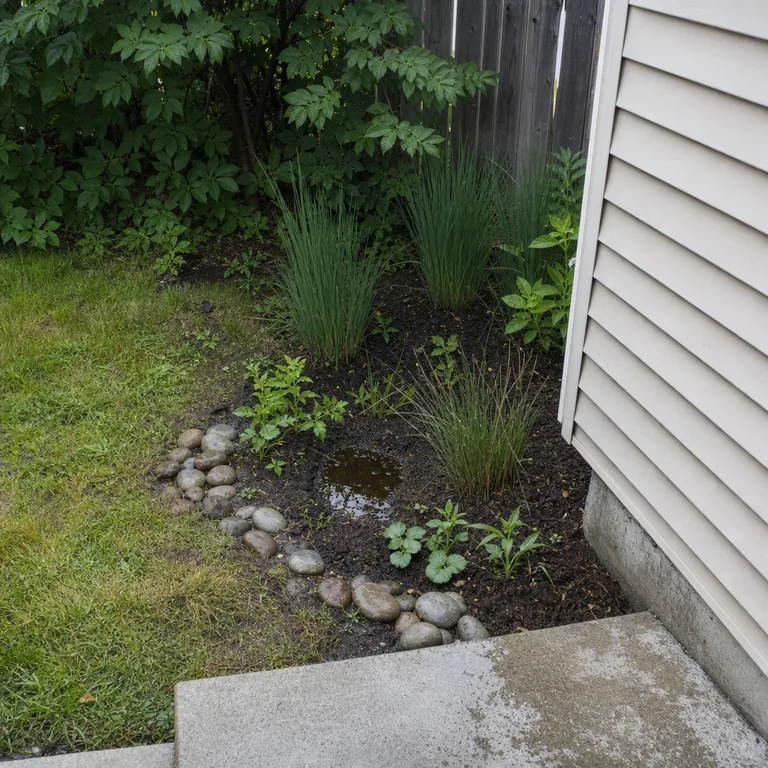
The finished grade matters as much as the plants. Keep the feature well away from the house foundation, direct runoff only where it can safely enter the bed, and select plants suited to both periodic wetness and the local climate; young plants need watering during dry establishment periods.
Worth knowing: A rain garden is not suitable where drainage problems threaten the foundation, utilities, or neighboring property.
Related: 15 Budget Landscaping Ideas That Make a Small Yard Feel Finished
4.Make a mulched tree ring for deep shade
Deep shade and surface roots make the area around a mature tree one of the most frustrating places to maintain grass. Expanding the existing tree ring into a broad, gently shaped mulch bed removes a difficult mowing zone and helps protect the trunk from mower and string-trimmer damage.
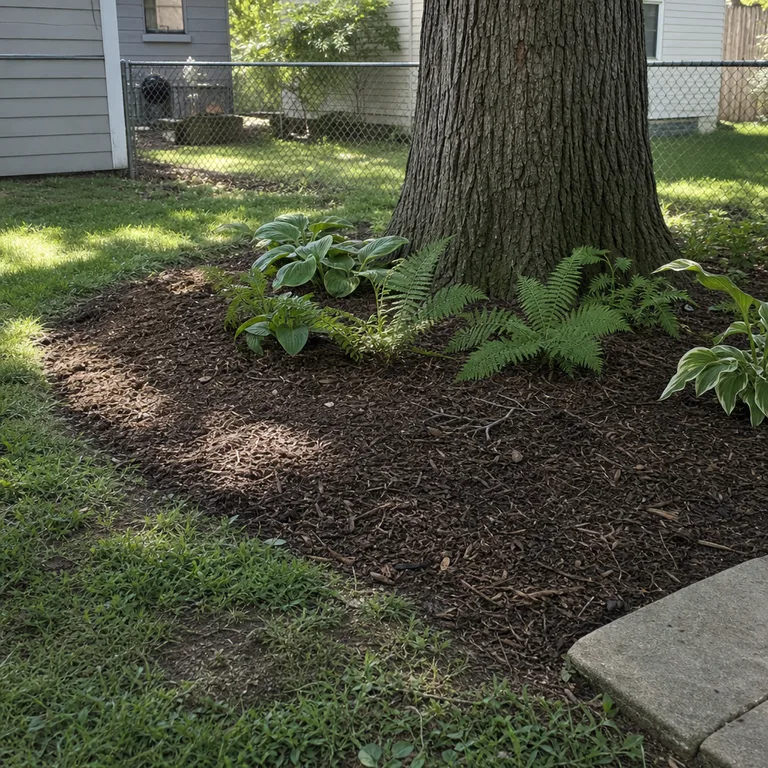
Use shredded bark or another appropriate organic mulch, then add a few shade-tolerant plants if the site receives enough moisture. Keep mulch pulled back from the trunk rather than piling it against bark, and refresh the layer as it decomposes or gets scattered by weather.
Worth knowing: Mulch reduces mowing but still needs occasional edging, weeding, and renewal.
5.Add stepping stones through a bare traffic route
A muddy line across the yard usually means the route is useful, not that the grass needs more attention. Placing stepping stones along that path gives feet a firm surface and lets mulch or a low, traffic-tolerant planting take over the worn strip between stones.
Lay out the route by following how people actually move through the space, especially between a gate, patio, shed, or bin area. Set stones securely and near enough for comfortable steps, with a stable base beneath them so they do not rock or become a trip hazard.
Worth knowing: Groundcover between stones may still fail if the route gets heavy daily use, in which case mulch or a more continuous hard surface may work better.
6.Create a native groundcover bed along the fence
Fence lines can become awkward slivers of lawn that are difficult to mow without scraping posts or edging by hand. A narrow bed of locally appropriate native groundcovers can turn that maintenance strip into a planted border with texture across the growing season.
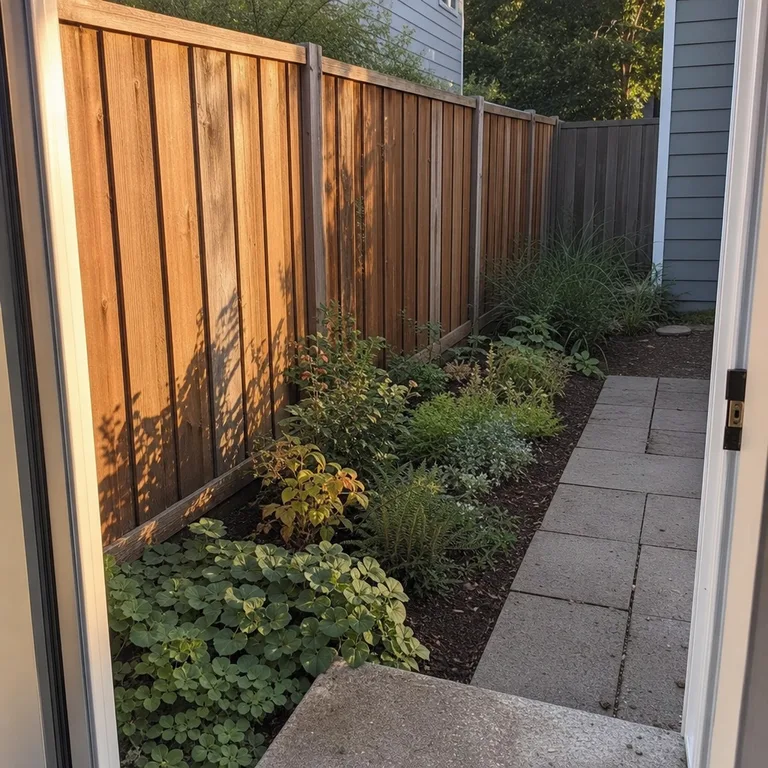
Choose plants for the actual light and soil along the fence, since a sunny boundary can become shaded as trees or neighboring structures change. Plant in grouped drifts, allow room for mature spread, and mulch open soil lightly while plants fill in; regular weeding is especially important in the first growing seasons.
Worth knowing: Even well-chosen groundcovers need time to knit together, so the bed will not look full immediately.
7.Test a clover patch in an open lawn area
A clover test patch can show whether a different green cover suits an open part of the yard that gets sun and only light to moderate activity. It creates a clear comparison with the surrounding lawn without requiring the whole yard to be managed differently at once.
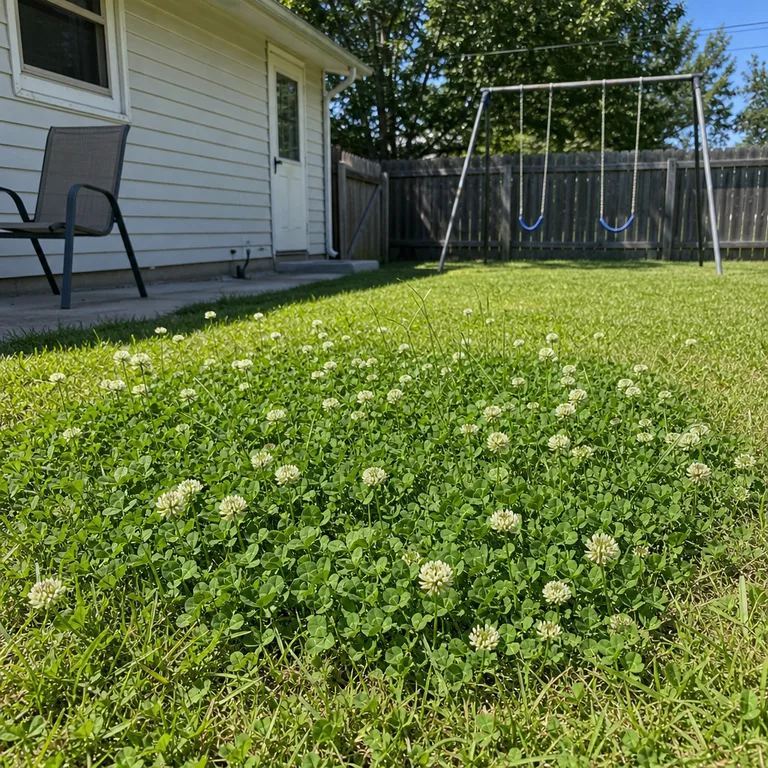
Start with a defined section and keep its edge visible while the patch establishes. Check local rules, homeowner association requirements, and any rental or shared-property restrictions first, then expect to remove grass weeds that emerge and to manage spread beyond the trial area if that matters to the layout.
Worth knowing: Clover can spread into adjacent lawn and may not hold up to the same use as a heavily played-on turf area.
8.Grow moss in a cool, damp shade pocket
A cool, humid pocket with persistent shade may be a place to stop fighting for grass. Moss can create a quiet green surface beside a north-facing foundation, under dense evergreens, or along a shaded patio edge where the soil does not dry quickly.
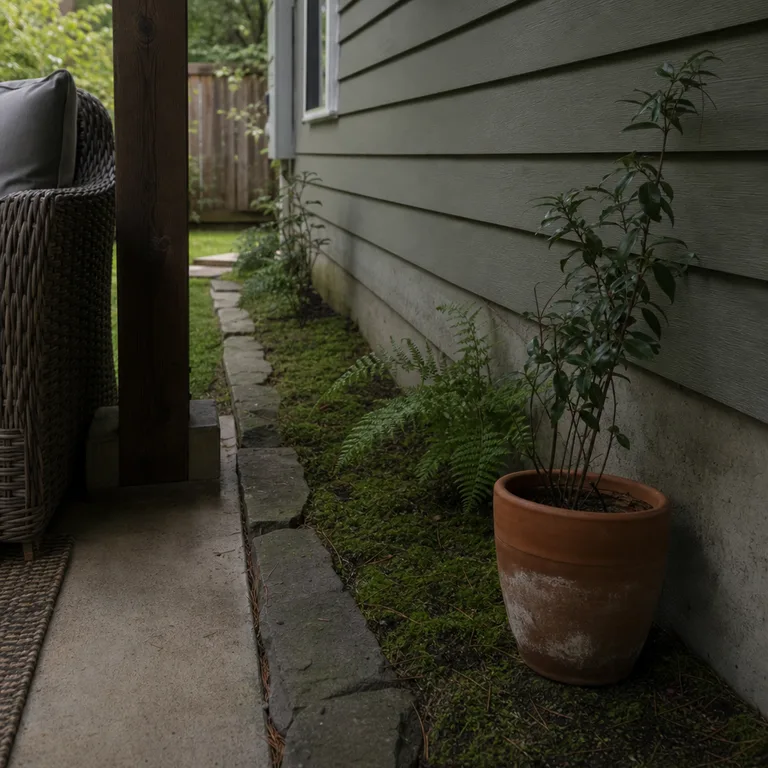
Use moss only where the conditions already support it rather than trying to force it into sunny or exposed ground. Keep the site free of regular steps and limit thick layers of leaves or needles that can smother the surface, while addressing any drainage that sends water toward the foundation.
Worth knowing: Moss will not tolerate regular foot traffic or hot afternoon sun.
9.Replace a dry slope with low drought-tolerant plants
A sunny slope often browns out, sheds water quickly, and makes mowing less comfortable. Low, climate-appropriate perennials and groundcovers can break up the slope with planted texture while roots help cover and hold the soil.
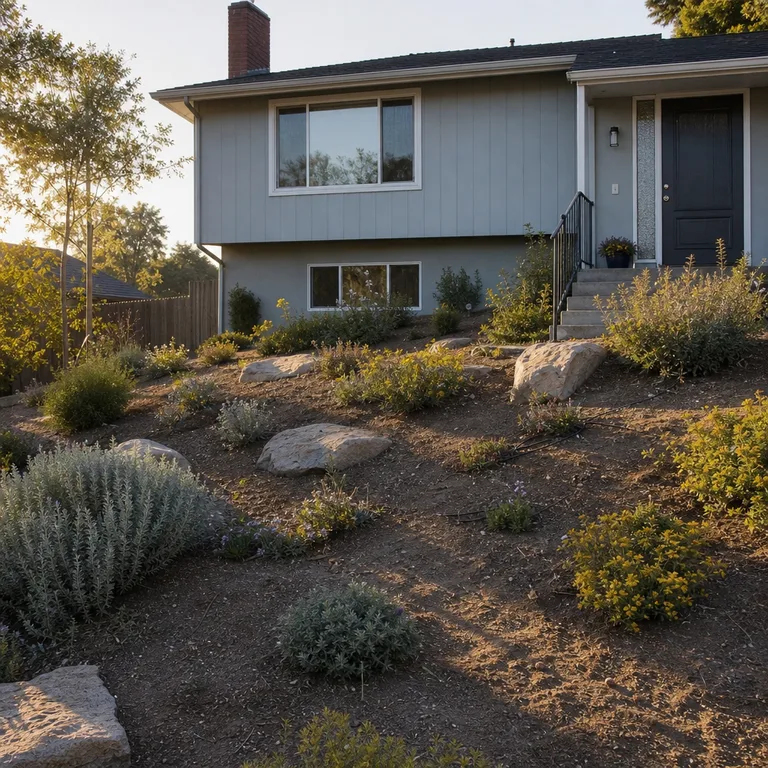
Plant in staggered groups rather than rows to make the area look natural as it fills in. Mulch bare spaces where appropriate, water new plants through establishment, and use stones, coir products, or other suitable erosion-control methods if runoff is moving soil before roots take hold.
Worth knowing: A steep or actively eroding slope may need a drainage or grading solution in addition to planting.
10.Build a compact gravel sitting pad
A small seating or grill corner does not need to remain lawn if it is constantly worn down by chair legs, foot traffic, or equipment. An edged gravel pad creates a usable outdoor zone while keeping the rest of the yard available for grass, planting, or play.
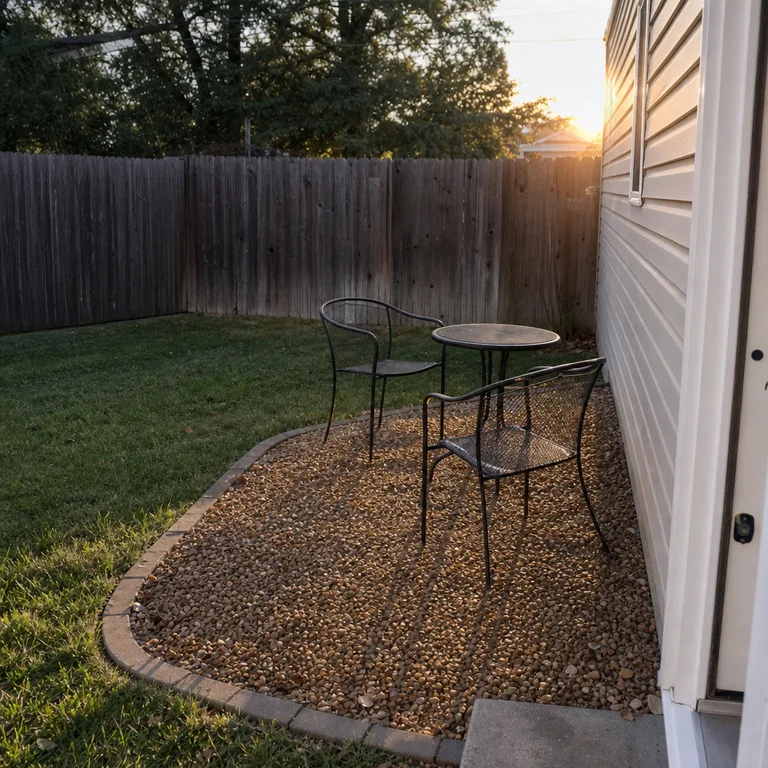
Choose a level area with a planned base, edging, and a route for surface water to move away from the house. Gravel can be a practical finish for a compact pad, but it should not be treated as a cure for standing water; site grading and existing drainage determine whether it will perform well.
Worth knowing: Loose gravel can migrate into the lawn and is less convenient for some furniture, mobility needs, and wheeled equipment.
About the author
Dana Ruiz, Senior editor
Dana writes about small-space living, storage and low-cost decorating.
Keep reading
10 Budget Patio Privacy Ideas for a Small Seating Area
September 25, 2026
10 Small Pollinator Garden Ideas You Can Start in One Corner
September 24, 2026
10 Budget Herb Garden Ideas for a Sunny Patio
September 23, 2026
10 Cottage-Style Patio Ideas You Can Build Around What You Own
September 23, 2026