10 Small-Space Game Night Ideas Without a Dedicated Game Room
A shared living room can host game night when the table, seating, lighting, and cleanup plan work without taking over the room. These ideas use ordinary apartment-scale furniture and flexible setups that can return to daily use soon after the last round.
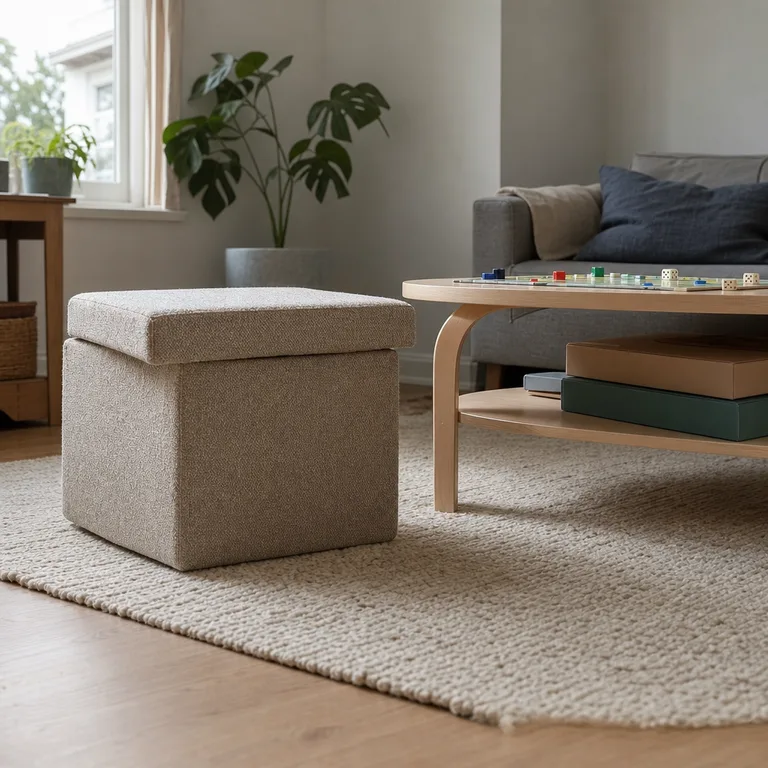
1.Use a Fold-Down Dining Table as the Game Surface
A fold-down dining table gives cards, score sheets, and compact board games a proper flat surface without permanently claiming living-room floor space. Open it for the evening, then close it once the pieces are packed away so the room returns to normal.
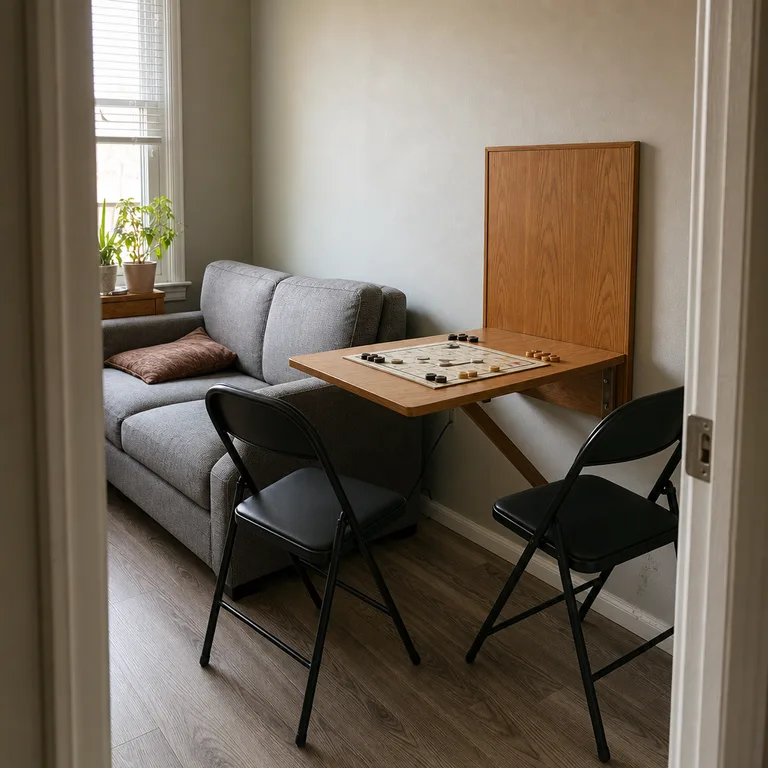
Choose a table deep enough for the kinds of games your household actually plays, rather than trying to make every large board fit. Folding chairs can hang nearby or tuck into a closet, which keeps the setup suited to a shared apartment.
Wall-mounted tables need secure installation, so renters should check lease rules and use an approved mounting method.
Worth knowing: This works best for compact games; larger boards and games with many player mats may feel cramped.
Related: 10 Small Dining Area Ideas When You Don't Have a Dining Room
2.Place a Tray on a Coffee Table for Card Games
A rigid tray with raised sides turns a coffee table into a contained spot for card games, dice, or small tile games. The edge helps stop loose pieces from drifting onto the rug or under the sofa.
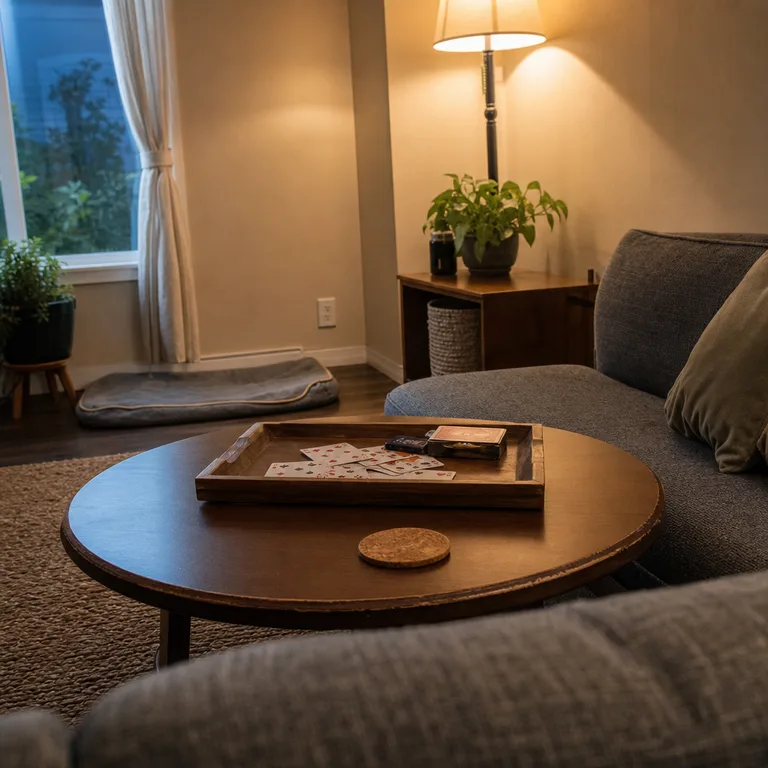
Use a tray that sits securely on the table and is wide enough for the active game, leaving room for players to reach in from the sofa. At the end of the round, carry the tray to a shelf or cabinet as one unit rather than clearing components one by one.
Keep drinks on separate coasters or a nearby surface, since a crowded tray is easy to bump from a low sofa.
Worth knowing: A coffee table setup is most comfortable for short games and a small number of players.
Related: 12 Small Living Room Layout Ideas That Leave Room to Walk
3.Pull Two Nesting Tables Together for a Compact Game
Two nesting tables can become one temporary game surface when pulled flush together. They are useful for a compact board, a puzzle, or a card game that does not need a perfectly seamless tabletop.
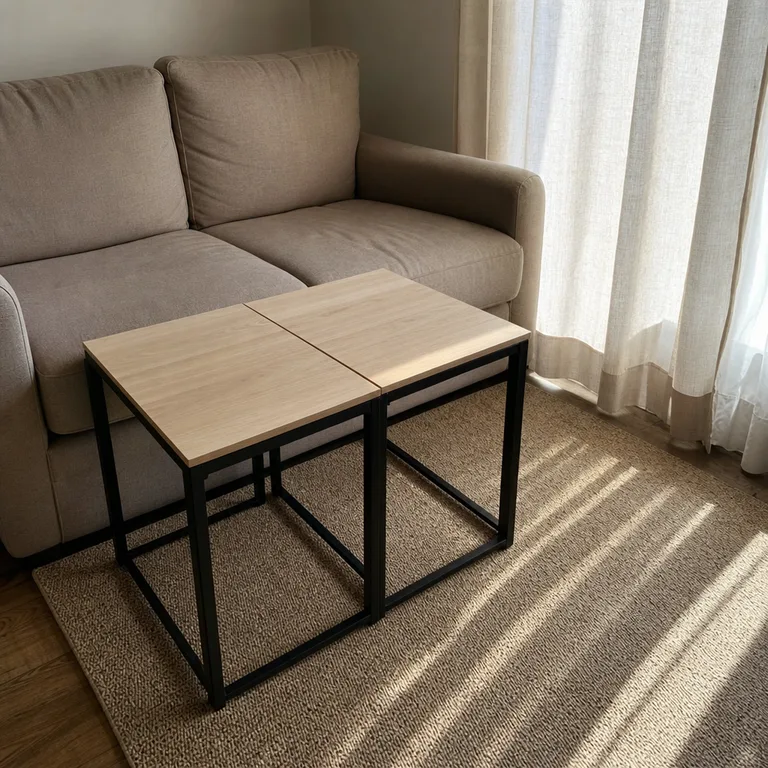
Match the table heights as closely as possible, and place the seam away from the busiest part of the game. When friends leave, separate the tables and return them to their usual job beside seating.
Choose lightweight tables only if they still feel stable when players lean in to move pieces or write scores.
Worth knowing: An uneven seam can make dice roll unpredictably and may not suit games with lots of small tiles.
4.Add a C-Table Beside Each Seat for Snacks and Cards
Slim C-tables slide close to sofa seats and give each player a personal spot for a drink, cards, or a score sheet. This keeps the central game surface clearer and reduces the need for a larger table.
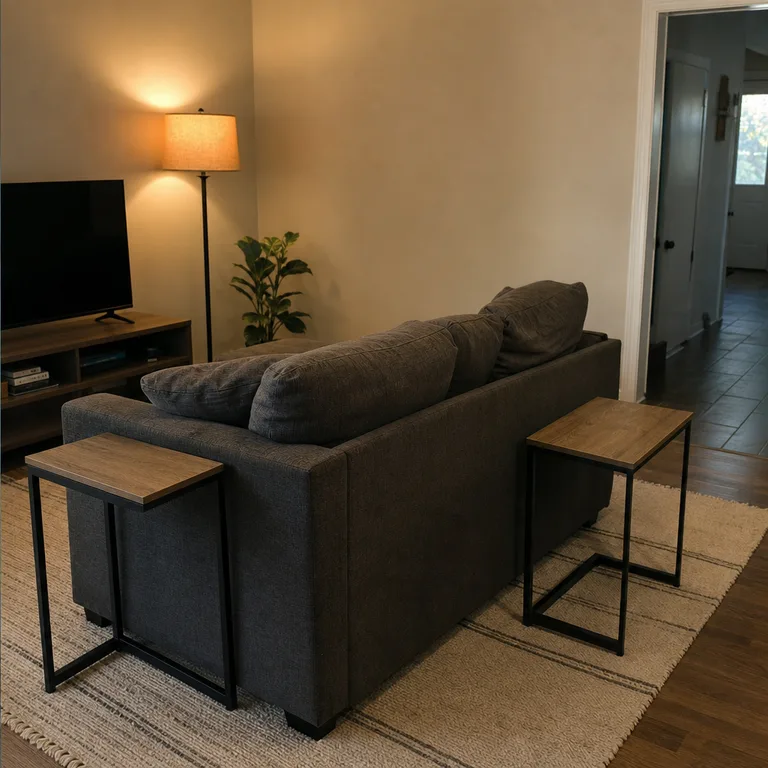
Use them around the outer edges of the seating area so they do not narrow the main path through the room. Their small footprint also makes them practical for games where players hold cards instead of spreading everything out.
Look for stable bases that can slide under the sofa without catching on a thick rug.
Worth knowing: C-tables are support surfaces, not substitutes for a main board-game table.
Related: 12 Small Living Room Seating Ideas Beyond a Second Sofa
5.Make an Ottoman the Extra Player Seat
A storage ottoman can provide an extra seat when the usual sofa does not fit everyone. It can also hold a soft-sided game tote, spare throws, or floor cushions after the gathering.
Pull it close enough to the table for the player to participate without blocking the walkway. A firm tray placed on top can turn it into a temporary drink surface when it is not needed as seating.
Choose an upholstered ottoman with a washable or easy-clean cover if snacks are likely to be part of game night.
Worth knowing: Soft ottomans can be uncomfortable for a long game and are not stable enough to hold drinks without a tray.
6.Clamp a Task Light to the Table Edge
A clamp-on task light puts focused light directly over cards, game pieces, and score sheets. It can make a dining table or coffee-table game easier to see without brightening the entire shared room.
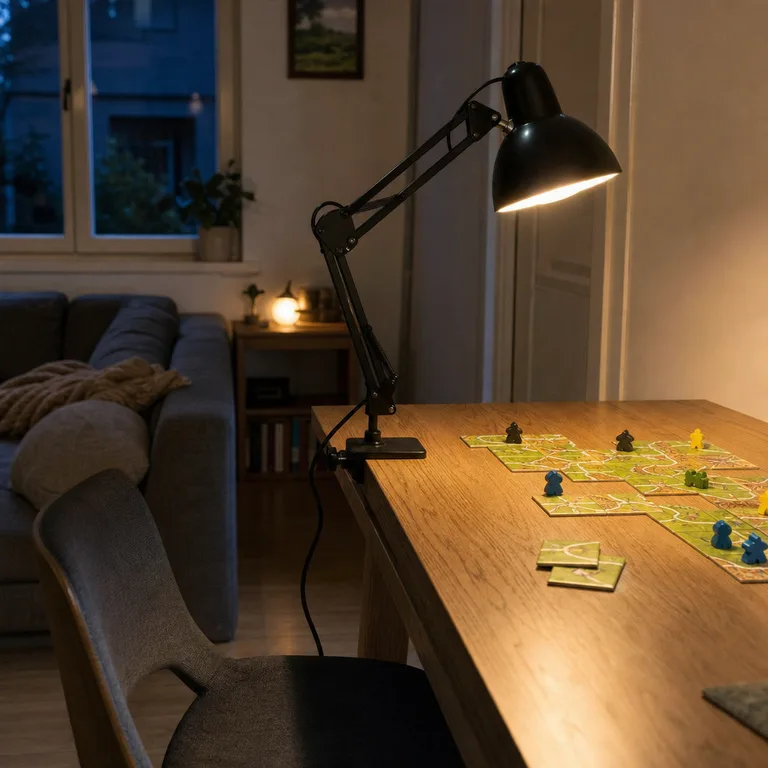
Clamp the light to a solid table edge and angle it so players are not looking into the bulb. An adjustable arm lets the light move as the game changes, especially when different parts of the table need attention.
Route the cord along a table leg or wall edge where it will not cross a walkway.
Worth knowing: Not every table has an edge sturdy enough for a clamp, and a cord can be a trip hazard in a tight room.
7.Roll a Bar Cart Up for Drinks and Game Supplies
A narrow rolling cart moves drinks, napkins, pencils, and spare supplies off the game surface. It also creates a clear separation between play materials and anything that might spill.
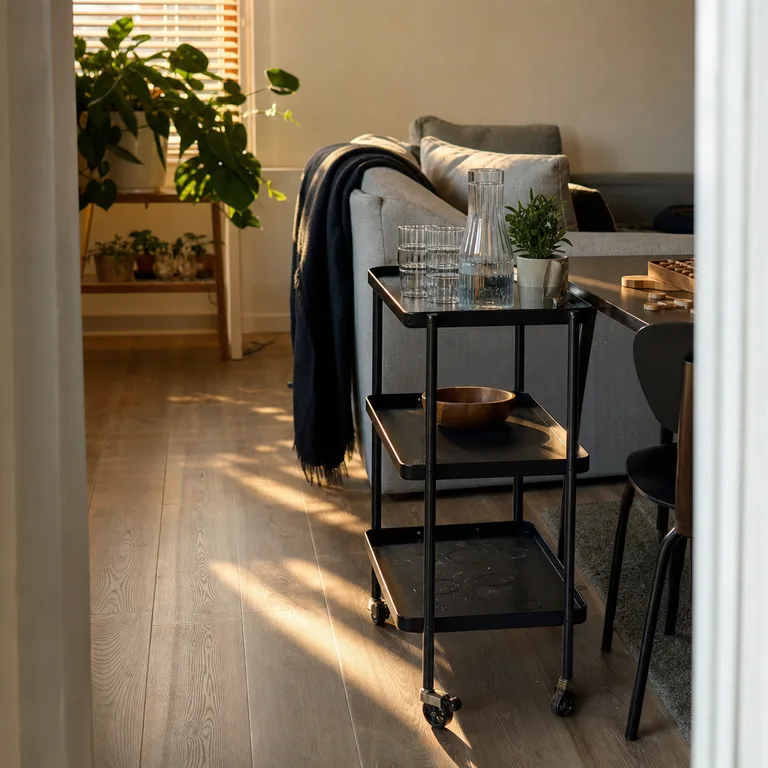
Park the cart at the end of the table or beside the sofa, leaving enough room to pull out chairs and pass through the space. Afterward, roll it toward the kitchen or its storage spot for a faster cleanup.
Use trays or bins on the shelves so dice, pencils, and small supplies do not shift when the cart moves.
Worth knowing: A rolling cart needs a clear route and can feel bulky in a very narrow living room.
8.Use Floor Cushions for a Low Coffee-Table Game
Floor cushions let more people gather around a low coffee table without storing extra dining chairs. They work well for casual card games, simple boards, and family games where players can sit close together.
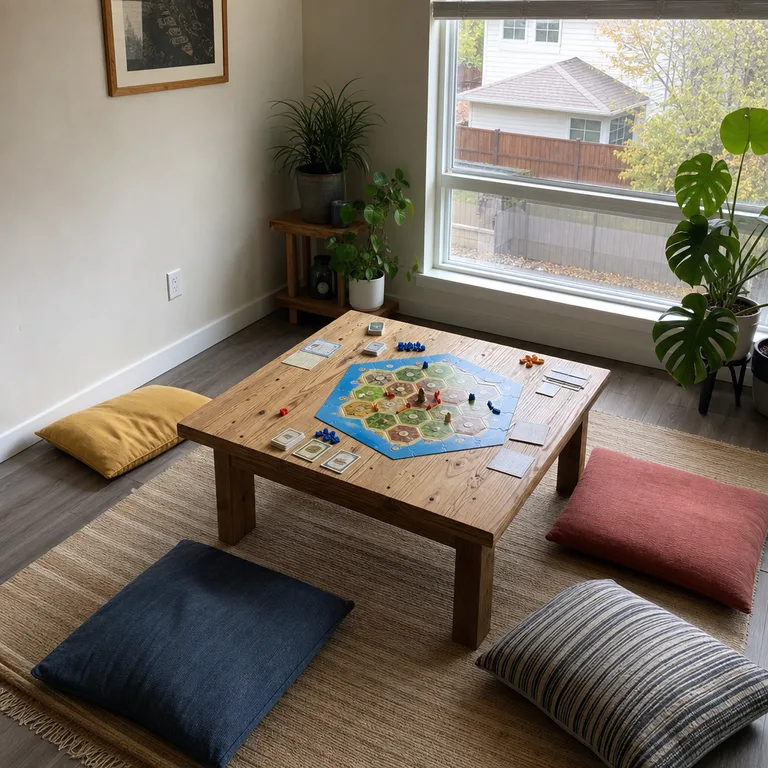
Choose cushions with washable covers and place them on a rug for a softer, less slippery base. Keep enough open floor around the group so people can get up without stepping over game pieces or each other.
Low seating is especially useful when the room needs to switch back quickly, because the cushions can stack in a closet or under a bed.
Worth knowing: Floor seating is not comfortable or accessible for every guest, particularly during longer games.
9.Set a Small Round Table in an Unused Corner
A small round pedestal table can create a temporary game spot in an open corner near a window or bookcase. Its curved edge keeps the circulation path clearer than a square table with projecting corners.
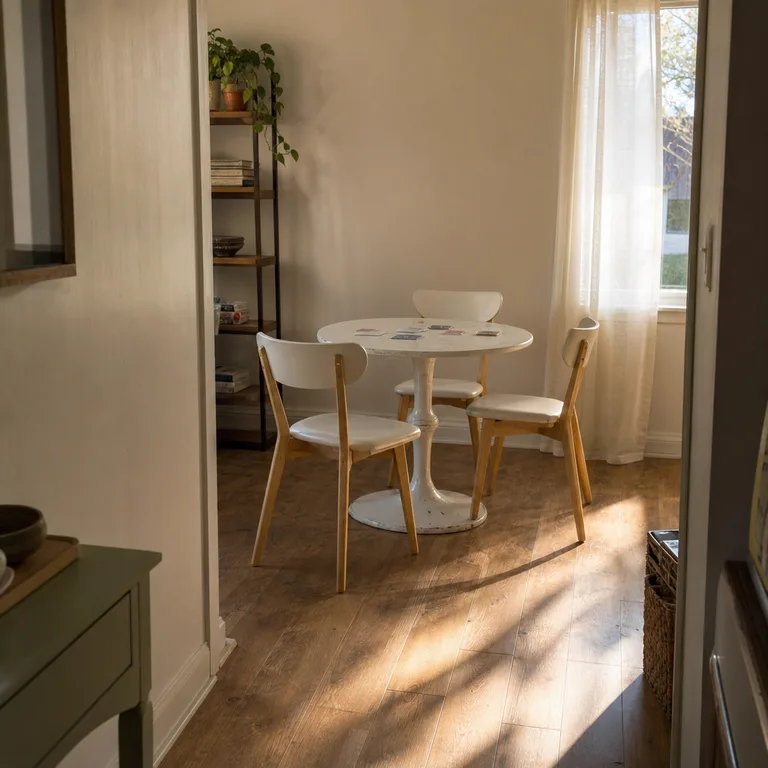
Use it for card games, dominoes, or compact boards, and bring in lightweight chairs only for the evening. Keeping the table near an existing outlet or lamp can also make lighting easier without adding cords across the room.
Avoid placing it where a door swings open or where it blocks access to a closet, balcony, or frequently used storage.
Worth knowing: A small round top limits how much each player can spread out, so it is better for compact games than large strategy games.
10.End the Night With a Lidded Game Caddy
A lidded caddy gives loose cards, dice, pencils, and tokens one place to go as each game ends. Pair it with a tray for larger components so the tabletop can be cleared in a single trip.
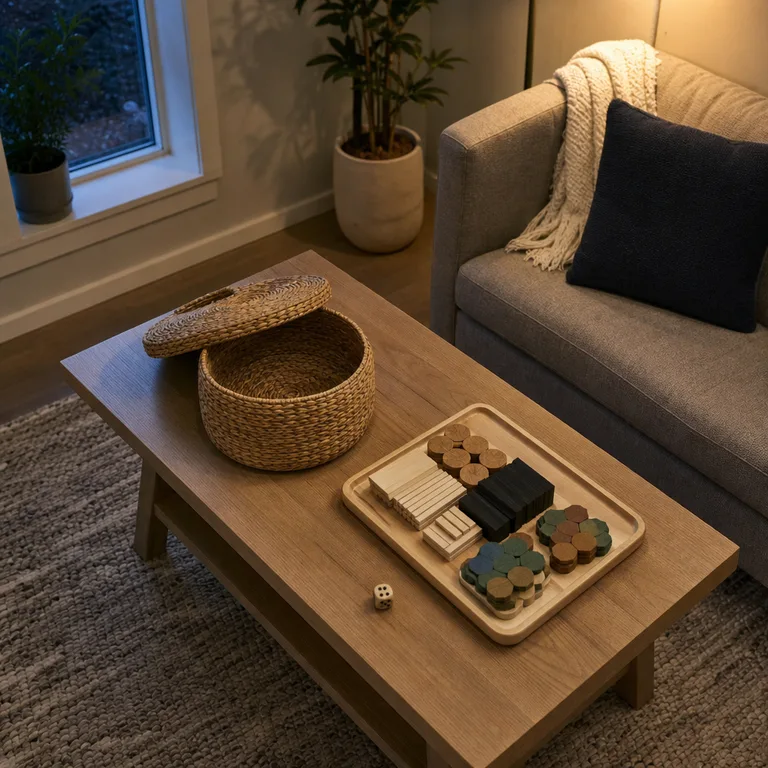
Sort items at the table instead of carrying loose pieces across the room. A caddy with a lid is especially useful in homes with pets or children, since it keeps small components contained until the next game night.
Use simple dividers, pouches, or small containers inside the caddy to prevent mixed pieces from becoming a frustrating cleanup task later.
Worth knowing: A caddy speeds up clearing the room, but it still needs a designated shelf or closet spot between gatherings.
About the author
Dana Ruiz, Senior editor
Dana writes about small-space living, storage and low-cost decorating.
Keep reading
12 Small Living Room Seating Ideas Beyond a Second Sofa
September 21, 2026
10 Small Laundry Nook Ideas for Homes Without a Laundry Room
September 21, 2026
10 Guest Room and Office Ideas for One Small Room
September 20, 2026
10 Budget Reading Nook Ideas for an Unused Corner
September 20, 2026