6 Budget Christmas Table Layouts for Family-Style Meals
Family-style Christmas meals need a table layout that leaves a clear path for shared platters and bowls without turning every place setting into a serving station. These six arrangements use the table’s shape and available reach to keep dishes practical, with trivets under hot cookware and decorations kept low or moved aside between courses.
As an Amazon Associate I earn from qualifying purchases.
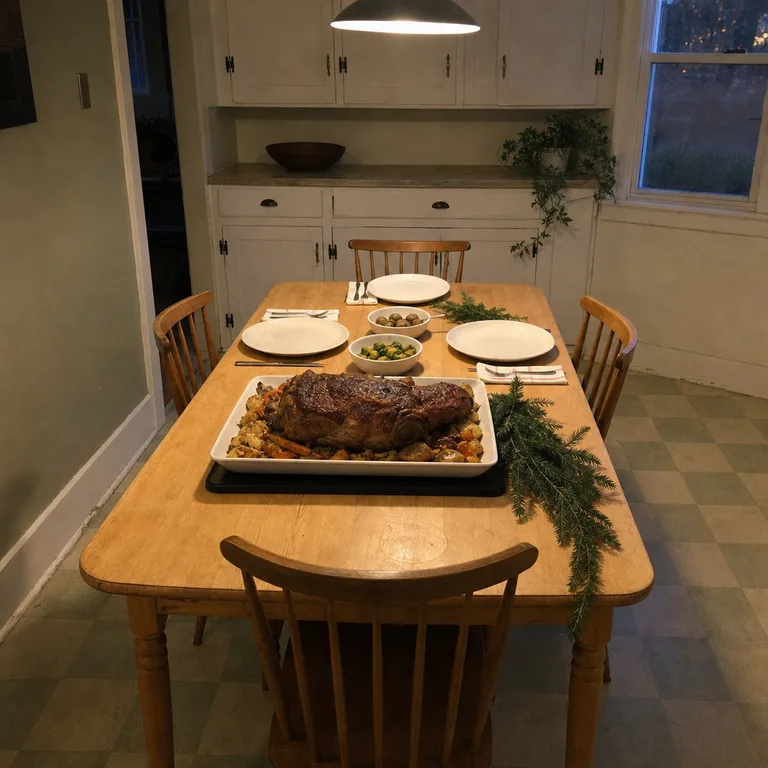
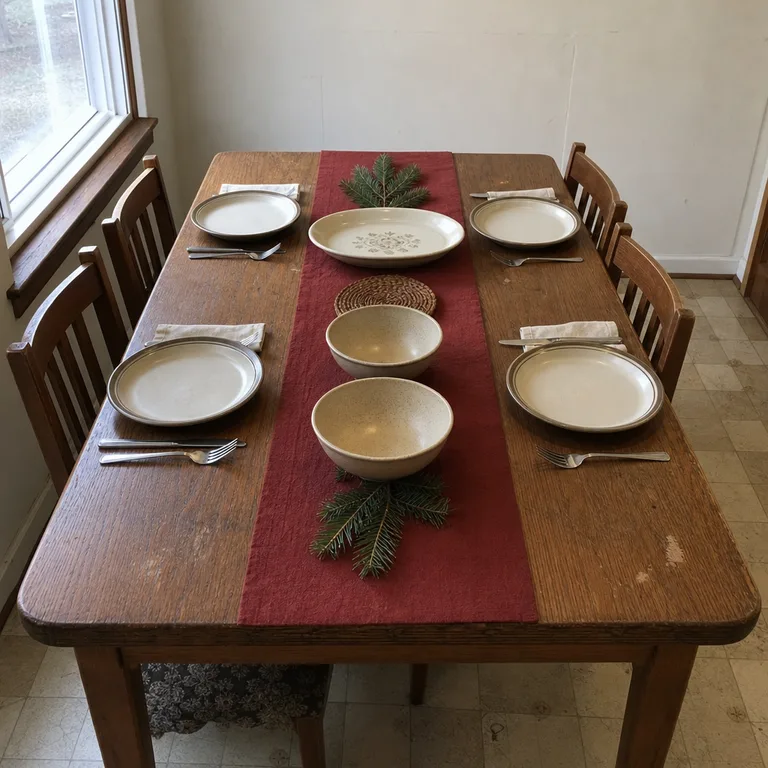
This works when every guest needs access to the same dishes without passing them around the table repeatedly. Keep the lane for serving ware rather than a tall centerpiece, and choose handled platters and low bowls that do not block sightlines; a simple cotton runner also makes the serving zone look intentional.
Worth knowing: A central lane can feel crowded on a narrow table, especially if deep bowls or large cookware take up the middle.
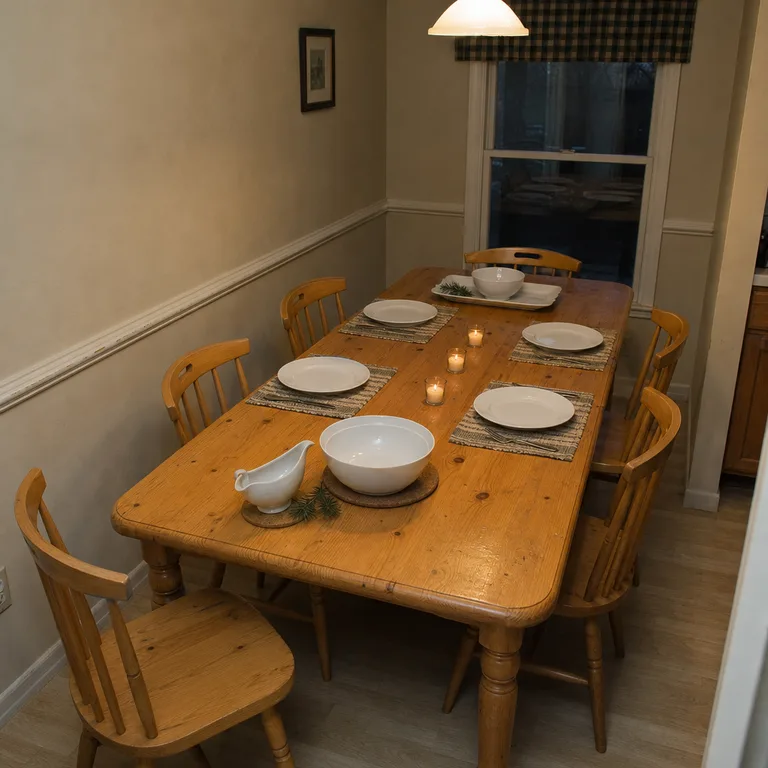
This shortens the distance between guests and the dishes nearest to them, while the bare center gives hands room to pass serving ware if needed. Use matching trivets or small trays beneath each cluster so the two ends look connected rather than randomly loaded.
Worth knowing: Guests still need to pass dishes across the table when the item they want is in the opposite cluster.
3.Assign Rotating Dish Positions Around a Round Table
On a 48-inch round table, place shared bowls in the gaps between four place settings instead of grouping everything in the center. Four 8-inch bowls on individual trivets leave the middle available for one low, nonessential detail, such as a small bowl of pinecones.
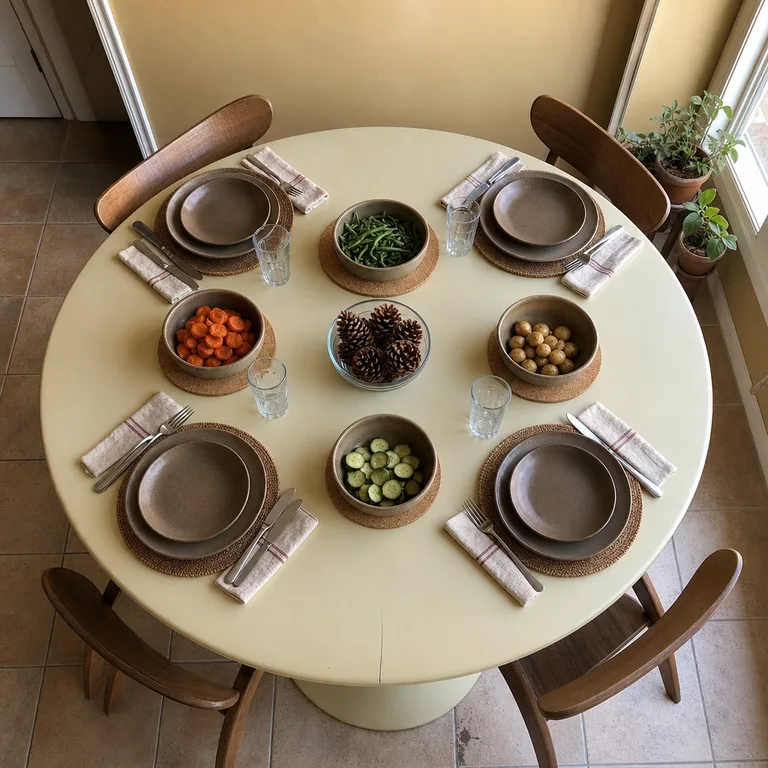
The between-setting positions give each person a nearby dish and make the table easier to navigate than a packed central pile. Rotate bowls around the table as needed, and keep the seasonal accent short enough that it does not interfere with serving or conversation.
Worth knowing: A round table becomes cramped quickly when a main dish requires a deep or oversized platter.
4.Use One End Zone for the Largest Platter
Reserve the end of a rectangular table closest to the kitchen for the largest shared platter. On a 5-foot table, an 18-inch rectangular platter can sit lengthwise on a heat-resistant trivet, with smaller bowls placed along the remaining sides of the table.
This gives the bulkiest serving piece a defined landing spot instead of forcing it into the middle of place settings. Leave open space around the platter handles so it can be lifted and passed easily, and use a short garland along one edge rather than a centerpiece that competes for the same area.
Worth knowing: People seated at the far end will need the main platter passed to them.
5.Stagger Serving Bowls Along Both Table Edges
Place low serving bowls in alternating positions along the outer edges of a rectangular table, with each bowl beside a guest rather than directly in front of one. On a 60-inch table set for six, five shallow 7-inch bowls can sit on small trivets while a 13-inch platter remains free to travel through the center.
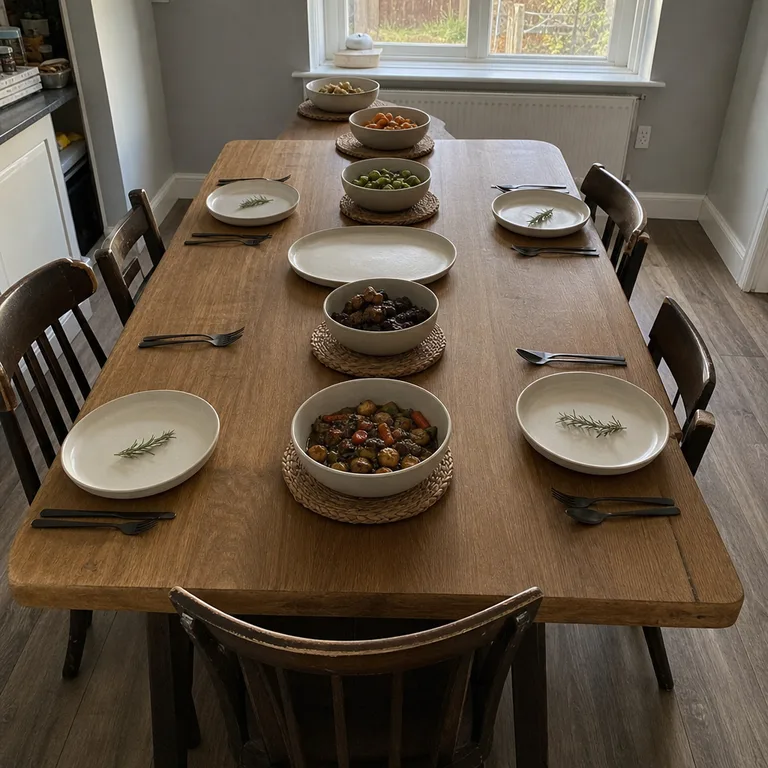
This keeps the middle clear for the dish most likely to be passed while spreading side dishes around the table. Choose stable, low bowls and leave enough elbow room at each setting so sleeves do not brush the serving ware.
Worth knowing: This layout needs shallow dishes; tall bowls along the edges can make the table feel tight and interfere with seated guests.
6.Clear the Middle Between Courses
Set out only the shared dishes needed for the current course, then clear that serving ware before bringing out the next group. At a small 4-foot drop-leaf table, one 10-inch bowl and two place settings can leave the center open instead of trying to hold every dish at once.
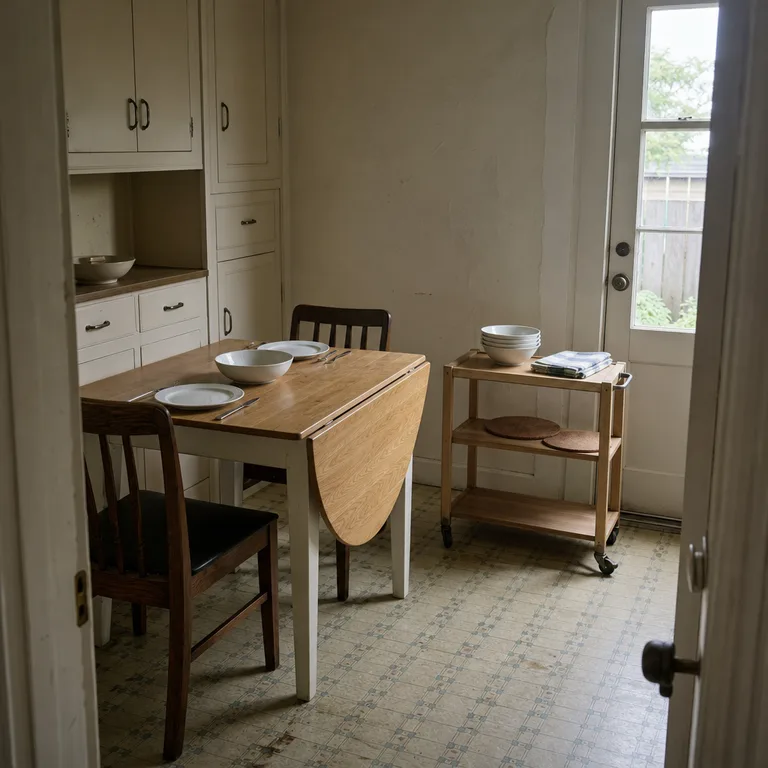
Keep clean bowls, napkins, and unused trivets on a narrow rolling cart or other nearby surface until they are needed. This makes a tight Christmas table feel calmer and gives each course its own usable serving space without relying on a separate buffet counter.
Worth knowing: This approach depends on having a nearby, accessible surface for clean serving ware between courses.
About the author
Dana Ruiz, Senior editor
Dana writes about small-space living, storage and low-cost decorating.
Keep reading
7 Easy Shoe-Changing Seats for a Narrow Entryway
November 5, 2026
9 Budget Garden Focal Point Ideas With Secondhand Finds
November 6, 2026
8 Budget House Number Displays for an Easy-to-Find Entrance
November 6, 2026
6 Budget Umbrella Storage Ideas to Keep a Small Entryway Dry
November 6, 2026