6 Budget Umbrella Storage Ideas to Keep a Small Entryway Dry
Wet umbrellas need an upright or hanging place where water can drain and air can move, rather than being folded into a dry basket or laid across the walking path. These six small-entry solutions separate active drying from later dry storage while keeping the door swing, flooring, and rental limits in mind.
As an Amazon Associate I earn from qualifying purchases.
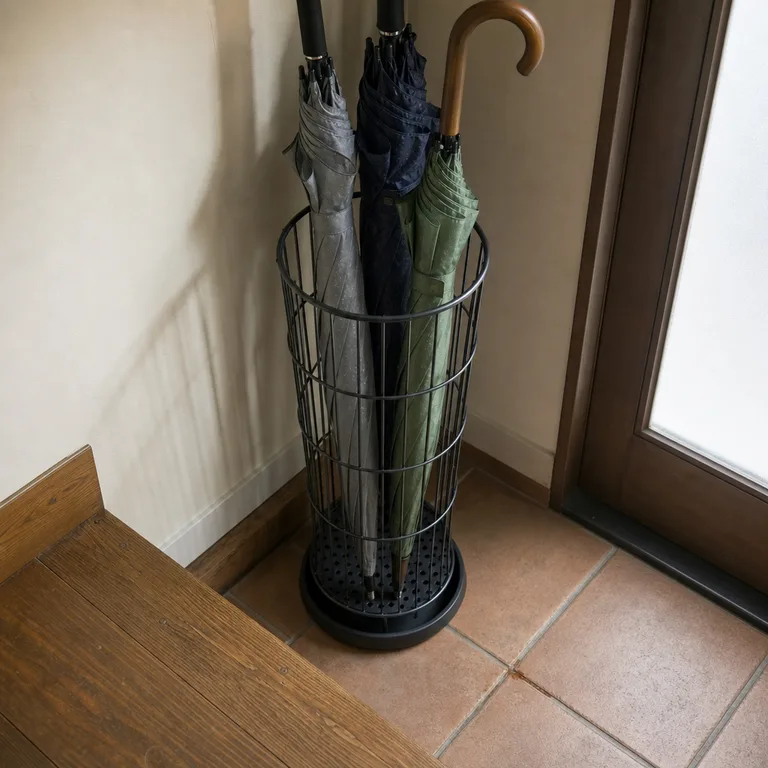
1.Tuck a Slim Umbrella Stand Behind the Open Door
A slim upright stand can turn the unused space behind an inward-swinging door into a parking spot for long wet umbrellas. Choose a location that stays clear when the door opens fully, so handles and canopies do not catch on the door edge.
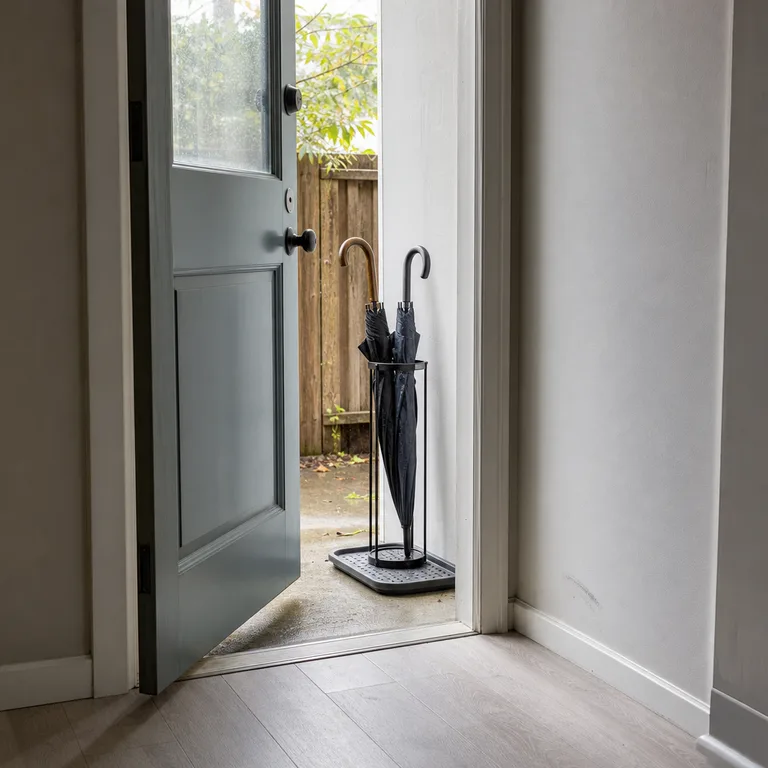
Set the stand on a removable rubber liner or shallow waterproof tray to contain drips. A basic metal stand, an existing tall container with a stable base, or a reused narrow waste bin can all work when paired with a liner that can be lifted out and emptied.
Worth knowing: This only works if the door has enough clearance; a stand that blocks the swing or narrows the exit route is not worth keeping there.
Related: 8 Wet Boot Tray Setups for a Winter Entryway With No Mudroom
2.Hang Open Umbrellas From a Wall Rail Over a Drip Shelf
A short wall rail gives wet umbrellas room to hang partly open, which helps fabric dry faster than storing it tightly folded. Hang them by wrist straps or curved handles above a shallow drip shelf, leaving space between canopies for air to move.
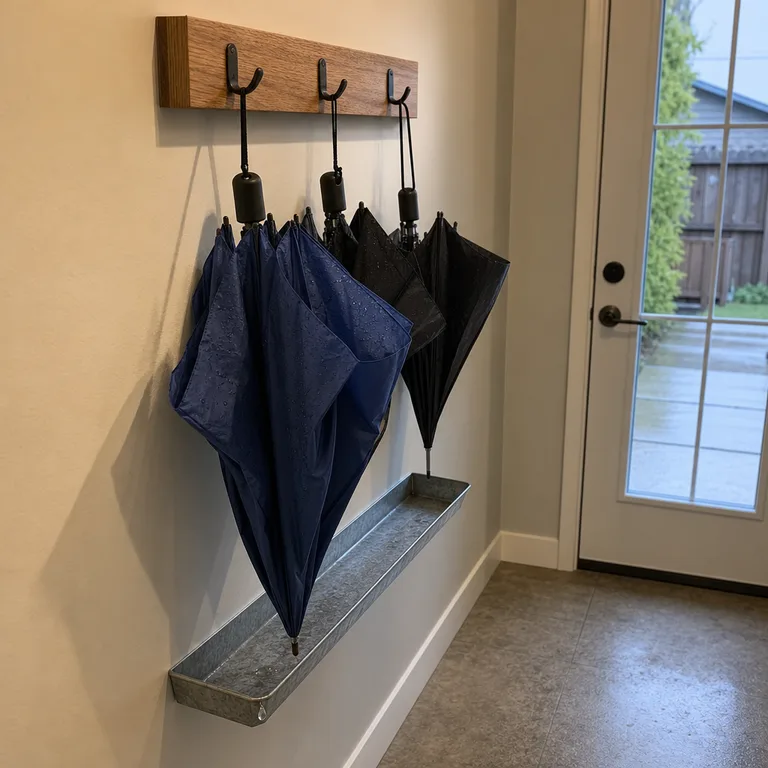
Use a small removable tray, metal shelf, or repurposed boot tray below the hooks instead of relying on the floor. Place the setup away from coat sleeves, bags, and the main door route, since damp umbrella fabric can brush against anything stored close by.
Worth knowing: Partly open umbrellas take more wall space than closed ones and may not suit a very narrow hall or a rental where wall mounting is restricted.
3.Build a Tall Vertical Cubby Beside a Small Bench
A tall, narrow cubby gives long umbrellas a dedicated compartment beside an entry bench without mixing them with shoes or dry bags. Add a waterproof removable base inside so water stays contained at the bottom rather than soaking into wood or flooring.
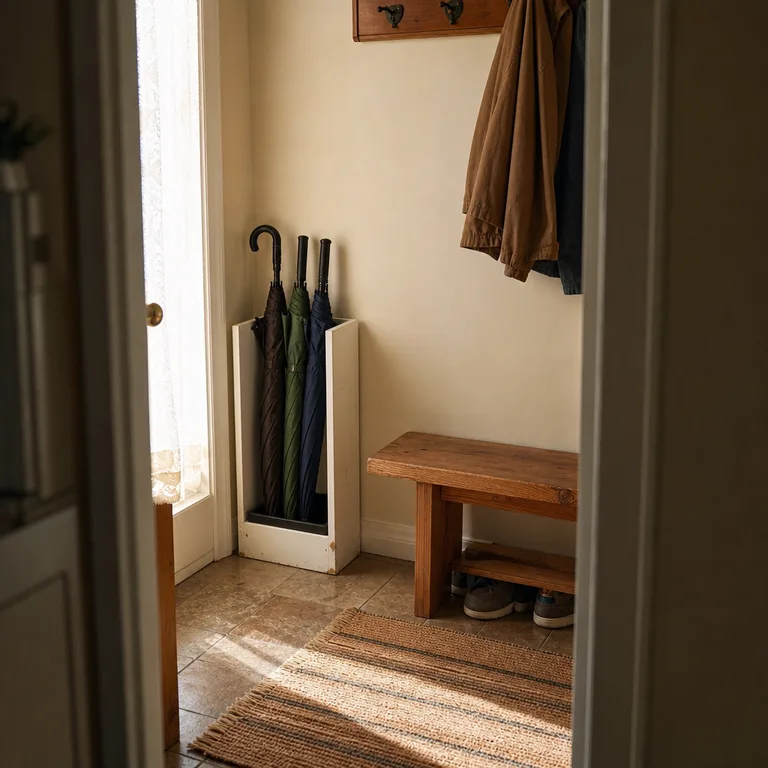
An inexpensive plywood box, a spare narrow cabinet compartment, or a reused vertical organizer can become a cubby with paint and a plastic tray liner. This format keeps closed umbrellas tidy while they finish dripping, then lets them move to dry storage once the fabric is fully dry.
Worth knowing: A closed umbrella inside a cubby dries slowly, so it is best used as a drip-holding spot rather than the only drying method.
4.Use a Wire Basket With a Raised Draining Insert
A tall open wire basket keeps several long umbrellas upright without the solid sides of a bin trapping moisture around them. Fit a raised perforated insert inside the basket so umbrella tips sit above the water collected in a removable catch pan.
This can be assembled from a basic storage basket, a plastic grid or shelf insert, and a shallow tray already on hand. Put it beside a clear wall rather than against upholstered furniture or a radiator, where damp fabric can cause problems or dry unevenly.
Worth knowing: Wire baskets are open and practical rather than concealed, and they need occasional cleaning to prevent dust and water residue from building up in the pan.
5.Slide a Pull-Out Umbrella Tray Under a Floating Console
A shallow pull-out tray under a wall-mounted console uses low, otherwise empty space for folded compact umbrellas. It keeps wet fabric contained and leaves the main passage open, making it a useful option for a slim hall.
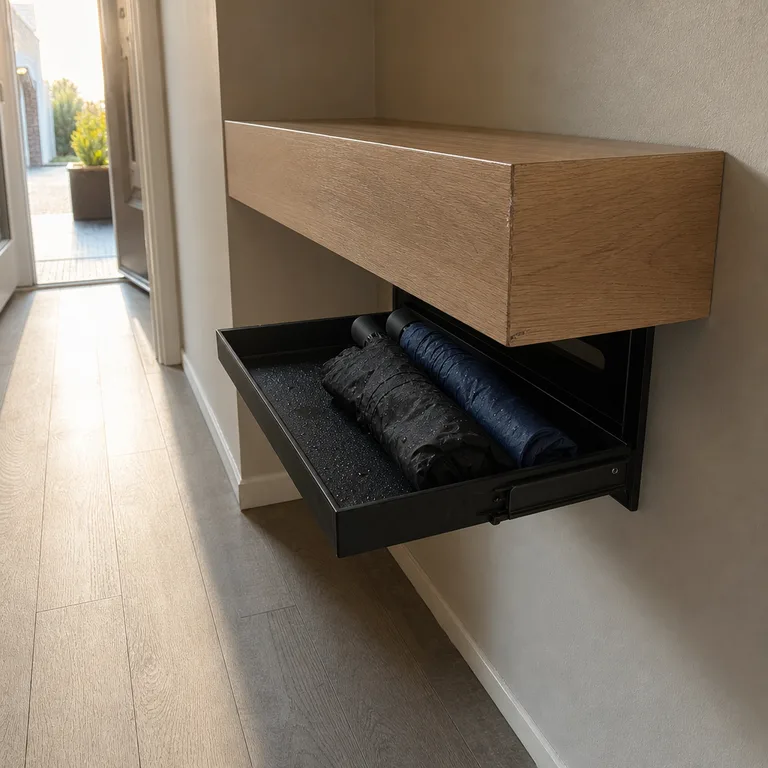
Line the tray with waterproof material and use drawer slides only if they can be secured properly to the console or nearby structure. Pull the tray out for emptying and wipe it dry before returning umbrellas to long-term storage elsewhere.
Worth knowing: This is for compact folding umbrellas only; long handled umbrellas will not fit safely in a low tray.
6.Place a Covered Outdoor Drying Stand Beside the Entry
A covered stoop or sheltered porch can handle the wettest stage before umbrellas come indoors. A weighted outdoor stand lets umbrellas drain in open air, while one simple indoor hook can hold them later once they are dry.
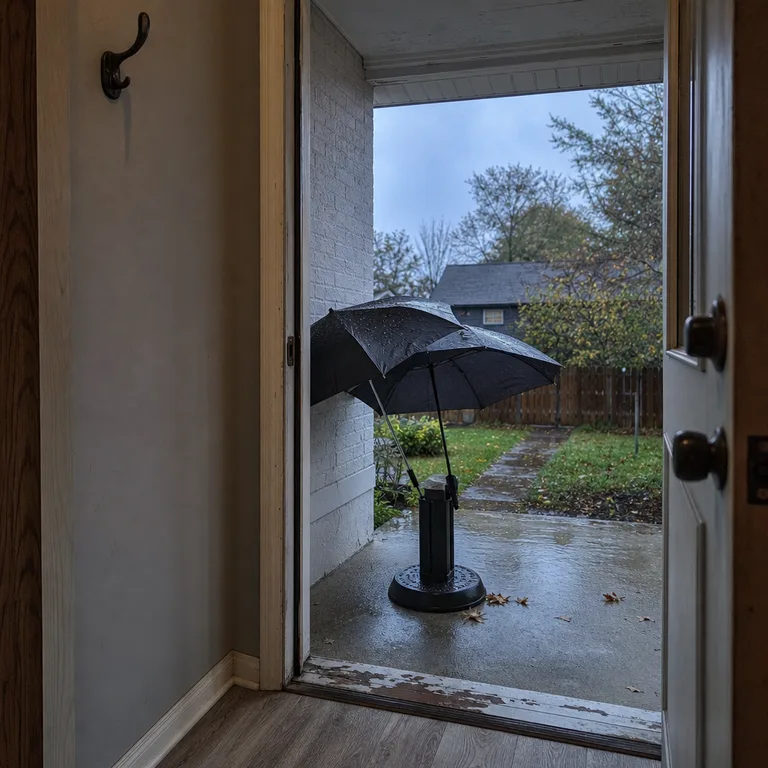
Use a sturdy stand that will not tip in wind, and keep it under enough cover that rain does not simply refill the canopies. This approach also protects indoor floors, but the placement needs to preserve a safe route through the doorway.
Worth knowing: Check shared-hall rules, rental policies, and local weather first; an outdoor stand is not suitable on an exposed stoop or where belongings cannot be left outside.
About the author
Dana Ruiz, Senior editor
Dana writes about small-space living, storage and low-cost decorating.
Keep reading
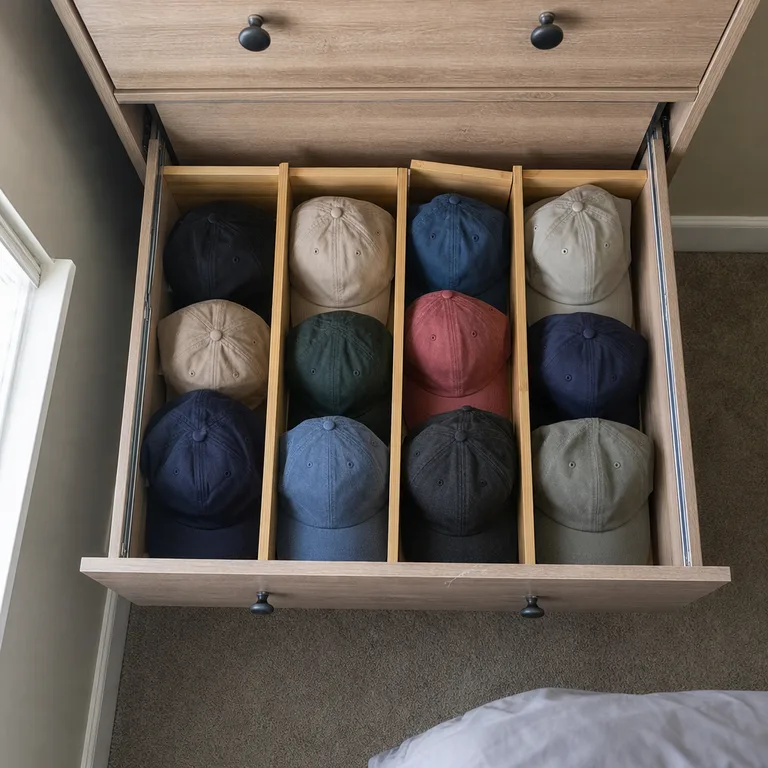
8 Budget Baseball Cap Storage Ideas That Avoid Crushing
November 6, 2026
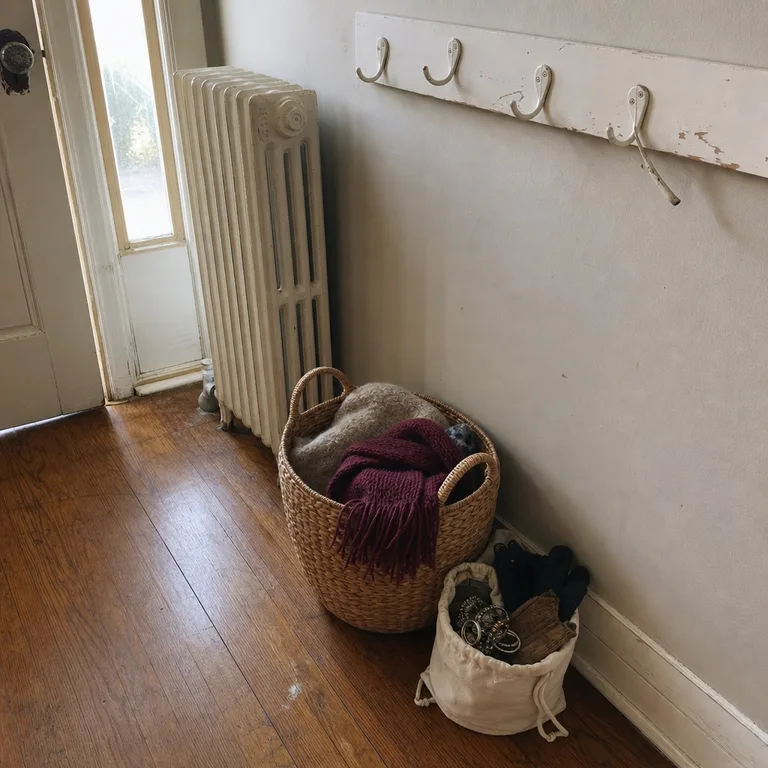
10 Easy Decluttering Wins for a Home That Feels Too Full
November 6, 2026
8 Budget Ways to Organize a Small Chest Freezer
November 5, 2026
10 Cottagecore Decor Ideas That Bring Collected Charm to a Plain Room
November 6, 2026