10 Pot Lid Storage Ideas That Stop the Cabinet Avalanche
Pot lids create cabinet avalanches because their knobs, rims, and mixed diameters do not stack neatly. These storage ideas keep each lid upright, separated, or secured to a door without changing the cabinet itself.
As an Amazon Associate I earn from qualifying purchases.
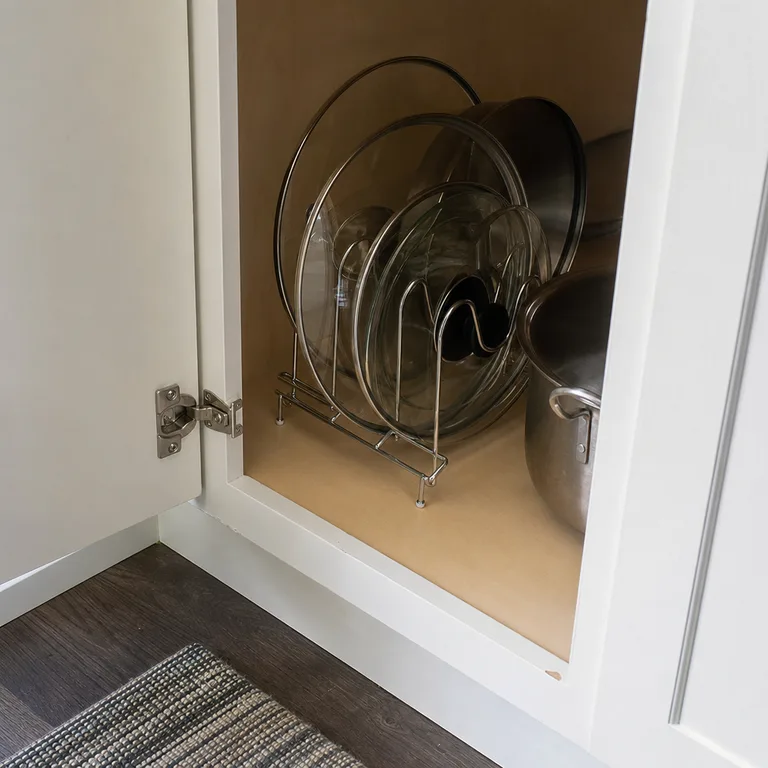
1.Add an Adjustable Wire Rack Inside a Deep Base Cabinet
Set an expandable wire rack on the floor or shelf of a deep base cabinet and slide lids into the spaces on their edges. This stops glass and metal lids from nesting into a hard-to-separate pile beside the pots.
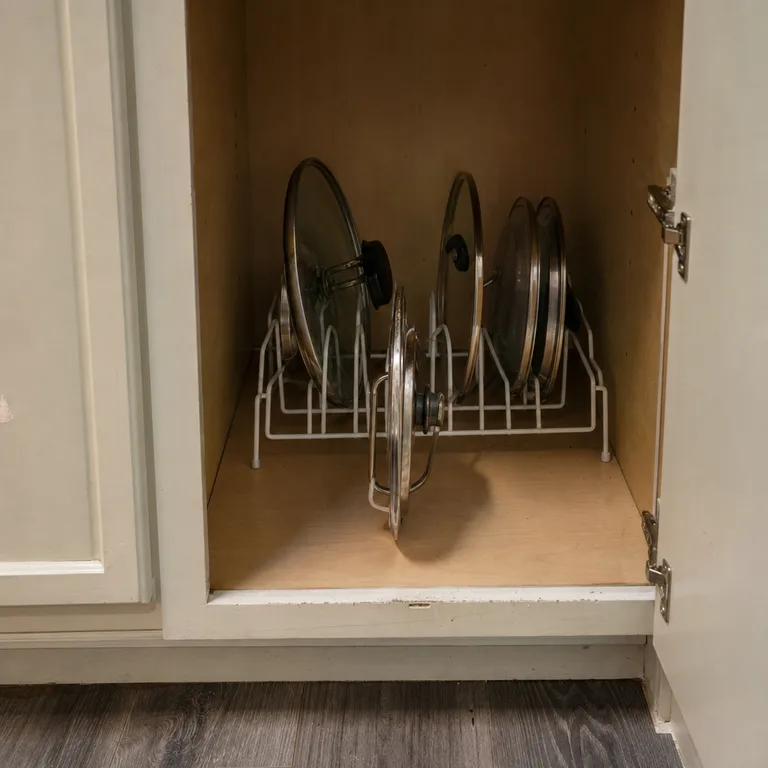
Choose a rack with dividers that can be moved for the mix of small and large lids already in the kitchen. A non-slip shelf liner underneath can help keep it steady when one lid is pulled out.
Worth knowing: Measure the tallest lid, including its knob, against the shelf above; this option needs enough vertical clearance to work.
2.Use Tension Rods as Narrow Lid Slots
Short tension rods can create simple individual bays in a drawer or shallow cabinet. Position them so each lid rests on its rim and the handle has room to clear the neighboring rod.
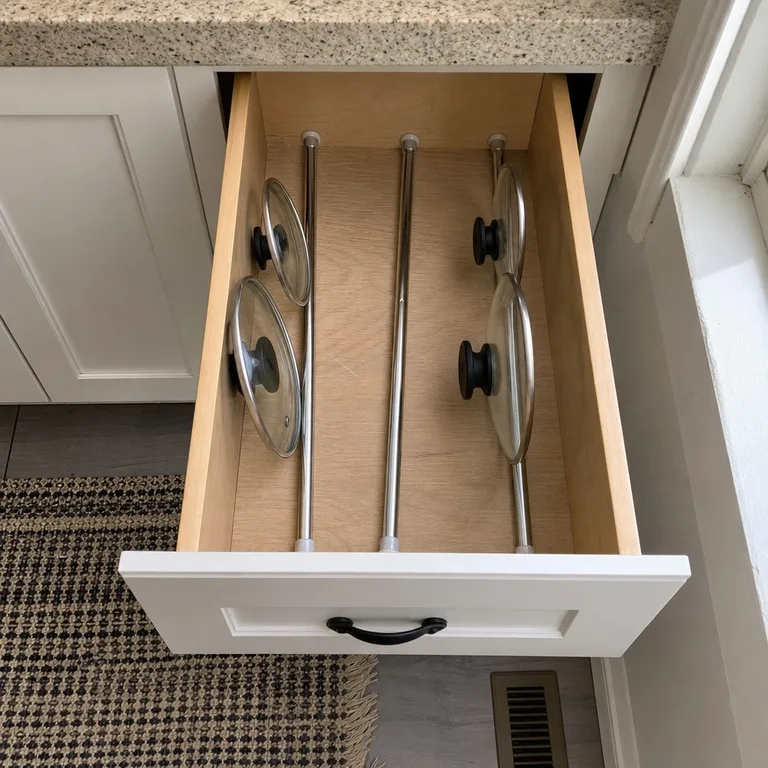
This is a flexible approach for a collection made up mostly of similarly sized saucepan lids. Start with a few rods and adjust their spacing rather than trying to force every lid into identical slots.
Worth knowing: Tension rods work best on smooth, solid drawer sides and may shift if a heavy lid is pulled out roughly.
3.Mount Individual Lid Holders on the Cabinet Door
Put individual holders on the inside of a lower cabinet door to keep frequently used lids visible and separate. The door turns unused vertical space into storage while leaving the cabinet shelf for pots.
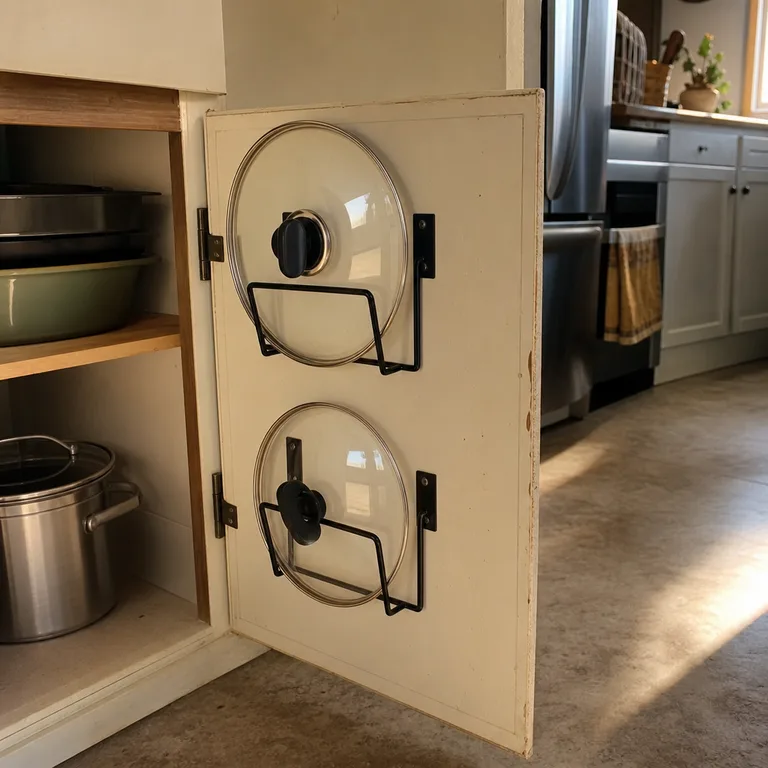
Adhesive versions avoid drilling, while screw-mounted holders tend to suit heavier lids and more frequent use. Arrange the holders around the shelves and cookware already inside so the door can close without bumping anything.
Worth knowing: Door-mounted storage can interfere with shelf contents, and renters may need permission before using screws or adhesives that could mark the finish.
4.Stand Lids in a File Sorter Beside the Pots
A sturdy metal file sorter can hold smaller lids upright on a cabinet or pantry shelf. Its separated sections make it easier to take one lid without disturbing the rest of the cookware.
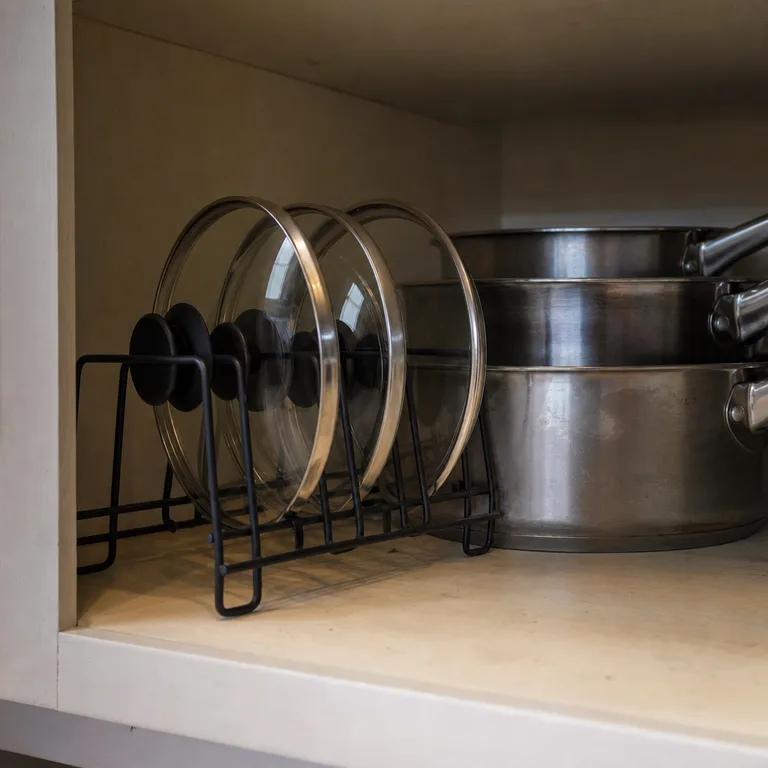
Choose a sorter with closely spaced, rigid dividers and place it on a shelf liner if the base feels slippery. This is an inexpensive way to test vertical storage with an item that may already be available elsewhere at home.
Worth knowing: Very narrow lids can slip through wide divider gaps, while large glass lids may be too heavy or tall for a basic file sorter.
5.Place a Vertical Bakeware Rack on a Cabinet Shelf
A plate or bakeware rack gives wider lids their own channels, which keeps broad rims from leaning in a loose stack. It is especially useful when a cabinet shelf is wide but not tall enough for a freestanding organizer with high sides.
Place the rack with the openings facing the cabinet door so lids can be lifted out without reaching behind pans. A rack intended for bakeware is often sturdy enough for this job, provided the shelf is deep enough to support each lid fully.
Worth knowing: A lid that overhangs the front of a shallow shelf can catch on the cabinet door or become easy to knock out of place.
6.Create Dividers With Peel-and-Stick Cabinet Channels
Adhesive plastic channels create fixed lanes for lids in a drawer or on a flat shelf. Each lid gets a defined resting place, which can make a mixed collection look calmer without adding a bulky rack.
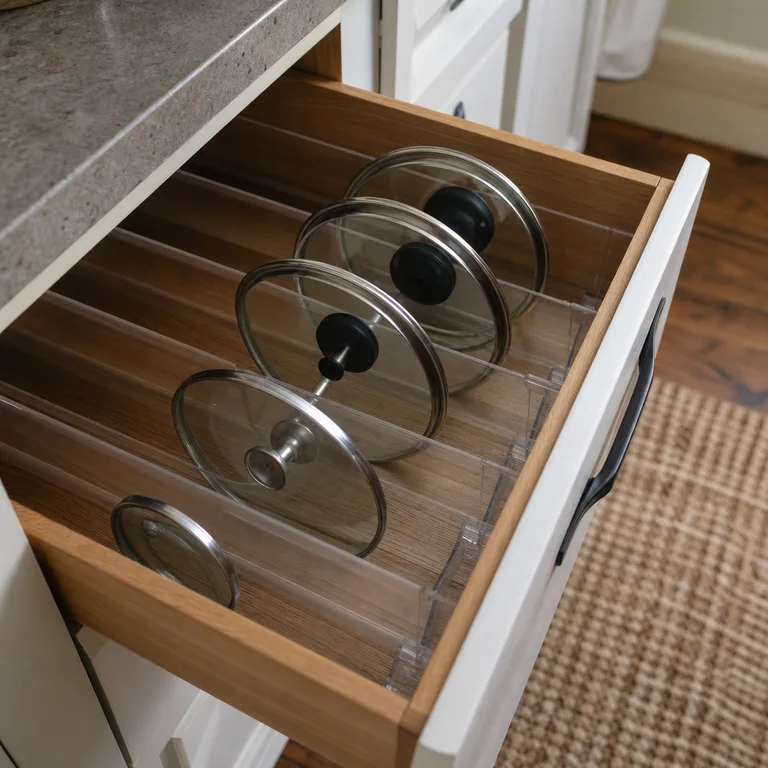
Lay out the lids first and leave enough room for knobs and fingers between channels. Clean away grease and let the surface dry fully before applying adhesive, since kitchen humidity and residue can weaken the bond.
Worth knowing: Once the channels are installed, changing the layout is less convenient, and adhesive may not hold reliably on textured or worn surfaces.
7.Use a Pull-Out Lid Organizer in a Lower Cabinet
A pull-out organizer brings upright lids from the back of a deep lower cabinet to the opening. It makes use of hard-to-reach space and can prevent the usual search through nested pots for a matching cover.
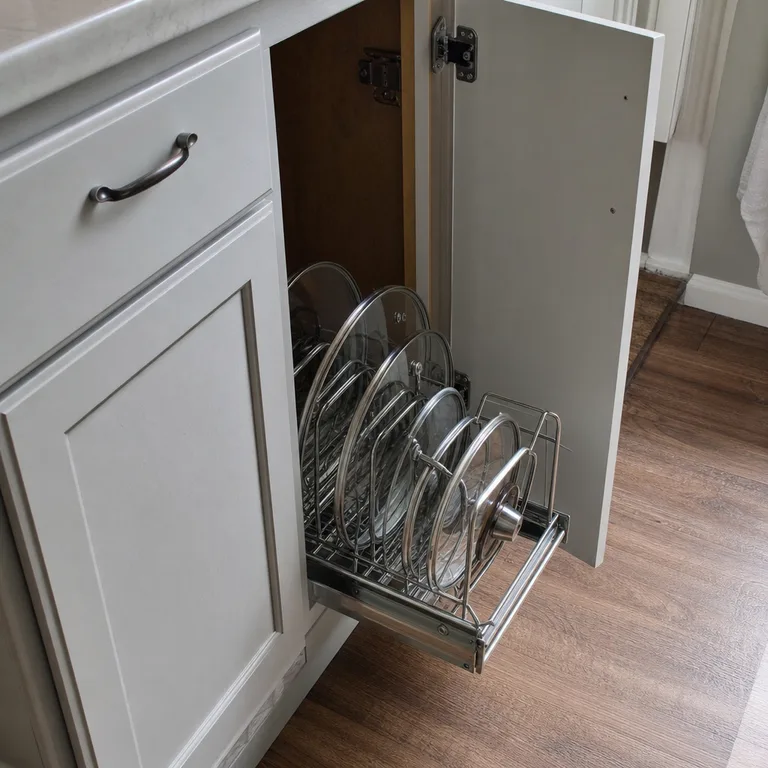
Look for a model designed for the cabinet’s opening and install it level so it slides smoothly under load. This is a more involved upgrade than a freestanding rack, but it can be cheaper than replacing cabinetry when the existing cabinet is otherwise sound.
Worth knowing: Installation requires accurate measuring, suitable mounting surfaces, and enough room for the organizer’s slide hardware.
8.Store Everyday Lids in a Countertop Drip Rack
Keep the handful of lids used most often in a compact rack near the stove or sink. The arrangement makes them easy to grab during cooking and gives washed lids a place to dry on edge.
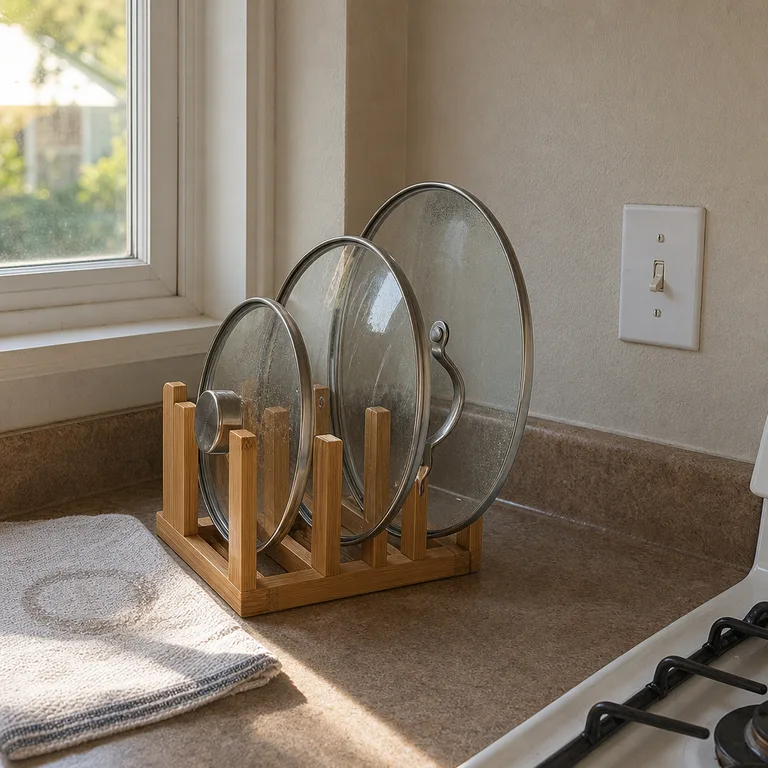
Use a small rack rather than a full dish drainer to limit counter clutter, and put it on a tray, mat, or other wipeable surface. This works particularly well for homes that run the dishwasher less often or wash cookware by hand.
Worth knowing: Countertop storage takes up visible workspace and needs regular wiping so water does not sit beneath the rack.
Related: 12 Small Kitchen Ideas That Free Up Prep Space Without Remodeling
9.Hang Lids From Heavy-Duty Adhesive Hooks
Hang lids by their knobs from sturdy adhesive hooks on a pantry side panel or the interior wall of a roomy cabinet. This keeps each piece separate without adding a full organizer to a shelf.
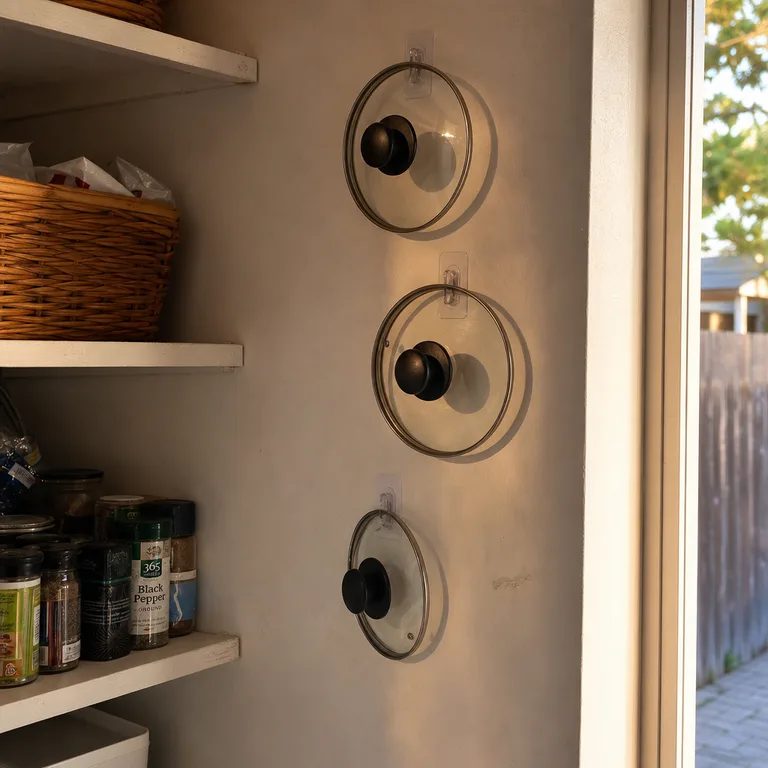
Test the hook shape with an empty lid first: the knob needs to sit securely without allowing the lid to tilt free. Apply hooks only to a clean, smooth surface, and leave room between lids so glass edges do not knock together.
Worth knowing: Not every knob shape will stay safely on a hook, and adhesive hooks may fail on dusty, textured, humid, or damaged surfaces.
10.Separate Lids in a Rolling Cart Basket
Use the top wire basket of a slim rolling cart to hold lids upright near the cooking area. The cart keeps the collection portable, which can be helpful in a small kitchen where cabinet space is limited.
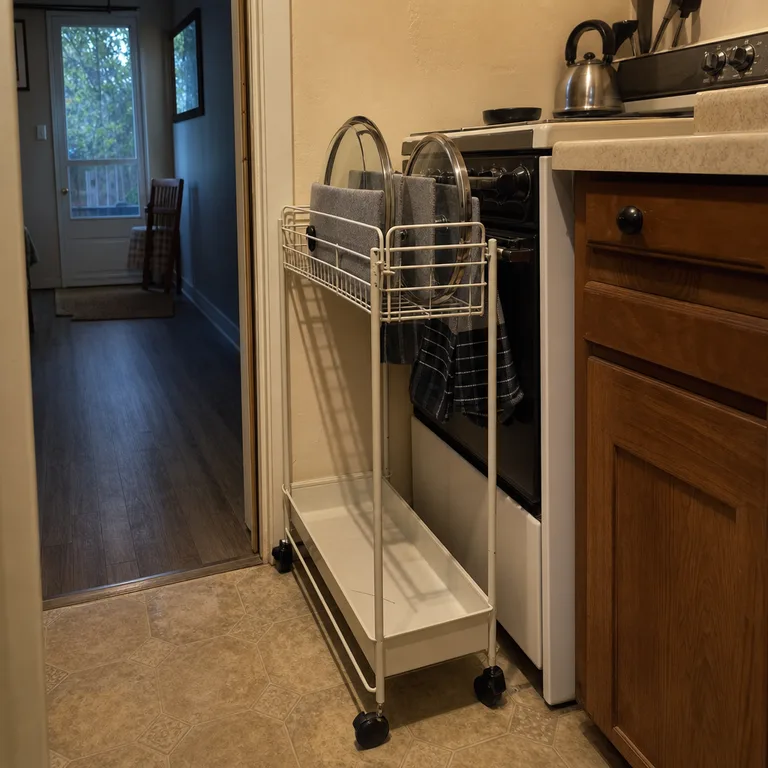
Add a simple divider or soft liner between lids if they rattle against one another, and park the cart where it does not block a walkway or appliance door. It can also move out of sight when guests are over or when more prep room is needed.
Worth knowing: A rolling cart adds another item to the room, so it is not a good fit for narrow kitchens with tight traffic paths.
About the author
Dana Ruiz, Senior editor
Dana writes about small-space living, storage and low-cost decorating.
Keep reading
10 Mail and Key Organization Ideas for a Tiny Entryway
September 28, 2026
12 Corner Kitchen Cabinet Organization Ideas Without a Remodel
September 28, 2026
12 Kitchen Drawer Organization Ideas Using Simple Dividers
September 25, 2026

10 Large Wall Art Ideas That Start With Affordable Materials
September 28, 2026