8 Budget Mini Christmas Tree Arrangements for Tables
Small freestanding Christmas trees can work on a coffee table, console, or sideboard when the arrangement leaves room for drinks, remotes, mail, or serving dishes. These eight concepts use contained accents and stable bases so the display feels intentional without making everyday furniture harder to use.
As an Amazon Associate I earn from qualifying purchases.
1.Pair Two Small Trees at One End of a Sideboard
Group two small trees with slightly different heights at one end of a sideboard. The paired shape gives the furniture a fuller holiday focal point while leaving the center and other end open for a tray, drinks, or everyday items.
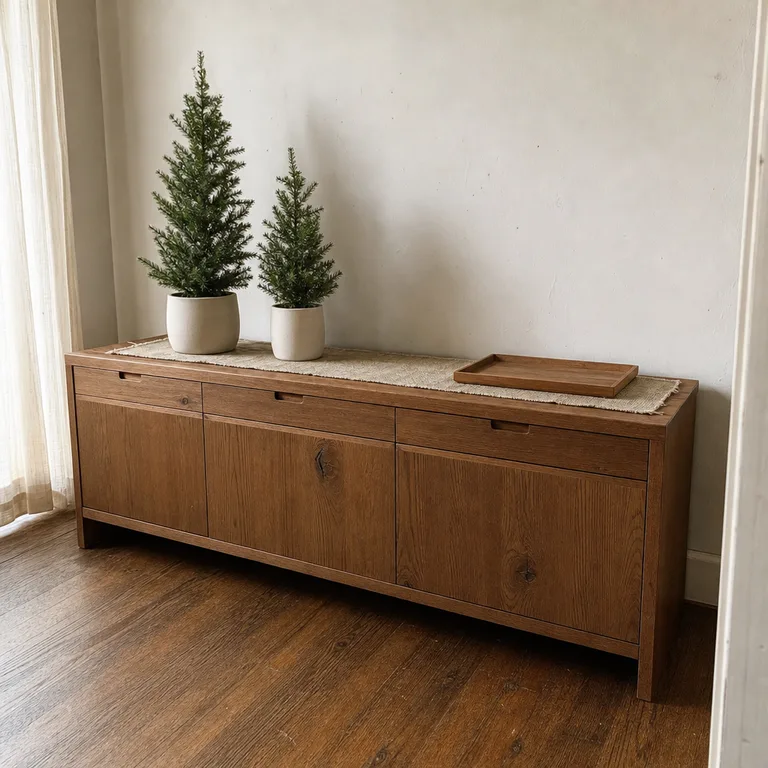
Choose pots with broad, weighted bases rather than narrow lightweight containers. A runner beneath the pair can visually connect the trees without spreading decorations across the whole surface.
Worth knowing: This asymmetrical arrangement works best on a longer sideboard; on a short cabinet, two trees can take over the usable top surface.
2.Anchor One Tree on a Plain Coffee-Table Tray
Place one compact tree inside a low-sided tray on a coffee table. The tray creates a clear boundary for the decoration, so remotes, coasters, and snacks can stay on the remaining open section of the table.
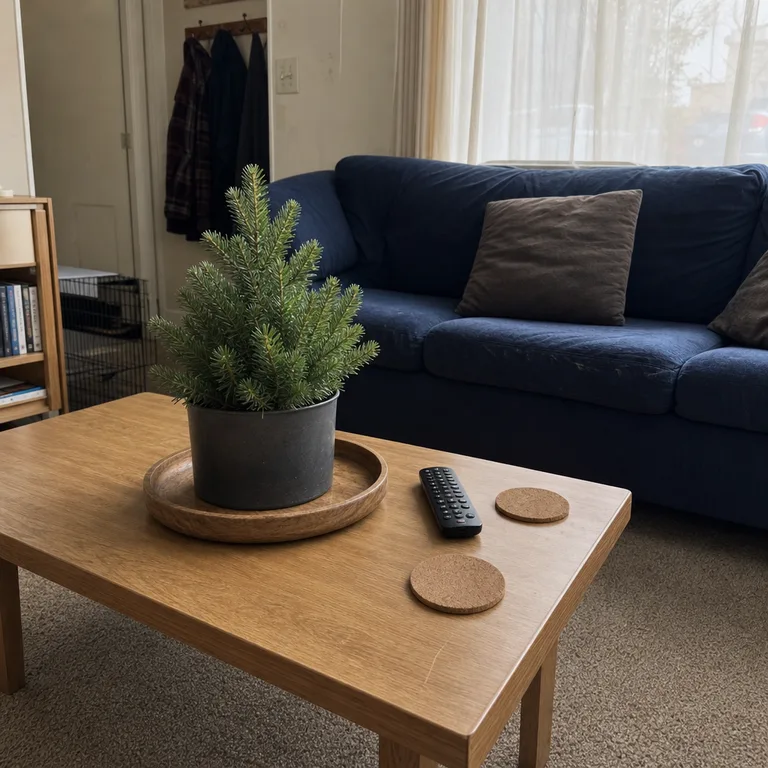
Use a tray wide enough to catch loose needles or small accents, but keep its sides low enough that the tree does not look buried. A tree in a low, stable pot is less likely to shift when the table is bumped.
Worth knowing: A coffee table is a high-use surface, so even a contained tree may need to be moved for game nights, larger snack trays, or visiting guests.
3.Build a Three-Height Cluster on a Console
Arrange a short, medium, and taller narrow tree as one cluster at one side of a console. Putting the tallest tree at the back creates depth while keeping lower pieces toward the front where they are easier to see.
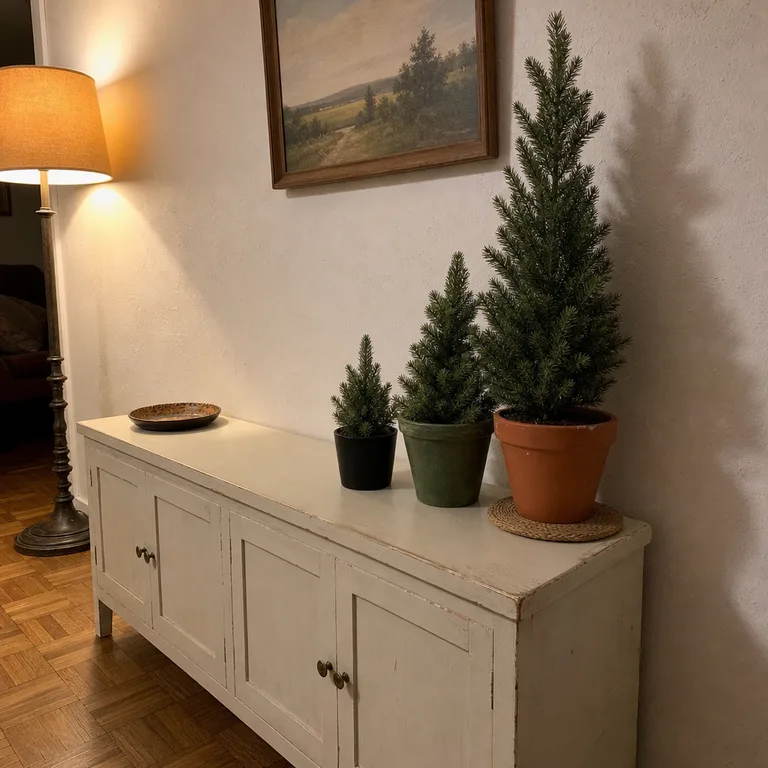
Use different pot finishes in a restrained color family, such as clay, dark green, and black, to make mismatched trees feel connected. Keep the cluster together instead of spacing trees across the console, leaving one clear area for keys, mail, or a catchall dish.
Worth knowing: A tall tabletop tree can block artwork or sightlines in a narrow room, especially when the console sits near a doorway.
4.Place a Tree Beside a Framed Winter Print
Set a small tree beside one framed winter print on a side table. The frame adds height and a finished backdrop, allowing the arrangement to feel complete without a collection of small, unstable decorations.
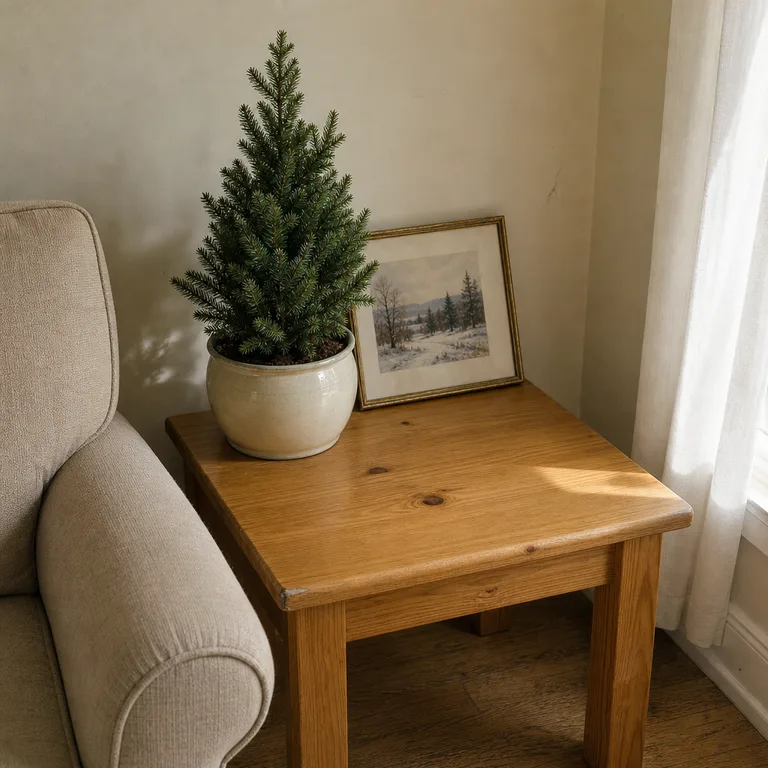
Lean the print against the wall or use a secure stand, then place the tree in a wide pot beside it. Keep the front half of the table empty for a mug, book, or reading glasses, particularly beside a chair that gets daily use.
Worth knowing: A leaning frame can be easy to knock out of place on a table used by children, pets, or anyone reaching for a drink.
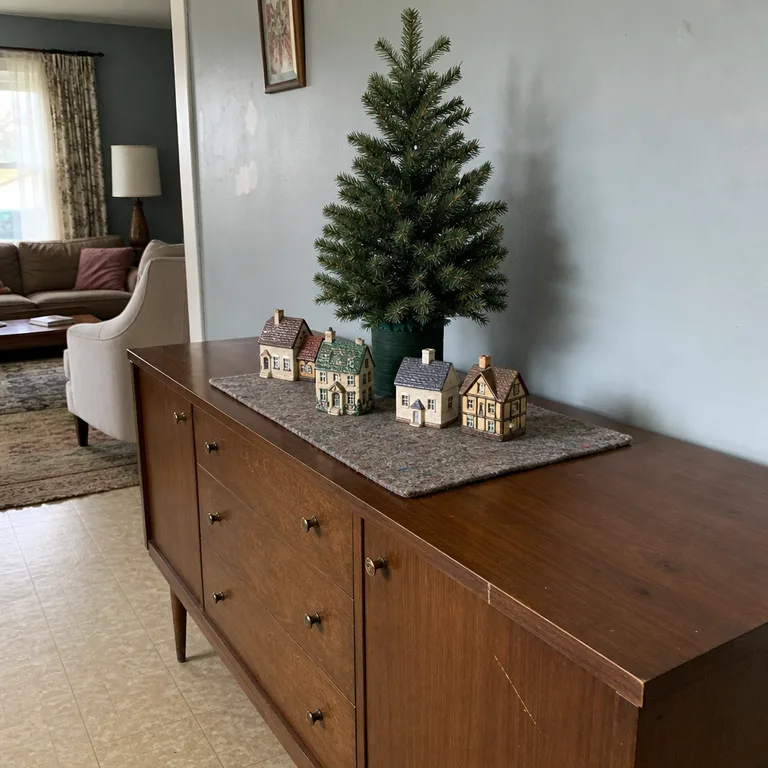
5.Set a Small Tree Behind a Low Village Scene
Create one compact village scene by placing a small tree behind a low row of houses. The tree becomes a backdrop rather than a separate object, and the low foreground keeps the scene visible without crowding the buffet.
Put the village on a mat or runner that defines its footprint, then leave both ends of the furniture bare for serving dishes. Use a stable riser only if it has a broad base and does not make the tree top-heavy.
Worth knowing: This arrangement needs occasional dusting and careful storage because several small village pieces are easier to chip or misplace than one simple display.
6.Balance a Tree with a Flameless Lantern
Pair a compact tree with a flameless lantern at the back of a console or sideboard. The lantern balances the tree's visual weight while keeping the arrangement simple enough for an entry or small apartment living room.
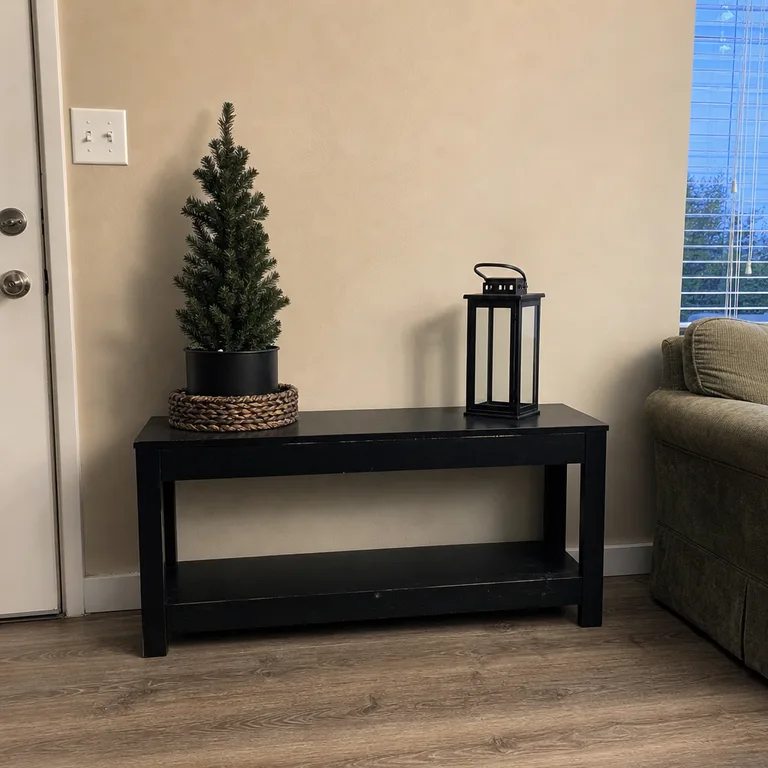
Choose a lantern with a solid base and place both objects behind the front edge of the furniture. Leave a clear strip in front for mail, keys, or other daily items, and follow the lantern maker's battery and indoor-use instructions.
Worth knowing: A lantern adds another object to maintain, and batteries or charging needs can be inconvenient during a busy holiday season.
7.Make a Low Woodland Bowl with One Center Tree
Use a broad, shallow bowl to contain faux cedar sprigs, pinecones, and one short tree in the center. The low profile makes this a useful choice for a dining-height table or game table because people can still see over it.
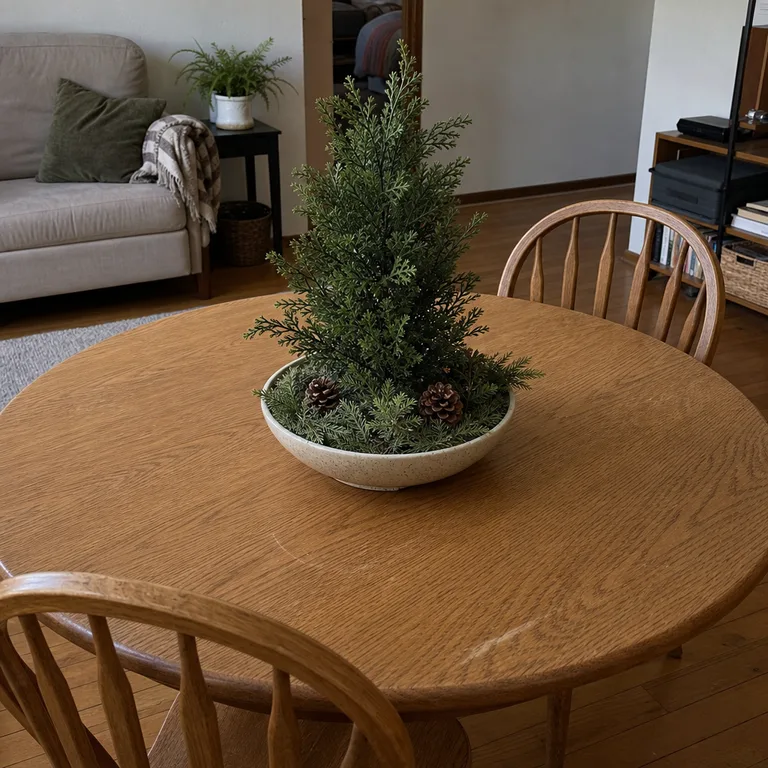
Start with a heavy bowl that will not slide easily, then keep loose accents fully inside its rim. Faux greenery is easier to reuse than fresh cut material and avoids dropping debris across a table used for food or games.
Worth knowing: The bowl takes up the center of the table, so it is better for a surface with enough open perimeter for place settings or activities.
8.Use Matching Trees as Sideboard Bookends
Place matching small trees at the far ends of a long sideboard to frame an open central serving zone. This symmetrical layout looks orderly and makes the middle of the furniture the obvious place for a tray, napkins, or seasonal drinks.
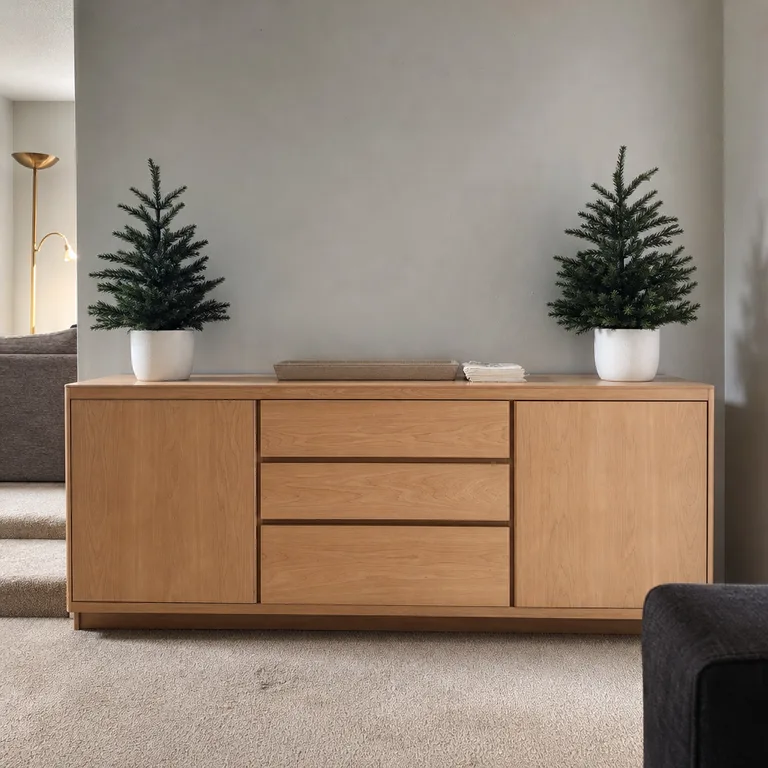
Use identical broad containers to keep both trees steady and visually balanced. Keep ornaments minimal or skip them altogether, since dangling decorations can catch on sleeves when someone reaches across the sideboard.
Worth knowing: The bookend effect depends on a fairly long, unobstructed surface; it can feel cramped on a short cabinet or a sideboard crowded with daily storage.
About the author
Dana Ruiz, Senior editor
Dana writes about small-space living, storage and low-cost decorating.
Keep reading
7 Budget Ways to Give a Plain Bookcase More Character
November 11, 2026
8 Minimalist Christmas Decorating Ideas That Feel Festive
November 11, 2026
8 Budget Ways to Display Family Keepsakes Without Clutter
November 9, 2026
8 Budget Christmas Decor Ideas for Homes With Cats or Dogs
November 9, 2026