10 Budget Coastal Living Room Ideas That Feel Relaxed
Coastal character in an everyday living room comes from a quiet mix of pale woods, soft mineral colors, woven fibers, and relaxed fabrics rather than overt beach motifs. These ten concepts layer those elements in ways that suit ordinary rooms, with practical limits for sun exposure, cleaning, rentals, and daily use.
As an Amazon Associate I earn from qualifying purchases.
1.Layer Pale Wood and Natural Fibers
Start with a pale wood coffee table or small side table, then place it on a jute or seagrass rug. Add only a few matte ceramic pieces so the room keeps an open, unfussy base instead of looking themed.
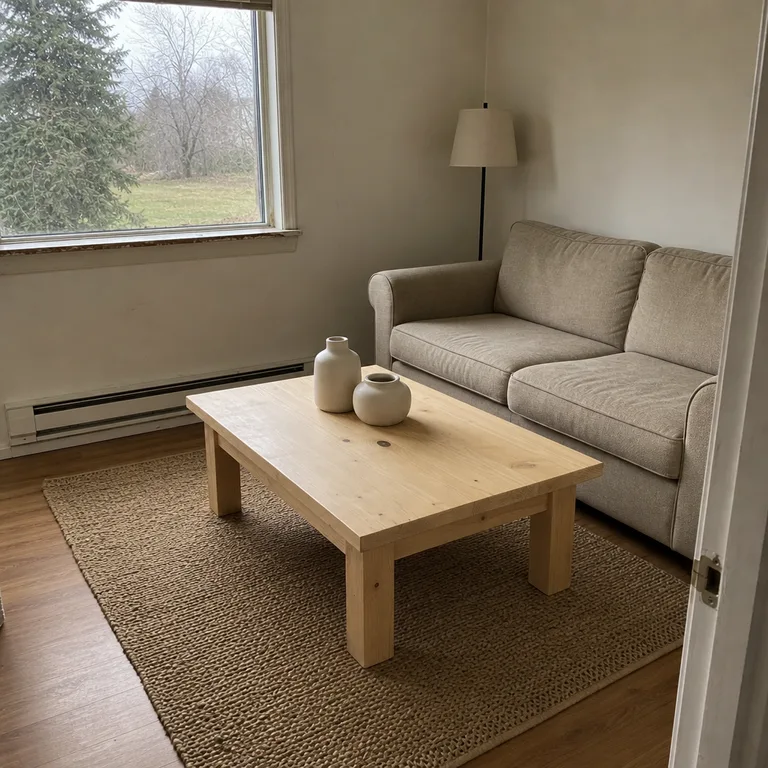
This combination gives ordinary upholstery and plain walls a lighter, more grounded feel. Affordable versions often come from simple unfinished or lightly finished wood furniture, plus a natural-fiber rug in a room-friendly size.
Natural fibers work best in a dry living room with enough daylight to keep the palette from feeling heavy. Choose a rug pad to reduce shifting and to give the coarse weave a little more softness underfoot.
Worth knowing: Jute and seagrass can feel rough under bare feet, and plant-fiber rugs are not ideal for damp areas or frequent spills.
2.Use Sea-Glass Color in Small Accents
Bring blue-green glass into the room through a small vase, candleholder, or lidded jar on a side table. Keep the grouping small and leave surrounding surfaces fairly clear.
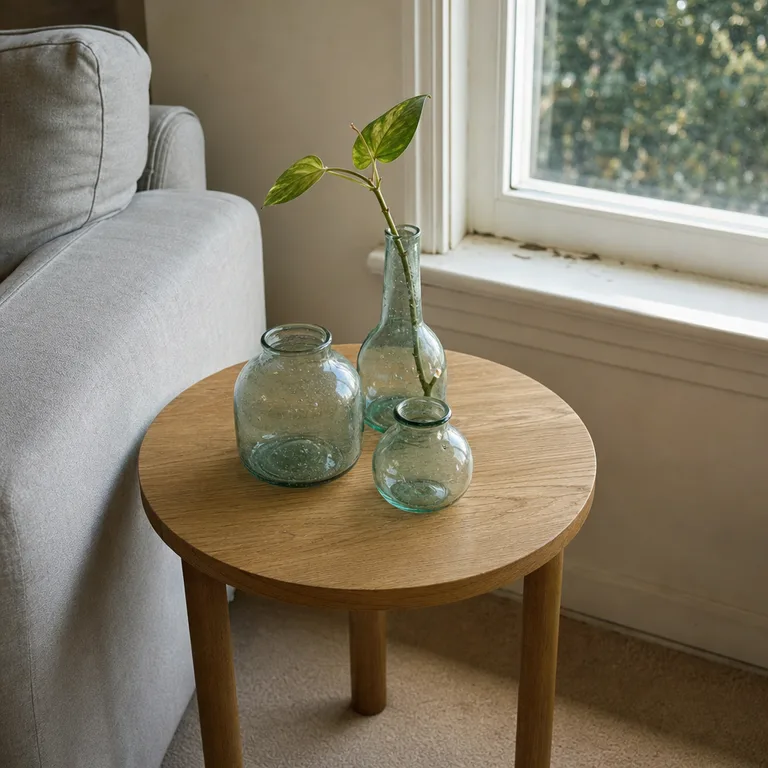
Translucent glass catches window light in a way that suggests water without relying on shells, signs, or nautical objects. It is a renter-friendly update because it changes the mood without changing the room itself.
Look for imperfect recycled-style glass or mix a few related green-blue tones rather than matching every piece. A leafy cutting in one vase adds a little height, while the remaining vessels can stay empty.
Worth knowing: Too many colored-glass pieces can turn a calm accent into visual clutter, especially on small tables.
3.Add One Washed Stripe
Use one faded blue-gray and ivory striped throw, or a pair of striped pillow covers, on otherwise solid seating. Let the stripe be the only active pattern nearby so it reads as relaxed rather than busy.
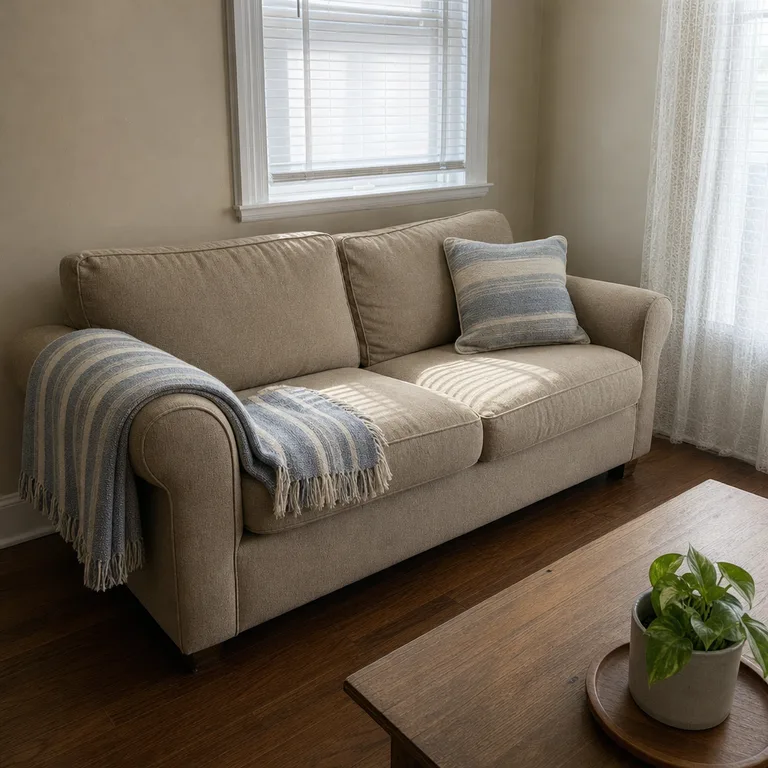
A softened stripe brings rhythm to a sofa and connects naturally with pale wood, warm white, and sand-colored textiles. It is an affordable way to refresh a plain beige, gray, or cream sofa without replacing it.
Choose removable, washable covers for a living room used by children, pets, or frequent guests. Slightly uneven stripe edges and brushed-looking cotton suit the lived-in coastal direction better than crisp, high-contrast patterns.
Worth knowing: Several competing stripes or patterns can quickly make a small living room feel crowded.
Related: 12 Playful Striped Decor Ideas You Can Try on a Budget
4.Bring in Woven Texture at Floor Level
Place a woven basket beside a sofa or chair and use it for throws, magazines, or a spare cushion. This puts texture at floor level where it feels useful instead of decorative for its own sake.
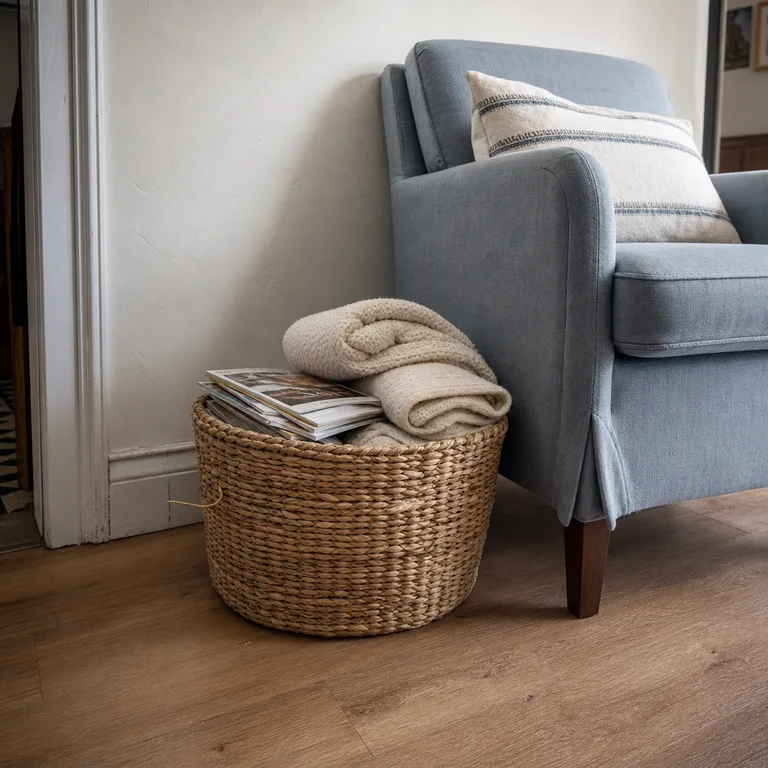
Seagrass, rattan, and similar woven materials add the dry, casual texture associated with coastal interiors. A storage basket also helps an everyday room stay tidier, which makes the lighter color palette easier to maintain.
Choose a stable basket with a wide base and a weave that does not snag easily on nearby fabrics. Put it where it will not block a walking path, and keep it away from exterior doors where wet shoes and rain can reach it.
Worth knowing: Natural-fiber baskets can hold moisture and develop mildew if they are used in damp conditions.
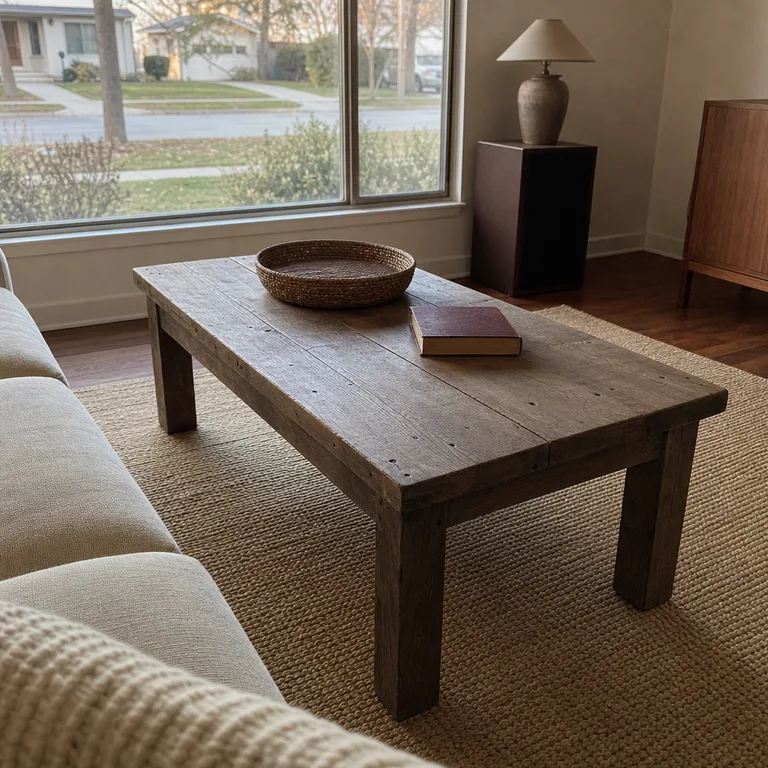
5.Choose One Weathered-Wood Focal Piece
Use one weathered wood piece, such as a coffee table, stool, or narrow console, as the room’s aged element. Pair it with cleaner warm-white walls and simpler fabrics so its grain and wear have room to stand out.
Gray-brown wood brings contrast to pale upholstery without the heaviness of very dark furniture. The worn finish also gives a newer room some visual history while staying more restrained than rustic signs or heavily distressed decor.
Keep the surface practical with a shallow tray for drinks, remotes, or books. Check that the piece sits level and use felt pads underneath to protect hard flooring from scratches.
Worth knowing: Deeply textured or uneven reclaimed-style surfaces can be harder to dust and less convenient for setting down drinks.
6.Paint a Soft Blue-Gray Backdrop
Paint one wall, or the whole room, in a muted blue-gray with warm white on trim and nearby large surfaces. This creates a cool backdrop for pale wood, woven fibers, and creamy upholstery.
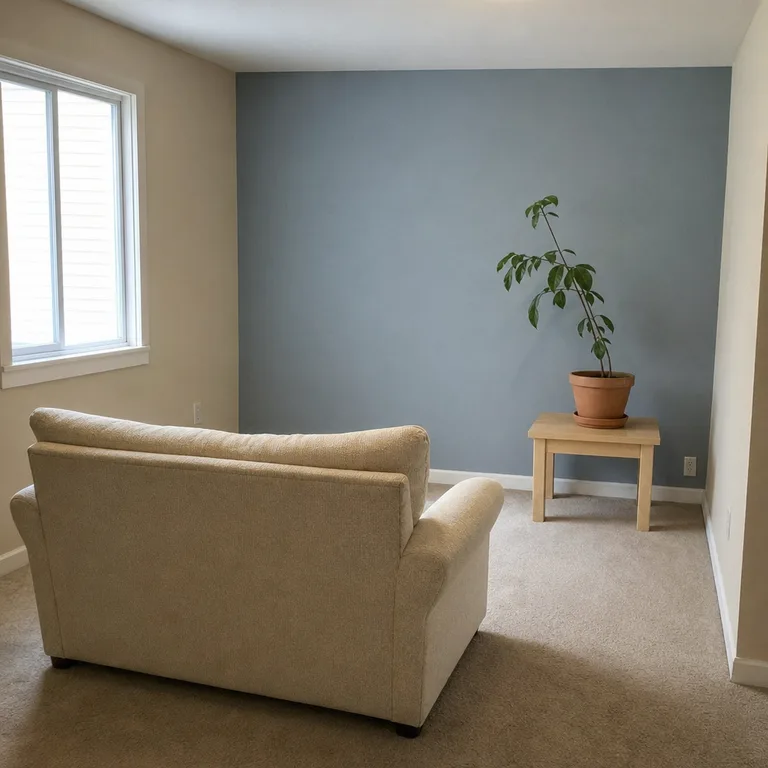
The color suggests a misty horizon rather than a bold beach theme. It can make an ordinary living room feel quieter and more intentional, particularly when the furnishings already have warm beige or oatmeal tones.
Test samples on more than one wall and look at them across the day. A low-sheen finish is generally easier to live with than a very flat surface in a room where walls get touched often.
Worth knowing: North-facing daylight can make blue-gray read noticeably colder, so it may not suit every room without warmer textiles and lighting.
7.Keep the Main Surfaces Warm White
Use warm white on walls, curtains, or a larger upholstered piece to create the room’s lightest layer. The goal is a creamy, softened white rather than a stark blue-white finish.
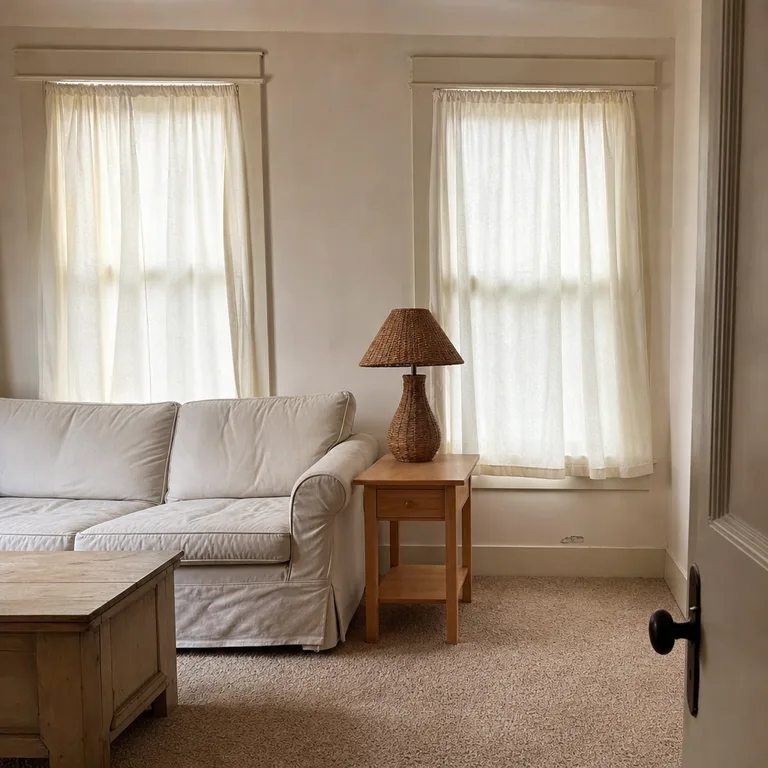
Warm white reflects available daylight and makes natural textures easier to notice. It also gives blue-gray accents and weathered wood a cleaner contrast without making the room feel overly crisp.
Choose washable curtains, slipcovers, or cushion covers in high-touch homes. In a sunny room, check fabric care guidance and rotate movable textiles if one side receives much more direct light.
Worth knowing: Very light fabrics show marks, pet hair, and everyday soil more readily than mid-tone alternatives.
Related: 12 Warm Neutral Living Room Ideas on a Budget
8.Soften Seating With Linen-Look Fabric
Add oatmeal pillow covers, a flax-colored throw, or relaxed curtains in linen-look fabric. These pieces bring a dry, gently rumpled texture to a sofa without requiring every textile in the room to match.
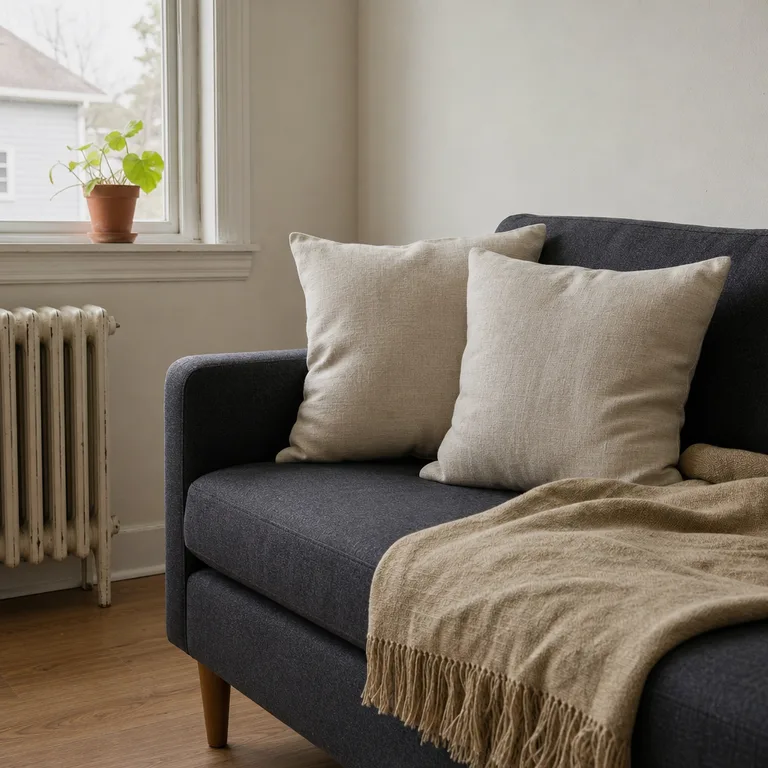
The woven look softens darker upholstery and prevents a coastal palette from feeling too smooth or polished. It works especially well with sand tones, pale wood, and a single washed stripe.
Choose covers with closures that can be removed for cleaning, and inspect the weave before buying if pets are likely to snag it. A loose throw can be the easiest starting point because it can move with the seasons.
Worth knowing: Lighter textured weaves may show spills and pet hair quickly, and open weaves can snag.
9.Hang One Quiet Coastal Landscape
Choose one muted landscape showing dunes, marsh, shoreline, or a hazy horizon, then frame it in pale wood. Keep the palette subdued and the wall around it open rather than building a themed gallery wall.
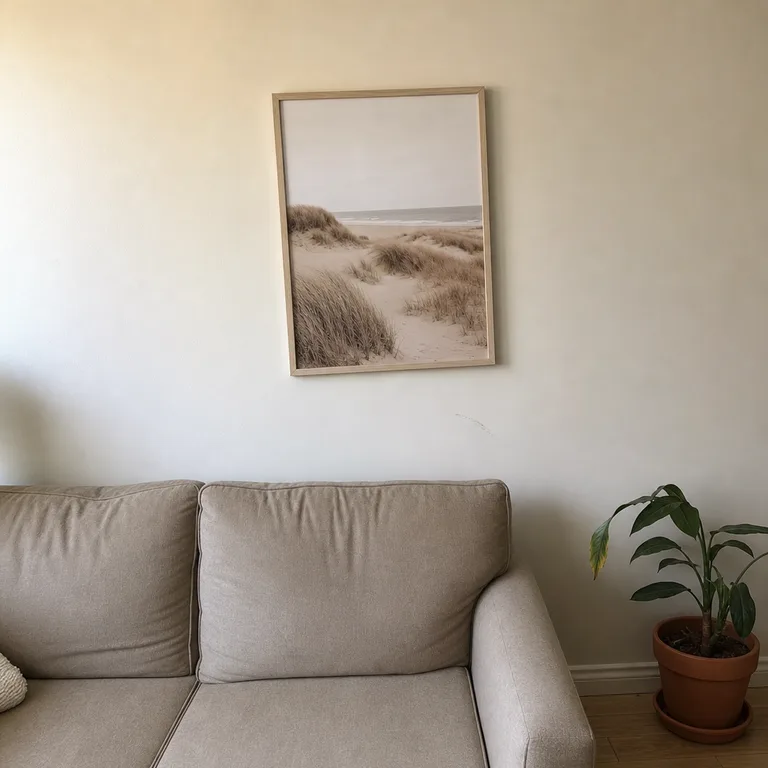
A single landscape suggests a sense of place while keeping the room from becoming a nautical display. It also introduces soft blue-gray, sandy beige, and weathered neutral tones in one controlled focal point.
Center the art over a sofa or console with enough clear wall around it to breathe. Renters can use removable hanging hardware when allowed, but should follow the product instructions and property rules for wall surfaces and weight limits.
Worth knowing: Removable hanging hardware has surface and load limitations, and it may not work equally well on every painted wall.
Related: 10 Large Wall Art Ideas That Start With Affordable Materials
10.Ground the Room With Sand Tones
Use sand, oatmeal, camel, and light taupe across a rug, ottoman, cushions, or window shades. These warm neutrals should form the foundation, with blue-gray appearing only as a cooler accent.
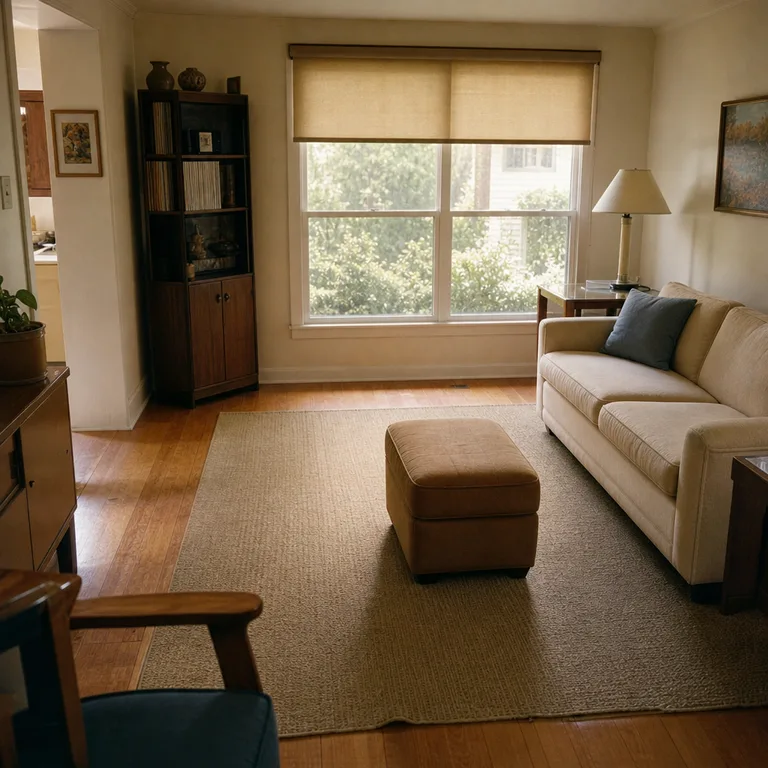
Sand tones stop a coastal room from becoming overly blue or overly white. They echo natural shoreline colors while making everyday wood floors and beige upholstery feel more connected.
For a busy household, choose washable mid-tone pieces where hands and feet land most often. A flatweave rug or upholstered ottoman can introduce the color without requiring a large furniture change.
Worth knowing: A room using only pale beige tones can look flat, so include some contrast through wood grain, woven texture, or a restrained blue-gray accent.
About the author
Dana Ruiz, Senior editor
Dana writes about small-space living, storage and low-cost decorating.
Keep reading
7 Relaxed Blue and White Room Schemes on a Budget
November 12, 2026
8 Budget Mini Christmas Tree Arrangements for Tables
November 11, 2026
7 Budget Ways to Give a Plain Bookcase More Character
November 11, 2026
8 Minimalist Christmas Decorating Ideas That Feel Festive
November 11, 2026