9 Budget Organic Modern Living Room Ideas With Warm Wood
Organic modern living rooms work best when a few repeatable materials and shapes carry the room, rather than a collection of matching neutral accessories. These nine ideas add warm wood, tactile surfaces, and soft curves around an existing sofa without requiring a full furniture replacement.
As an Amazon Associate I earn from qualifying purchases.
1.Add A Rounded Wood Side Table Beside The Sofa
Trade a sharp-cornered accent table for a round or softly oval wood table at the outer end of the sofa. That one curved silhouette breaks up the sofa’s straight lines and introduces warm grain without asking the room to match perfectly.
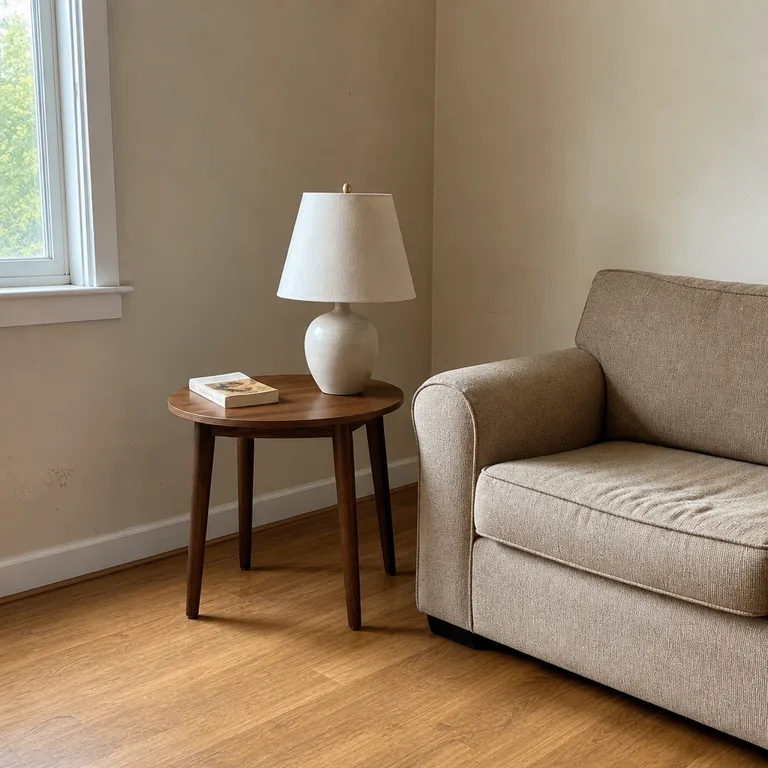
Choose a finish that relates to existing wood rather than trying to duplicate it exactly; a warmer or deeper tone can still look intentional. Leave a clear path around the table, and use it for a lamp, drink, or book so it earns its place in a small room.
Worth knowing: A rounded table still needs enough walking clearance, so it may not suit a tightly packed seating layout.
Related: 9 Ways to Mix Wood Furniture Tones Without Buying a Matching Set
2.Hang One Plaster-Look Artwork Over The Sofa
Use one large plaster-look canvas or textured panel above the sofa instead of filling the wall with small neutral prints. Broad ridges, a simple arch, or an uneven matte surface bring depth while keeping the wall calm.
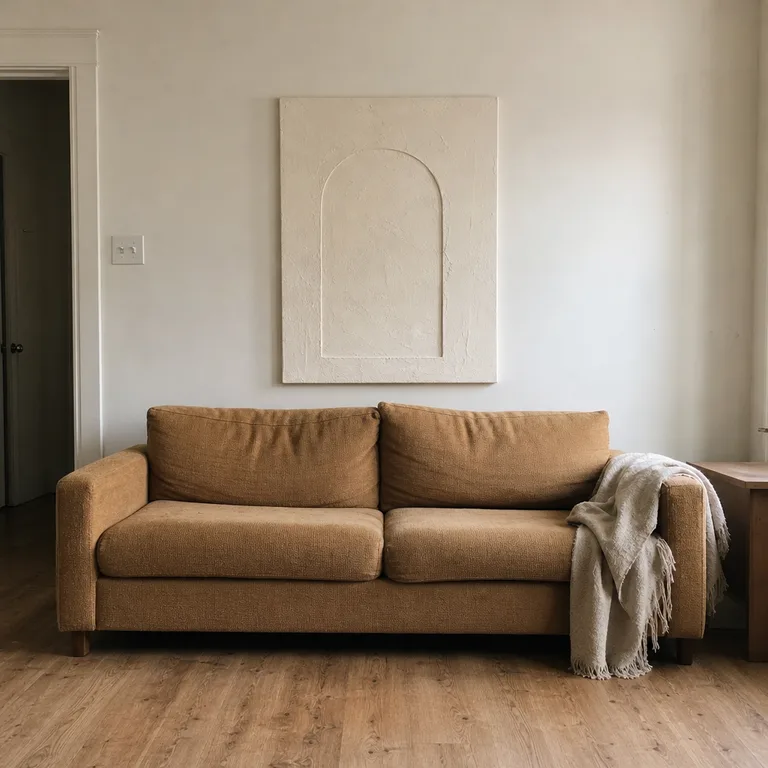
Look for a lightweight piece with a restrained palette of ivory, sand, clay, or warm white. Center it with the sofa rather than the full wall, and choose hanging hardware that suits the wall material and any rental rules.
Worth knowing: Textured artwork can collect dust in deeper grooves and may require more careful cleaning than a smooth framed print.
3.Use One Sculptural Branch Arrangement
A few bare, twisting branches in a matte floor vase add an irregular natural form that contrasts with the sofa and other boxy furniture. One arrangement is usually stronger than several small botanical accents scattered around the room.
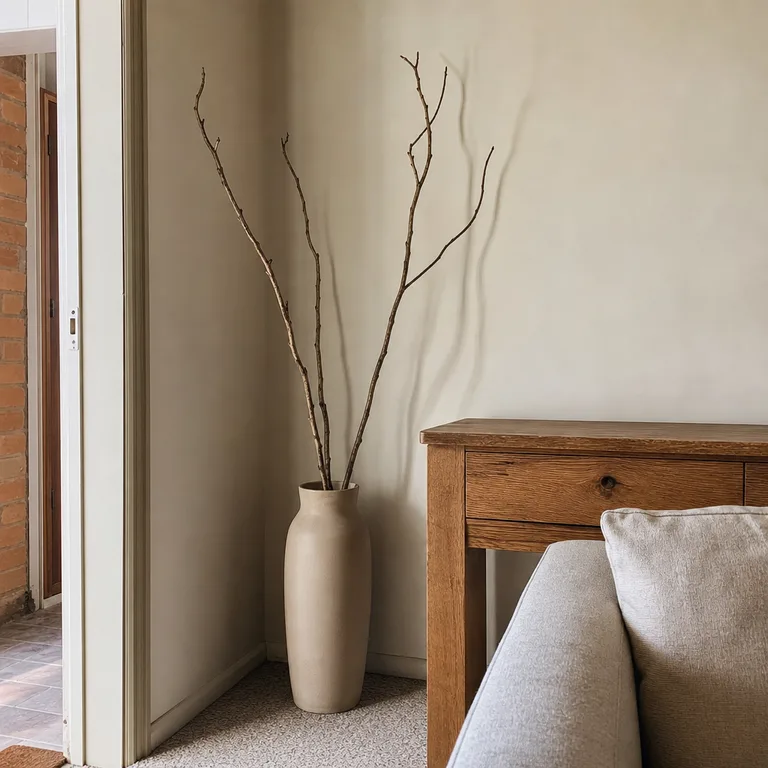
Gather branches with varied angles, or use dried stems, and let their shape remain visible against a plain wall. Place the vase in a quiet corner beside a console or chair, where it adds height without obstructing a doorway.
Worth knowing: Tall branches need a stable, low-traffic location and may not be practical around pets, children, or ceiling fans.
4.Soften Windows With Linen-Look Curtain Panels
Hang linen-look panels high and wide around the window to create a relaxed vertical layer. Their soft folds balance wood furniture and curved accessories while making an ordinary window feel more finished.
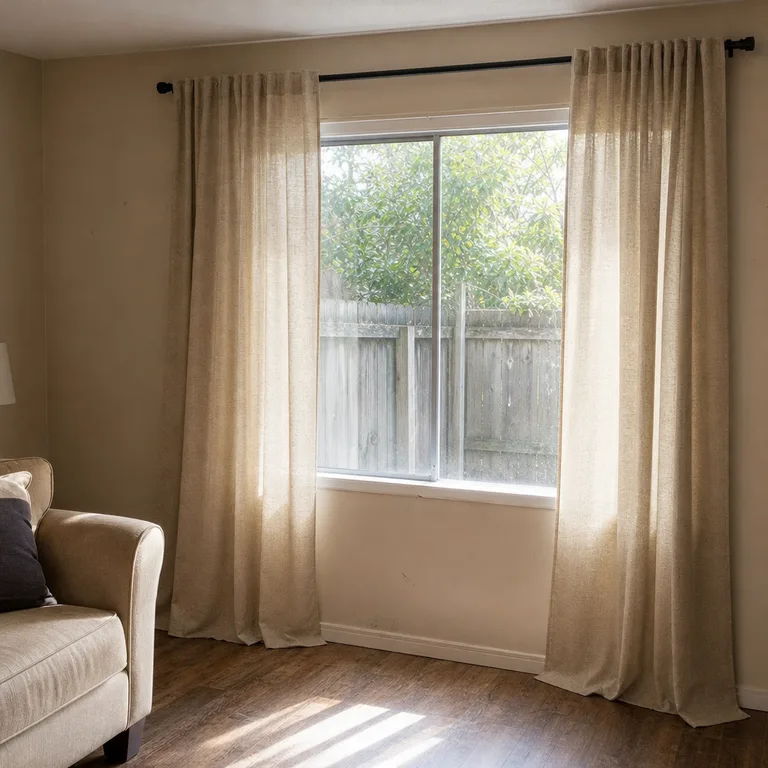
Flax, oatmeal, and warm white work well with the organic modern material palette. In a room with strong sun, lined panels can help reduce glare and lessen direct exposure on nearby upholstery.
Worth knowing: Light-filtering fabric will not provide much privacy or room darkening on its own.
5.Group Small Objects In A Low Wood Bowl
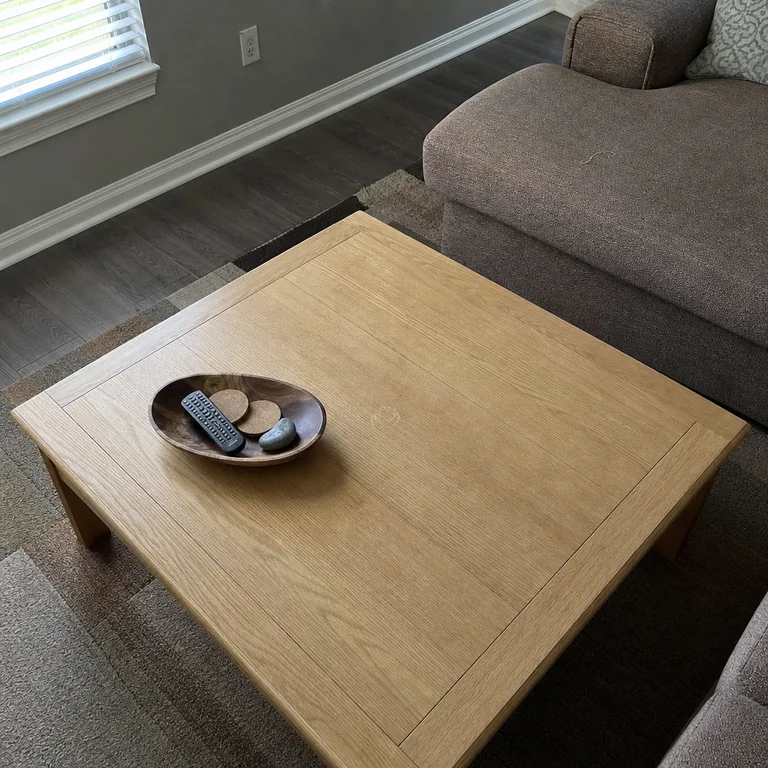
Set a shallow wood bowl on the coffee table to contain useful small items such as remotes, coasters, or a smooth stone. The low, grounded shape adds warmth without turning the tabletop into a decorative display.
Use a bowl with visible grain and leave part of the table empty around it. This approach is especially useful when the room needs function first, because everyday items look more deliberate when they have one defined place.
Worth knowing: A bowl that is too tall or overfilled can block sightlines and make a compact coffee table feel crowded.
6.Choose Cushions With Rounded Edges
Add one or two round cushions, bolsters, or gently curved lumbar pillows to a square-armed sofa. Their silhouettes soften an existing seating piece without covering every seat or requiring a new sofa.
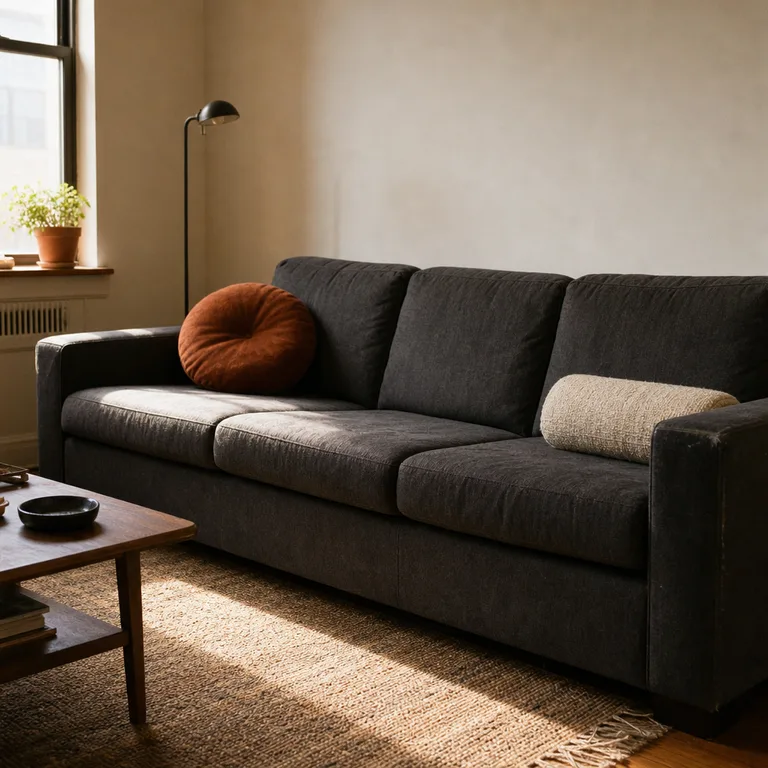
Mix one warmer tone, such as rust or clay, with an oatmeal or cream textured cover. Keep the center cushions clear if the sofa gets daily use, so the styling does not make the seating less comfortable.
Worth knowing: Too many cushions can make a smaller sofa harder to use and weaken the simple-shape effect.
7.Pair Two Matte Ceramic Vessels At Different Heights
Place two matte ceramic vessels in related earth tones on a shelf, console, or coffee table. A short rounded vase beside a taller cylindrical one creates a sculptural pair without needing flowers or extra filler.
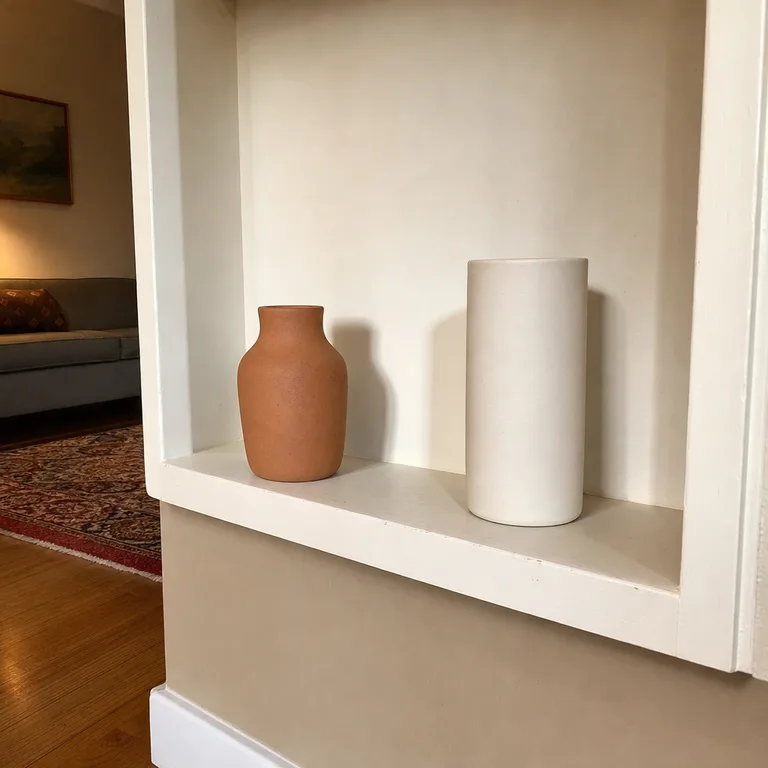
Choose pieces that share an understated finish but differ in height and silhouette. Leaving the vessels empty keeps attention on the shapes, subtle irregularity, and contrast against wood or a painted wall.
Worth knowing: Matte ceramic can chip at edges, so this arrangement is better on stable surfaces away from busy traffic paths.
8.Layer A Small Natural-Fiber Rug Near The Seating Area
A small jute or seagrass rug adds a coarse woven surface near the sofa or beneath a coffee table. That rough texture gives smooth upholstery and wood furniture more contrast without replacing a larger existing rug or carpet.
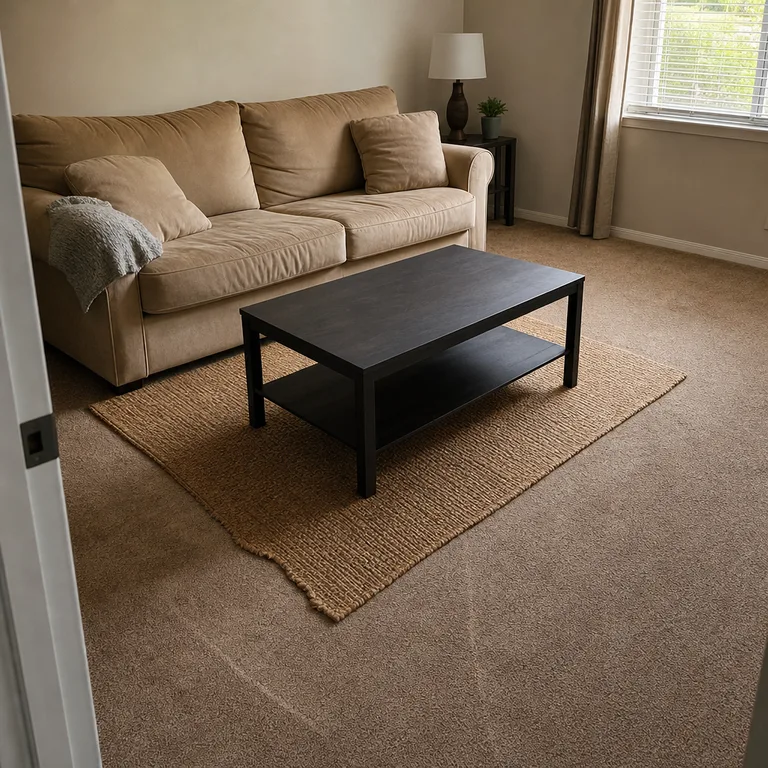
Use it as a defined accent rather than trying to cover the whole floor. A rug pad can help it stay put, particularly over carpet or smooth flooring, and a smaller layer is easier to remove for cleaning.
Worth knowing: Natural fibers can shed, feel rough underfoot, and are not the best choice for damp spaces or frequent pet messes.
9.Set Smooth Pieces Against Rough Natural Texture
Make material contrast a deliberate part of the room: place a smooth ceramic lamp beside a woven tray, rough wood bowl, linen throw, or plaster-look artwork. The difference between surfaces helps a restrained palette feel layered rather than flat.
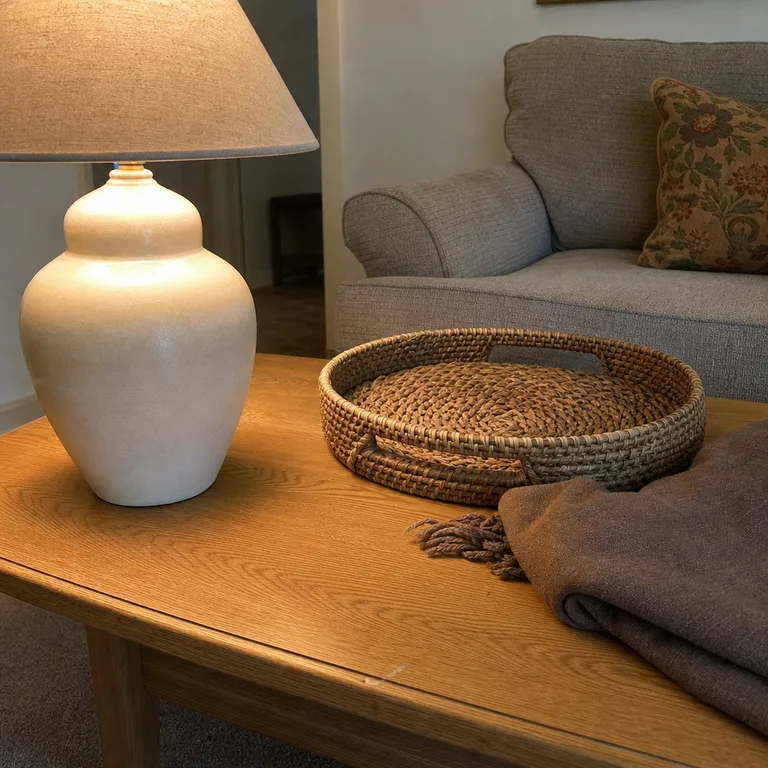
Limit each small area to a few clearly different finishes so the contrast remains readable. For example, an ivory ceramic piece, warm wood, and one woven element can create more interest than several similar accessories.
Worth knowing: When too many textures compete in one area, the room can look cluttered instead of calm.
About the author
Dana Ruiz, Senior editor
Dana writes about small-space living, storage and low-cost decorating.
Keep reading
7 Relaxed Blue and White Room Schemes on a Budget
November 12, 2026
10 Budget Coastal Living Room Ideas That Feel Relaxed
November 12, 2026
8 Budget Mini Christmas Tree Arrangements for Tables
November 11, 2026
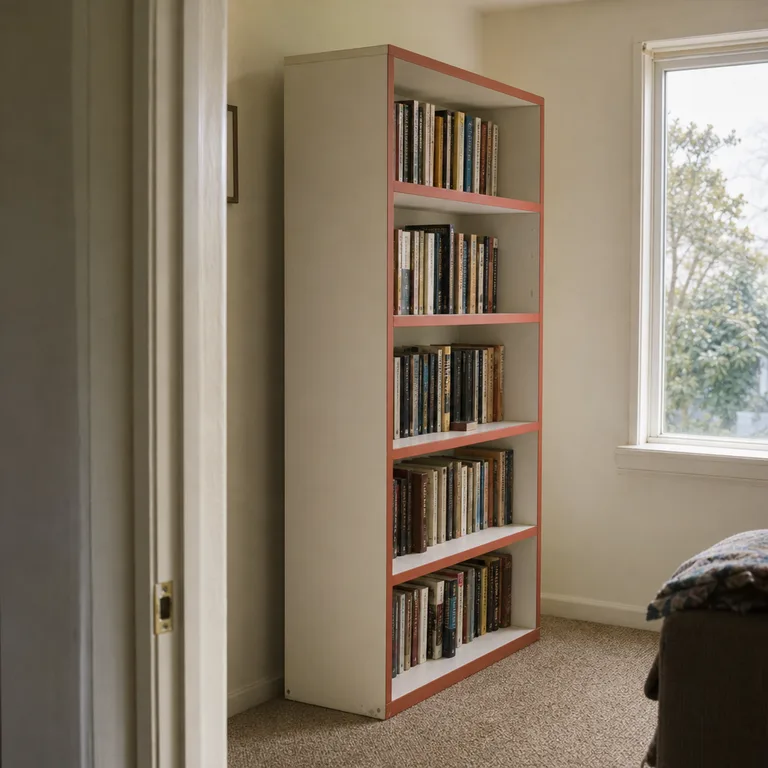
7 Budget Ways to Give a Plain Bookcase More Character
November 11, 2026