7 Budget Ways to Give a Plain Bookcase More Character
A sound basic bookcase can look more intentional when its back, shelf fronts, sides, or hardware gain a new color, pattern, or texture. These seven surface-focused updates leave the book arrangement alone while keeping anchoring, shelf limits, and the original assembly intact.
As an Amazon Associate I earn from qualifying purchases.
1.Line the Back With Removable Patterned Paper
Cover the back panel with removable patterned paper to create a deliberate backdrop behind unchanged books and objects. A muted botanical, small stripe, or subtle geometric pattern can make a basic white or wood-look bookcase feel less flat without changing its shape.
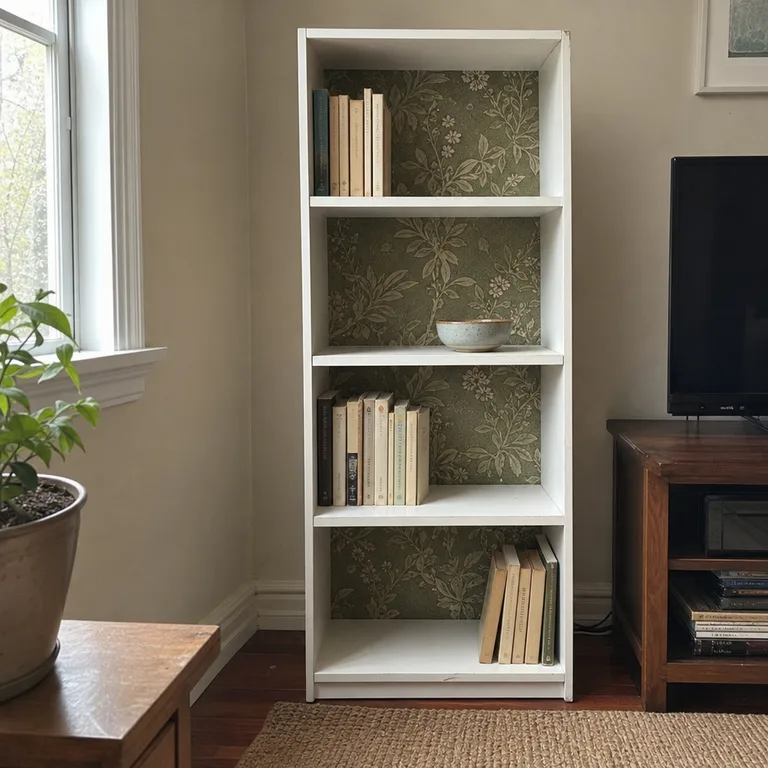
Measure each back section separately, then apply the paper slowly from top to bottom and smooth outward as it goes. This is a practical option for renters or anyone who may want to return the bookcase to its original look later.
Worth knowing: Test a hidden spot first: textured laminate, dusty surfaces, and humid rooms can reduce how well removable paper stays in place.
2.Paint the Existing Back Panel One Deep Color
Paint the existing back panel in a deep low-sheen shade such as dusty navy, forest green, charcoal, or warm brown. The darker field gives pale book spines, ceramics, and frames more definition while leaving the outer frame and shelf surfaces plain.
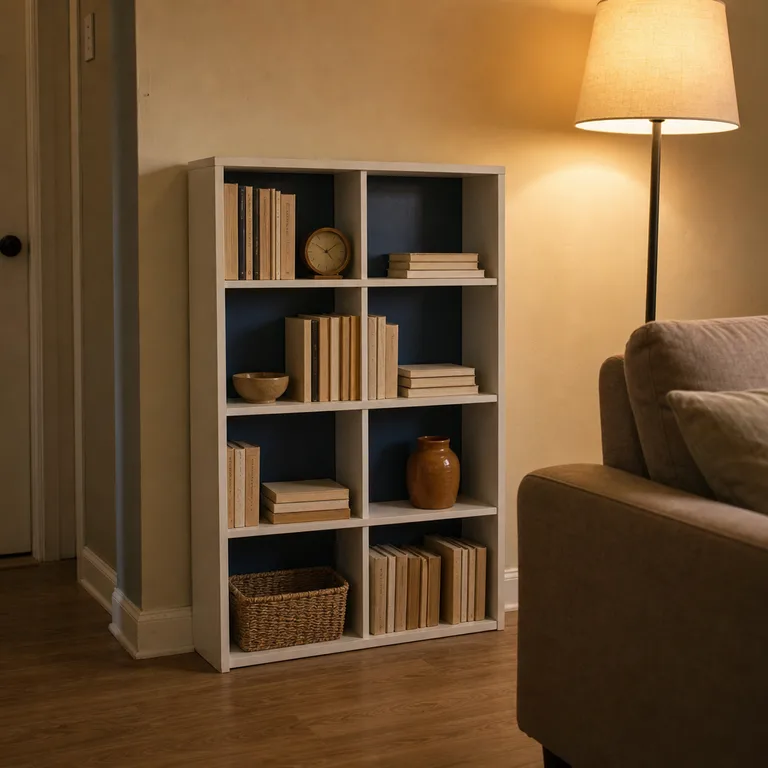
Remove what is sitting on the shelves, clean the panel, and choose preparation and paint suited to the bookcase’s existing finish. If the coating is old or unknown, assess it before sanding or otherwise disturbing it, especially in an older home.
Worth knowing: A painted back is a more permanent update than paper, and panel joints or thin fiberboard edges may still show through the finish.
3.Place Fabric Behind a Removable Backing
Use fabric over a thin removable backing panel to bring in softness that paint and paper cannot provide. A rust-and-cream stripe, small check, linen-look solid, or tightly woven cotton can give a plain bookcase a warmer, more layered surface.
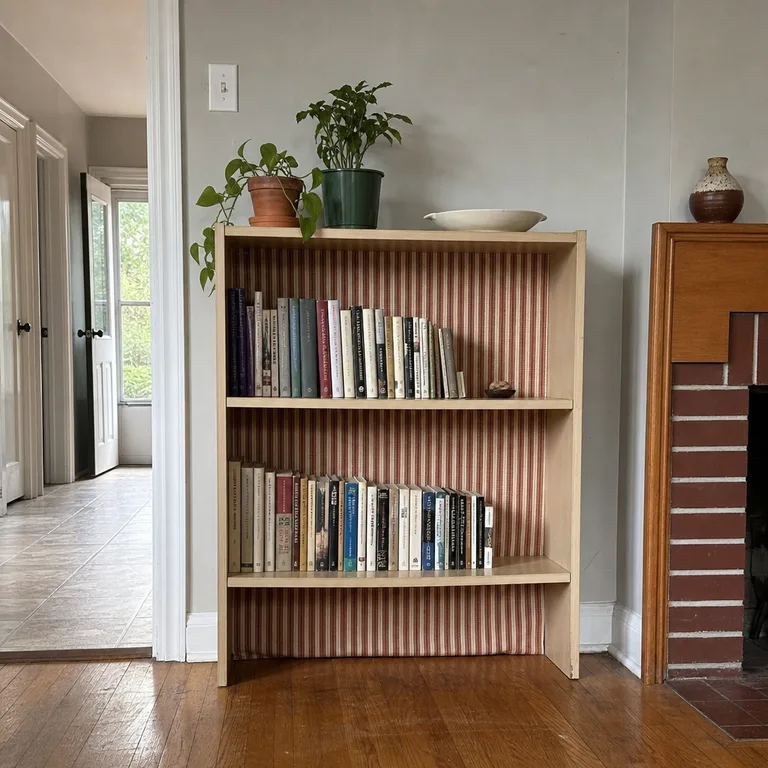
Cut the backing to fit inside the rear opening, stretch the fabric smoothly around it, and secure the fabric to the panel rather than directly to the furniture. Slide or lightly position the finished insert behind the shelves without altering the bookcase structure.
Worth knowing: Avoid loose weaves and very heavy fabric, which can sag, collect dust, or look uneven; fabric is also a poor choice against a damp exterior wall.
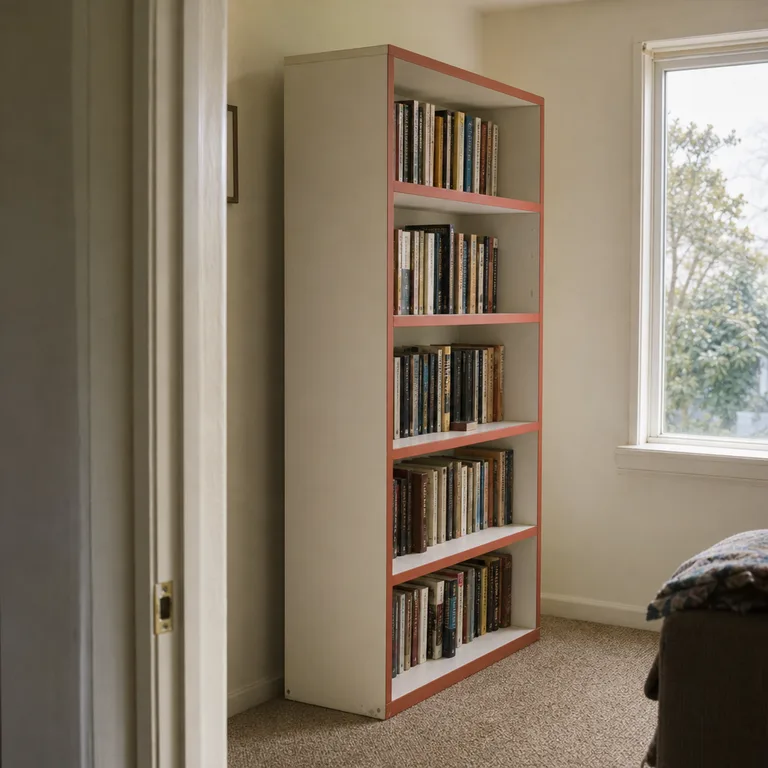
4.Paint Only the Front Edges of the Shelves
Paint just the visible front edges of each shelf in one contrasting color for a small but graphic change. Terracotta on white, deep blue on pale wood, or black on a light laminate bookcase creates crisp horizontal lines without making every cubby feel busy.
Mask the shelf surfaces carefully, use a small roller or brush, and let the paint cure fully before putting books back. Because the painted area is narrow, this approach uses less material and keeps the original bookcase finish as the main surface.
Worth knowing: The edges receive regular contact from books, so they can chip sooner than a back panel and may need occasional touch-ups.
5.Color-Block Alternate Interior Cubbies
Paint the insides of selected cubbies in two or three related colors, leaving the outer frame white or wood-toned. Alternating muted sage and soft clay, for example, gives a square cubby unit a simple rhythm while the furniture silhouette stays unchanged.
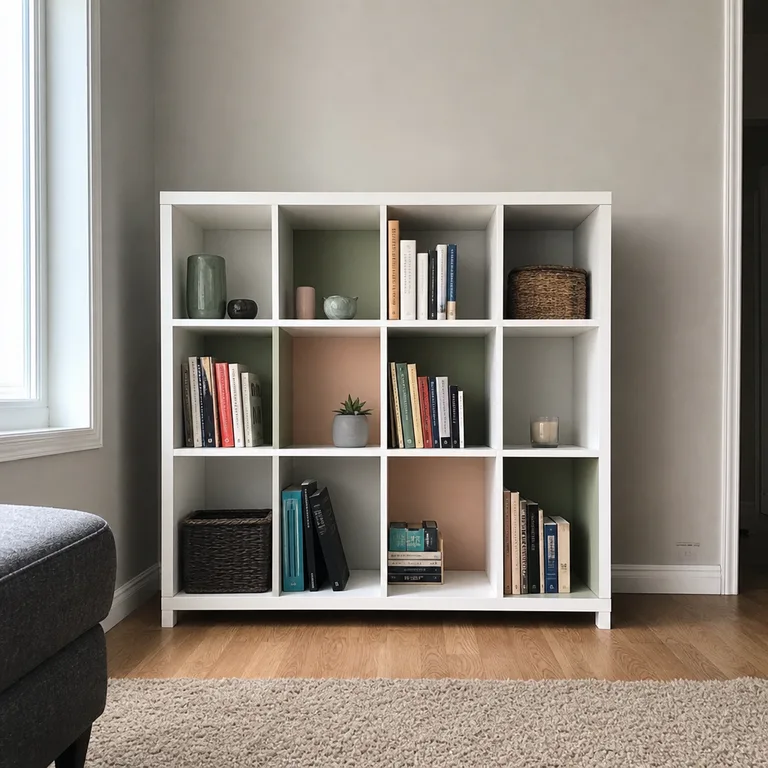
Choose compartments that remain visible around the existing contents, rather than painting every opening. Keep the colors within one restrained palette so the bookcase reads as a single piece instead of a collection of separate boxes.
Worth knowing: This works best on open cubbies with some open background still visible; densely packed shelves can hide most of the color.
6.Cover One Side With a Removable Decorative Panel
Give a freestanding bookcase a more finished profile by covering one exposed side with a lightweight decorative panel. A cane-pattern sheet, thin oak-look veneer, or simple painted hardboard can add texture where the bookcase is visible from a sofa or room entrance.
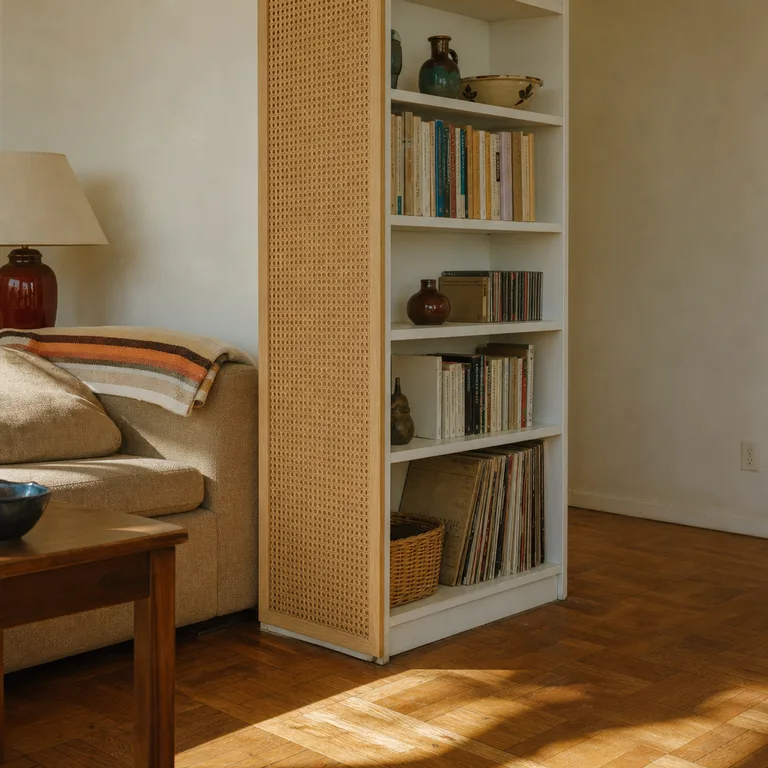
Use a removable mounting method suited to the panel’s weight, and keep the panel within the bookcase’s existing side dimensions. The goal is a visual layer, not a structural addition or a way to change how the unit carries weight.
Worth knowing: Do not let a side panel interfere with required wall anchoring, a nearby door swing, or a narrow walkway, and avoid using it where it could catch or peel at the edges.
7.Replace Knobs on the Closed Lower Base
If the bookcase has existing lower cabinet doors, swap their matching knobs for a coordinated shape and finish. Round matte black, warm metal, painted wood, or simple ceramic knobs can tie the lower base to other room details while leaving the open shelves untouched.
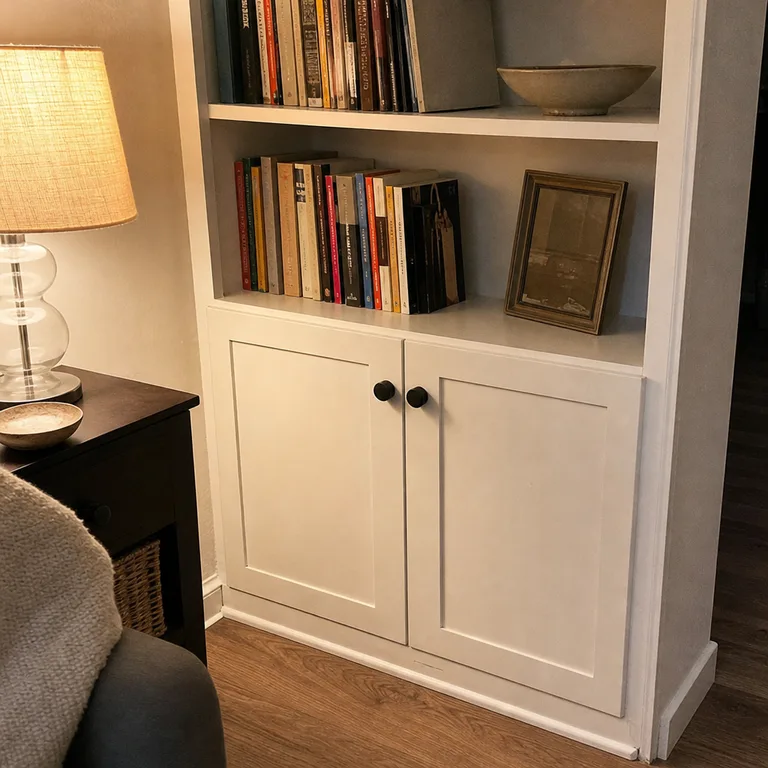
Check the existing screw size, door thickness, and knob projection before choosing replacements. Install both knobs at the same height and confirm that they clear nearby drawers, doors, and the usual walking path.
Worth knowing: This update only applies to bookcases with existing doors or drawers, and unusually placed holes may limit the knob styles that fit without modification.
About the author
Dana Ruiz, Senior editor
Dana writes about small-space living, storage and low-cost decorating.
Keep reading
8 Minimalist Christmas Decorating Ideas That Feel Festive
November 11, 2026
8 Budget Ways to Display Family Keepsakes Without Clutter
November 9, 2026
8 Budget Christmas Decor Ideas for Homes With Cats or Dogs
November 9, 2026
8 Budget Vintage Bedroom Decor Ideas That Mix Old and New
November 9, 2026