15 Budget Living Room Updates That Work With the Sofa You Already Own
An older sofa can still anchor a living room when the surrounding color, texture, lighting, and layout make it look intentional. These updates work around the sofa’s existing size and upholstery rather than treating replacement as the only solution.
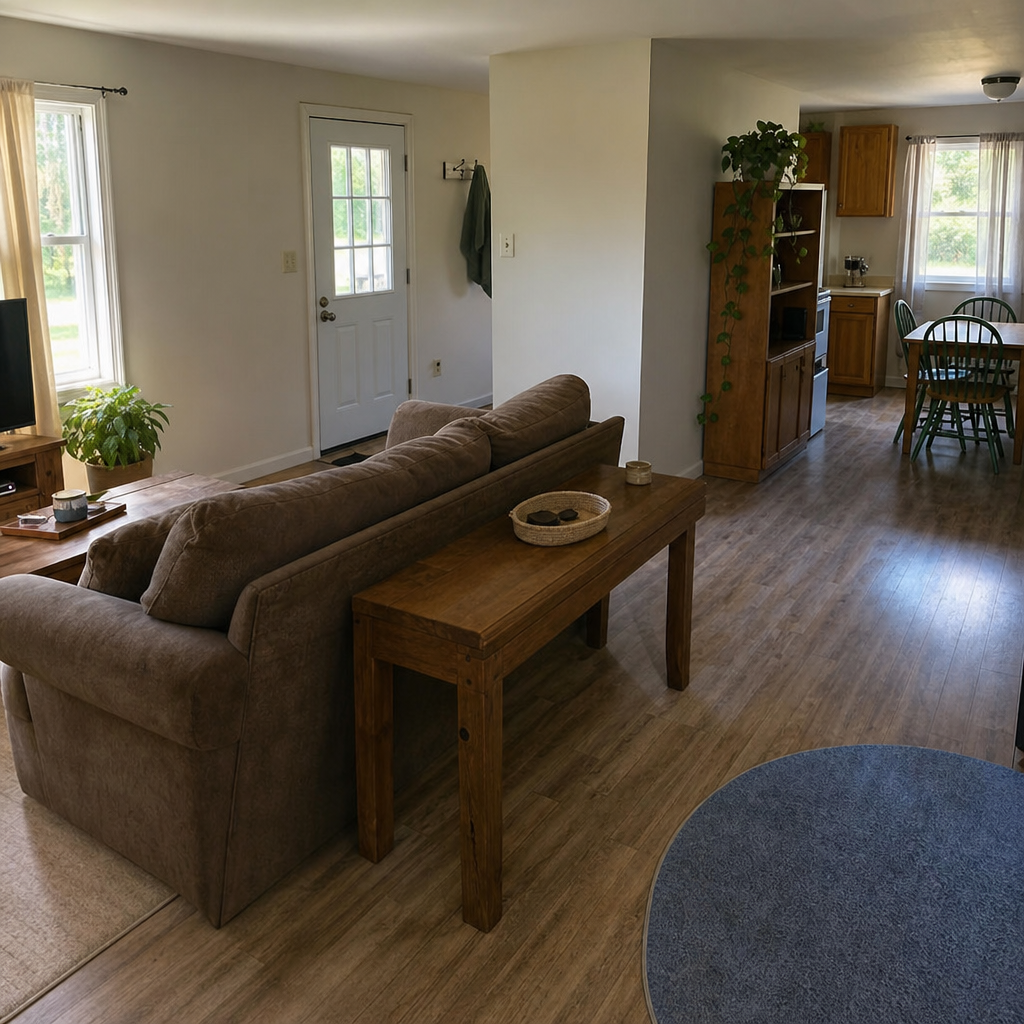
1.Repeat the Sofa Color in One Accent Layer
Choose one undertone from the sofa and repeat it in a throw, cushion covers, or a small textile on a nearby chair. An olive, rust, navy, or warm beige sofa looks more deliberate when that color appears elsewhere in the seating area.
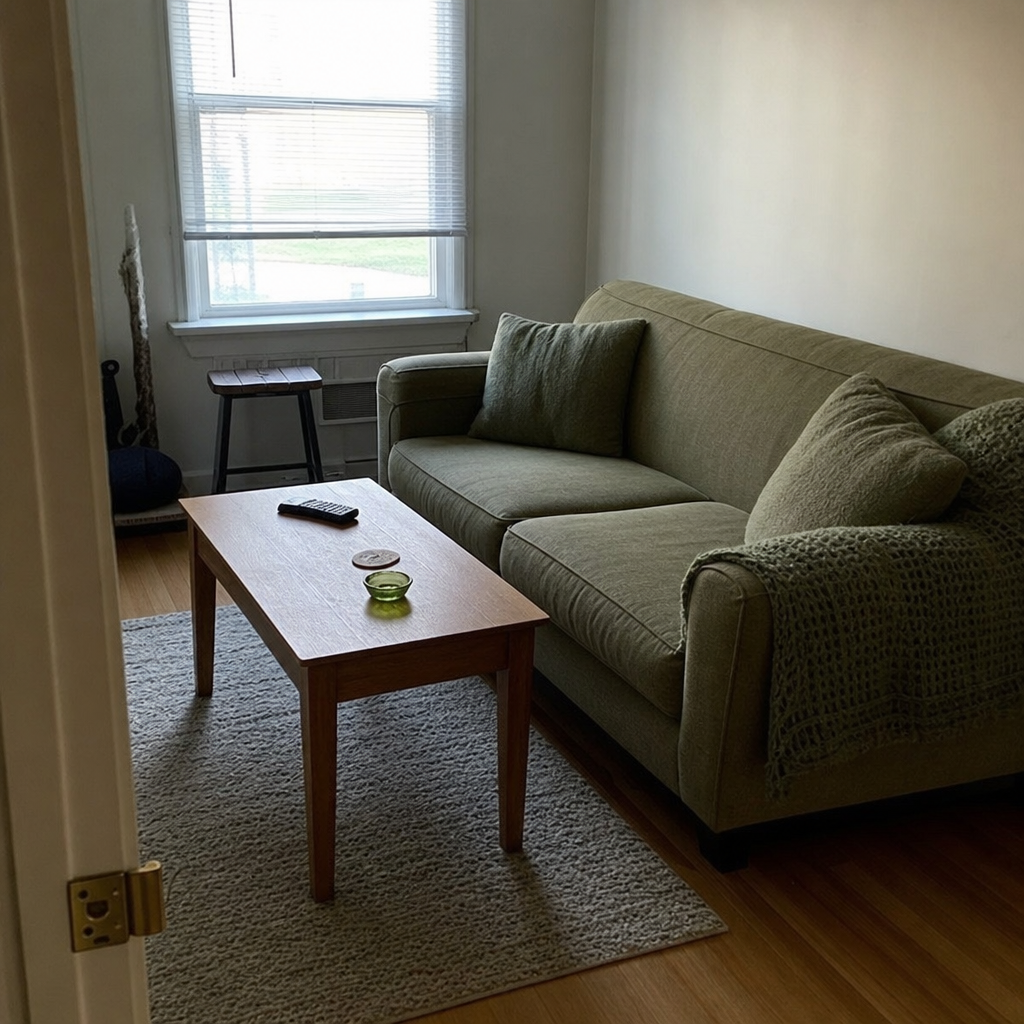
Keep the added layer simple rather than matching every item exactly. A patterned cushion can pull together several room colors while still making the older upholstery feel like part of the scheme.
Worth knowing: If the sofa color is strongly dated or badly faded, use it as a minor accent within a broader neutral palette rather than repeating it throughout the room.
2.Use a Rug That Creates Contrast Under the Sofa
Place a rug beneath the front legs of the sofa to separate it from the floor. A lighter rug can lift a dark sofa, while a deeper or softly patterned rug can give a pale sofa more definition.
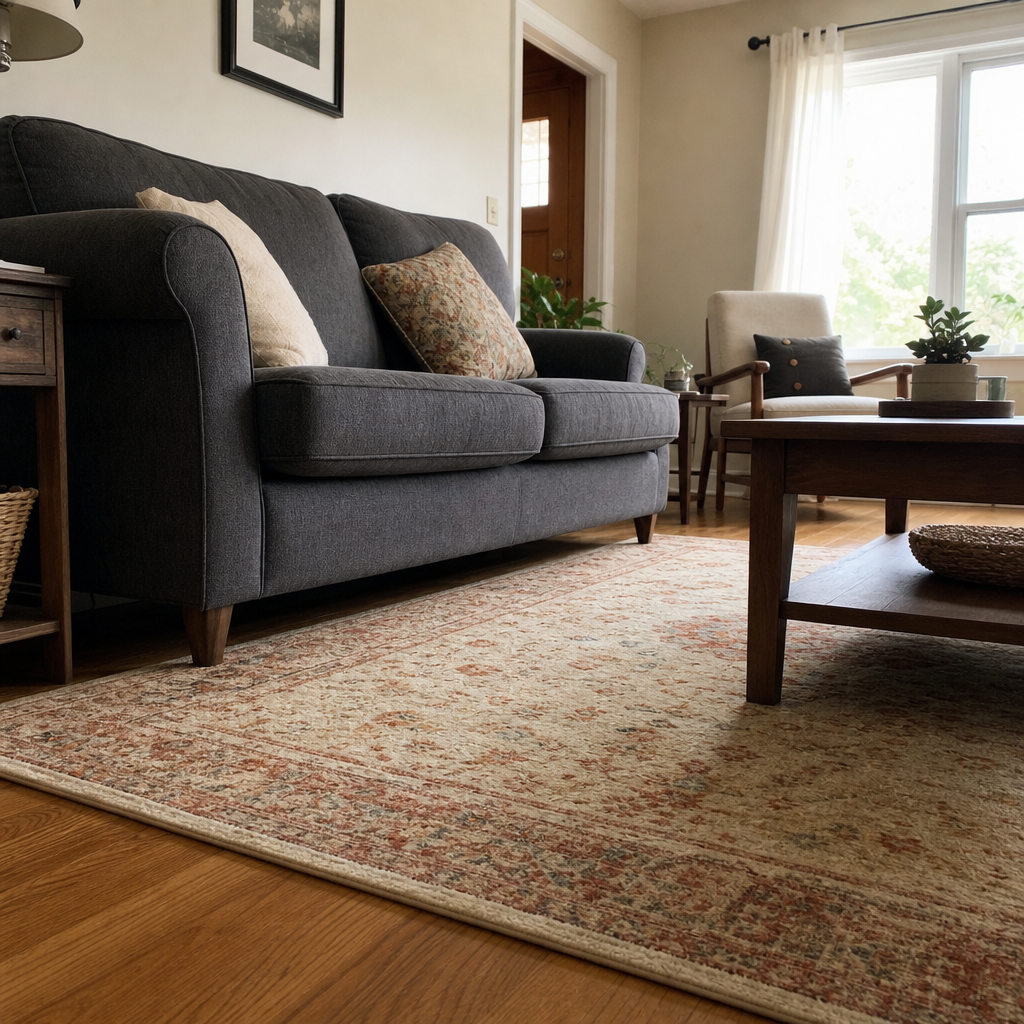
Look for a finish that contrasts with the upholstery instead of blending into it. A worn neutral sofa often benefits from pattern, while a floral or heavily textured sofa usually needs a quieter rug.
Worth knowing: A rug that is too small can make the seating area look disconnected, and thick rugs may interfere with doors or create a trip edge in tight rooms.
3.Build a Larger Art Group Above the Sofa
Create a group of framed prints, family photographs, or thrifted artwork that relates to the width of the sofa. A broad arrangement gives the wall enough presence that the sofa reads as part of a complete seating zone.
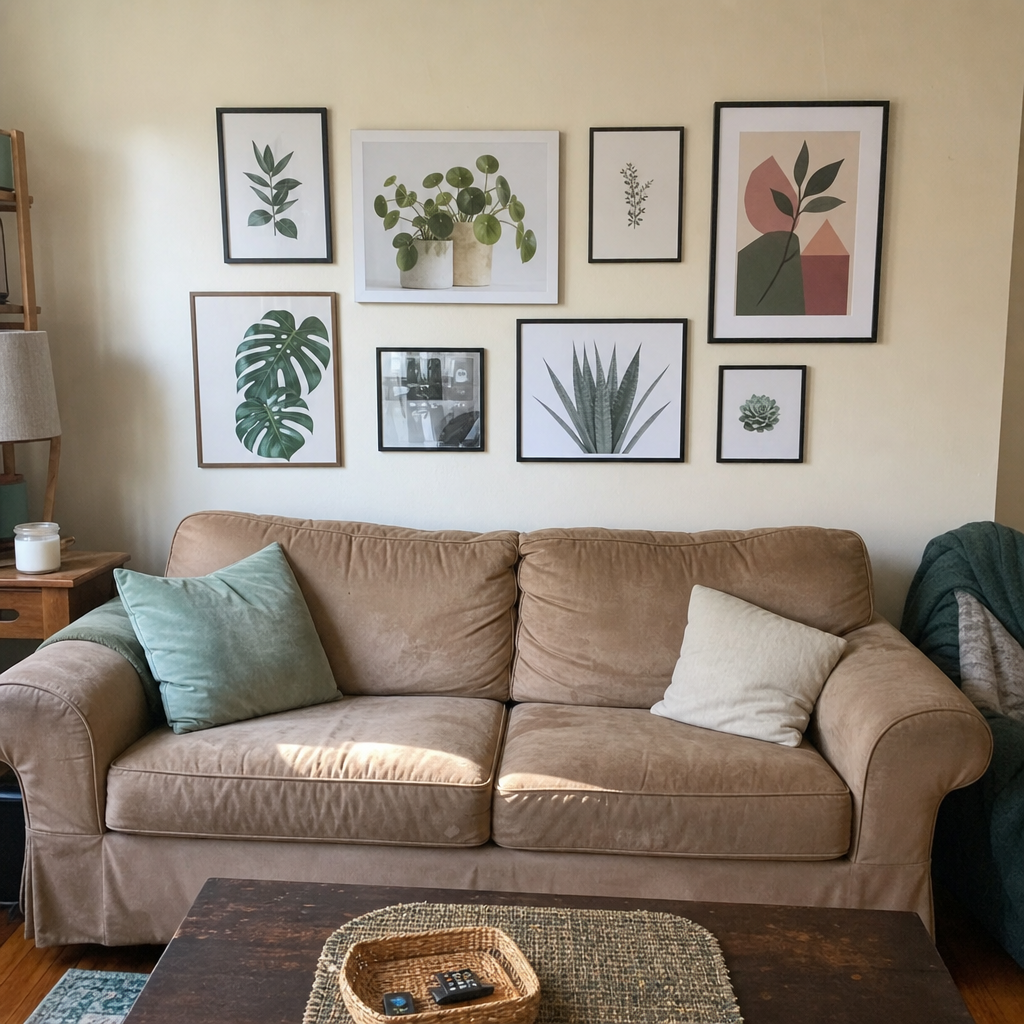
Mix inexpensive frames in a limited finish, or paint mismatched frames one color for a more unified result. Paper prints and personal photos can fill the arrangement without requiring expensive original art.
Worth knowing: Check rental rules before making multiple wall holes; removable hanging strips work best only with lightweight pieces and suitable wall surfaces.
4.Add a Tall Plant Beside One Sofa Arm
Use a tall leafy plant to fill an empty corner beside the sofa. Its vertical shape breaks up a long, low furniture line and draws the eye away from tired upholstery or bulky arms.
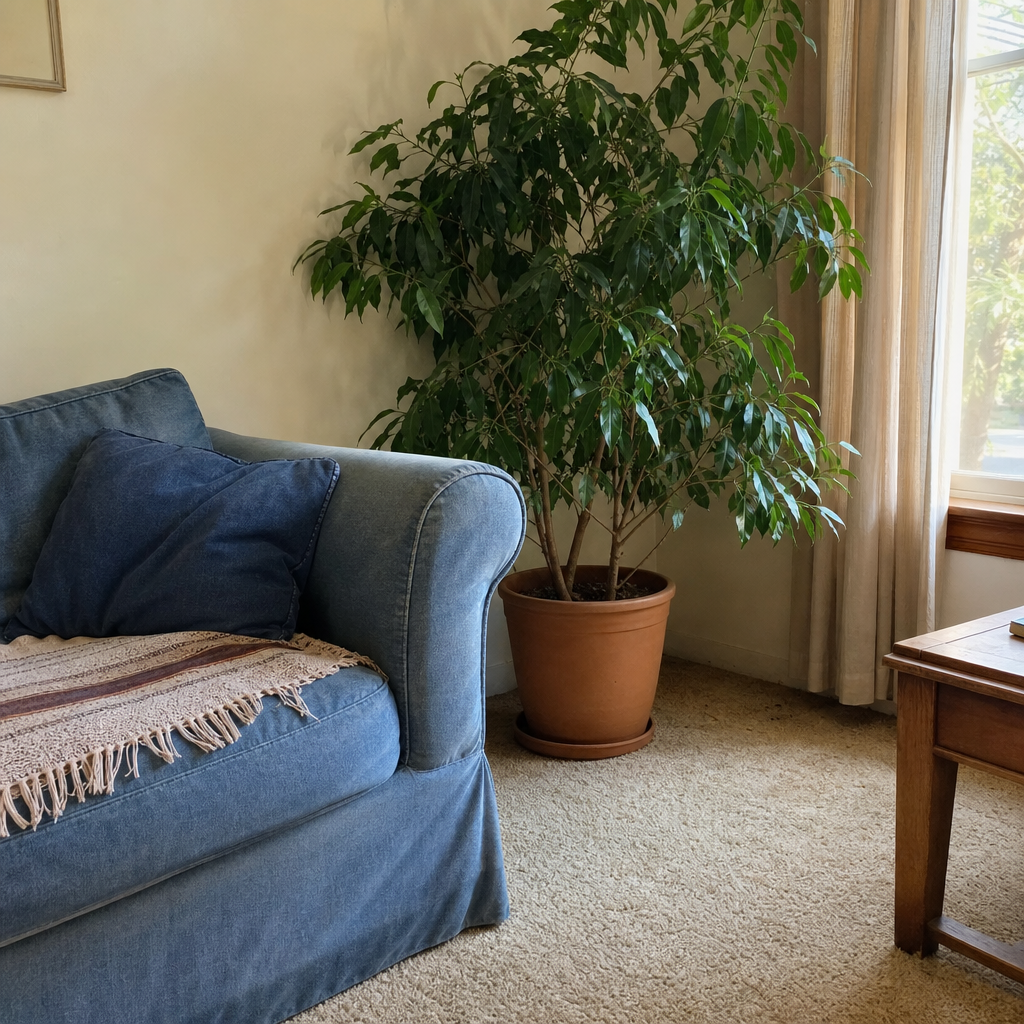
A simple pot or basket planter is enough to make the plant feel intentional. In darker rooms, a convincing faux plant can provide the same height without struggling in low light.
Worth knowing: Real plants need placement that suits their light and watering needs, and large pots can be awkward in narrow walkways.
5.Replace Mismatched Cushion Covers With a Limited Palette
Use two or three related colors in different textures to make the sofa look more composed. For a beige sofa, navy, clay, and cream can add depth; for a blue sofa, warm neutrals and muted green can soften the cooler upholstery.
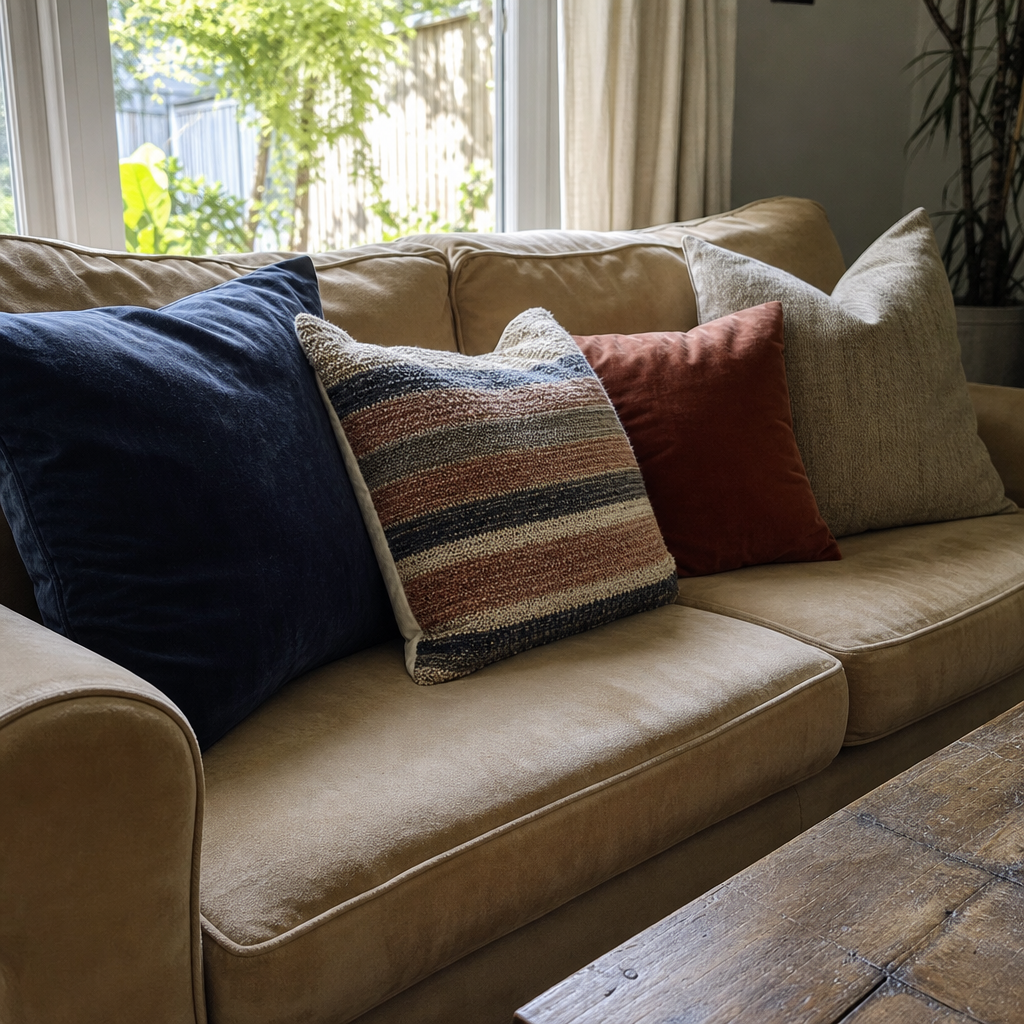
Buying covers instead of whole cushions keeps the update flexible and makes washing easier. Combine one plain fabric, one subtle pattern, and one textured cover so the arrangement does not look flat.
Worth knowing: Too many small cushions can make an older sofa less comfortable to sit on, especially if its seat depth is already limited.
6.Move the Sofa Away From the Wall
Pull the sofa forward if the room has enough depth to preserve a clear route behind or around it. Even a small gap can make the arrangement look planned rather than pushed to the perimeter.
Use the new space for a narrow console, a floor lamp, or simply a little breathing room. This works especially well in open-plan rooms where the back of the sofa can help define the living area.
Worth knowing: Do not float the sofa if it blocks a main path, a door swing, heating vent, or access to storage.
7.Give the Sofa a Defined Side Table
Add a side table beside the sofa arm with a lamp, coaster, and small tray. This gives the seating area a useful edge and makes the sofa look supported by the rest of the room.
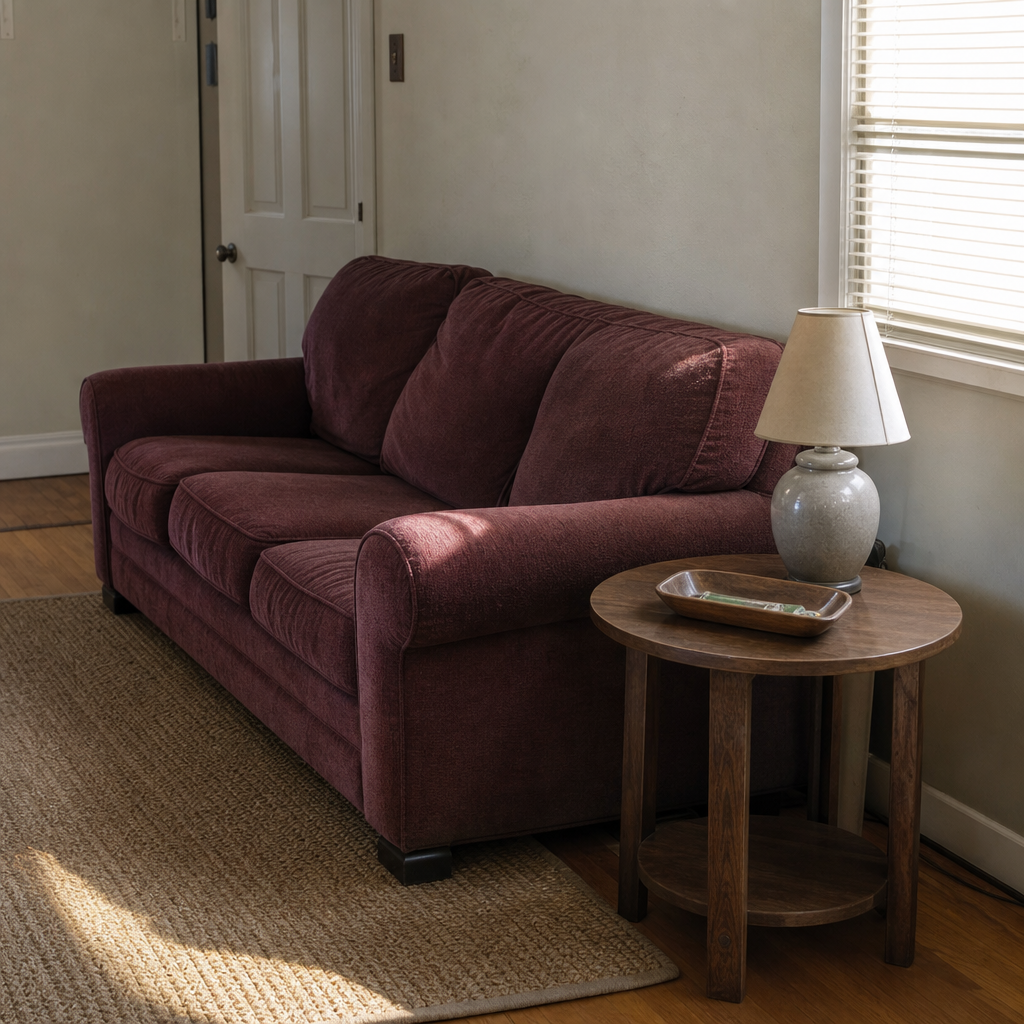
Choose a table that fits under or close to the arm rather than one that crowds the seat. A simple wood, painted, or metal table can introduce contrast when the sofa is a large block of fabric.
Worth knowing: Very narrow rooms may need a compact C-table or wall-mounted solution instead of a standard side table.
8.Hang Curtains Higher and Wider Than the Window
Mount a curtain rod above the window frame and extend it beyond each side, then use full-length panels. The added vertical line can make a low-backed or dated sofa feel less dominant against the wall.
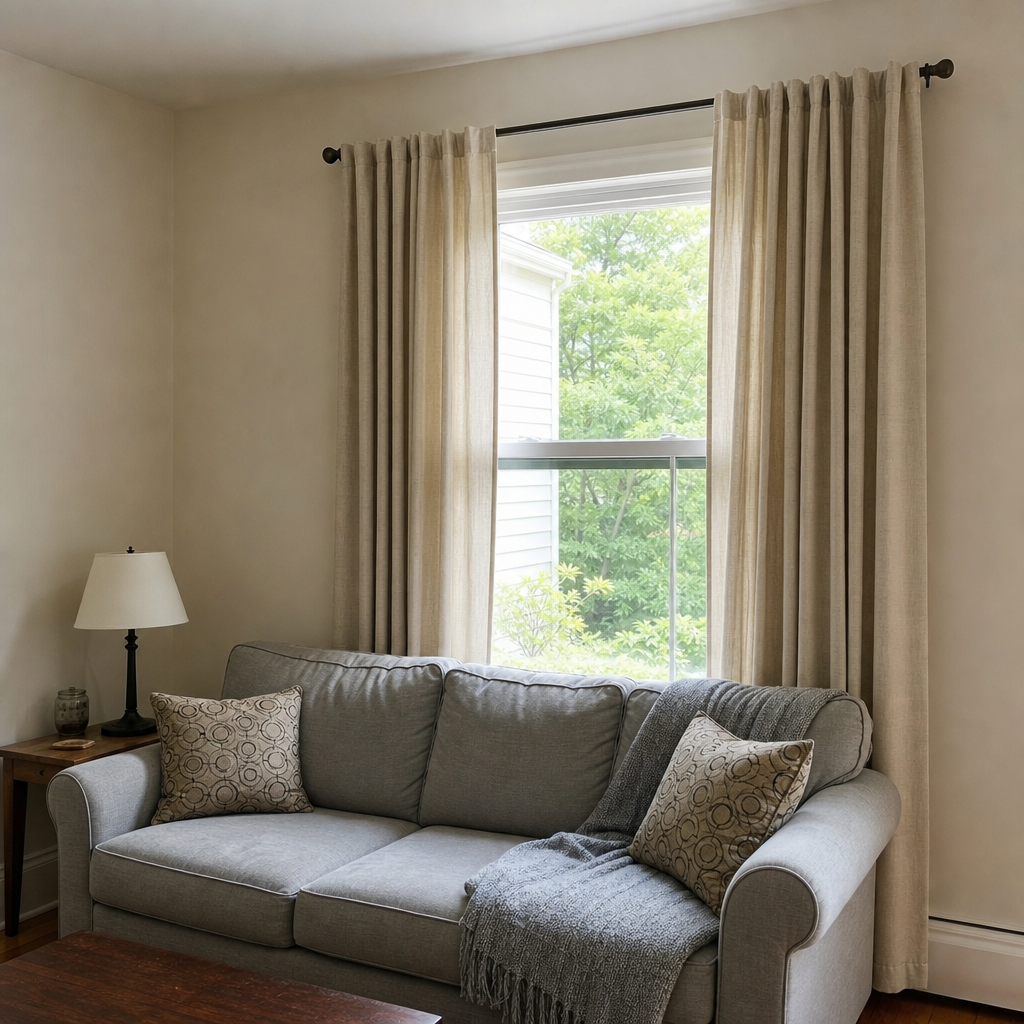
Choose washable fabric in a calm color that works with the sofa rather than competing with it. Lined curtains can also help with drafts, while lighter panels suit rooms that need more daylight.
Worth knowing: Drilling into walls may not be allowed in a rental, and heavy curtains can make a small or shaded room feel darker.
9.Use a Coffee Table With a Different Finish
Pair the sofa with a coffee table in a finish that changes the room’s material balance. Wood can warm up gray or black upholstery, while metal, glass, or painted furniture can lighten a bulky traditional sofa.
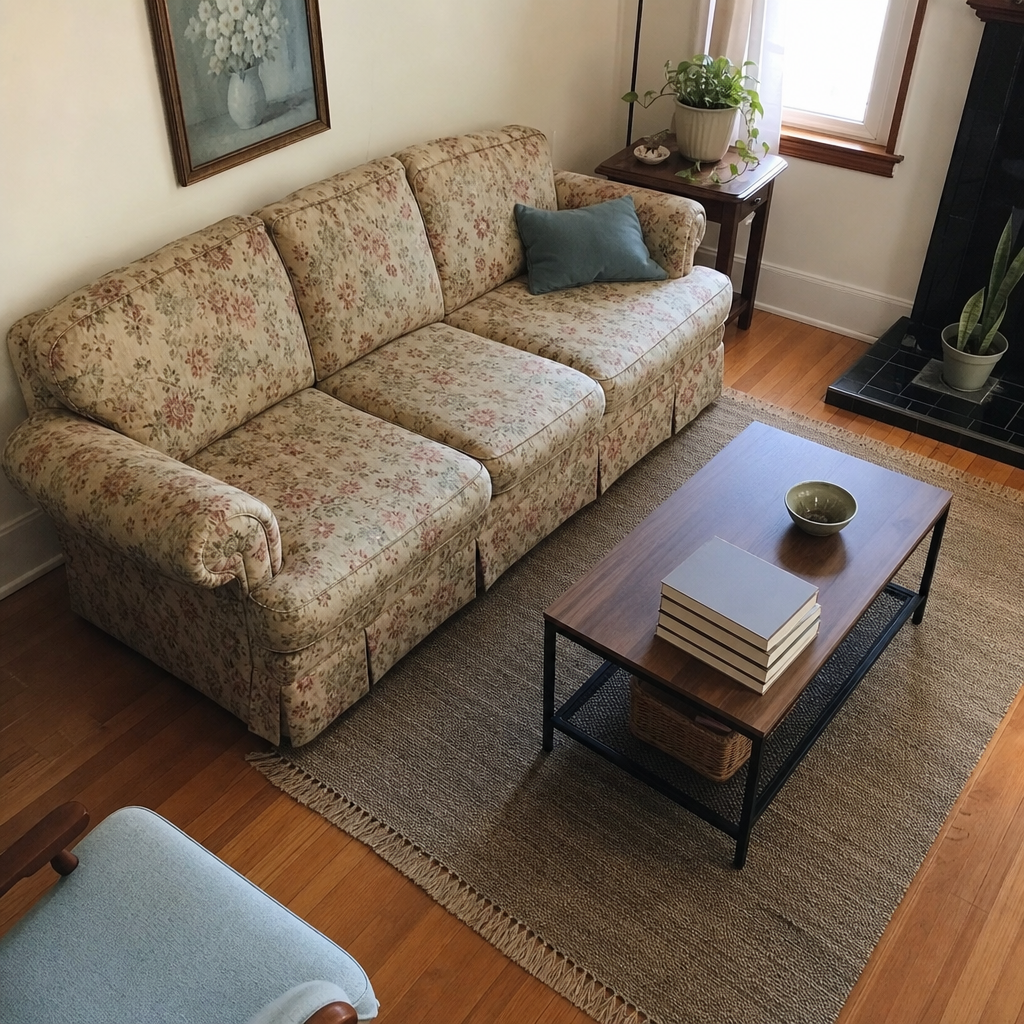
Keep the table practical for the room’s traffic and daily use. A tray can gather remotes and small items while leaving enough clear surface for drinks or games.
Worth knowing: Glass tables show fingerprints quickly, while sharp corners may not suit homes with young children or crowded pathways.
10.Add a Washable Throw Across the Most Worn Section
Drape a washable throw over the arm, back corner, or seat section where wear is most visible. The goal is to add a relaxed layer, not to cover every inch of the sofa like a fitted slipcover.
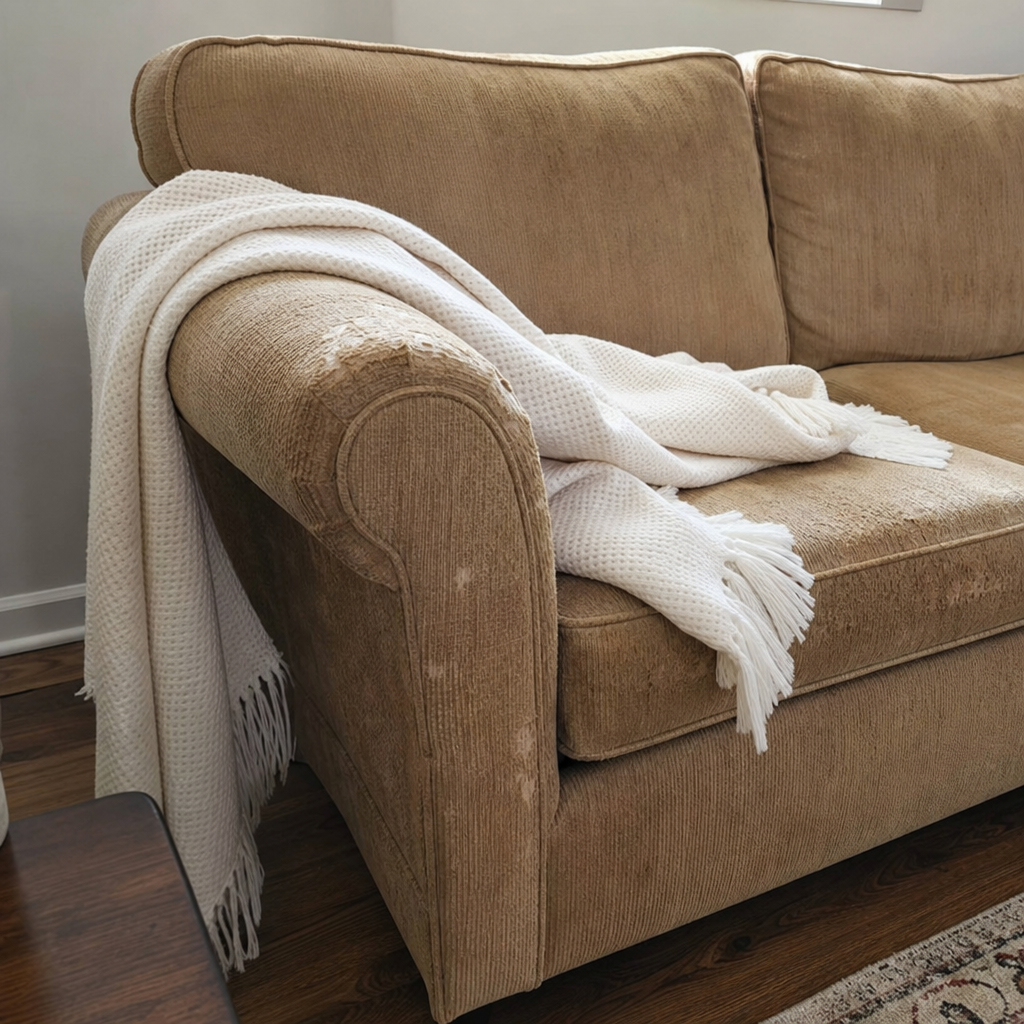
Choose a fabric with enough texture to look intentional against the upholstery. A throw can also make a leather or tightly woven sofa feel softer and more inviting during colder months.
Worth knowing: A throw will shift with daily use and cannot hide deep sagging, peeling, odors, or extensive damage to the upholstery.
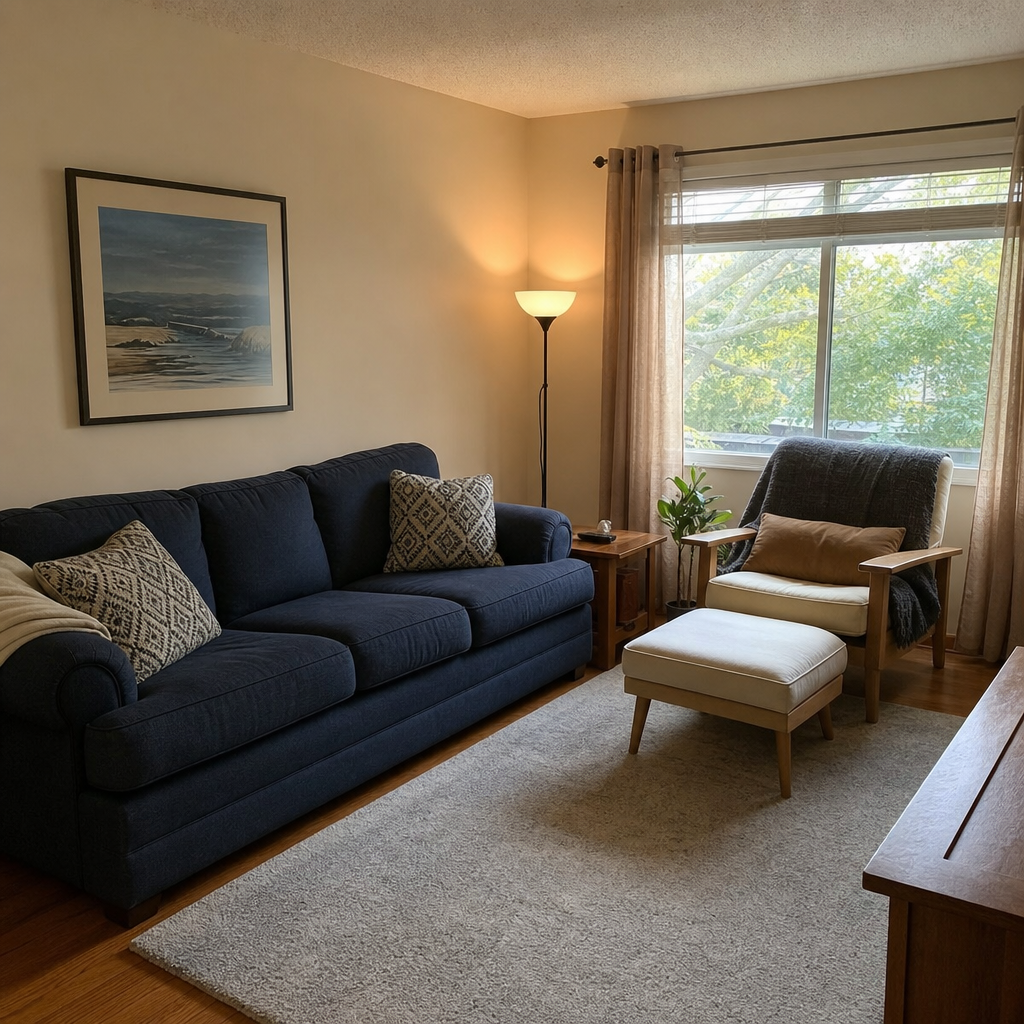
This arrangement makes an older sofa feel like one part of a considered room instead of the only major furnishing. A reading corner also gives the room a useful purpose beyond television viewing.
Worth knowing: Leave enough clearance for doors, drawers, and everyday foot traffic; an extra chair can quickly overcrowd a compact room.
12.Use a Floor Lamp Instead of Relying on Ceiling Light
Place a floor lamp beside the sofa arm to give the upholstery side lighting in the evening. This adds depth to cushions and throws, unlike a single overhead fixture that can make the whole room look flat.
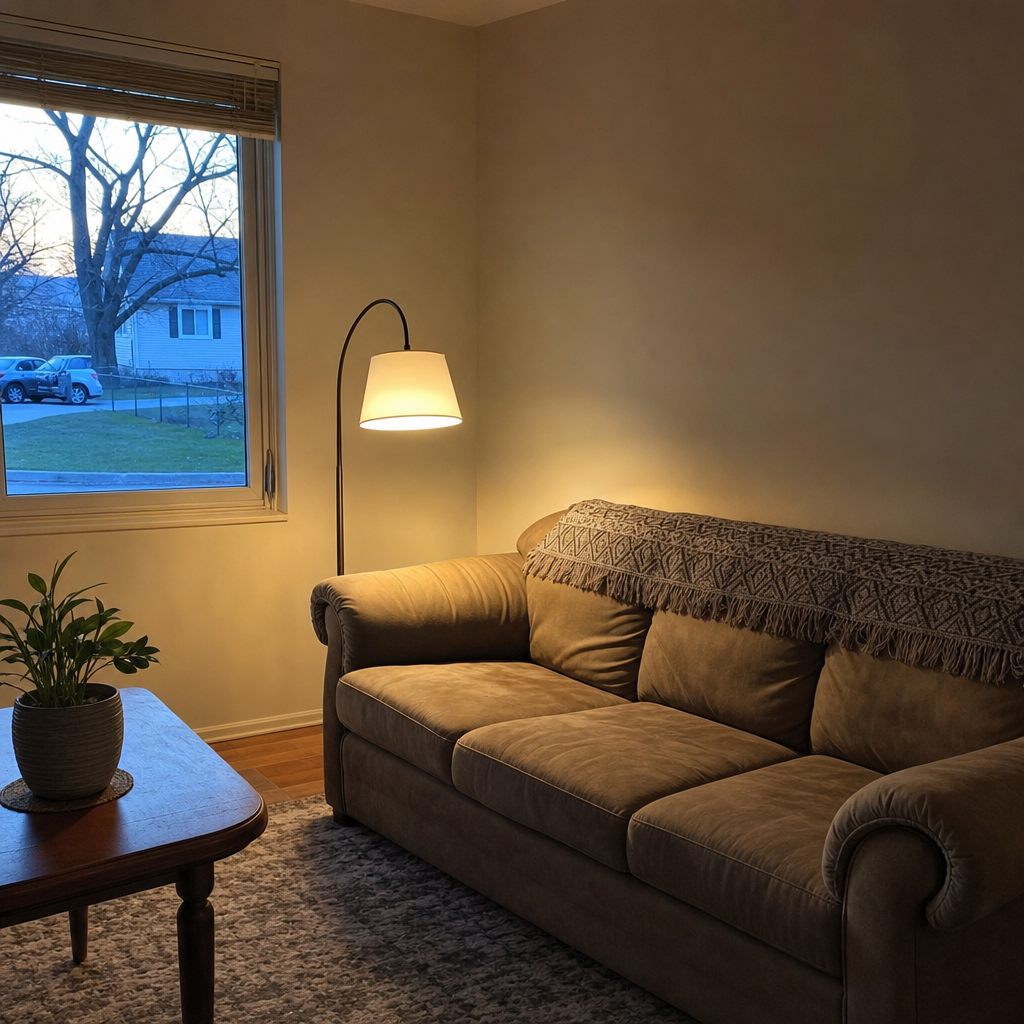
A lamp with a simple shade can soften the seating area without changing any major furniture. Position it where it lights a book, side table, or conversation area without shining directly into someone’s eyes.
Worth knowing: Floor lamps need a safe outlet and stable placement, particularly in homes with pets, children, or busy circulation routes.
13.Style the Wall Behind the Sofa With a Single Oversized Mirror
Hang one large, simple mirror above the sofa to reflect daylight and give a darker room more visual depth. It can be less busy than a gallery wall, especially when the sofa already has a strong pattern or color.
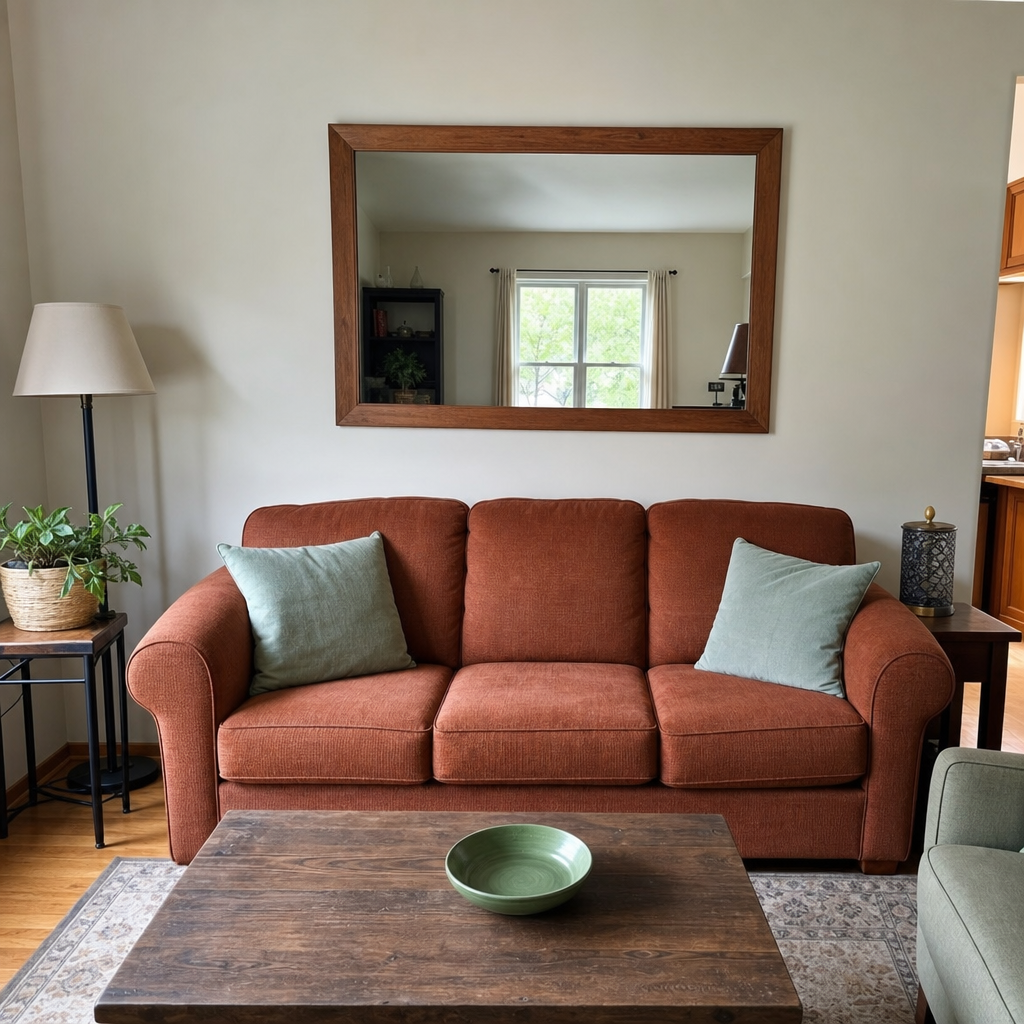
Choose a frame that brings in a material missing from the room, such as wood for a fabric-heavy space or black metal for a more structured look. Place it where it reflects a window, a lamp, or a pleasing part of the room.
Worth knowing: A mirror facing harsh afternoon sun can create glare, and heavy mirrors require secure mounting that may not work with every rental wall.
14.Bring in a Basket for Blankets and Everyday Clutter
Set a sturdy basket beside the sofa for throws, remotes, children’s books, or current reading. The texture adds softness near the upholstery while keeping the coffee table from becoming a storage surface.
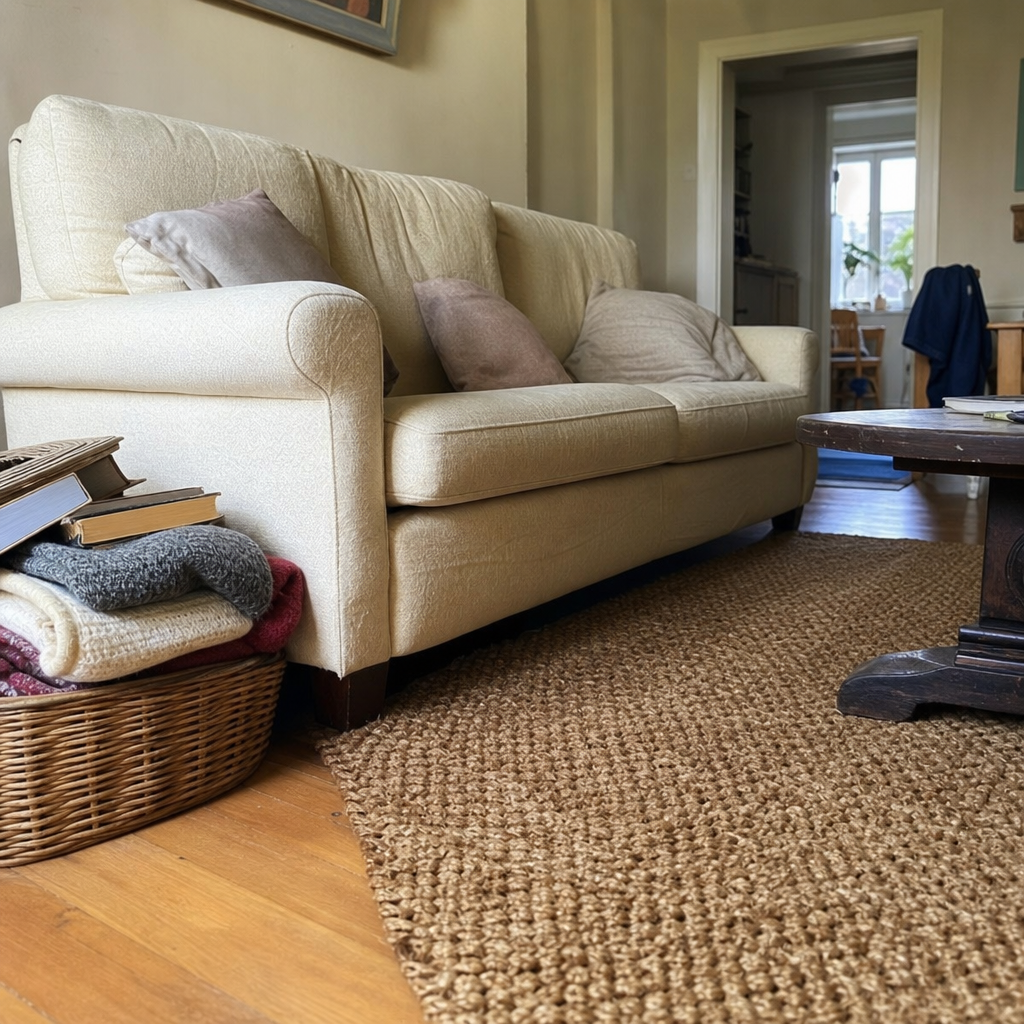
Choose an open basket for items used every day, or one with a lid if visual clutter is the bigger problem. A basket is easy to move when cleaning or when the room needs extra floor space.
Worth knowing: An open basket can still look messy if it becomes a catch-all, so it needs occasional sorting to stay useful.
15.Anchor the Seating Area With a Painted Focal Wall
Paint the wall behind the sofa in a color that suits the upholstery and lets it look chosen rather than inherited. A muted blue can support mustard or camel tones, while warm earthy paint can make a gray sofa feel less cold.
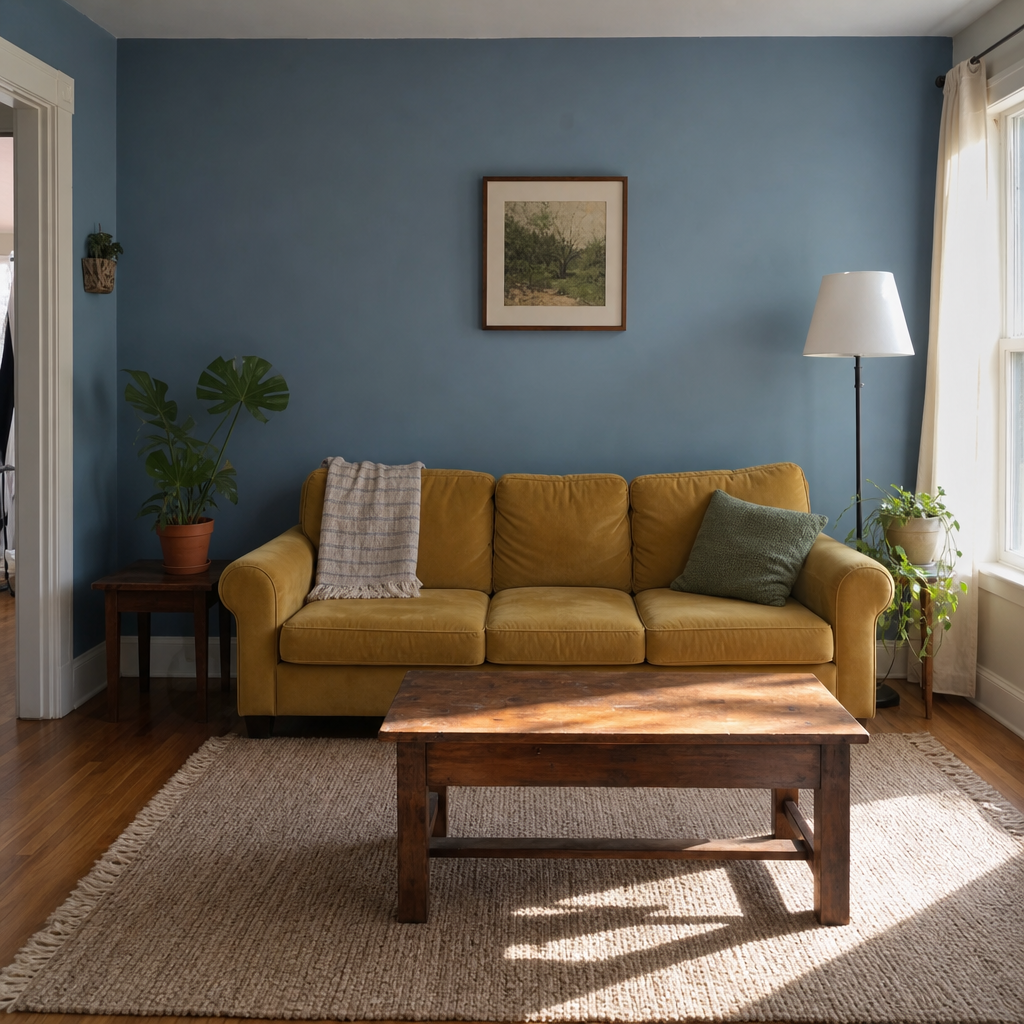
Test paint samples on the wall at different times of day before committing. Keeping the other walls lighter can give the room definition without making a small space feel closed in.
Worth knowing: Daylight changes undertones dramatically, and rental agreements may limit painting or require the wall to be returned to its original color.
About the author
Dana Ruiz, Senior editor
Dana writes about small-space living, storage and low-cost decorating.
Keep reading
12 Sage Green and Brown Decorating Ideas That Feel Cozy
September 13, 2026
12 Warm Neutral Living Room Ideas on a Budget
September 13, 2026
12 Thrifted Decor Ideas That Make Mismatched Finds Feel Collected
September 13, 2026

15 Budget Landscaping Ideas That Make a Small Yard Feel Finished
September 11, 2026