10 Budget Bedroom Rug Ideas for Rooms With Existing Carpet
An area rug can give a bed its own visual zone, even when wall-to-wall carpet cannot be removed. These renter-friendly layouts use rug size, placement, and color while allowing for door clearance and a floor-compatible underlay that helps prevent bunching and trip hazards.
As an Amazon Associate I earn from qualifying purchases.
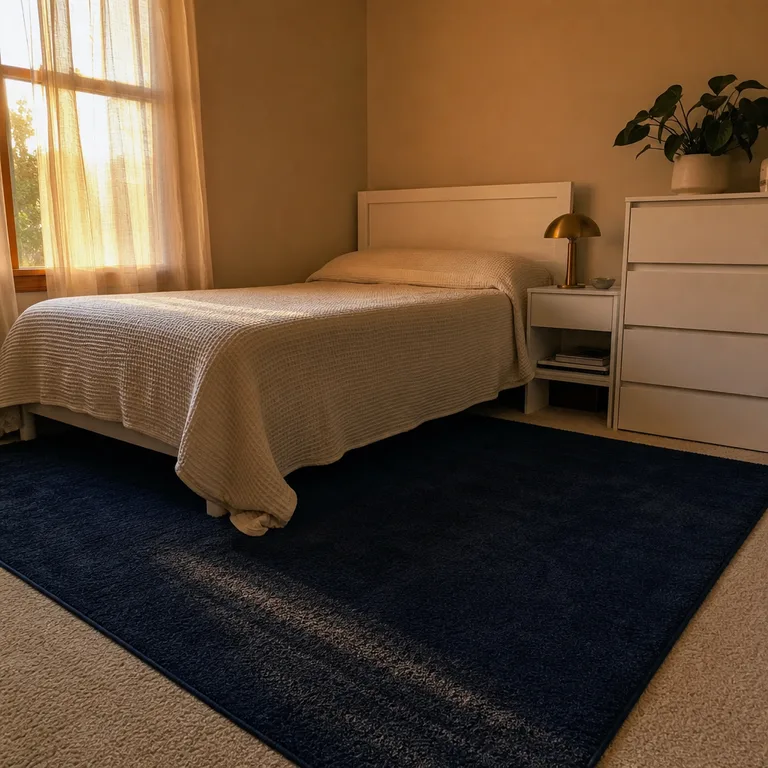
1.Frame a Queen Bed With a Large Rug Under the Lower Two-Thirds
Set a large, low-pile rug perpendicular to the bed, starting below the nightstands and reaching past both sides and the foot. The visible border creates a balanced frame around the bed while leaving the carpet near the headboard exposed.
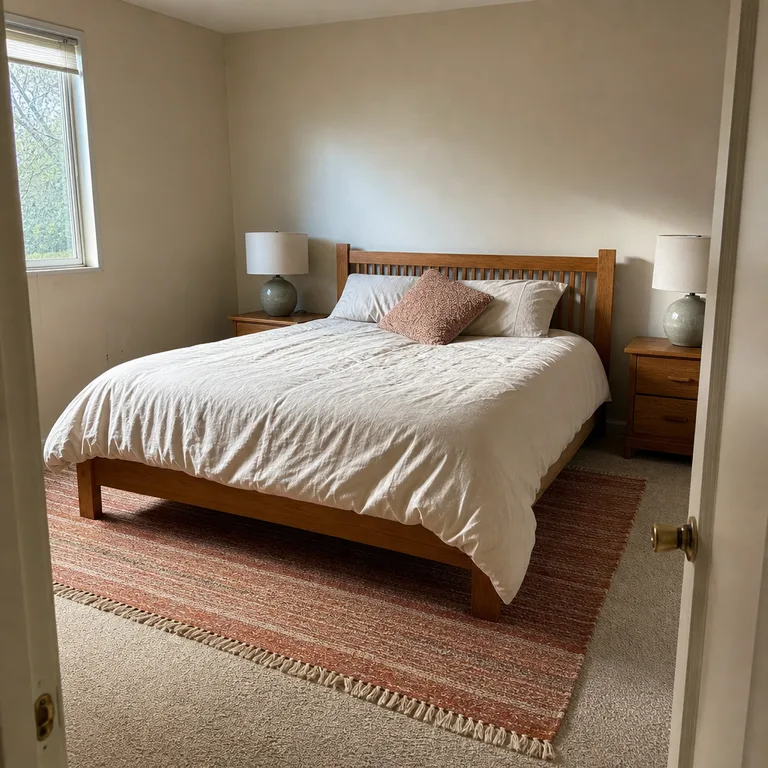
This layout makes the bed look anchored without requiring the effort of moving every piece of furniture. Choose a flatweave or another thin construction, then use a rug pad rated for carpet beneath it to reduce shifting and bunching.
Worth knowing: A large rug can be awkward to position under a heavy bed, so it may take two people and furniture sliders to install it neatly.
Related: 12 Cozy Bedroom Refresh Ideas That Keep Your Existing Furniture
2.Use Two Matching Runners Along Both Sides of the Bed
Place a matching runner along each open side of the bed for softness where feet first touch the floor. This gives the room symmetry without covering most of the carpet or placing a bulky rug under the bed frame.
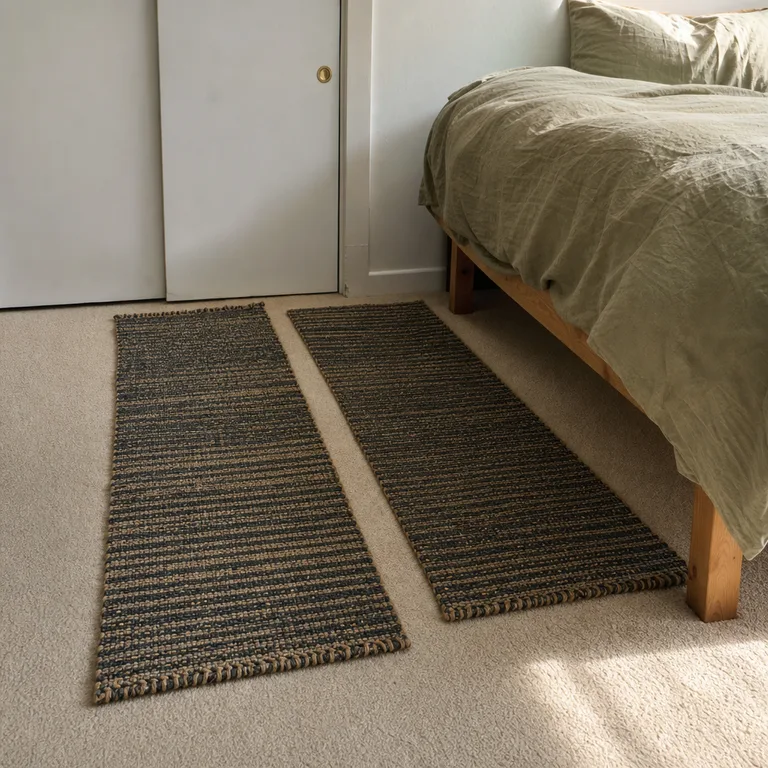
Runners are easier to carry, clean, and replace than one large area rug. Keep them clear of closet tracks and door swings, and secure corners with a carpet-safe grip system so the narrow edges do not curl into a trip hazard.
Worth knowing: This arrangement does not add much color or softness at the foot of the bed.
3.Set a Small Rug at the Foot of the Bed
Center a compact rug at the foot of the bed to give a narrow room a finished focal point. A patterned rug can bring in color without competing with the larger field of existing carpet.
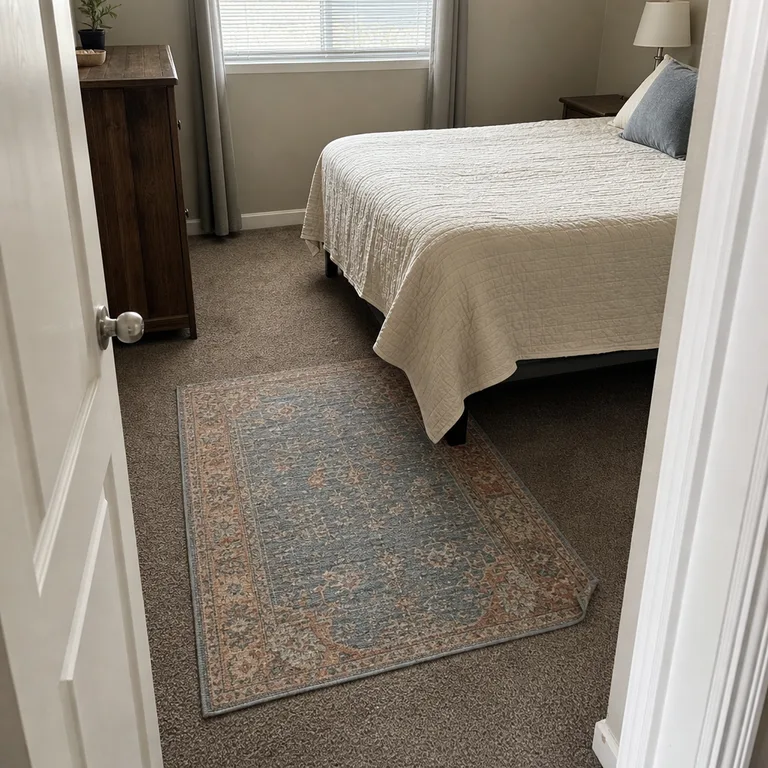
This is a practical choice when a full under-bed rug would crowd the path to a dresser or block an inward-swinging bedroom door. Leave enough bare carpet for the door to move freely, and choose a low-profile rug that will lie flat at the edges.
Worth knowing: A small foot-of-bed rug defines the end of the room more than the sleeping area itself.
4.Layer a Patterned Rug Over a Larger Neutral Base
Use a large neutral rug as the quiet base under the lower part of the bed, then center a smaller patterned rug over it near the foot. The two layers create more visual depth than a single rug and make a plain carpeted room feel more deliberate.
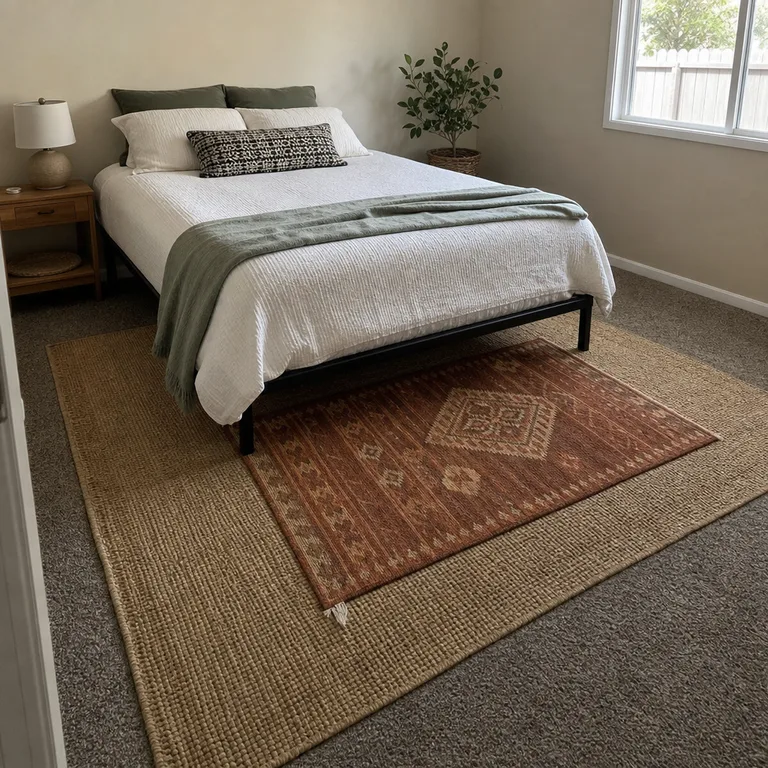
Keep the base layer simple and low-pile so the top rug sits as flat as possible. Secure the rugs to one another only with products suitable for the rug backings, and check them regularly because layered edges can shift more easily on soft carpet.
Worth knowing: Layering adds thickness, which can be less comfortable for people who need a very clear, level walking path.
Related: 12 Playful Striped Decor Ideas You Can Try on a Budget
5.Choose a Dark Rug to Ground Light Beige Carpet
A charcoal, deep blue, or dark brown rug gives pale beige carpet a stronger contrast and makes the bed area easier to read as its own zone. The dark color can also make light-colored bedding and pale furniture look more intentional.
Look for a dense low-pile rug rather than a thick shag, especially where the rug meets existing carpet. Vacuum it regularly, since pale carpet can show lint around a dark rug border and the combined surfaces can collect dust at the edges.
Worth knowing: Dark rugs tend to show light pet hair, dust, and lint more clearly than mid-tone options.
Related: 12 Warm Neutral Living Room Ideas on a Budget
6.Use a Pale Rug to Brighten Dark or Dated Carpet
Lay a cream, sand, or light gray rug beside and partly beneath the bed to break up a broad expanse of dark carpet. The lighter surface can make a dim bedroom feel less heavy, particularly if the room gets limited daylight.
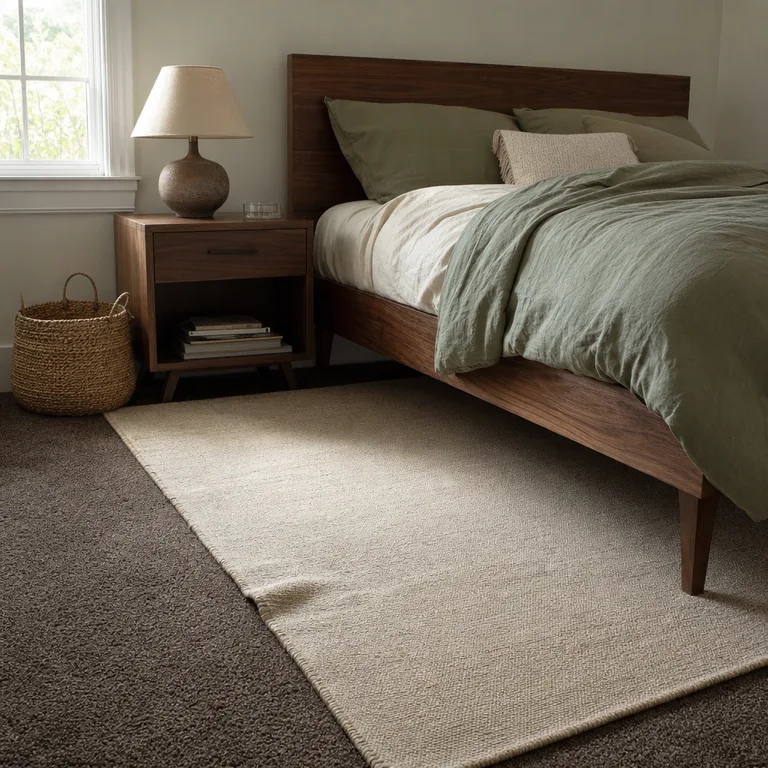
A washable or easy-clean weave is useful near the bedside, where shoes, drinks, and pets may leave marks. Avoid a high, fluffy pile over already-plush carpet, since the softer layers can make footing less stable.
Worth knowing: Very pale rugs need more frequent spot cleaning in bedrooms used by pets or children.
7.Turn an Off-Center Bed Into an Intentional Zone
When a window, radiator, closet, or wall vent forces the bed off-center, move the rug with the bed rather than centering it in the room. Let more rug show on the open walking side, where it creates a useful landing strip instead of an awkward empty margin.
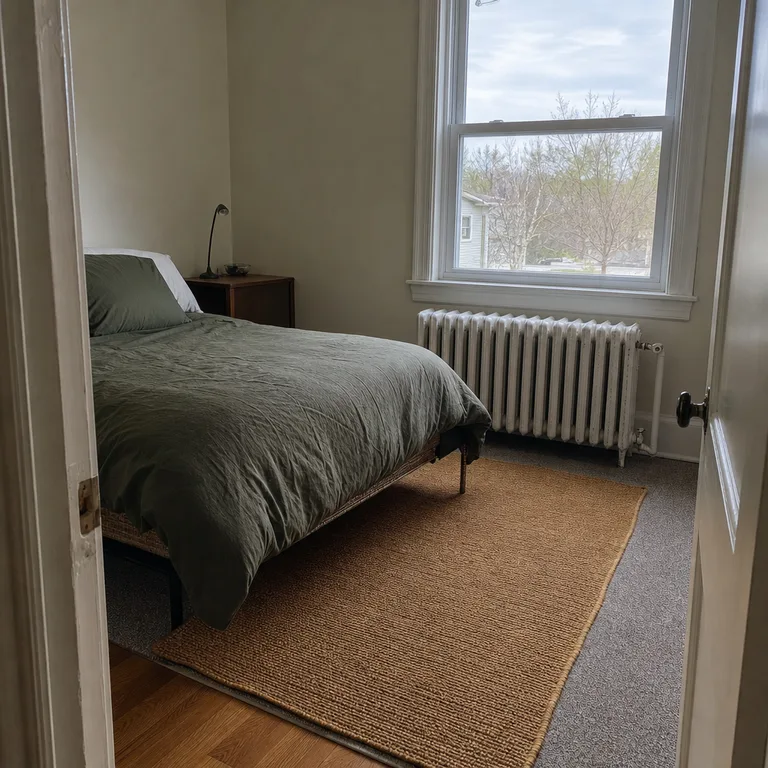
This approach makes a constrained layout look planned around the room's fixed features. Keep fabric and rug edges away from radiators, and do not cover a vent with a rug or bed frame because airflow still matters in a rental bedroom.
Worth knowing: The layout will look asymmetrical, which may not suit a room where the bed can be centered easily.
8.Place a Round Rug Beside the Bed for a Small Soft Zone
Put a round rug beside the bed to soften the hard lines of a compact rectangular room. It creates a small bedside zone for a table, basket, or morning landing spot without requiring clearance for a full rectangle.
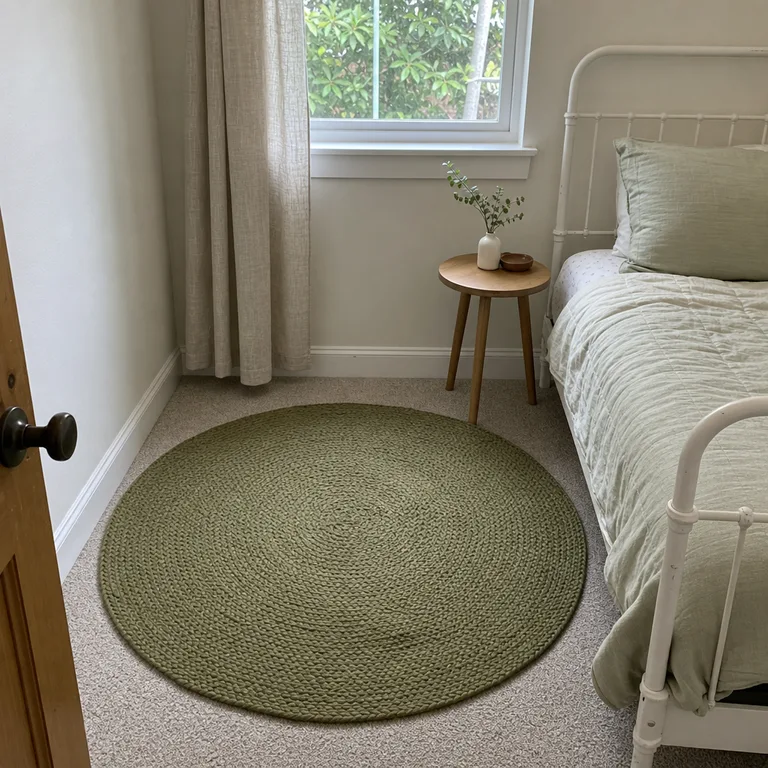
A braided cotton or flatwoven round rug is usually easier to keep flat over carpet than a thick circular shag. Place it where it will not catch under a drawer, and avoid pushing part of it into a busy doorway path.
Worth knowing: A round rug works best as an accent and will not visually anchor a large bed as strongly as a rectangular rug.
9.Use a Long Runner to Connect the Bed and Window
In a long, narrow bedroom, run a low-pile runner through the open strip between the bed and window. This turns an otherwise unused stretch of carpet into a clear route and visually connects the sleeping area to the natural light.
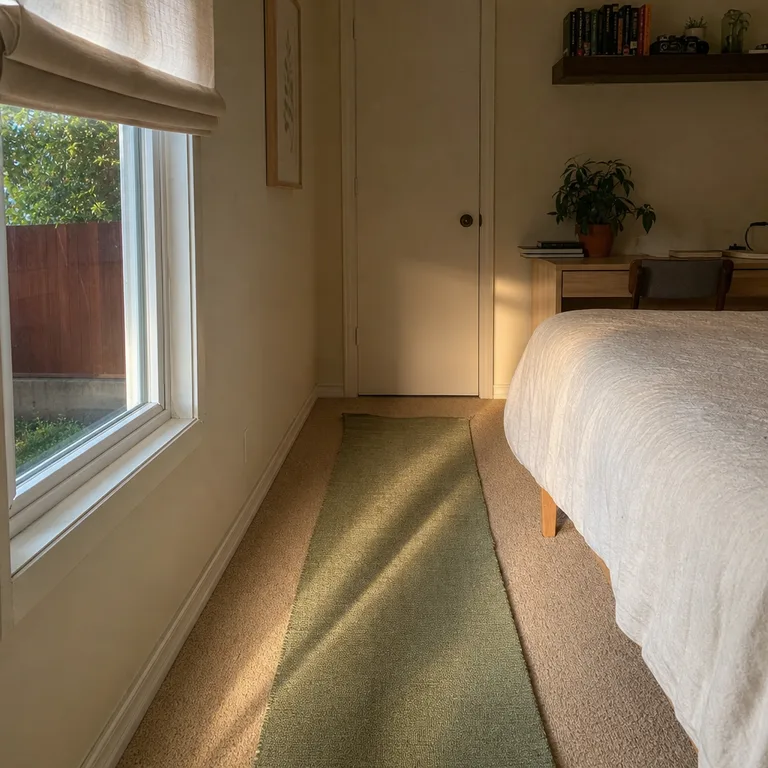
Choose a runner narrow enough to leave clearance for window coverings, desk chairs, and drawers. Use removable grip corners designed for carpet if needed, and smooth the runner after vacuuming so a wrinkle does not become a stumble point.
Worth knowing: A runner improves one pathway but leaves most of the bed area on the original carpet.
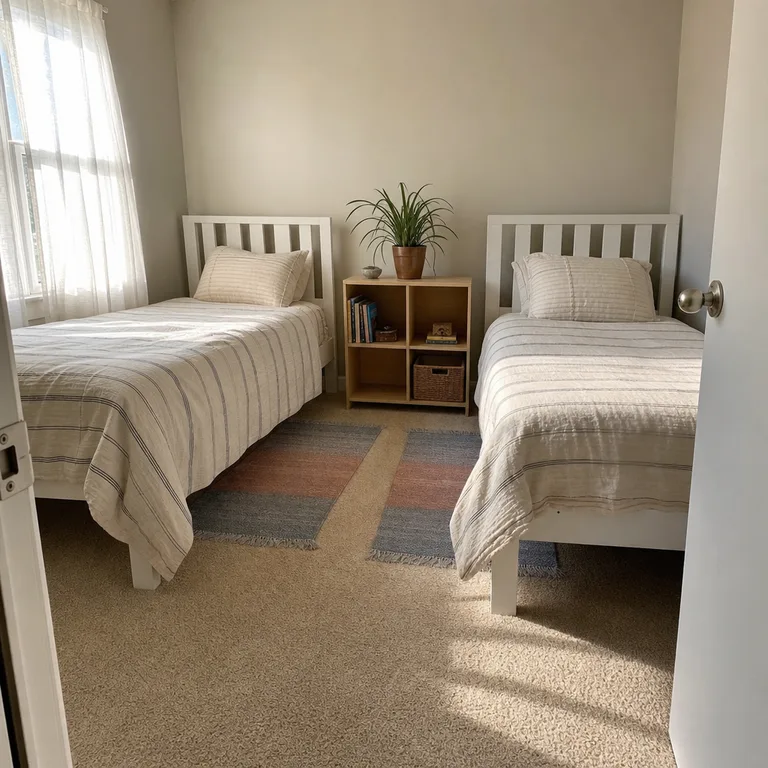
Flatwoven rugs are practical here because they are easier to reposition when beds need to move for cleaning or changing storage. Keep each rug fully within its own bedside zone, leaving a clear shared aisle between the beds and the door.
Worth knowing: Several small rugs can make a crowded shared bedroom feel visually busy if their patterns are too different.
About the author
Dana Ruiz, Senior editor
Dana writes about small-space living, storage and low-cost decorating.
Keep reading
10 Budget Headboard Ideas That Work With a Basic Bed Frame
October 6, 2026
12 Family Photo Display Ideas Beyond a Matching Frame Set
October 4, 2026
10 Kitchen Color Accents That Work With Oak Cabinets
October 3, 2026
10 Blanket Storage Ideas for a Living Room Without Spare Closets
October 6, 2026