10 Blanket Storage Ideas for a Living Room Without Spare Closets
Blankets can stay close to the sofa without turning the room into a pile of bulky fabric or leaving every throw exposed to dust. These living-room storage ideas use furniture, wall space, and contained bins to keep family blankets easy to grab and simple to put away.
As an Amazon Associate I earn from qualifying purchases.
1.Use a Lidded Woven Basket Beside the Sofa
Set a large lidded basket beside the sofa arm where blankets usually collect. It keeps the throws close enough for movie night but gives the room a cleaner edge than an open pile on the floor.
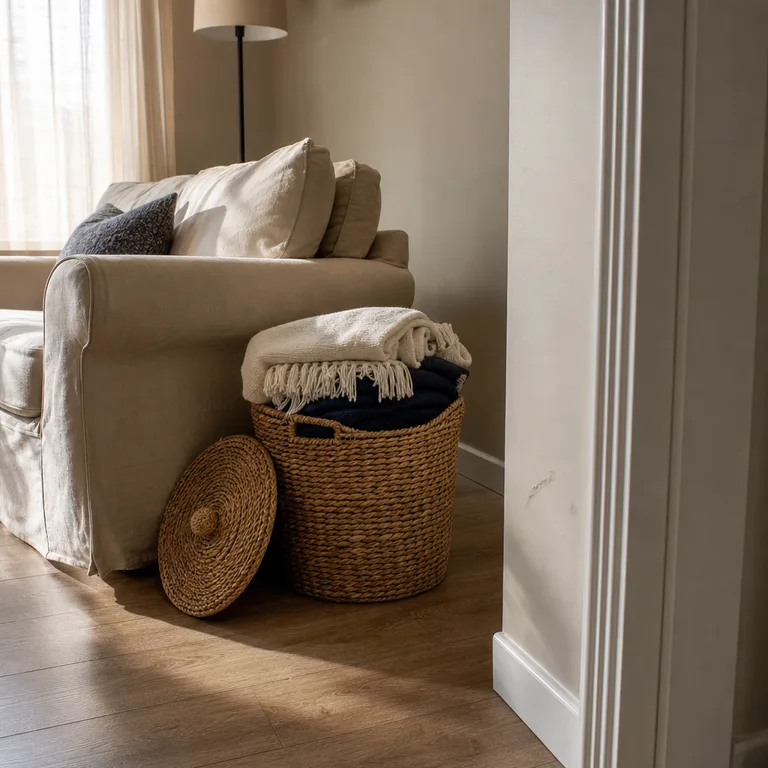
Fold fleece and lighter cotton throws flat before stacking them inside. A basket that holds several thin throws will fill much faster with puffy quilts, so reserve it for the blankets used most often and store heavier seasonal bedding elsewhere.
Choose a fitted lid rather than a loose cover if dust is a concern. Natural woven materials work well in dry living rooms, but they can absorb moisture and should not sit against a damp exterior wall.
Worth knowing: A lidded basket is convenient for everyday throws, but bulky quilts can make it crowded quickly.
2.Turn a Storage Ottoman Into the Family Blanket Bin
Use a hinged storage ottoman as the main blanket drop spot in front of the sofa. It hides the bulk inside furniture that already earns its floor space as a footrest or casual surface.
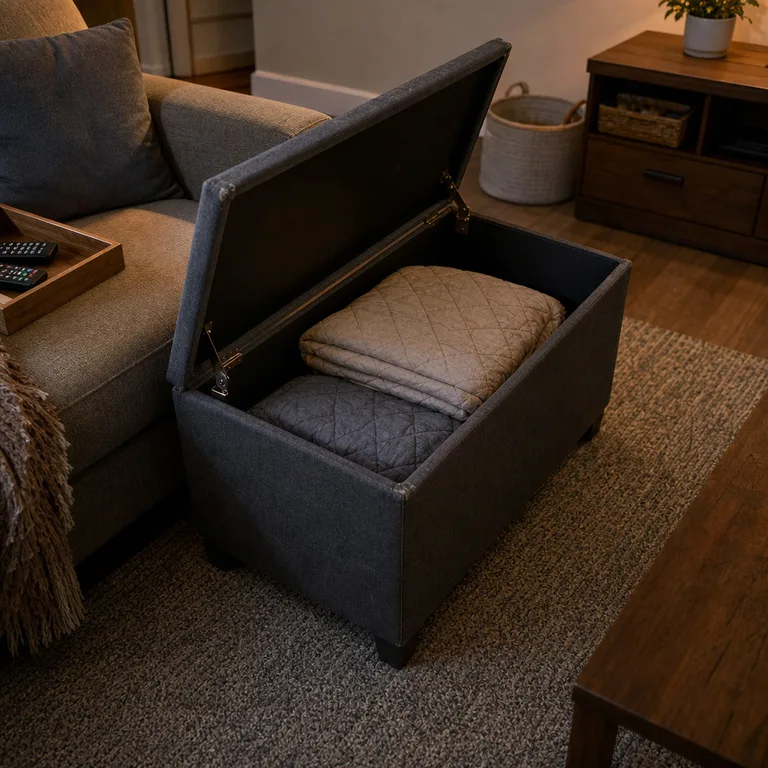
Keep frequently used throws loosely folded rather than tightly packed, especially if the ottoman is opened and closed often. Separating blankets from remotes, chargers, and snacks also makes the interior easier for children to use and reset.
An existing ottoman can sometimes be adapted with an interior tray or fabric bin if it has an accessible compartment. Check that the lid stays open safely and that hinges are sturdy enough for regular family use.
Worth knowing: A full ottoman can be awkward to open when feet, trays, or drinks are resting on top.
3.Store Matching Throws in a Coffee Table With Drawers
Put folded or rolled throws in the deep drawers of a coffee table, leaving the tabletop clear for daily living. This works especially well when the center of the room already has a coffee table and no spare wall space for another storage piece.
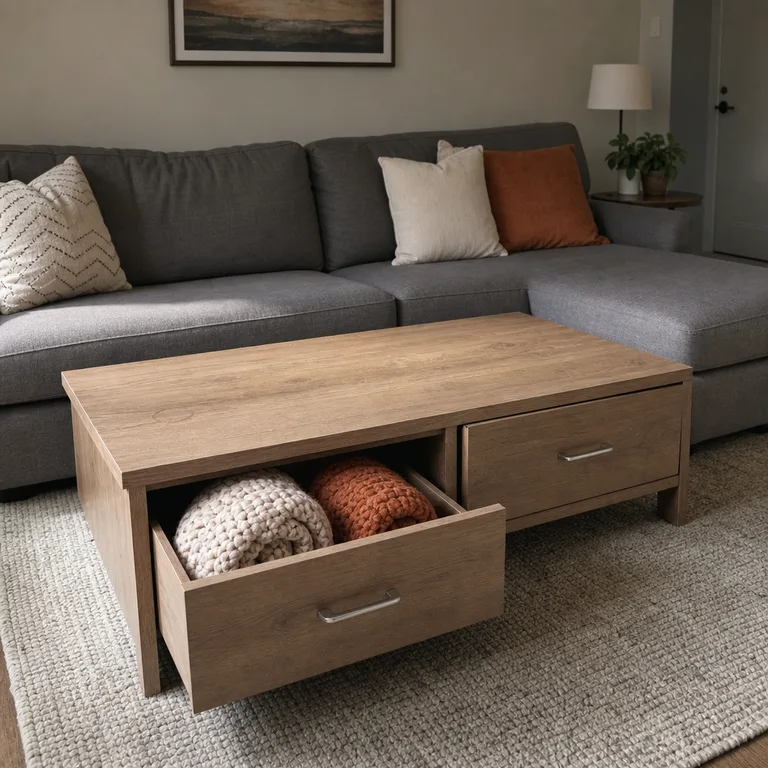
Give blankets one drawer and keep games or remotes in another so the fabric does not get snagged on loose items. Rolled knit throws are easy to see at a glance, while smooth cotton blankets tend to stack neatly.
A lift-top table can serve the same purpose if its compartment is deep enough and the lid is easy to raise around the sofa. Avoid stuffing the storage area tightly, since trapped fabric can pick up stale odors if it stays compressed for long stretches.
Worth knowing: Coffee-table storage is usually best for lighter throws, not a full collection of thick quilts.
Related: 10 Small-Space Game Night Ideas Without a Dedicated Game Room
4.Assign One Cube Shelf Section to Folded Throws
Dedicate one open cube section to the blankets that are used every week. The visible stack gives each throw a clear home and makes it easier to tell when blankets have not been put away.
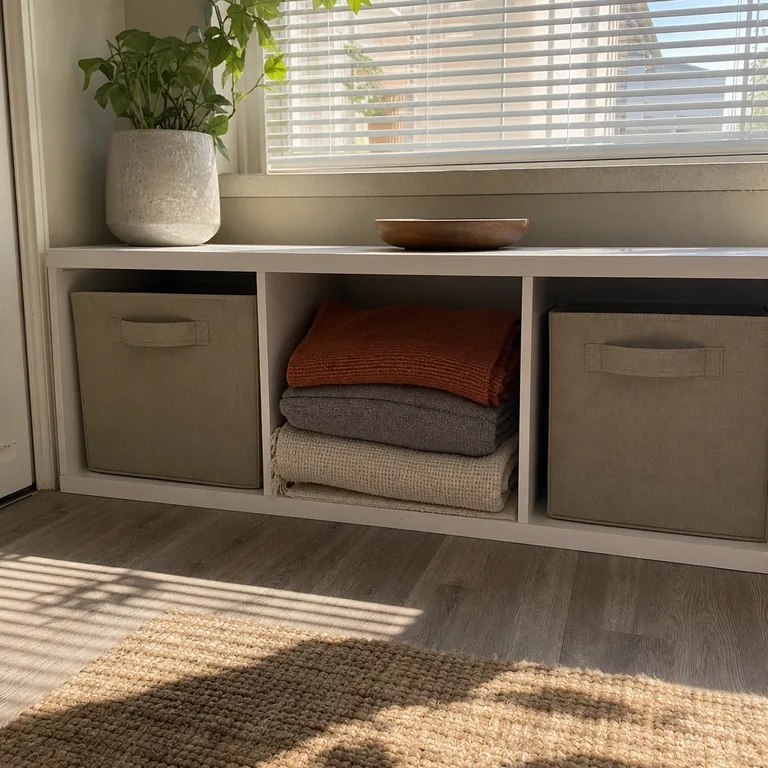
Fold blankets to the width of the cubby, with the softest or most attractive one facing outward. Use fabric bins in nearby sections for seasonal extras that need more protection from dust and visual clutter.
A low cube shelf can fit under a window or along a short wall without making the room feel closed in. Open shelves do need regular dusting, so they suit blankets that are washed and used often rather than rarely touched guest throws.
Worth knowing: Open cubbies leave blankets exposed to dust unless bins or doors are added.
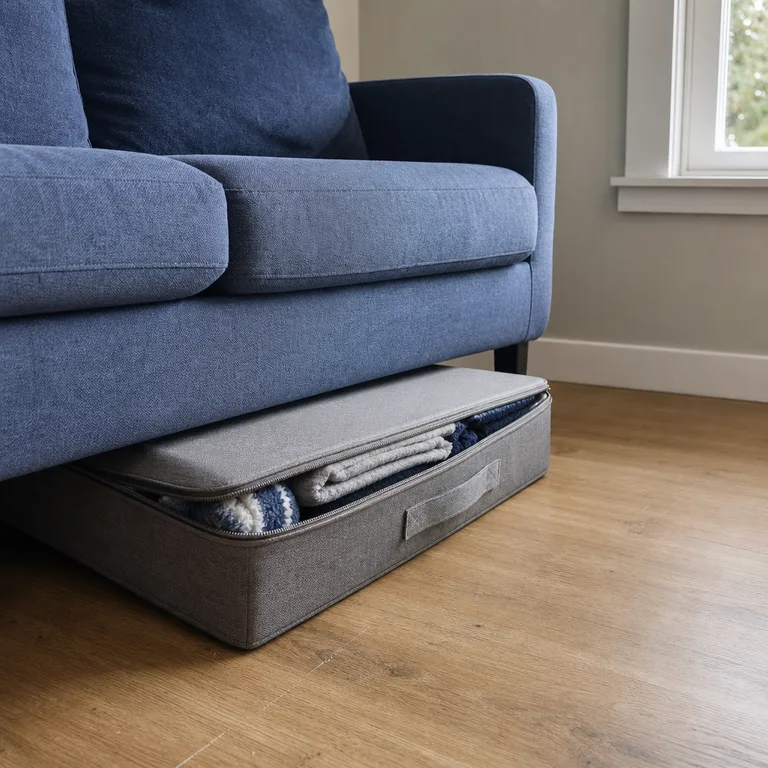
5.Slide Lidded Boxes Under a Raised Sofa
Use shallow covered boxes beneath a sofa to store extra throws out of sight. This is useful for blankets that need to stay nearby but do not need to be grabbed every day.
Choose boxes that slide smoothly and do not catch on rug edges or flooring seams. Fold the blankets loosely inside rather than vacuum-compressing them, since moisture and trapped air can leave fabrics smelling stale or encourage mildew in a damp room.
Measure the clear space under the sofa, including any center support legs, before choosing containers. This approach is most practical on a dry floor with enough clearance to pull the box out without lifting the sofa.
Worth knowing: Under-sofa storage is inconvenient for daily-use blankets and will not work with low furniture.
6.Place a Blanket Trunk Along an Empty Wall
Place a modest storage trunk against an unused wall, behind chairs, or at the end of the room. Its closed interior can hold heavier quilts that overwhelm baskets, while the lid can become a surface for a lamp, books, or a tray.
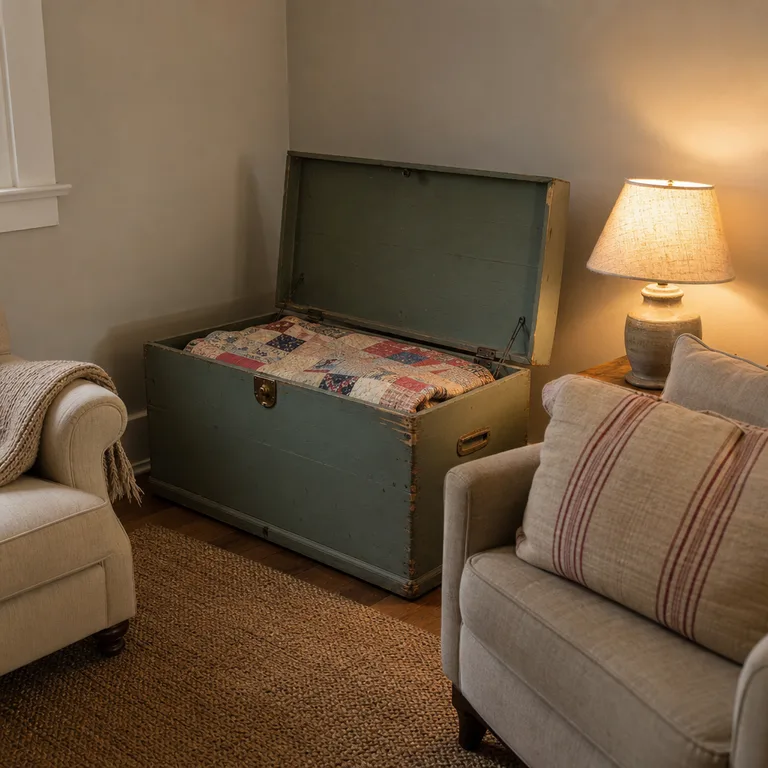
Line the bottom with clean cotton fabric or use separate fabric bags to keep different blankets from tangling together. A trunk with a flat, sturdy lid is more useful than a decorative chest that cannot safely support anything on top.
Secondhand trunks can be a budget-friendly option when their hinges, interior odor, and lid support are in good condition. Keep wood furniture away from a cold, damp wall, particularly in basements or rooms with condensation concerns.
Worth knowing: A trunk takes up permanent floor space and may be too bulky for a narrow living room.
Related: 10 Board Game Storage Ideas for Homes Without a Playroom
7.Hang a Narrow Wall Cabinet for Clean-Lined Storage
Mount a narrow wall cabinet beside the sofa to hold small folded throws above floor-level dust. A closed cabinet gives the room a more built-in look while preserving the walking space below.
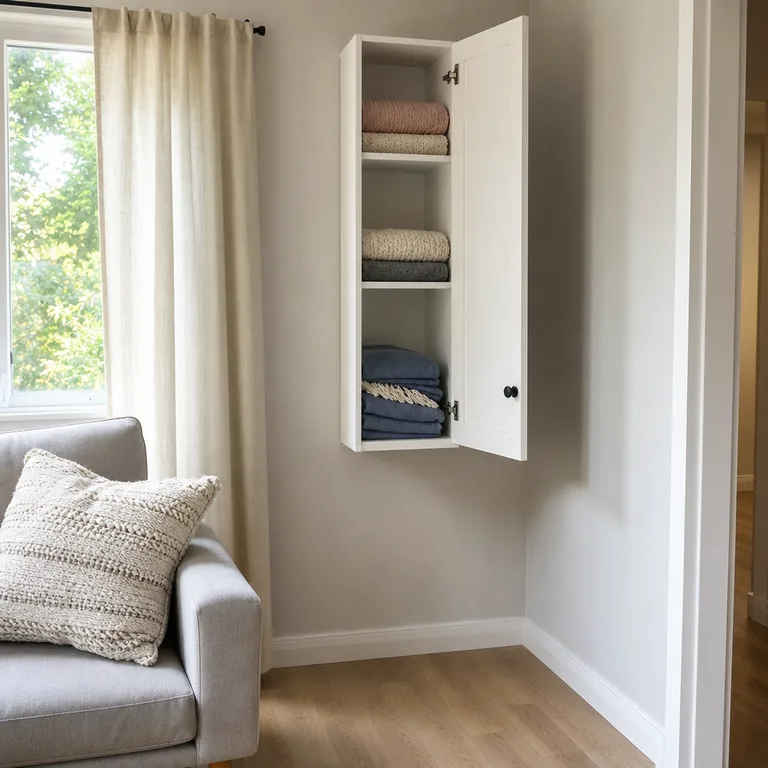
Keep the cabinet for lightweight cotton throws, baby blankets, or lap blankets rather than heavy quilts. Arrange stacks by use, with the most-reached-for items on the lowest shelf and less-used extras higher up.
Secure mounting matters more than appearance here. The cabinet should be attached to suitable wall framing or installed with hardware rated for the wall type, and renters may need landlord approval before drilling.
Worth knowing: Wall cabinets require careful installation and are not suitable for heavy blanket loads.
8.Keep One Current Throw in a Leaning Blanket Ladder
Drape one or two current throws over a leaning blanket ladder beside the sofa. The open setup keeps the fabric aired out after use and makes it easy for anyone to grab a blanket without opening a lid or drawer.
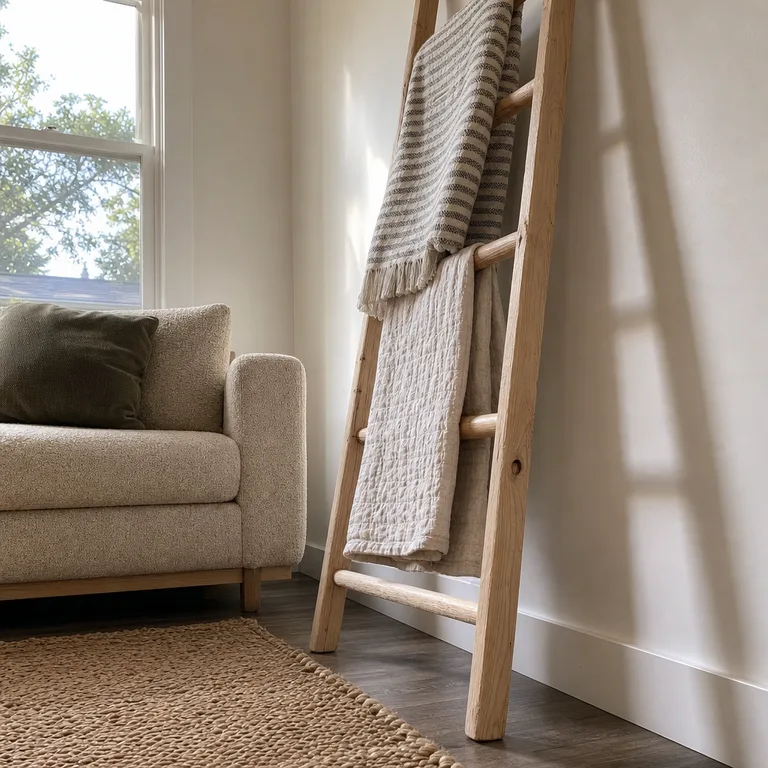
Use it as a display and drying spot, not the whole household storage system. Pair the ladder with a closed basket, ottoman, or trunk for spare blankets that would otherwise make the rungs look crowded.
Place the ladder where it will not narrow a walkway or be pulled over by children or pets. It is best on a stable, level floor, and the top should rest securely against the wall without rubbing delicate paint.
Worth knowing: A blanket ladder leaves throws exposed to dust and only holds a small number neatly.
9.Use a Bench With a Hinged Seat Under the Window
Place a storage bench beneath a living-room window to turn an underused area into a blanket station. It gives blankets a concealed home and adds extra seating for guests, children, or putting on shoes near an entry-adjacent room.
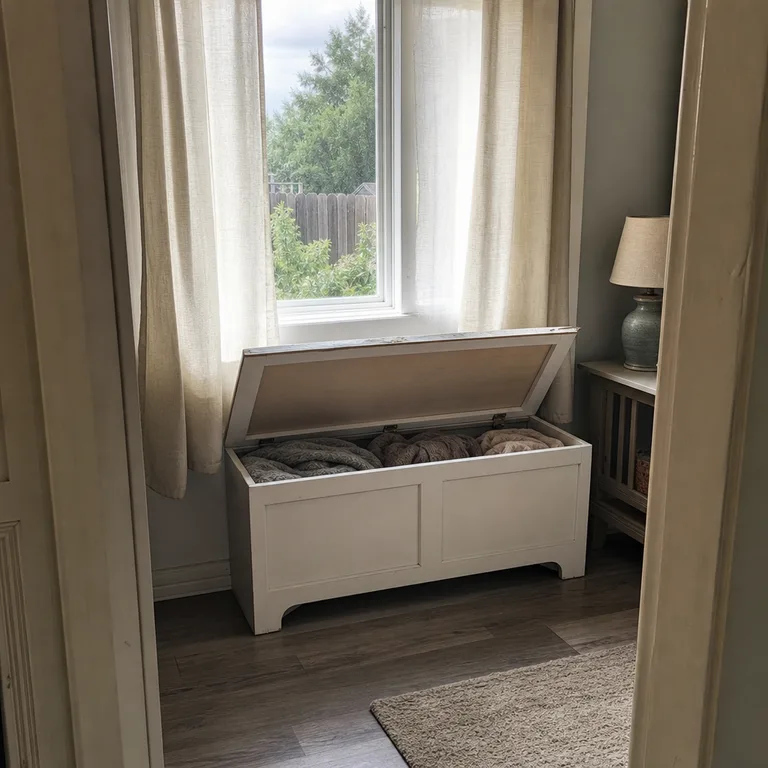
Store loosely folded plush throws inside and use the top as a simple perch with a removable cushion. A bench can make returning blankets easier because it is visible and accessible without opening a larger piece of furniture across the room.
Choose a lid with controlled hinges or safety supports if children will use it. Window areas can also have drafts or condensation, so check occasionally that the interior stays dry and that blankets are not pressed against damp glass or walls.
Worth knowing: A window bench needs a clear wall and may be exposed to temperature swings or condensation.
10.Tuck Blanket Baskets Behind the Sofa
Place matching low baskets behind a floating sofa to keep spare throws close without putting them in the main sightline. Rolling blankets instead of stacking them makes it easier to pull out one at a time from a narrow space.
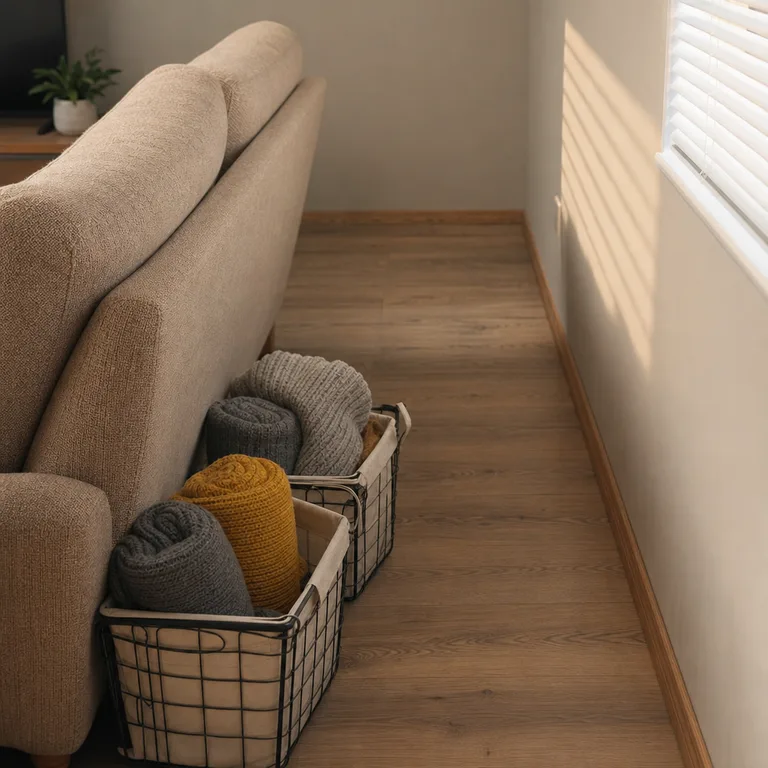
Leave enough path behind the sofa to reach the baskets without squeezing past furniture or blocking an outlet. Canvas-lined wire baskets protect delicate knits from catching, while solid-sided bins contain loose fringe more neatly.
This arrangement works best when the sofa is genuinely away from the wall rather than pushed back after each use. Add floor pads if the baskets scrape hard flooring, and vacuum behind the sofa regularly because this area gathers dust quickly.
Worth knowing: Behind-sofa baskets are only practical when there is safe, usable access around the furniture.
About the author
Dana Ruiz, Senior editor
Dana writes about small-space living, storage and low-cost decorating.
Keep reading
10 Food Container Storage Ideas That Keep Every Lid Easy to Find
October 4, 2026
10 Budget Headboard Ideas That Work With a Basic Bed Frame
October 6, 2026
10 Budget Bedroom Rug Ideas for Rooms With Existing Carpet
October 6, 2026
10 Small Entryway Ideas for Coats When You Have No Coat Closet
October 5, 2026