10 Bedroom Wardrobe Ideas for a Room With No Built-In Closet
A bedroom without a built-in closet can work well when freestanding pieces create a clear place to hang, fold, sort, and access clothes. The most useful layouts balance hanging depth and drawer clearance with dust control, visual calm, rental-safe anchoring, and enough open floor to move around the bed.
As an Amazon Associate I earn from qualifying purchases.
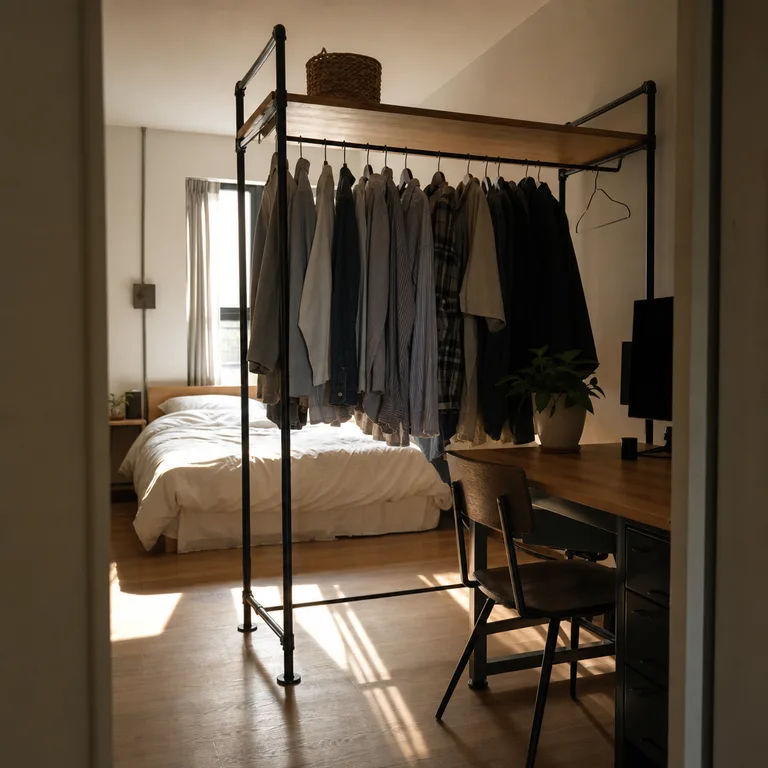
1.Make One Wall a Full Clothing Zone
Give clothes one dedicated wall rather than scattering racks, drawers, and laundry across the bedroom. A freestanding wardrobe, low drawer chest, and open rail can read as one intentional storage zone when their finishes or hardware have a simple connection.
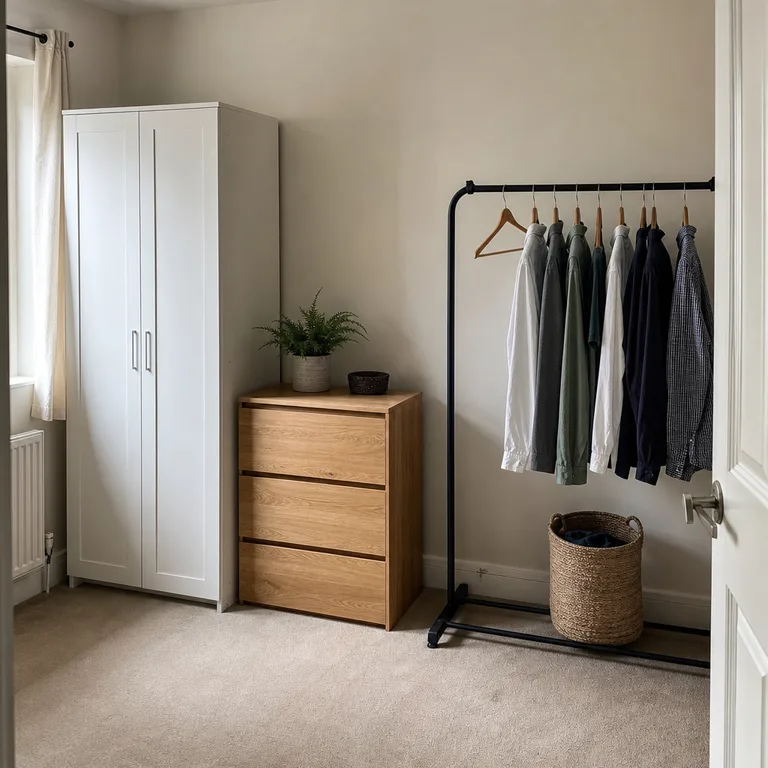
Put the tallest closed piece at one end, then keep the drawers and rail together so the layout feels grounded instead of pieced together. Secondhand drawer chests and a basic rail are often cheaper than trying to build a fitted closet, while matching hangers make the open section look calmer.
Leave enough space in front of drawers to pull them open fully, and check that the rail does not block a nearby door or window. Anchor tall wardrobes to the wall using renter-approved methods where possible, especially in homes with children or pets.
Worth knowing: A full clothing wall can make a small bedroom feel narrower if it faces the bed at close range.
Related: 15 Small Closet Organization Ideas Without a Custom System
2.Use a Rail and Drawer Chest Behind the Bed
The wall behind the headboard can become useful storage when the side walls are occupied by windows, doors, or a desk. Set a low drawer chest against the wall and place a slim rail where it will not interfere with pillows or make the bed hard to make.
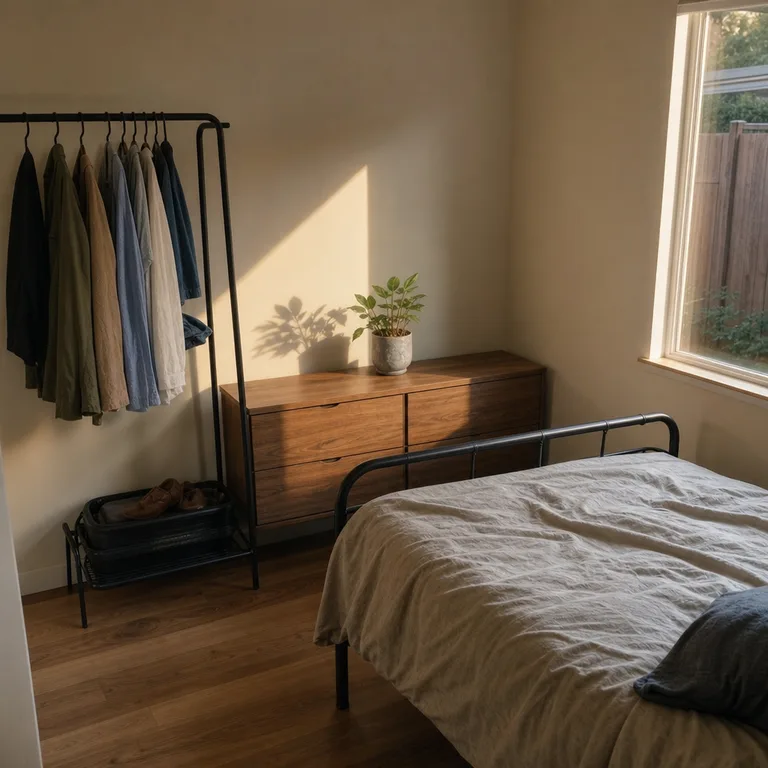
This layout keeps folded clothes close to hanging clothes while preserving the room's other walls for circulation. Choose a low, stable chest and keep the rail's active clothing selection small so the headboard area does not look overloaded.
Measure drawer depth with the bed in place. If drawers cannot open without hitting the mattress frame, use a chest with shallower drawers, place it to one side of the bed, or rely more heavily on under-bed storage.
Worth knowing: Clothes behind the bed are less convenient to reach for daily dressing than clothes on a clear side wall.
3.Create a Dressing Corner With an L-Shaped Layout
Use two adjoining walls to form a compact dressing corner: a closed wardrobe on one wall, then a rail and narrow drawers on the next. This keeps the middle of the room available for walking, getting dressed, or opening the bedroom door.
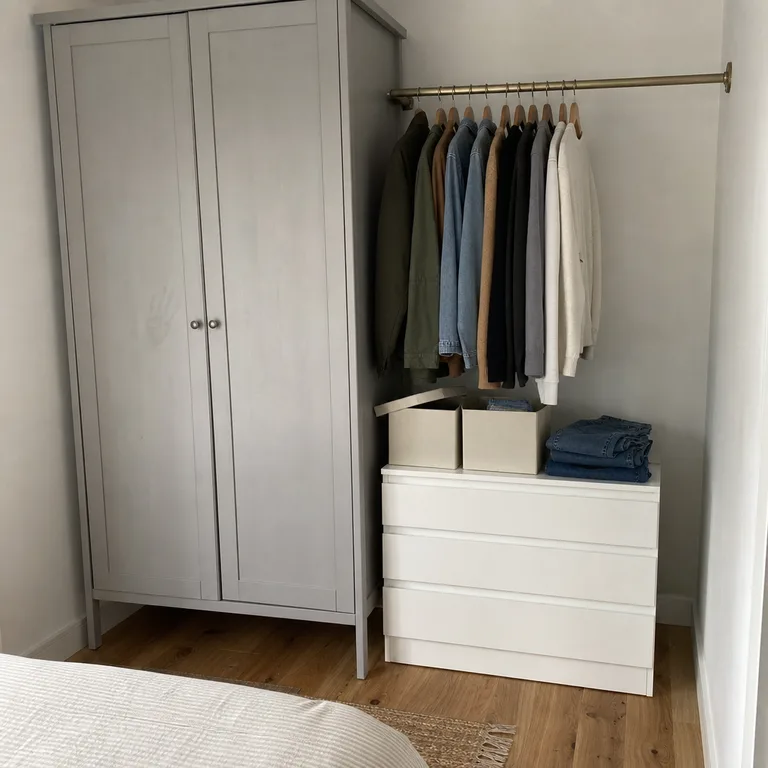
The corner works best when the wardrobe holds bulkier or less attractive storage and the rail carries a limited everyday rotation. Basic drawer units, fabric bins, and a simple garment rail can fill out the second wall without the expense or permanence of built-in cabinetry.
Avoid squeezing the pieces tightly into the corner. Doors, drawers, and rail ends all need clearance, and tall furniture should be anchored rather than left free-standing in a spot where it can be knocked.
Worth knowing: An L-shaped setup needs two uninterrupted walls, so it may not suit bedrooms with several doors or large windows.
4.Turn a Shallow Niche Into a Rail-and-Shelf Wardrobe
A shallow recess can become a useful clothing zone with a freestanding rail and a compact shelf unit. Keeping the pieces inside the niche makes storage feel less intrusive than placing a rack in the middle of a plain wall.
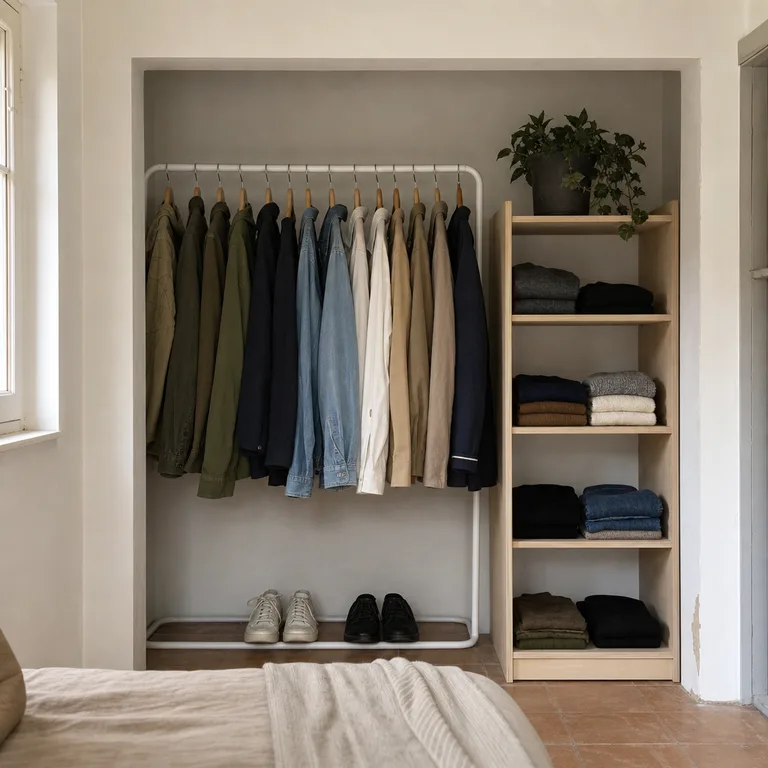
Measure the recess carefully with hangers in mind, not just the rail itself. Hanging clothes need more depth than a folded-shirt shelf, and sleeves that project into the room can turn a neat niche into a pinch point.
Use shelves for folded knits, bags, and lidded bins, while the rail holds only garments that fit without being crushed against the wall. Freestanding pieces are a practical rental choice because they avoid drilling into awkward niche walls.
Worth knowing: Many shallow niches are not deep enough for standard front-facing hanging clothes.
5.Divide a Sleeping Area With a Double-Sided Clothing Rack
A substantial open rack can separate a bed from an entry, desk, or living area while providing clothing storage on both sides. It gives a studio-like room a clearer boundary without adding a permanent wall.
Choose a wide-based rack with shelves or a lower bar rather than a light single rail. Store folded items, shoes, or baskets low down to add visual weight, then keep the hanging section edited so the divider still lets light move through the room.
Treat this as furniture that may be bumped from either side. Anchor it if the design allows, avoid placing it in a main exit route, and do not overload one side enough to make it unstable.
Worth knowing: An open divider collects dust and can make the whole room look cluttered when clothing is not kept tidy.
Related: 12 Studio Apartment Divider Ideas Without Building a Wall
6.Hide Seasonal Clothes in a Wardrobe With Closed Doors
Use a closed freestanding wardrobe for seasonal clothing, spare bedding, laundry supplies, and anything that makes an open rail look busy. Reserve the rail for the current set of clothes that benefit from quick access.
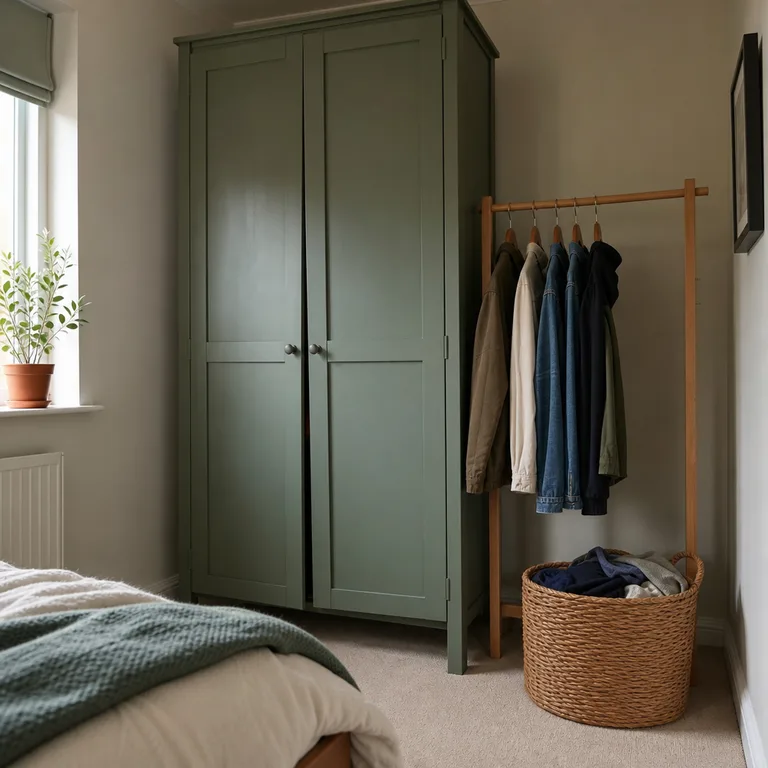
Closed doors give a bedroom a calmer backdrop and protect fabrics from dust, sunlight, and cooking odors drifting in from an open-plan home. A simple wardrobe can be paired with an inexpensive rail rather than requiring every item to fit inside one large cabinet.
Sort the wardrobe by season and use bins or bags to keep smaller categories contained. If the room is humid, avoid packing clothes away damp and leave some airflow around the unit to reduce musty odors.
Worth knowing: A large wardrobe uses significant floor space and can be difficult to move in narrow rental stairwells or hallways.
7.Add a Curtain Across an Open Rail
A curtain in front of an open rail softens the look of hanging clothes without requiring a built-in closet. It is especially useful when the rail sits in direct view of the bed or near an entry door.
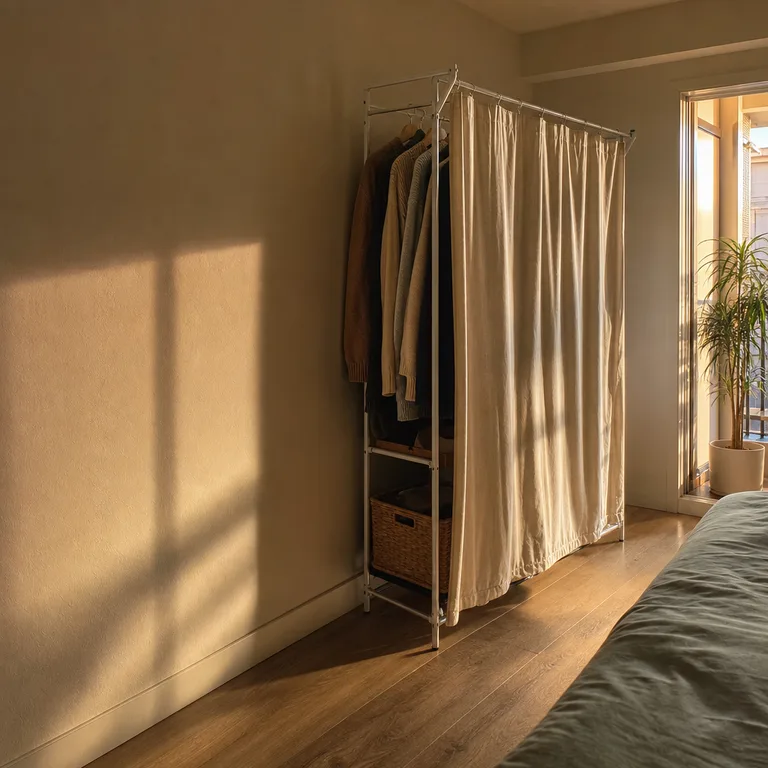
Use a freestanding frame or a tension-based setup where the room and lease allow it, then choose a washable curtain with enough fullness to cover the rail. Neutral cotton or linen-look panels can make the storage read more like part of the room than a utility rack.
The fabric also offers a modest barrier against dust from open windows, though it is not sealed storage. Keep a small gap for airflow and wash the curtain regularly in bedrooms near busy streets or in homes with shedding pets.
Worth knowing: A curtain hides clutter but does not solve overcrowding, and it adds another fabric surface to clean.
8.Use a Tall Open Rack Around a Low Drawer Unit
A tall open rack can frame a low drawer unit with shelving above and beside it, combining hanging space, folded storage, and bins in one compact footprint. Put the pieces on a short wall to make the vertical storage feel deliberate rather than looming over the whole room.
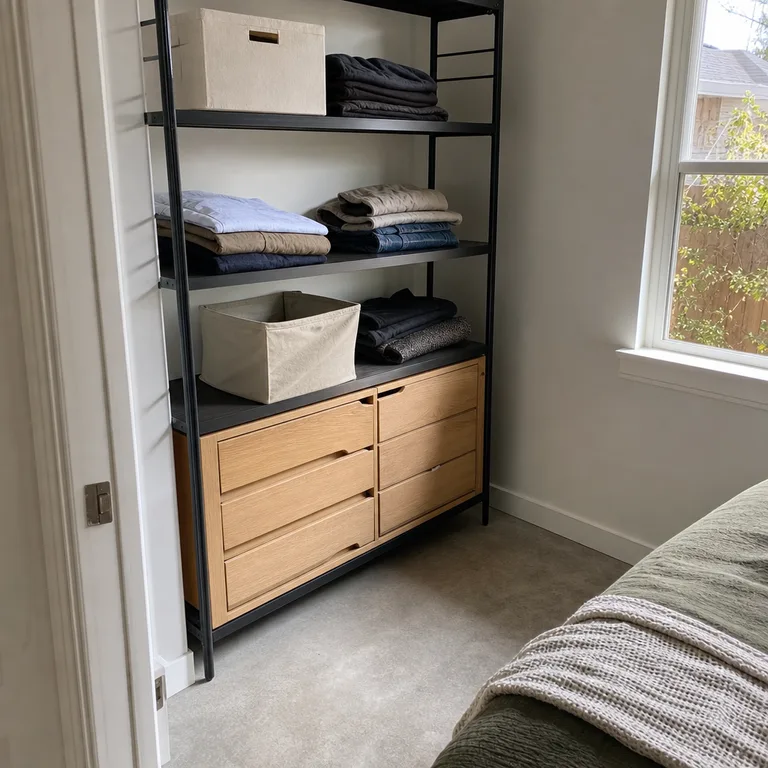
Keep daily clothes at arm height, with off-season items and spare linens on the upper shelves. This arrangement is affordable to build gradually: start with a basic drawer unit, then add open shelving or a rack as storage needs become clearer.
Use lidded bins for upper shelves so loose items do not create visual clutter. Because a tall open rack can be top-heavy, secure it to the wall and do not store heavy luggage or dense boxes overhead.
Worth knowing: Upper shelves are inconvenient for frequently used clothes and may be unsafe if heavy items are stored too high.
9.Put a Narrow Rail at the Foot of the Bed
A narrow rail at the foot of the bed works well for tomorrow's outfit, a small capsule wardrobe, or items that would otherwise end up on a chair. It creates a simple dressing spot without committing a whole wall to storage.
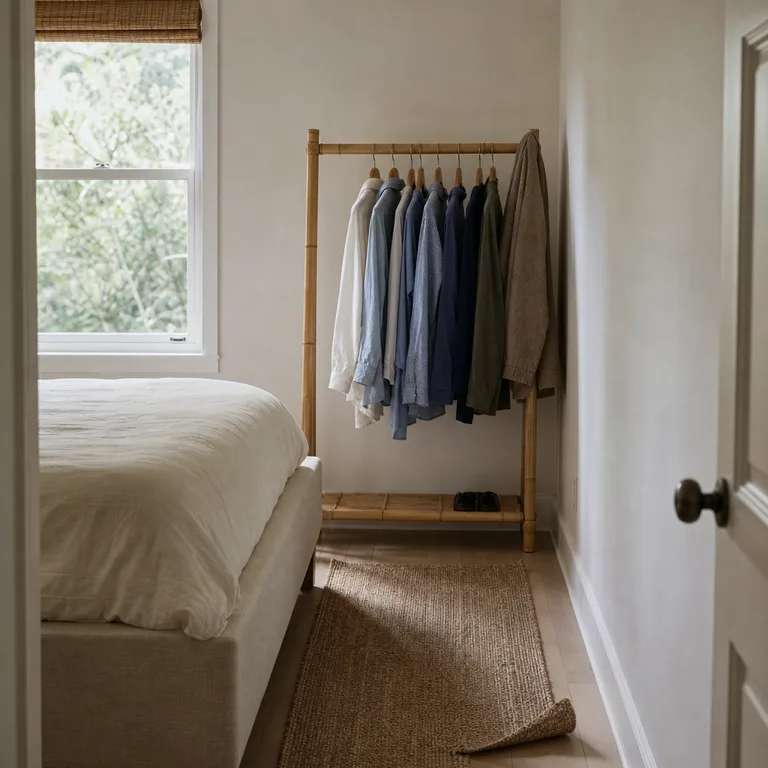
Choose a low-profile rail that does not visually block the bed, and add a tray or low basket underneath for shoes. Limiting it to a small rotation keeps the rail useful and prevents it from becoming a catch-all for clean and worn clothes.
Protect a clear route around both sides of the bed before settling on this layout. It is best in rooms with enough length beyond the mattress; a rail that forces sideways squeezing will become frustrating quickly.
Worth knowing: This setup provides only limited hanging storage and can obstruct the main walking path in a tight bedroom.
10.Pair a Dresser With Wall-Adjacent Peg Storage
A dresser handles folded clothes while nearby pegs catch robes, bags, hats, and the items that usually collect on a chair. Add a compact open rack beside the dresser only if more hanging space is needed.
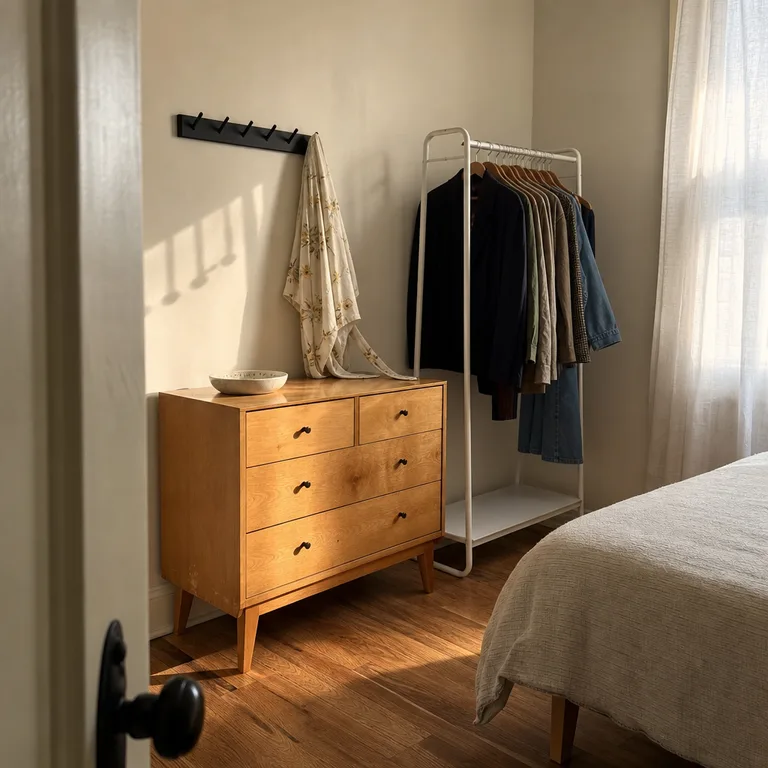
This combination keeps the visual weight low and gives small everyday items an assigned landing place. For renters, removable hooks or a rental-approved peg option can be more practical than installing a permanent rail, provided the wall surface and lease allow adhesive hardware.
Use the dresser top as a controlled drop zone with one tray for jewelry, keys, or pocket contents. Check adhesive weight limits carefully, and keep heavy bags off removable hooks to avoid damaged paint or falling hardware.
Worth knowing: Removable peg solutions have limited weight capacity and may not adhere reliably on textured, dusty, or humid walls.
About the author
Dana Ruiz, Senior editor
Dana writes about small-space living, storage and low-cost decorating.
Keep reading
10 Coffee Table Alternatives That Make a Small Living Room Easier to Use
September 25, 2026
10 Small-Yard Lawn Alternatives You Can Try One Patch at a Time
September 26, 2026
12 Budget Christmas Mantel Alternatives for Homes Without a Fireplace
September 26, 2026
10 Budget Patio Privacy Ideas for a Small Seating Area
September 25, 2026