9 Ways to Mix Wood Furniture Tones Without Buying a Matching Set
A living room can combine pale, medium, and dark wood without looking like a collection of accidental leftovers when each finish has a clear role in the room. Use daylight to compare undertones, then organize the pieces by visual weight, repeated details, and the space between them rather than trying to make every surface match.
As an Amazon Associate I earn from qualifying purchases.
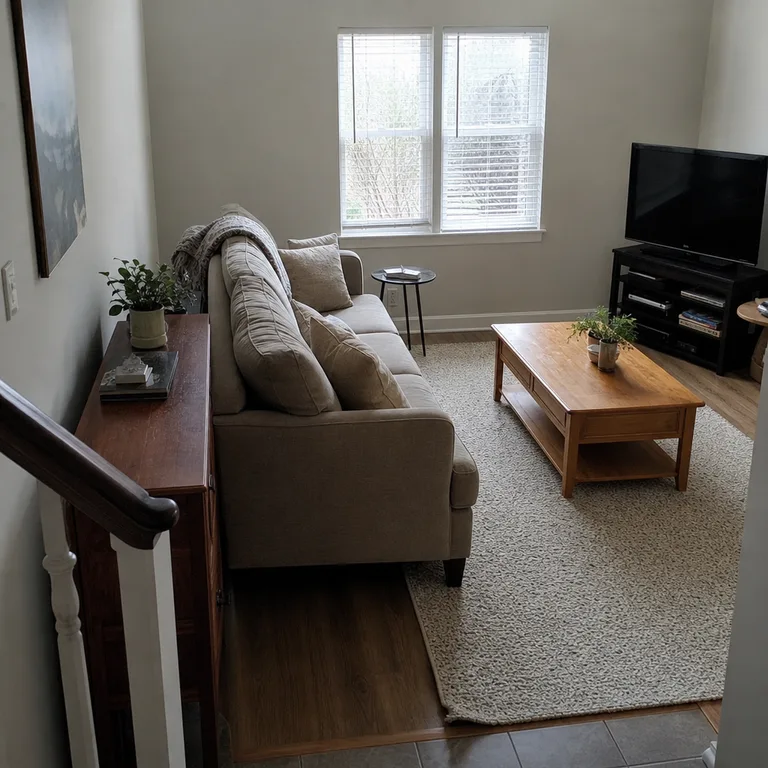
1.Choose One Wood Tone to Lead the Room
Start with the wood finish found on the largest piece or the pieces already used most often, such as a media unit, coffee table, or pair of bookcases. Let that tone occupy the most visual area so the room has a clear base instead of several finishes competing for attention.
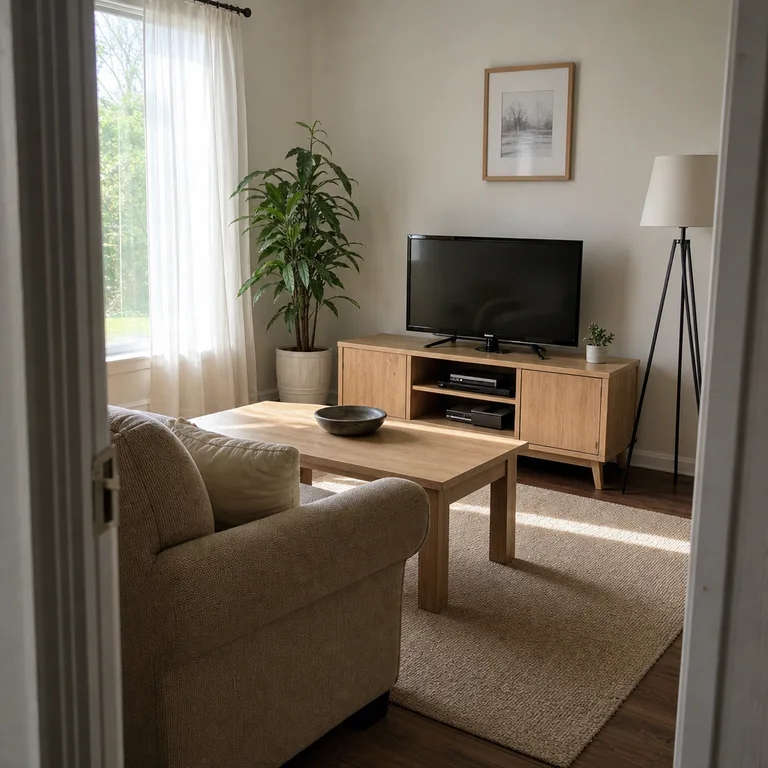
Keep the remaining woods in supporting roles. A dark side table beside pale oak furniture, for example, reads as an accent when the pale wood is repeated elsewhere; compare the pieces in daylight, since warm indoor bulbs can disguise undertones.
Worth knowing: This approach is harder in a small room where one very dark or strongly red-toned piece is also the largest item.
2.Repeat the Darkest Wood in Two or Three Places
A single dark walnut, espresso, or stained piece can feel heavy when it stands alone. Repeat that deepest tone in separated locations, such as a side table, picture frame, tray, or the legs of a lamp, to make it feel connected to the rest of the room.
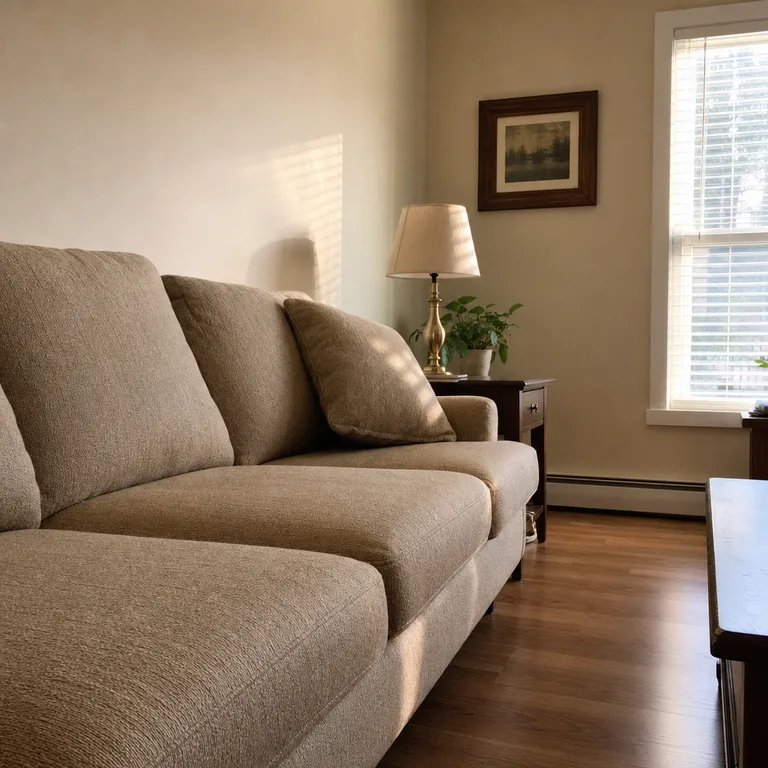
Use smaller repeats when the original dark furniture is substantial. This keeps the dark finish from taking over a light room while still giving the eye a reason to travel around the seating area.
Worth knowing: Too many dark repeats can make a room with limited daylight feel more enclosed, especially if the walls and upholstery are also deep in color.
3.Group Warm Wood Undertones Together
Honey pine, golden oak, teak-look finishes, and reddish brown wood often sit comfortably together because they share warm undertones. Place these pieces within the same zone, such as a reading corner or one side of the seating area, rather than scattering them randomly through the room.
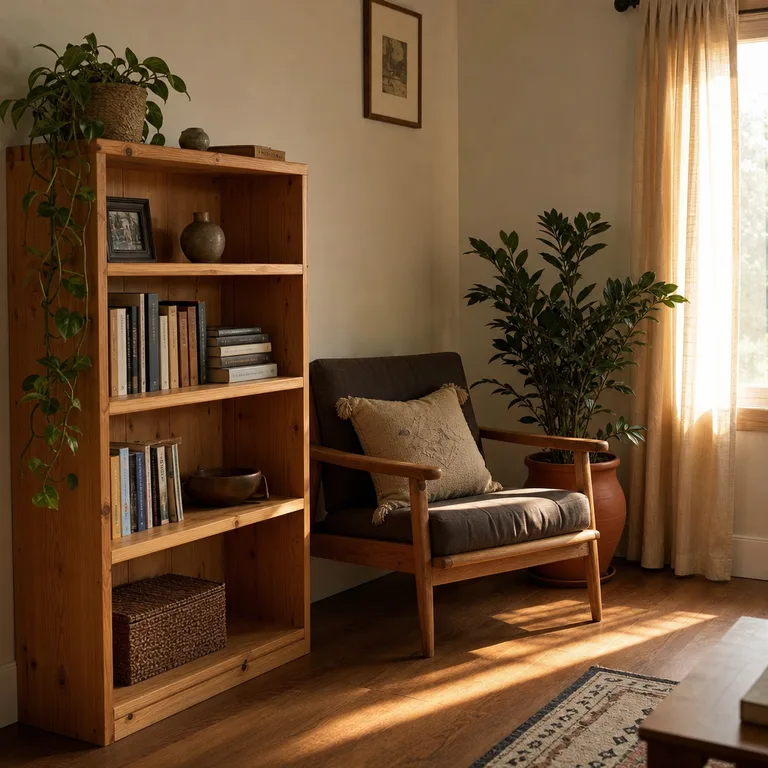
Cream upholstery, terracotta, warm beige, and aged brass can help the group look intentional without requiring new furniture. Check the colors near a window during the day, because direct sun can make a neutral wood appear more yellow than it does in ordinary room light.
Worth knowing: Warm woods can look overly orange when paired with strongly yellow walls or saturated golden flooring.
4.Balance Cool Wood with Neutral Surfaces
Gray-washed wood, ash, and cooler brown finishes need calmer neighbors when warm woods are also present. Off-white walls, charcoal fabric, black metal, and stone-like surfaces give cool furniture a place to sit without forcing it to match an orange-toned table or floor.
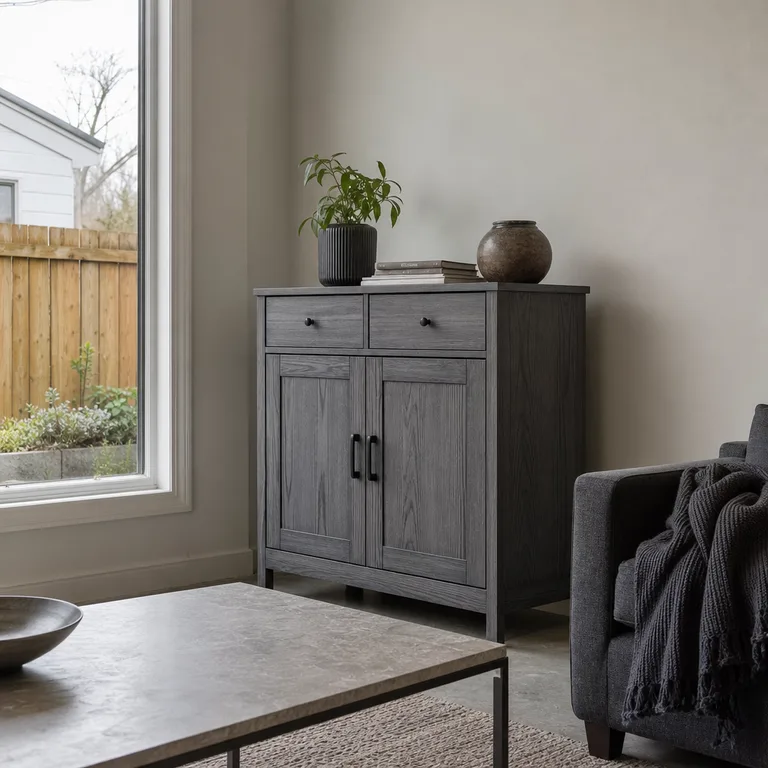
Keep the cool piece visually clean and avoid surrounding it with several different competing stains. A neutral rug or simple upholstered sofa can create enough separation for the finish to read as a deliberate contrast.
Worth knowing: Cool gray wood may still clash with very red-toned flooring, particularly in rooms with little natural light to soften the contrast.
5.Keep Similar but Competing Finishes Apart
Two medium woods can look more mismatched than pale and dark pieces when they are similar in depth but different in undertone. A red-brown console and a yellow-oak coffee table may fight when placed edge to edge, even though both are medium-toned.
Separate those pieces with a sofa, rug, open floor space, or a neutral upholstered chair. The gap gives each finish its own boundary, making the difference look planned rather than like an unsuccessful attempt at a match.
Worth knowing: This is less effective in a very compact living room where furniture must sit close together for practical circulation.
6.Bridge Different Woods with One Large Textile
A substantial rug, curtain treatment, or upholstered sofa can connect several wood finishes more quietly than another hard surface. Choose a neutral textile with shades that relate to the pale, medium, and dark pieces already in the room, rather than a pattern that introduces another dominant color.
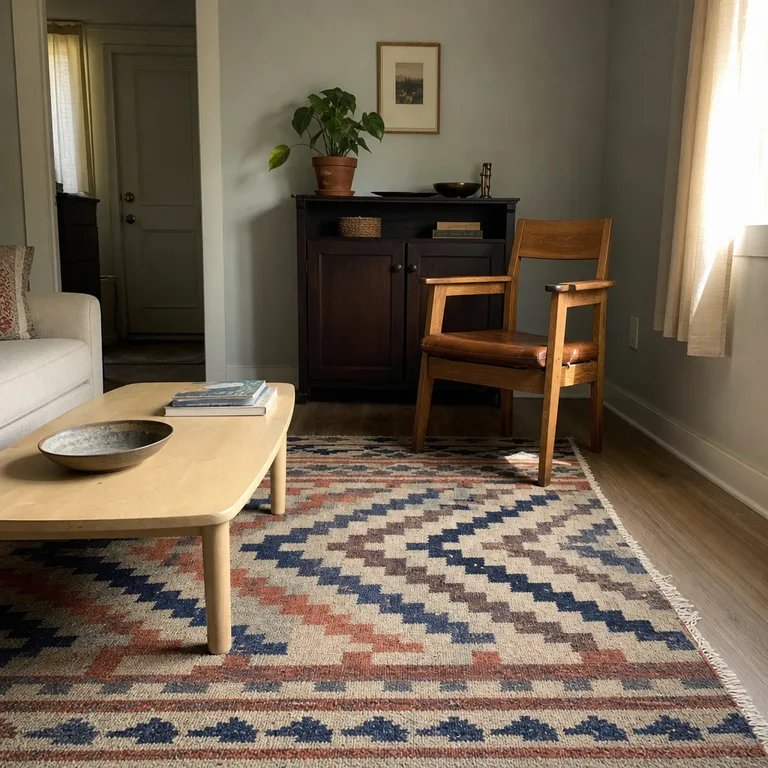
Place the textile where it touches or visually overlaps several furniture items. A rug beneath a pale coffee table, medium chair, and dark cabinet helps them read as one seating group while also softening the amount of exposed wood grain.
Worth knowing: A small accent rug or a busy pattern usually cannot do the same bridging work and may make mixed finishes feel busier.
7.Mix Fine and Bold Wood Grain at Different Scales
Wood tone is only part of the composition; grain pattern matters too. Pair a bold oak-grain coffee table or cabinet with quieter maple, birch, or painted supporting pieces so the most expressive grain has room to be noticed.
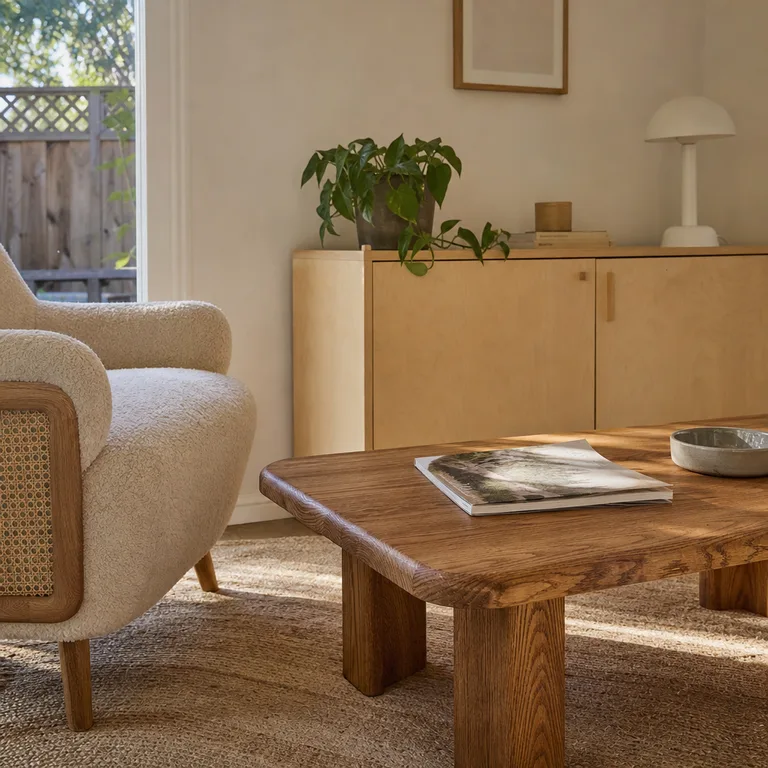
Avoid lining up multiple dramatic grain surfaces at the same eye level. Let one large surface carry the visual texture, then use simpler finishes for nearby storage, side tables, or frames.
Worth knowing: Veneers and laminates can vary noticeably between pieces, so inspect them in daylight before deciding that their grain patterns will work together.
8.Repeat One Hardware Finish Across Wood Pieces
A shared metal detail can give unrelated furniture a common thread. Matching visible knobs, pulls, curtain hardware, or lamp metal in one restrained finish helps different woods look assembled as a group rather than collected at random.
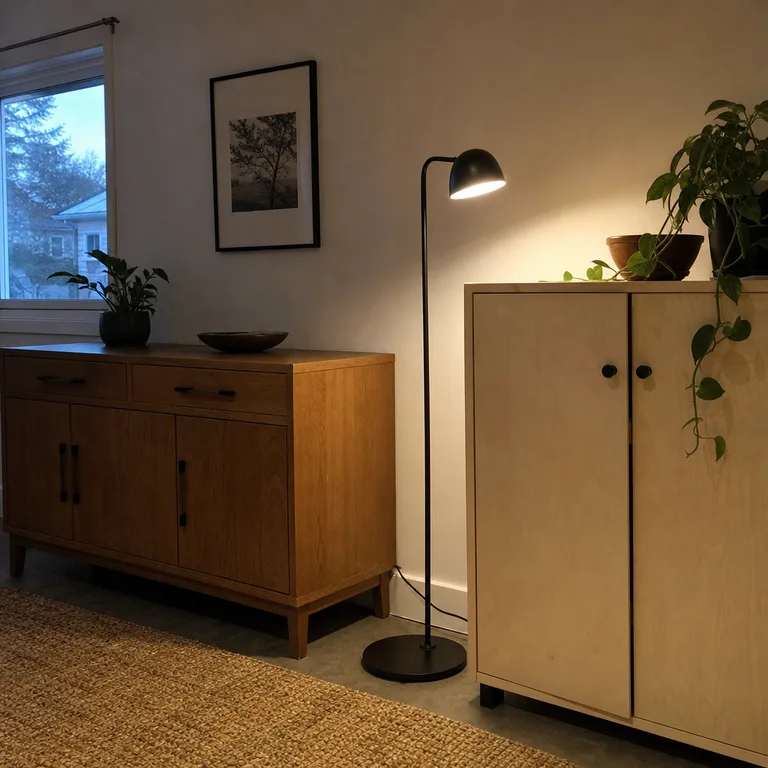
This works well for secondhand cabinets with replaceable hardware, but measure existing holes and check whether a piece can accept a change without damage. If a rental restriction or a fragile veneer makes alterations impractical, repeat the finish through a lamp, tray, or curtain rod instead.
Worth knowing: Hardware will not fully unify furniture with severely clashing undertones, so it works best as a finishing detail rather than the main solution.
9.Spread Dark Wood Around the Room
Do not place every dark wood piece along one wall. A dark media unit can be balanced by a smaller side table on the opposite side of the seating area and a dark frame or lamp detail elsewhere, which keeps the room from feeling pulled in one direction.
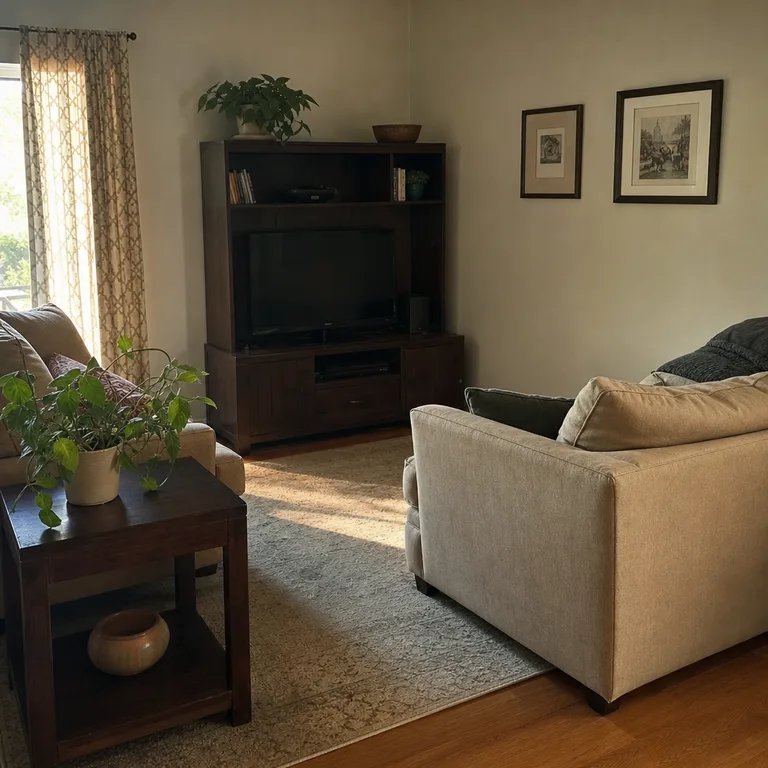
Use the smallest dark pieces for the farthest points of the room. This distributes visual weight without turning every corner into a dark zone, and it is especially useful when a large inherited cabinet cannot be moved or replaced.
Worth knowing: In an open-plan room, spreading dark pieces too widely can weaken the living-room zone instead of strengthening it; keep the repeats tied to the seating area.
About the author
Dana Ruiz, Senior editor
Dana writes about small-space living, storage and low-cost decorating.
Keep reading
8 Budget Interior Door Makeovers for Plain Flat Doors
October 29, 2026
10 Christmas Stocking Displays for Small Homes With No Mantel
October 29, 2026
8 Christmas Gift-Wrapping Stations That Pack Away in a Small Home
October 31, 2026
9 Kids' School Paper Organization Ideas That Separate Forms From Keepsakes
October 31, 2026