9 Easy Furniture Refreshes for Tired Pieces That Still Work
A tired-looking living room piece can often look more settled with cleaning, minor adjustments, and replaceable parts rather than a full makeover. These nine ideas focus on sound furniture and reversible changes, leaving painting as a separate project for another day.
As an Amazon Associate I earn from qualifying purchases.
1.Clean Each Surface With the Care Its Finish Needs
A wood table, laminate cabinet, and metal frame can all hold dust, skin oils, and everyday marks that make the whole piece look more worn than it is. Use the furniture maker’s care guidance and a gentle cleaner suited to the specific surface, working with a soft cloth rather than an abrasive pad.
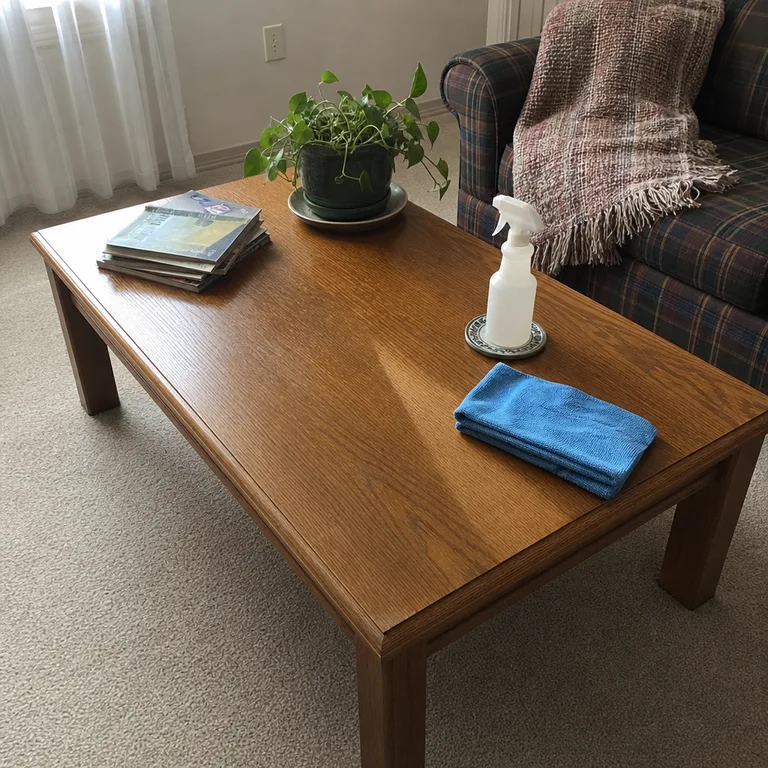
This is a low-commitment first step because it preserves the original finish instead of covering it. A veneer coffee table, for example, may look more even once residue is removed from the top and edges.
Stop if the finish is unknown, sticky, cracked, lifting, or reacting to cleaning.
Worth knowing: Gentle cleaning will not fix water damage, deep scratches, failing veneer, or a damaged finish.
2.Tighten Accessible Screws on Existing Hardware
A loose drawer pull can make a media console feel neglected even when the cabinet itself is sound. Open the drawer and gently tighten the accessible screws holding the pull in place, using a screwdriver that fits the screw head properly.
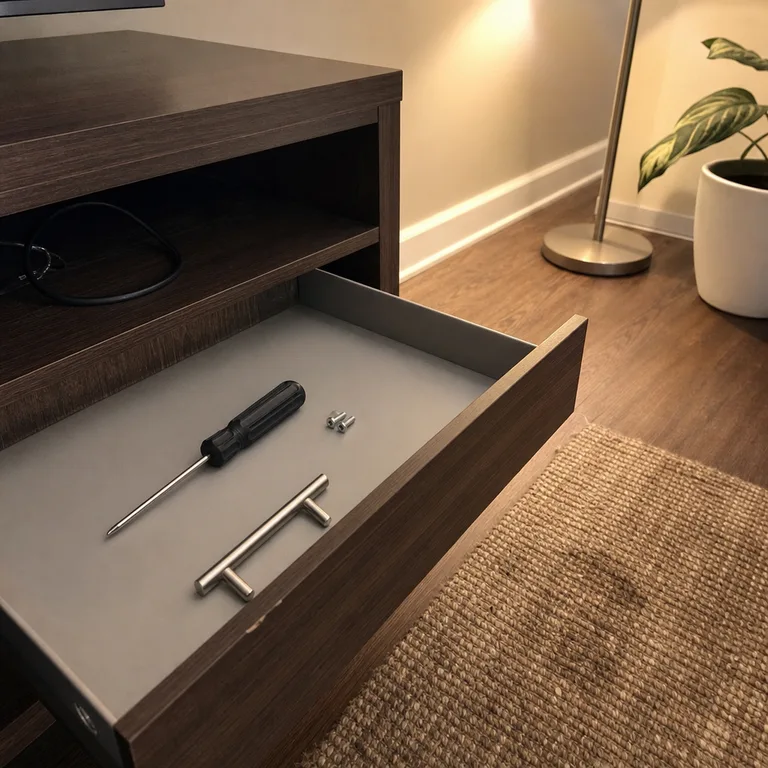
This small adjustment makes drawers easier to use and restores the tidy alignment of the existing hardware. Keep the original pull when it is still in good condition rather than replacing a full set for one loose piece.
Only tighten accessible manufacturer-installed hardware, and do not force a screw that spins, resists, or has stripped threads.
Worth knowing: A loose chair joint, cracked drawer front, or unstable frame needs more than a hardware adjustment.
3.Match One Missing Knob Instead of Replacing Every Pull
One missing cabinet knob can draw more attention than general wear. Match it to the remaining hardware by checking its mounting style, diameter, finish, and how far it projects from the door or drawer.
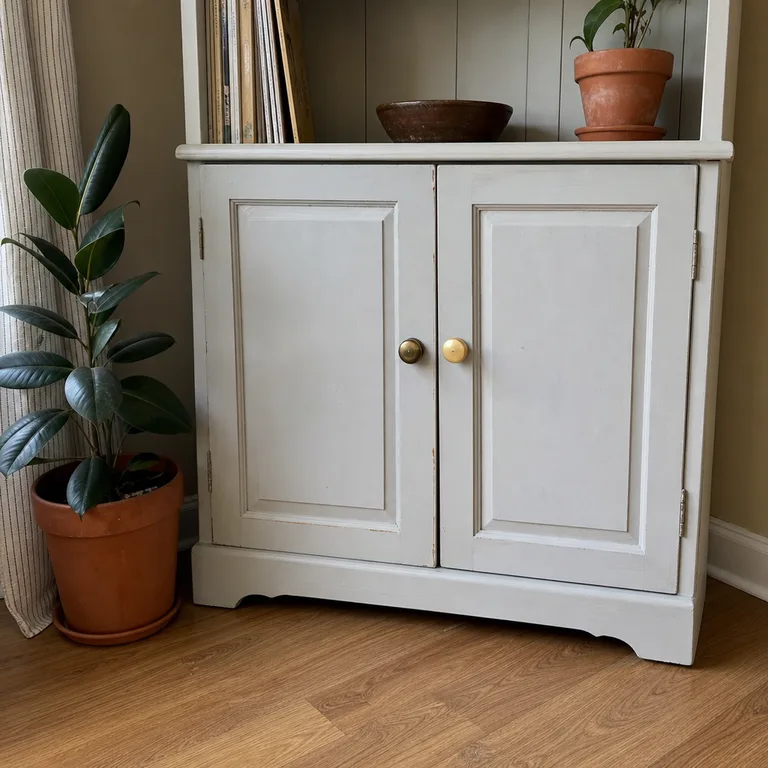
Keeping the existing knobs lets a painted storage cabinet retain its original character while solving an obvious gap. Bring an intact knob along when shopping if possible, or compare it carefully to product dimensions and photos.
Fit the new knob at the same height as the others and use the existing hole whenever the mounting is compatible.
Worth knowing: A close match may still show slight differences in aging, tarnish, or finish tone beside older hardware.
4.Level a Wobbling Table With Its Adjustable Feet
A side table with factory-installed threaded feet may wobble simply because the floor is uneven. On a stable floor, turn one adjustable foot in small increments until all legs sit firmly, checking the tabletop between adjustments.
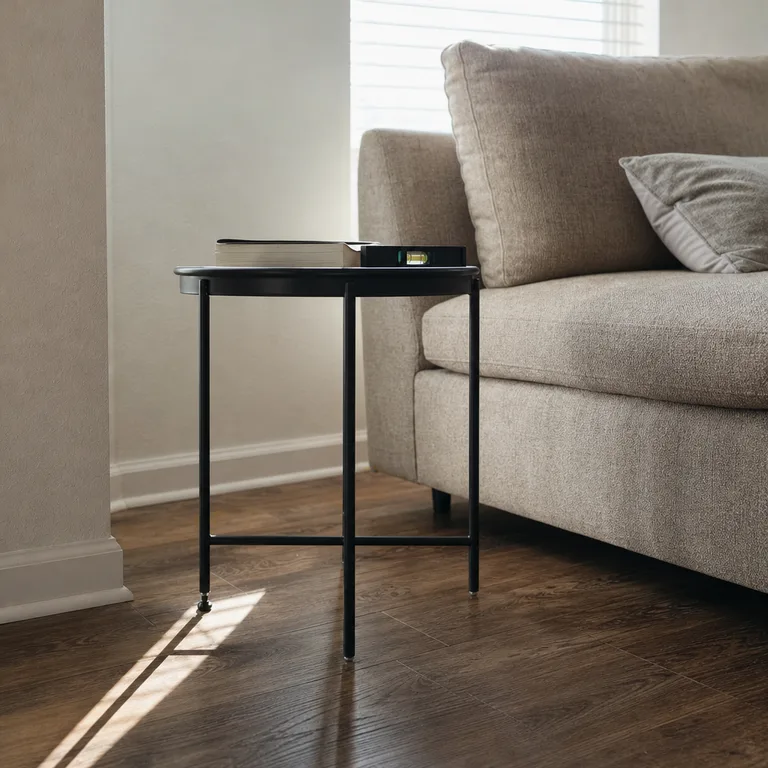
A level table feels more deliberate and is less likely to rattle when a book, lamp, or drink is set down. This works especially well for metal-frame pieces with visible adjustable feet and intact leg connections.
Follow the table’s instructions and use only the adjustment already built into the piece.
Worth knowing: Leveling feet cannot correct a warped top, bent leg, loose base, or furniture that is unsafe to use.
5.Replace Worn Glides That Drag Across the Floor
Worn felt pads and damaged glides can make a sound chair scrape, catch, or look careless against the floor. Remove only the old pad or glide and choose a replacement made for the existing leg shape and the flooring beneath it.
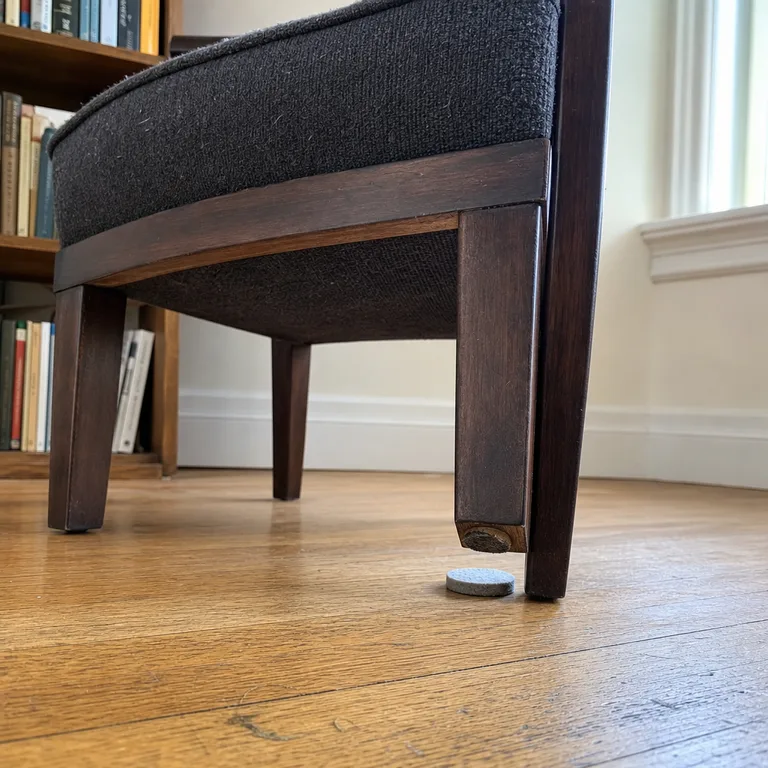
Fresh pads help a chair slide more smoothly and can reduce new scuffs on hardwood, vinyl, or laminate. For a square wood chair leg, use a glide that fully fits the contact area rather than a small pad that will peel away quickly.
Check the pads periodically, especially in homes where chairs are moved often or floors collect grit.
Worth knowing: Glides cannot make a damaged chair frame safe, and the wrong material can mark or slip on certain floor surfaces.
6.Give a Sound Cushion a Fresh Removable Cover
If a cushion still feels supportive, a removable cover can change its appearance without rebuilding upholstery. Measure the cushion carefully, including depth and thickness, then confirm where the zipper sits so the cover will fit and close correctly.
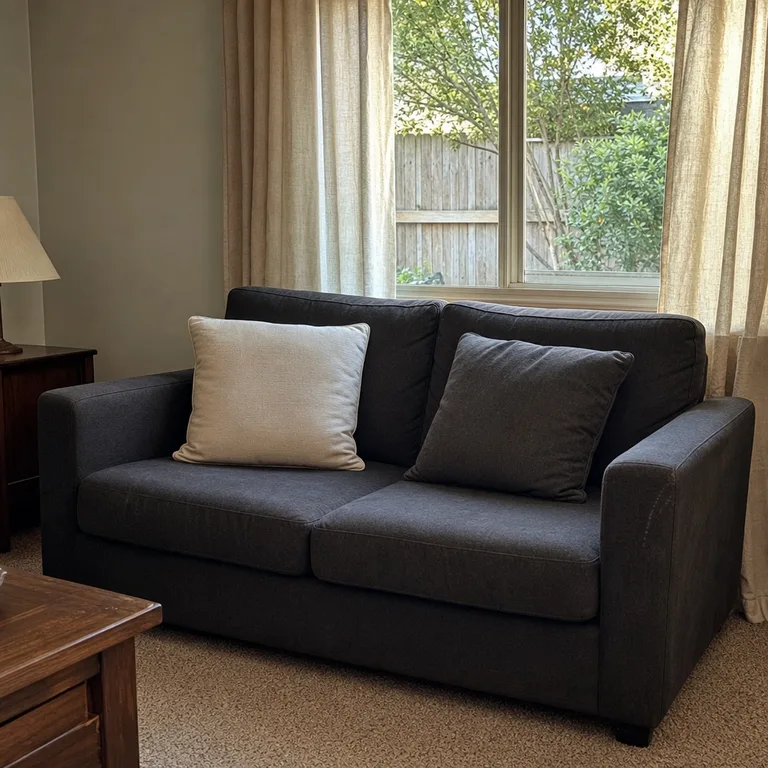
A washable oatmeal or neutral cover can soften a tired charcoal sofa while keeping the original cushion and filling in service. Choose a fabric with care requirements that suit the household, particularly if the sofa gets strong sun or frequent use.
Use a cover designed for removable cushions rather than forcing fabric over a fixed or damaged upholstered seat.
Worth knowing: A new cover will not correct flattened filling, sagging support, torn seams, or a cushion that no longer holds its shape.
Related: 12 Warm Neutral Living Room Ideas on a Budget
7.Line a Drawer With a Properly Fitted Removable Insert
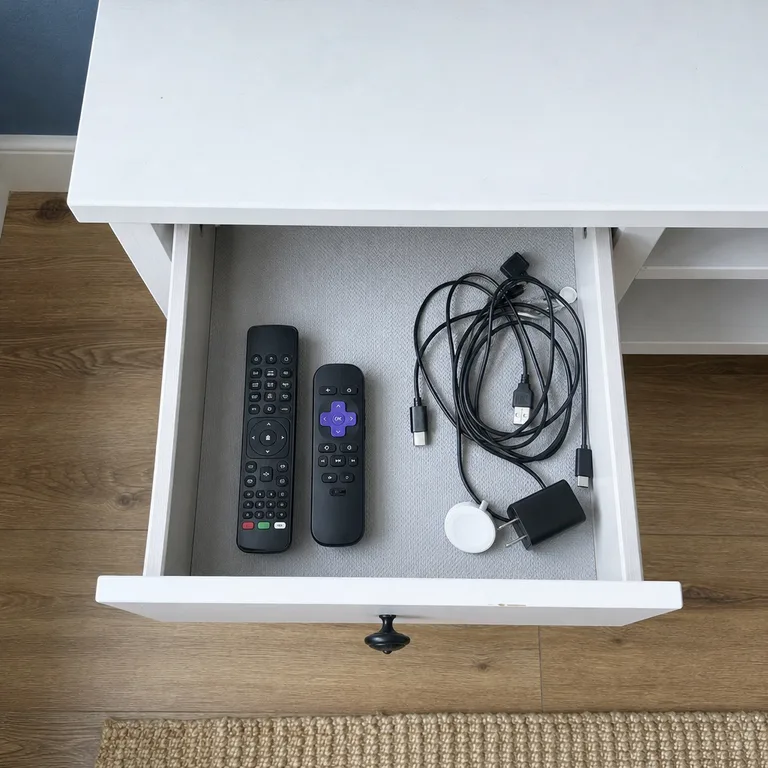
A clean non-adhesive liner gives a shallow drawer a more finished interior and helps remotes, cables, or small accessories stay in place. Cut the liner to the drawer base, keeping corners neat without folding material up the sides.
This is useful in a media cabinet where loose items tend to slide around each time the drawer opens. A pale liner also makes it easier to see what is stored inside without changing the cabinet permanently.
Test the drawer after fitting the liner to make sure it lies flat and does not interfere with the slides or closure.
Worth knowing: A liner will not resolve a sticking drawer, damaged drawer bottom, or misaligned slides.
8.Remove Loose Decorative Trim From a Slipcover
A removable tie, ruffle, or fringe can make a slipcovered chair feel dated or can catch on nearby furniture. If the trim is designed to detach, remove it without cutting the cover or altering the base seams.
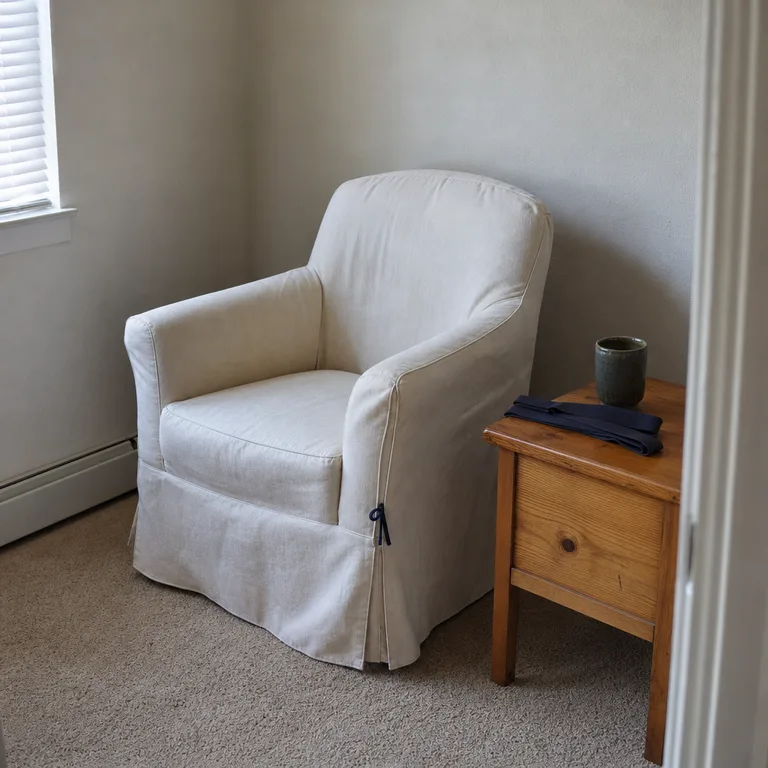
Setting aside a navy tie from a cream chair, for example, leaves a simpler outline while keeping the original detail available for another season or a future room. Store the trim in a labeled pouch with the cover’s care information so it does not get lost.
Keep the base cover intact for washing and for easy reversal in a rental or shared home.
Worth knowing: Do not remove sewn-on trim or cut fabric; permanent alterations can damage the slipcover and limit its fit.
9.Move a Removable Shelf to a More Useful Height
An adjustable bookcase shelf can be moved when the cabinet already has factory-drilled pin holes and the correct supports are present. Raising one shelf may create enough room for baskets below, while a lower position can make space for taller books or media.

This changes how the furniture works without drilling new holes or adding new materials. Keep shelf pins fully seated and distribute weight evenly so the bookcase remains orderly and the shelf does not bow.
Leave adequate clearance above stored items so they can be removed without scraping the shelf above.
Worth knowing: Do not alter fixed shelves, use missing or mismatched support hardware, or overload an adjustable shelf.
About the author
Dana Ruiz, Senior editor
Dana writes about small-space living, storage and low-cost decorating.
Keep reading
10 Easy Ways to Make Christmas Gift-Wrapping Look Coordinated
November 7, 2026
10 Budget Colorful Decorating Ideas to Wake Up a Beige Room
November 7, 2026
7 Easy Furniture Painting Projects to Refresh Your Home
November 7, 2026
8 Budget English Country Kitchen Ideas to Soften Existing Cabinets
November 7, 2026