8 Easy Ways to Decorate With Pattern Without a Busy Room
Pattern works best in a living room when the prints have different jobs: one leads, one supports, and solids give the eye a place to rest. These combinations help mixed existing textiles feel deliberate while leaving room for the practical limits of light, wear, and cleaning.
As an Amazon Associate I earn from qualifying purchases.
1.Pair a Large Floral With a Tiny Check
Give the large floral the leading role on curtains, an upholstered chair, or another surface that can carry visual weight. Add a small check on a cushion, lampshade, or small stool so the second pattern reads as texture rather than competition.
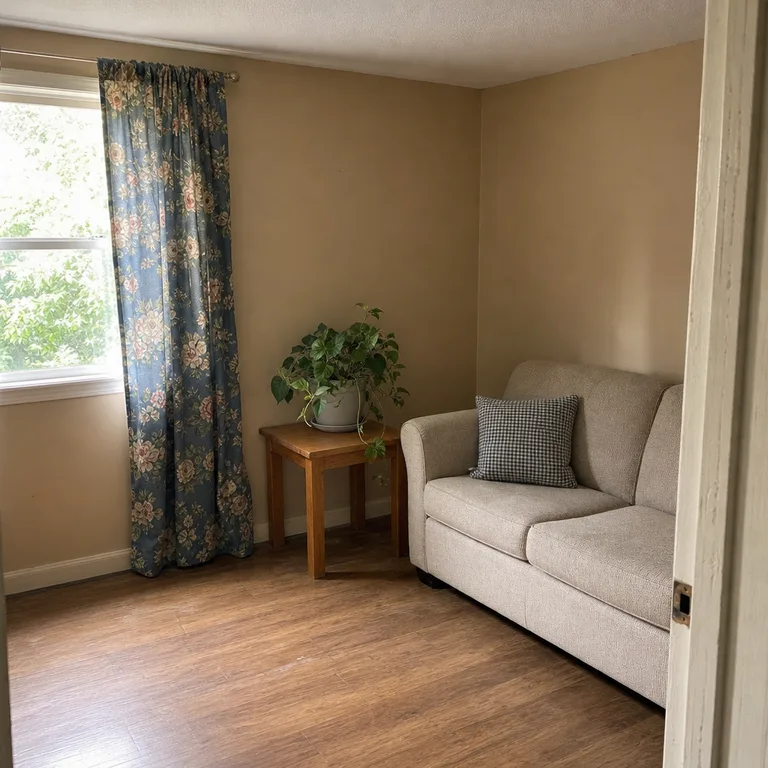
A shared color makes this pairing easier to pull together. A blue floral, for example, can sit with a cream-and-blue check, while plain upholstery and a wood side table keep the combination from spreading across the room.
Using pillow covers or a secondhand curtain panel is an affordable way to test the pairing without replacing larger furniture.
Worth knowing: Large florals can feel heavy in a dim room or a room with very little open wall and window space.
2.Balance a Straight Stripe With an Organic Print
Pair a tidy stripe with a looser botanical, leaf, or block-print pattern. The contrast between a straight line and an irregular shape gives each textile a distinct job, such as a striped rug under a sofa with botanical cushions above it.
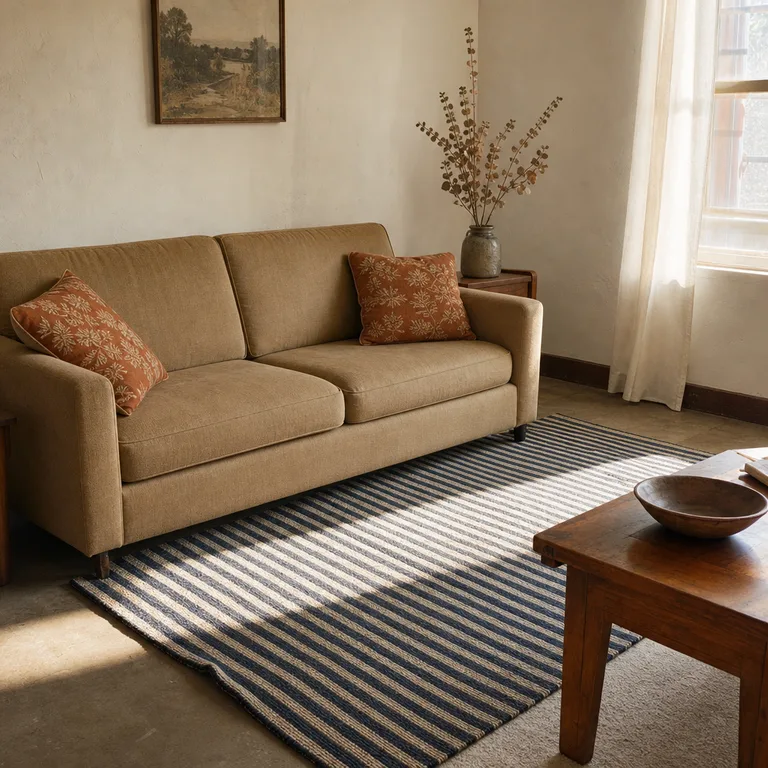
Keep the colors at a similar depth so the pair still feels connected. A navy-and-ivory stripe can work with rust or deep blue botanicals, especially when the sofa and walls stay plain.
Use removable cushion covers if the organic print is likely to need regular washing. A striped runner or smaller flatwoven rug can also add the linear pattern without covering the whole floor.
Worth knowing: Organic prints on a high-traffic floor can be harder to keep clean, particularly near an entry or where pets spend time.
Related: 12 Playful Striped Decor Ideas You Can Try on a Budget
3.Let One Multicolor Pattern Set the Palette
Start with one multicolor rug, quilt, or curtain that already contains several colors you like. Treat it as the room's reference point, then pull only two or three quieter colors from it for other textiles.
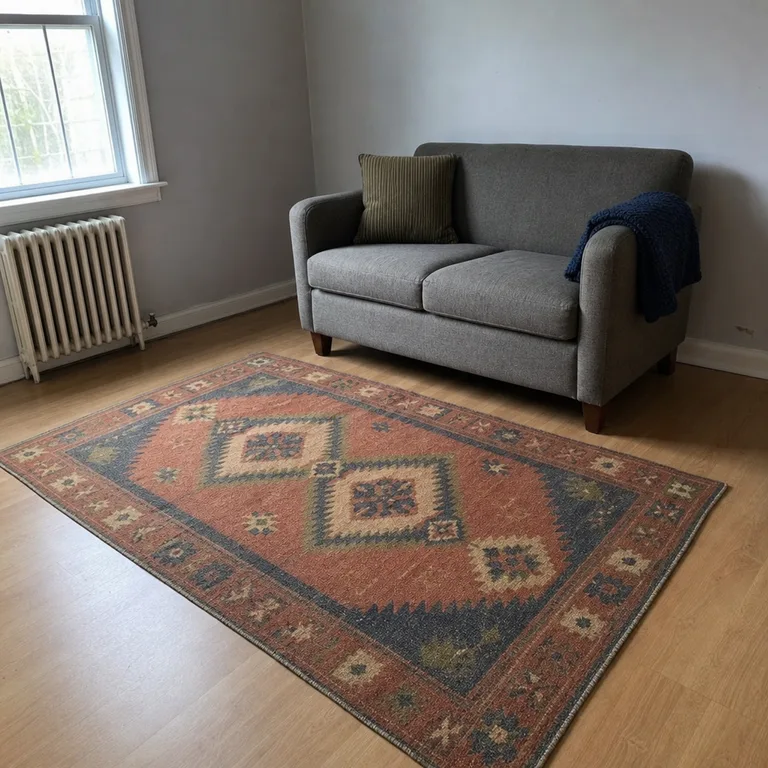
A faded terracotta, olive, and indigo rug, for example, can guide an olive pinstripe cushion and a solid indigo throw. This keeps the room from collecting several unrelated multicolor pieces that all demand attention.
Shopping from what is already in the room is often enough for this approach. Try moving a solid throw or pillow into the anchor pattern's color family before adding another print.
Worth knowing: This method is less effective when the multicolor anchor is mostly hidden under bulky furniture or obscured by clutter.
4.Keep Pattern Inside One Seating Zone
Concentrate the patterned rug, pillows, and throw around the sofa rather than distributing prints across every wall and surface. A defined seating zone can make an open-plan room feel organized while the kitchen, entry, and curtains remain quieter.
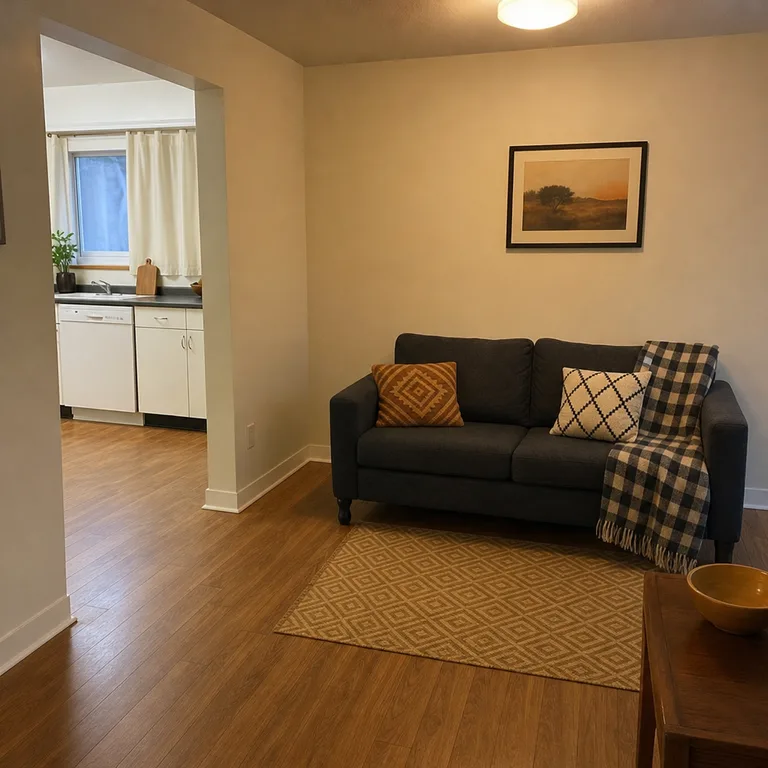
Try one rug, two patterned cushions, and one additional textile such as a checked throw. The surrounding plain finishes create visual breathing room and make the patterned area feel intentional.
This arrangement is especially useful when existing textiles do not all match perfectly. Keeping them within one zone creates a boundary without requiring new built-ins or permanent changes.
Worth knowing: A seating zone needs enough open floor around it to read clearly, so this can be difficult in a very crowded room.
5.Use Two Different Prints in One Color Family
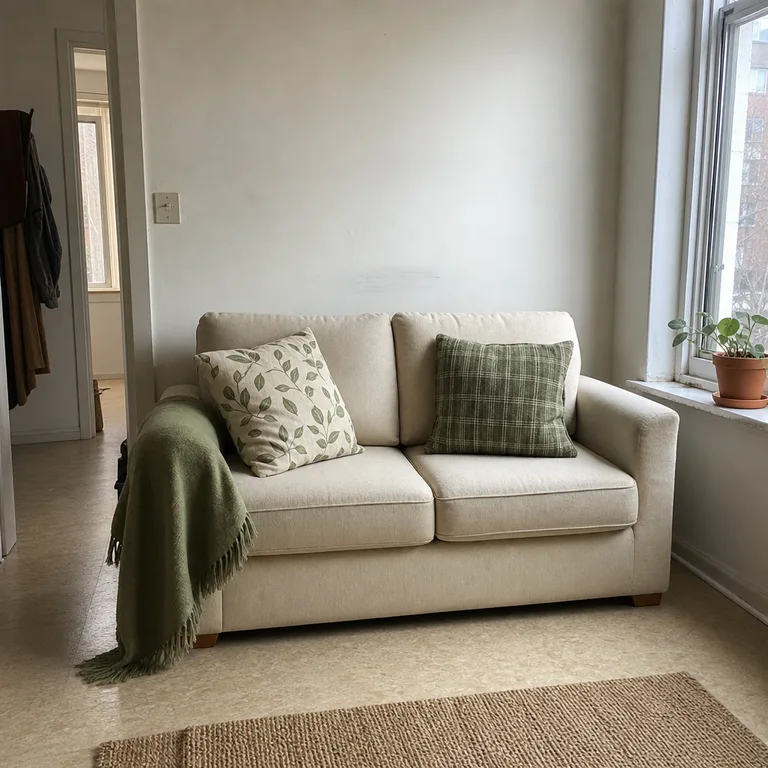
Choose patterns that share a color family instead of trying to find identical designs. A muted sage leaf print and a moss-green plaid can work together because the repeated green links them, even though the motifs are different.
Lay the two prints against the same sofa or bed to judge them in the room's actual light. Add a solid throw in a related shade to make the connection clearer and give the patterns a pause.
This is a useful way to combine inherited cushions or thrifted textiles. Covers are easier to swap than whole pillows, which makes it practical to adjust the balance over time.
Worth knowing: Warm and cool versions of the same color can still look disconnected, especially under cool daylight or mixed indoor lighting.
Related: 12 Sage Green and Brown Decorating Ideas That Feel Cozy
6.Separate Prints With a Solid Buffer
Place a solid cushion, throw, chair, or section of exposed upholstery between two patterned pieces. On a sofa, a cream cushion between a red block print and a blue stripe lets each print show up clearly instead of blending into a row of visual noise.
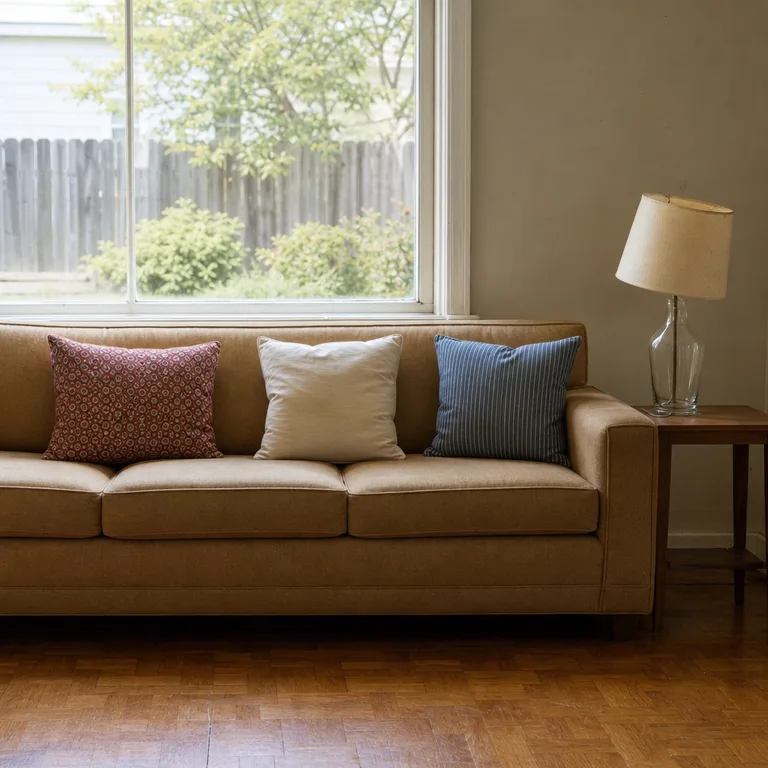
The solid buffer does not need to be plain white. Choose a color that appears in one or both patterns, then repeat it in a washable cover or simple throw.
This approach works well with textiles already on hand because it asks for spacing, not a matched collection. Rearranging three cushions may be enough to make mixed prints look more considered.
Worth knowing: The solid piece still needs enough contrast with the sofa or bed to act as a visible break between the prints.
7.Repeat One Motif at Two Scales
Use one motif in a larger and smaller version, such as large leaf-print curtains with a small leaf-print lumbar cushion. The shared shape creates a link, while the change in scale keeps the two pieces from looking like accidental duplicates.
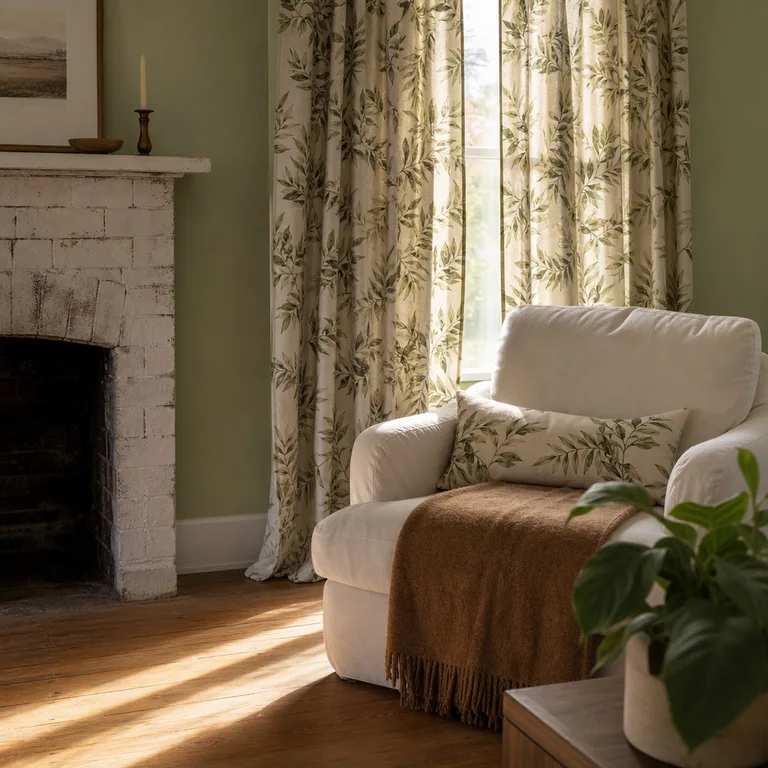
Keep the rest of the upholstery mostly solid so the repeated motif has room to register. A brown or cream throw can ground green leaf prints without introducing another shape into the mix.
For an affordable trial, use a small cushion cover that echoes an existing curtain or rug instead of replacing the larger textile. This gives a room a layered look while retaining its main anchor.
Worth knowing: The two versions should be noticeably different in scale; similarly sized repeats can look overly matched or visually flat.
8.Frame a Plain Center With Patterned Edges
Put pattern around the outside edges of a plain central surface. On a sofa, place patterned pillows at the outer ends and leave the middle cushion or seat area solid; on the floor, use a border rug around a more open center.
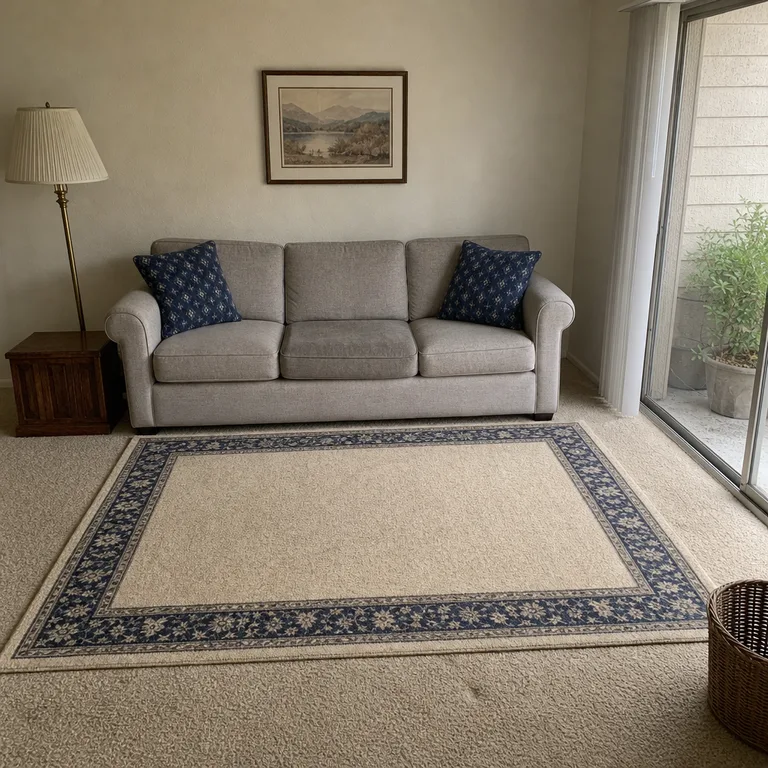
This arrangement keeps the eye moving around the room without filling every surface with activity. It can be particularly helpful in a small living room, where a plain center makes the seating area feel less crowded.
Use what is already there by moving patterned cushions outward and placing a solid pillow between them. A bordered rug can create the same perimeter effect while leaving a clear area for a coffee table or open walking path.
Worth knowing: Too many patterned pieces around a very small perimeter can still feel crowded, so limit the edge treatment to a few clear accents.
About the author
Dana Ruiz, Senior editor
Dana writes about small-space living, storage and low-cost decorating.
Keep reading
7 Budget Ways to Give a Small Home a Vintage Christmas Look
November 8, 2026
10 Easy Ways to Make Christmas Gift-Wrapping Look Coordinated
November 7, 2026
9 Easy Furniture Refreshes for Tired Pieces That Still Work
November 7, 2026
10 Budget Colorful Decorating Ideas to Wake Up a Beige Room
November 7, 2026