8 Ways to Decorate Around a Wall Air Conditioner Without Covering It
A wall air conditioner can stay fully visible and still feel connected to the living room when nearby color, scale, and placement give it a role in the composition. Keep the manufacturer’s required airflow, clearance, and service access open at all times; these ideas work around the unit rather than covering, painting, boxing in, or hanging anything from it.
As an Amazon Associate I earn from qualifying purchases.
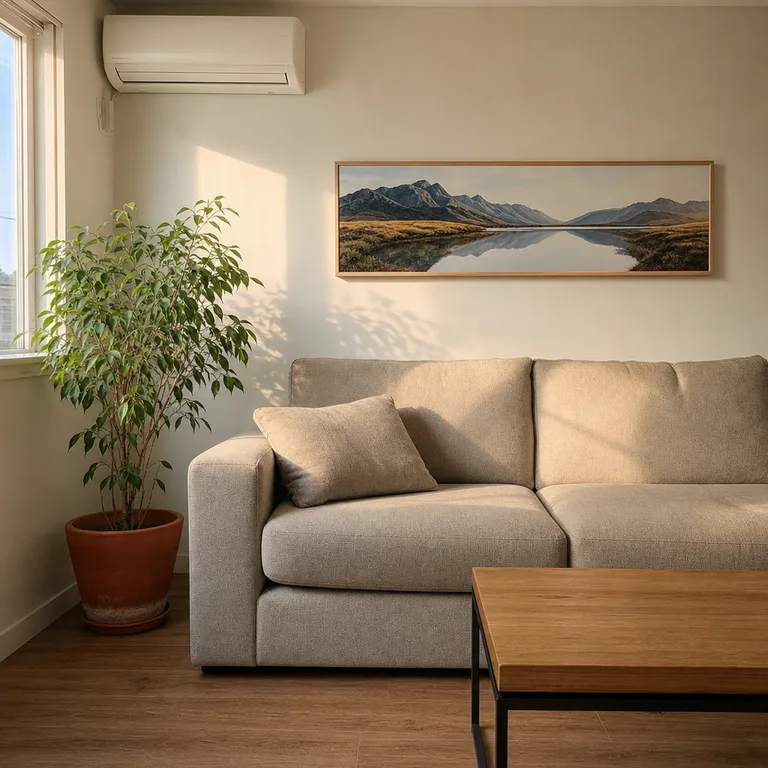
1.Repeat the Unit’s Color in One Nearby Frame
Choose one frame that picks up a casing color already in the room, such as white, black, gray, or a soft metallic neutral. Hang it on an adjacent clear section of wall, never over the appliance or where it could interfere with access.
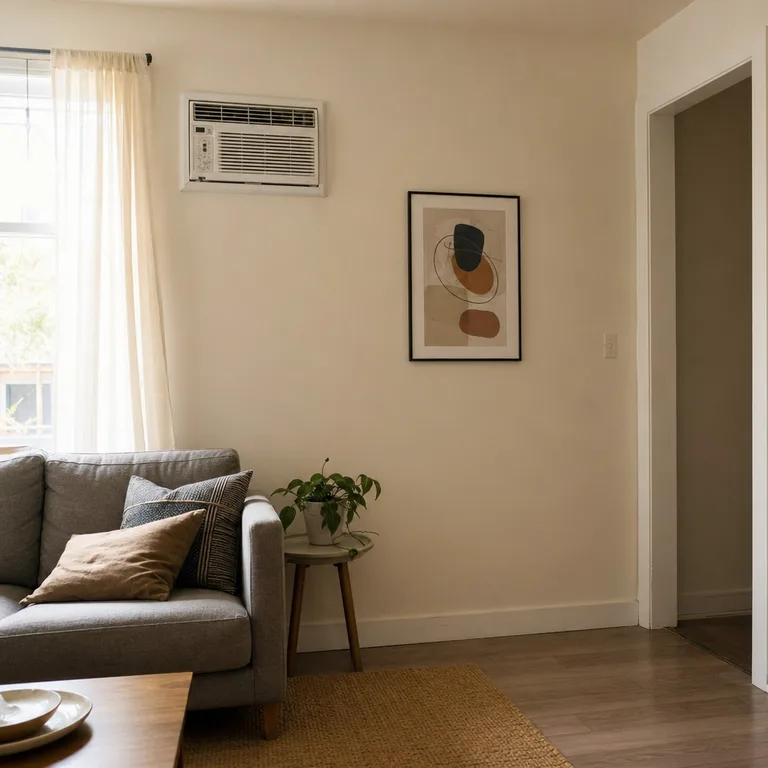
That small repeat makes the unit look less like an isolated rectangle because its color appears elsewhere on purpose. Reuse a frame with a new print, mat, or painted backing board instead of building a larger gallery around the unit.
Worth knowing: A very small frame can make a large or high-mounted unit look more prominent, so use a size that holds its own without crowding the wall.
Related: 10 Large Wall Art Ideas That Start With Affordable Materials
2.Balance the Unit With Art on the Opposite Side
Put a larger artwork, or a compact pair of matching frames, on the opposite side of the wall from the air conditioner. Keep open space around both sides so the arrangement reads as balanced rather than packed in.
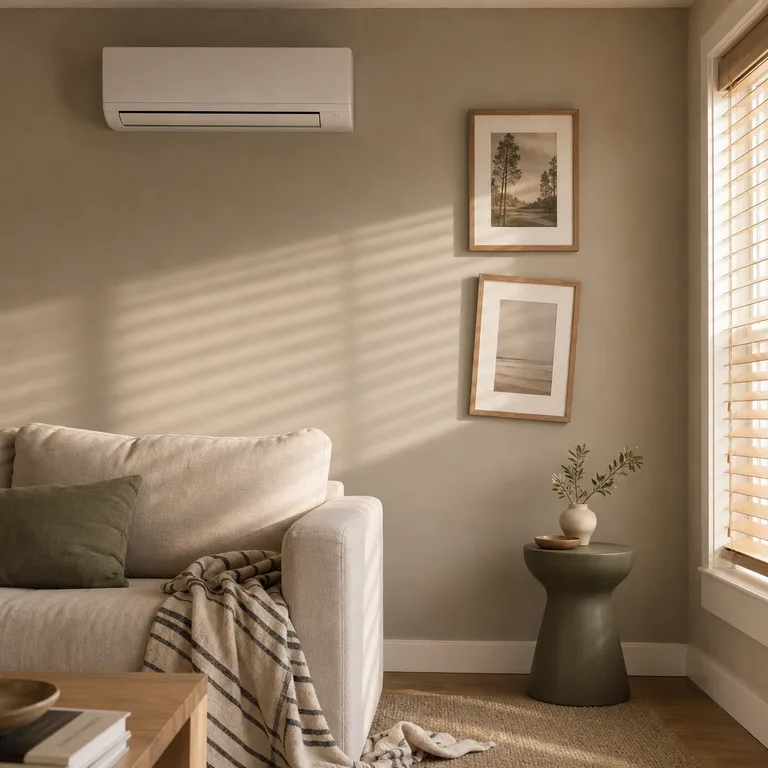
The art gives the eye another destination, which reduces the appliance’s visual dominance without trying to hide it. Secondhand frames, printable art, or a framed textile can create this counterweight with little installation work.
Worth knowing: This approach needs enough uninterrupted wall width; on a narrow wall, extra art may make the unit feel more crowded.
3.Use a Limited Wall Palette
Carry the neutral of the air conditioner into nearby curtains, pillows, wall paint, or a rug. A restrained mix of light neutrals with one darker accent helps white, gray, or black plastic casing blend into the room’s larger color plan.
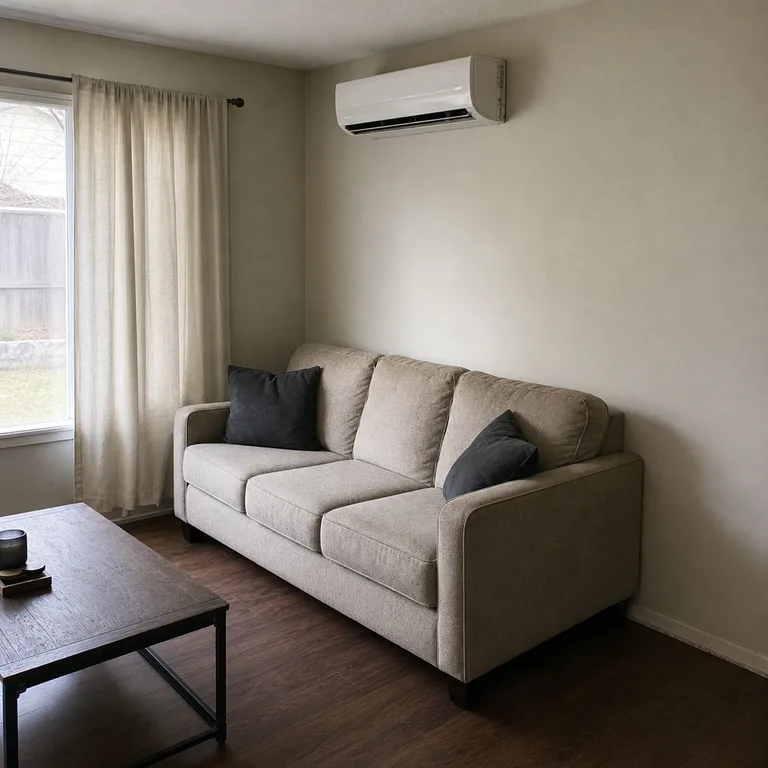
Start with textiles and removable accents if painting is not allowed in the rental. If a landlord permits paint, choose a wall color that does not create a sharp contrast around the unit, while keeping all vents and controls untouched.
Worth knowing: Light neutrals can show marks near a frequently used unit, particularly in rooms with children, pets, or heavy seasonal use.
Related: 10 Budget Curtain Ideas That Make Windows Feel More Finished
4.Place a Low Console Below, Outside Required Clearances
A low, shallow console can anchor the wall beneath a unit when it sits outside every clearance listed in that model’s manual. Leave the front, vents, controls, and any service route fully open, and do not use the console to support or surround the appliance.
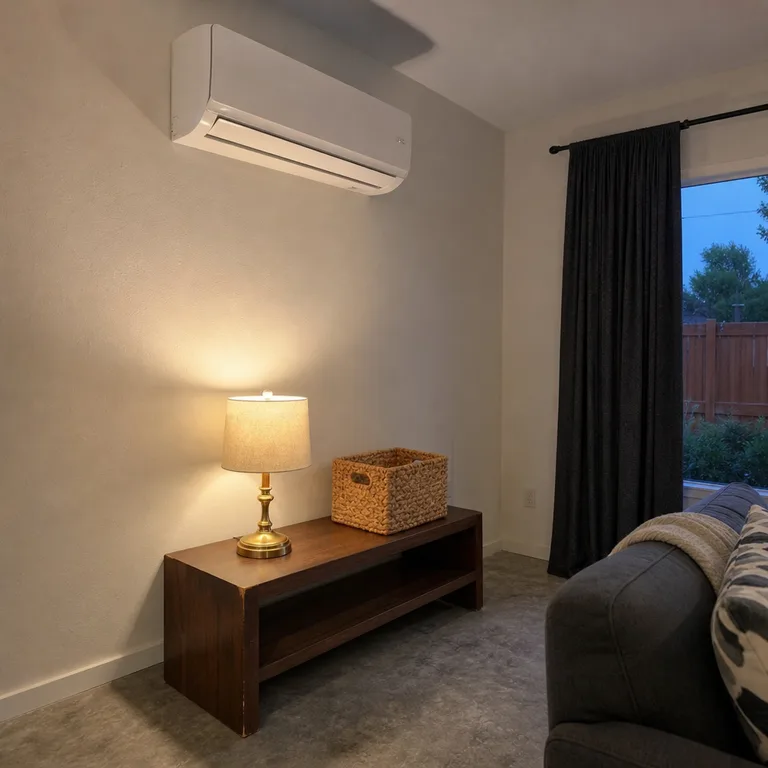
A lamp, basket, or a few books on the console adds a grounded layer below the hard plastic box. A reused sideboard, narrow bench, or simple secondhand table can work if its depth does not block circulation in a small room.
Worth knowing: Some units need more open space than the wall layout allows, so a console is not suitable unless the manual confirms safe placement.
5.Echo the Unit’s Horizontal Shape
Use one long, low visual element on an open nearby wall, such as a landscape print or horizontal mirror. Its shape quietly repeats the air conditioner’s proportions without putting anything on, above, or directly against the unit.
The repeated line makes the appliance feel like one part of a broader composition. A panoramic print in an existing frame, or a thrifted mirror with a simple finish, is often enough to establish the connection.
Worth knowing: Mirrors can bounce direct sun into a seating area and may create glare, so check the room’s daylight before choosing one.
6.Add Softness With Curtains and Throws Elsewhere
Add fabric at the window and seating area rather than near the air conditioner. Curtains, a throw, and textured pillow covers soften the room’s hard surfaces while staying well clear of the unit’s intake and discharge areas.
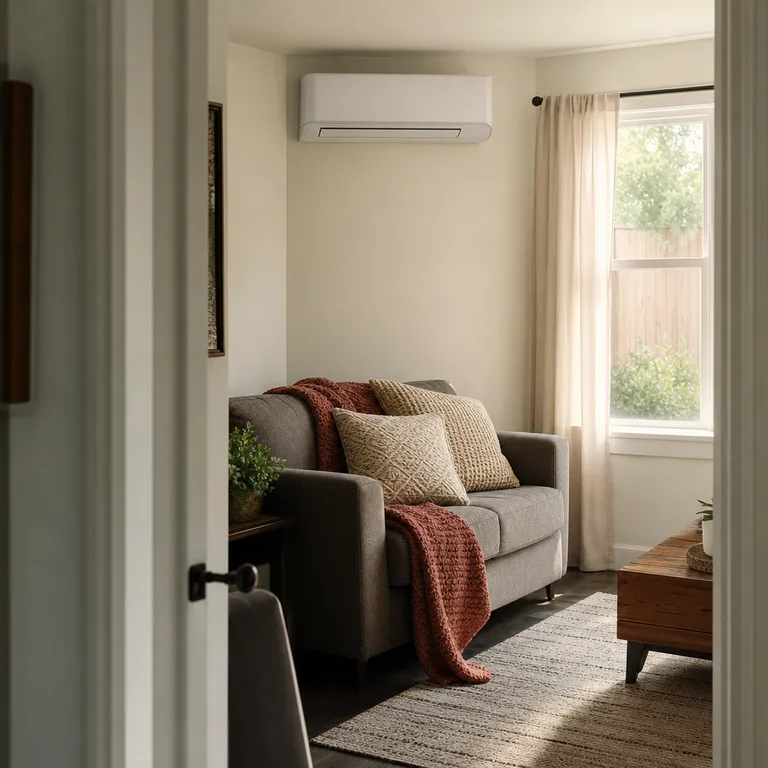
Use curtain holdbacks or a rod placement that keeps panels from drifting toward the appliance. Washable cotton or durable woven fabrics are practical near windows where sunlight, condensation, and dust can be part of regular maintenance.
Worth knowing: Curtains can fade in strong sun and must remain secured away from the unit whenever it is running.
7.Set a Plant Away From the Airflow Path
Place a floor plant or tabletop plant to one side of the air conditioner, beyond the manual-specified clearance and outside its direct airflow. The leaves introduce a vertical, organic shape that softens the appliance’s straight edges.
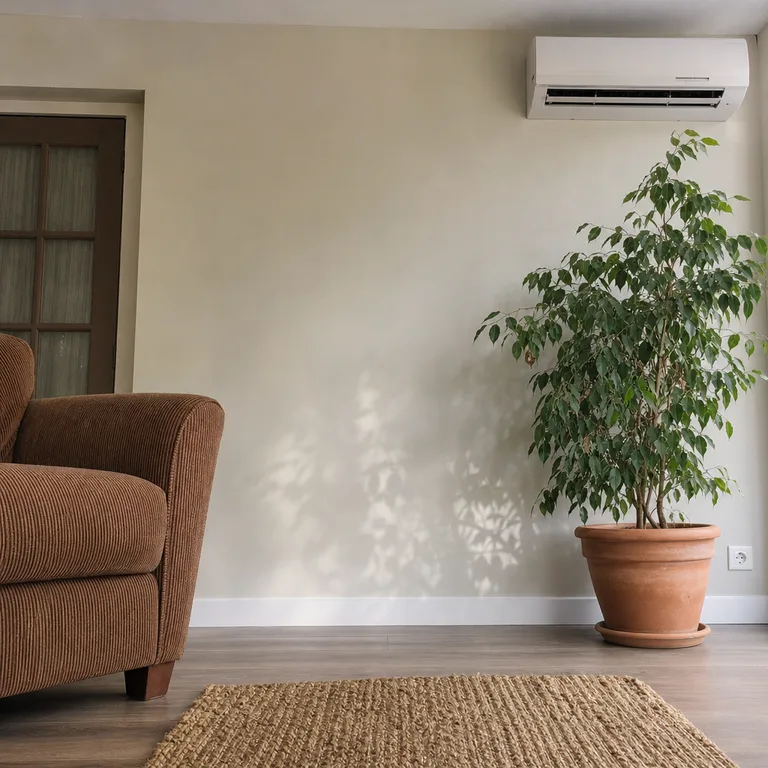
Use a plant already suited to the room’s actual light instead of choosing only for its look. A simple pot, saucer, or basket cover can tie its color to the rest of the room, but use a waterproof barrier to protect floors and furniture from watering spills.
Worth knowing: Air from the unit can dry soil quickly or stress foliage, and some rooms do not have enough natural light for a live plant.
8.Leave Open Wall Space Around the Unit
Treat empty wall space as part of the arrangement. Keep nearby decor selective so the appliance has visual breathing room as well as the functional clearance required for airflow and service.
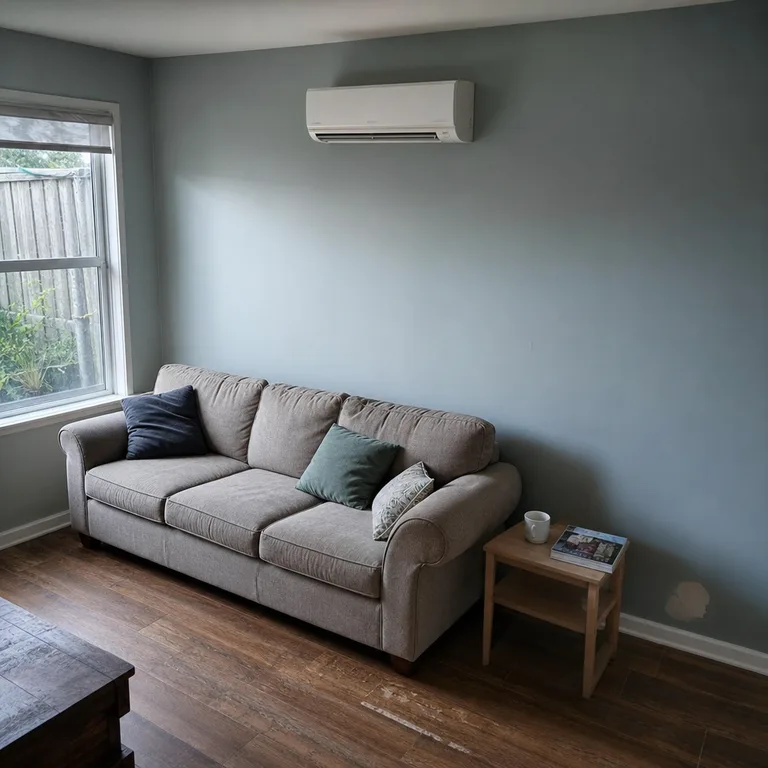
One modest piece of furniture below the unit or one artwork off to the side is often more effective than a dense cluster of objects. This approach costs little because it relies on editing, repositioning, and letting the wall remain calm.
Worth knowing: Deliberate open space can feel sparse in a very large room, where the unit may still need a balanced piece of art or furniture elsewhere on the wall.
About the author
Dana Ruiz, Senior editor
Dana writes about small-space living, storage and low-cost decorating.
Keep reading
8 Budget Interior Door Makeovers for Plain Flat Doors
October 29, 2026
10 Christmas Stocking Displays for Small Homes With No Mantel
October 29, 2026
8 Christmas Gift-Wrapping Stations That Pack Away in a Small Home
October 31, 2026
9 Kids' School Paper Organization Ideas That Separate Forms From Keepsakes
October 31, 2026