8 Privacy Ideas for Kids Sharing a Small Bedroom
A shared bedroom can feel more private without moving two twin beds or closing either child into a separate nook. These ideas use partial visual breaks, dedicated surfaces, and clear personal boundaries while keeping the route through the room, airflow, and adult supervision open.
As an Amazon Associate I earn from qualifying purchases.
1.Hang a Partial Ceiling-Track Curtain Between the Beds
A slim ceiling track with a curtain pulled across part of the room can stop the direct view from one bed to the other. Keep the panel as a visual break rather than a wall: it should leave a clear walking route and plenty of open space above and below for air to circulate.
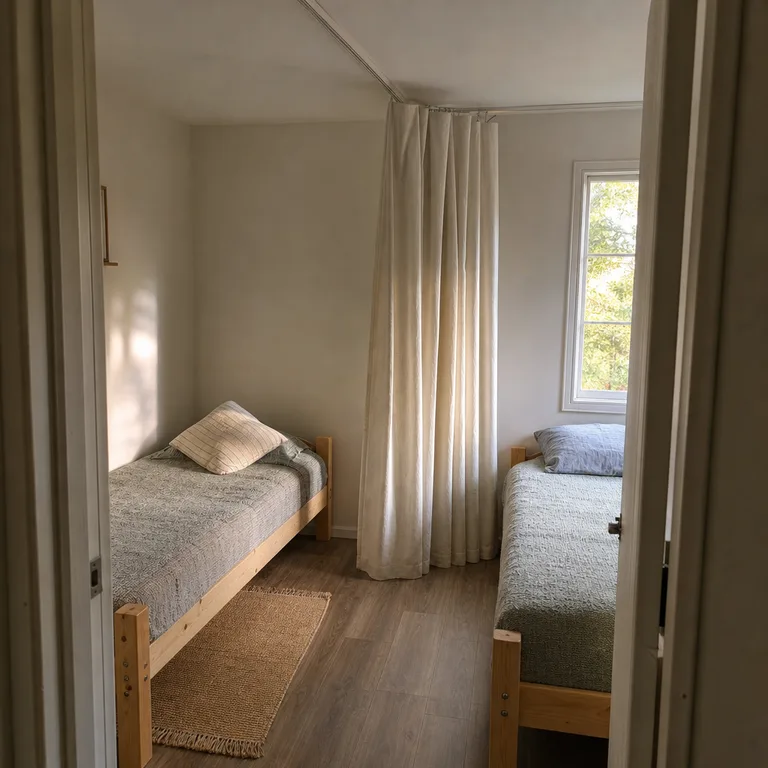
Use a plain cotton panel, an existing curtain, or a secondhand pair cut to a useful width. Mount the track into suitable ceiling framing or use hardware rated for the ceiling type, and make sure the curtain can be opened easily by an adult and the children.
This works especially well when the beds face each other or one child can see straight into the other child’s sleep area. A curtain is also easy to pull back during the day so the room does not feel divided all the time.
Worth knowing: A ceiling track can be difficult to install in plaster, concrete, or ceilings without secure framing, and the curtain should never create an enclosed sleep space.
Related: 12 Studio Apartment Divider Ideas Without Building a Wall
2.Use an Anchored Open Bookcase as a Low Divider
Place a low, open-back bookcase perpendicular to a wall to mark where one child’s area ends and the other begins. The shelves interrupt a direct sightline while leaving the room visibly connected and giving both children a place for books, soft storage bins, and bedtime items.
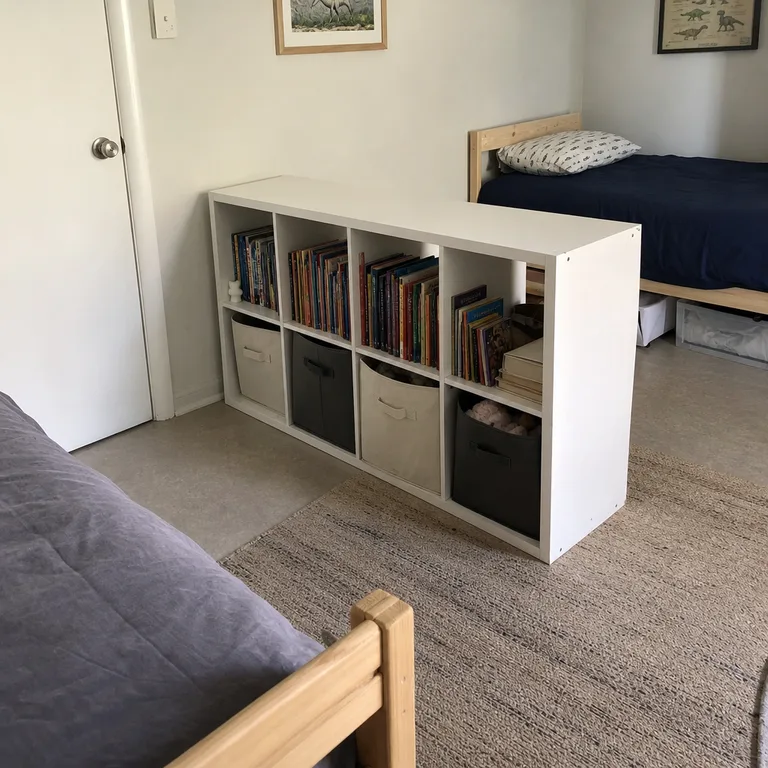
Reuse a sturdy bookcase that is already the right height, or choose a simple open unit rather than a tall, heavy divider. Anchor it to the wall according to the manufacturer’s instructions, keep heavy items on low shelves, and leave the top clear so it does not become a climbing surface.
Give each child a few assigned cubbies instead of dividing every shelf exactly in half. That small piece of ownership can make the boundary feel more meaningful without adding more furniture.
Worth knowing: A bookcase only works where it can be securely anchored and positioned away from beds or other furniture that could make climbing easier.
3.Add Fixed Open Slats Near the Foot of One Bed
A short fixed partition of open vertical slats near the foot of a bed can break the strongest sightline without cutting the room in two. The gaps let daylight and air move through, and an adult can still see across the room when needed.
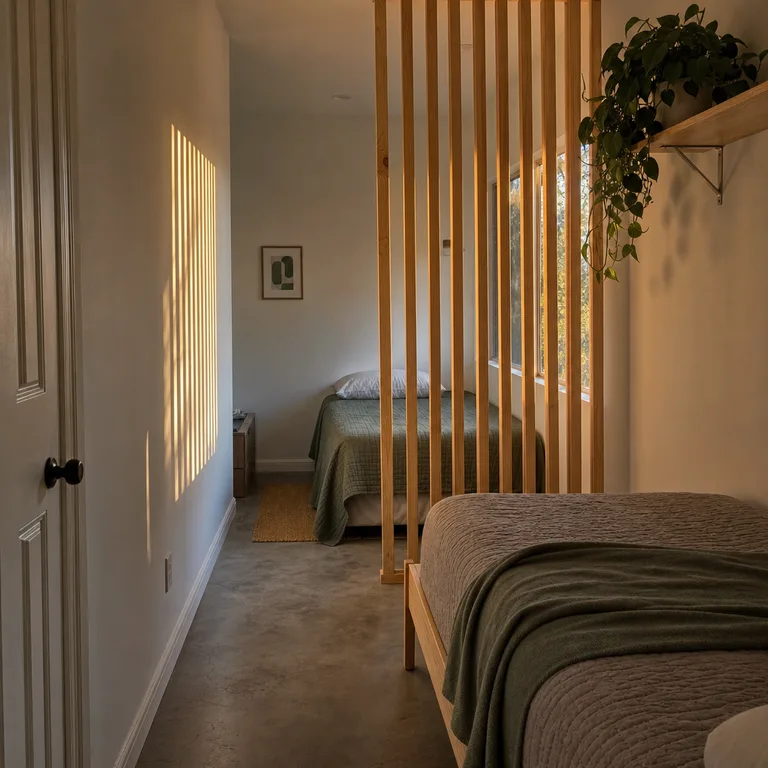
This is best treated as a small carpentry project, using securely fastened slats attached to suitable wall and floor framing or a properly designed fixed base. Stop the partition well before the main path so there is an easy route around it, especially for nighttime trips to the door.
Natural unfinished wood can work with many bedroom styles, while painted slats can disappear into the wall color. A partial partition often looks more intentional than a large screen squeezed into a narrow room.
Worth knowing: This is not a quick removable option, and installation may require landlord approval or professional help if wall or floor structure is uncertain.
4.Turn an Existing Dresser Into a Visual Buffer
A short dresser can create a useful visual pause between two bed areas when it sits along a wall or at the edge of one child’s zone. It gives the room a clearer shape while also holding clothing, pajamas, and personal belongings that would otherwise spread across shared surfaces.
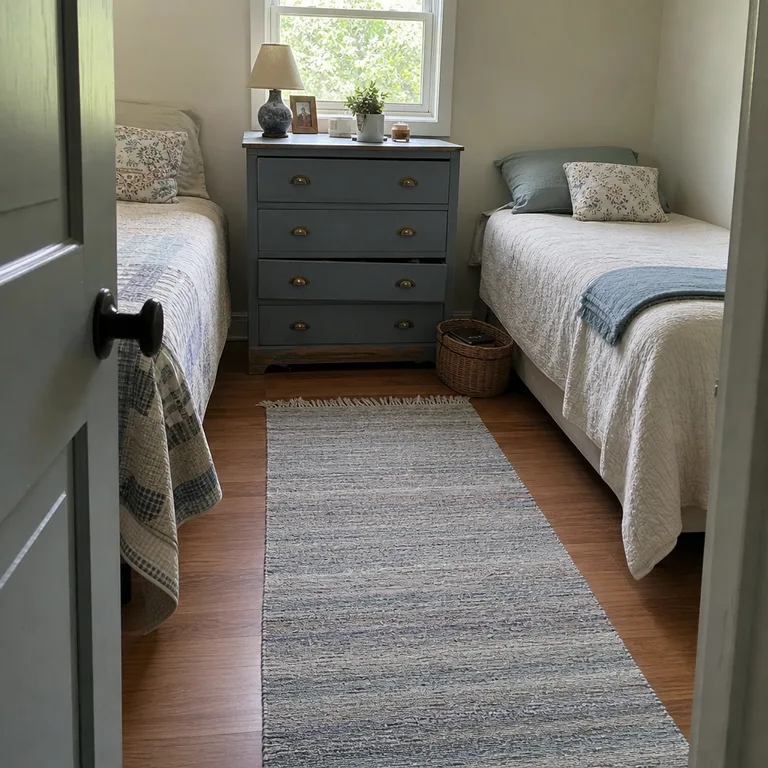
Use a dresser already in the home if it fits without pinching the route from the door to each bed. Secure it to the wall with the correct anti-tip hardware, avoid placing it beside a bed where children could climb onto it, and keep drawers organized so they do not become another source of clutter.
Assign separate drawers or drawer sections, then place a small tray on top for items that belong in the shared room. The result is a boundary that earns its floor space through storage.
Worth knowing: A dresser cannot safely sit in the middle of a tight room if it narrows the exit path or makes it harder to open doors and drawers.
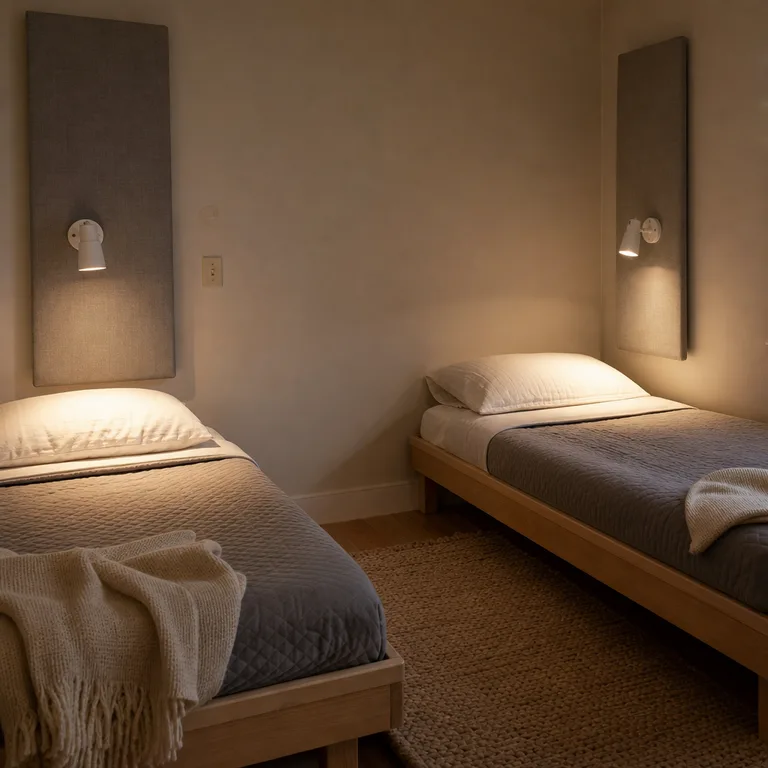
5.Give Each Bed a Wall-Mounted Bedside Panel
A narrow fabric-covered or wood panel beside or behind each pillow area can make each bed feel less exposed. Unlike a freestanding screen, it keeps the floor open and gives children a small visual backdrop for reading, resting, or settling down separately.
Mount panels directly to suitable wall supports with hardware appropriate to the wall material. Simple padded panels can be made from lightweight boards, batting, and washable fabric, or use purpose-made wall tiles installed according to their instructions.
Keep the design shallow and place any reading light where cords cannot hang loose or run across bedding. Matching panels make the room look calm, while different colors or fabric textures let each child claim a distinct spot.
Worth knowing: Wall-mounted panels are mainly a side-view shield; they will not block noise or provide full privacy from a sibling across the room.
6.Create Two Small Study Spots With Desk Privacy Panels
Separate work zones can ease everyday friction even when the beds stay exactly where they are. Clamp-on felt side panels at two small desks block distractions at seated height without adding a full divider that takes over the room.
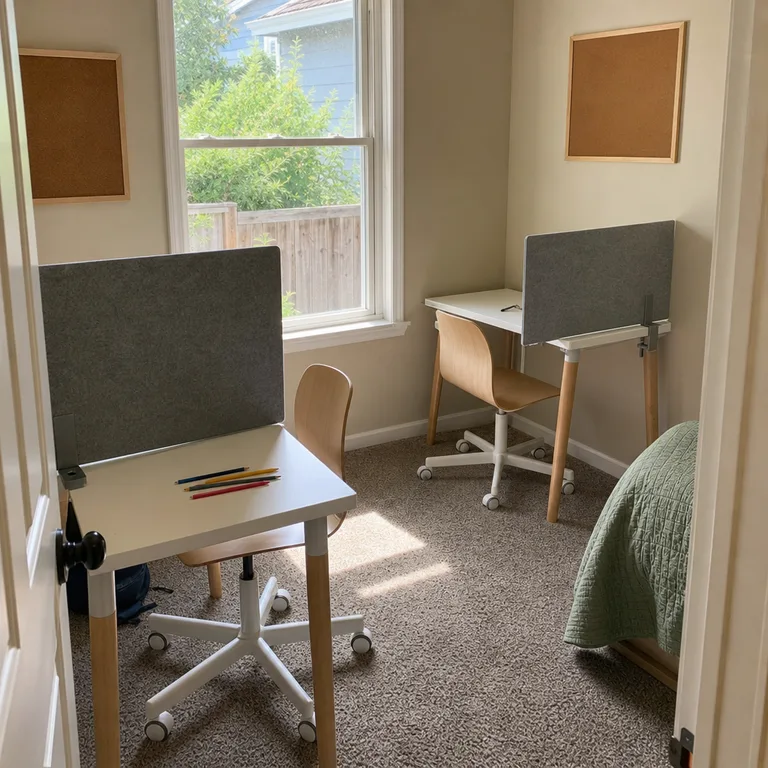
Use existing desks, narrow writing tables, or sturdy wall-mounted work surfaces, then set them facing different walls where possible. Attach panels firmly, keep them low enough for adult visibility, and use simple cable clips so chargers do not hang where they can be pulled or tangled.
Each child can have a small pinboard, tray, or cup for school supplies on their own surface. That clear separation is useful in a room where shared storage and shared sleep space already require compromise.
Worth knowing: This helps with visual distraction during homework but does not solve noise, and two desks may be impractical in a very small room.
7.Make a Personal Changing Corner Away From the Beds
A partial curtain in an unused corner can give an older child a little privacy for changing without wrapping fabric around either bed. Position it by a wall with hooks or a hamper so clothing has a defined place instead of ending up on both children’s beds.
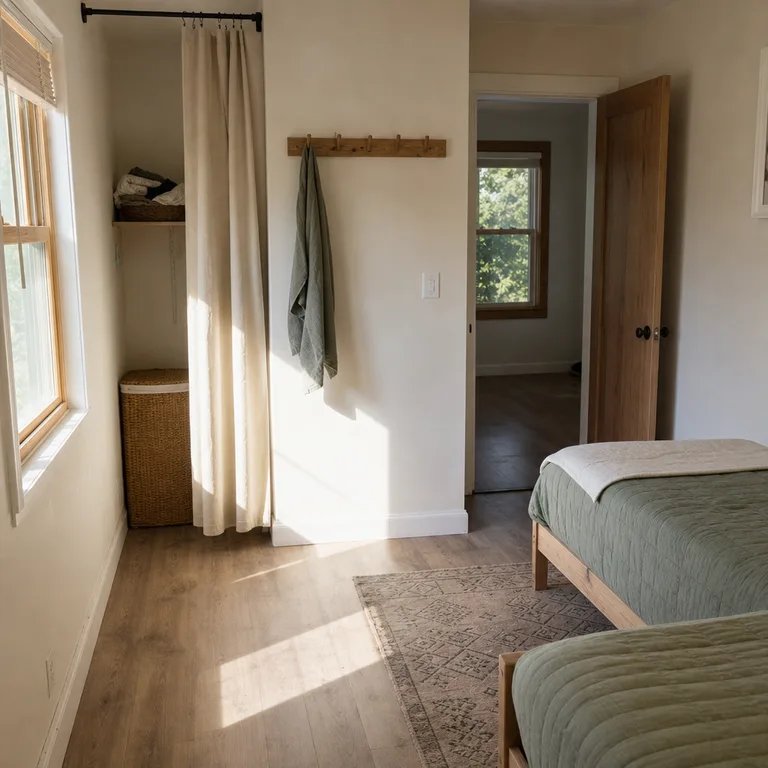
A wall-mounted rod or track uses less floor space than a freestanding changing screen. Keep the curtain away from heaters, windows used for escape, and the bedroom door, and choose a lightweight panel that can be opened easily from either side.
This arrangement works best as a brief-use zone rather than a closed-off nook. Pull the curtain open after use to bring daylight back into the room and keep the shared space easy to supervise.
Worth knowing: A changing corner requires an unused wall area, and it should not interfere with an exit, heat source, or access to storage.
8.Use Frosted Window Film for Private Window-Side Zones
Frosted film on the lower part of a window gives a bed or desk near the glass more privacy from outside while still admitting daylight. It can make a window-side zone feel less exposed without adding another object to an already small room.
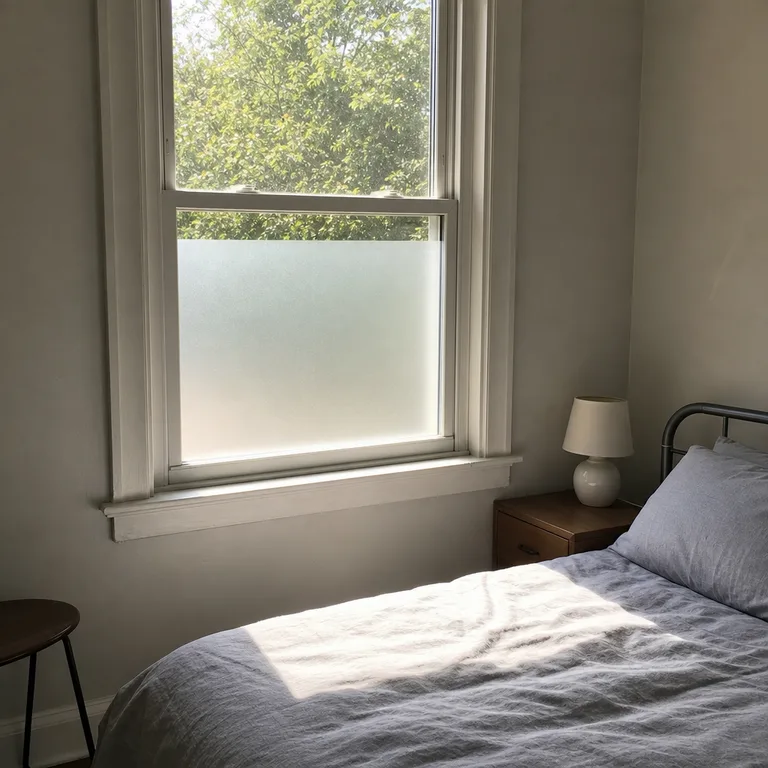
Choose removable or static-cling film for a rental, and check lease rules before applying anything to the glass. Clean the pane carefully, apply the film smoothly, and leave the upper section clear if children benefit from a view of the sky and changing daylight.
This is particularly helpful on a ground-floor room, a close neighboring property, or a street-facing window. It does not divide the children from each other, but it can make one child’s side of the room feel more settled.
Worth knowing: Window film does not provide nighttime privacy if indoor lights make uncovered upper panes visible, and some window types or rental agreements may limit its use.
About the author
Dana Ruiz, Senior editor
Dana writes about small-space living, storage and low-cost decorating.
Keep reading
8 Christmas Gift-Wrapping Stations That Pack Away in a Small Home
October 31, 2026
7 Small Bedroom Layouts With Sloped Ceilings
October 31, 2026
8 Christmas Buffet Setups for a Small Kitchen Without an Island
October 29, 2026
7 Rewear Clothes Stations for a Small Bedroom Without a Chair Pile
October 29, 2026