8 Drainage Checks for Patio Plant Pots That Stay Too Wet
When a patio pot stays wet long after watering, the cause is often blocked outlets, trapped runoff, an unsuitable container setup, or a potting mix that holds too much moisture. Work through these physical checks, then adjust watering to the plant and local weather rather than trying to fix the problem with a gravel layer or filler material.
As an Amazon Associate I earn from qualifying purchases.
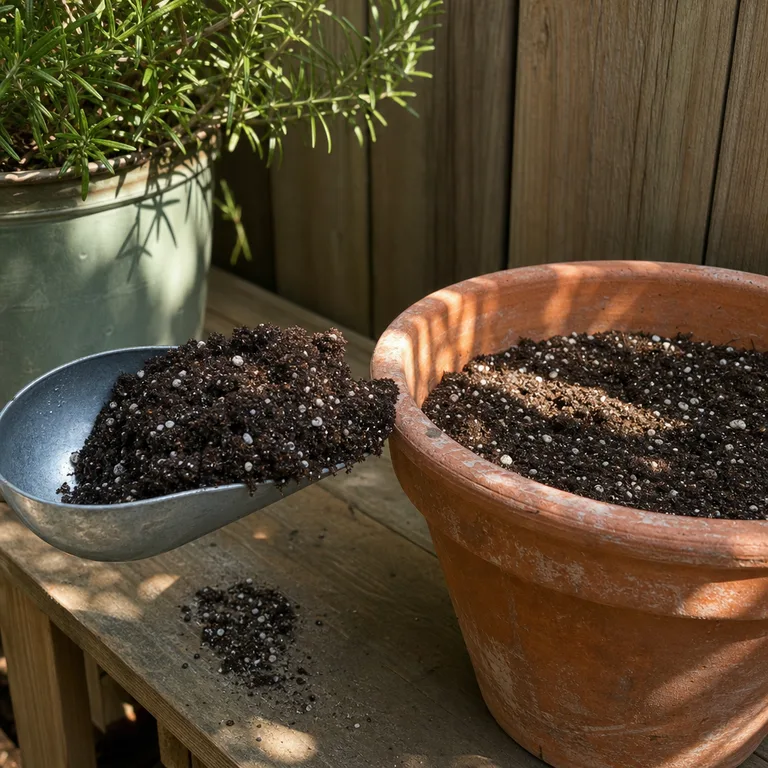
1.Inspect the Pot’s Existing Drainage Holes
Start by confirming that the container has drainage holes in its base. A pot may look like a planter but function as a decorative cover with no outlet for excess water, especially if it was made for indoor use.
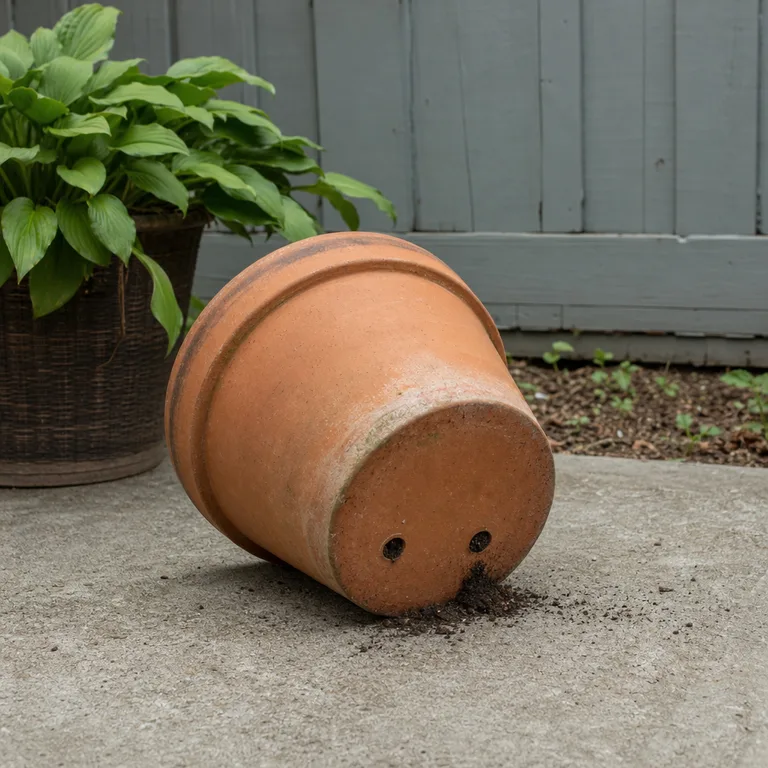
Gently tip or empty the pot as needed to inspect the bottom. Use a nursery pot with proper holes inside a decorative outer pot when a favorite container has no drainage, rather than attempting to drill ceramic, glazed, or otherwise fragile materials.
Worth knowing: A container without drainage may still work as a cachepot, but the plant should remain in a separate, drainable nursery pot that can be lifted out for watering.
2.Clear Soil and Root Debris From the Outlets
Open holes can still fail when compacted potting mix, fallen leaves, or roots block them from inside or below. Check each outlet after lifting the pot, particularly on containers that have sat in one place through a rainy period.
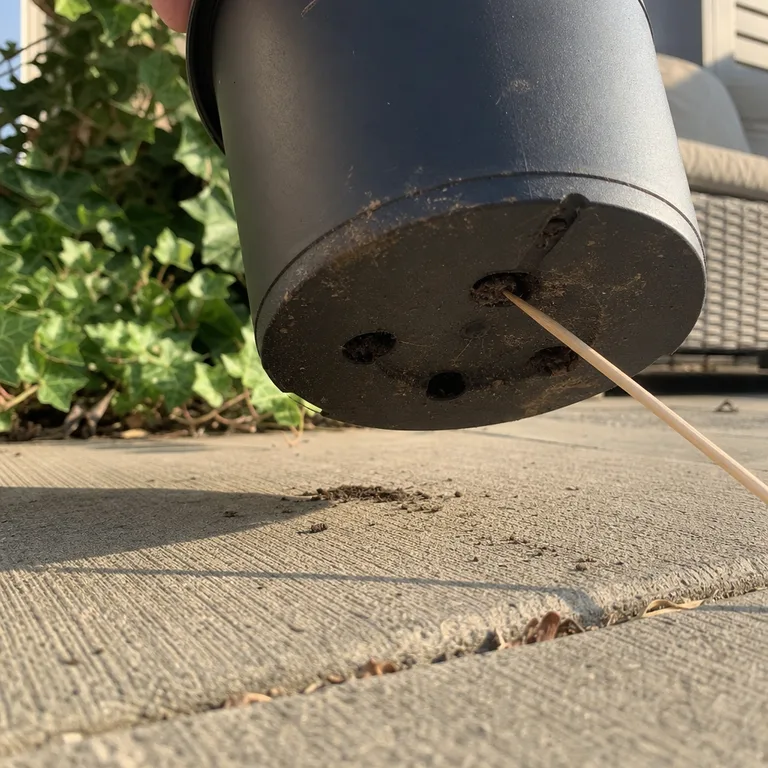
Loosen only the material covering the hole with a narrow stick or small brush. Avoid forcing tools deep into the pot or cutting through a healthy root ball, since damage to roots can create a separate plant problem.
Worth knowing: Repeatedly clogged holes can point to a compacted mix or a root-bound plant, so clearing them may be only a temporary fix.
3.Check Whether the Saucer Is Holding Runoff
A saucer protects patios, balconies, and indoor-adjacent surfaces, but standing water beneath the pot can keep the root zone wet. Look after watering and rain to see whether runoff remains pooled around the base.
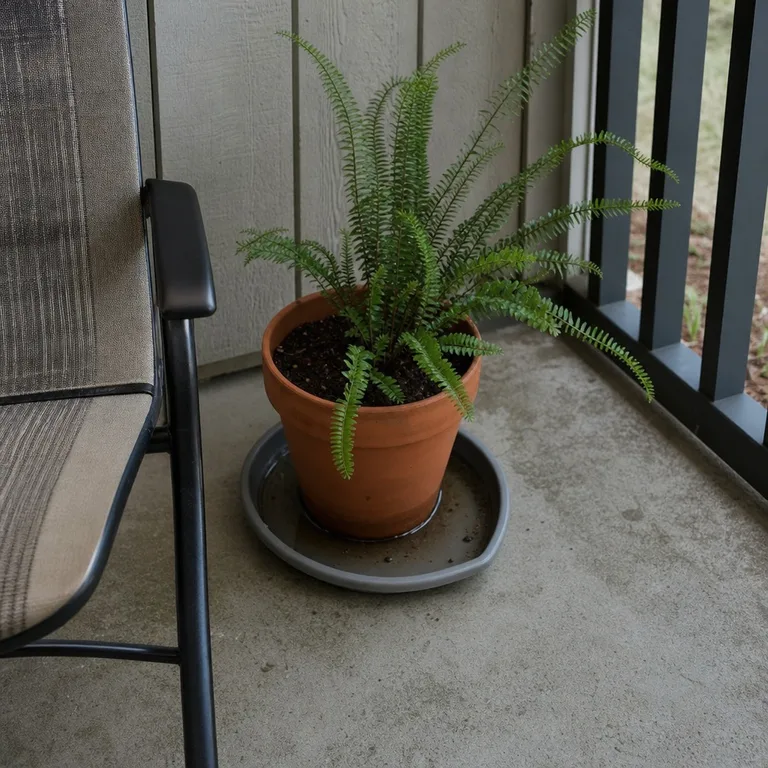
Empty a full saucer once the pot has finished draining, unless the plant is one that specifically tolerates wetter conditions. This matters most during cool, humid, or rainy weather, when the mix dries much more slowly than it does in hot sun.
Worth knowing: Some patio surfaces need a saucer to prevent staining, so the practical goal is emptying collected water rather than removing the saucer altogether.
4.Remove a Nursery Pot From a Decorative Cachepot
Plants often arrive in plastic nursery pots that have drainage holes, then get placed inside decorative cachepots with no holes. Water can drain from the inner pot and collect unseen at the bottom of the outer container.
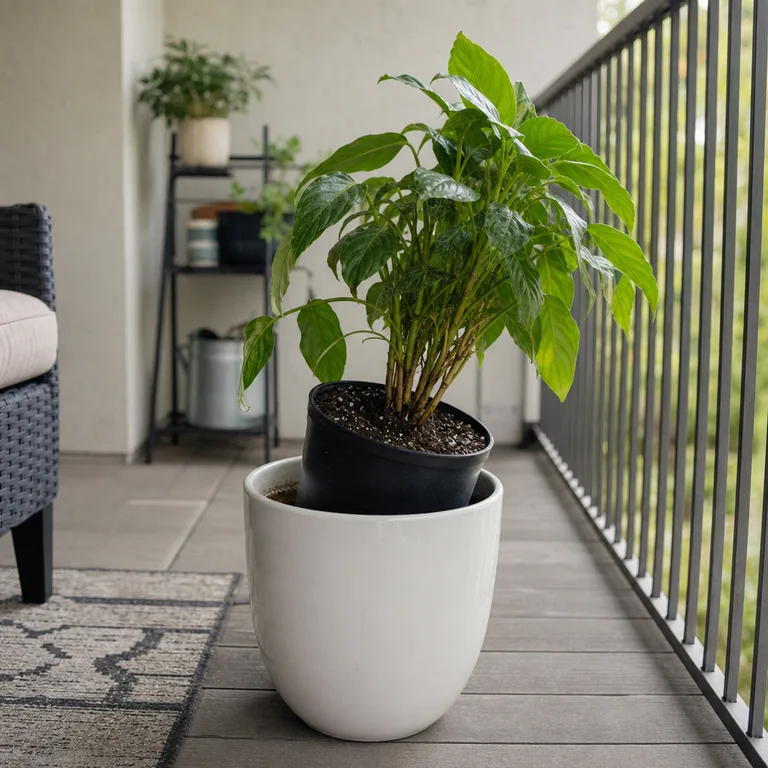
Lift the nursery pot out and check for pooled water, mineral residue, or a damp base. Empty and dry the cachepot before returning the plant, and lift it again after future watering if the outer pot has no outlet.
Worth knowing: A heavy plant may be difficult to lift safely from a tall cachepot, so this setup is less convenient for large containers.
5.Look for a Mix That Stays Dense and Airless
Potting mix should hold moisture while still leaving air spaces around roots. If it remains muddy, tightly packed, or unusually heavy after excess water has had time to drain, it may be retaining more water than the plant can use.
Repot with a container mix suited to that plant’s needs when the season and plant condition make repotting appropriate. Use fresh mix rather than trying to correct a dense root zone with a gravel layer at the bottom, which does not improve drainage through the potting medium.
Worth knowing: Repotting can temporarily stress a plant, and it is best postponed when the plant is already struggling from heat, cold, or active flowering unless the wet conditions are severe.
6.Check Whether the Plant Has Outgrown Its Pot
A plant with tightly circling roots can have trouble taking up water evenly, and old mix may become compressed around the crowded root mass. When practical, slide the plant from its pot and inspect the outside of the root ball.
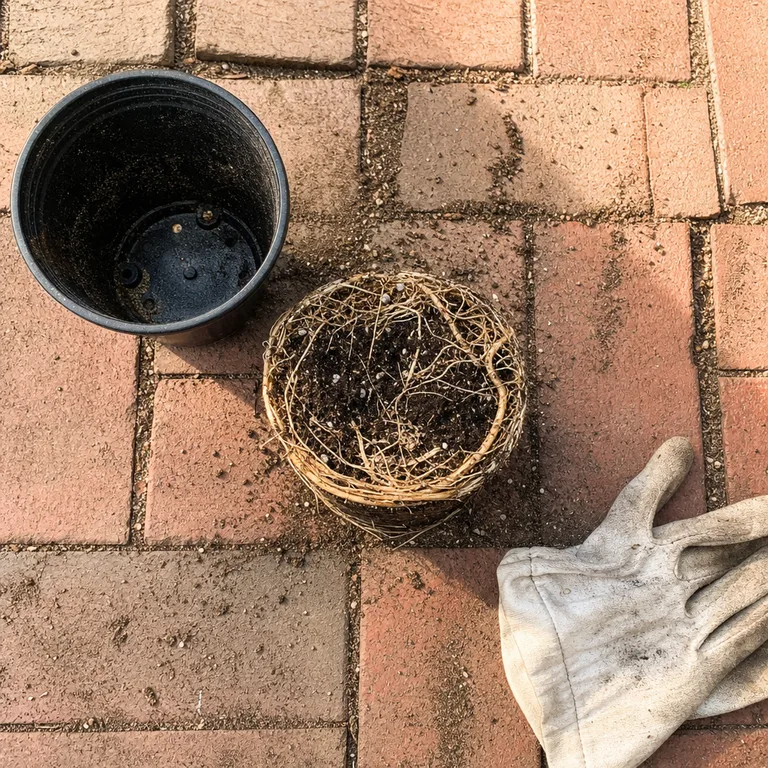
If roots form a dense mat around the edge or emerge heavily from drainage holes, move the plant to a modestly larger container with fresh, suitable mix. Handle the root ball carefully and follow the plant’s own repotting needs, since not every plant responds well to major root disturbance.
Worth knowing: Root-bound growth is not the only cause of wet soil, and a larger pot can stay wet even longer if it is oversized for the root system.
7.Raise Suitable Pots Slightly Above the Patio
Working drainage holes can be pressed against a flat patio, deck, or balcony surface, especially when the pot settles into dirt, moss, or pooled rainwater. Raising the container slightly gives water a clearer path out from the base.
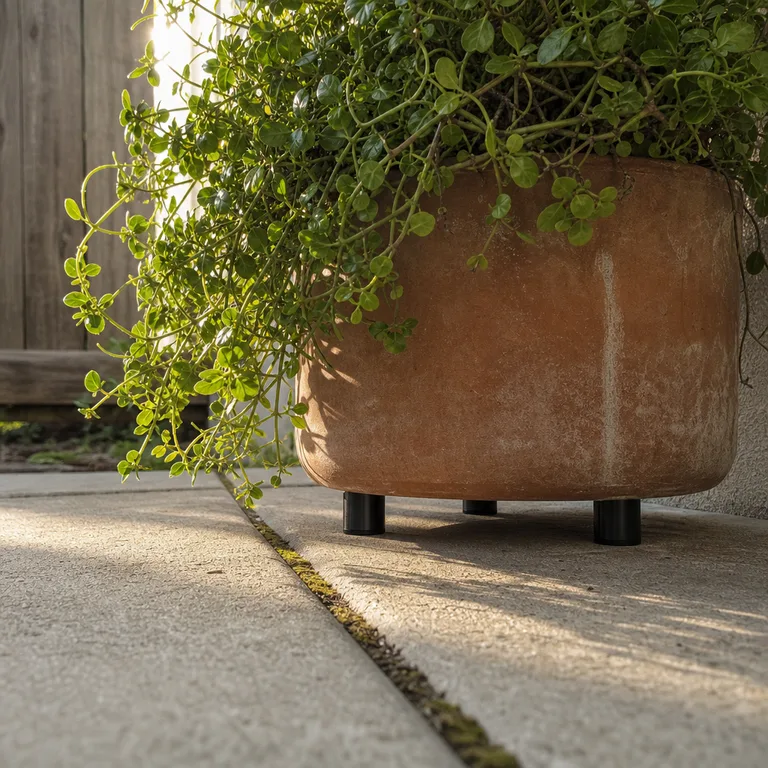
Use stable pot feet or risers sized for the weight and shape of the container. Keep the pot level so it cannot wobble, and check that the raised setup does not create a trip hazard or cause runoff to stain the surface below.
Worth knowing: Pot feet will not solve blocked holes, a full saucer, or a waterlogged potting mix; they only help water leave an already drainable pot.
8.Reassess Watering After the Drainage Fix
Once water can leave the container freely, check moisture below the dry-looking surface before watering again. A finger, simple probe, or the weight of a smaller pot can help show whether the root zone is still wet.
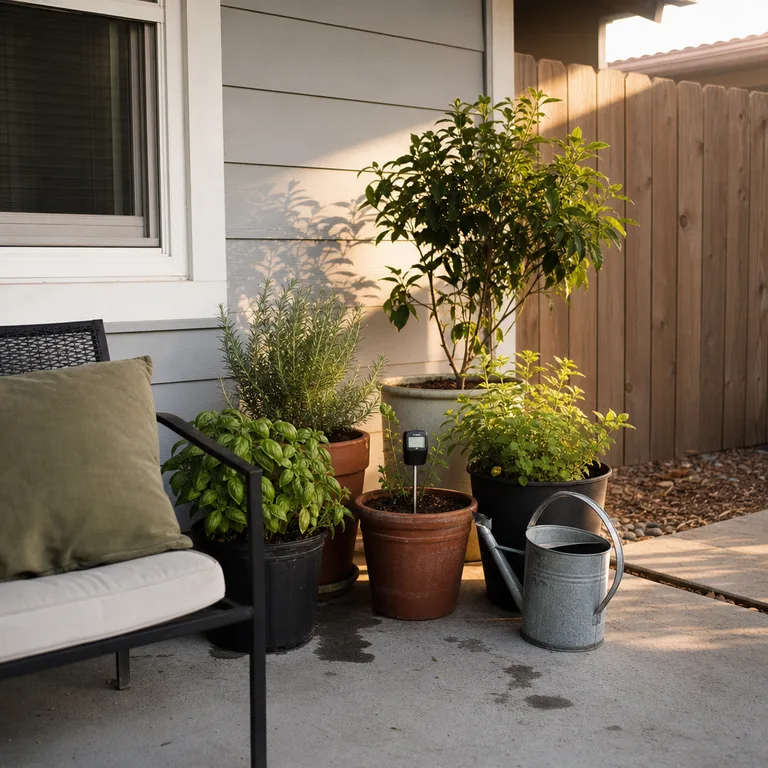
Match watering to the plant, its light level, local season, wind, rain exposure, and the drying speed of the container. A shaded pot in cool weather may need far less frequent watering than the same plant in a sunny, breezy spot during warmer conditions.
Worth knowing: Persistent yellowing, wilting, or decline can also come from pests, disease, low light, or plant-specific care needs, so improved drainage does not guarantee a full recovery.
Related: 9 Hand Watering Setups That Make a Small Container Garden Easier to Maintain
About the author
Dana Ruiz, Senior editor
Dana writes about small-space living, storage and low-cost decorating.
Keep reading
10 Garden Fence Decorating Ideas That Don't Depend on Climbing Plants
November 1, 2026
7 Narrow Foundation Bed Layouts for the Front of a Small House
October 31, 2026
8 Christmas Porch Planters Using Empty Summer Pots
October 29, 2026
8 Homework Station Ideas for Two Kids Sharing One Bedroom
November 1, 2026