8 Homework Station Ideas for Two Kids Sharing One Bedroom
These shared-bedroom homework stations give two children separate school supplies and a defined work turn or personal surface, then fold, roll, or pack away so the room returns to sleep space each day. Unlike two permanent adult work desks, these setups suit changing child heights, shorter homework sessions, and ordinary bedroom layouts while keeping tall storage anchored to the wall.
As an Amazon Associate I earn from qualifying purchases.
1.Two shallow desks along one wall with separate supply caddies
Two shallow desks placed side by side give both children a place to work at the same time without filling the room with bulky office furniture. Choose chairs that suit each child’s height, since siblings may not be comfortable at the same desk and chair setting.
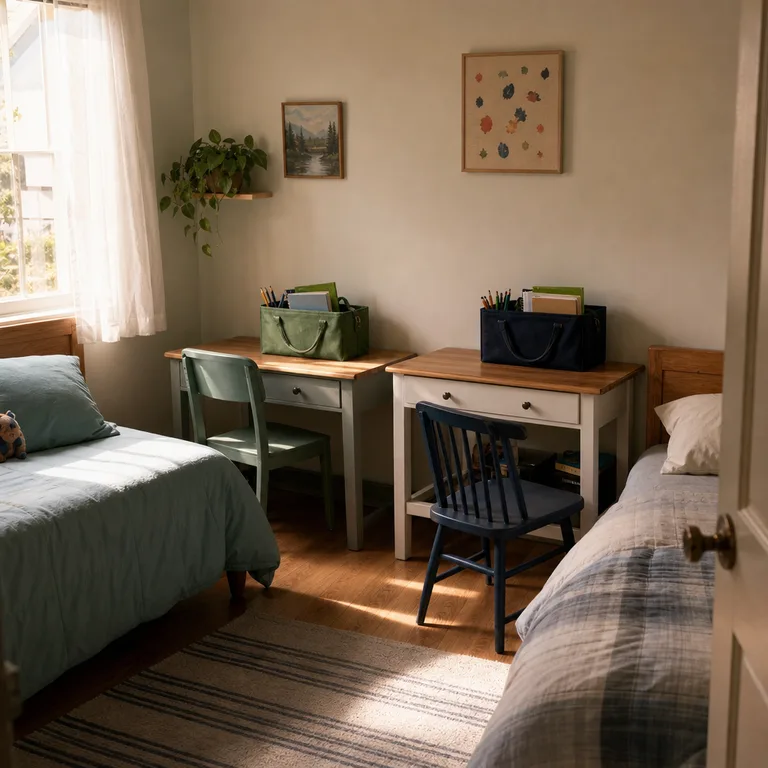
Give each child one caddy for pencils, papers, headphones, and small supplies. At the end of homework, each caddy goes into a drawer, onto a shelf, or under the desk so both surfaces are clear for the next day.
Secondhand writing desks, simple tables, and matching wood tops on different bases can create a coordinated look without buying a complete desk set. Keep the desks away from a radiator and avoid blocking the path between the beds.
Worth knowing: This works best when the room has one uninterrupted wall and enough depth for chairs to pull out safely.
Related: 6 Small Shared Bedroom Layouts for Two Children Using Twin Beds
2.A rolling homework cart with one table used in turns
A small folding table can become a homework station without permanently claiming the center of the bedroom. One child uses the table at a time while the other reads on a bed, works at another surface, or takes a planned break.
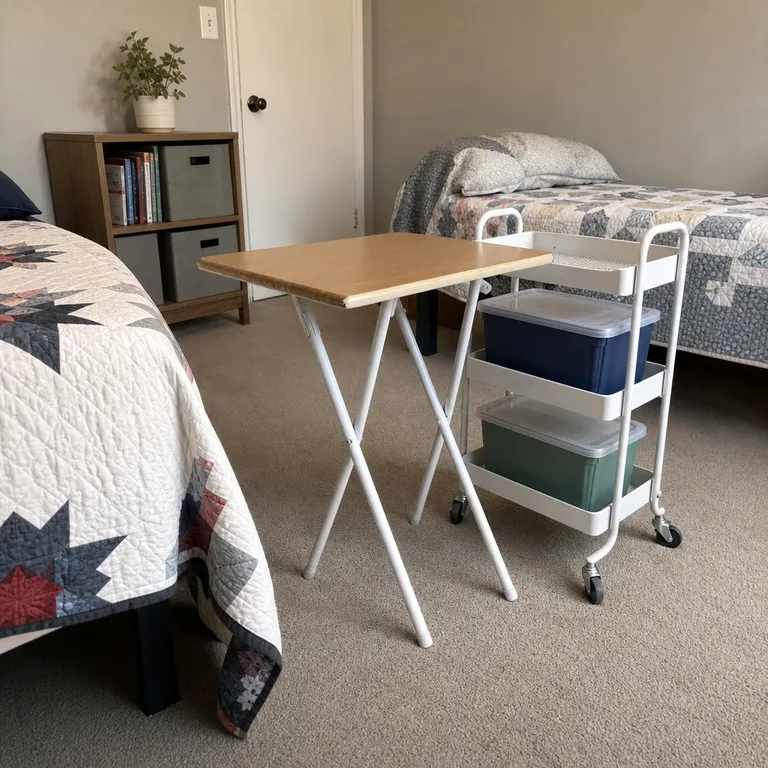
Use separate drawers, bins, or lidded boxes on a rolling cart so worksheets do not get mixed together. A simple work-turn routine helps make one shared table feel fair, especially when the children have different amounts of homework.
Roll the cart into a closet, beside a dresser, or under a raised bed after school, then fold the table flat against a wall. A lightweight table is easier for an older child to help reset, but it should still be stable enough for writing.
Worth knowing: Turn-taking can be frustrating when both children regularly need quiet, focused work at the same time.
3.A closet homework nook that closes after school
A reach-in closet can hold a compact desk shelf and stool when clothing storage can move to a dresser, under-bed bins, or another closet. The enclosed nook gives one child a defined work spot without adding another large piece of furniture to the bedroom.
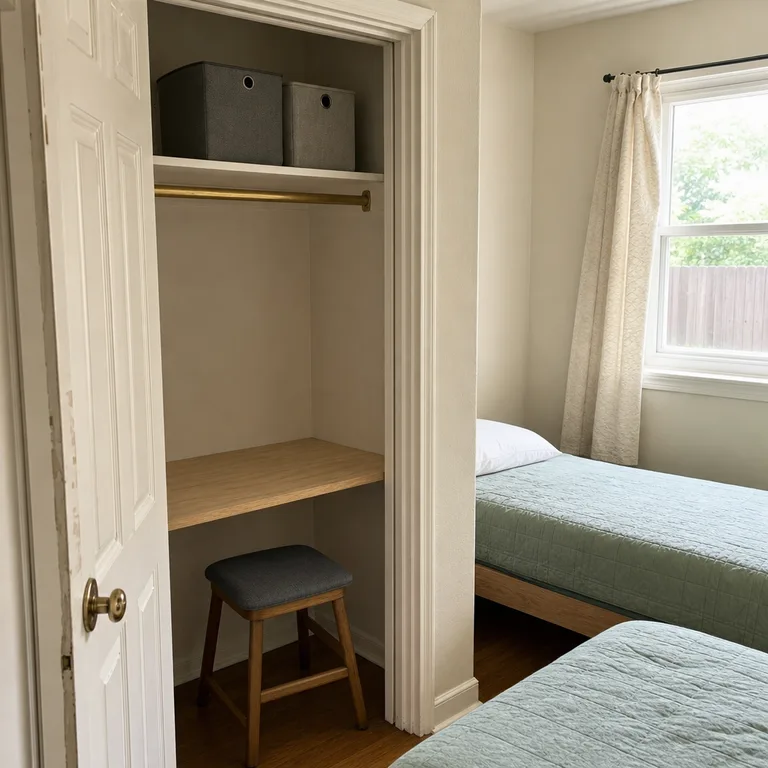
Assign each child a separate shelf bin or file box, even if only one child can sit at the desk at a time. The desk should clear completely after use, with papers returned to the correct bin before the closet door or curtain closes.
A sturdy shelf mounted on proper supports can be cheaper than a freestanding desk, but installation needs care. Add a battery light if daylight does not reach the back of the closet, and leave enough ventilation around any light source.
Worth knowing: This setup sacrifices clothing storage and may require landlord approval in a rental if shelves must be installed.
4.A window bench with two removable homework trays
A sturdy window bench can serve as a short-session homework seat when two removable trays rest across the cushion or on each child’s lap. It uses space that might otherwise be decorative while preserving the open floor between beds.
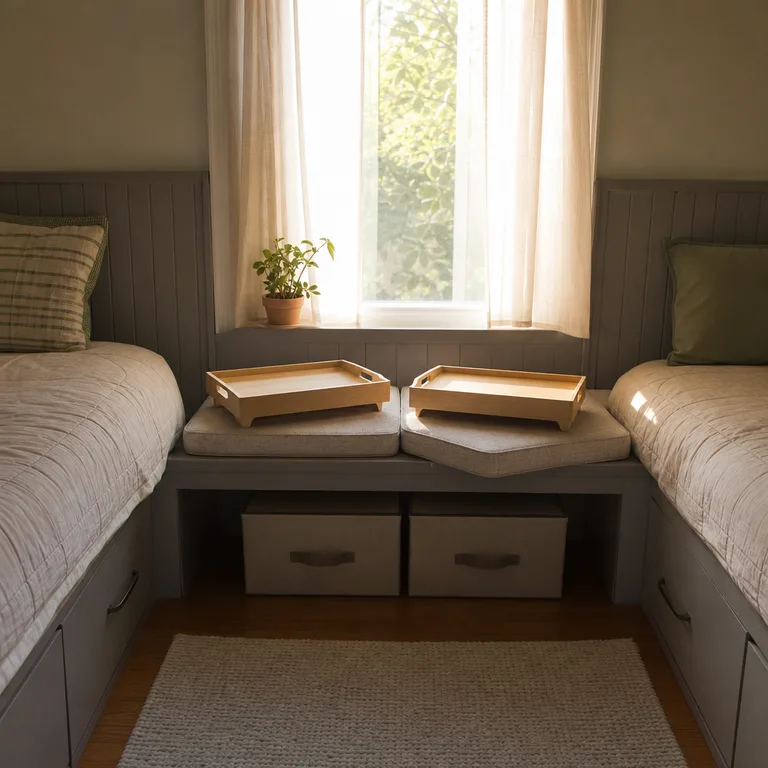
Give each child a handled box beneath the bench for notebooks, pencils, and unfinished work. When homework ends, the trays stack vertically and the boxes slide back underneath, returning the bench to seating or a reading spot.
Use trays with a raised edge or a non-slip surface to keep pencils and papers from sliding off. Check the window for cold drafts, direct afternoon glare, and cords from blinds that could interfere with the seating area.
Worth knowing: A bench is less supportive than a proper desk and chair, so it is better for shorter assignments than long daily work sessions.
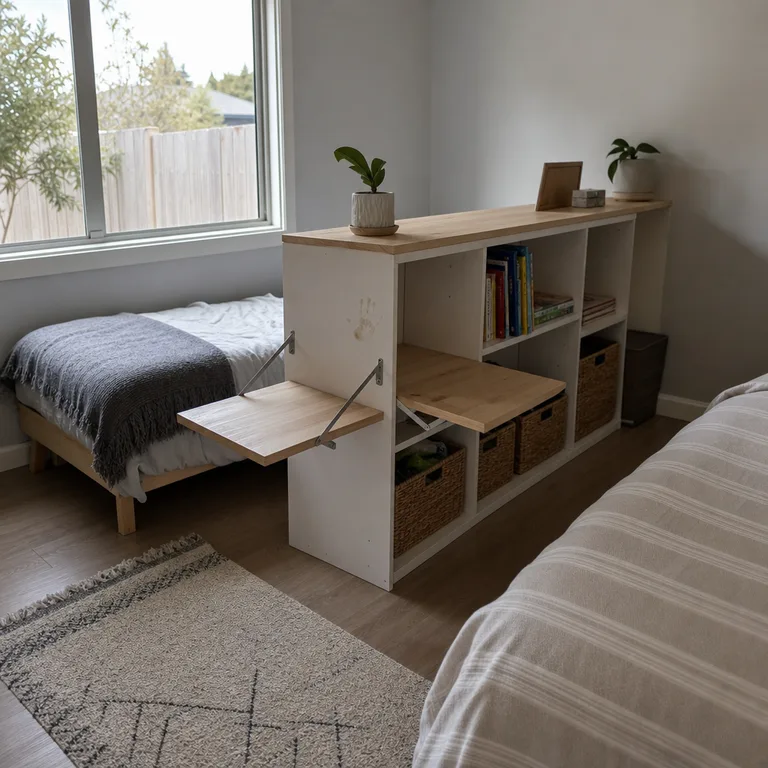
5.A low bookcase divider with fold-down work surfaces
A low bookcase between two sleep zones can create a small sense of separation while holding school supplies for both children. Fold-down panels on the room-facing side provide individual work surfaces only when they are needed.
Put one basket or shelf section in each child’s zone, keeping folders, pencils, and project materials separate. After homework, close the panels and return each basket to its shelf so the divider looks like ordinary bedroom storage rather than a permanent office.
Use a low, stable unit and secure it to the wall or floor as appropriate for the room. The fold-down hardware must be rated for the panel and its expected use, and open panels should not block a route to the door.
Worth knowing: This option needs careful installation and is not suitable for a lightweight bookcase that cannot be securely anchored.
6.An under-loft desk zone for the older child and a pullout table for the younger child
An older child can use the space beneath a properly assembled loft bed as a compact desk area, while a younger child uses a smaller pullout table nearby. The two stations do not need to match because the children’s chair heights, reach, and homework habits may be different.
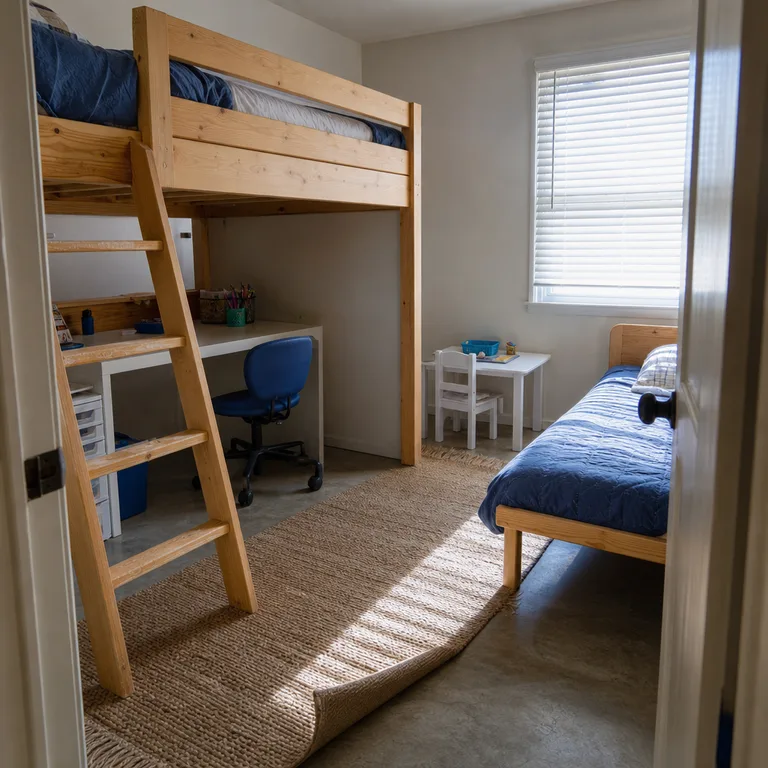
Keep the older child’s books and supplies in a drawer or small shelf under the loft, and give the younger child a portable bin that travels with the pullout table. Both surfaces should be cleared nightly so the room does not stay in school mode after bedtime.
A loft bed creates usable vertical space, but it should be assembled exactly as directed and kept stable. Position the smaller table where it will not interfere with the ladder, and make sure the under-loft area has enough light for reading.
Worth knowing: Loft beds are not appropriate for every child, and the upper bunk needs to meet the manufacturer’s age and safety guidance.
7.Bedside wall rails with clip-on homework trays
Clip-on trays beside each bed create two brief-use work surfaces in a room with almost no spare floor area. Each child gets a separate hanging pocket for pencils, folders, and a current assignment, avoiding a shared pile on the bedding.
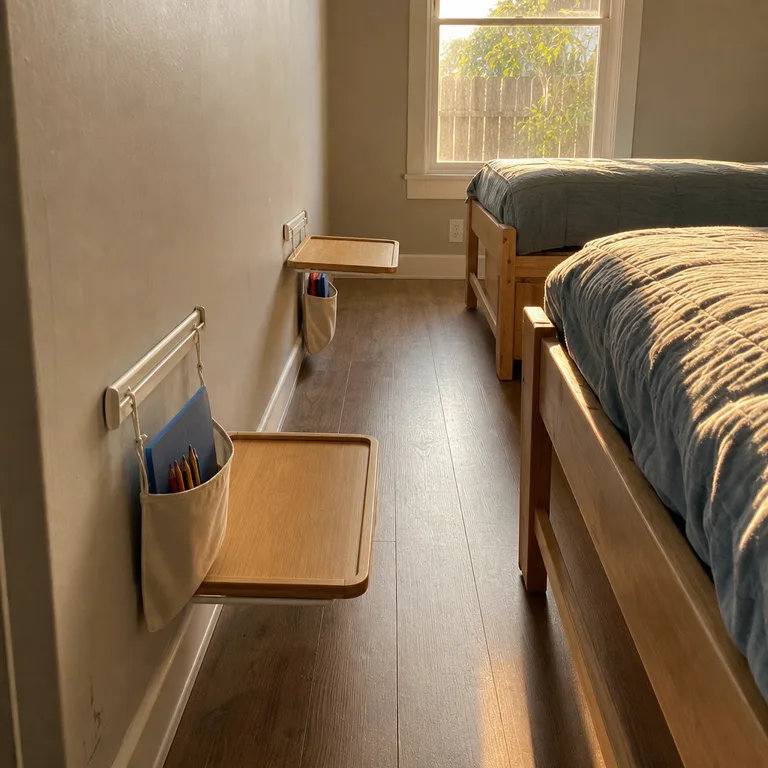
The trays come down for homework and fold or unclip afterward, while supplies return to the pockets. This clear reset keeps beds available for sleeping and makes it easier to see when school papers have been put away.
Use rails and brackets designed for the wall type, and avoid relying on adhesive hooks for anything carrying books or a writing surface. Mount trays at a usable height for each child, with no sharp corners near where they climb in and out of bed.
Worth knowing: These small trays have limited room for textbooks, art projects, or a laptop plus writing materials.
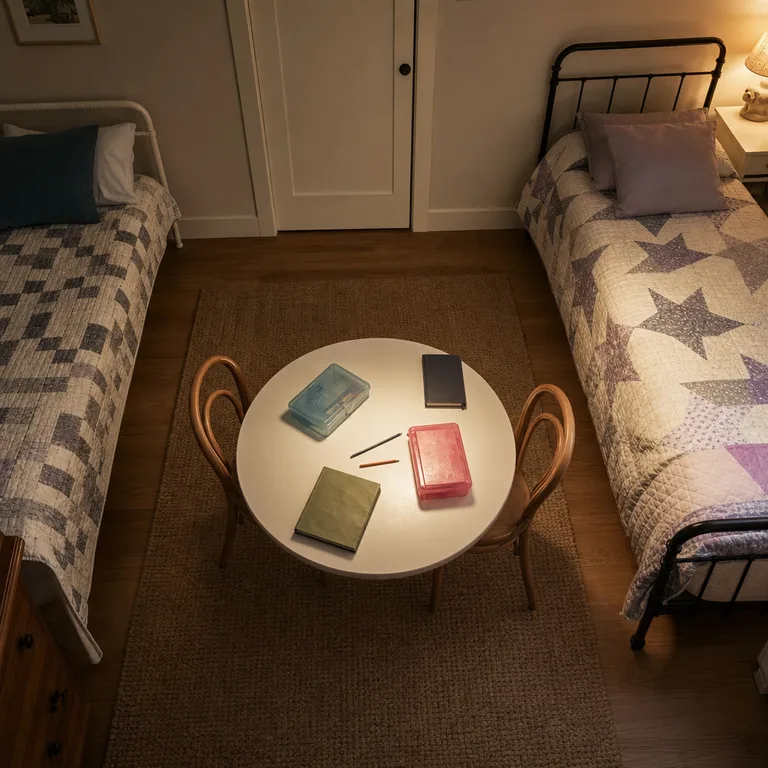
Give each child a portable project box with folders, a pencil case, and current materials. When a work turn ends, unfinished work goes back into that child’s box rather than spreading across the table or mixing with the other child’s papers.
Choose a table small enough to keep clear walking paths around both beds. It can double as a game or craft table outside homework hours, but the boxes should still have a regular shelf or closet spot for the evening reset.
Worth knowing: A central table can make a small bedroom feel crowded if it cannot be moved aside or if both children need simultaneous quiet work.
About the author
Dana Ruiz, Senior editor
Dana writes about small-space living, storage and low-cost decorating.
Keep reading
8 Small Kitchen Layout Ideas for Two People Cooking Together
November 1, 2026
8 Christmas Gift-Wrapping Stations That Pack Away in a Small Home
October 31, 2026
7 Small Bedroom Layouts With Sloped Ceilings
October 31, 2026
8 Christmas Buffet Setups for a Small Kitchen Without an Island
October 29, 2026