9 Hand Watering Setups That Make a Small Container Garden Easier to Maintain
A small container garden is easier to keep healthy when water, tools, and pots are arranged around a simple checking route rather than a fixed daily schedule. These hand-watering setups reduce carrying and missed pots while making it easier to feel the soil and respond to heat, wind, shade, and recent rain.
As an Amazon Associate I earn from qualifying purchases.
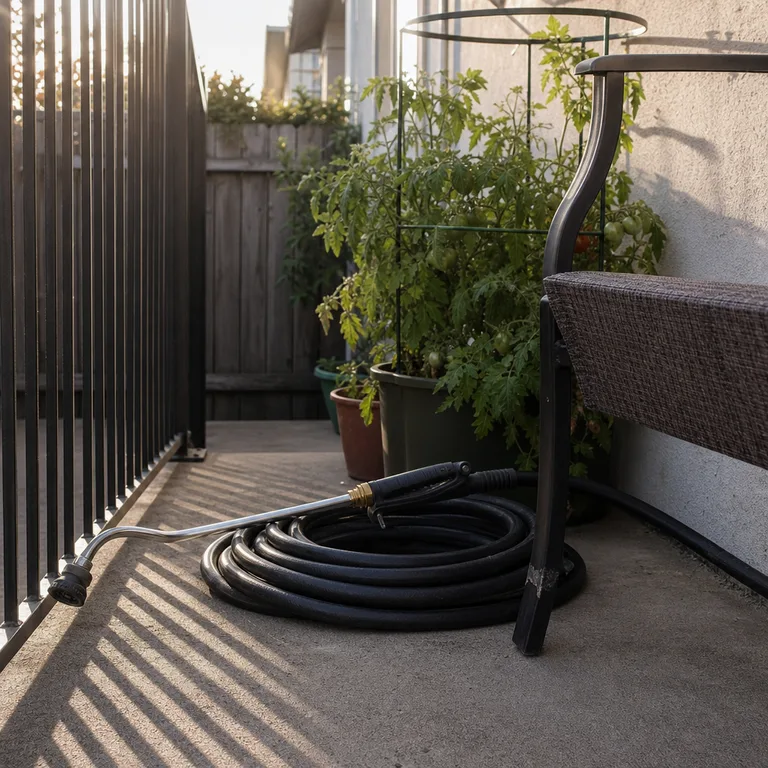
1.Set a Small Watering Can Beside an Outdoor Refill Point
Keep a compact watering can near an approved outdoor water source, such as a spigot by the patio door. When a pot feels dry, the can is already close enough to fill and use without making a long trip through the house.
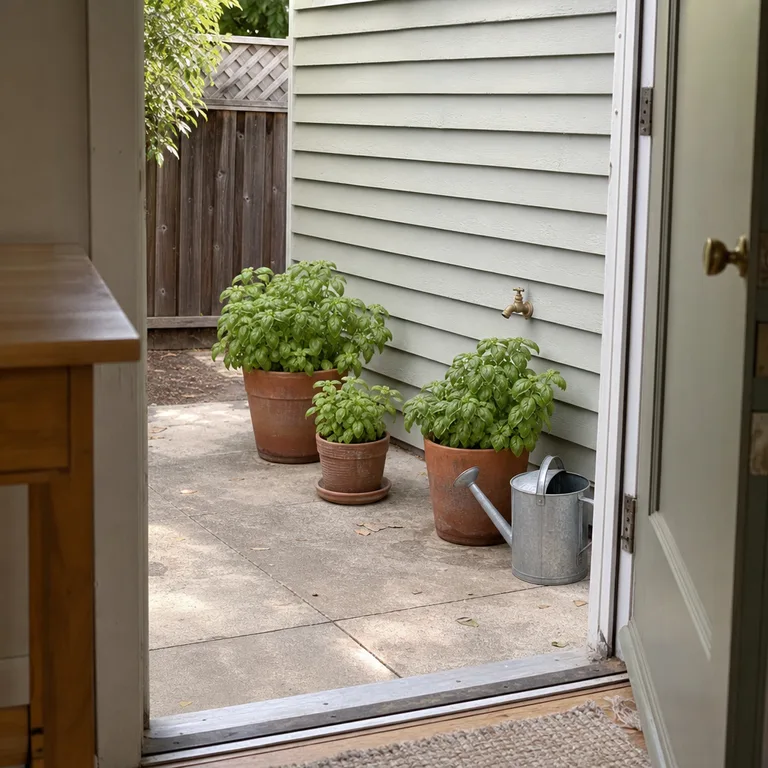
A smaller can is easier to lift around steps, furniture, and closely planted pots. Reuse a sound can if possible, and place it on a paver, hook, or sheltered spot where it will not block a walkway.
In freezing climates, disconnect and store any hose attachments before cold weather arrives. A can left outdoors also needs regular emptying so it does not collect rainwater, debris, or insects.
Worth knowing: A small can means more refills when several large containers need water.
2.Use Two Small Cans for a Refill Rotation
Set up two manageable watering cans when the patio pots are several steps from the tap. Fill both, carry one to the plants, and leave the other at the refill point or nearby until it is needed.
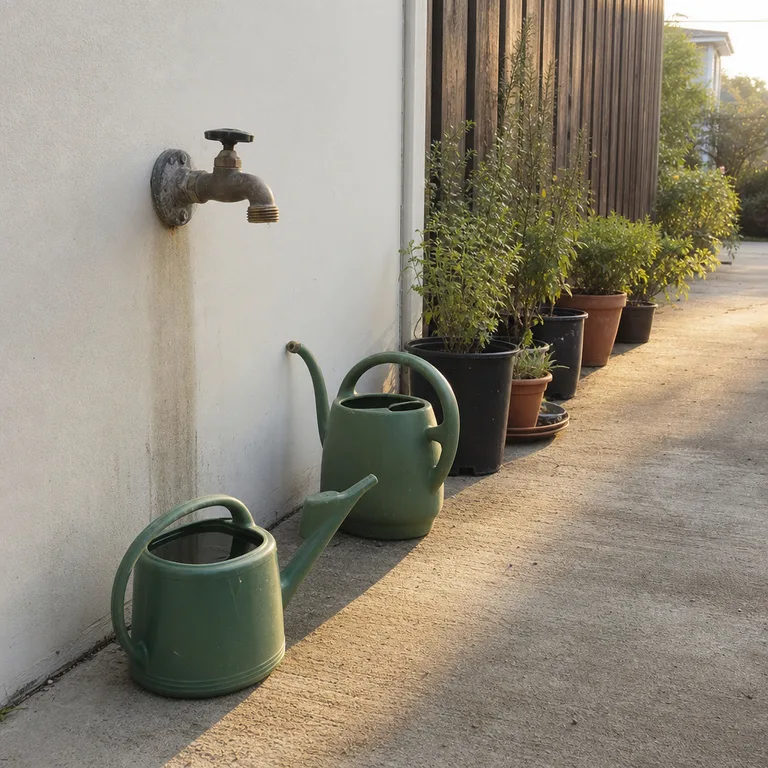
This rotation avoids carrying one heavy container across the patio and back repeatedly. It also makes it easier to stop after checking the soil, rather than feeling obliged to water every pot simply because a large can was filled.
Choose cans with comfortable handles and a removable rose if different plants need different flow rates. Keep their combined weight realistic for the person doing the watering.
Worth knowing: Two cans take up more storage space than one, especially on a narrow balcony or patio.
3.Move Frequently Checked Pots Into a Reachable Row
Place small pots, seedlings, herbs, and other fast-drying containers along a path edge, deck step, or railing where the soil is easy to reach. Put larger tubs behind them only when their placement will not shade or crowd the smaller plants.
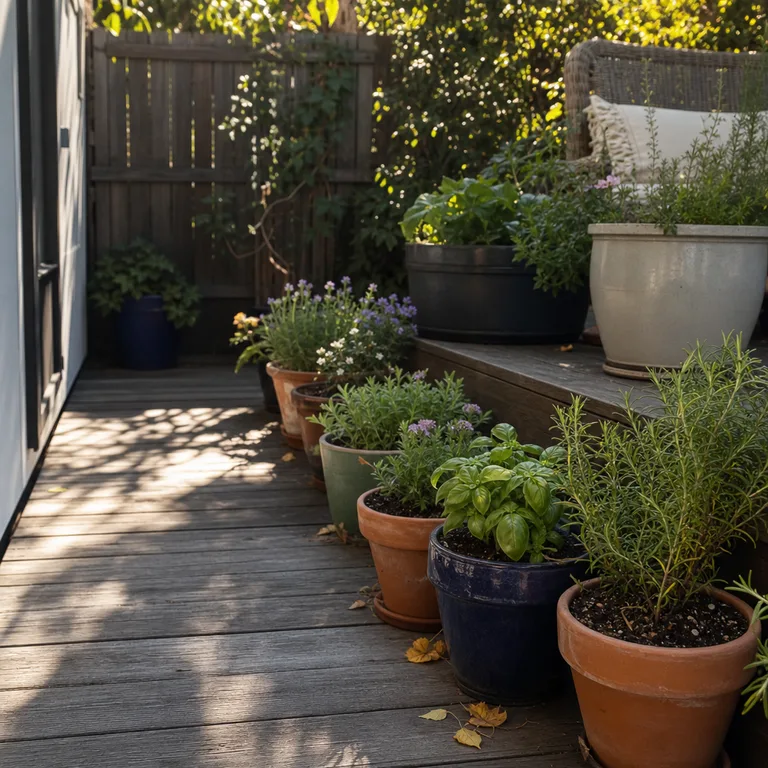
A visible front row makes it easier to notice drooping leaves, dry soil, and pots that have been missed. It also prevents a thirsty pot from disappearing behind a large shrub container or patio chair.
Use existing pot stands, spare pavers, or a narrow shelf to bring low containers closer to hand height. Leave enough room between pots for air movement and for the watering can spout to reach the soil.
Worth knowing: Moving pots changes their light exposure, so sun-loving plants may need a different position than the most convenient row.
Related: 12 Container Garden Ideas for a Small Patio on a Budget
4.Follow the Same Moisture-Check Route Around the Patio
Walk the patio in the same order each time, starting near the door and ending at the farthest pot. Press a finger into the potting mix near the plant rather than relying on the surface alone, which can dry faster than the root area.
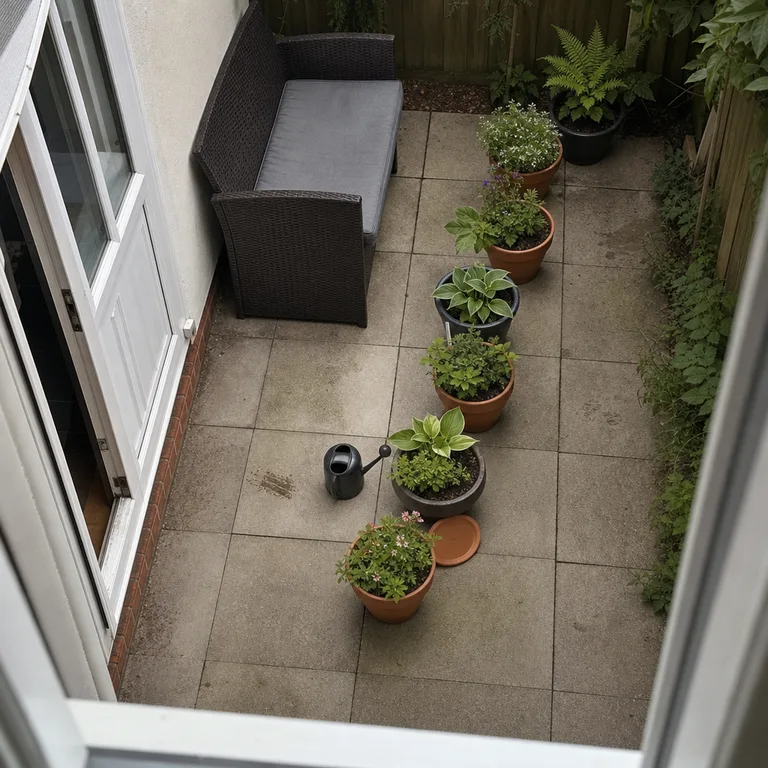
Water only the containers that are drying at that check. Heat, wind, rainfall, plant size, and shade all change how quickly pots dry, so a fixed daily schedule can leave some containers too wet and others too dry.
Arrange pots so the route is clear around benches, chairs, and storage. A simple sequence also helps identify containers that regularly dry first and may need a larger pot, more shade, or a different location.
Worth knowing: A consistent route still requires attention after unusual weather, since rain may not reach pots under eaves or dense foliage.
5.Keep a Watering Wand at the Hose for Hard-to-Reach Pots
Where a hose can safely reach the patio, keep a watering wand with a shutoff control near the connection. The longer reach is useful for hanging baskets, rail-side containers, and pots behind furniture that are awkward to water with a can.
A wand helps direct a gentle stream to the potting mix instead of blasting soil out of the pot or soaking surrounding surfaces. Check the soil first, then water slowly enough for the mix to absorb moisture rather than sending it straight through the drainage holes.
Coil the hose where it will not create a trip hazard, and do not drag it across delicate plants. Renters should check building rules before attaching a hose to shared or balcony water connections.
Worth knowing: A hose and wand can be cumbersome on very small patios, and some apartments do not provide a suitable outdoor connection.
6.Leave Space to See Drainage Under Each Pot
Space containers so runoff, saucers, and drainage holes remain visible after watering. Pot feet, pavers, or low risers can lift a container slightly and make it easier to see whether water is collecting underneath.
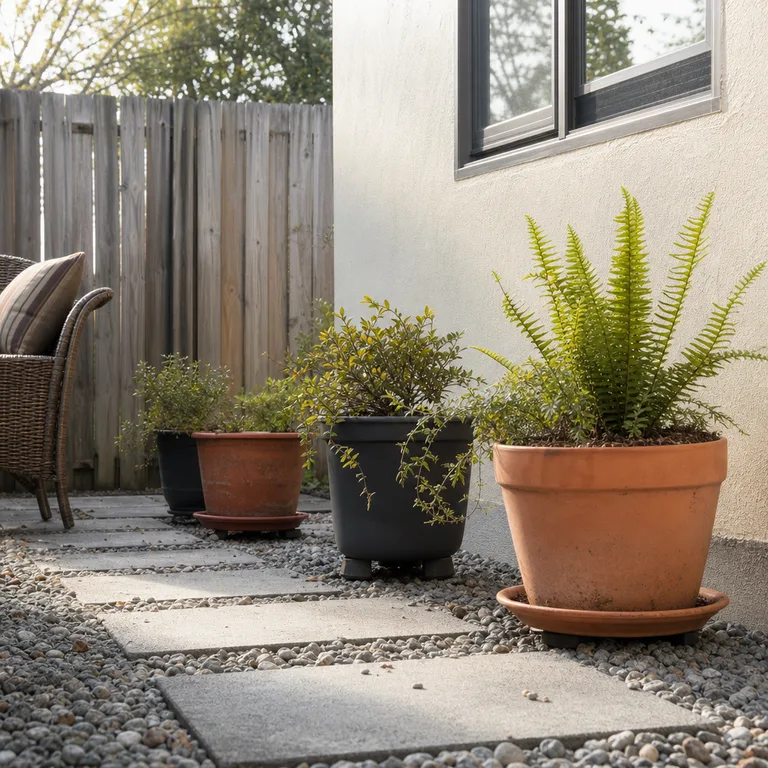
This arrangement makes overwatering easier to spot. If a saucer stays full, empty it rather than leaving the pot sitting in water, which can keep the root zone too wet.
Use stable supports sized for the pot, especially with heavy containers that can shift when wet. On a balcony, confirm that runoff will not drip onto neighbors below or stain the surface.
Worth knowing: Raised pots can dry a little faster in hot, windy conditions because air moves beneath the container.
7.Use a Long-Spout Can for Tight Groups of Pots
Choose a long, narrow-spout can for a crowded corner of herbs, flowers, or railing planters. The spout can reach the potting mix between leaves and containers without requiring the whole group to be pulled apart.
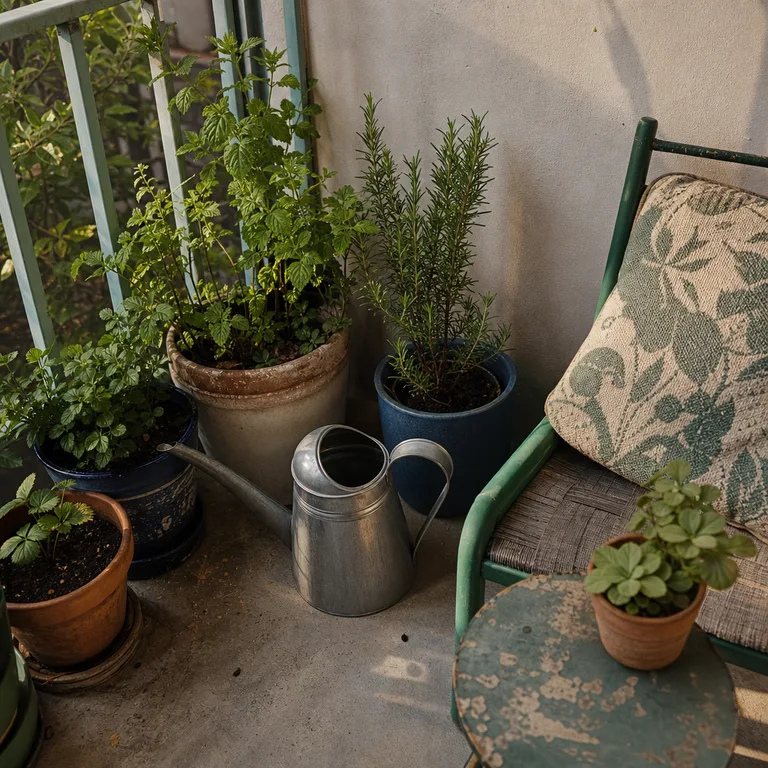
Directing water at the soil keeps the patio chair, wall, and nearby foliage drier. It is also useful for pots tucked beneath taller plants, where a broad watering-can rose may not fit.
Fill the can only as much as is comfortable to carry and pour slowly around the base of each plant. A long spout gives control, but it does not replace checking whether that individual pot actually needs water.
Worth knowing: A narrow spout is slower for large tubs and may clog if debris gets into the can.
8.Keep a Covered Refill Bucket Near the Pot Group
For a distant group of patio pots, a dedicated covered bucket can serve as a nearby temporary refill point for a small watering can. Keep it stable beside the pot group rather than in the middle of a path, and use a lid that fits securely.
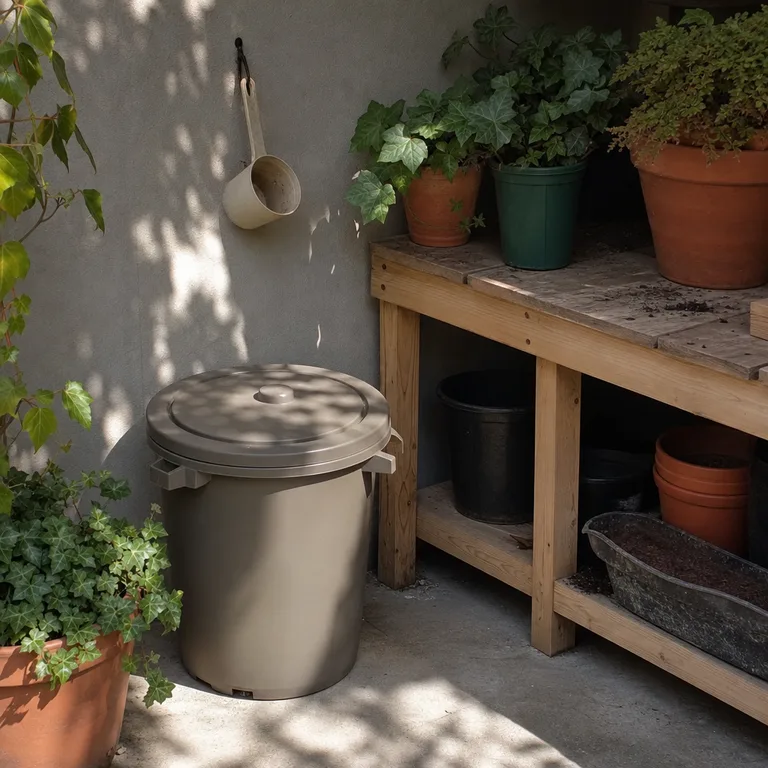
This setup shortens the back-and-forth walk when several containers need attention at once. A small dipper can refill a can or direct water into a pot, but it should be kept clean and stored with the bucket.
Keep the bucket covered whenever it holds water, particularly outdoors, and place it where children and pets cannot access it. Refresh stored water regularly rather than treating the bucket as long-term storage.
Worth knowing: A bucket adds another item to maintain and can become a safety or insect issue if it is left uncovered.
9.Divide Heavy Container Watering Into Short Sections
Break an L-shaped patio or scattered container garden into short watering sections, using a bench, plant stand, or large tub as a natural stopping point. Check the soil in one section, water only what is dry, refill if needed, then move to the next.
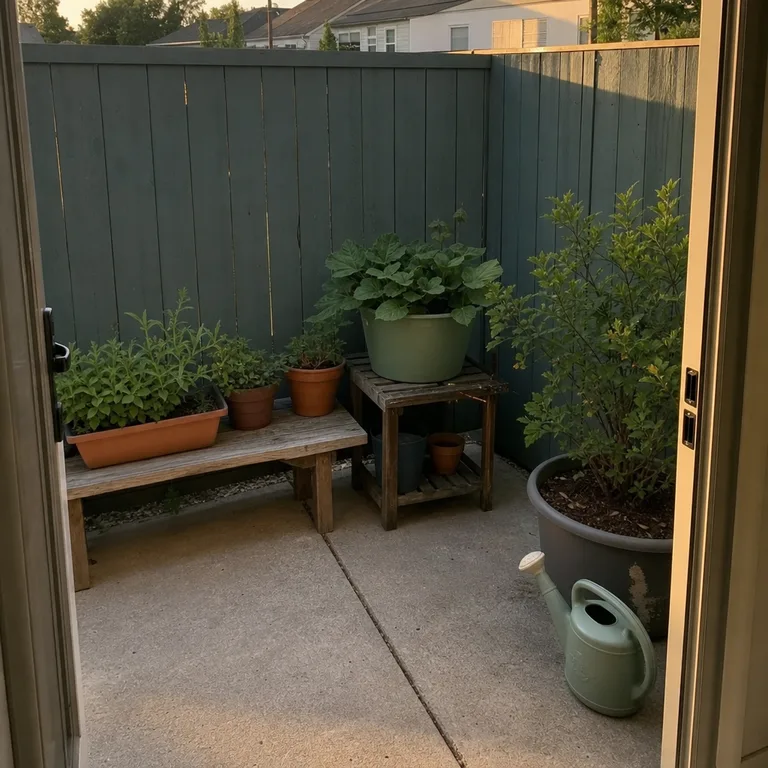
This prevents the task from becoming a long carry with a full can. It is especially helpful around large containers, where repeated trips are more manageable than trying to handle one heavy load across the entire patio.
Keep the lightest practical can near the first section and position heavy tubs where they can be reached from a stable surface. Large containers may dry differently from smaller pots, so do not assume the whole section needs the same amount of water.
Worth knowing: Dividing the work into sections can take longer if the refill point is far from the patio.
About the author
Dana Ruiz, Senior editor
Dana writes about small-space living, storage and low-cost decorating.
Keep reading
7 Narrow Foundation Bed Layouts for the Front of a Small House
October 31, 2026
8 Christmas Porch Planters Using Empty Summer Pots
October 29, 2026
8 Small Front Yard Layouts for a Plain Rectangular Lawn
October 29, 2026
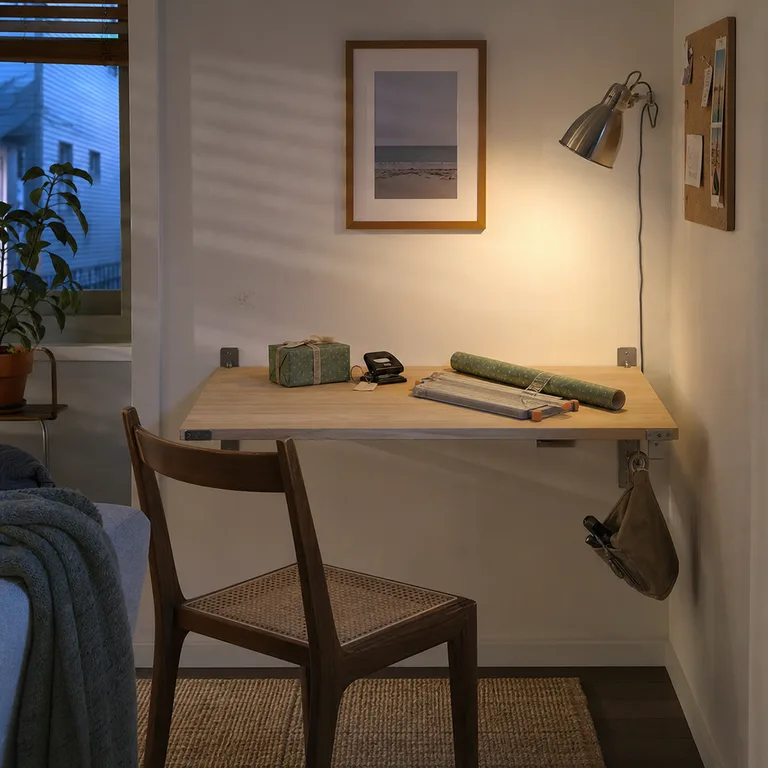
8 Christmas Gift-Wrapping Stations That Pack Away in a Small Home
October 31, 2026