10 Garden Fence Decorating Ideas That Don't Depend on Climbing Plants
A plain existing fence can look intentional with removable, weather-suitable accents arranged in small compositions rather than covered from end to end. Use owner-approved fixings, leave room for repairs, and match the weight of each item to local wind and the fence’s condition.
As an Amazon Associate I earn from qualifying purchases.
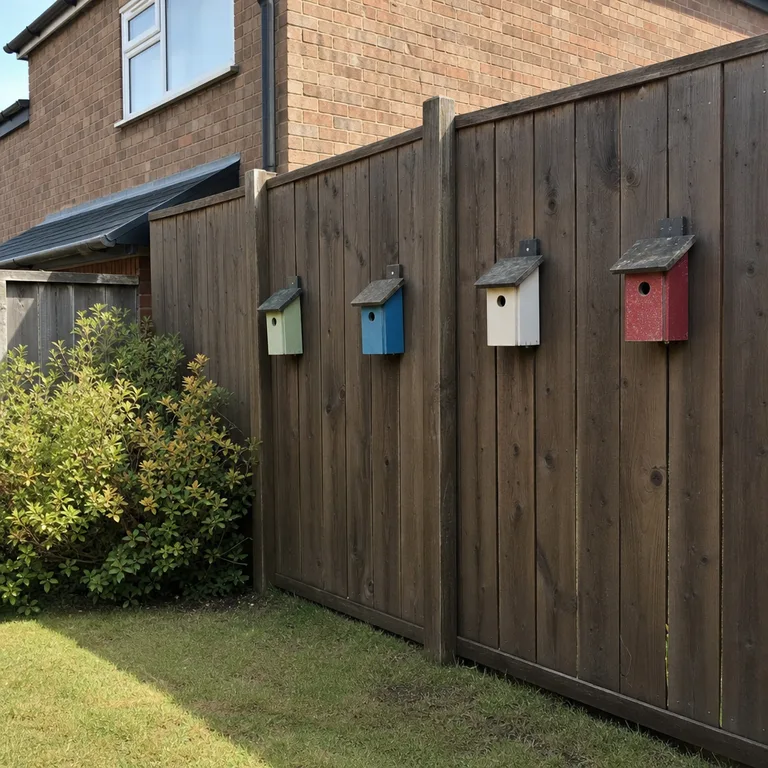
1.Hang a Group of Lightweight Metal Wall Art
Turn one sound fence bay into a focal point with three or five lightweight metal shapes. Leaves, suns, and simple abstract pieces work well because the open space around them still lets the fence read as a boundary rather than a solid decorated wall.
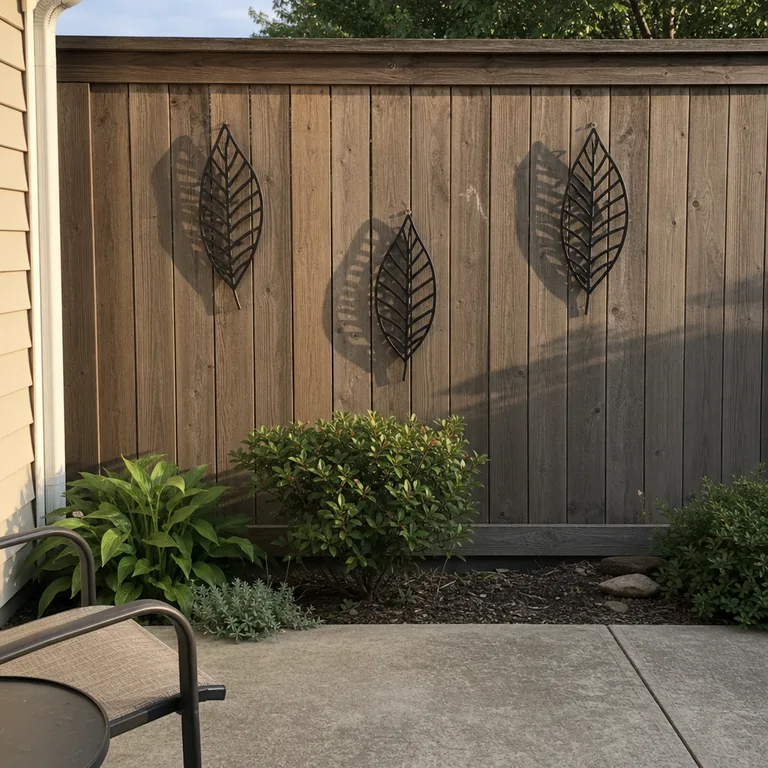
Keep the grouping loose instead of lining every piece up in a rigid row. Look for rust-resistant finishes, use fixings suited to the fence material, and choose pieces that can be taken down when staining, painting, or repairs are needed.
This approach gives a plain run of timber a stronger visual center without adding bulk or relying on living plants. It is also easy to change later by moving the arrangement to another bay.
Worth knowing: Thin metal pieces can rattle or bend in exposed, windy gardens, so avoid large shapes on a weak or loose fence panel.
2.Use Acrylic Mirrors to Brighten a Shaded Corner
A small cluster of acrylic mirrors can make a dark fence corner feel less closed in by catching pale sky, nearby foliage, and light from the patio. Round mirrors in different sizes tend to look softer than one large rectangle on a garden fence.
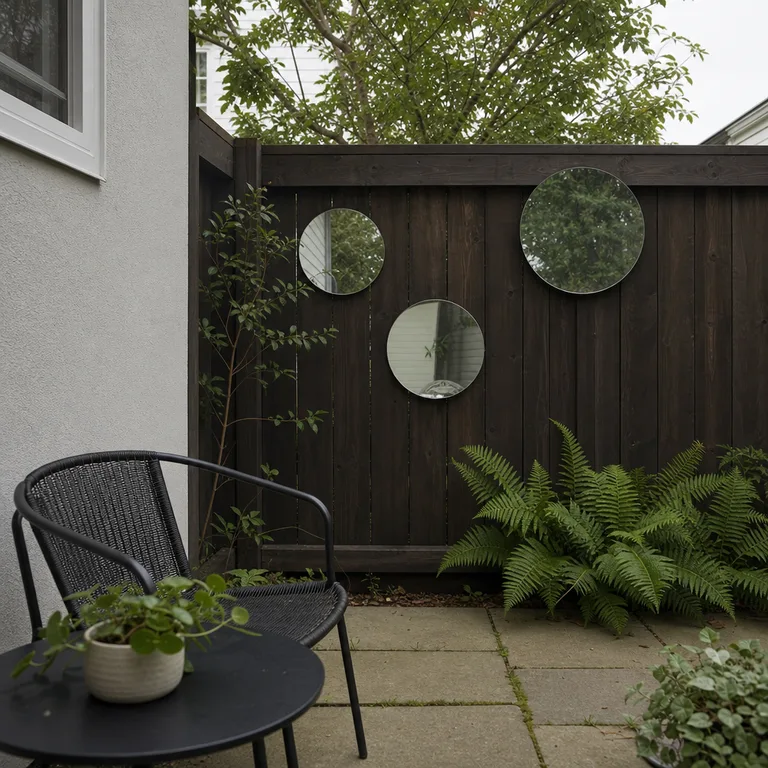
Use outdoor-rated acrylic rather than glass, and mount each mirror securely with compatible clips or screws. Position them where they reflect a pleasant view, not a neighbour's window or a busy path, and check them after strong wind.
This is especially useful beside a shaded seating spot where paint colors can look flat. Keeping the mirrors grouped in one corner creates a deliberate feature without covering the whole boundary.
Worth knowing: Mirrors need occasional cleaning and should be kept out of harsh, prolonged direct sun where glare could be uncomfortable or troublesome.
3.Mount Battery Lanterns Along One Fence Bay
A short line of small battery lanterns gives the edge of a patio a warmer evening outline. Mount them at an even height along a single fence bay rather than scattering them across the entire garden.
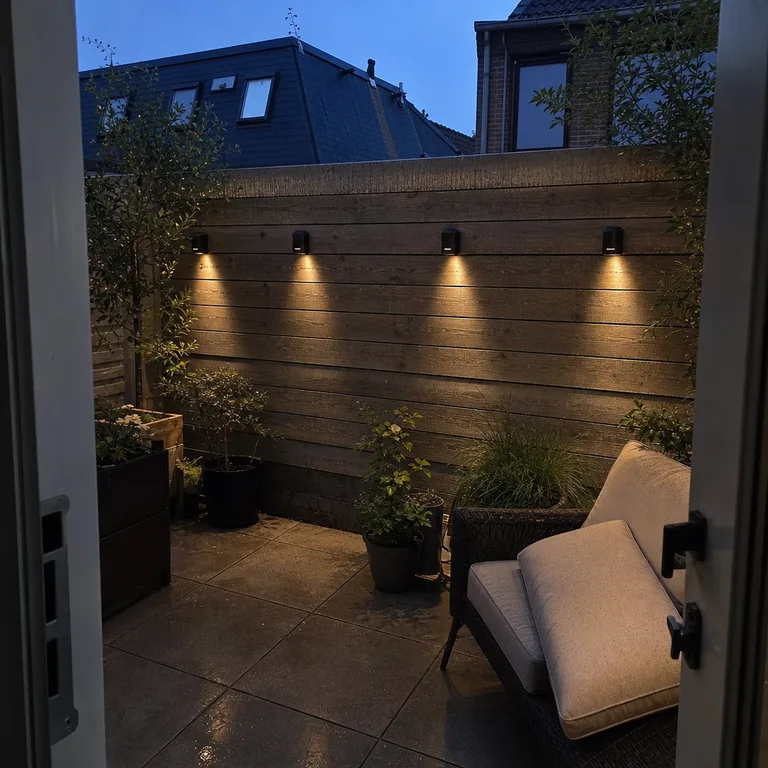
Choose lanterns intended for outdoor use and use removable hooks or owner-approved brackets where possible. Warm, low light is enough for atmosphere near chairs and a table, while brighter task lighting is better placed near steps or doorways.
The lanterns add interest in daylight through their shape and finish, then make the fence useful after dusk. Bringing them inside during prolonged severe weather can help reduce wear.
Worth knowing: Battery lanterns need regular checking, and they may not provide enough light to safely illuminate a path or level change.
4.Create a Flat Display With Reclaimed Wooden Shutters
Old wooden shutters mounted flat against the fence bring color, texture, and a little architectural detail to a bare boundary. A pair with chipped paint can suit a relaxed garden, while a freshly painted pair creates a cleaner look.
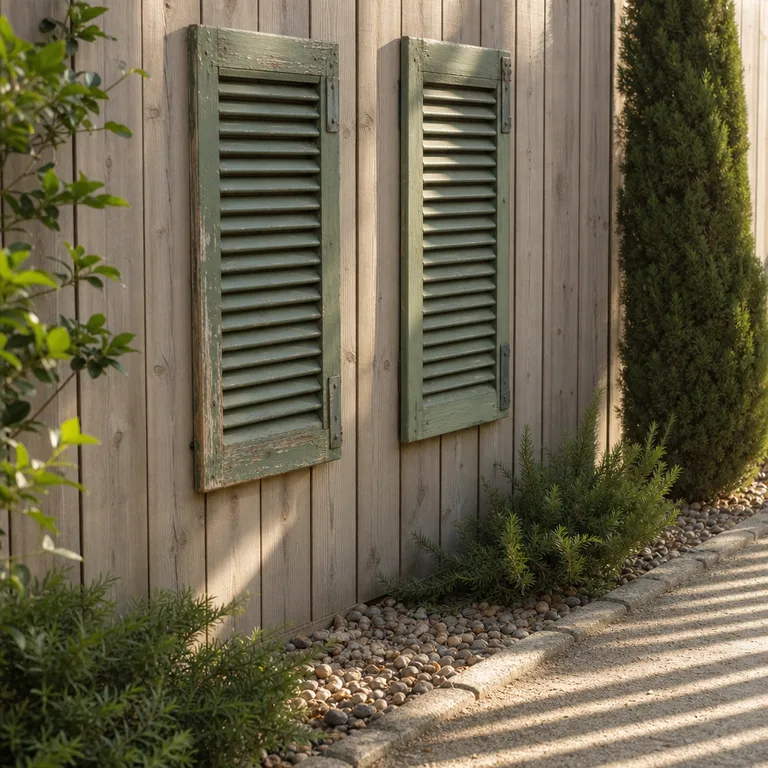
Use shutters that are light enough for the fence and seal any bare timber before hanging them. Keep their bottom edges clear of soil, mulch, and splashback so damp does not sit against the wood after rain.
One or two shutters are usually enough to make a focal point behind a bench, gravel border, or small patio. Salvaged pieces can be painted in leftover exterior paint to tie them to pots, a gate, or existing garden furniture.
Worth knowing: Reclaimed wood needs more maintenance than metal or plastic accents, particularly in wet climates or on fences that receive little sun.
5.Add a Vertical Row of Small Birdhouses
A neat arrangement of simple birdhouses adds color and a garden theme without needing vines or trailing plants. Use boxes with different muted finishes, or paint a matching set so the display feels orderly rather than overly busy.
If the houses are intended for nesting, follow suitable placement guidance for the bird species likely to use them. Include drainage, keep them away from frequent disturbance, and make sure the design allows cleaning between nesting seasons.
Mounting a few boxes across one section of fence makes the decoration feel connected to the garden's wildlife. The compact scale works well for a narrow side garden where larger wall art could feel too dominant.
Worth knowing: Functional birdhouses cannot be placed solely for appearance; their location, cleaning access, and proximity to pets or busy seating areas matter.
6.Hang Enamel Trays as Color Blocks
Plain enamel trays and shallow metal platters can become simple color blocks on a dark or weathered fence. Mix circles, ovals, and rectangles, but limit the palette so the display feels collected rather than cluttered.
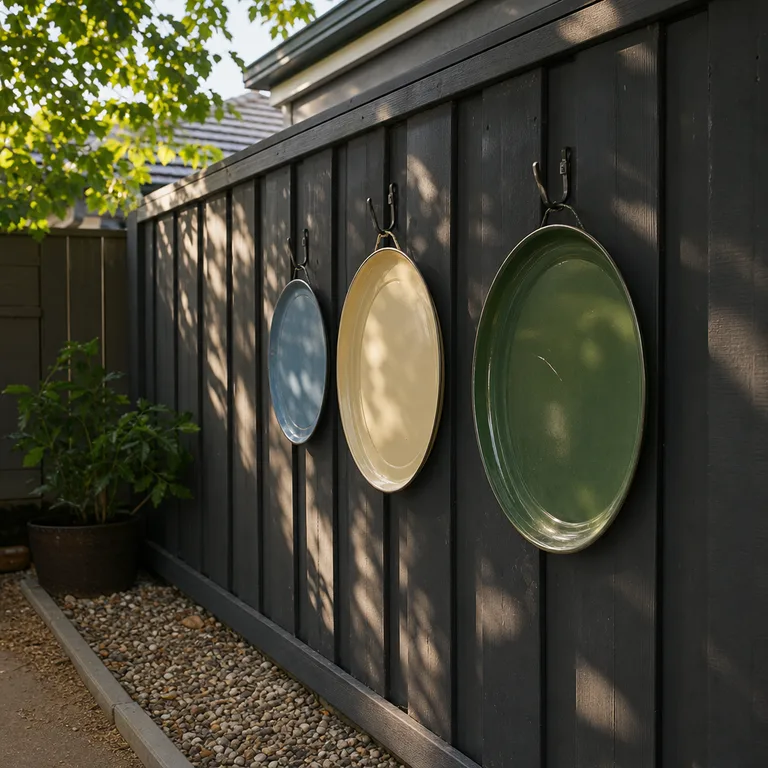
Hang the trays by strong rim holes, suitable brackets, or hooks that hold them flat to the fence. Choose rust-resistant pieces in rainy areas, and avoid anything with sharp damaged edges or loose handles.
This idea works well with reused serving pieces that are no longer wanted indoors. The glossy surfaces catch changing daylight, while the arrangement can be taken down quickly when the fence needs treatment.
Worth knowing: Ordinary trays may rust, fade, or collect water if they were not made for exterior use, especially in persistently damp conditions.
7.Fix Solar Downlights Under the Fence Rail
Small solar downlights tucked under a top rail make the texture of a timber fence visible after dark. Their narrow beams add a repeating pattern of light without filling the fence face with large objects.
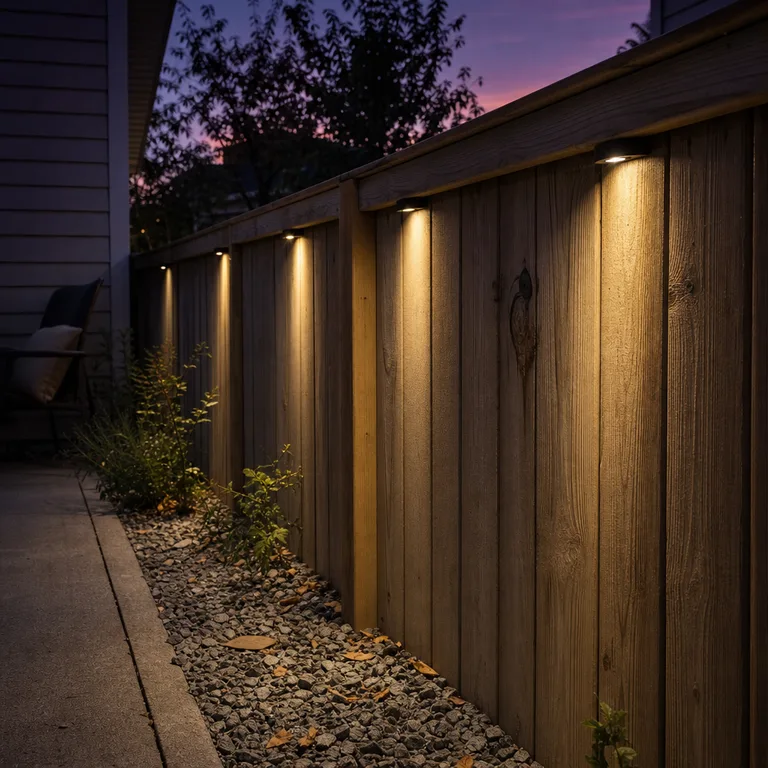
Place the solar panel where it receives dependable daylight, which may mean choosing lights with separate panels rather than all-in-one units. Use screw-mounted fittings only on sound timber, and keep wiring or panel placement clear of gates and maintenance access.
These lights are most effective along the fence beside a patio or gravel strip, where their glow can define the garden edge. They are a restrained option for anyone who wants the fence to look finished in the evening as well as daytime.
Worth knowing: Solar lights perform poorly on heavily shaded boundaries and can give weaker, shorter illumination during periods of limited daylight.
8.Arrange Ceramic Wall Pockets Without Plants
Empty glazed ceramic wall pockets make a fence feel more handmade and layered without adding another watering job. Group several different shapes in a close composition, using tones that stand out against the fence paint or timber.
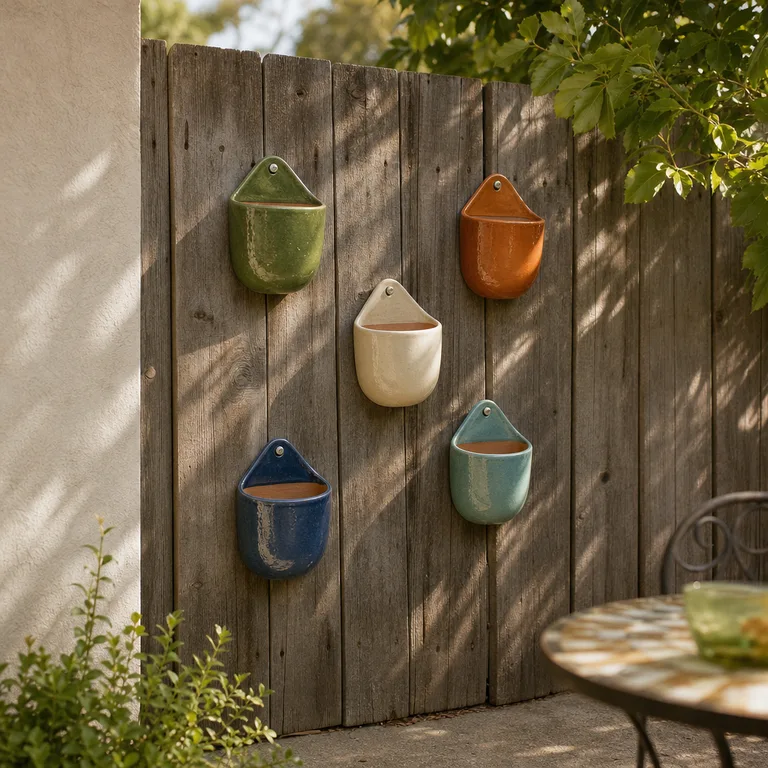
Treat them as wall ornaments rather than planters, and use hooks rated for their weight. Check each pocket for chips and cracks, particularly after freezing weather, and leave enough space to remove individual pieces easily.
Their curved forms soften long straight fence lines and add color even in a small garden with limited planting. A cluster near a patio table or bench can also make that area feel more established.
Worth knowing: Ceramic is heavier and more breakable than many fence decorations, so it is not a good choice for weak panels, high-wind sites, or areas used for active play.
9.Display a Weatherproof Clock and Thermometer Pair
An outdoor clock paired with a simple thermometer gives a plain fence a practical focal point near a patio door or seating area. Matching their frame color or keeping both faces simple helps them read as one deliberate display.
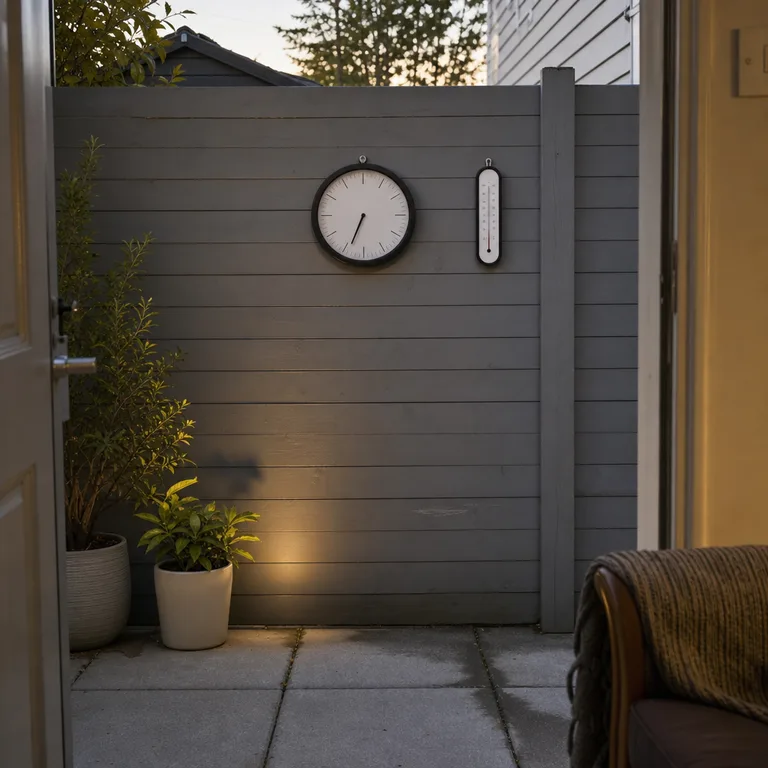
Choose items with sealed, weather-suitable housings and make sure batteries can be changed without dismantling the entire arrangement. Mount them where they can be read easily but are not constantly hit by sprinkler spray or driving rain.
This is a useful alternative to purely decorative pieces for a garden that is used often. The pair fills a modest area of fence while leaving the surrounding boards clear for future repairs or repainting.
Worth knowing: Outdoor clocks and thermometers can become less reliable when exposed to repeated rain, temperature swings, and direct sun, so they may need seasonal checking.
10.Make a Salvaged Tool Display With Flat Garden Tools
A trowel, hand fork, and small rake can become a simple fence display when mounted handle-down as a group. Their worn wood and dark metal suit an informal garden, shed corner, or gravel patio without needing any added planting.
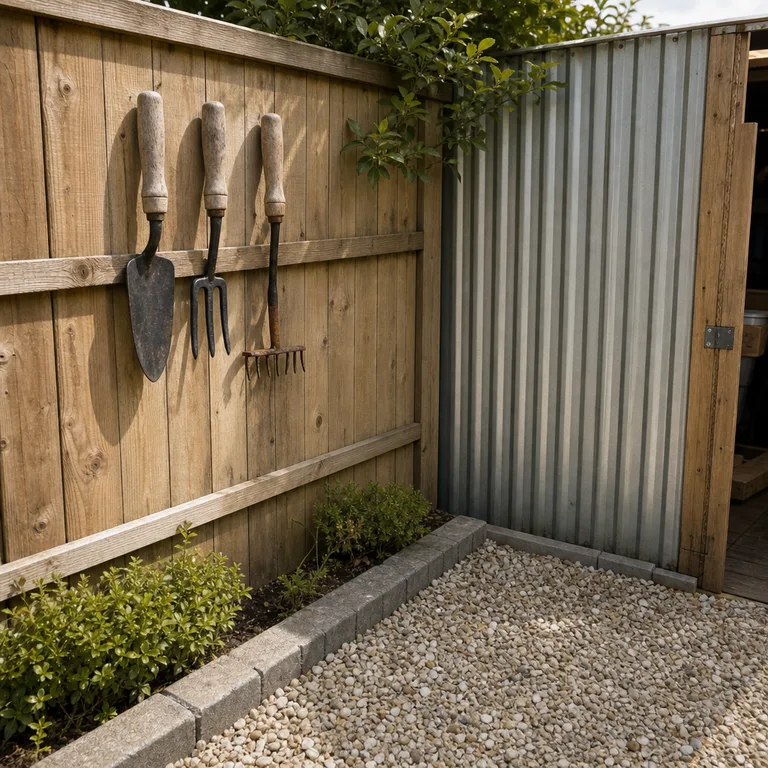
Choose retired tools with flat profiles and remove or cover sharp points before mounting them. Treat exposed metal to slow rust, use sturdy hooks or brackets, and place the arrangement well away from areas where children play.
Keeping the tools to a small matching set makes the idea look intentional. It is a useful way to reuse pieces that are no longer comfortable or reliable enough for regular gardening work.
Worth knowing: This display needs careful placement and secure installation because old tools can have sharp edges, splinters, and loose rust that make them unsuitable near active paths or play spaces.
About the author
Dana Ruiz, Senior editor
Dana writes about small-space living, storage and low-cost decorating.
Keep reading
8 Drainage Checks for Patio Plant Pots That Stay Too Wet
November 1, 2026
7 Narrow Foundation Bed Layouts for the Front of a Small House
October 31, 2026
8 Christmas Porch Planters Using Empty Summer Pots
October 29, 2026
8 Homework Station Ideas for Two Kids Sharing One Bedroom
November 1, 2026