8 Christmas Chair Back Decorations Using Ribbon and Reusable Accents
These eight Christmas chair-back treatments add seasonal color to a small eating area while leaving the chairs, upholstery, and table setting unchanged. Each uses light reusable materials that can be tied or slipped on, with attachment choices matched to chair shape and kept clear of seated backs and chair legs.
As an Amazon Associate I earn from qualifying purchases.
1.Tie One Wide Velvet Bow at the Top Rail
A single wide velvet bow gives a plain chair a finished Christmas look without crowding a small eating area. Center it on a solid top rail, where the shape reads clearly from across the room and stays above a seated person’s back.
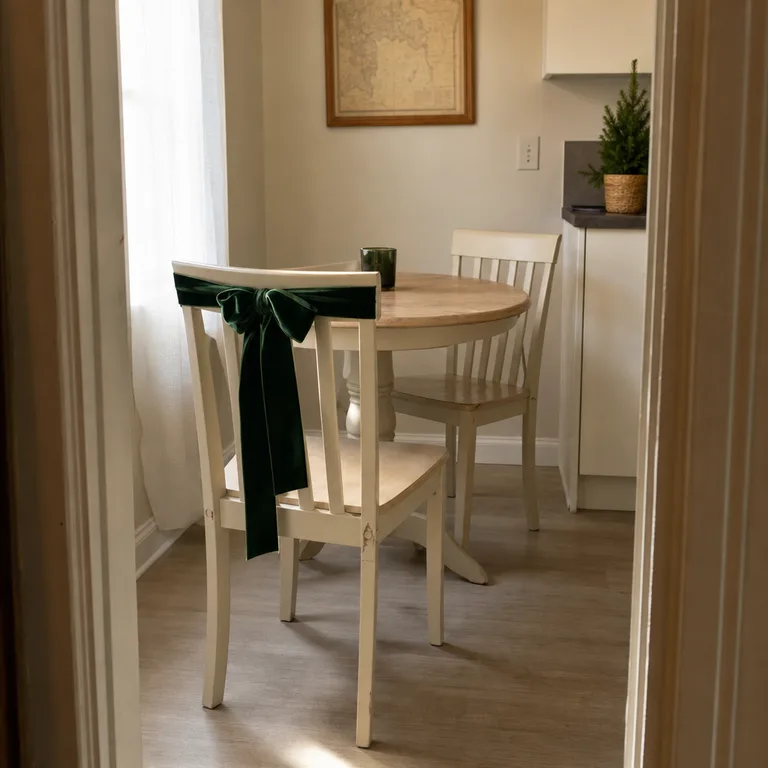
Wrap the ribbon around the rail and tie the bow directly rather than using tape or permanent fasteners. Reuse ribbon from gift wrapping or seasonal storage, and trim uneven tails only if needed; a slightly relaxed bow can suit an everyday kitchen better than a rigid one.
Velvet is best kept away from wet outerwear, food splashes, and chairs that are constantly pushed against a wall, since the pile can flatten or pick up marks.
Worth knowing: This only works well on chairs with a sturdy, visible top rail wide enough to hold the bow in place.
2.Cross Two Narrow Ribbons in an X
Two narrow ribbons crossed through upper chair slats add color without the bulk of a large bow. The X shape works especially well on spindle, ladder-back, and other open-back chairs, where the ribbons can pass through the structure instead of slipping around it.
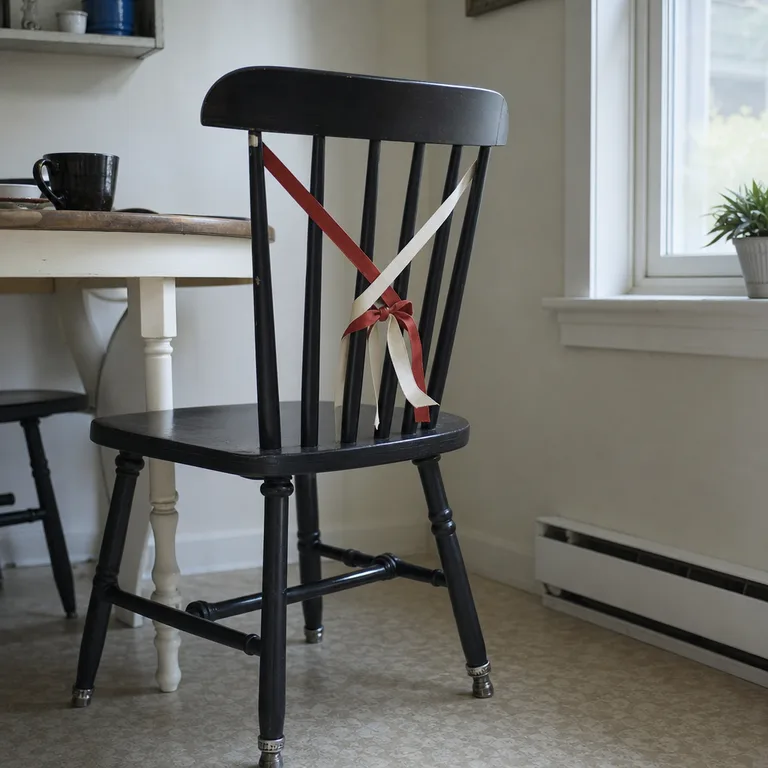
Thread each ribbon through the upper slats and knot the ends at the rear of the chair. Keep the crossing high and the knots flat, so the decoration does not press into someone’s back during dinner; grosgrain or other matte ribbon is easier to handle than very slippery satin.
Use contrasting colors sparingly in a tight dining nook, since a bold X on every chair can make the seating area feel busier.
Worth knowing: Closed-back chairs do not provide a simple route for crossed ribbons, and adhesive clips may not be suitable for painted or delicate finishes.
3.Loop a Fabric Tie Through a Blank Gift Tag
A soft fabric tie and blank gift tag create a small, place-specific accent without changing the table setting. The tag can be left blank for a simple look or labeled temporarily for a holiday meal, then removed when the chairs return to daily use.
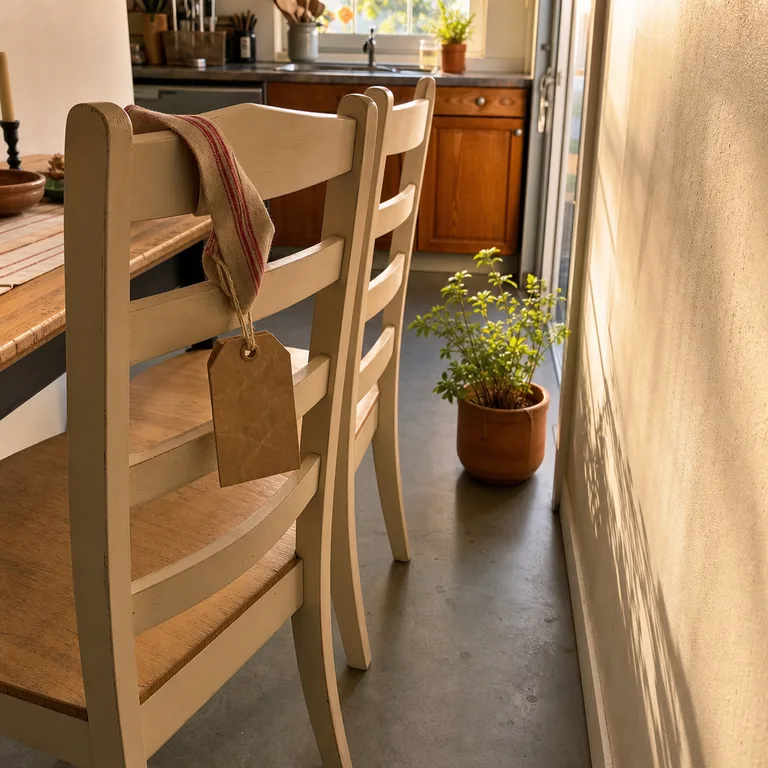
Loop a torn or cut strip of linen, cotton, or leftover fabric around an upper rung and thread it through the tag hole. A loose knot is enough for a lightweight tag, and it avoids adhesive that could mark wood, paint, or laminate surfaces.
Choose tags with rounded corners or smooth edges if chairs are stored close together, as stiff paper can catch when the chairs rub against each other.
Worth knowing: Paper tags can bend or stain in a busy eating area, particularly where young children or frequent spills are part of daily life.
4.Hang a Small Felt Wreath From the Center Slat
A small felt wreath adds a classic holiday shape while keeping the chair back mostly visible. Its soft texture works particularly well with wood chairs and calm neutral kitchens, where a large shiny decoration might feel out of place.
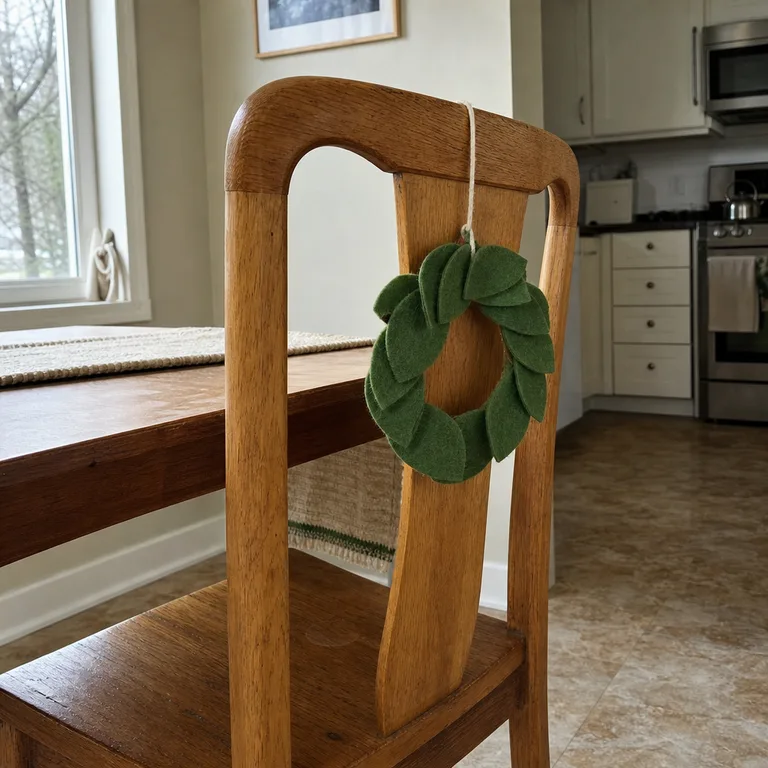
Hang the wreath from a short cotton cord at the center of a broad slat or upper opening. Keep the cord short enough that the wreath does not swing into the table when the chair is moved, and choose felt or fabric rather than a heavy wire form.
Felt decorations are easy to store flat or in a shallow box after the season. If the wreath gets compressed, reshape the leaves or loops by hand rather than pulling hard on glued details.
Worth knowing: A wreath can obstruct a narrow chair back or feel awkward on chairs that are pushed tightly beneath the table after every meal.
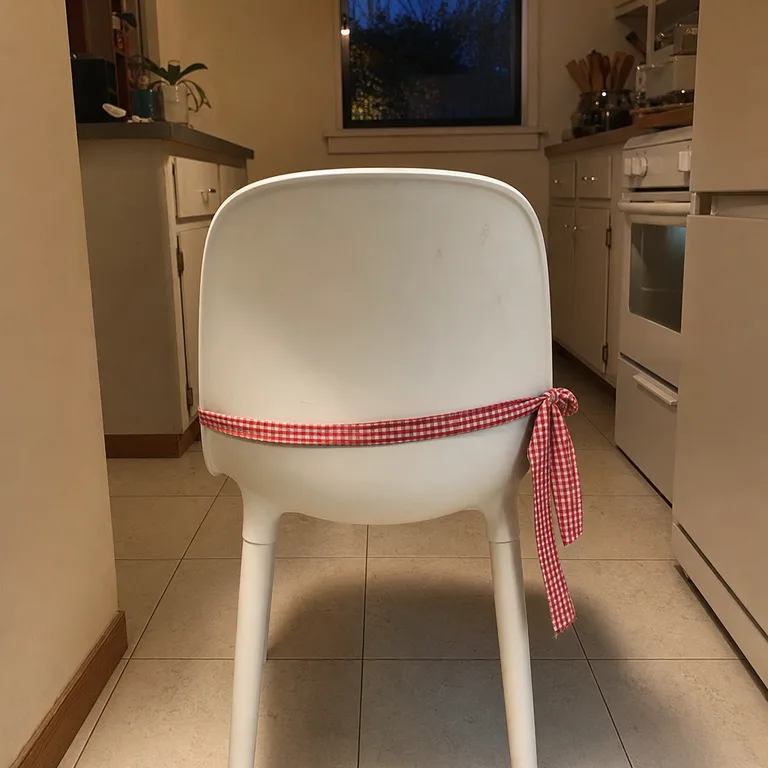
5.Knot a Washable Cloth Strip Around the Back
A washable cloth strip gives a plain chair a casual Christmas accent that is softer than wired ribbon. Gingham, solid cotton, or a cut piece from an unused seasonal textile can bring in color without adding a separate ornament or sign.
Wrap the strip around a closed chair back and make a compact side knot rather than a large centered bow. Keep the ends short so they do not trail near chair legs, wheels, or a narrow walkway where they could snag as someone pulls out the chair.
Cotton is practical for chairs used every day because it can be untied and washed if it picks up crumbs or splashes. A simple knot also makes it easy to remove the decoration for a non-holiday meal.
Worth knowing: Very smooth plastic or metal chair backs may let fabric slide downward unless the knot is checked and retightened occasionally.
6.Tie One Shatter-Resistant Ornament to a Short Loop
One lightweight ornament can add a clear Christmas detail to a metal or wood chair without covering the back. A matte finish tends to look quieter in a small dining area than a cluster of reflective ornaments, especially near bright windows or overhead lights.
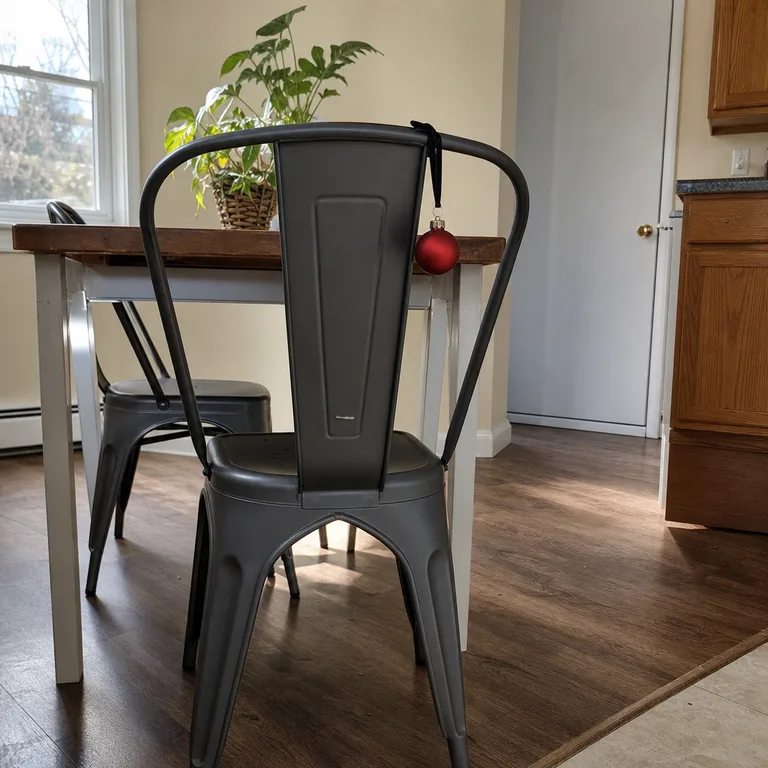
Tie the ornament below the top rail on a short ribbon loop, leaving enough space for it to hang freely without touching knees. Shatter-resistant ornaments are the more practical choice for frequently used chairs, homes with children or pets, and tight paths where chairs are moved often.
Check the loop after chairs have been pulled in and out a few times. A decoration that is secure when the chair is still can shift once it brushes the table edge or another chair.
Worth knowing: Even lightweight ornaments may tap against the chair frame or table when chairs are moved, so this is not ideal for restless seating or very close chair spacing.
7.Drape a Mini Fabric Bunting Across a Wide Back
A short strand of fabric bunting turns one wide chair back into a small holiday display. It is most effective on a stable, broad-backed chair that has enough width for the pennants to show without sagging into the seat.
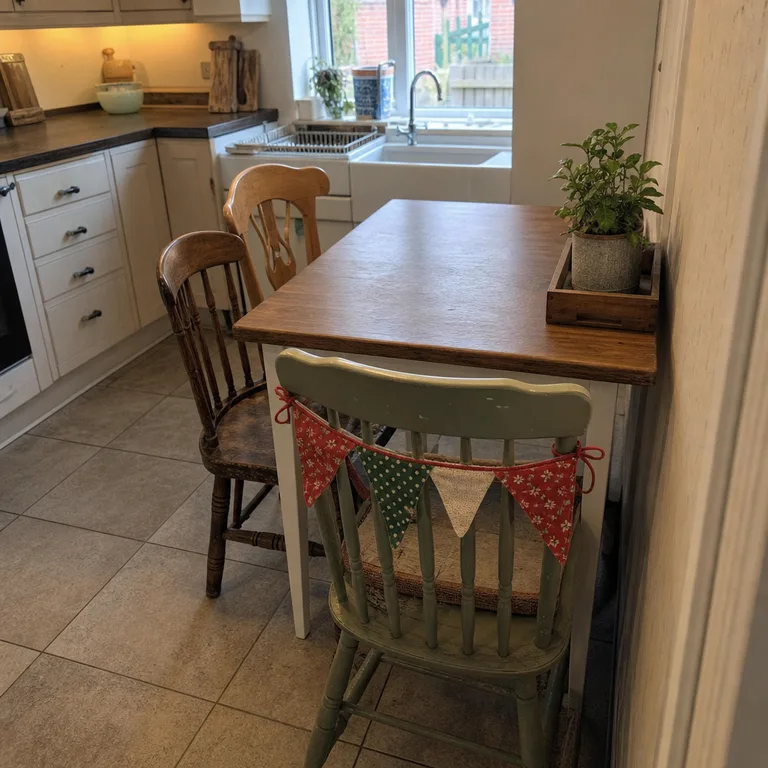
Tie the bunting at both upper corners with removable fabric ties, keeping the flags high and shallow. A small scrap-fabric version can be made from existing textiles, with colors repeated from other room accents rather than introducing a new palette.
Reserve this treatment for a pair of end chairs or the most visible chairs in the room if the eating area is compact. That keeps the seasonal detail from overwhelming the table and makes daily chair movement easier.
Worth knowing: Bunting is less suitable for narrow, curved, or open spindle backs because the ties can slip and the flags can hang unevenly.
8.Bundle Fabric Greenery With a Soft Ribbon
A small bundle of fabric greenery at one upper chair corner adds texture without the shedding and moisture concerns of fresh clippings. Cloth holly, felt berries, or soft faux leaves can bring a traditional Christmas note to cane, wood, or painted chair backs.
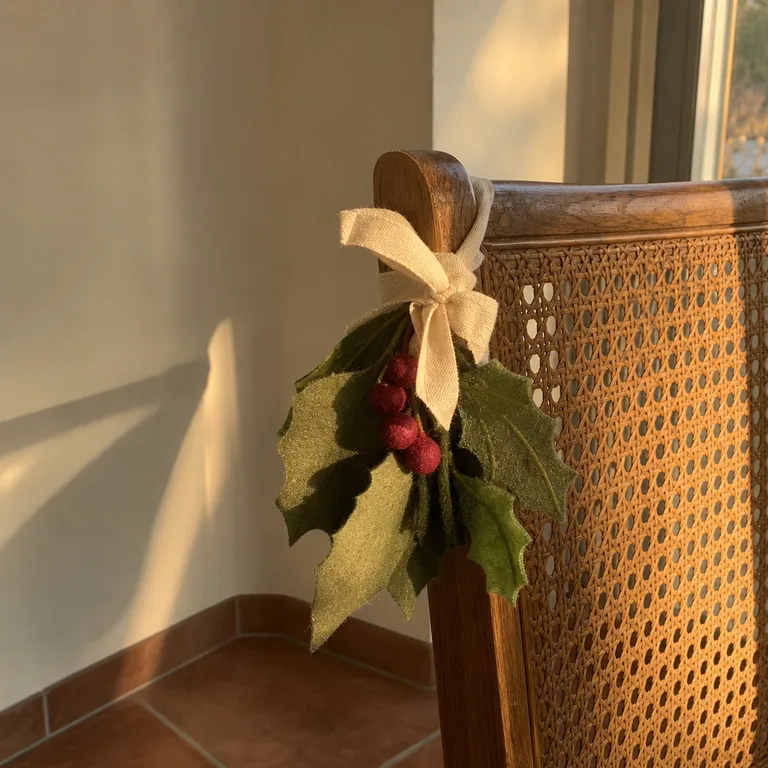
Gather only a few stems and fasten them with a soft ribbon around a sturdy upper corner. Keep any wire-covered stems fully wrapped or skip them altogether, since exposed wire can scratch chair finishes and feel uncomfortable if it shifts toward the seating area.
Fabric greenery can be reused from wreaths, gift toppers, or older decorations that no longer work as a full display. Dust it before storing, and keep the bundle small enough that it does not catch on a nearby wall or cabinet.
Worth knowing: Cane and delicate woven chair backs need special care, since tightly tied ribbon or stems can strain fragile sections or snag loose fibers.
About the author
Dana Ruiz, Senior editor
Dana writes about small-space living, storage and low-cost decorating.
Keep reading

7 Dish Drying Setups for a Small Kitchen With Almost No Counter Space
October 21, 2026

12 Refrigerator Organization Habits That Do Not Require Matching Bins
October 20, 2026

7 Portable Potting Setups for a Small Patio Without a Potting Bench
October 20, 2026
6 Parking Spots for a Folding Step Stool in a Small Kitchen
October 19, 2026