7 Two-Desk Arrangements for Adults Sharing a Small Bedroom
A shared bedroom can hold two work surfaces when the layout protects a clear route to the bed and gives each person enough chair space to work without constant collisions. These arrangements suit different wall shapes and schedules, but each should be tested against real desk depth, chair pullout, window access, outlets, and rental limits before moving furniture.
As an Amazon Associate I earn from qualifying purchases.
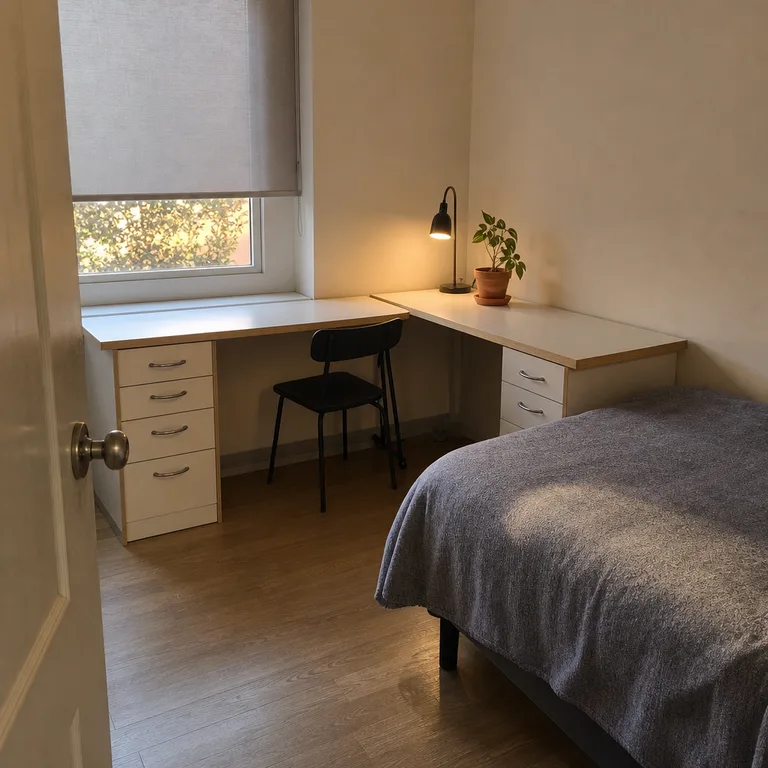
1.Place Two Matching Desks Along the Longest Wall
Put two slim desks side by side on the room’s longest uninterrupted wall. Matching desk heights and similar chairs make the setup read as one intentional work zone rather than furniture squeezed into leftover space.
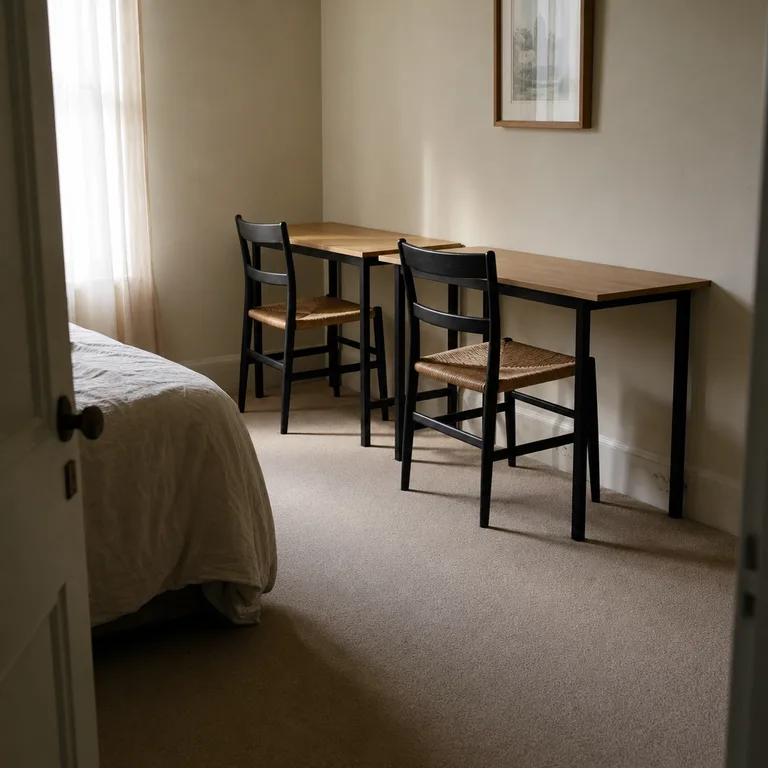
This arrangement keeps the middle of the room clearer than two desks facing each other. It also gives both people comparable work surfaces, which can make a temporary shared-bedroom office feel more balanced.
Reuse two tables of similar height if possible, or choose simple writing desks rather than deep computer desks. Mark out the desk footprints and pulled-back chair positions with tape first, especially if the path from the door to the bed runs alongside this wall.
Worth knowing: This only works when open chairs still leave a comfortable route past the bed and do not interfere with a door swing.
Related: 12 Small Desk Organization Ideas That Clear Your Work Surface
2.Float Back-to-Back Desks in the Center of the Room
Set two compact desks back to back so each person faces a different direction. The desks can create a small work island while the bed, storage, and walls remain separate zones around it.
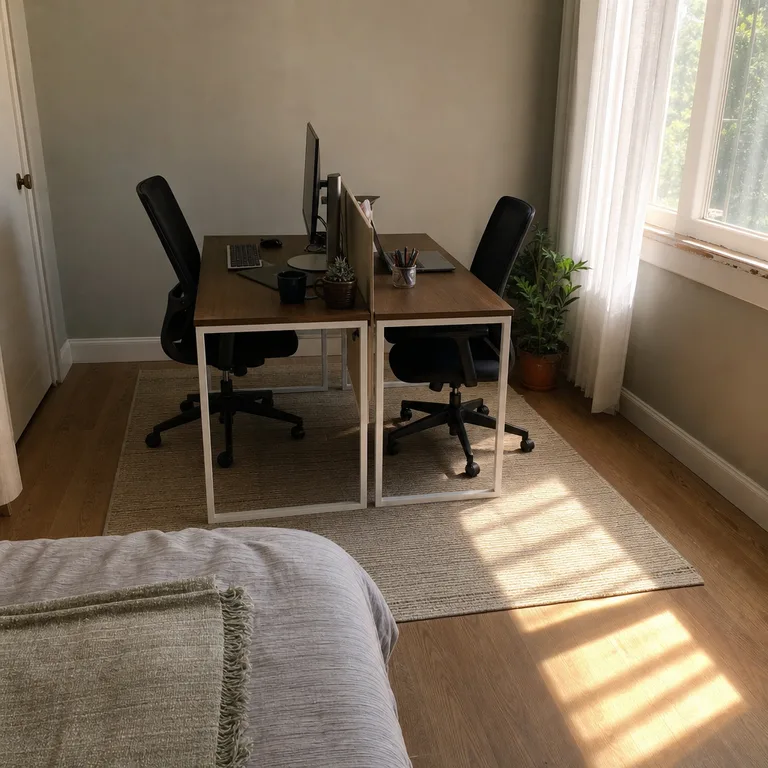
Facing away from one another can reduce visual distraction during overlapping work time. It also avoids putting both workstations along a wall that may be needed for wardrobes, radiators, or windows.
Use narrow, freestanding desks with finished backs, since both sides will be visible. Run cables beneath the paired desktops and test the full circulation loop around the desks before committing to the layout.
Worth knowing: A central desk pair demands more open floor area than it appears to, so it is rarely suitable for a room with a large bed or tight perimeter paths.
3.Use Opposite Walls for Two Fully Separate Stations
Place one desk on each of two opposing walls, leaving the center of the bedroom as a shared passage. One station can sit beneath a window if the sill height allows, while the other uses the wall across from it.
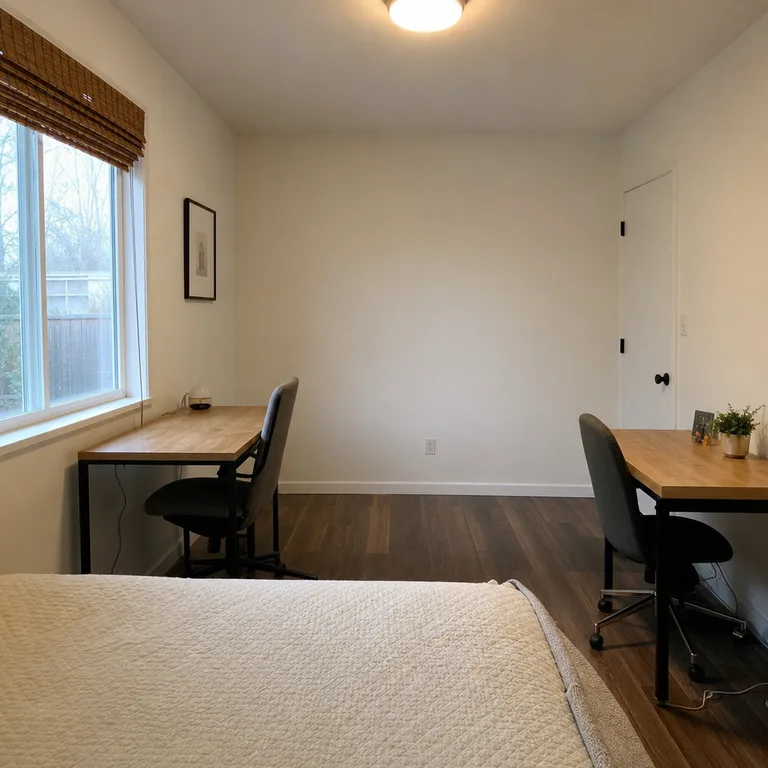
This is the strongest option for giving each adult a separate visual zone. The distance between stations can also make calls, screens, and everyday desk clutter feel less intrusive.
Keep both desks shallow enough that chairs do not meet in the middle when pulled out. Check window operation and daylight glare at different times of day, then use adjustable blinds or curtains rather than permanently blocking the window.
Worth knowing: The room needs enough width for two chair pullouts plus a usable central lane, not merely enough space for the desks themselves.
4.Build an L-Shaped Pair Around an Unused Corner
Use two narrow desks that meet at a quiet corner, with one desk on each adjacent wall. This turns an awkward corner into two clearly defined work positions without requiring a large central furniture piece.
Each person faces a different wall, which helps establish separate focus areas even when the desks touch. The arrangement can also preserve a longer wall for the bed, clothing storage, or a dresser.
A pair of basic rectangular desks often costs less and offers more flexibility than a large fitted corner unit. Leave a small gap at the corner for cables, wall cleaning, and slight adjustment if walls are not perfectly square.
Worth knowing: A corner near a window, heater, closet door, or frequently used drawer may be less practical than it first appears.
5.Pair a Desk With an Existing Dressing Surface
Give one person a dedicated desk and adapt a dressing table, chest, or vanity as the second work surface. A removable laptop stand, small desk lamp, and tray for work supplies can let the second surface return to its usual role after the workday.
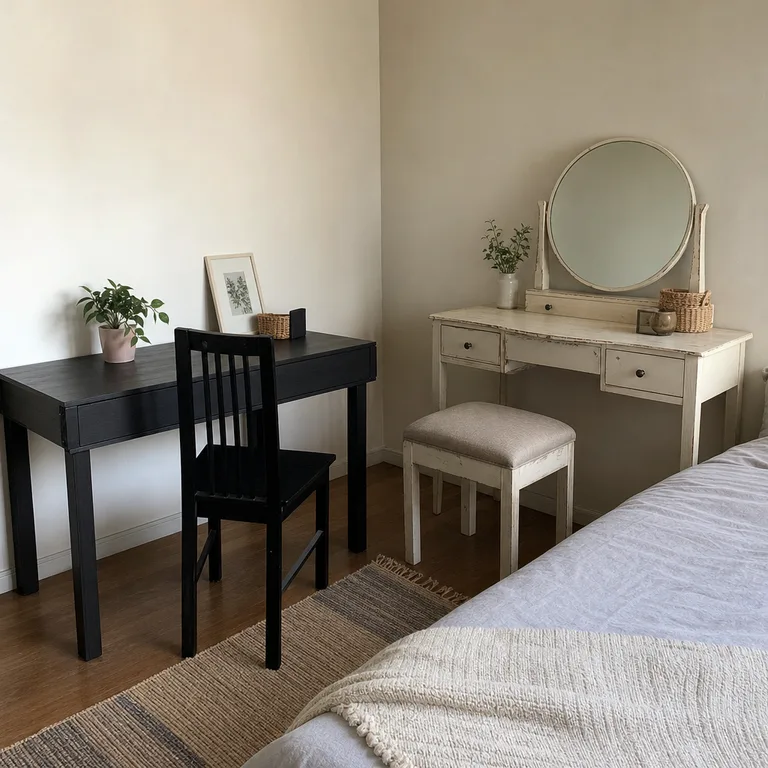
This approach avoids forcing two full desks into a bedroom that cannot comfortably hold them. It also makes use of furniture already in the room, helping the workspace feel integrated instead of crowded.
Choose a stool or chair that can serve both surfaces, or use a lightweight seat that tucks away easily. Keep cosmetics, cords, and daily work supplies contained in separate trays so changing between uses takes only a few moments.
Worth knowing: A dressing surface may be too shallow or too low for long computer sessions, particularly when used with a large monitor.
6.Choose Narrow Wall Desks for Staggered Work Hours
Install or place shallow desks on separate short wall sections, such as beside a window and near the door. These work surfaces are best for laptops, notebooks, and compact task lighting rather than wide multi-screen setups.
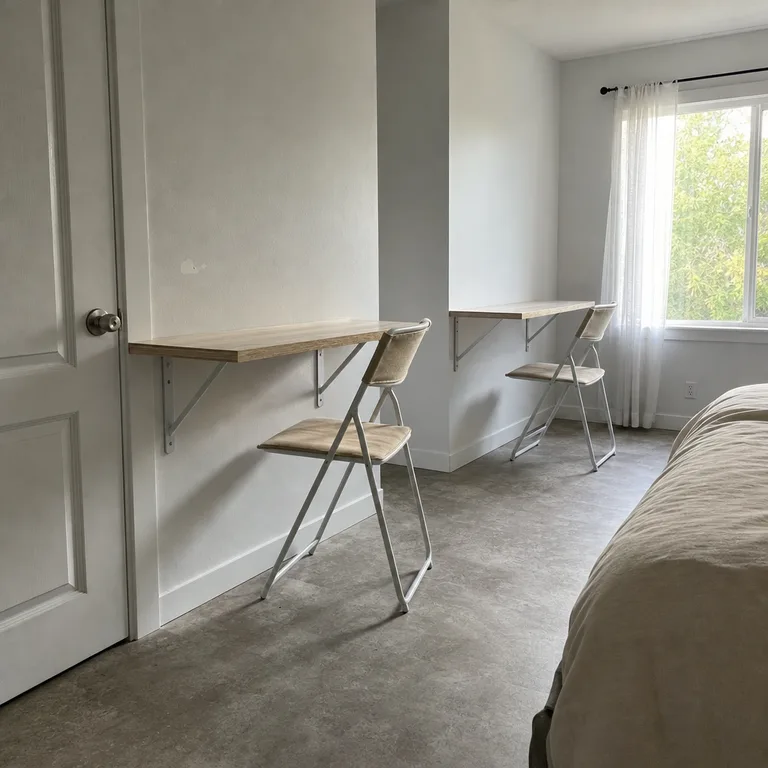
The reduced depth preserves floor space and makes sense when both adults only occasionally work in the bedroom at the same time. Folding chairs can be stored elsewhere between work periods to keep the room feeling like a bedroom.
Wall-mounted options free the floor beneath them, but the wall construction must safely support the brackets and desktop. In a rental, use freestanding narrow consoles or confirm whether wall fixing is permitted before drilling.
Worth knowing: Shallow desks limit monitor depth, keyboard space, and storage, so they are not a good match for a permanent equipment-heavy workstation.
7.Match a Fixed Desk With a Folding Work Surface
Keep one compact desk permanently in place and add a fold-down wall table for the second workstation. When the folding surface is closed, the room regains a clearer route to the bed and more room for everyday movement.
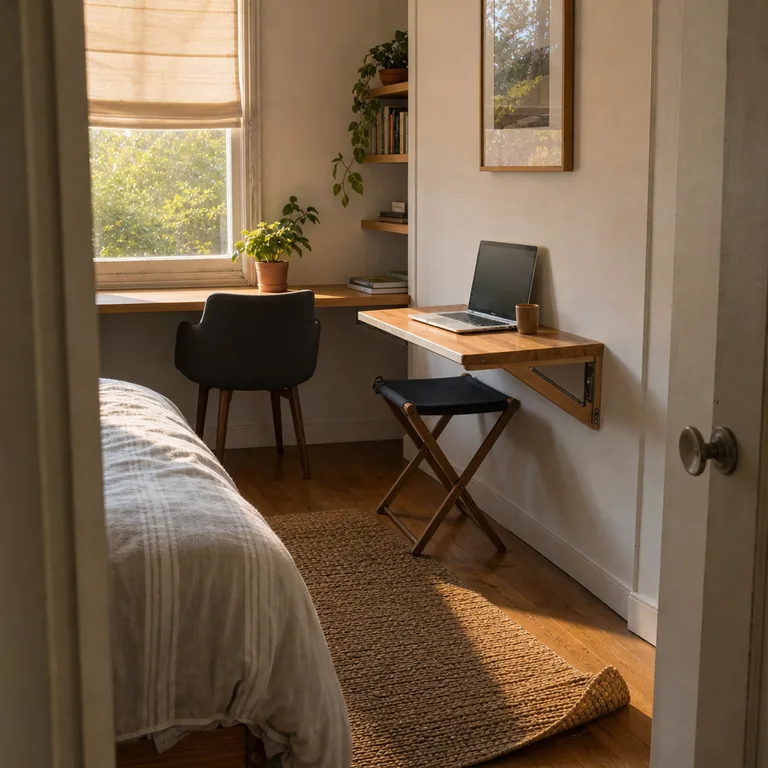
This gives the person with more frequent work needs a dependable setup without making the second work surface permanent. It is especially useful when the available wall space is narrow but the room needs to function normally outside work hours.
Choose a folding table with a work surface large enough for the intended laptop and keep its opening path clear of the bed and doors. A folding stool can disappear with the table, while a cord basket or nearby outlet keeps setup from becoming cumbersome.
Worth knowing: A fold-down surface requires secure wall installation, and renters may need permission or a freestanding alternative.
About the author
Dana Ruiz, Senior editor
Dana writes about small-space living, storage and low-cost decorating.
Keep reading
8 Christmas Gift-Wrapping Stations That Pack Away in a Small Home
October 31, 2026
7 Small Bedroom Layouts With Sloped Ceilings
October 31, 2026
8 Christmas Buffet Setups for a Small Kitchen Without an Island
October 29, 2026
7 Rewear Clothes Stations for a Small Bedroom Without a Chair Pile
October 29, 2026