7 Shared Bedroom Layouts for a Toddler Bed and a Twin Bed
These seven arrangements pair an age-appropriate toddler bed with a twin bed while giving each child an open side for bedtime, night waking, and sheet changes. Measure the room, door swing, radiator or vent clearance, and window access for the specific beds; anchor any tall dresser or bookcase to the wall rather than using it as a divider near either bed.
As an Amazon Associate I earn from qualifying purchases.
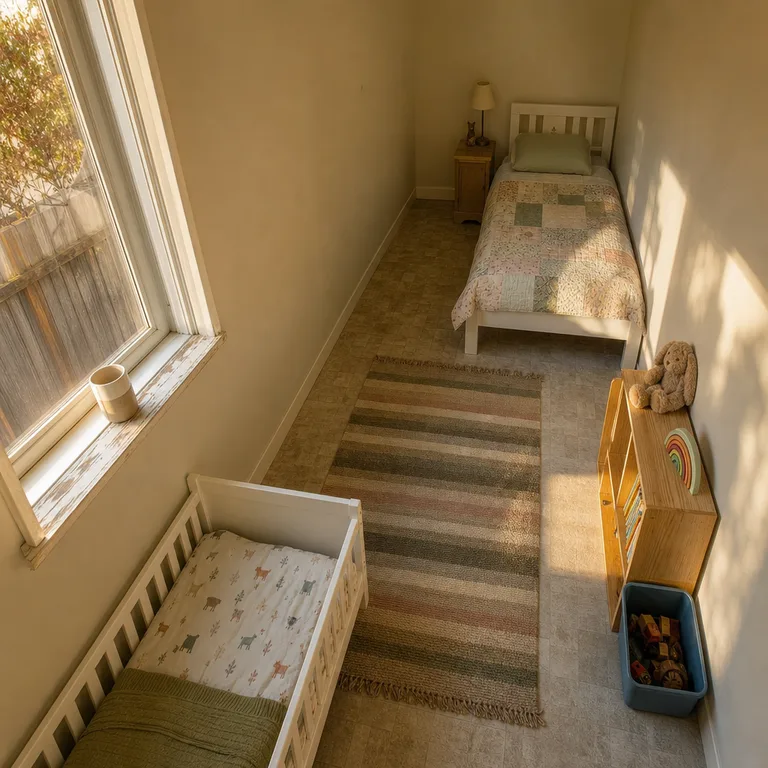
1.Place the Beds Along Opposite Long Walls
Run the toddler bed along one long wall and the twin bed along the opposite wall. Position both beds so their accessible long sides face the center aisle, leaving each child with a direct route from the door.
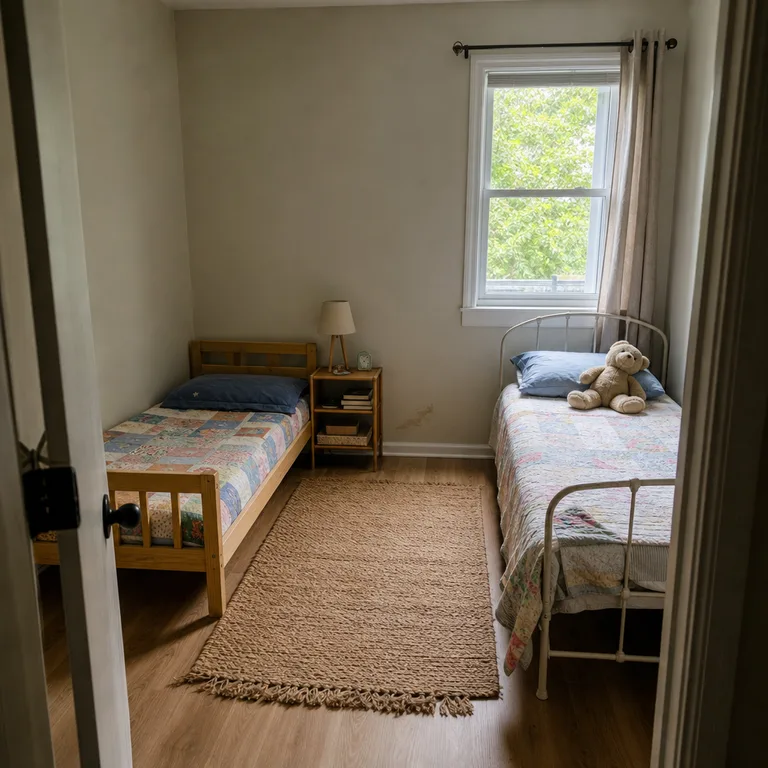
This arrangement makes a rectangular room feel orderly because the middle stays clear for walking, dressing, and nighttime check-ins. It is also an affordable reuse-first option when the existing beds already fit against opposing walls; use a washable runner only if the central floor feels bare.
Worth knowing: This layout needs enough room width for a useful center aisle. It can feel cramped in a narrow bedroom, especially when bed rails, drawers, or a door swing project into the path.
Related: 6 Small Shared Bedroom Layouts for Two Children Using Twin Beds
2.Use Two Adjacent Corners in an L Shape
Place the toddler bed in one corner and the twin bed along the adjoining wall, creating an L shape. Keep the open side of each bed facing the room rather than pushing both accessible sides against walls.
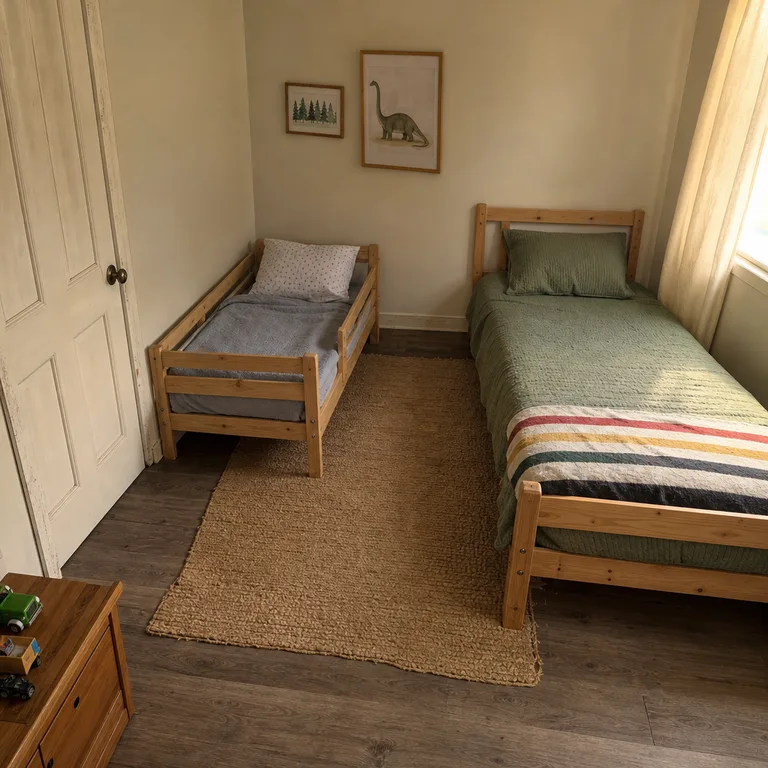
The arrangement leaves a shared patch of floor in the middle for a play rug, toy basket, or simply easier movement. It can work well when a door or closet interrupts one wall, since each bed only needs one clear approach side.
Worth knowing: The inner corner can become a collection point for dust and dropped toys. Avoid filling it with tall storage that makes either bed harder to reach at bedtime.
3.Make a Head-to-Head Bed Wall
Set the head of the toddler bed and the head of the twin bed along the same wall, with a small gap between the frames. Both beds then extend into the room with separate sides available for settling each child.
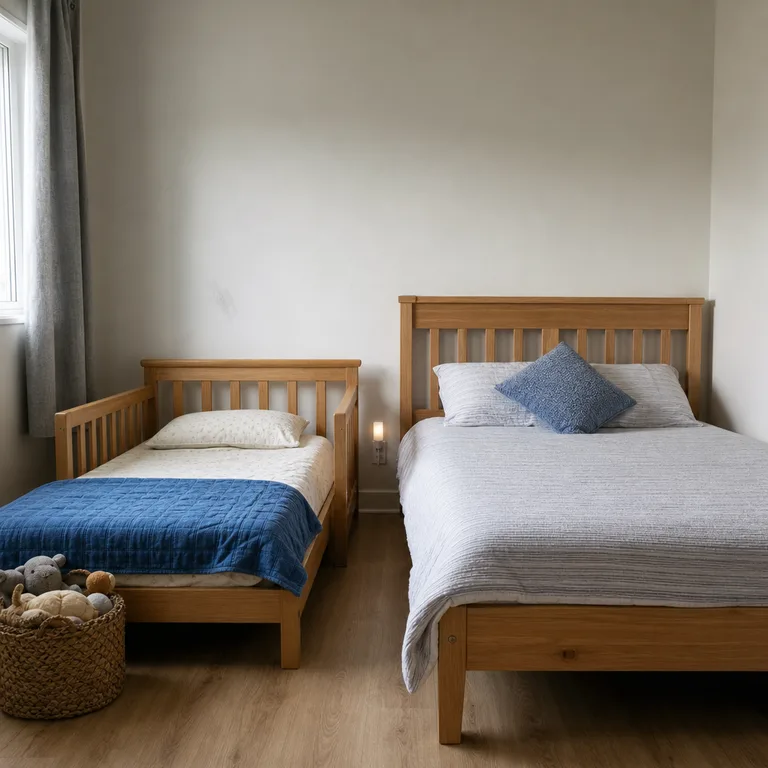
Keeping the headboards on one wall gives the room a calm, symmetrical look without requiring matching bed frames. A small night-light gap or a low basket between the beds can define each child’s space without creating a barrier.
Worth knowing: This plan takes a broad uninterrupted wall. It is less suitable if that wall contains a radiator, closet door, or window that must remain fully accessible.
4.Give Each Child a Different Short Wall
In a long, narrow room, place the toddler bed on one short wall and the twin bed on the opposite short wall. Turn each bed so its accessible side faces the open middle of the room.
The beds sit at opposite ends without turning one child’s bedtime route into a trip past the other bed. The long center section can hold a low rug or remain open, which helps a narrow room feel less like a corridor lined with furniture.
Worth knowing: The room must be long enough to preserve walking space between the bed ends. A central dresser or large toy storage unit can quickly defeat the benefit of the open middle.
5.Put the Twin Bed Under the Window and Toddler Bed Near the Door
Use the larger twin bed on the window wall and place the smaller toddler bed along the wall near the door. Leave a route from the doorway to both open bed sides, rather than forcing anyone to cross the twin bed’s sleeping area.
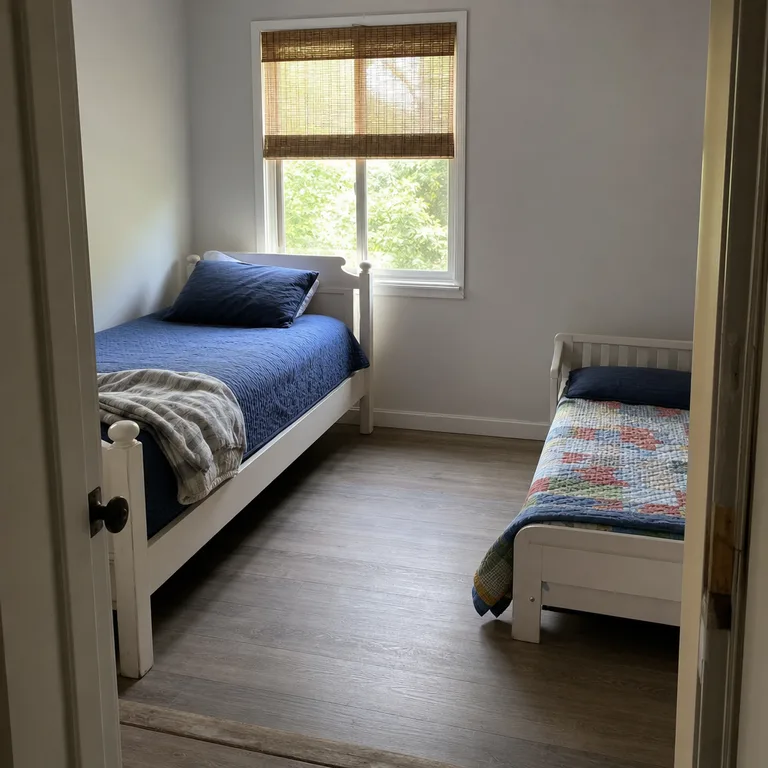
This can make use of a wall that is otherwise difficult to furnish because of the window. Keep window coverings cordless, make sure the window remains usable in an emergency, and leave clear space around any radiator, vent, or heater below it.
Worth knowing: A bed under a drafty window may be uncomfortable in cold or very hot climates. This layout also will not suit a window that serves as a required exit if the bed blocks access.
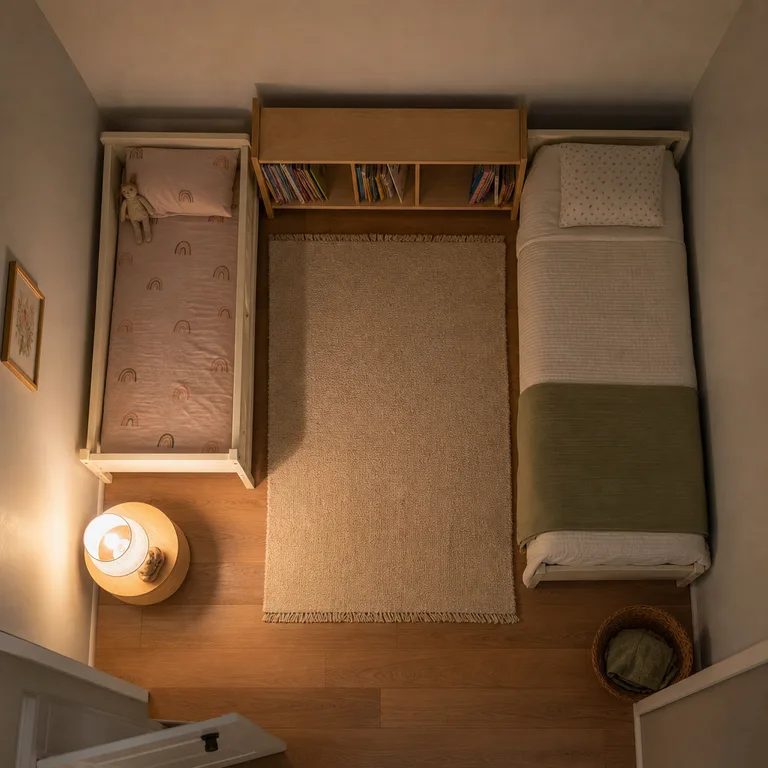
A low shelf gives each child a place for books and a small light while adding gentle separation between sleep zones. Reusing a short bookcase can be cheaper than adding new furniture, but secure it to the wall and keep it simple rather than turning it into a climbable structure.
Worth knowing: The shelf needs careful placement so it does not create a tight corner or encourage climbing. Tall shelving does not belong here, even if it would hold more storage.
7.Create a Corner Twin Zone and Open Toddler Zone
Tuck the twin bed into a far corner while leaving its long side clear for the older child and for changing sheets. Put the toddler bed on the opposite wall with open floor beside it, giving a parent room to sit or kneel during the younger child’s bedtime routine.
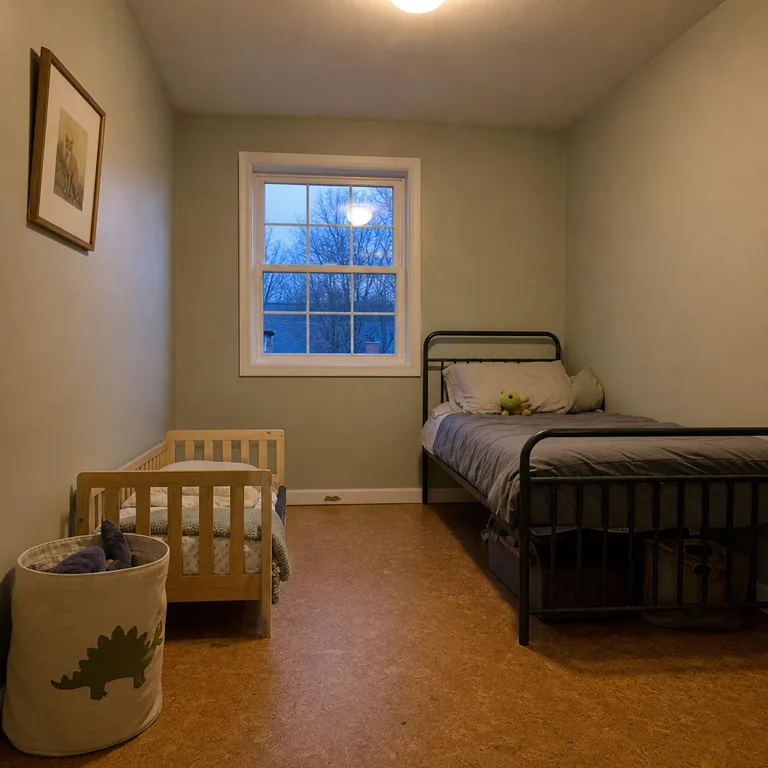
This plan gives the larger bed a defined zone while preserving flexible space around the smaller bed. It suits rooms where the twin bed is the hardest item to place and the toddler’s bedtime still needs a direct, uncluttered route from the door.
Worth knowing: Corner placement can make it harder to make the twin bed if both long sides are tight to walls. It is best for a child who can comfortably use the one open side without needing furniture moved.
About the author
Dana Ruiz, Senior editor
Dana writes about small-space living, storage and low-cost decorating.
Keep reading
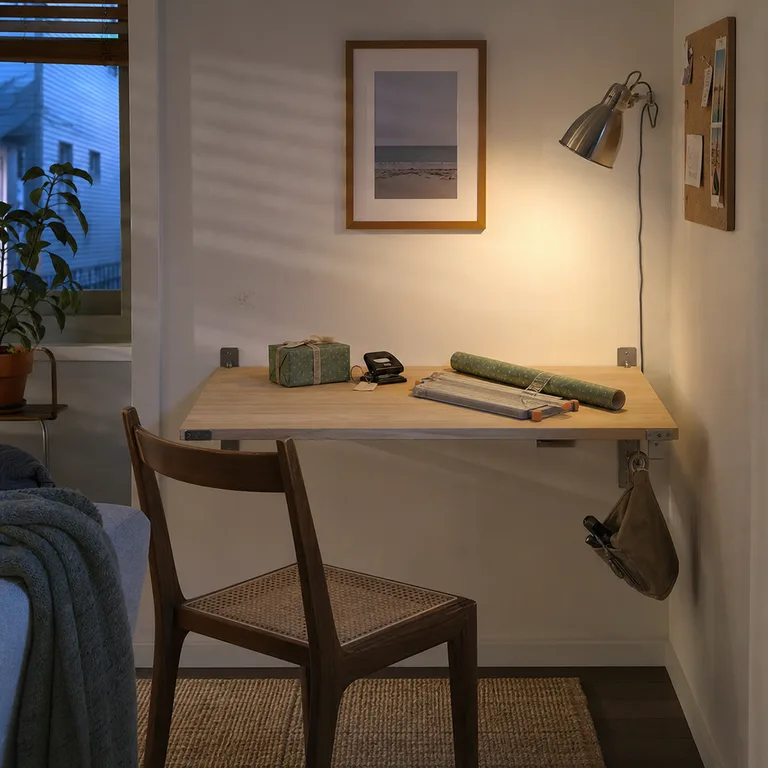
8 Christmas Gift-Wrapping Stations That Pack Away in a Small Home
October 31, 2026
7 Small Bedroom Layouts With Sloped Ceilings
October 31, 2026
8 Christmas Buffet Setups for a Small Kitchen Without an Island
October 29, 2026
7 Rewear Clothes Stations for a Small Bedroom Without a Chair Pile
October 29, 2026