7 Folding Chair Parking Spots That Keep a Small Living Room Clear
Folding guest chairs earn their place when they have a defined parking spot that keeps walkways, windows, and everyday seating open. These seven options use overlooked edges of a small living room or nearby storage, with fit, weight, and rental limits in mind.
As an Amazon Associate I earn from qualifying purchases.
1.Use the Side Gap in a Hall Closet
A slim strip beside closet shelving can be enough for folded chairs stored upright on their feet. Measure the chairs when folded, including any handles, hinges, or feet that stick out, then compare that size with the clear gap rather than the closet’s overall width.
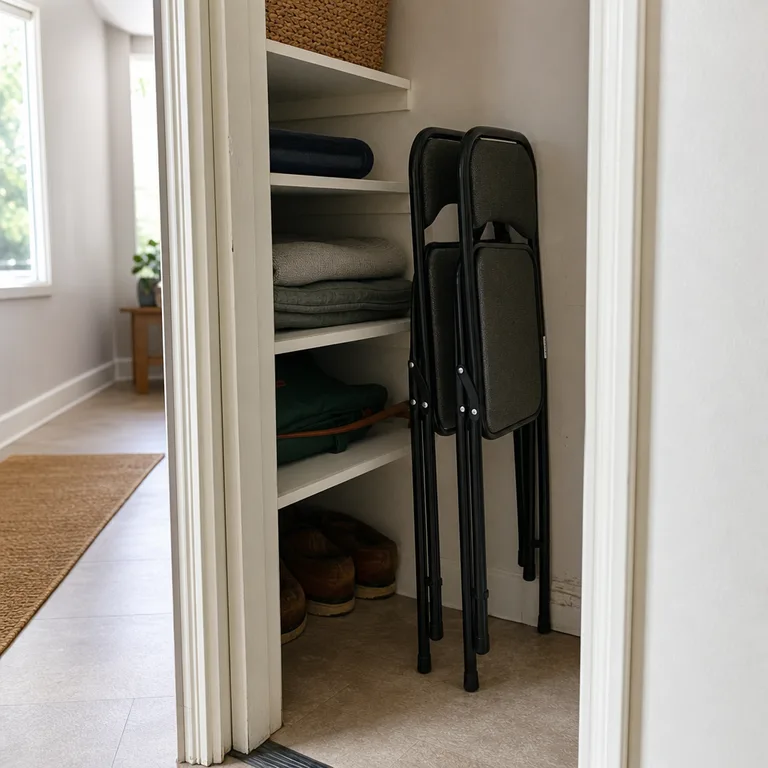
This keeps guest seating nearby without taking over the living room corner or blocking a closet shelf. It works especially well when the chairs can stand independently and coats, bags, or storage bins will not knock into them.
Reuse an existing closet gap rather than adding a bulky organizer. Add felt pads if chair feet scrape the floor, and use a simple adjustable strap only when it stops chairs from tipping as other closet items are moved.
Worth knowing: A crowded coat closet can make this inconvenient, and chairs should not be stored where opening the door or reaching everyday items becomes difficult.
2.Hang Lightweight Chairs on a Stud-Mounted Wall Rack
Compatible lightweight folding chairs can be lifted onto a wall rack beside a bookcase, behind a door that opens fully, or on another unused stretch of wall. Follow the chair manufacturer’s hanging guidance and use hardware suited to the chair’s full weight.
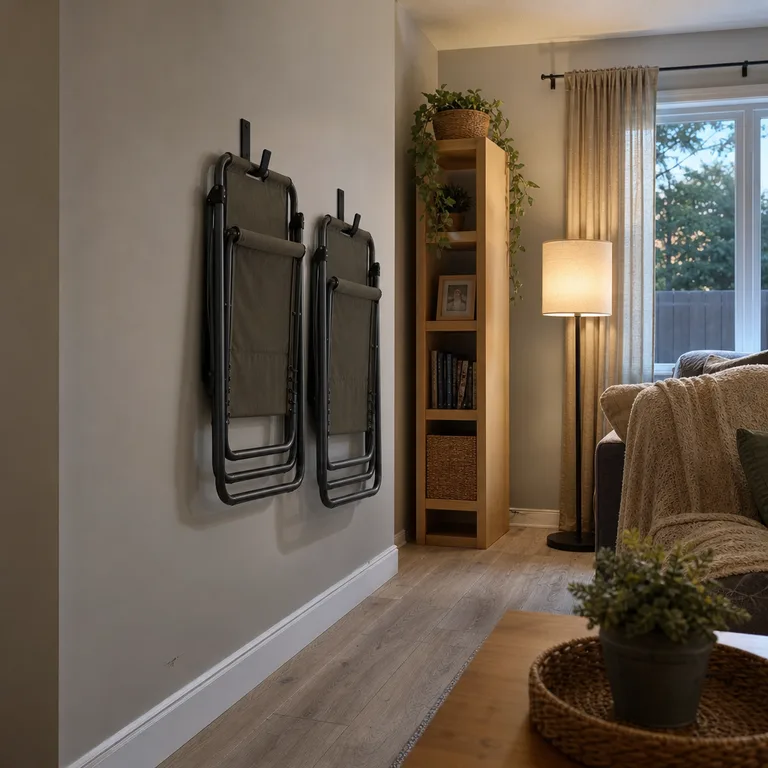
Getting chairs off the floor makes a compact living room feel clearer and leaves the space underneath easier to clean. A wall-mounted setup can also make the chairs simpler to grab before guests arrive, provided each chair has its own secure support.
A basic stud-mounted utility hook or purpose-made rack may be enough for chairs designed to be hung. Locate wall studs carefully, use suitable fasteners, and avoid adhesive hooks for heavy chairs or repeated use.
Worth knowing: This is not a renter-friendly solution without permission, and it will not suit chairs that are heavy, awkwardly shaped, or not approved for hanging.
3.Slide Chairs into the Cabinet-End Slot
The narrow gap between a freestanding cabinet and a wall can hold chairs that fold nearly flat. Keep enough space to slide them out without dragging the cabinet, and check that chair frames will not rub painted walls, baseboards, or flooring.
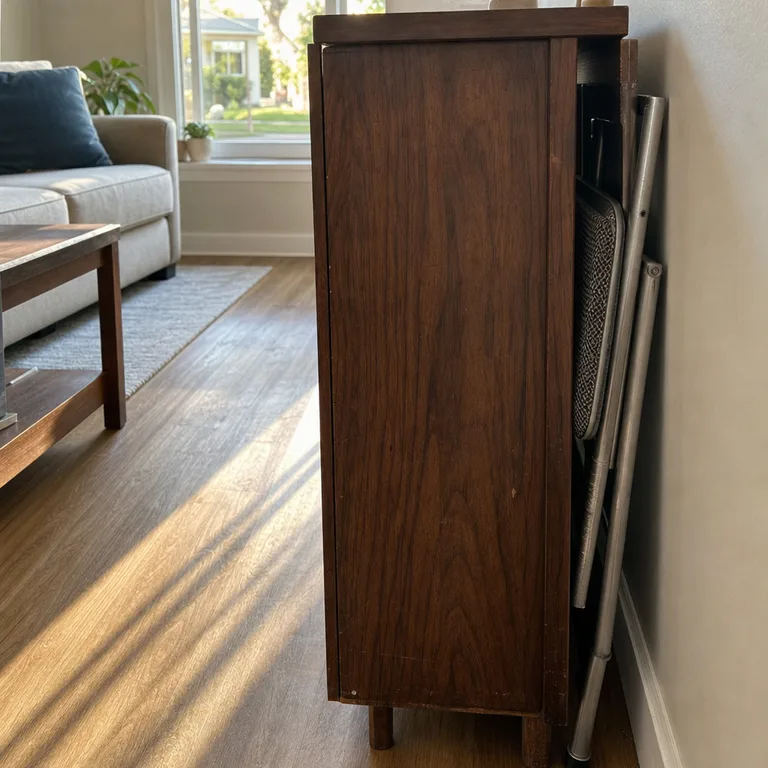
Using this overlooked slot turns a dead edge into hidden storage while keeping the chairs close to the living room. The cabinet visually screens the folded frames from the main seating area, which helps the room look less like storage.
Choose a location beside furniture already in place instead of buying a dedicated storage unit. Felt strips, floor pads, or low-profile glides can reduce scuffs where chair legs meet hard flooring.
Worth knowing: The slot needs to stay open and accessible; it is a poor choice if the cabinet must be moved often or the chairs are too thick when folded.
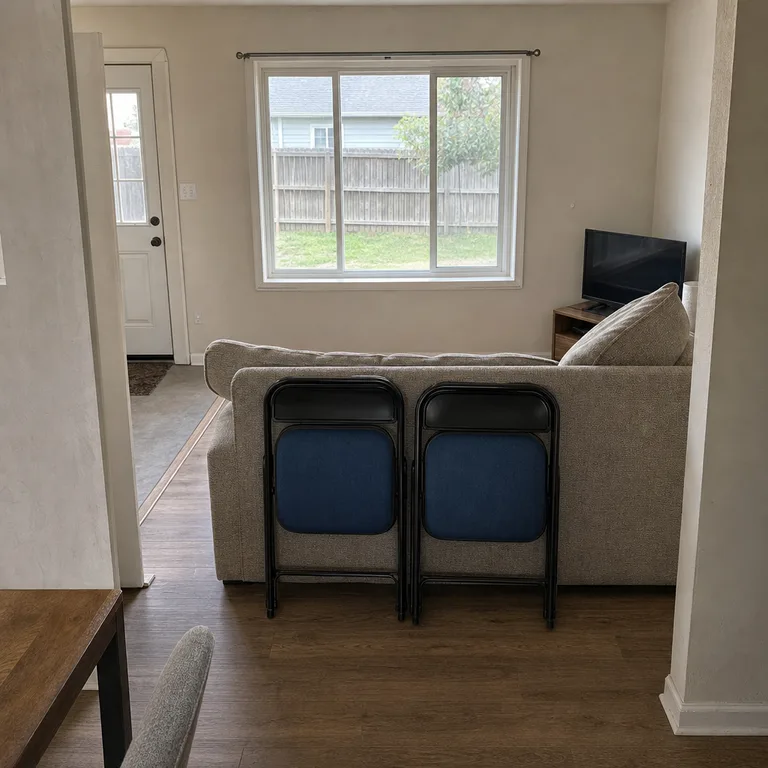
4.Park Them Behind the Sofa With a Pull Handle Facing Out
A sofa set slightly away from the wall may leave enough rear clearance for folded chairs. Place the chairs so their top handles or upper frames remain easy to reach from one side, rather than forcing anyone to shift the sofa to retrieve them.
This makes use of a visually quiet zone without filling the room’s corners or interrupting the main route through it. The sofa hides the folded chairs in everyday use while keeping them in the same room for occasional guests.
Use the existing gap only if the chair frames sit without pushing into the sofa fabric. Keep them clear of radiators, heating vents, outlet access, and curtains, and consider soft floor glides if the chairs slide against finished flooring.
Worth knowing: A shallow gap turns retrieval into a frustrating job, and this position can collect dust more quickly than enclosed storage.
Related: 7 Small Living Room Layout Adjustments That Keep Windows Easy to Open
5.Make an Open Utility Recess a Chair Bay
A shallow recess beside built-in shelving, an entry nook, or a chimney breast can become a designated chair bay. Stand chairs in a single row when possible, with their folded edges aligned so the area looks intentional rather than crowded.
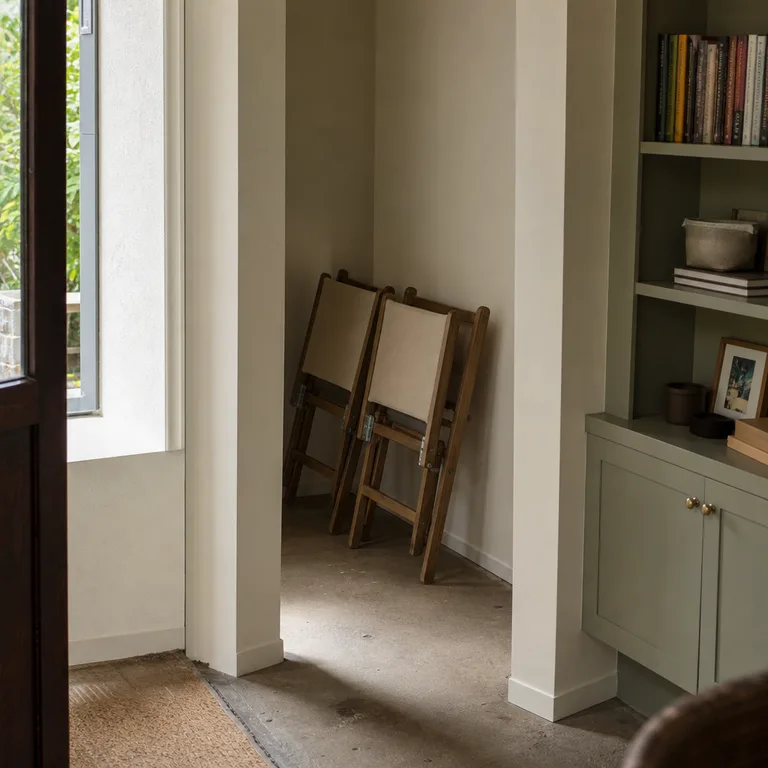
Giving the recess one clear job prevents folding chairs from drifting into the middle of the room. It also creates a simple visual boundary, especially if the nook already reads as a separate architectural pocket.
This approach needs little more than careful measuring and a clear floor. Add rubber leg caps or floor protection where needed, but leave access clear around electrical panels, heating equipment, and the room’s main walking route.
Worth knowing: A recess near a heat source, entry door swing, or electrical panel should not be used for chair storage.
6.Keep Covered Chairs Vertical in an Unused Corner
An unused corner can hold a vertical stack of folded chairs inside a fitted storage bag. The cover softens the look of metal frames, reduces dust, and helps several chairs read as one contained item instead of loose clutter.
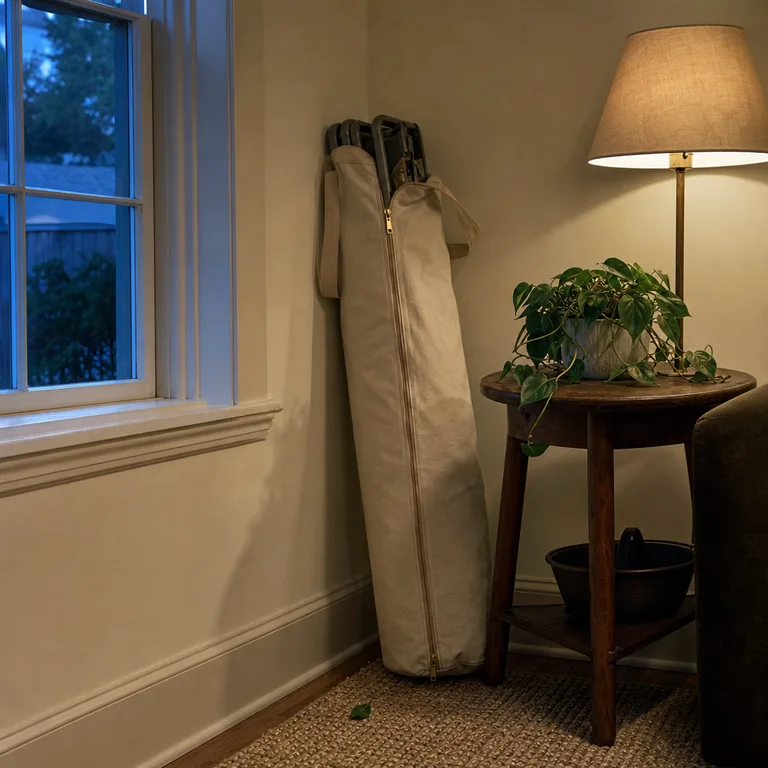
Place the bag against a stable interior wall where it will not narrow a walkway or interfere with curtains. If the stack is tall or inclined to shift, secure it appropriately so it cannot tip when someone brushes past it.
A plain canvas-style chair bag is a practical alternative to a larger cabinet, especially for chairs already owned. Keep the bag dry and off damp exterior-wall corners, where trapped moisture can affect fabric seats and metal hinges over time.
Worth knowing: A bag conceals the chairs but does not make an unstable stack safe; the chairs still need to sit securely and remain easy to lift out.
7.Use Under-Bed Storage Only for Chairs That Fit Flat
A nearby bedroom can provide useful overflow storage when folded chairs are slim enough to lie fully flat under the bed. Measure both the under-bed clearance and the chairs’ folded depth, including protruding hinges, before choosing a container.
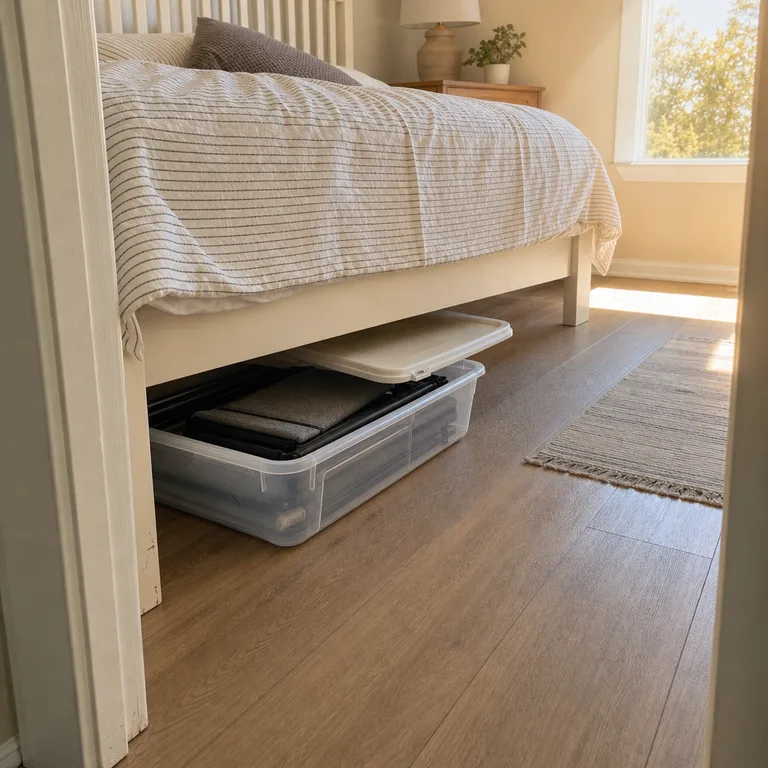
A shallow lidded bin protects chair hinges and seat fabric from dust while keeping the living room entirely free of stored seating. It is a good fit for chairs used occasionally rather than every week, since retrieving them takes more effort than reaching into a closet.
Use a low container that can slide out without catching on the bed frame or flooring. A lid is helpful when bedding, pet hair, or dust are concerns, and the bin should be light enough to pull out and return safely when loaded.
Worth knowing: This only works with enough clearance and chairs that fold flat; forcing a bin under the bed can damage the chair, container, or bed frame.
About the author
Dana Ruiz, Senior editor
Dana writes about small-space living, storage and low-cost decorating.
Keep reading
8 Christmas Gift-Wrapping Stations That Pack Away in a Small Home
October 31, 2026

7 Small Bedroom Layouts With Sloped Ceilings
October 31, 2026
8 Christmas Buffet Setups for a Small Kitchen Without an Island
October 29, 2026
7 Rewear Clothes Stations for a Small Bedroom Without a Chair Pile
October 29, 2026