10 Cottagecore Decor Ideas That Bring Collected Charm to a Plain Room
A plain living room can take on a cottage look when soft patterns, useful storage, and small handmade details repeat in a restrained palette. These ideas work around ordinary sofas and tables, using removable layers where rental rules or limited wall space make permanent changes impractical.
As an Amazon Associate I earn from qualifying purchases.
1.Hang a Floral Fabric Panel Behind the Sofa
Hang a floral cotton panel from a simple rod above an ordinary sofa to give the wall a softer focal point. This reads more like a textile layer than a permanent decorative commitment, which helps a plain room feel less flat.
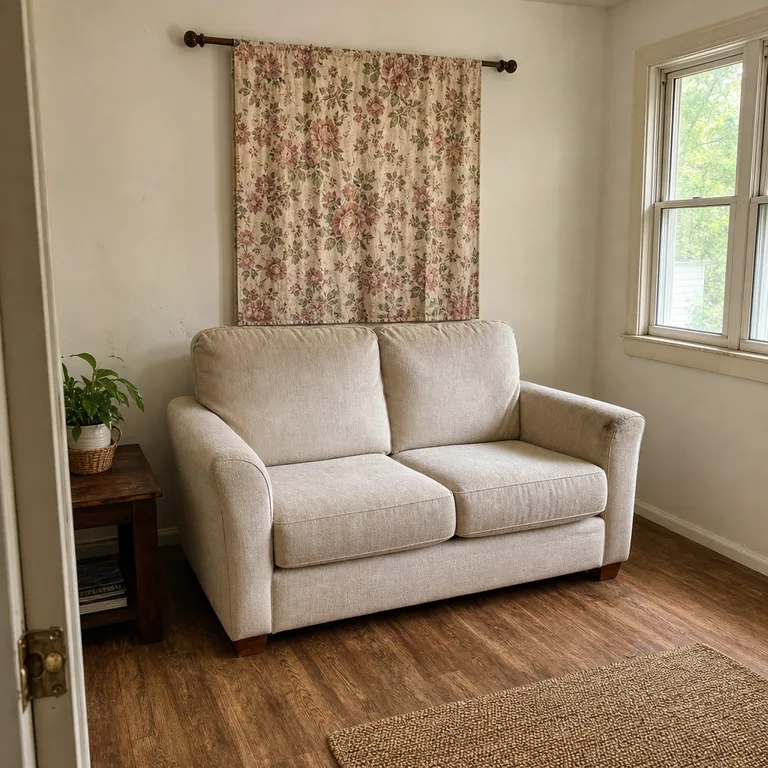
Choose a small-scale floral that shares colors with the sofa, rug, or existing curtains. A ready-made curtain panel, remnant, or lightweight fabric can work; use removable hanging hardware where rental rules allow, and keep the rod level even if the fabric itself has a relaxed look.
Keep the panel clear of radiators, vents, and direct harsh sunlight, which can fade fabric over time.
Worth knowing: A fabric panel can collect dust and may not suit a wall exposed to strong sun or heat.
2.Add a Gingham Accent Chair Layer
Drape a gingham throw over the back and one arm of a plain chair instead of trying to reupholster it. The checked pattern adds an immediately recognizable cottage element while preserving the chair underneath.
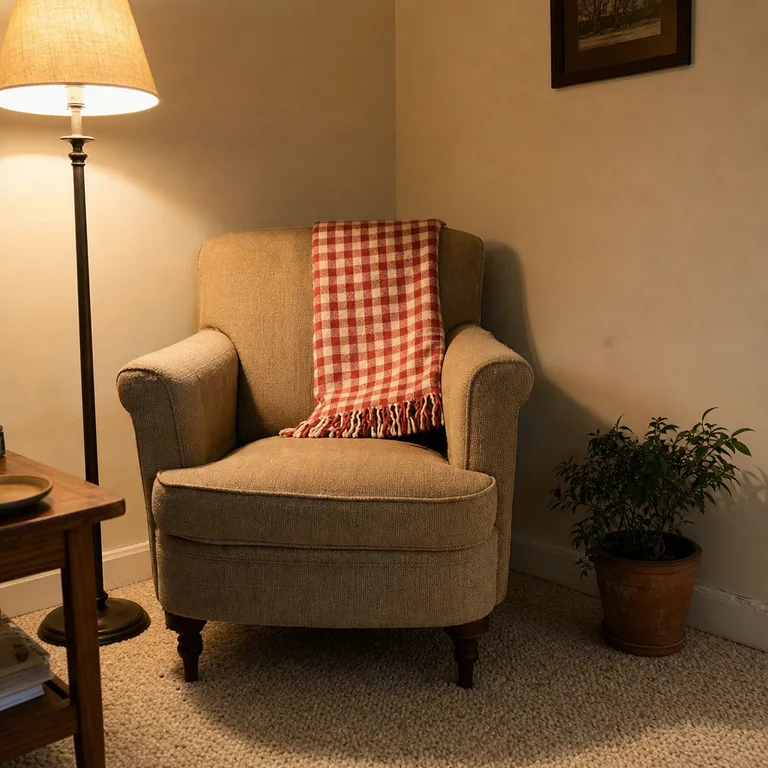
Use gingham in one accent color already present elsewhere in the room, such as muted red, blue, green, or brown. Fold it loosely enough to show the chair shape, and avoid adding the same pattern to every seat so the room does not become overly busy.
Washable cotton is the practical choice for a chair used often by children, pets, or guests.
Worth knowing: A throw can slide around on slick upholstery and needs regular straightening on a frequently used chair.
3.Group Botanical Prints in Mismatched Wood Frames
Create a compact botanical print group above a console, sideboard, or small table. Leaf studies, flower drawings, and fern prints bring the garden reference that anchors cottagecore decor without requiring a full floral wall.
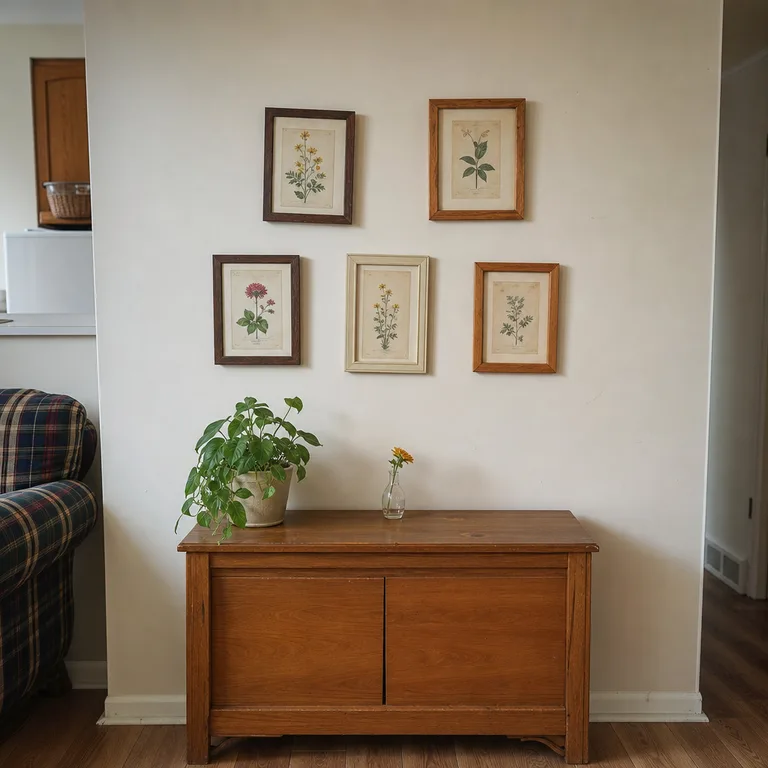
Mix wood frame finishes, but repeat similar pale paper backgrounds so the grouping still feels connected. Affordable reproduction prints and simple frames can look intentional when arranged as one tight cluster rather than spread across the whole wall.
Use removable picture strips in rentals only if the frame weight and wall surface suit them; otherwise, a few leaning frames on furniture can create a similar effect.
Worth knowing: Too many unrelated frame styles or print colors can make the arrangement look accidental rather than collected.
4.Sew a Scalloped Edge on a Plain Table Cover
Give a simple side table cover a scalloped edge in a soft contrast color. That small shaped detail makes an everyday table feel more cottage-like without changing the table itself.
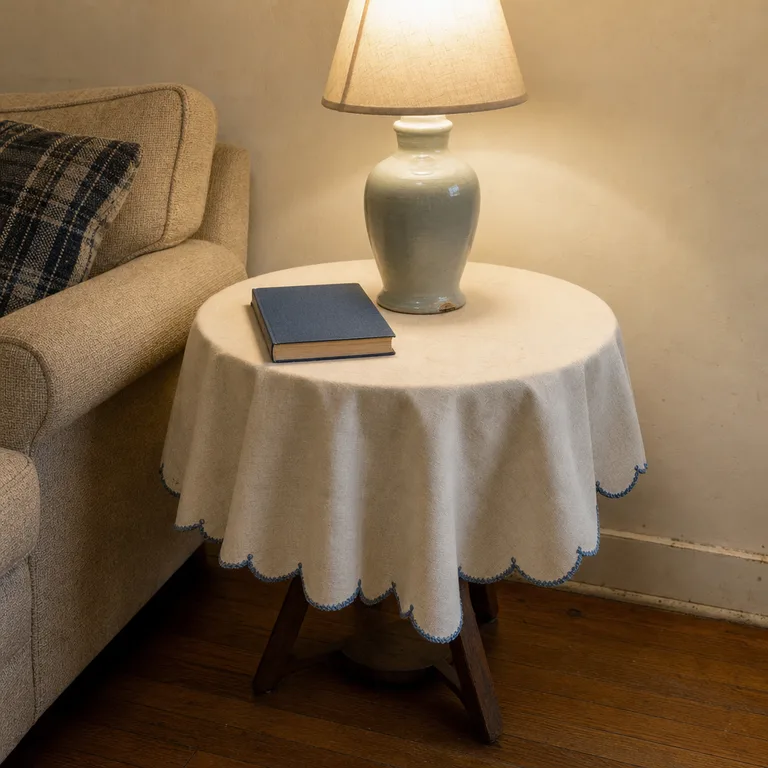
Start with a plain cotton cloth and stitch or apply a neat scalloped trim around the hem. A cream cloth with faded blue, green, or red edging works especially well beside a plain lamp and a small stack of books.
Reserve this treatment for a side table with light use, and choose a washable fabric if it sits near a snack area or pets.
Worth knowing: A cloth-covered table is less practical for regular drinks, crafts, or anything likely to spill.
5.Use Crocks to Hold Everyday Supplies
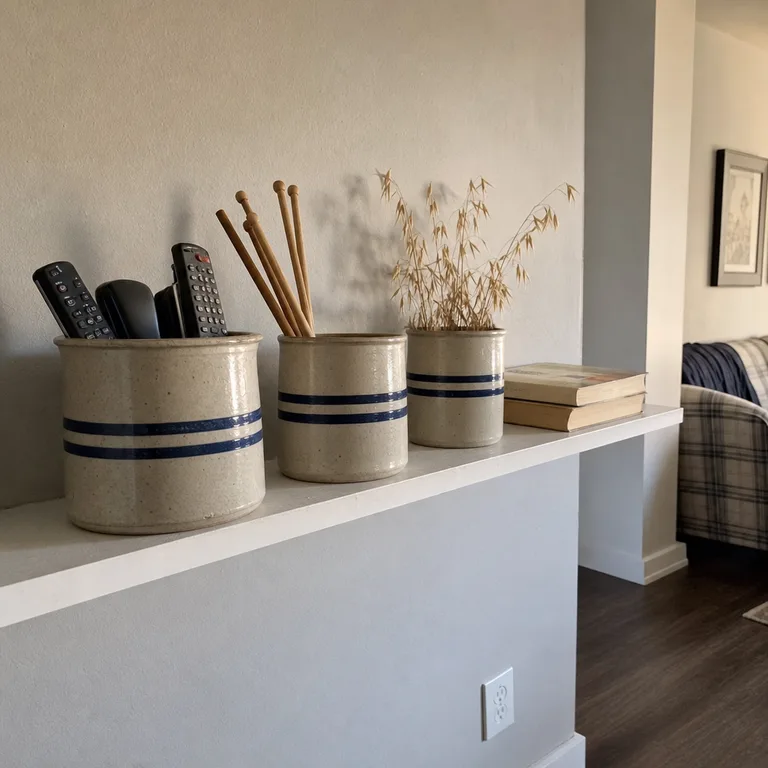
Set a few stoneware crocks on a shelf, sideboard, or desk to contain the small objects that otherwise scatter around a room. Remotes, knitting needles, pencils, dried stems, and reading glasses become part of the display when each crock has a job.
Choose similar cream, tan, or blue-banded pottery so the useful objects look like a small collection rather than random storage. Keep the number limited and leave some open shelf space around them.
Place breakable crocks on stable furniture away from active play areas, especially if they will hold long tools or stems.
Worth knowing: Crocks are heavy and breakable, so they are not ideal storage for low shelves in homes with young children or energetic pets.
6.Place a Woven Market Basket Beside the Sofa
Use a handled woven market basket beside the sofa for a blanket, magazines, or a current handwork project. Its natural texture adds warmth at floor level, where a plain room often has little visual interest.
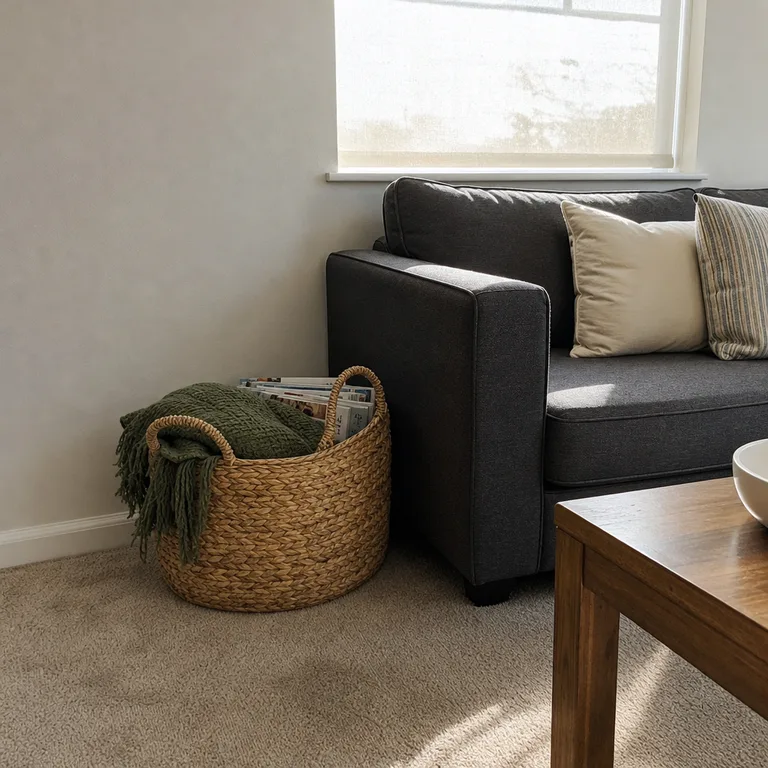
Look for a basket with a sturdy base and handles that can stand upright. Let one folded throw show at the top rather than filling it to the point where it becomes overflow storage.
Natural fibers last best in dry indoor spaces, so keep the basket away from damp exterior doors and the heat or sparks of a fireplace hearth.
Worth knowing: Woven fibers can snag, fade, or become misshapen when exposed to moisture, strong sunlight, or heavy loads.
7.Mix One Patchwork Cushion With Solid Pillows
Place one patchwork cushion among solid pillows on a standard sofa. The mix of small fabric pieces introduces the handmade quality associated with cottage interiors while keeping the larger furniture calm.
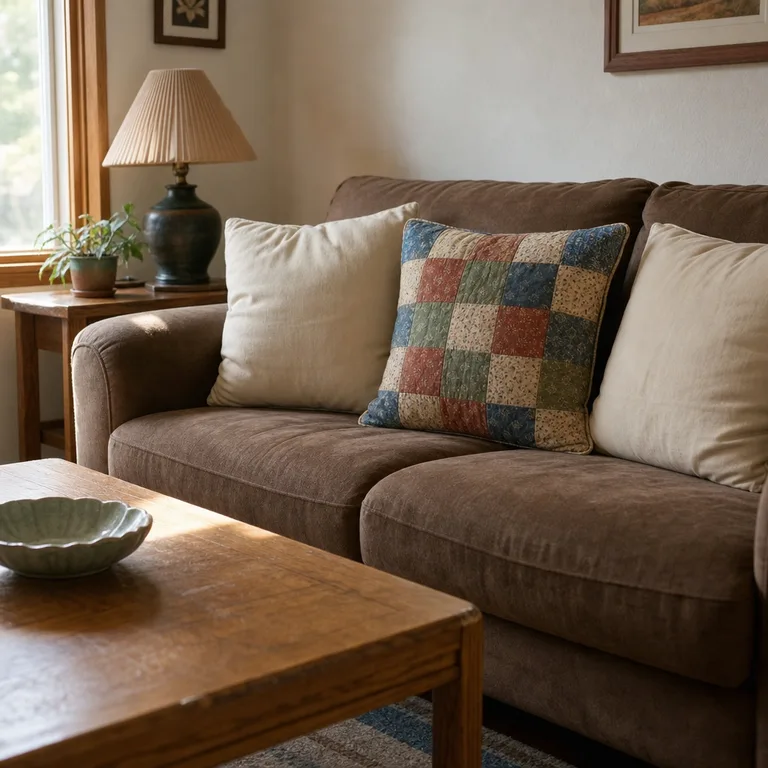
Choose patchwork in faded shades that relate to the rest of the room, then surround it with simple cotton, linen-look, or velvet covers in solid colors. One focal cushion is usually enough on a small sofa; additional patterned pillows can compete with it.
Use removable, washable covers if the sofa gets daily use from children or pets.
Worth knowing: Patchwork with too many bright colors can overwhelm a small seating area or clash with existing patterned upholstery.
8.Layer Lace Over a Solid Curtain Panel
Hang a narrow lace panel in front of existing solid curtains for a softer window treatment. The lace adds pattern when daylight comes through, while the solid fabric keeps the room from looking overly frilly.
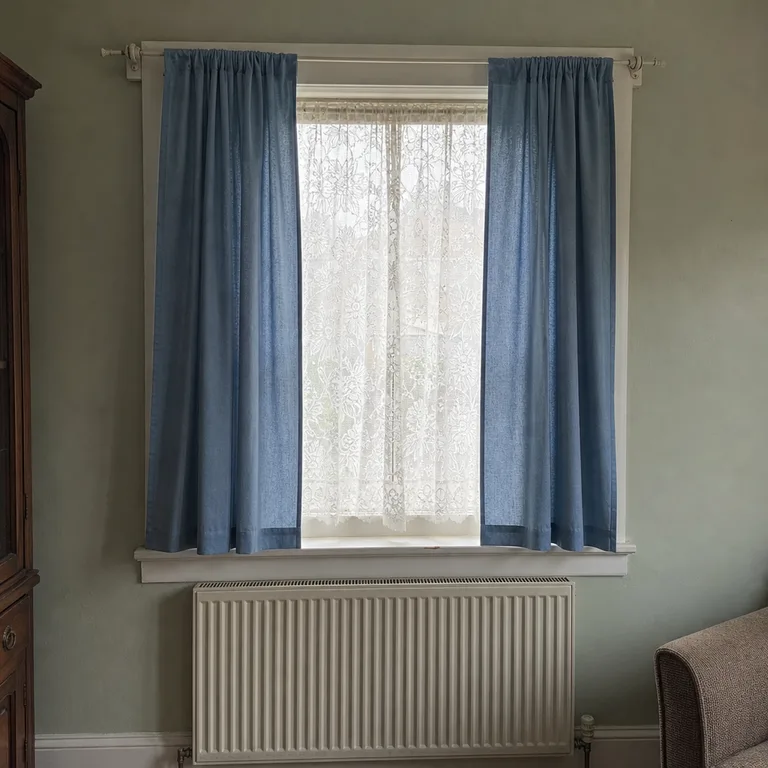
Pair cream or off-white lace with muted cotton curtains in blue, green, rose, or warm neutral tones. Use the same rod with rings or a second slim rod if the window trim and rental restrictions permit it.
Check that the added layer does not block an operable window, cover a radiator, or reduce needed daylight in an already dim room.
Worth knowing: Lace offers little privacy after dark on its own and can make a low-light room feel dimmer when layered too heavily.
9.Frame Pressed Flowers From a Small Bouquet
Press a few flowers, leaves, or fern fronds from a small bouquet and frame them against warm cream paper. This creates a handmade botanical detail that feels personal without needing a large art collection.
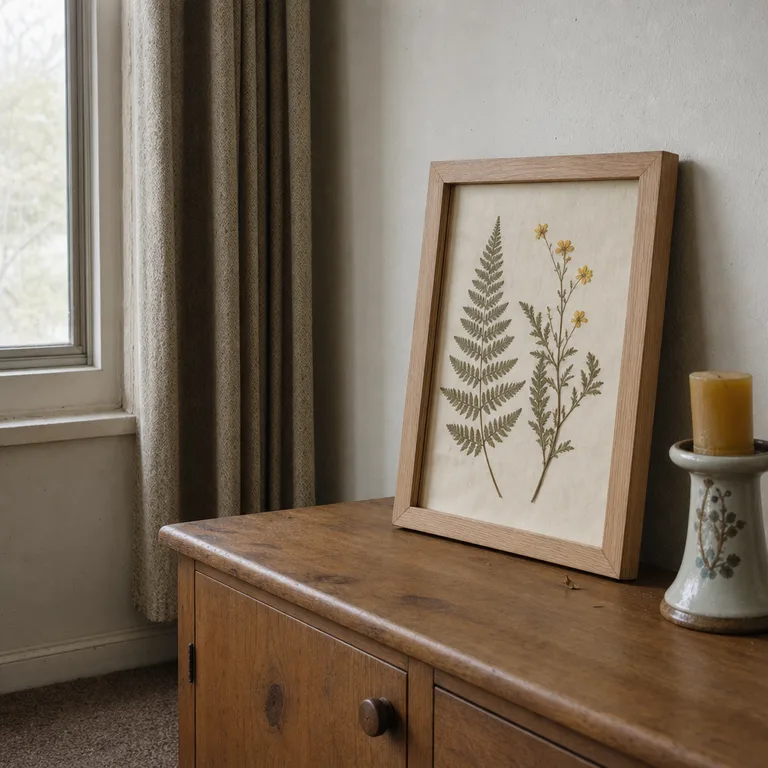
Keep the composition simple: a few flat stems with open space around them will show better than a crowded arrangement. An inexpensive wood frame and plain backing paper keep the focus on the plant shapes rather than the materials.
Display pressed flowers away from direct sun, since petals and leaves naturally lose color over time.
Worth knowing: Pressed flowers are delicate and may fade, especially in bright windows or humid rooms.
10.Paint a Small Stool as a Flexible Side Table
Paint a sturdy wooden stool in a muted cottage shade and use it beside the sofa as a compact side table. A butter yellow, soft blue, sage, or warm cream finish can bring color to a room full of ordinary furniture.
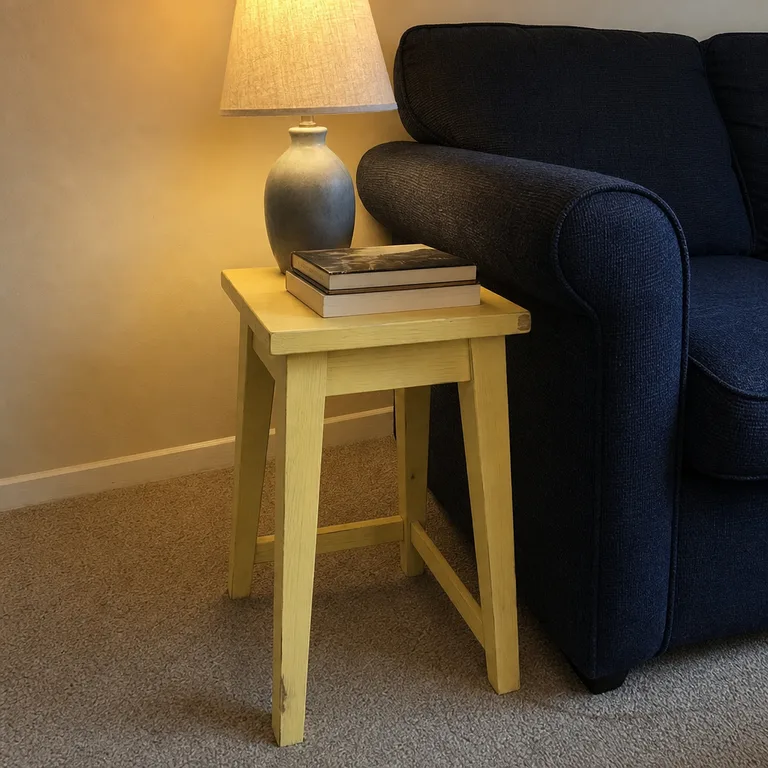
A secondhand or unfinished stool is a straightforward weekend project when the surface is clean, sound, and lightly sanded as needed. Use a finish suited to furniture if the top will regularly hold a lamp, books, or a drink tray.
Test the stool for wobble before placing anything breakable on it, and select a color that works with the room’s existing wood tones rather than fighting them.
Worth knowing: A small stool has limited surface area and may need a protective tray if it will be used for drinks.
About the author
Dana Ruiz, Senior editor
Dana writes about small-space living, storage and low-cost decorating.
Keep reading
9 Budget Ways to Make Open-Plan Rooms Feel Connected
November 5, 2026
9 Easy Christmas Garland Ideas Beyond the Mantel
November 4, 2026
10 Budget Retro Decorating Ideas for a Playful Home
November 4, 2026
10 Easy Decluttering Wins for a Home That Feels Too Full
November 6, 2026