6 Temporary Packing Stations for a Small Bedroom Before a Trip
A temporary packing station gives an open suitcase, travel clothes, toiletries, and documents a defined place without turning a small bedroom into an obstacle course. These six setups use surfaces already in the room or compact helpers, with a clear reset once the bag is closed.
As an Amazon Associate I earn from qualifying purchases.
1.Set the suitcase on a luggage-rated folding rack
A folding luggage rack gives an open suitcase its own raised spot beside the bed or along an open wall. It keeps the case off the floor and, importantly, keeps suitcase wheels away from bedding and upholstered furniture.
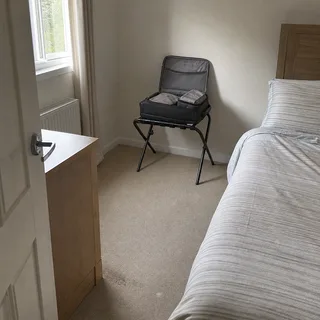
Choose a rack intended to hold luggage, and check its stated load limit against the packed case. Position it so there is still a clear route to the door, closet, and bed; a rack is useful only if it does not create a new obstacle in a tight room.
This is a compact option for occasional travel because the rack can fold away between trips. Use packing cubes or small pouches inside the open case to stop loose categories from spreading onto nearby surfaces.
Worth knowing: A rack may be too narrow or unstable for an overpacked large suitcase, so it is not a substitute for a properly rated luggage stand.
2.Use a cleared sturdy bench for an open bag
A bedroom bench can serve as a temporary suitcase platform when its top is fully cleared. The raised surface makes it easier to see what is packed and leaves the bed available for sleeping or for a small amount of clean clothing.
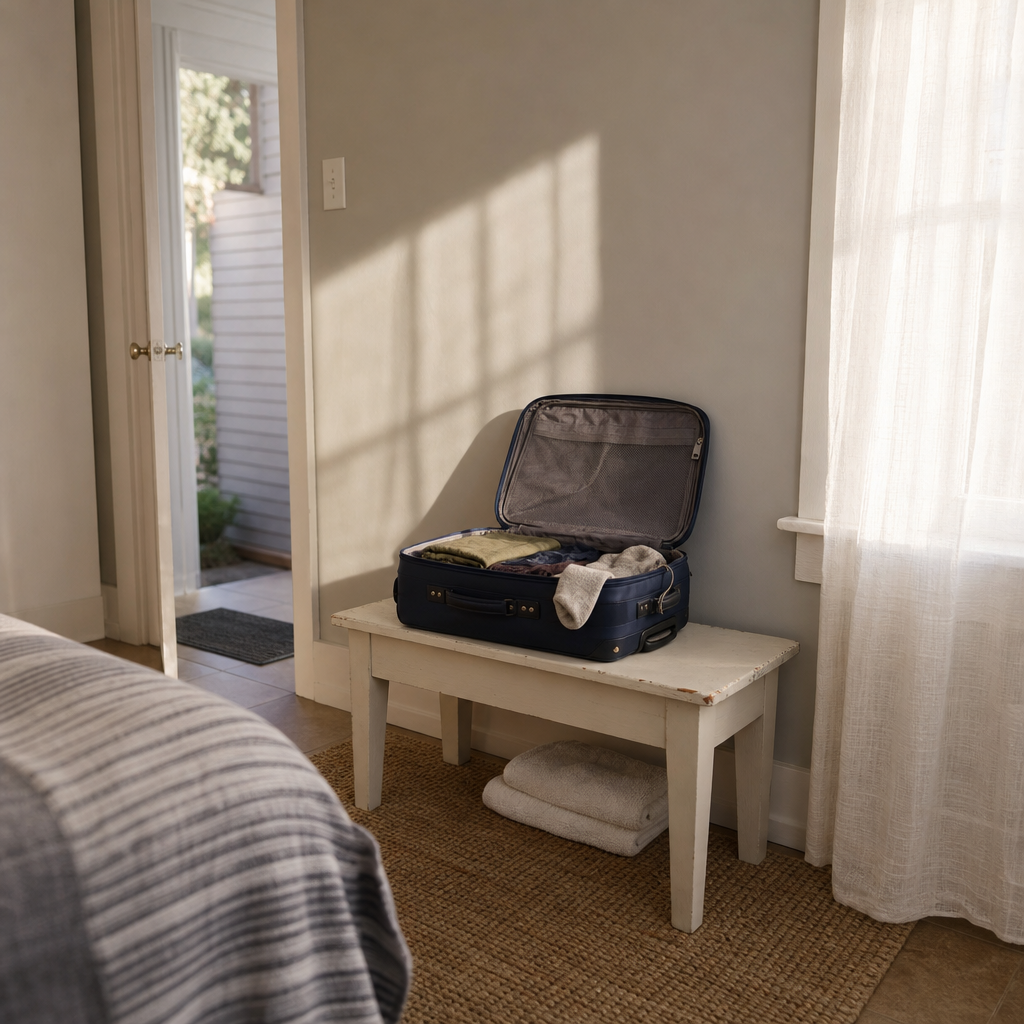
Put a folded towel, washable cloth, or other protective layer under the suitcase if the wheels, feet, or zipper hardware could scratch the finish. Keep only the suitcase on the bench rather than letting the surface become a general pile of travel items.
This approach works best with a stable bench that is already in the room, rather than adding another piece of furniture for a short packing task. Place shoes and heavier loose items in or beside the suitcase, not on a bench that could become unbalanced.
Worth knowing: A lightweight decorative bench may not be designed to support a loaded suitcase, particularly when the lid or bench seat is narrow.
3.Cover the bed and reserve it for clean soft items
A clean flat sheet or washable cover can turn part of the bed into a sorting area for folded clothes, pajamas, scarves, and other soft travel gear. The cover creates a clear boundary between packing items and the bedding underneath.
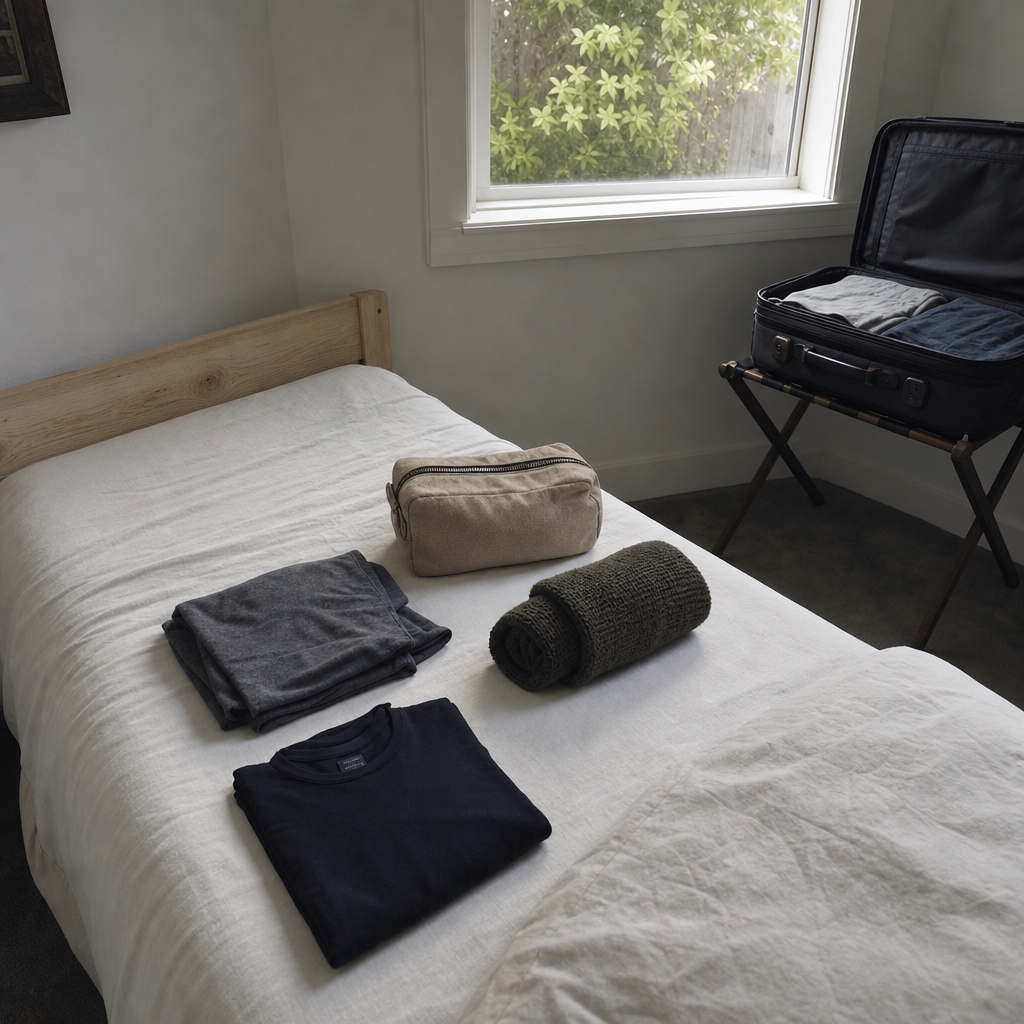
Keep the suitcase itself on a rack, bench, or floor zone instead of placing it on the bed. Suitcase wheels and exterior shells collect dirt during travel, while toiletries and shoes are also better kept separate from clean linens.
Fold each clothing group into a small stack or place it directly into packing cubes as decisions are made. When packing is paused, lift off the cover with any unneeded items and the bed is ready to use again.
Worth knowing: This station is only practical if the bed can still be cleared before bedtime; it is not a good place to leave an open suitcase overnight.
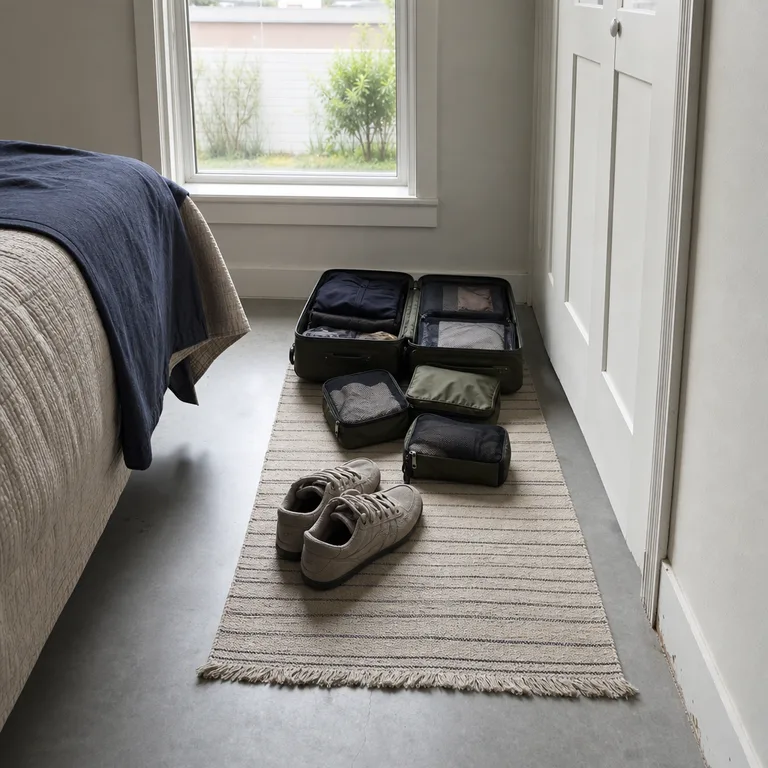
4.Mark one floor packing rectangle with a washable mat
A thin washable runner, flat mat, or folded blanket can define a single floor rectangle for the suitcase, shoes, and packing cubes. Keeping every item within that boundary makes the packing footprint easier to manage in a room with little open floor.
Set the zone alongside the bed or another open edge of the room, not across the doorway or in front of a closet. Check that doors can open fully and that there is a safe walking path to the bed, especially in a shared bedroom or a room used at night.
Reuse a washable textile already at home when possible. A flat layer is easier to work around than a thick rug, which can make an open suitcase tilt or catch a wheel.
Worth knowing: A floor station can still feel cramped in a very small room, and it needs to be packed away promptly so it does not block daily movement.
5.Turn an existing table into a sorting surface
Use a bedside table, desk, or small folding table to sort the small items that disappear in a larger packing pile. Make separate groups for documents, chargers, medication, and toiletries, while the main suitcase stays on the floor or another stable surface.
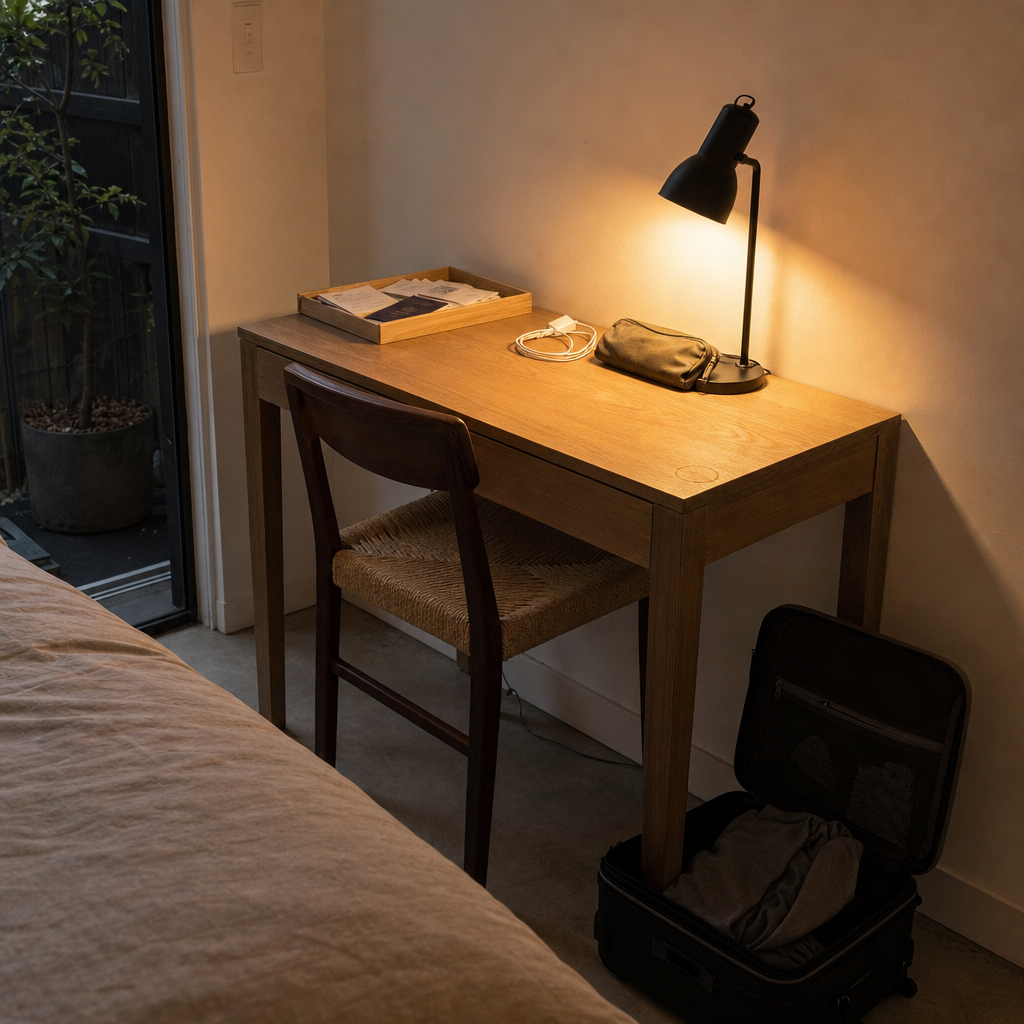
A tray, shallow box, or zip pouch keeps each category contained without taking over the full tabletop. Keep liquids inside a sealed toiletry bag, and avoid setting open containers near electronics, paper documents, or a wood-finish surface.
Leave enough bare table space for its normal job, particularly if it is also a desk or the only bedside surface. This makes the station easier to reset when a packing session ends.
Worth knowing: A small table is useful for sorting but rarely has room for clothing piles or a full-size open suitcase.
Related: 10 Guest Room and Office Ideas for One Small Room
6.Pack in two stages and close the station between sessions
Pack the confirmed items into the suitcase during the first session, then zip it closed rather than leaving it open for days. Put final items, such as a sweater, toiletries needed until departure, or charging gear, into one small tote or pouch for the second stage.
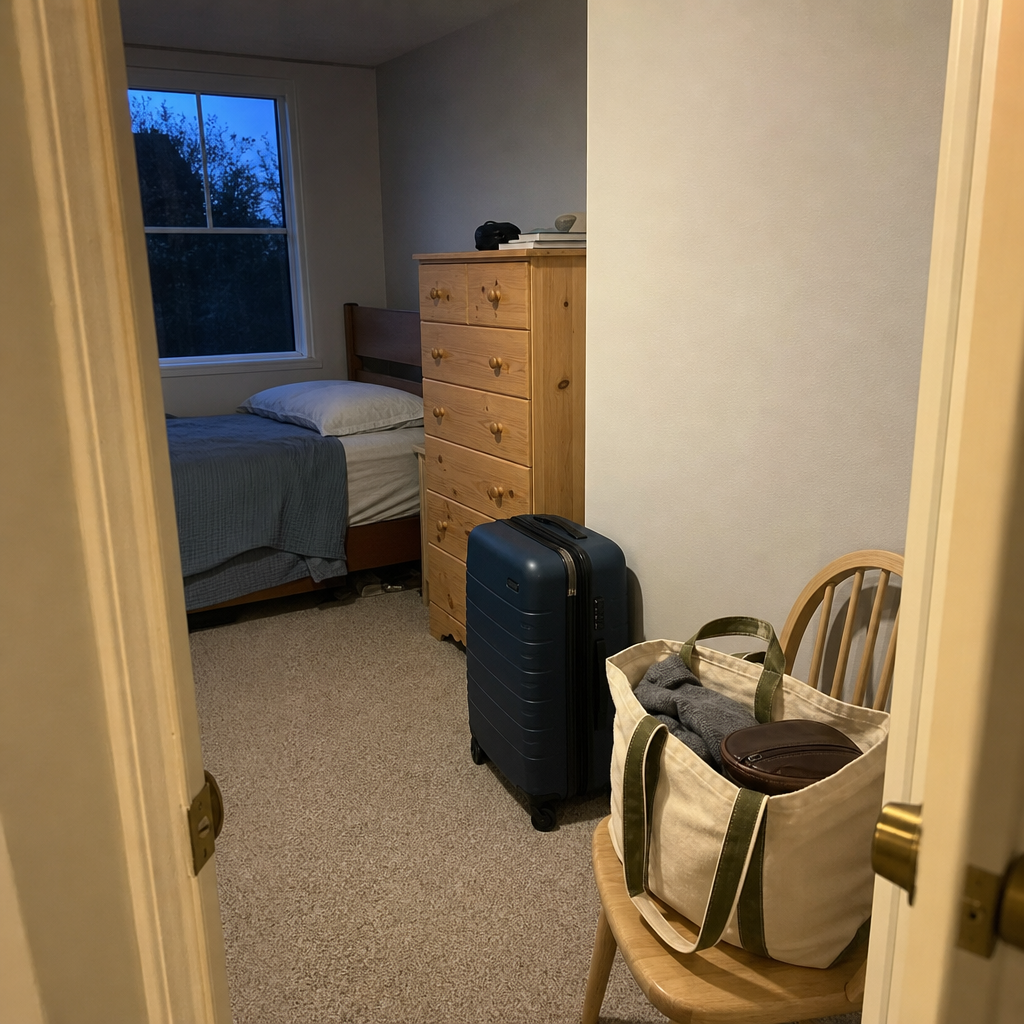
Store the closed suitcase upright beside a dresser, along a wall, or in another spot that does not interfere with the closet or exit. The tote stays visible and portable, so last-minute additions do not spread across the bed, desk, or floor.
This routine suits occasional trips because it gives the bedroom a reset between packing sessions. It also separates packed items from things still needed at home, reducing the need to reopen and reshuffle the entire case.
Worth knowing: The method depends on remembering to add the final tote contents before leaving, so keep the tote near the suitcase rather than in a separate room.
About the author
Dana Ruiz, Senior editor
Dana writes about small-space living, storage and low-cost decorating.
Keep reading
8 Christmas Gift-Wrapping Stations That Pack Away in a Small Home
October 31, 2026
7 Small Bedroom Layouts With Sloped Ceilings
October 31, 2026
8 Christmas Buffet Setups for a Small Kitchen Without an Island
October 29, 2026
7 Rewear Clothes Stations for a Small Bedroom Without a Chair Pile
October 29, 2026