6 Container Pond Setups for a Small Garden Without Digging a Large Pond
A container pond can support plants and visiting wildlife in a modest garden without the disruption of digging, provided the vessel is stable, watertight, and easy for small animals to leave. These six setups compare practical materials, safe access, routine maintenance, and siting concerns such as sun, drainage, mosquitoes, and children or pets.
As an Amazon Associate I earn from qualifying purchases.
1.Wide, Shallow Watertight Tub on a Level Patio
A broad plastic tub makes a simple small pond because its low sides leave room for planted baskets, stones, and a gradual way out for wildlife. Choose a container that is genuinely watertight and stable when full, and set it on firm, level paving rather than bare soil that can settle unevenly.
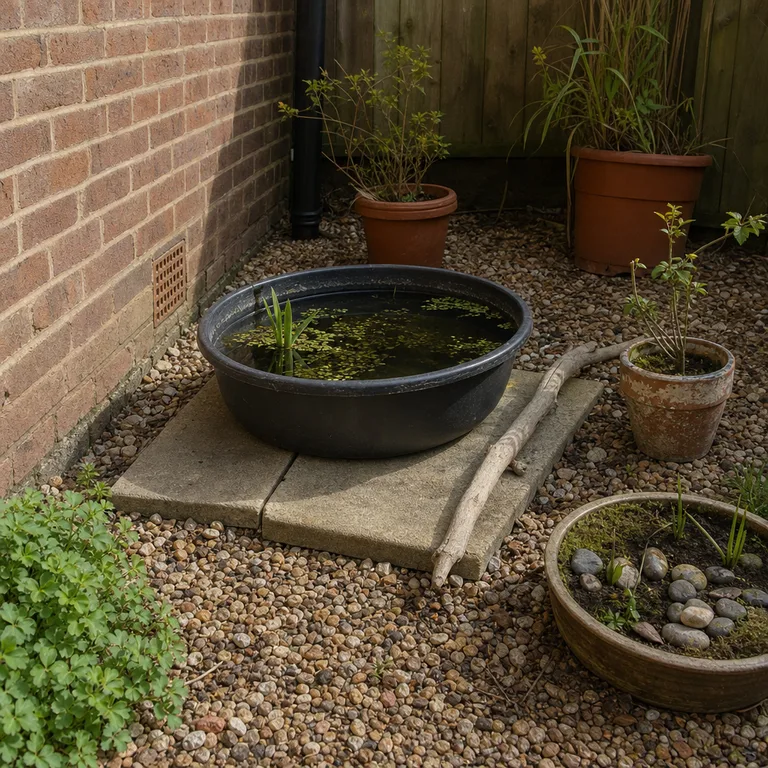
RHS container-pond guidance recommends a vessel at least 20cm deep. Place smooth stones at one side and add a securely wedged branch or slate piece that reaches from the water to the rim, so insects and small animals can escape if they fall in.
A spot with some sun will support many pond plants, but intense all-day sun can warm a small volume of water quickly and encourage algae. Remove fallen leaves and excess plant growth regularly, and check the surface for mosquito larvae; a small amount of water movement can help where suitable for the setup.
Worth knowing: A shallow tub needs frequent topping up in hot, dry weather and may be too exposed in a patio that receives strong sun all day.
Related: 12 Container Garden Ideas for a Small Patio on a Budget
2.Sound Half-Barrel Lined for Water Use
A reclaimed half-barrel gives a container pond more visual weight than a lightweight tub while keeping the project above ground. Only use a barrel with solid staves and secure hoops, then line it with pond-safe flexible liner to protect the wood and prevent leaks through old joints.
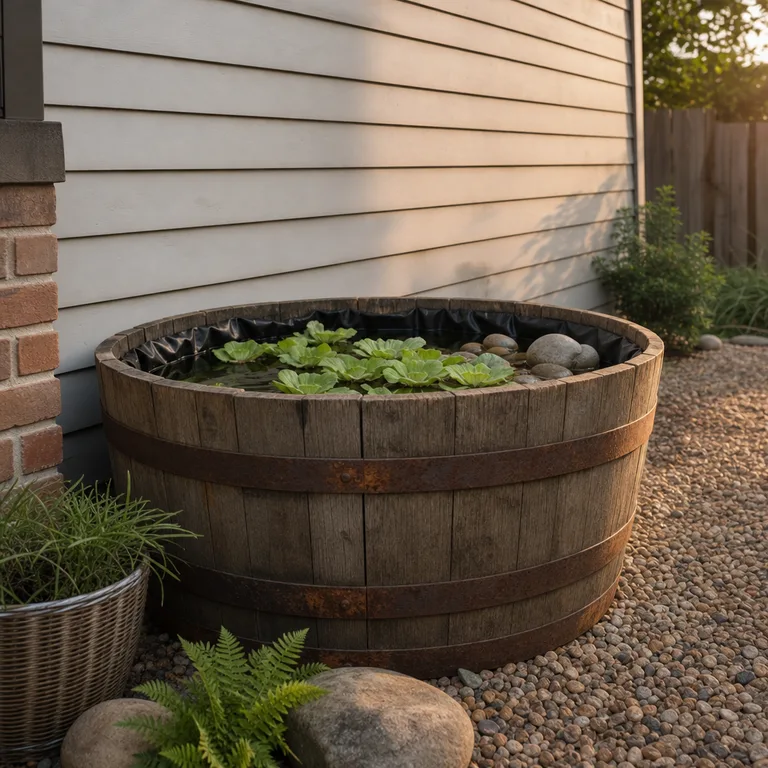
Fold the liner neatly over the inner rim and hold it in place with rounded stones or planted baskets, avoiding sharp edges that could puncture it. Include a stone pile or branch ramp inside the barrel, since the deeper sides can make it hard for wildlife to climb out.
A partly shaded position helps reduce overheating and slows water loss in summer. Inspect the outside of the barrel seasonally for rot, splitting, or loose hoops, especially after wet or freezing weather.
Worth knowing: Wooden barrels are not permanent containers and need more regular inspection than plastic or stone options.
3.Purpose-Made Rigid Pond Container With Plant Shelves
A small rigid pond preform is a straightforward option when separate planting depths are useful. Its molded shelves hold marginal plants near the surface while the lower section gives the pond more water volume and a cooler refuge during warm spells.
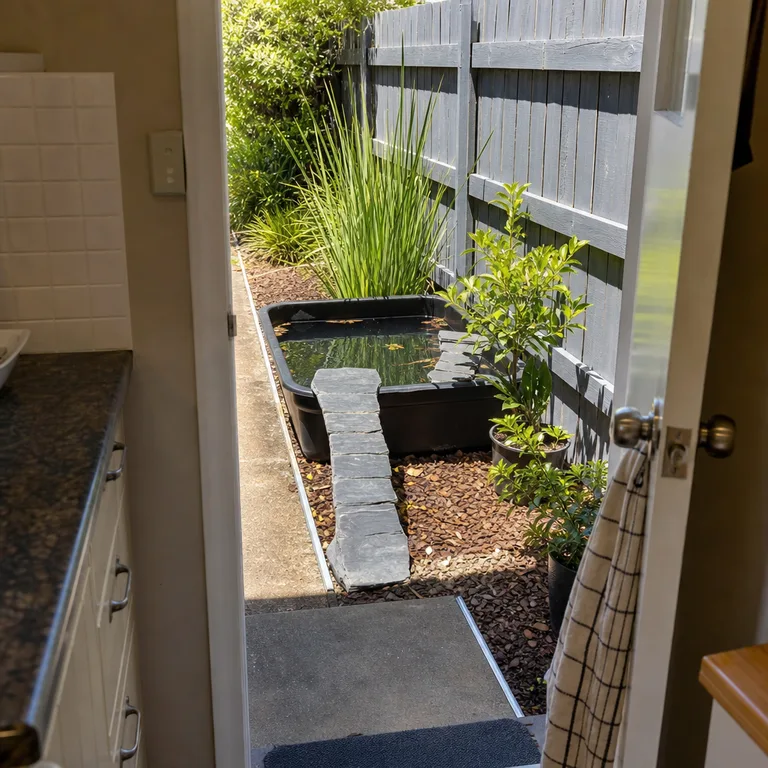
Set the preform on fully supported, level ground so the rim does not twist or crack under the weight of water. Use aquatic baskets suited to the shelf depth, choose noninvasive plants appropriate to the local region, and leave open water rather than filling every section with foliage.
A slate ramp or textured stone slope should lead from the water to the surrounding ground for safe wildlife access. Check the surface often in warm weather for mosquito larvae, and consider gentle circulation only if it does not create a current that makes the pond difficult for small creatures to use.
Worth knowing: The fixed shelf layout is convenient, but it offers less flexibility than a plain tub when changing the planting arrangement.
4.Reused Stone Sink Set on a Supported Base
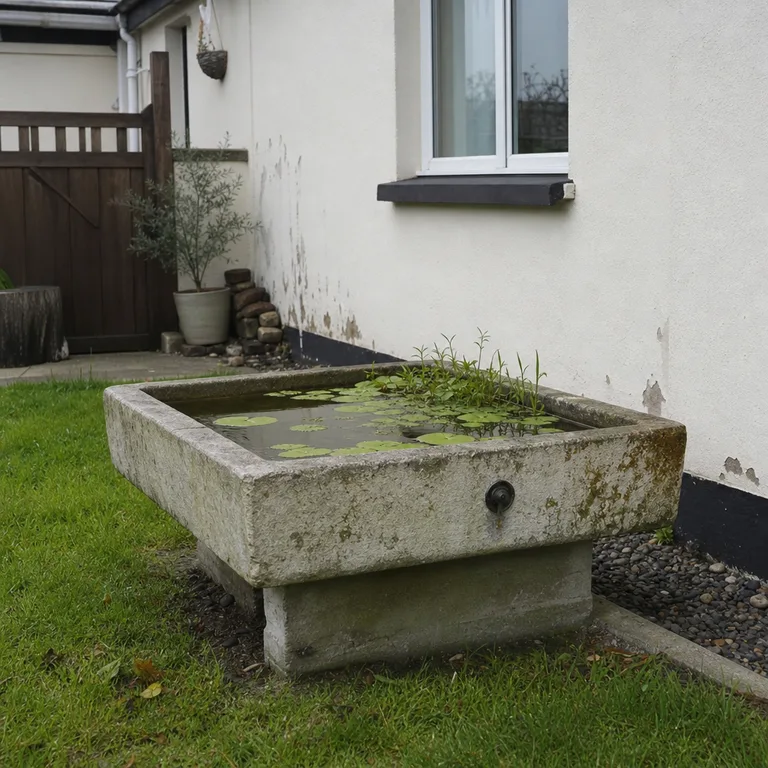
A sound old stone or concrete sink can become a durable shallow pond with a characterful, weathered finish. Seal the drain reliably, test the basin for slow leaks before planting, and place it only at ground level on a base that supports its full footprint.
Because stone sinks are heavy, concrete pavers or a compacted, level pad are more practical than a deck, balcony, or loosely laid gravel. A low internal stone slope creates an exit route, while a few planting baskets soften the hard basin edges without making the water inaccessible.
The stone itself can help moderate rapid temperature swings, but a small sink still benefits from partial shade in hot climates. Keep roof runoff, lawn treatments, and soil washout from entering the water, as these can cloud it or upset the planting balance.
Worth knowing: Moving or correcting the level of a filled stone sink is difficult, so the base and final position need careful planning.
5.Low Ground-Level Water Garden Basin With a Pebble Beach
A low, broad basin can disappear into a planted border more naturally than a raised container. Build one side into a gently graded pebble beach, with stones extending from dry ground into shallow water, so visiting wildlife has an obvious route in and out.
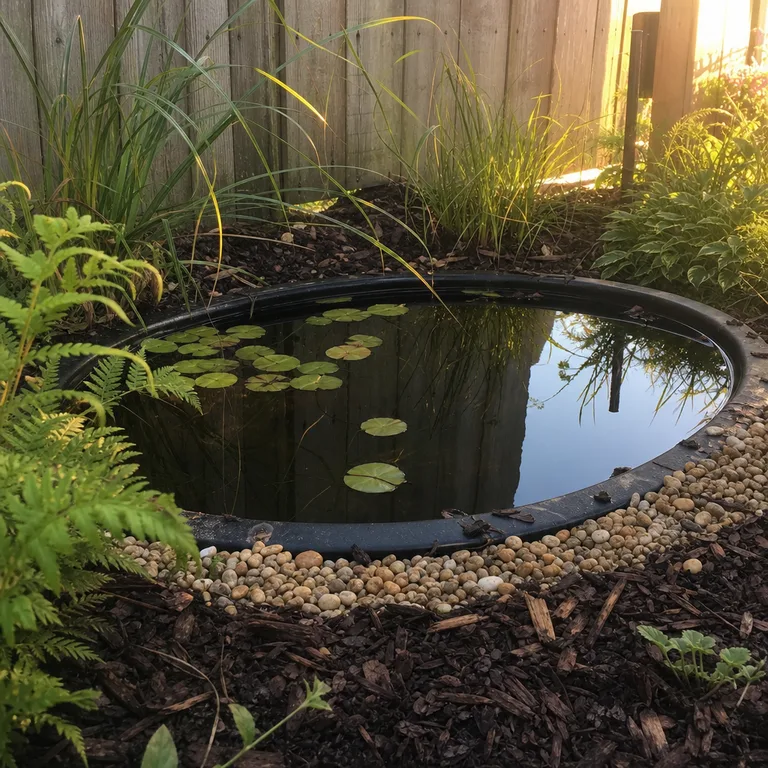
Keep the basin away from places where heavy rain carries mulch, fertilizer, or muddy runoff into it. Plant around the outside with regionally suitable foliage for shade and cover, but avoid dense growth that completely hides the water or makes routine cleaning difficult.
This low arrangement needs particular care around children and pets. Site it where access can be supervised, maintain the shallow edge, and thin plants and remove decomposing leaves so the water does not become choked with debris.
Worth knowing: Its easy wildlife access also means the pond is easier for children and pets to reach, so it is not suitable for every household.
Related: 15 Budget Landscaping Ideas That Make a Small Yard Feel Finished
6.Patio-Edge Mini Pond in a Raised Planter Zone
A contained mini pond beside a patio or raised planter keeps water, plants, and routine checks close to the house. A sturdy glazed trough or purpose-made watertight planter can define the edge of a seating area without requiring excavation in the garden.
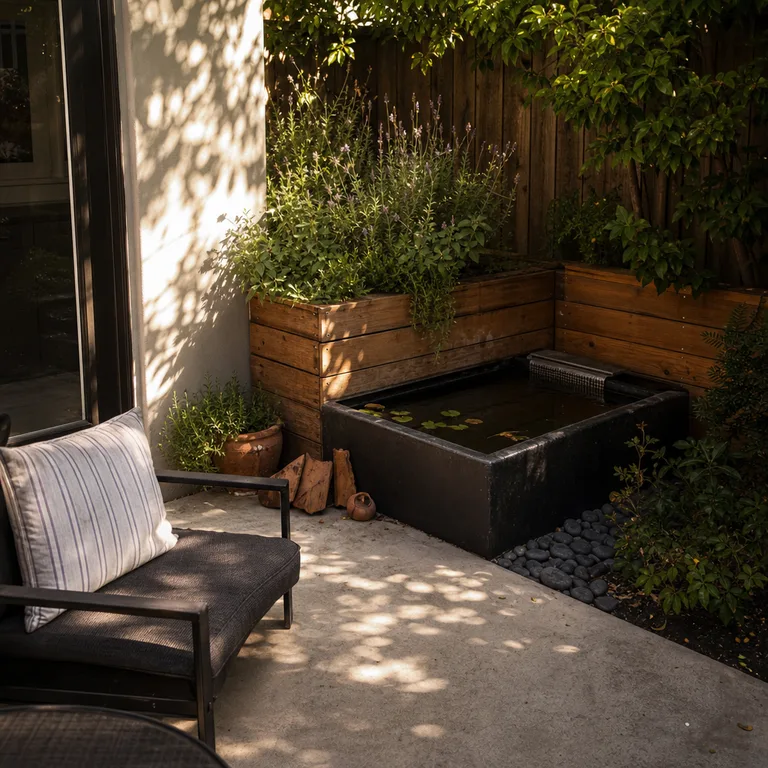
Leave a safe overflow path that directs excess rainwater away from the house foundation and does not wash soil from nearby planters into the pond. A screened overflow opening can keep leaves out while allowing water to escape, and a stable stone or ramp should give wildlife a way out.
This location makes regular leaf removal and surface checks easier, which is useful for managing mosquito breeding. Choose only plants that are appropriate and noninvasive in the local region, and avoid crowding the container with large species that quickly overtake the available water.
Worth knowing: A patio-edge pond can receive reflected heat and debris from nearby seating areas, so it may need more frequent summer checks.
About the author
Dana Ruiz, Senior editor
Dana writes about small-space living, storage and low-cost decorating.
Keep reading
8 Small Lettuce Container Garden Plans for a Patio or Balcony
October 18, 2026
8 Christmas Garden Fence Decorations That Keep Gates Easy to Open
October 16, 2026
10 Christmas Advent Calendar Displays for Small Homes
October 18, 2026
6 Entryway Parking Ideas for a Folded Stroller in a Small Apartment
October 18, 2026