8 Christmas Garden Fence Decorations That Keep Gates Easy to Open
An undecorated garden fence can carry a simple Christmas display without turning the gate into an obstacle. Keep every accent lightweight, weather-suited, and fixed to stationary fence sections well clear of hinges, latches, posts, and the gate swing path.
As an Amazon Associate I earn from qualifying purchases.
1.Tie outdoor fabric bows to fixed fence pickets
Space a few fabric bows along a fixed fence panel rather than attaching them close to the gate. Deep red, green, cream, or a pattern that suits the house can make an ordinary run of pickets look more deliberate from inside the yard.
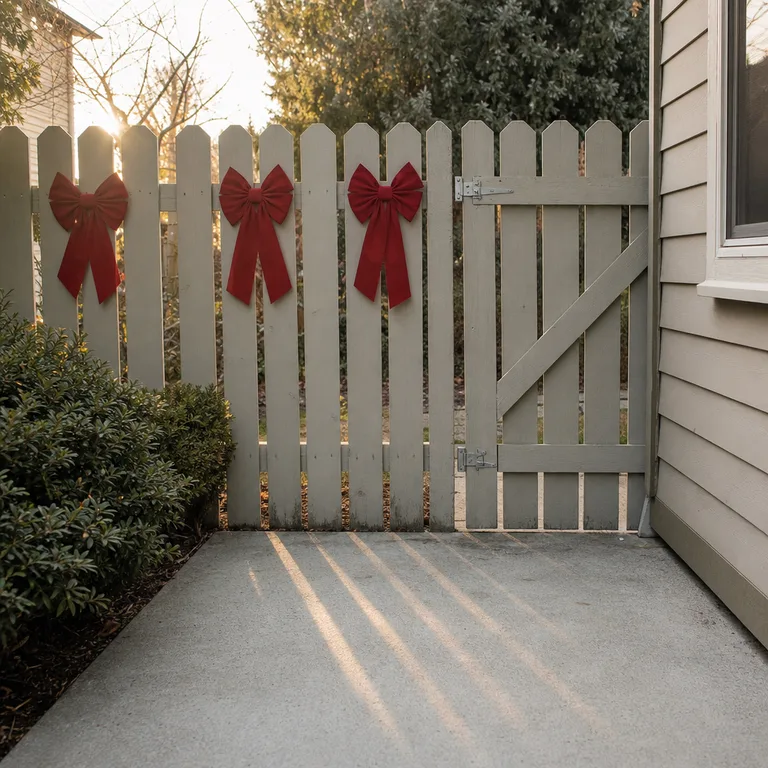
Choose outdoor-suited fabric and fasten each bow with removable ties at more than one point. This stops loose loops from shifting toward the latch or catching the gate in gusty weather, and it makes seasonal removal straightforward.
Keep the display sparse on a small boundary. A line of well-spaced bows reads more clearly than covering every picket, especially where the fence is viewed from a patio or kitchen window.
Worth knowing: Fabric can fade, hold moisture, or become untidy in prolonged rain or snow, so remove it during severe weather if possible.
Related: 10 Budget Christmas Porch Ideas for a Narrow Front Step
2.Hang a matched pair of small wreaths on the fence
Two small lightweight wreaths on one stationary panel create a balanced focal point without requiring a full fence display. Set them at a similar height and leave the gate itself plain so its opening edge and hardware remain obvious.
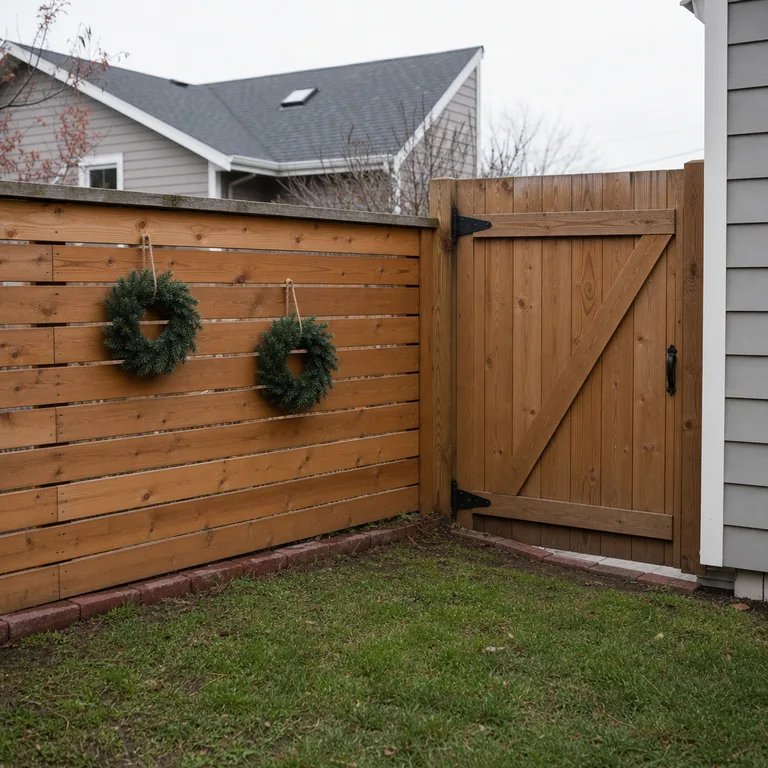
Faux greenery is usually easier to reuse outdoors than fresh cut greens, which can dry out, shed, or lose color. Removable outdoor hooks or simple cord around sturdy fence elements can keep the hanging method low-impact, subject to the fence material and owner approval.
Use modest wreaths that suit the scale of the panel. On a compact yard fence, oversized greenery can make the boundary feel crowded and may catch more wind.
Worth knowing: Adhesive hooks may not hold well on damp, rough, or very cold fence surfaces; check them regularly and use a different removable fixing if needed.
3.Drape a short reused garland strip across one fence panel
A short section of garland can soften a bare fence without the expense or visual weight of covering its full length. Attach it only across a fixed panel, ending it clearly before the gatepost and leaving a visible blank zone around the moving section.
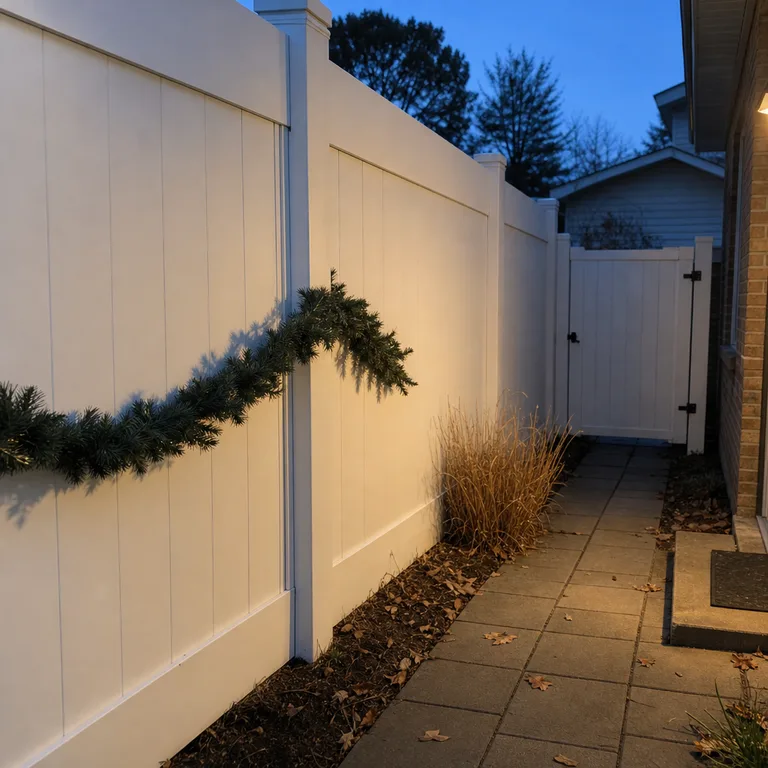
Reuse garland from indoor decorating if it is still in good condition and suited to outdoor exposure. Secure it at several points rather than relying on the ends alone, so wind cannot pull the strip loose or drag it into the gate opening.
A shallow swag works well on a fence seen from the house because it adds a horizontal line without hiding the fence. Avoid fresh greens where they will stay wet against the boards, as trapped moisture can mark some finishes.
Worth knowing: Artificial garland can collect leaves and moisture outdoors, and fresh garland may deteriorate quickly depending on the local winter climate.
4.Cluster shatter-resistant ornaments in one protected section
Hang a compact group of lightweight, shatter-resistant ornaments on one stationary fence panel for a concentrated patch of color. A small cluster is easier to secure than ornaments scattered all along the boundary, and it keeps the gate area free for daily use.
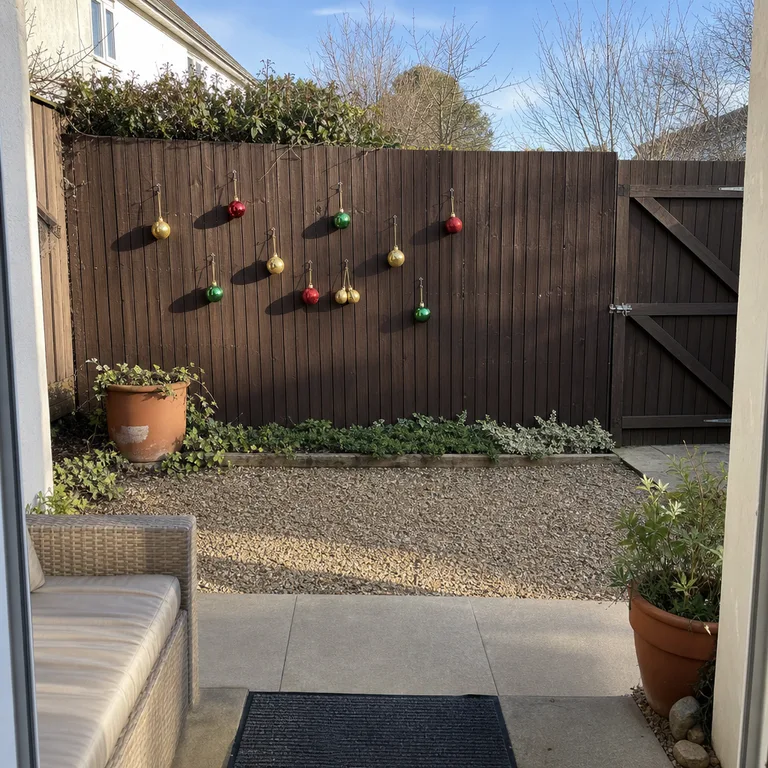
Choose weather-tolerant ornaments and attach each one separately with secure hooks or ties. Place them where they will not knock against the fence in wind and away from paths where a fallen ornament could become a nuisance.
Mixing two or three related colors gives the group a festive look without making a small yard feel busy. A protected spot under a slight overhang or beside dense planting may be calmer than an exposed fence corner.
Worth knowing: Even shatter-resistant ornaments can fade, scratch, or blow loose in exposed conditions, so this option needs occasional checks after windy weather.
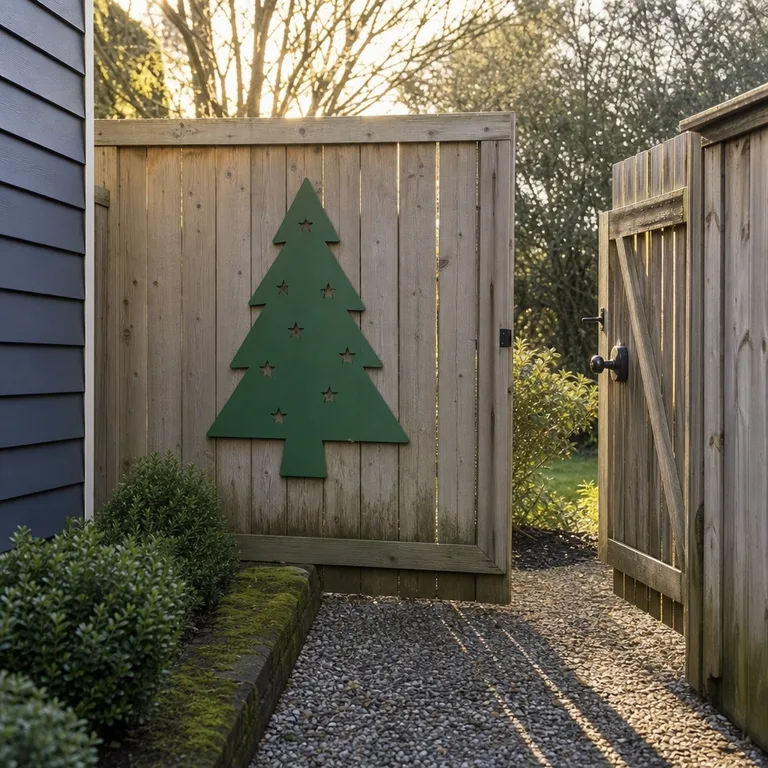
5.Mount a flat wooden tree silhouette on a solid fence panel
A thin tree silhouette adds a recognizable Christmas shape while sitting close to the fence rather than projecting into the yard. Mount it on the middle of a fixed solid panel, keeping the neighboring gate, latch, and hinge line fully clear.
Use a lightweight exterior-suited piece, or repaint a reusable wooden cutout with paint appropriate for outdoor conditions. Mechanical removable fixings are often more reliable than adhesive on uneven timber, but the fence owner or landlord should approve any method that could mark the surface.
A single silhouette works best as a focal point, particularly on a narrow side boundary. It can also be painted in a color that stands out from the fence without adding several separate decorations.
Worth knowing: Thin wood can warp or deteriorate in repeated rain and freeze-thaw conditions, and mounting options may be limited on rented or shared fencing.
6.String pinecones along the top rail of a fixed panel
A pinecone strand brings natural texture to a plain fence line and works particularly well with evergreen planting nearby. Run it along the top rail of one fixed panel and end it at the gatepost rather than carrying it across the moving gate.
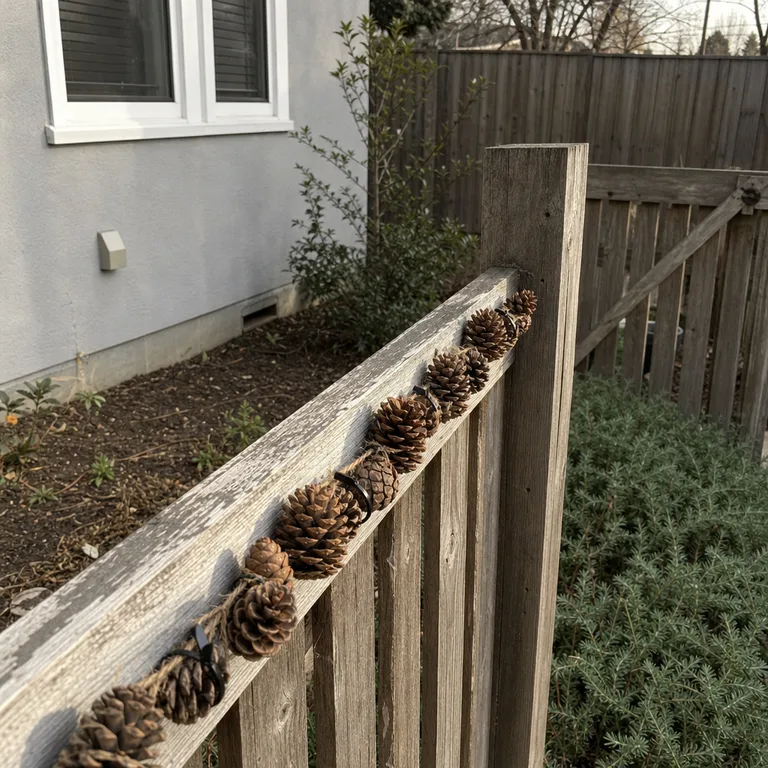
Use a lightweight strand or make one from dry, clean pinecones and outdoor-suited twine. Anchor it frequently so it does not sag into the gate path, scrape the boards, or swing in strong wind.
The uneven shapes of pinecones give a simple display a less manufactured look. Keep the strand short and remove debris as it gathers, since leaves and damp material can collect along a fence cap.
Worth knowing: Natural pinecones can become heavy when wet and may break down over more than one season outdoors.
7.Clip reusable fabric pennants below the fence cap
A short row of fabric pennants creates a band of color below the fence cap while leaving the gate bare. Clip the pennants to a stationary panel, allowing enough clearance that their lower points cannot brush the gate or interfere with a latch.
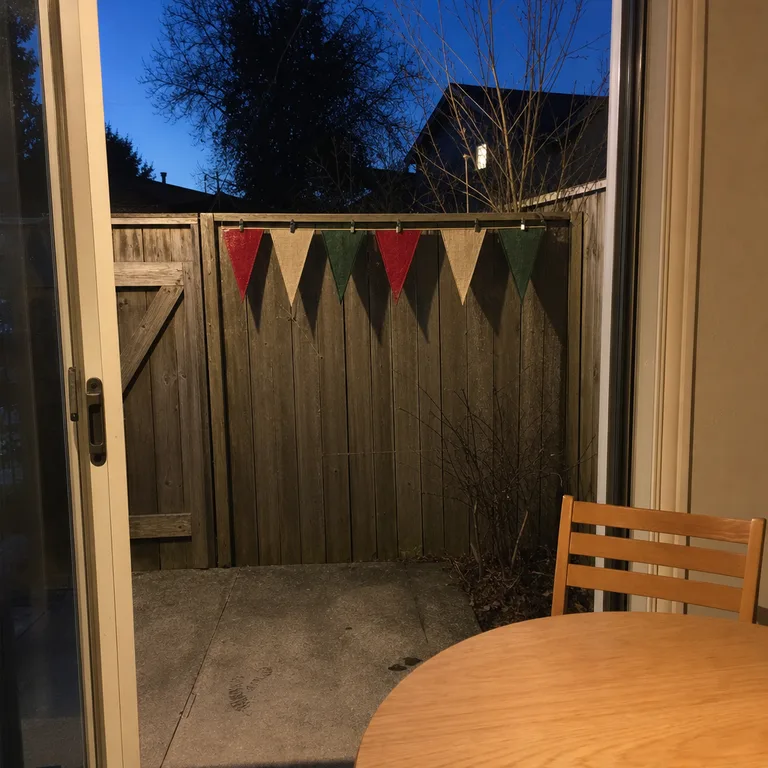
Choose a small number of durable fabric pieces in a restrained Christmas palette, then use clips that can be removed quickly. This makes it practical to take them down ahead of heavy rain, snow, or high winds rather than leaving damp fabric in place.
Pennants work well on an otherwise plain boundary because they emphasize the fence length without adding bulky objects. Use a shorter run on a small yard so the decoration does not visually close in the space.
Worth knowing: Fabric pennants are best in relatively sheltered locations, as wind, persistent rain, and snow can cause fraying, staining, or sagging.
8.Outline one fixed fence panel with outdoor-rated lights
Outline one stationary fence panel with outdoor-rated string lights to make the garden boundary visible after dark. Keep the adjacent gate unlit and leave its latch, hinge side, opening edge, and the nearby walking route free of cable and clips.
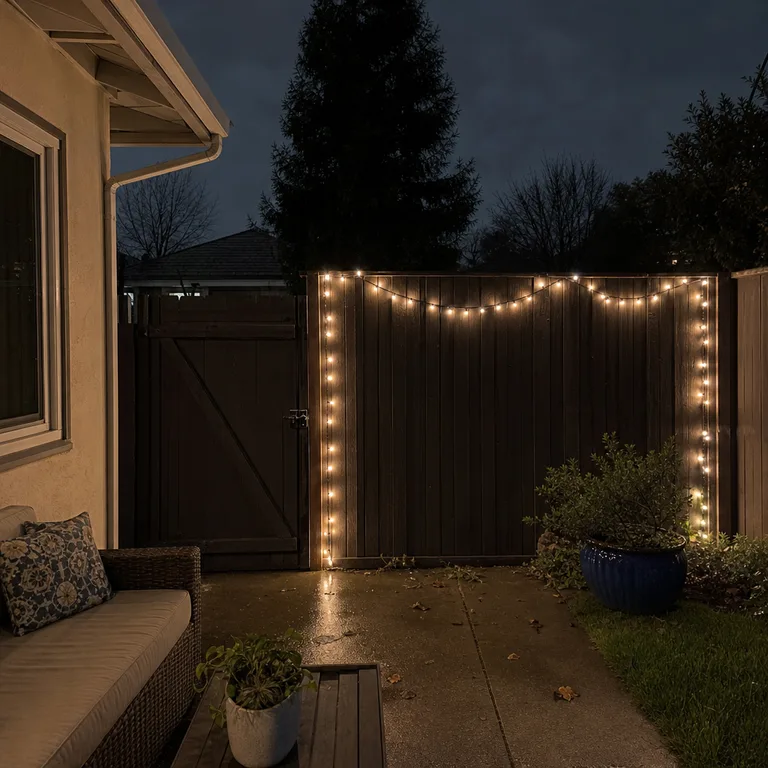
Use lights, connectors, extension leads, and timers only as directed for outdoor use. Secure the cable neatly to the fixed panel with suitable clips, avoid pinching it in gaps, and route any power connection where it will not sit in standing water or create a trip hazard.
A simple rectangular outline is enough to define the fence without turning it into a dense light display. Warm white lights are easy to combine with existing garden or patio lighting, while a timer can reduce the need to handle plugs in poor weather.
Worth knowing: Outdoor lighting requires safe access to an appropriate power source and regular checks for damaged cable, loose clips, and water exposure.
About the author
Dana Ruiz, Senior editor
Dana writes about small-space living, storage and low-cost decorating.
Keep reading
9 Fall Bulb Planting Plans for a Small Bed Using One Modest Bag of Bulbs
October 16, 2026
7 Winter Bird Bath Care Tasks for a Small Garden
October 16, 2026
10 Small Patio Winter Prep Tasks That Protect What You Already Own
October 16, 2026
12 Ways to Style Mismatched Christmas Ornaments on the Tree You Own
October 16, 2026