12 Toy Storage Ideas for a Living Room That Adults Use Too
A shared living room works better when children can reach a small selection of play materials independently and put them away without dismantling the adult side of the room. These ideas combine open access, concealed storage, rotation, and safety details so the space can still function for reading, hosting, and everyday family life.
1.Use a low credenza with one toy zone
Reserve the lowest drawer, cabinet, or open section of a low credenza for the toys currently in use. Keep media equipment, grown-up books, and anything fragile in the upper sections so children have a clear area that is theirs.
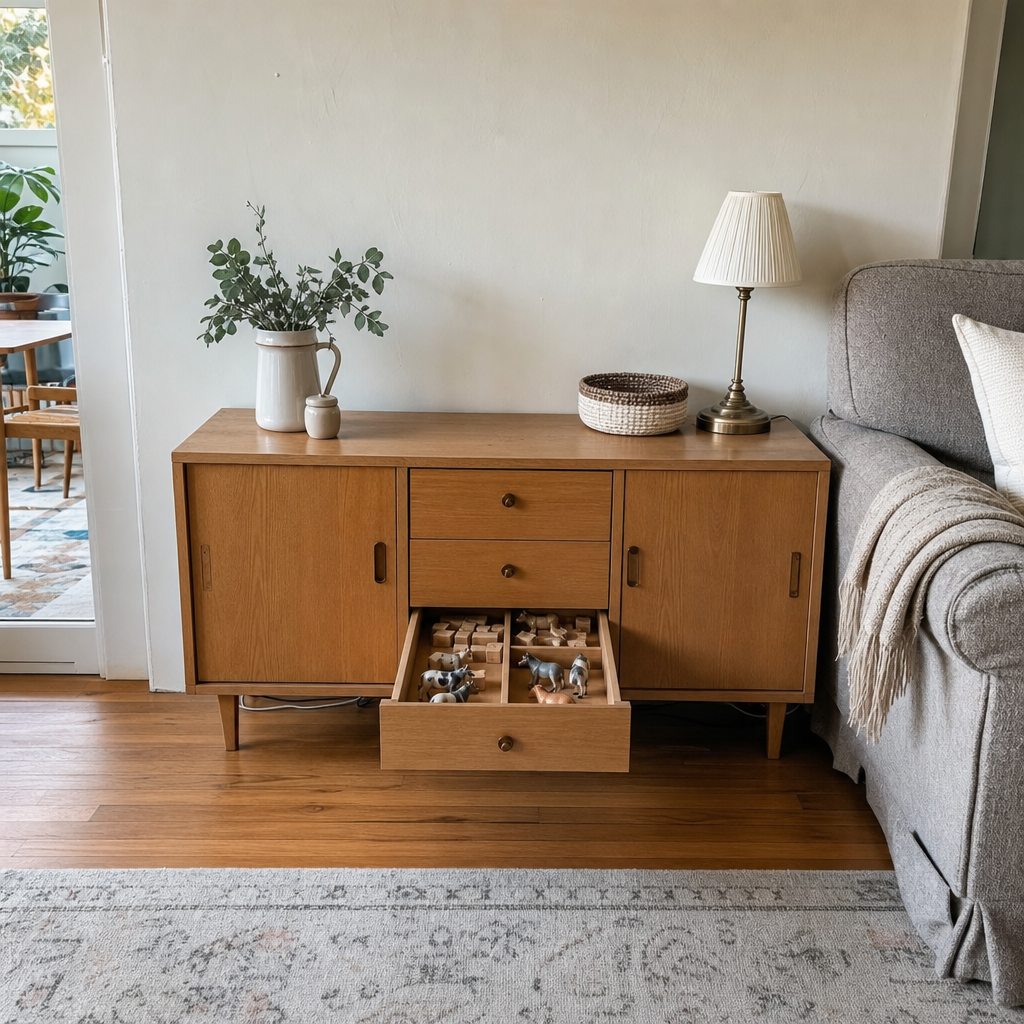
A credenza makes the toy zone feel like part of the living room furniture instead of a separate pile of storage. Use a few simple containers inside the lower section to keep blocks, figures, or vehicles from becoming one mixed-up collection.
Choose a piece that can be anchored securely to the wall, especially if children may pull open drawers or lean on doors. A small rotation is easier to return than every toy the household owns.
Worth knowing: Deep drawers can turn into clutter quickly unless the toy selection stays small and containers are easy for children to lift.
Related: 15 Budget Living Room Updates That Work With the Sofa You Already Own
2.Slide no-label fabric bins under a console table
Tuck soft handled bins beneath a narrow console table and give each one a broad toy category, such as dolls, vehicles, or dress-up clothes. Children can pull a lightweight bin out, play nearby, and slide it back without needing to manage a lid.
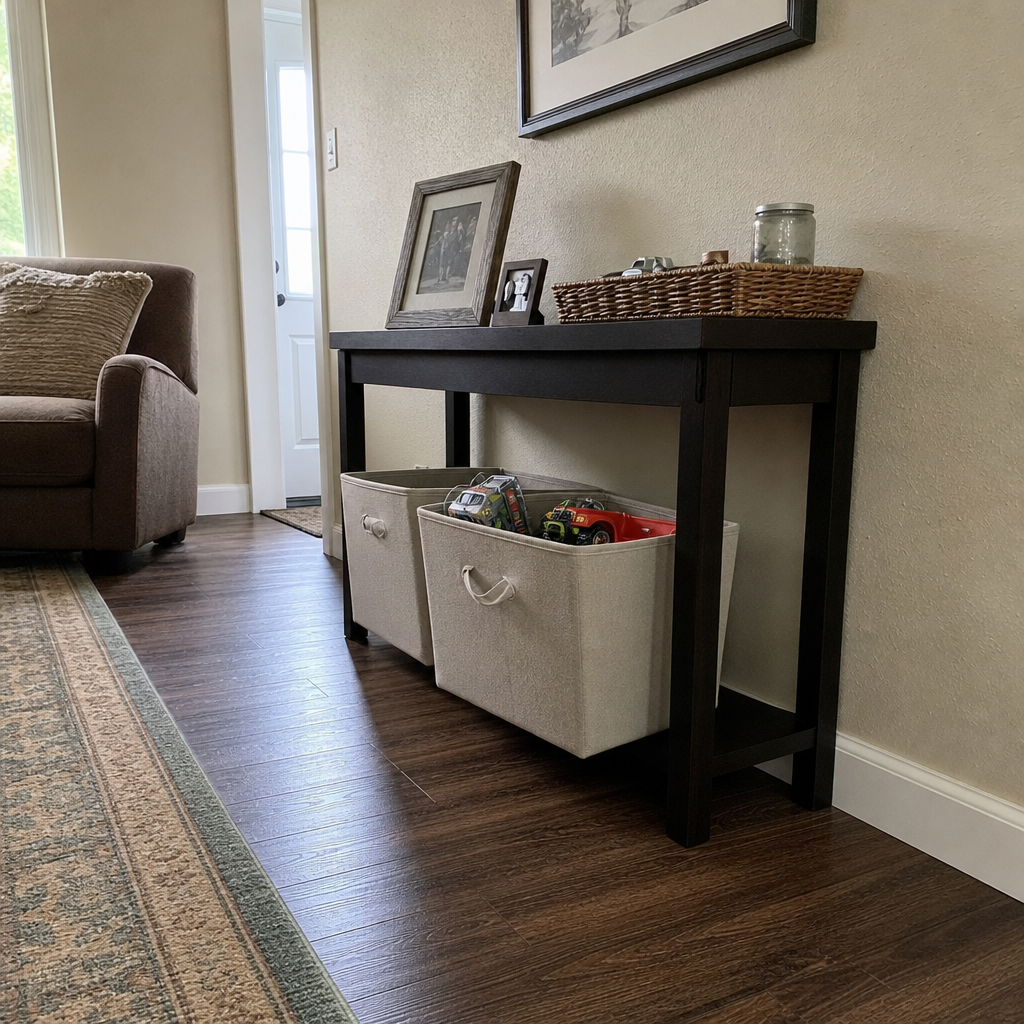
Fabric bins soften a hard-edged living room and use the unused space below furniture that already belongs there. Leaving them unlabeled can also make the system less fussy when toy categories change.
Look for bins that fit with room to spare under the table, rather than forcing them into a tight gap. This setup is best for soft items and larger toys, not loose small pieces that can disappear at the bottom.
Worth knowing: Bins left fully packed are difficult for young children to sort, so each one needs occasional editing.
3.Build a bookcase around open baskets and closed cabinets
Use the lower part of a bookcase for open cubbies and baskets that children can reach on their own. Put a limited group of books, puzzles, or toys there, while closed storage above holds visual clutter, paperwork, and adult belongings.
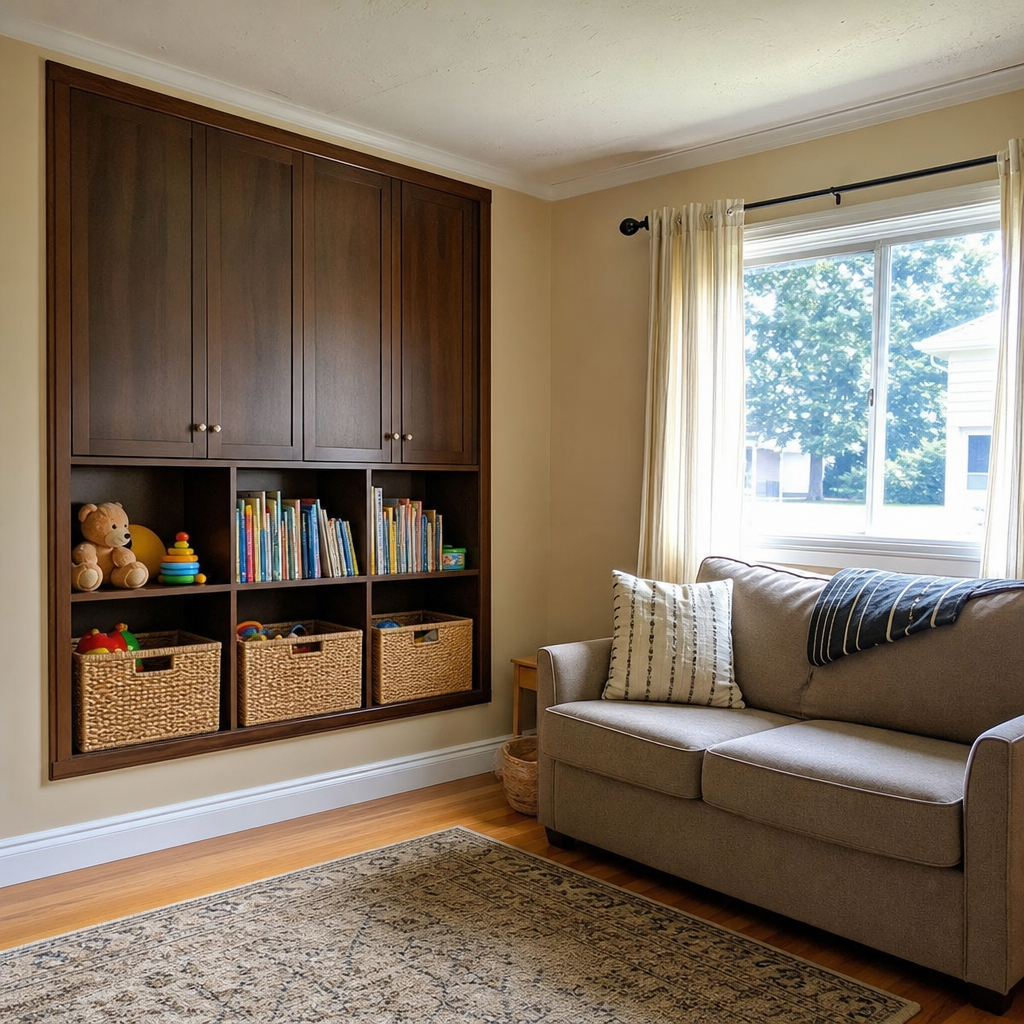
This mix gives children a clear place to choose from and gives the rest of the room a calmer backdrop. Baskets can be pulled down for play, then returned to the same cubby without a detailed sorting routine.
Secure the bookcase to wall studs or follow the manufacturer's anchoring instructions before filling it. Avoid placing heavy items high up, and keep glass, fragile decor, and small parts out of a child's reach.
Worth knowing: Open baskets still show visual clutter if too many categories are kept in circulation at once.
4.Turn an ottoman into soft-access toy storage
Use an upholstered storage ottoman for stuffed animals, play scarves, soft blocks, and other bulky items that do not need careful sorting. It gives the room a footrest or extra seat while hiding a soft toy category inside.
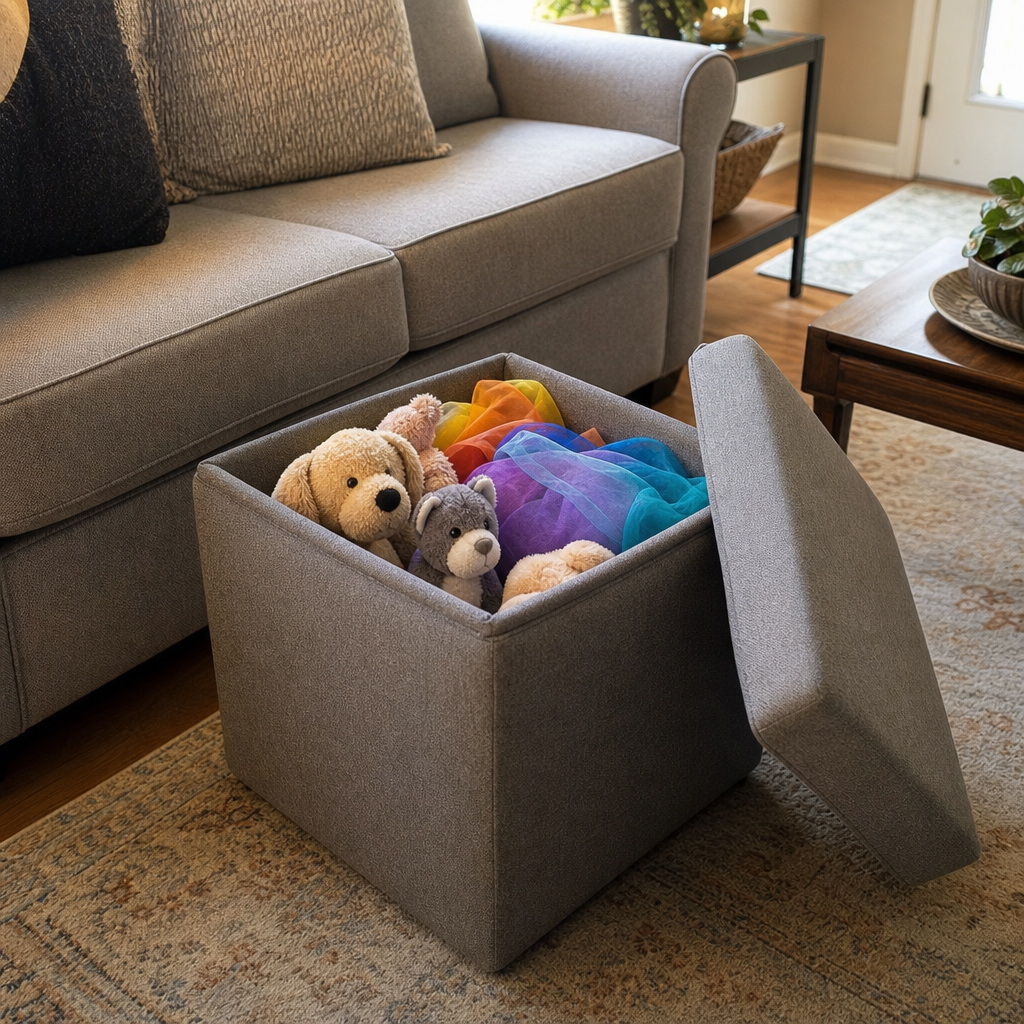
A fabric-covered ottoman is less visually busy than a plastic toy chest in the middle of a seating area. It also puts play materials near the floor, where young children are already likely to use them.
Choose a removable lightweight top or a front-opening design for regular child access. Heavy hinged lids can trap fingers, and a crowded ottoman becomes awkward to close and hard to search.
Worth knowing: This type of storage is not a good fit for tiny pieces, paper crafts, or toys that need to stay organized by set.
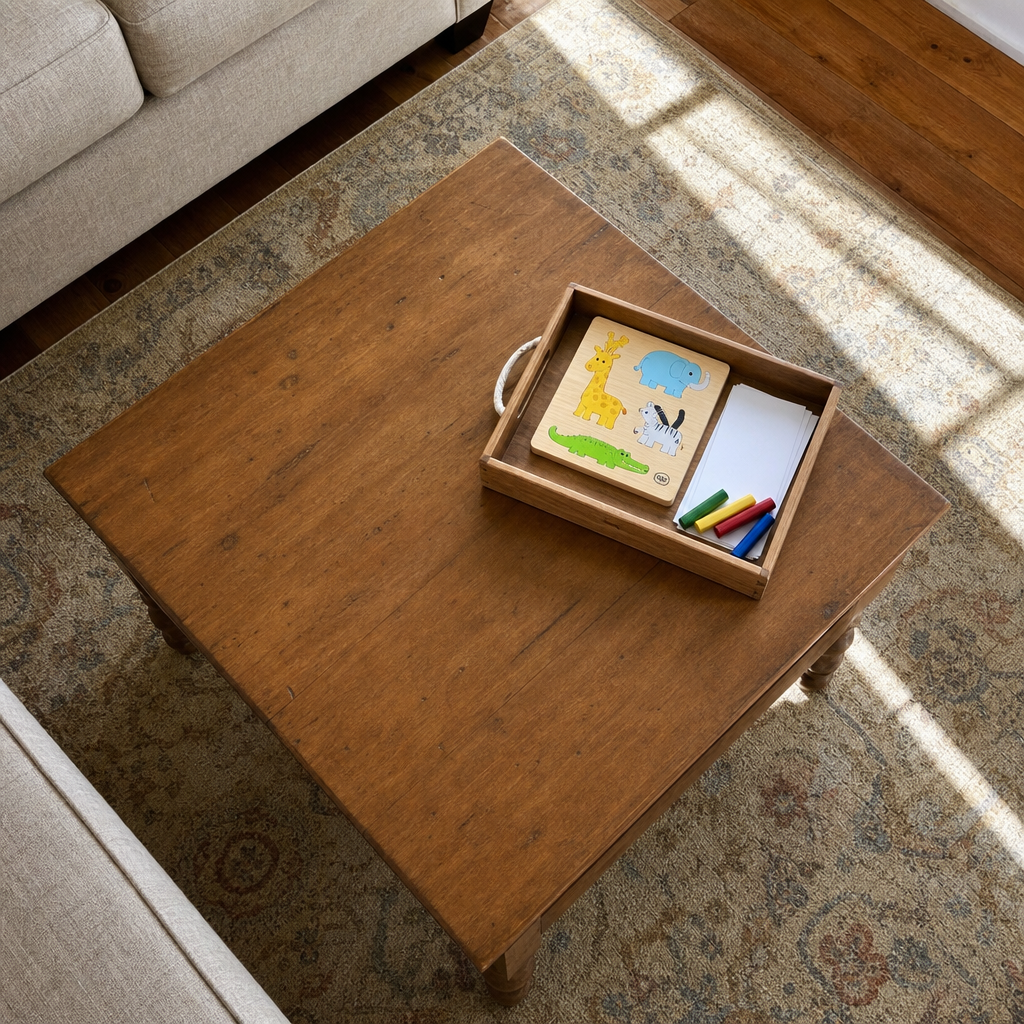
5.Keep a single play tray on the coffee table
Set one shallow tray on the coffee table with a self-contained activity, such as a chunky puzzle, drawing supplies, or magnetic tiles suited to the child's age. The tray defines how much comes out and keeps the activity from spreading across the whole table.
When the table is needed for meals, guests, or adult use, the full activity can be carried back to a cabinet in one trip. A tray also makes quiet play feel intentional instead of temporary clutter.
Use materials that are safe for the children who share the room, and keep magnets or other small components in adult-managed storage when not actively supervised. Pick a tray with a raised edge so pencils and pieces do not roll onto the floor.
Worth knowing: A coffee-table tray works for one contained activity, not for large building projects that need to stay out for days.
6.Store larger toys in a rolling cart
A compact rolling cart can hold one changing group of building toys, art supplies, or pretend-play materials. Roll it beside the play area during the day, then move it to a closet, bedroom, or low-traffic corner when the floor needs to be clear.
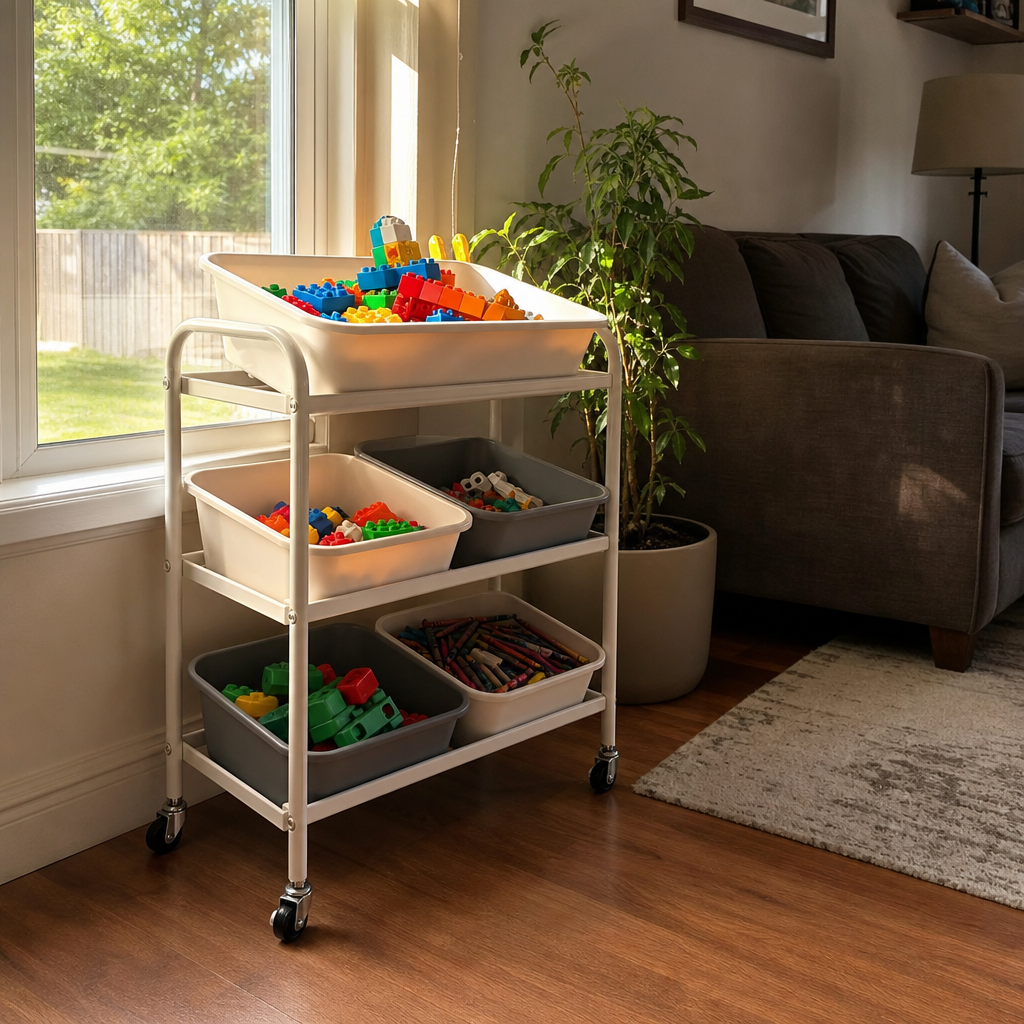
The cart creates portable storage without adding a large permanent cabinet to the room. Open tiers make it easy to see what is available, which can reduce the need to empty several bins looking for one item.
Keep the cart light enough for an adult to move easily and avoid overloading the top tier. If young children will push it, choose stable construction and keep it away from stairs, doorways, and narrow walkways.
Worth knowing: Open carts look untidy when they hold too many unrelated items, so they need a strict toy category or rotation.
7.Use a bench with divided interior storage
Place a storage bench near a window, along an open wall, or beside the sofa, and divide the interior into broad sections for blocks, board books, and soft toys. It adds useful seating while giving common play materials a single home.
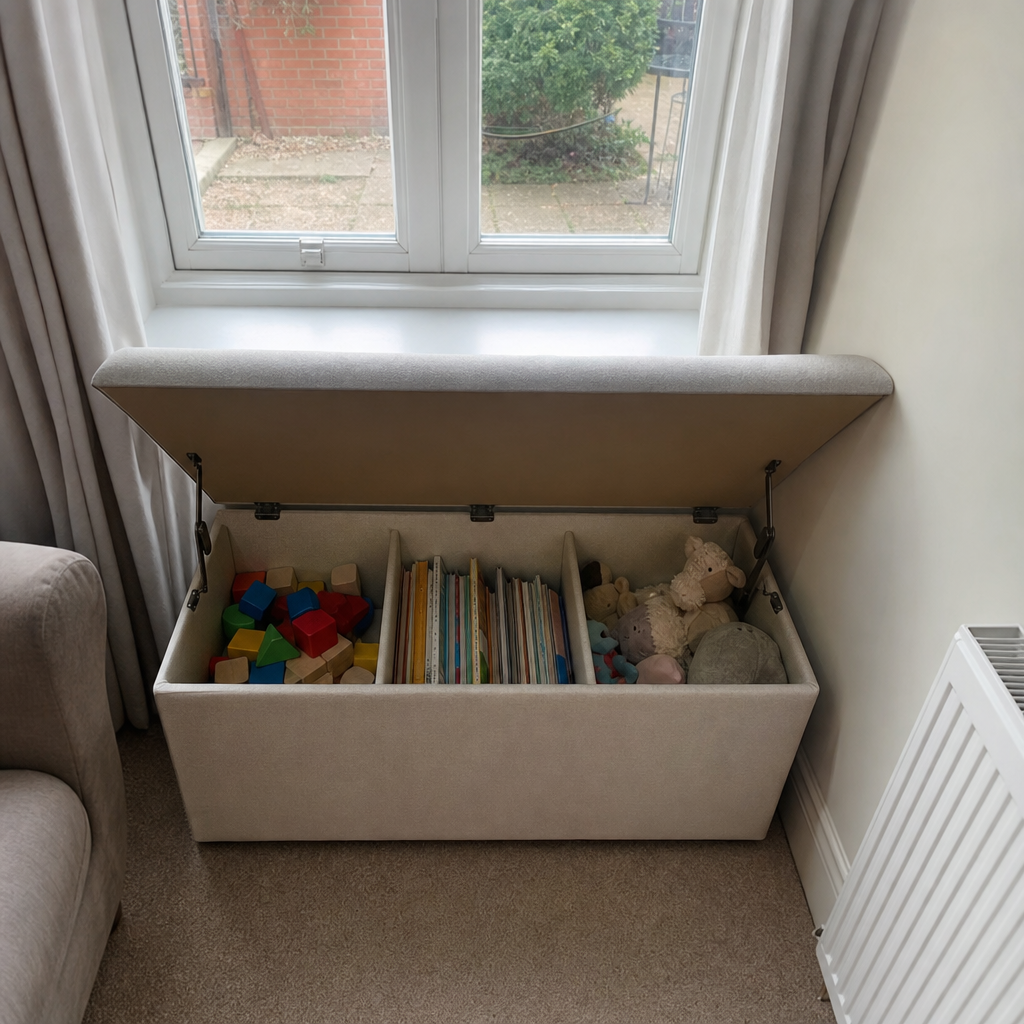
Internal dividers make it easier to put things back without expecting young children to make precise categories. A cushioned top can help the bench blend with the rest of the seating rather than reading as a toy box.
For frequent child access, use a slow-close hinge or removable cushions instead of a heavy unsupported lid. Check that the bench does not block a radiator, window access, or an important walkway.
Worth knowing: A hinged bench can be a pinch hazard if it lacks child-safe hardware and adult supervision.
Related: 10 Budget Curtain Ideas That Make Windows Feel More Finished
8.Hang a wall rail for dress-up and art supplies
Install a sturdy wall rail at an appropriate child height for a few capes, costume bags, headphones, or hanging containers of washable art tools. Place it on a wall that does not interfere with a door swing, seating area, or route through the room.
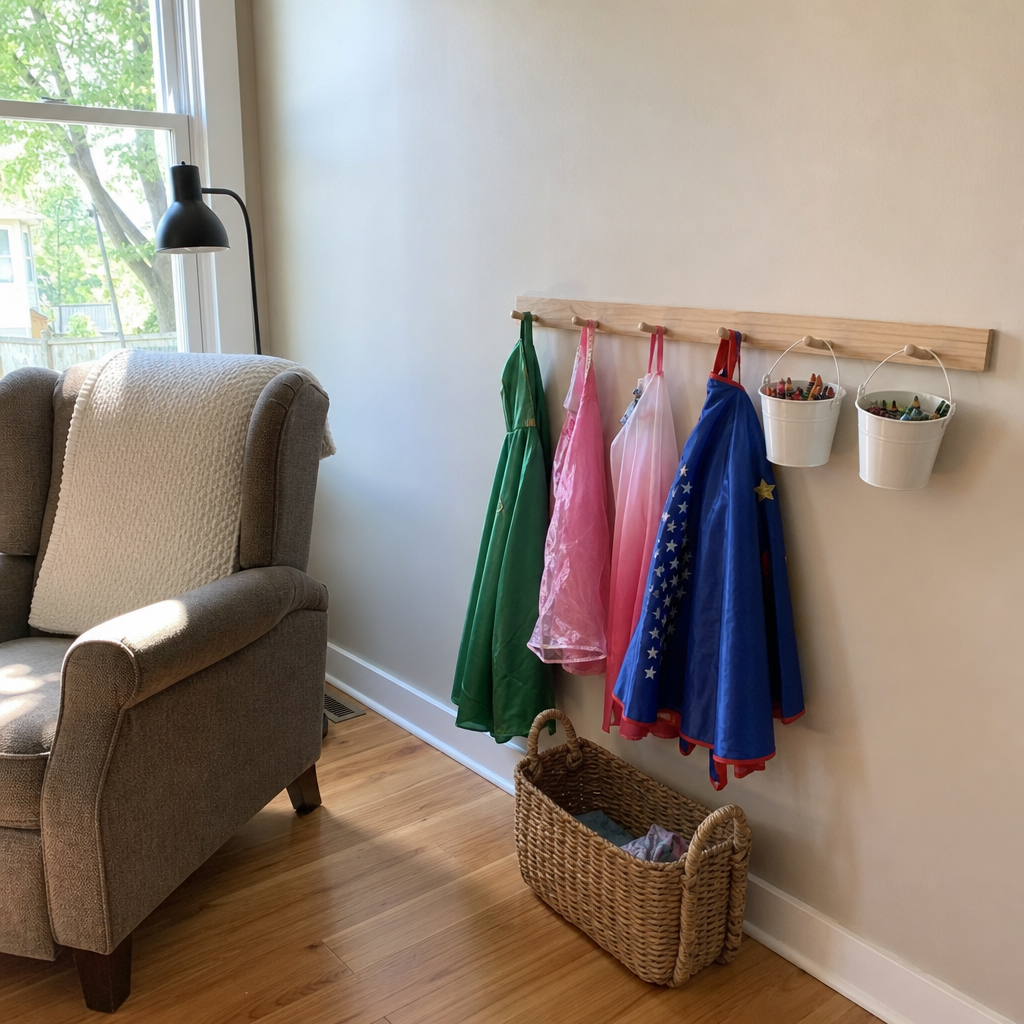
Hanging storage uses vertical space and gives lightweight items a place to air out rather than being packed into a bin. It also makes dress-up choices visible without putting every costume in the room on display.
Fasten the rail into suitable wall support and follow its weight guidance, especially if containers will hold supplies. Keep scissors, small pieces, and permanent art materials in higher adult-controlled storage.
Worth knowing: This works best for light items; overloading hooks can damage the wall rail or make the walkway feel crowded.
9.Give board games a vertical shelf section
Set aside one shelf section or cabinet compartment for a limited group of family board games. Store boxes upright with shelf dividers or sturdy bookends so each game can be pulled out without lifting a stack.
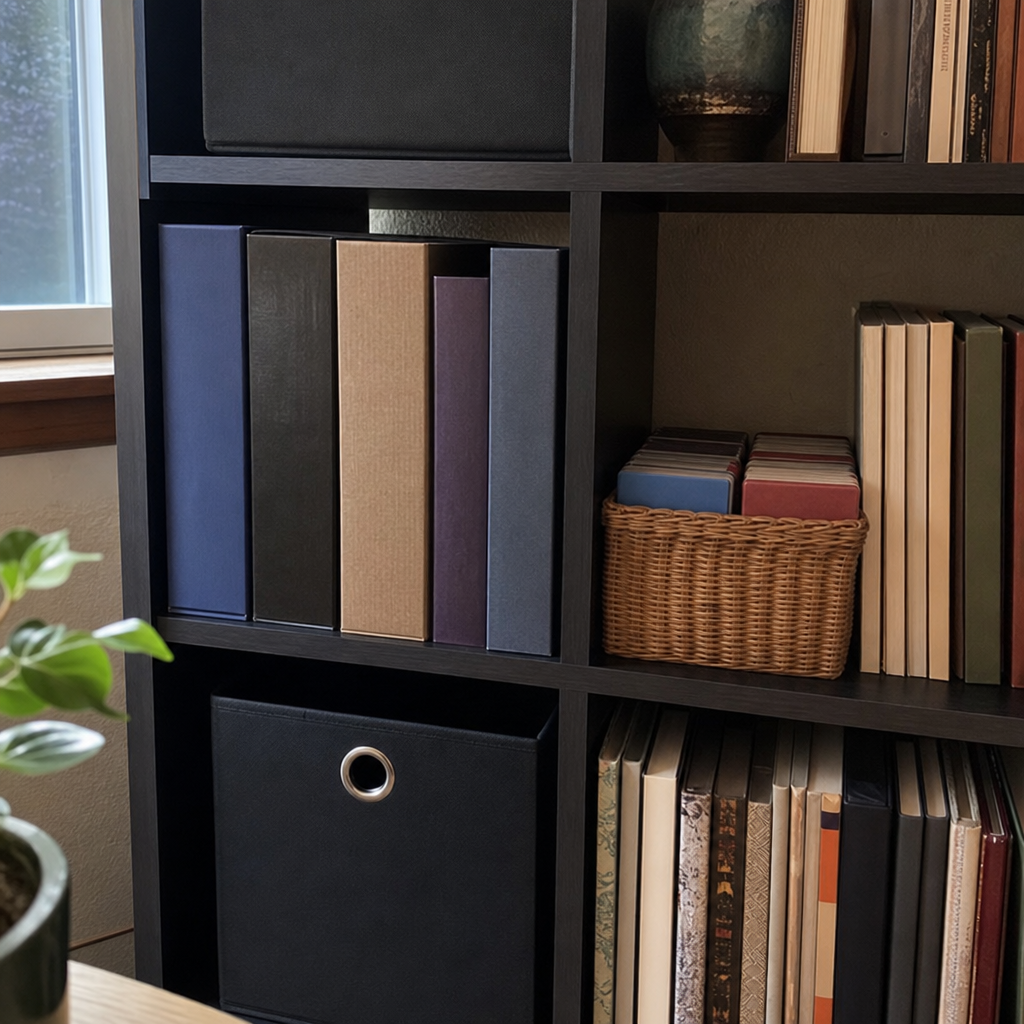
Vertical storage makes game choices visible and reduces crushed boxes caused by digging through a deep bin. Keeping games near adult books or media can also help them feel like a normal part of shared living room storage.
Use a shelf that is easy for the intended players to reach, but keep games with tiny components higher up if babies, toddlers, or pets are in the home. A small basket can hold card games that would otherwise slide between larger boxes.
Worth knowing: Boxes with loose parts still need an intact closure or an additional container to prevent pieces from scattering.
10.Add a slim behind-the-sofa toy basket
Place a long, low basket behind a sofa for large picture books, a folded blanket, and a few quiet toys. It uses an overlooked strip of floor while keeping the central play area and coffee table less crowded.
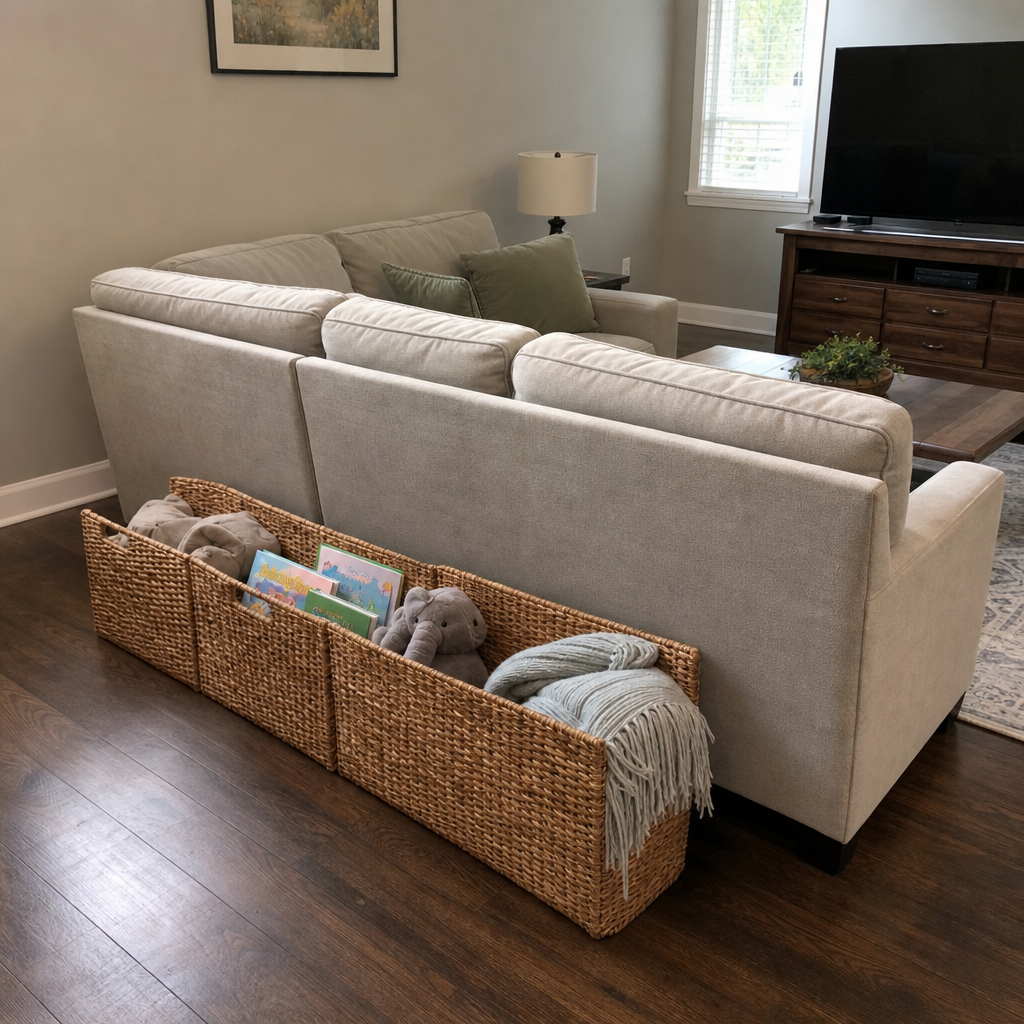
This arrangement is especially useful for wind-down materials that can be pulled out without opening a cabinet. A low basket also gives children a simple return point at the end of the day.
Leave enough clearance behind the sofa to remove items easily and to clean the floor. It is most useful when the sofa sits away from the wall, not when furniture is pushed tightly against it.
Worth knowing: The basket can become a catch-all for household clutter unless it is reserved for a narrow group of quiet-play items.
11.Make a small-parts box part of each play session
Keep magnets, miniature figures, beads, and other small components in a latching box that an adult brings out with the activity. Return the box to higher storage as soon as the play session ends, rather than leaving it in an open toy area.
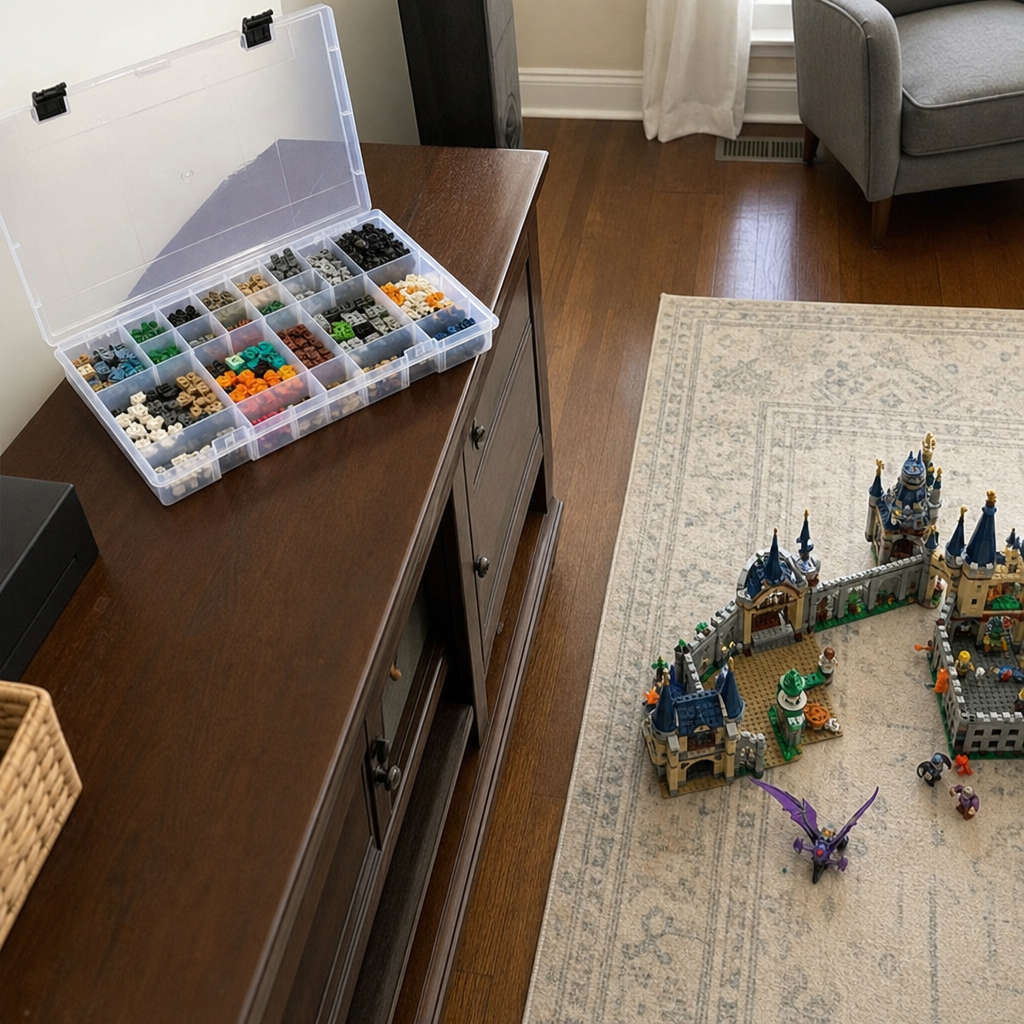
This protects the rest of the living room from scattered pieces and helps preserve sets that are frustrating to rebuild. It is particularly important in homes shared with babies, toddlers, or pets, where small parts can create a serious safety concern.
Choose an organizer with compartments only if the pieces truly need sorting; a simple latching box is often easier to manage. Make sure latches and containers are in good condition, since a loose closure defeats the purpose.
Worth knowing: This system requires adult involvement, so it will not provide fully independent access for very young children.
12.Rotate toys through a closet-ready backup bin
Keep most toys in closed backup bins in a nearby closet and bring only a few groups into the living room at a time. Refresh the selection when interest fades or when the current group no longer fits the season or stage of play.
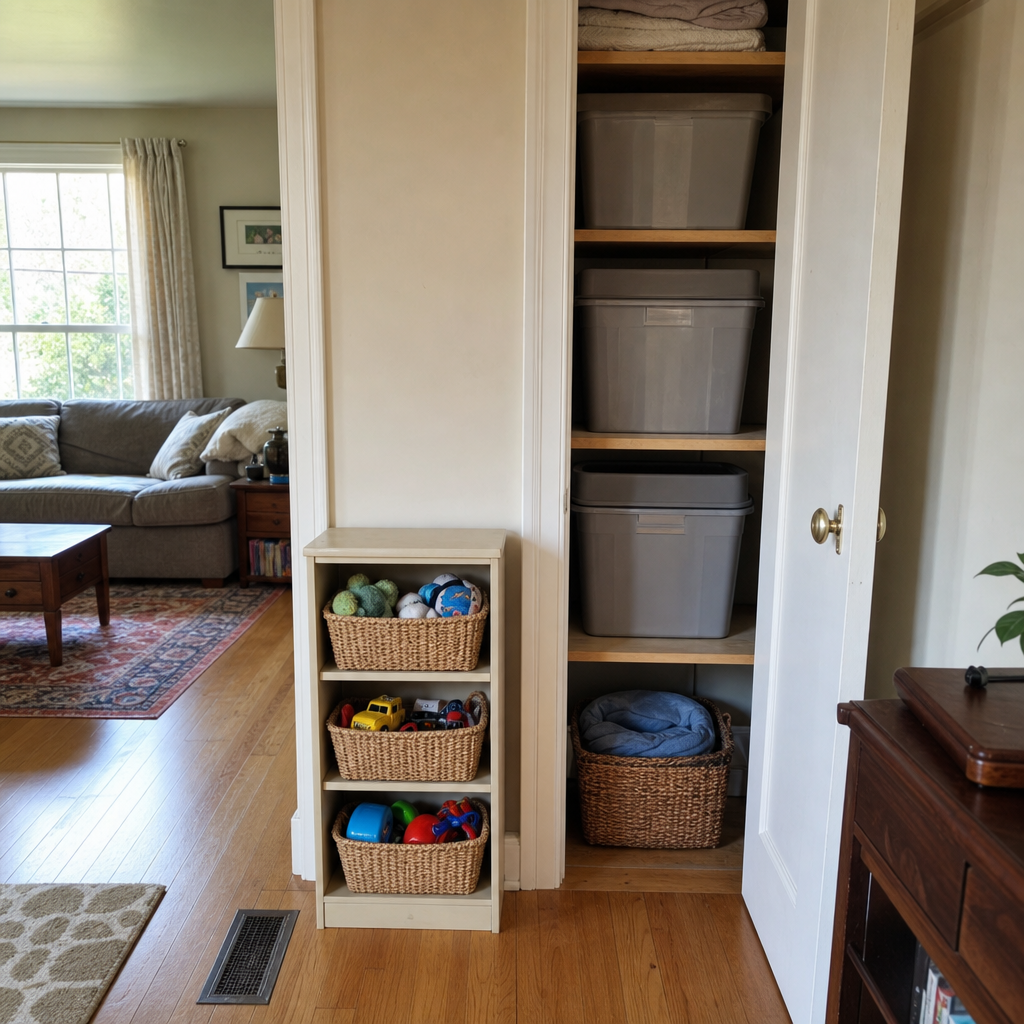
A smaller visible collection is easier for children to choose from and much faster to put away. Closed backup storage also lets the living room serve adult routines without requiring it to look unused or perfectly empty.
Store backup bins in a dry indoor closet rather than a damp basement, garage, or other unstable environment that can damage paper, wood, fabric, and games. Use bins that can be lifted safely, and keep heavier ones on lower shelves where possible.
Worth knowing: Rotation takes a little ongoing attention, and it depends on having a nearby dry storage area.
About the author
Dana Ruiz, Senior editor
Dana writes about small-space living, storage and low-cost decorating.
Keep reading
15 Small Closet Organization Ideas Without a Custom System
September 16, 2026
10 Small Dining Area Ideas When You Don't Have a Dining Room
September 16, 2026
12 Small Patio Seating Ideas on a Budget
September 16, 2026
12 Small Kitchen Ideas That Free Up Prep Space Without Remodeling
September 15, 2026