8 Belt Storage Ideas That Fit an Existing Bedroom Closet
Belts stay easier to use when each buckle can be seen and the straps are stored without hard folds or overcrowded hooks. These options work with common closet drawers, shelves, rods, and spare bedroom storage, while leaving room to separate everyday belts from seasonal styles.
As an Amazon Associate I earn from qualifying purchases.
1.Roll Belts Into a Divided Drawer Insert
A divided drawer insert gives each belt its own place without taking over the closet rod. Loosely coil belts with the buckle facing up, so the hardware is easy to identify at a glance and straps do not wrap around one another.
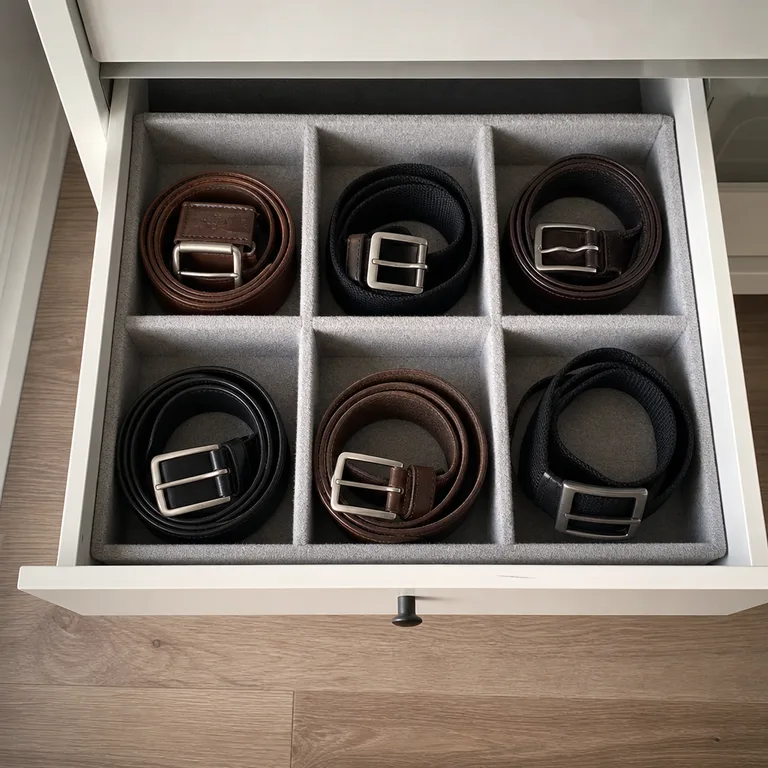
Use an organizer already in a dresser drawer if the sections are wide enough, or add adjustable dividers to a shallow drawer. Keep leather coils relaxed rather than pulling them into a tight circle, and reserve the largest compartments for wide straps or oversized buckles.
Worth knowing: This only works well in a drawer deep enough to close over the tallest buckle.
2.Protect Dress Belts in Individual Cloth Sleeves
Separate cloth sleeves suit dress belts that are worn less often, especially leather or suede styles that can be scratched by neighboring buckles. Slip one belt into each soft sleeve, then lay the sleeves in a shallow drawer or fabric bin.
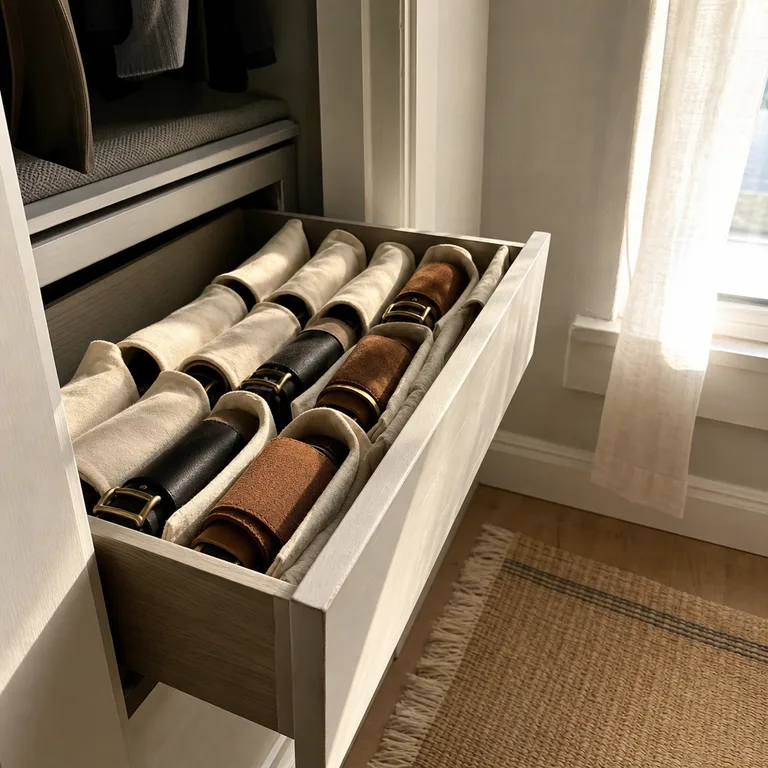
Reuse small cotton pouches, soft accessory bags, or clean fabric sleeves from other household storage. Keeping the buckle near the opening makes it easier to find a particular belt without emptying the whole drawer.
Worth knowing: Individual sleeves take longer to sort through than open storage, so they are less convenient for everyday belts.
3.Hang Everyday Belts on a Purpose-Made Belt Hanger
A multi-hook belt hanger keeps frequently used belts hanging straight, with buckles facing forward. It is a simple option for a closet rod that has a little spare width but no unused drawer space.
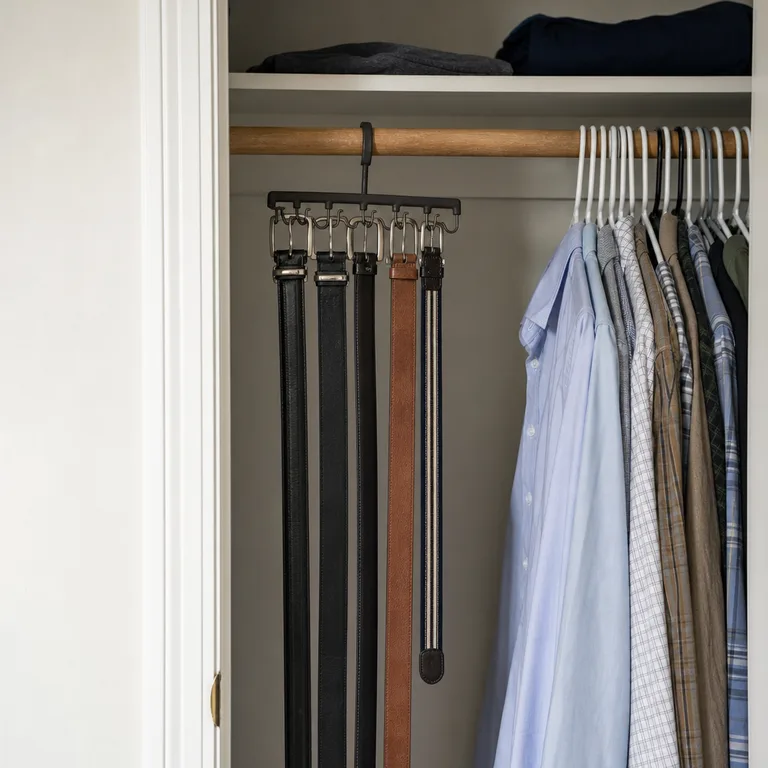
Choose a hanger with hooks that hold belts separately instead of stacking several straps on one hook. Spread heavier buckles across the hanger and leave a little space between belts so the hanger does not twist or become difficult to lift from the rod.
Worth knowing: A crowded closet rod can make hanging belts harder to see and can crease straps against nearby clothing.
4.Add Rated Hooks to the Closet Side Wall
A few individual hooks on a closet side wall can hold heavier belts without bunching them onto a hanger. This keeps thick leather work belts, statement buckles, or sturdy casual belts accessible near the clothes they are worn with.
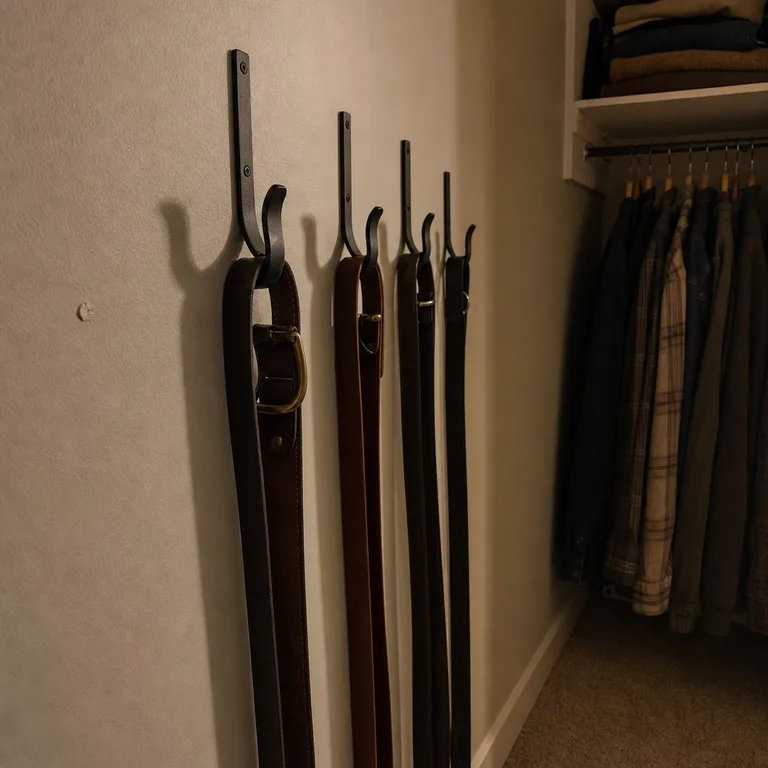
Use hooks rated for the expected load and match the fastener to the wall material. In a rental, removable options may be required, but adhesive hooks are not always suitable for heavy belts or humid closets; check the product guidance and rental rules first.
Worth knowing: Installation may not be practical in a rental or on a closet wall with limited clearance beside hanging clothes.
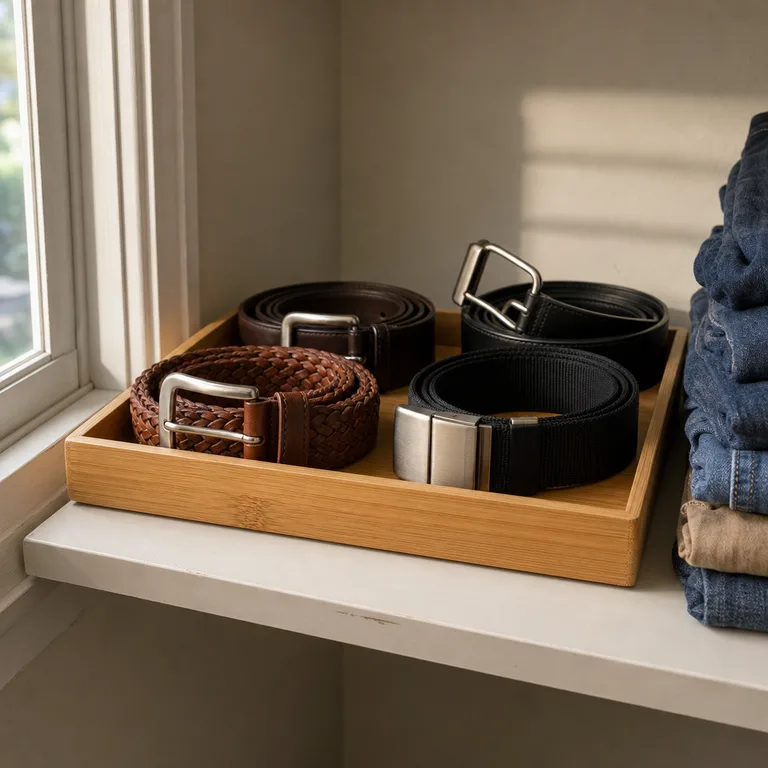
5.Keep Buckles Up in a Small Open Tray
A small open tray turns an accessible closet shelf into a belt station for casual styles. Coil each belt loosely with the buckle on top, making it possible to choose one without pulling the others apart.
Repurpose a shallow tray from another room, or use a simple open bin that fits the shelf depth. This setup works especially well for canvas and woven belts that do not hang as neatly as leather, though each coil still needs enough room to stay relaxed.
Worth knowing: Open trays collect dust more quickly than drawers or lidded storage.
6.Separate Belts in a Shallow Lidded Box
A shallow divided box keeps occasional belts grouped by color, formality, or use while protecting them on an upper shelf. The lid keeps the contents contained, and internal sections stop buckles from rubbing against every strap in the box.
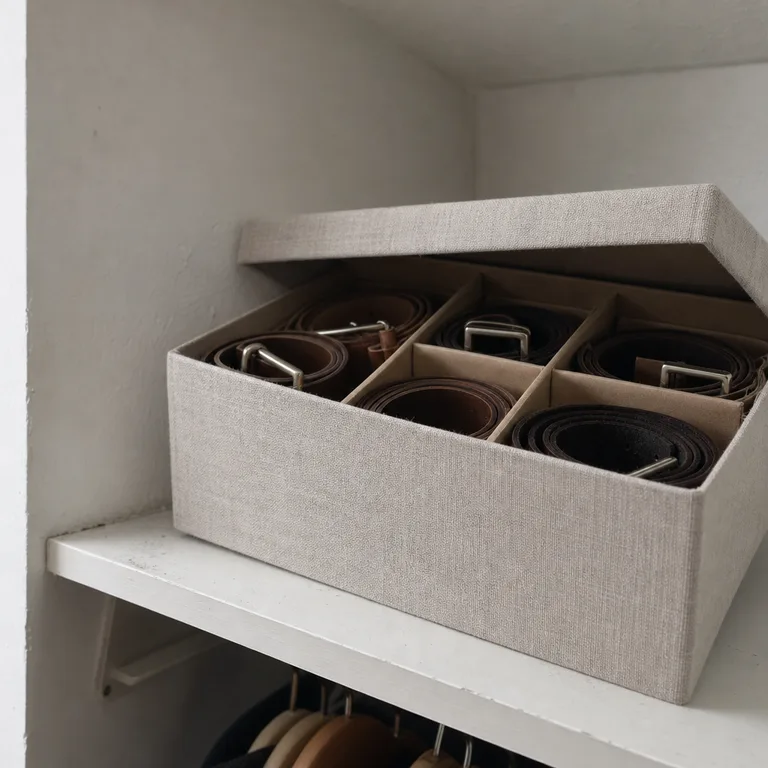
Reuse a shallow storage box and add simple divider panels if it has enough depth for loose coils. Measure both the shelf and the largest buckle first, since a box that is too tall or too deep becomes awkward to retrieve from overhead.
Worth knowing: An upper-shelf box is better for occasional belts than pairs that are needed during a rushed morning.
7.Assign One Existing Accessory Cubby to Belts
An empty accessory cubby can hold belt rolls upright with the buckles facing outward. Group similar widths together so slim dress belts do not disappear behind thick leather straps, and keep the most-used belts in the front row.
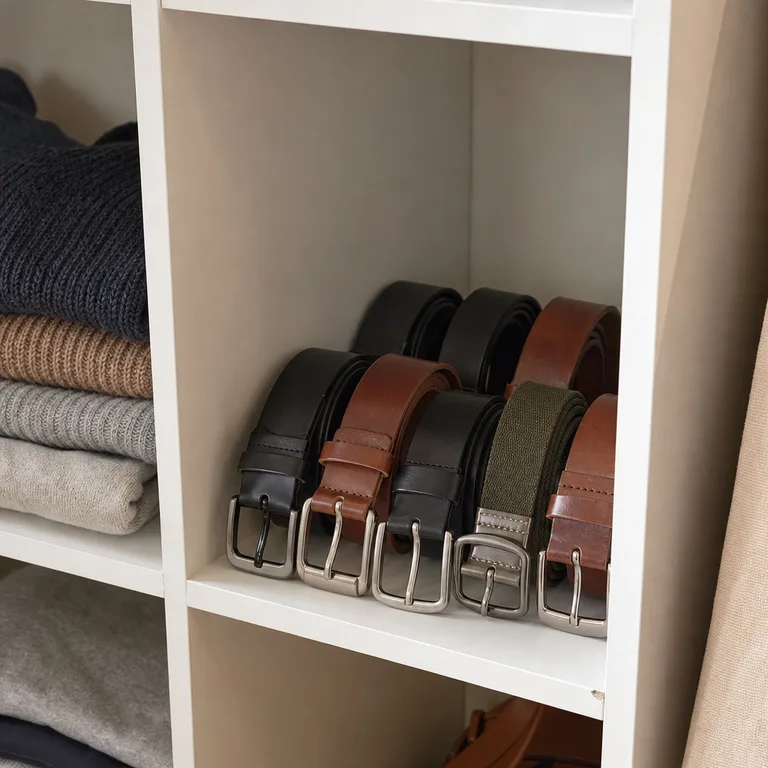
This approach needs no new organizer if the cubby already holds folded accessories or is currently unused. A small amount of spacing helps the rolls remain upright, while overfilling the cubby makes the belts slump into a tangled pile.
Worth knowing: Deep or very wide cubbies may need a small bin or divider to stop belt rolls from falling backward.
8.Store Seasonal Belts in a Labeled Reserve Pouch
A breathable zip pouch keeps occasional belts together without adding clutter to the everyday section of the closet. Group belts by season or occasion, such as holiday outfits, formalwear, or warm-weather canvas styles, and use a removable label that can change as the collection changes.
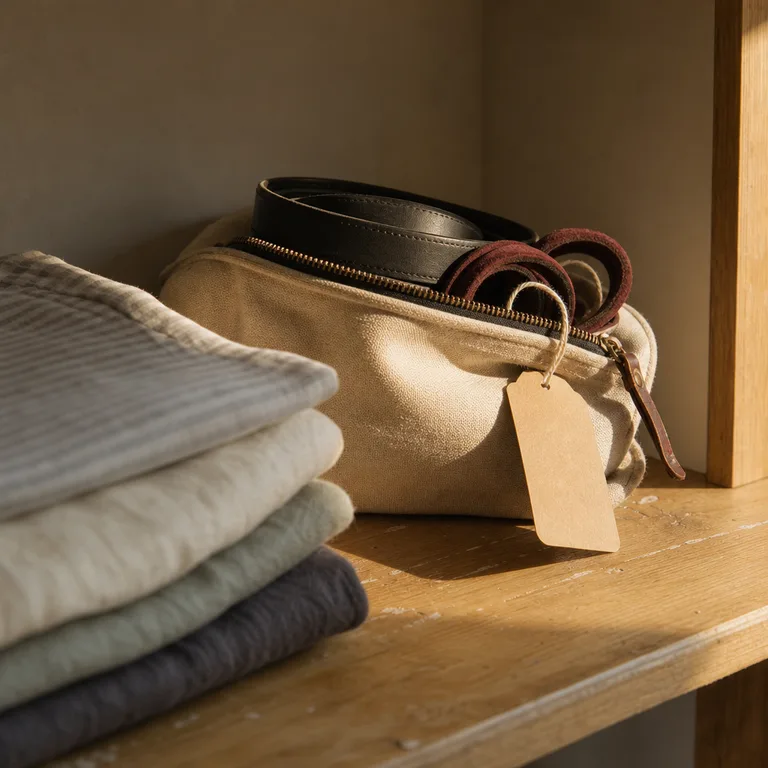
Store the pouch on a high shelf behind frequently used items, with belts loosely coiled rather than sharply folded. Canvas or other breathable fabric is a sensible choice for leather and suede, particularly where closet humidity can be an issue; make sure belts are clean and fully dry before storing them away.
Worth knowing: A reserve pouch keeps infrequently used belts tidy, but it does not provide instant visibility for every buckle.
About the author
Dana Ruiz, Senior editor
Dana writes about small-space living, storage and low-cost decorating.
Keep reading
9 Kids' School Paper Organization Ideas That Separate Forms From Keepsakes
October 31, 2026
7 Remote Control Storage Ideas for a Shared Living Room
October 29, 2026
8 Christmas Gift-Wrapping Stations That Pack Away in a Small Home
October 31, 2026

7 Small Bedroom Layouts With Sloped Ceilings
October 31, 2026