12 Shoe Storage Ideas for a Narrow Entryway
A narrow entry needs shoe storage that keeps the walking path and door swing clear while handling the pairs a household actually wears most often. The best fit depends on boot height, wet-shoe cleanup, available wall depth, rental rules, and whether a unit can be safely anchored.
1.Wall-Mounted Flip-Down Shoe Cabinet
A wall-mounted flip-down cabinet keeps everyday sneakers, flats, and low sandals out of sight without claiming much floor area. Its shallow profile can suit the wall beside a door, as long as opened compartments do not enter the door swing or narrow the route through the entry.
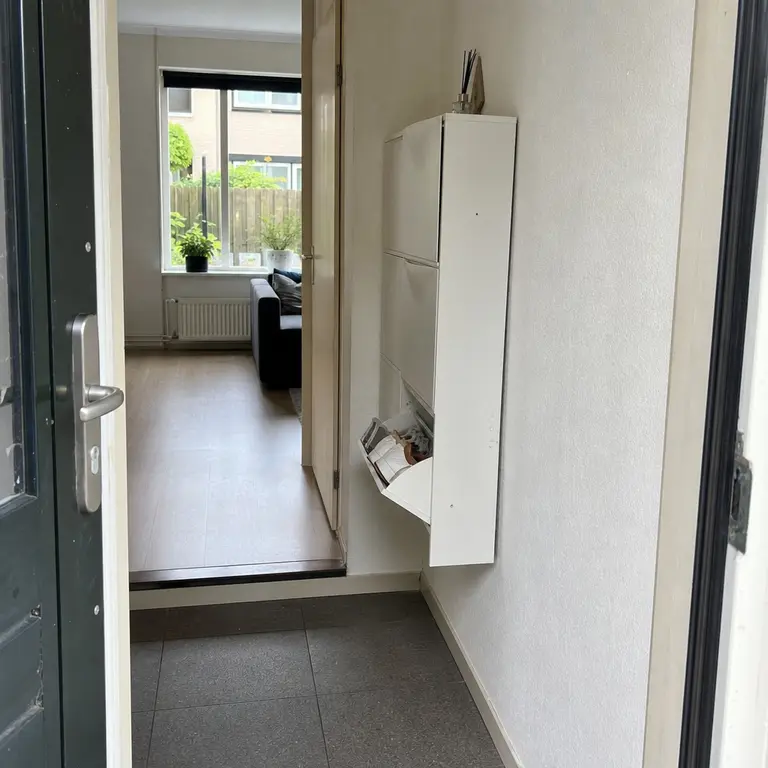
Use it for the pairs that leave the house most often rather than trying to fit every shoe in the home. Choose a model with compartments deep enough for the household’s common footwear, and keep taller boots elsewhere; anchor it to the wall exactly as the manufacturer instructs.
Worth knowing: Most flip-down compartments are not a good fit for tall boots, and damp shoes should be allowed to dry before being closed inside.
2.Low Open Shoe Bench Along One Wall
A low bench creates a simple drop zone for a few active pairs and gives children or guests somewhere to sit while putting shoes on. Keeping it low preserves sightlines in a tight hall and is less likely to make the entry feel boxed in than a tall unit.
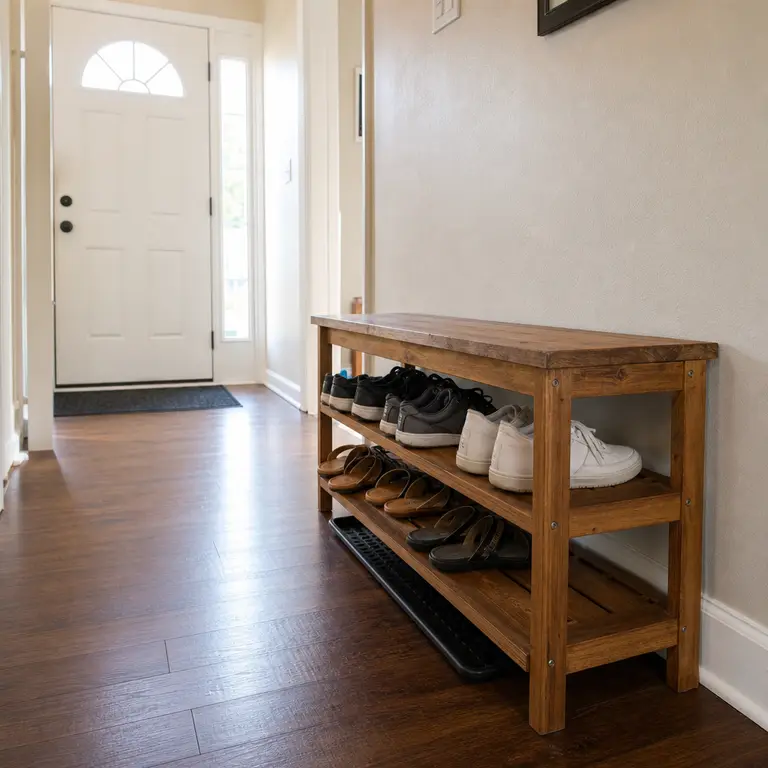
Use the shelf for shoes that can be reached quickly, with boots on the floor below if the bench has enough clearance. A removable boot tray or wipeable mat underneath contains drips, salt, and mud; position the bench so someone sitting down does not block the front door.
Worth knowing: Open storage looks untidy quickly if too many pairs collect there, so it works best for a limited daily rotation.
3.Stackable Clear Shoe Boxes in a Closet
Clear stackable boxes make a shallow coat closet floor work harder by keeping seasonal shoes visible, paired, and protected from dust. They are especially useful for flats, sandals, and shoes that tend to disappear under hanging coats.
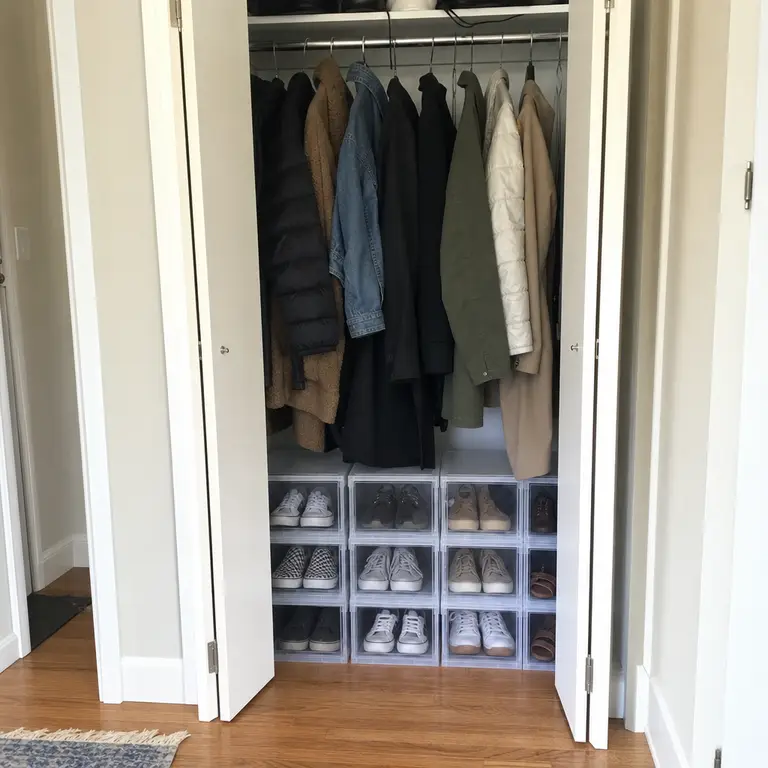
Place the boxes where closet doors can still close freely, and keep the stack low enough to pull out without shifting the whole column. Let wet shoes dry outside the boxes first, and reserve floor-level positions for pairs used often enough that opening several boxes would be annoying.
Worth knowing: This approach needs a closet with usable floor space and is less convenient for hurried daily shoe changes.
Related: 15 Small Closet Organization Ideas Without a Custom System
4.Over-the-Door Pocket Organizer
A pocket organizer turns the back of a closet or utility door into storage for lightweight shoes that otherwise spread across the floor. It works well for children’s sneakers, sandals, flats, and slippers, while keeping the main hallway clear.
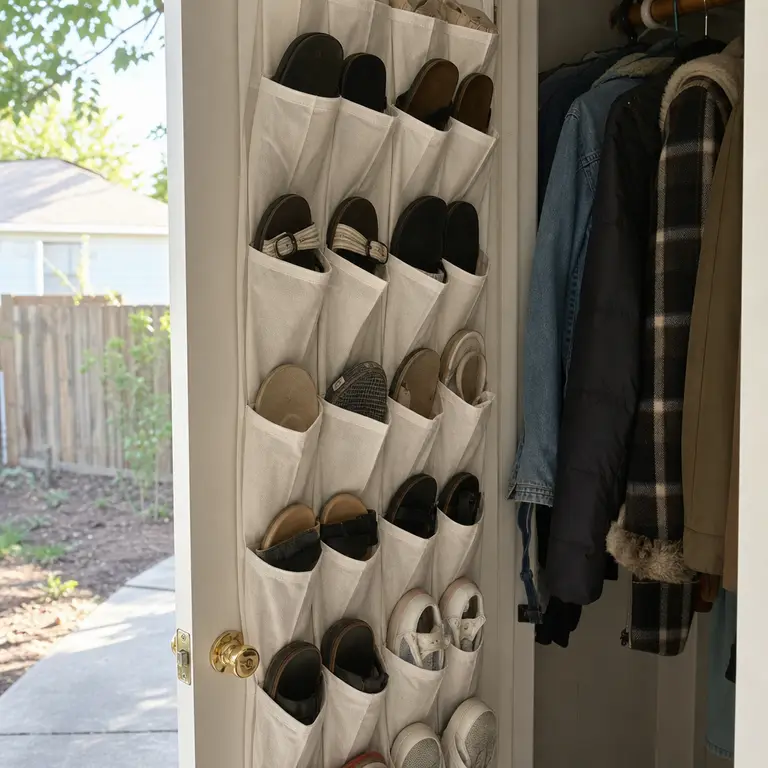
Check the added thickness before committing to it, since a loaded organizer can stop a shallow closet door from closing properly. Hang heavier shoes elsewhere, and avoid placing damp footwear in fabric pockets until it has dried.
Worth knowing: Pocket organizers generally cannot support heavy boots or bulky adult shoes without sagging or making the door difficult to close.
5.Narrow Rolling Shoe Cart
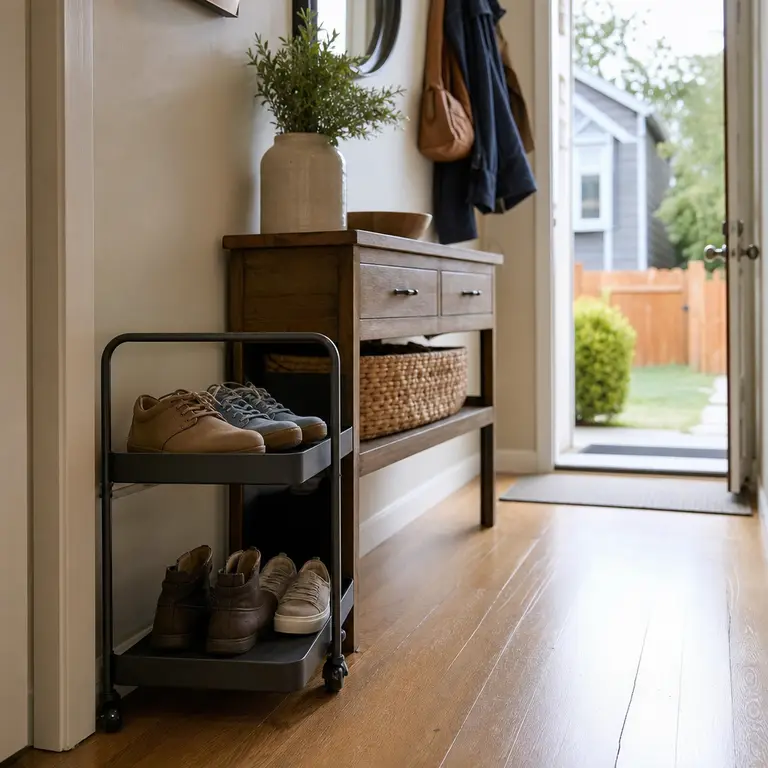
A slim rolling cart can live beside a wall, under a console, or in another small gap near the entry. Pulling it out only when needed keeps the route to the front door more open than a permanently protruding shelf.
Use the upper shelf for the current daily pairs and the lower level for less frequent shoes, while leaving tall boots out if the shelf spacing is tight. Wheels work best on smooth, level flooring, and the cart should be parked where it cannot roll into the exit path.
Worth knowing: It can feel cumbersome on carpet, uneven floors, or in an entry so narrow that there is no safe parking spot.
6.Boot Tray With a Wall Hook Zone
A sturdy boot tray below a set of wall hooks makes a practical landing zone for rain boots, muddy sneakers, and shoes worn to outdoor activities. It contains mess at the threshold instead of letting water and grit spread through the hall.
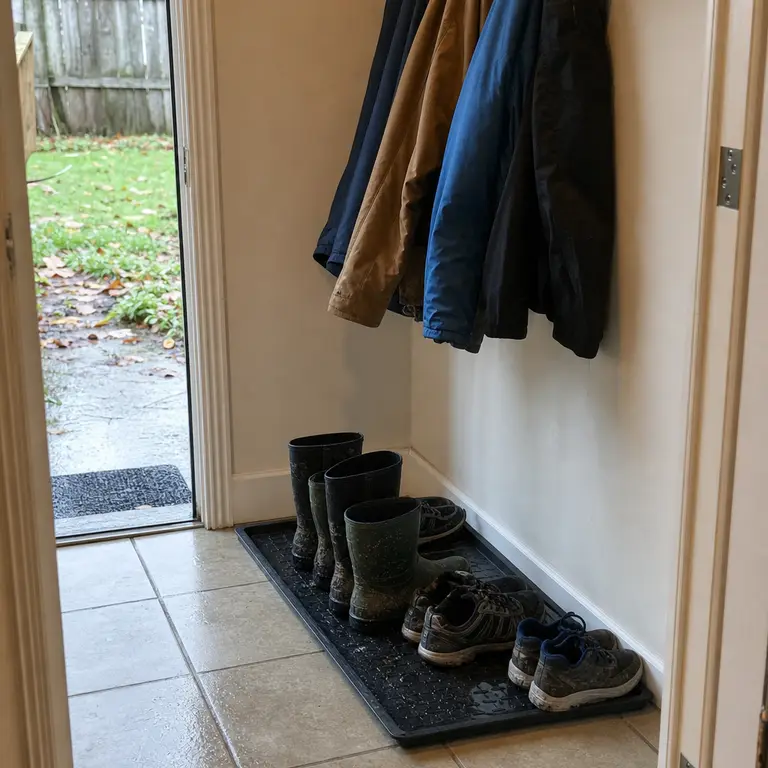
Choose a tray with an easy-to-clean surface and enough room for the household’s wet-weather pairs without creating a trip hazard. Keep it close to the door but outside its swing path, and empty or wipe it regularly in rainy or snowy climates.
Worth knowing: A boot tray is containment rather than full storage, so dry everyday shoes will still need another home.
7.Under-Stair Pullout Drawers
The space beneath an open staircase can become concealed shoe storage with fitted pullout drawers. Drawers make use of an awkward footprint while leaving the entry visually calmer than open shelves or a line of baskets.
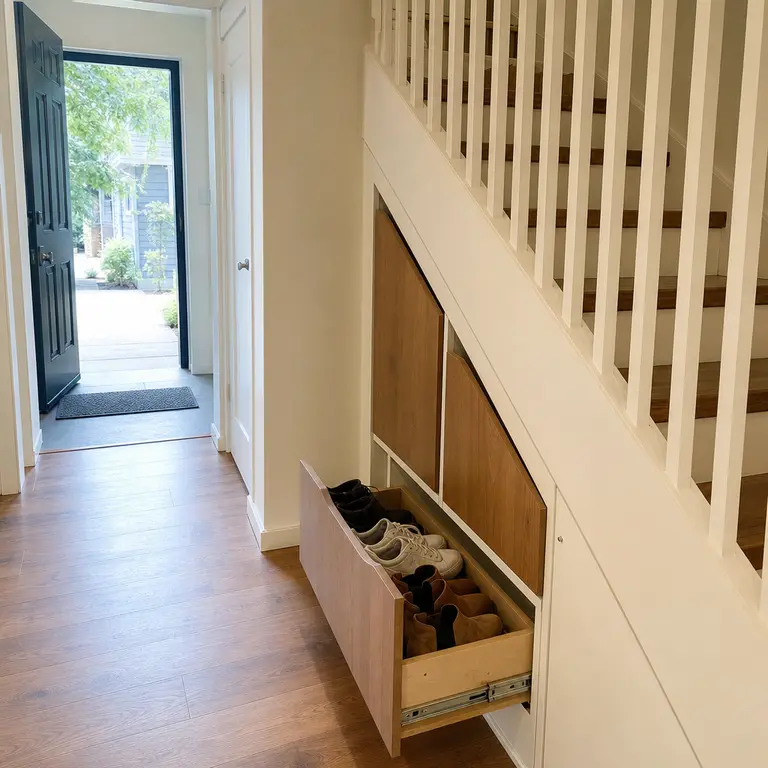
Plan drawer depth around the largest shoes worn regularly, including ankle boots, not only slim sneakers. The drawer fronts should open away from the main passage, and a custom or fitted solution may be more appropriate for homeowners than renters.
Worth knowing: Installation is more involved than freestanding storage and may not be possible under every staircase.
8.Lidded Baskets Under a Narrow Console
Lidded baskets tucked below a slim console hide loose shoes while keeping the storage low and easy to move. Assigning a basket to each person, or separating everyday shoes from occasional pairs, prevents a single deep bin from becoming a jumble.
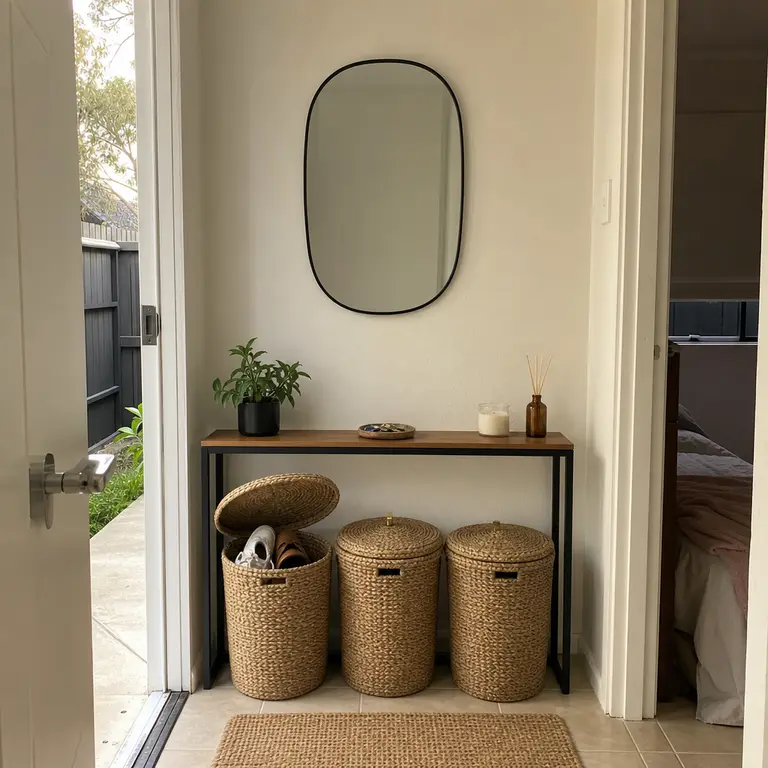
Choose baskets that slide out without scraping the wall or blocking the door when opened. Woven materials suit dry footwear, but wet shoes should go on a tray first or dry fully before being put back inside.
Worth knowing: Deep baskets can bury matching shoes, especially when several people add pairs without keeping them together.
9.Vertical Cubby Rack for Assigned Pairs
A narrow vertical cubby rack gives each person a defined place for one or two active pairs. The individual compartments limit hallway piles and make it easier for children to see where their shoes belong.
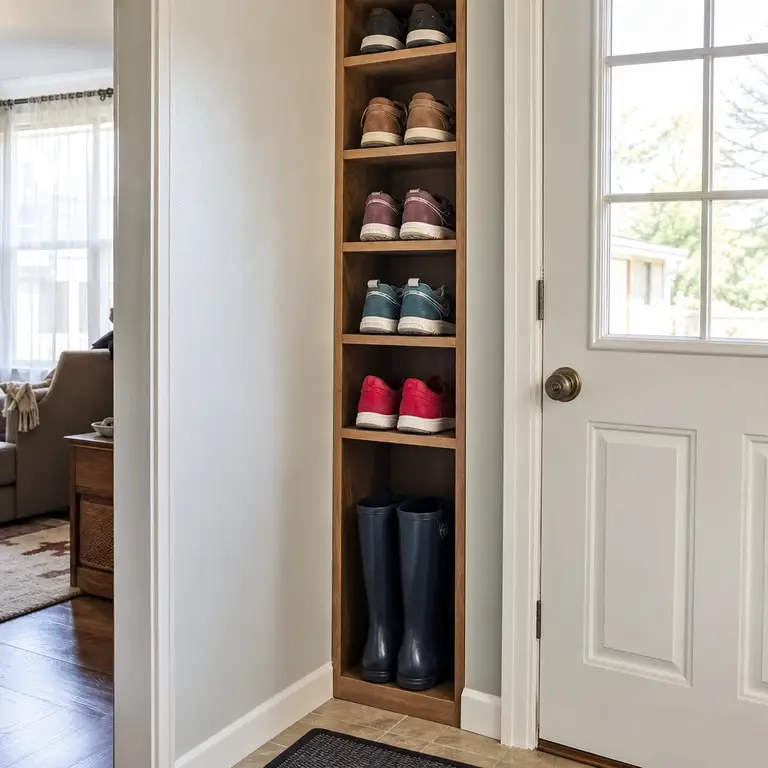
Use larger lower cubbies for rain boots or bulkier shoes, and keep upper cubbies for lighter pairs. Put the rack on a stable, level wall section that does not interfere with the front door, and anchor it whenever the manufacturer requires anchoring.
Worth knowing: Tall freestanding racks are not suitable for every household, particularly where climbing children or unstable floors create a tipping risk.
10.Slide-Out Shoe Shelf in a Hall Closet
A slide-out shelf brings shoes from the back of a hall closet into view, so pairs stay aligned instead of getting lost beneath coats. It can hold a modest everyday rotation while preserving the uncluttered look of a closed closet.
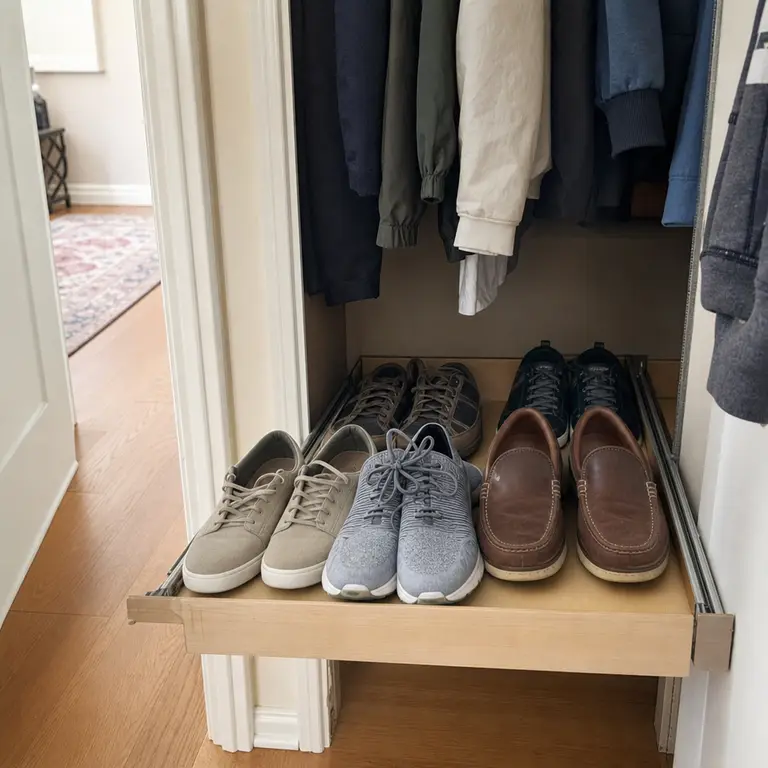
Measure the closet depth, door clearance, and hanging space before choosing hardware, since the shelf needs room to extend without catching on the door or nearby items. This is often a better project for an owner or a renter who has permission to alter cabinetry.
Worth knowing: Installing slide-out hardware requires accurate fitting and may leave holes or other changes that a renter must restore.
11.Shoe Drawers Beneath a Window Seat
A window seat with lower drawers combines shoe storage with a useful perch for lacing up. Closed drawers can hold more of a family’s shoe rotation than a slim open rack, while the seat keeps the entry from feeling like storage alone.
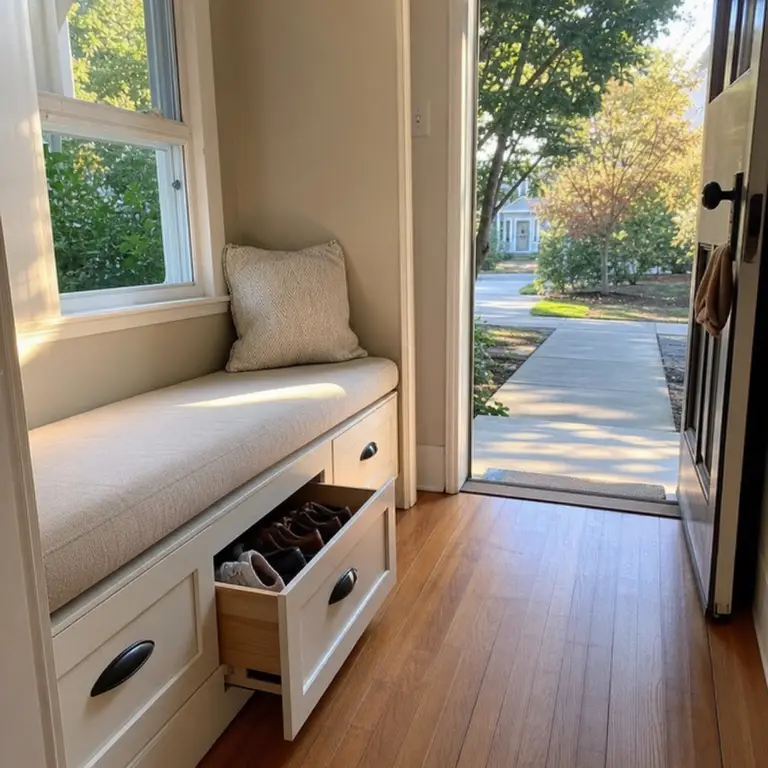
Use shallow drawers for low shoes and reserve a deeper section for ankle boots if the base allows it. Make sure a fully opened drawer does not cross the main walking path, and keep wet footwear on a tray until dry rather than sealing it into the drawer.
Worth knowing: This option needs enough uninterrupted wall length and is usually a larger furniture or built-in project.
12.Seasonal Shoe Tote on a High Closet Shelf
A lidded tote on a high closet shelf removes off-season footwear from the daily entry pile. Keeping only current shoes at floor level makes a narrow hall easier to reset and reduces the temptation to add another rack near the door.
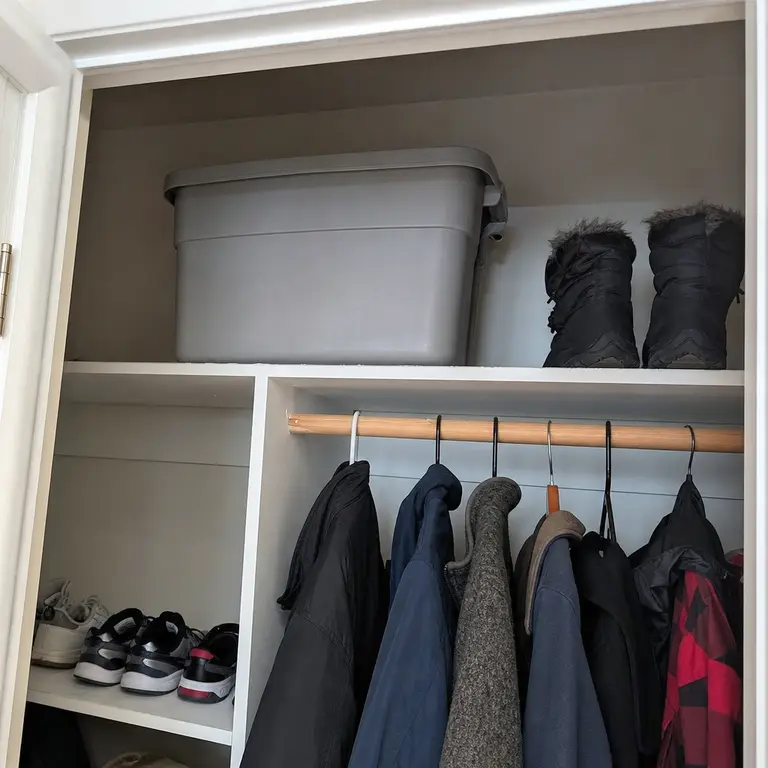
Store clean, dry shoes in the tote and use a simple category marker if several containers share the closet. Choose a tote that can be lifted down safely, and do not place it so close to the closet edge that it could fall when coats are moved.
Worth knowing: High-shelf storage is inconvenient for pairs that are worn often and may be inaccessible for children without help.
About the author
Dana Ruiz, Senior editor
Dana writes about small-space living, storage and low-cost decorating.
Keep reading
12 Under-Sink Storage Ideas That Work Around Pipes
September 19, 2026
12 Small Bathroom Storage Ideas When You Have No Linen Closet
September 19, 2026
15 Small Pantry Organization Ideas Without Matching Containers
September 19, 2026
10 Small Patio Dining Ideas Without a Big Furniture Set
September 19, 2026