10 Budget Patio Privacy Ideas for a Small Seating Area
A small patio feels more private when a screen blocks the one sightline that matters, rather than closing in every edge. These ideas suit renters and homeowners, with options that account for wind, drainage, plant growth, and permission-dependent installation.
1.Set a Freestanding Slatted Panel Across the Main Sightline
A freestanding slatted panel can block the window, walkway, or neighboring seating area that makes a patio feel exposed. Set it behind chairs or along the patio edge facing that view, rather than running it around the whole space.
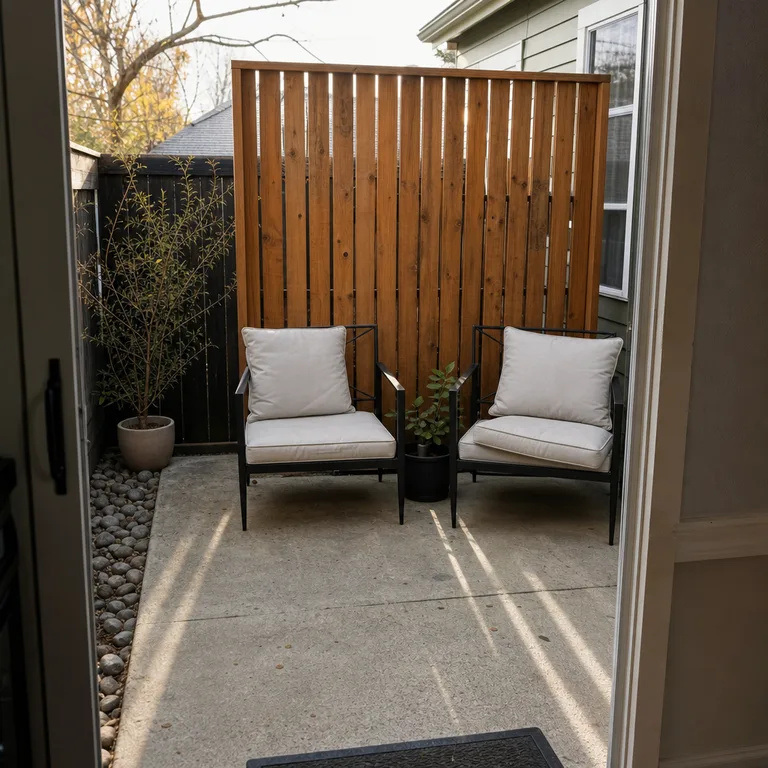
The gaps between slats keep the screen lighter than a solid wall and allow some air to move through. A simple wood panel can be made from basic lumber, while a composite or ready-made panel may reduce ongoing maintenance.
Use a panel with a stable base or a frame designed to stand on its own. On a windy patio, a tall narrow screen needs substantial weight and should not be loosely propped against siding, a shared fence, or a neighbor’s structure.
Worth knowing: A freestanding panel takes up patio floor space and may need to be moved or secured during strong wind.
2.Use Tall Planters to Create a Green Corner Screen
Arrange tall, narrow planters in an L shape around the most overlooked corner of the seating area. This gives a small table or two chairs a protected backdrop without blocking the rest of the patio.
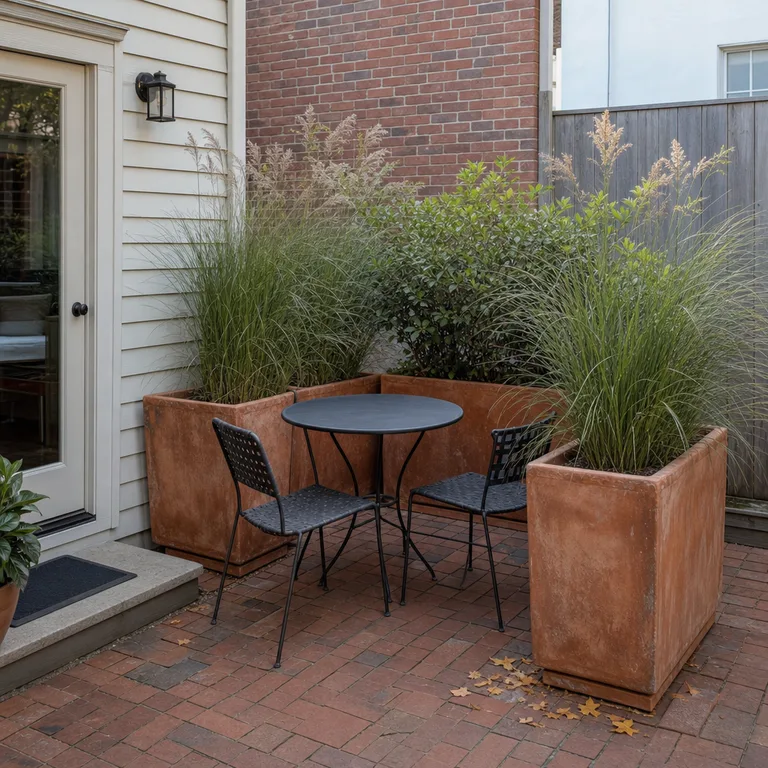
Upright grasses and compact evergreen shrubs add softness that a hard screen cannot. Matching planters make the arrangement read as one intentional feature, even when the plants are still small.
Choose containers with drainage holes and raise them slightly if water tends to collect on the patio. Use plants suited to the available sun, and expect a living screen to look more open at first while it grows in.
Worth knowing: Plants need regular watering and time to fill out, so the privacy is not immediate.
Related: 12 Container Garden Ideas for a Small Patio on a Budget
3.Hang an Outdoor Curtain From a Self-Supporting Frame
An outdoor curtain on a freestanding frame can cover one open side of a narrow patio when privacy matters most. Leave it open during the day for light and pull it across when people are using the seating area.
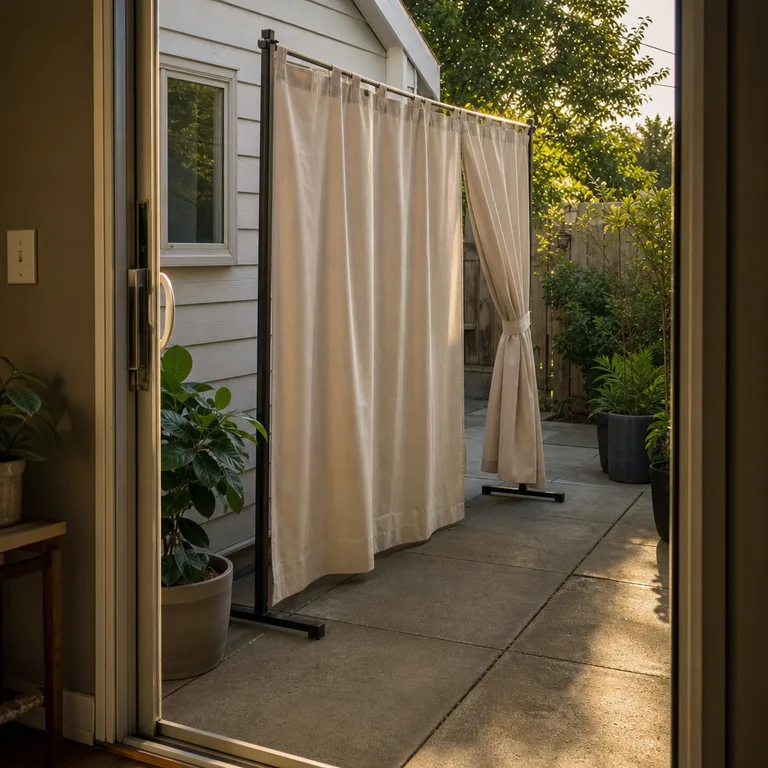
Fabric softens hard paving, siding, and metal furniture, making a compact patio feel more like a room. Outdoor-rated curtain panels are often easier to work with than building a permanent wall, especially in a rental.
Choose a washable fabric intended for outdoor exposure and use a frame with weighted feet. Tie the curtain back securely when it is open, and take it down or secure it during rough weather so it does not act like a sail.
Worth knowing: Curtains provide little privacy in high wind unless they are tied down, and they may need seasonal cleaning or storage.
4.Angle a Folding Screen Behind Two Chairs
Place a folding screen at an angle behind a pair of chairs instead of setting it flat along the boundary. That small shift blocks a direct view while creating a more enclosed conversation spot.
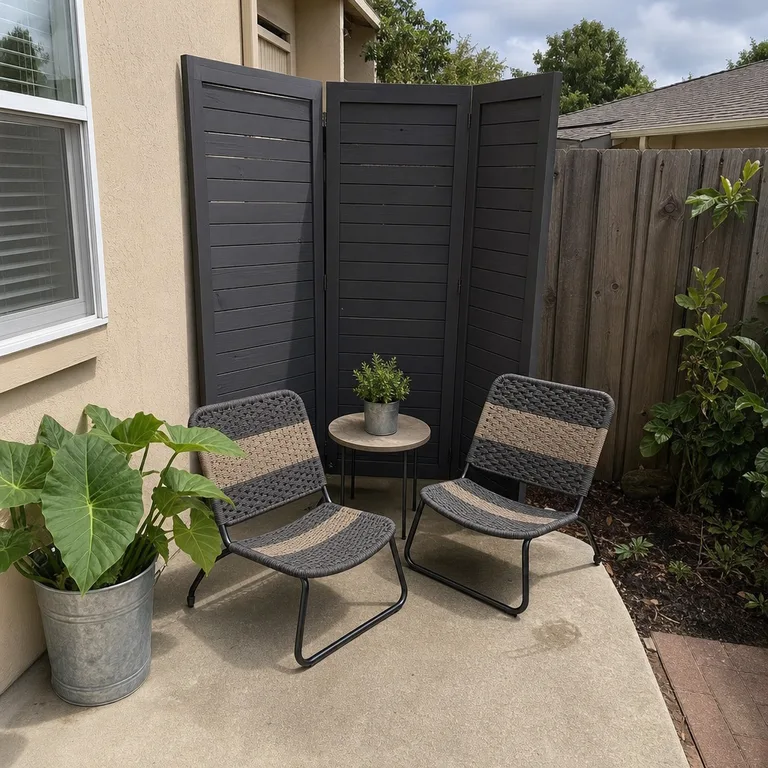
This option works well when the patio needs to stay flexible for doors, grills, or shared access. A screen can be folded and stored when guests need more room or when a renter moves out.
Look for weather-ready materials, or protect a painted wood screen with an exterior finish. Add weight low on the frame if needed, but keep the screen clear of pathways and avoid using it as a structural barrier.
Worth knowing: A folding screen is best for sheltered patios because it can tip in gusty conditions.
Related: 12 Small Patio Seating Ideas on a Budget
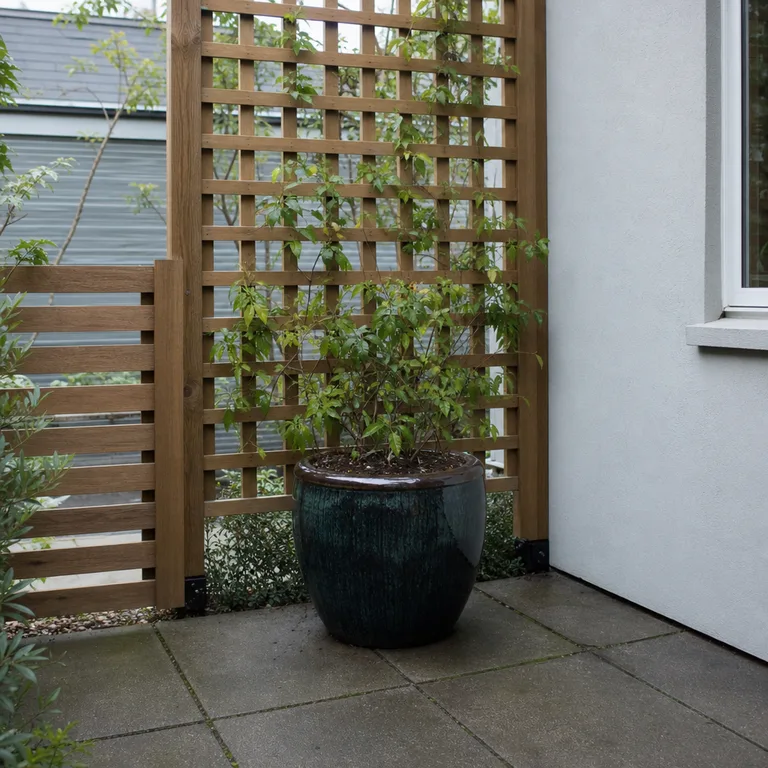
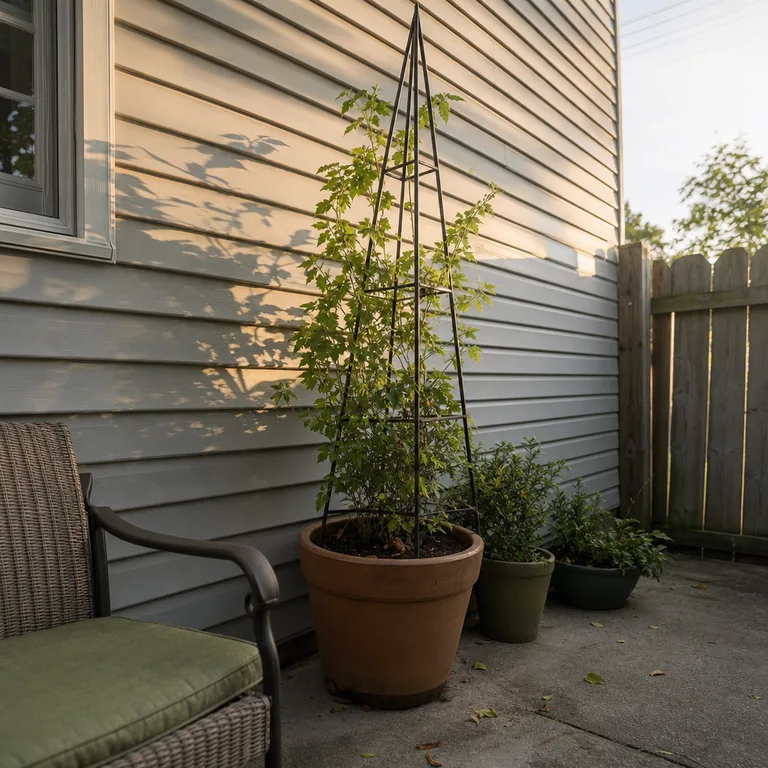
5.Train a Vine Up a Trellis in One Large Container
Put a trellis in one large container where the exposed view begins, such as beside a chair or at the corner nearest a neighboring window. It concentrates greenery exactly where it is useful without requiring a planted bed.
A vine adds vertical coverage while taking up less ground space than a row of shrubs. The trellis also gives a plain patio a focal point, especially when paired with a simple pot that matches other containers nearby.
Use a pot broad and heavy enough to support both soil and trellis, with clear drainage at the bottom. Select a climbing plant for the patio’s sun level and local climate, and avoid fastening the trellis to a fence that does not belong to the property.
Worth knowing: A young vine leaves visible gaps for a while and needs pruning or tying in as it grows.
6.Park a Storage Bench Along the Exposed Edge
Place a storage bench along a low, exposed patio edge to interrupt views at seated height. A high back or a short slatted panel behind the bench gives more cover while preserving an open feeling above it.
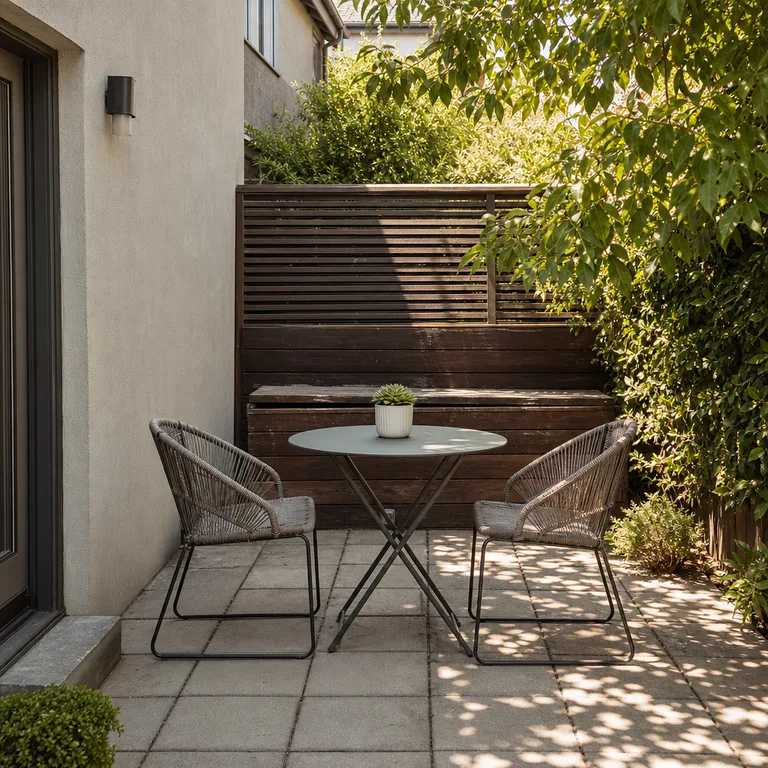
The bench earns its footprint by providing seating and a place to keep cushions, small tools, or outdoor textiles. It can also make a bare boundary feel finished without adding several separate pieces of furniture.
Measure the walking route around the bench before choosing one, particularly on a narrow patio. Pick a weather-resistant model with a lid that sheds rain, and keep stored items dry by using suitable bins or bags inside.
Worth knowing: A bench only blocks low sightlines and can make a tight patio feel crowded if it is too deep.
7.Make a Narrow Screen With Reclaimed Shutters
Mount reclaimed shutters or salvaged exterior panels to a narrow self-supporting frame behind a chair or at one patio corner. Their uneven paint and louvers bring texture while covering a focused view.
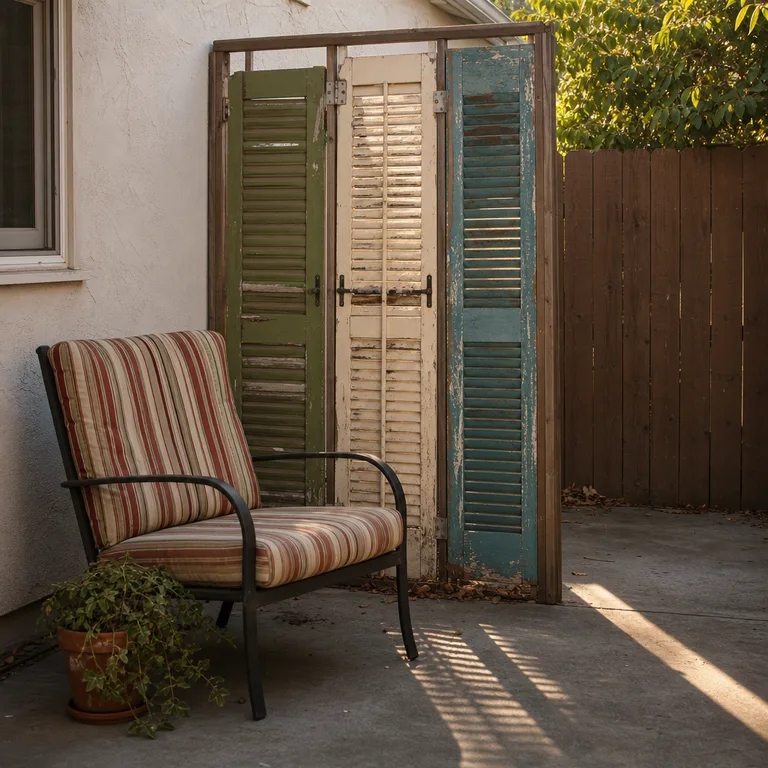
This approach works best as a partial divider rather than a full fence replacement. A small group of shutters can give a plain patio character without needing enough materials to span the whole edge.
Check old shutters for rot, loose hardware, and flaking finishes before using them outdoors. Secure them to a stable frame with a broad base, rather than attaching them to a neighbor’s fence, a shared boundary, or a surface not designed to carry the load.
Worth knowing: Salvaged panels may need repair and exterior sealing before they can withstand weather.
8.Place a Patio Umbrella Between the Seating Area and the View
A tilting or offset umbrella can be aimed toward an upstairs window or overlooking balcony instead of straight overhead. Position the canopy so it shades the table or chairs while interrupting the view from above.
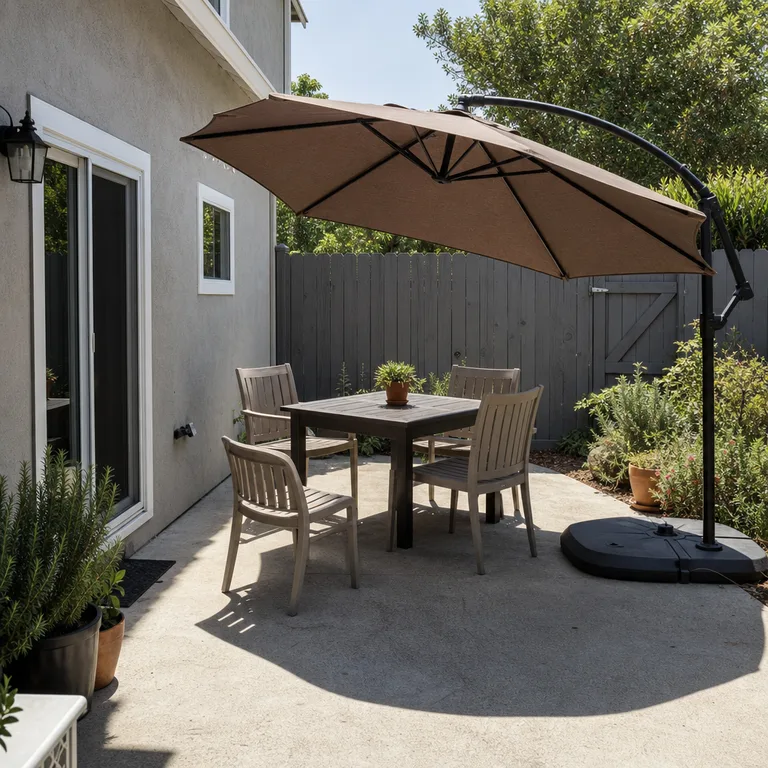
Unlike a fixed screen, an umbrella can be adjusted as the sun and patio use change. It is particularly useful where a tall structure would be difficult to install or not allowed under rental rules.
Use a base suited to the umbrella style and close the canopy when wind picks up or the patio is unattended. Check clearance around doors, railings, and walking paths, since offset arms need more room than a center-pole umbrella.
Worth knowing: An umbrella does not provide reliable privacy after dark when patio lights make the seating area visible.
Related: 10 Small Patio Dining Ideas Without a Big Furniture Set
9.Build a Low Lattice Screen Around One Seating Nook
A low lattice divider around two sides of a seating nook creates separation without making the yard feel shut in. It works especially well beside a small gravel pad or patio corner where the seating area needs a clearer boundary.
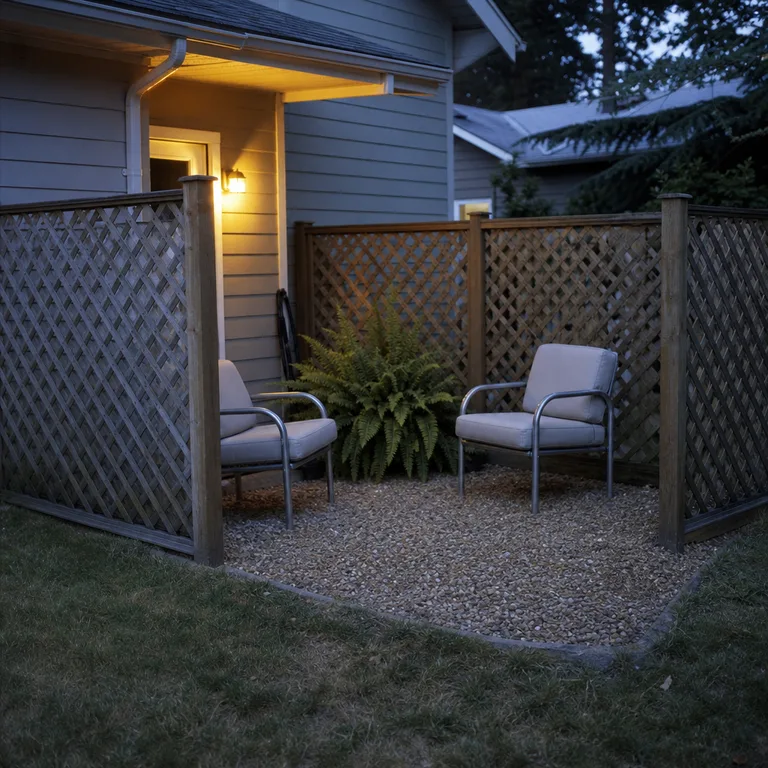
The open pattern lets light and breezes through while breaking up direct views. It also offers a simple backdrop for a few pots or lightweight greenery without demanding a dense wall of plants.
Keep the screen low enough to suit the space and use posts or bases designed for outdoor conditions. Permanent installation may need landlord approval in a rental and can be subject to local rules, especially if posts are set into the ground.
Worth knowing: Low lattice will not hide views from upper-story windows or tall neighboring decks.
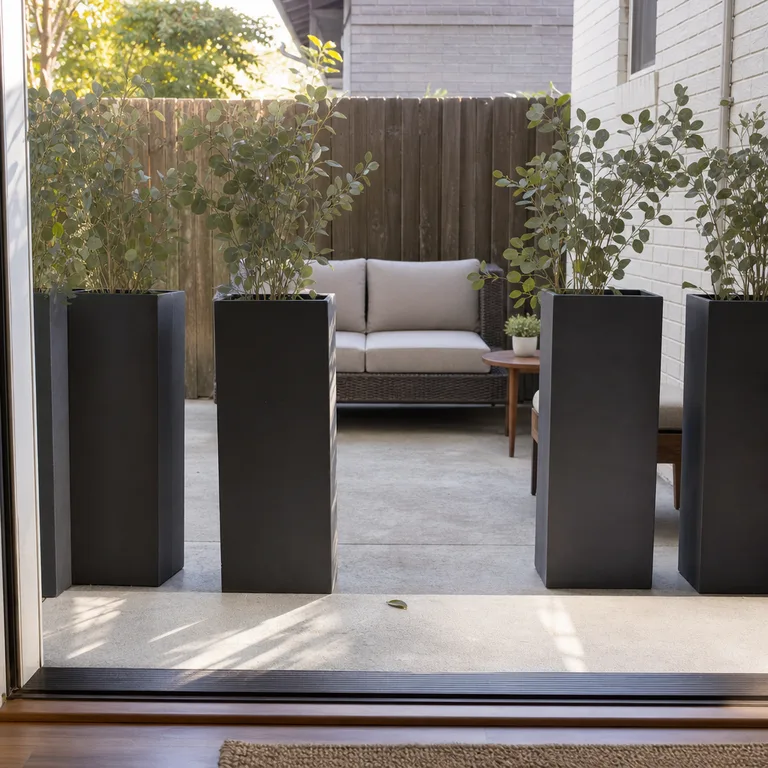
Repeated containers make a mixed-use patio look organized, while foliage softens the divide. Use upright plants for screening, or mix in trailing plants if the view is mostly at ground level.
Choose sturdy pots with drainage and plants that match the available sun and watering routine. Space the containers close enough to read as a divider, but not so tightly that air circulation and plant care become difficult.
Worth knowing: Tall pots can be heavy to rearrange once filled, and they require consistent watering in warm weather.
About the author
Dana Ruiz, Senior editor
Dana writes about small-space living, storage and low-cost decorating.
Keep reading
10 Small Pollinator Garden Ideas You Can Start in One Corner
September 24, 2026
10 Budget Herb Garden Ideas for a Sunny Patio
September 23, 2026
10 Cottage-Style Patio Ideas You Can Build Around What You Own
September 23, 2026
10 Shade Garden Ideas for a Small Yard on a Budget
September 22, 2026